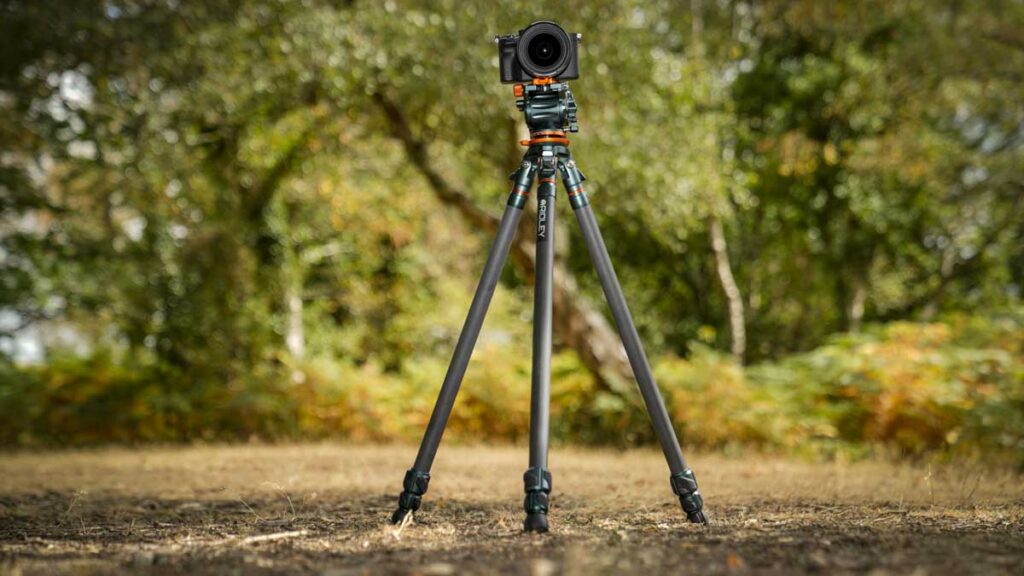

High-quality carbon tripod with fast levelling, excellent rigidity and flexible leg options for serious photographers and videographers.
Our Verdict
3LT is taking video seriously, especially with the mass audience of content creators out there who are looking for a tripod that’s simple, lightweight, and flexible in use. The Ridley, with its anodised options and partnership with the AirHead Cine CC, couldn’t be anything other than 3LT. The anodised colourway looks great, and the detachable legs and replaceable footwear complement the solid build and design. It ultimately offers a decent lightweight three-legged tripod for the content creator and hybrid shooter market.
I’ve been using the Ridley for the last month, and I have to say I’m really impressed by just how lightweight it is. The simplicity of the design is spot-on; you essentially get a decent midweight tripod in the kit that doesn’t weigh much. During the test, I had a variety of cameras on top, everything from an FS7, which was slightly overkill, through to the Canon EOS R5 C and Sony A7 IV.
There are a few things I would like to see, foremost of which is some type of accessory mount on the side. Still, the levelling system is absolutely superb, different from standard bowl designs, and I have to give full credit to 3 Legged Thing for focusing on simplicity.
What I really like about the design is its flexibility, everything from the new twist grips to the overall build quality, which is again exceptional. It feels like 3 Legged Thing has not just come of age, but is now challenging some of the market leaders, especially on price.
If you are a hybrid shooter who shoots both stills and video and you’re looking for a decent set of mid-weight legs for landscapes, portraits and possibly a bit of studio work, but at the same time you need to shoot video and you need a solid, relatively lightweight set of legs, then the Ridley is a superb option.
What is the 3 Legged Thing, Ridley?
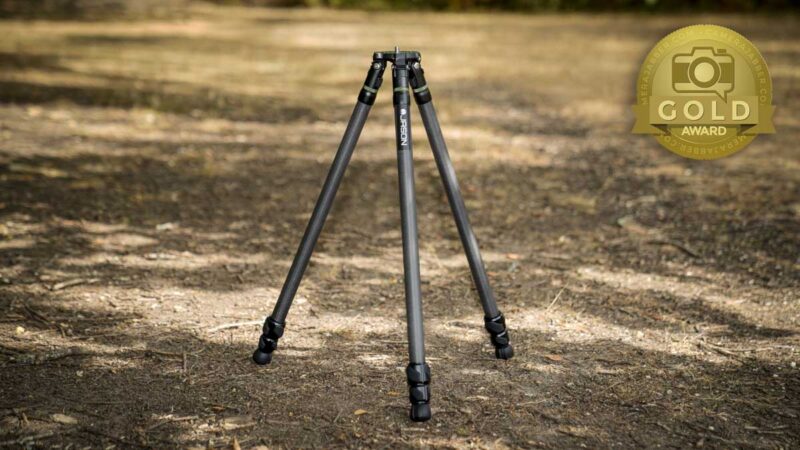
The 3 Legged Thing Ridley is a hybrid set of carbon fibre levelling tripod legs designed primarily for video but equally suited to photography. I have to say that, having used these for a good month now, I’m really into using the Ridley with that levelling base for stills photography, especially landscapes. It makes things so much easier when photographing out in the New Forest, although if I stick with it long term, I will swap the head.
This design style, with the levelling base, has really filtered through from cinematography. That base lets you quickly get an accurate level, so if you’re doing a panning shot with video, it’s on a plane rather than on a slight tilt, which will obviously be very noticeable.
Click here to purhase the 3LT Ridley directly from 3LT
Unlike a video tripod like the excellent 3LT Hugh that I looked at last week, the Ridley is more of a hybrid shooter tripod, so it has a three-section leg design, and each leg is completely separate, with the usual three-angle leg adjusters in the crown rather than utilising a spreader. This means it gets its heritage and design from the stills tripod market rather than cinematography, but blends some features such as the levelling base. Still, the way that the market has adapted, with mirrorless cameras offering especially superb video and obviously stills, makes this a perfect tripod for today. It’s aimed directly at those hybrid shooters, actually hybrid shooters like myself.
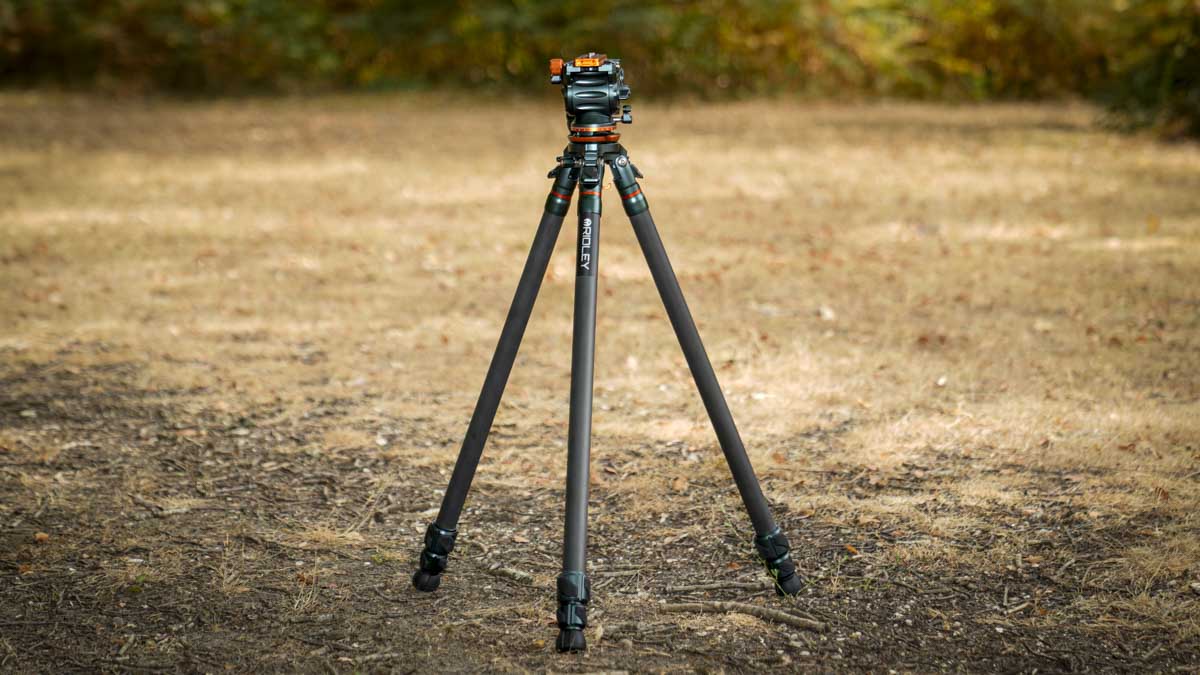
One of the big features is that it has three detachable legs, so you can essentially convert them into a monopod if you feel the need; it also means you can remove all the legs and replace them with Vanz footwear to make it shorter. This gives it a little extra versatility, and through the test, that versatility really stood out. I was able to take it from a standard tripod, then just pop it on the table, remove the legs and fit the Vanz footwear, and I had a tabletop video tripod or stills tripod ready to go. It’s a bit more versatile and handy, especially if you’re a jobbing photographer or videographer and don’t want to carry different tripods for different scenarios.
In the test, the cameras I used didn’t come anywhere close to the tripod’s maximum payload of 14kg, and it handled everything with absolute ease. The Ridley was supplied as the kit with the AirHed Cine CC, which was used throughout the test, and again it’s an exceptionally good head. I do hope that, like the head we saw on the Hugh, we’re going to get a slightly more simplified design for the Ridley.
Specification
Material: Carbon fibre
Tubing: Eight-layer carbon fibre
Canopy: Magnesium alloy
Maximum tube: 29mm
Leg sections: Three
Payload: 14kg / 30lb
Leg angles: 23°, 55°, 80°
Levelling range: 10°
Maximum height: 154.5cm
Minimum height: 15cm
Folded length: 70cm
Tripod weight: 1.67kg
Kit height: 164cm
Kit minimum: 24.5cm
Kit folded: 79cm
Kit weight: 2.4kg
Mount: 1/4in-20
Adapter: 3/8in-16
Tubing: Eight-layer carbon fibre
Canopy: Magnesium alloy
Maximum tube: 29mm
Leg sections: Three
Payload: 14kg / 30lb
Leg angles: 23°, 55°, 80°
Levelling range: 10°
Maximum height: 154.5cm
Minimum height: 15cm
Folded length: 70cm
Tripod weight: 1.67kg
Kit height: 164cm
Kit minimum: 24.5cm
Kit folded: 79cm
Kit weight: 2.4kg
Mount: 1/4in-20
Adapter: 3/8in-16
Build and Handling
The maximum tube diameter, which I know many people are very keen on knowing, is 29mm, so not quite the premium 32mm that we like to hit, but very close. I’ve got to be honest, it feels like a good, balanced weight for its intended market.
The canopy is magnesium alloy, and again it feels nicely made and solid.
Once again, like stills tripods, we have the leg latches so you can go from full height and then spread those legs out to lower the height of the tripod. Because there’s no centre column, just that levelling adjuster on the side, you can actually lower the tripod down quite low to the ground, which I really like.
As I’ve seen with other 3 Legged Thing tripods, the feet are replaceable, so after years of use, which I’m sure this will last through, you have the option to update the feet for new ones if they do wear. It’s only really relevant if you’re using it on concrete or tarmac. I only point this out because I checked some of my older tripods the other day, and they had started to make scraping noises as I moved them around the floor. I realised that I had actually worn through the rubber, so replaceable feet are a very relevant feature for video tripods especially.
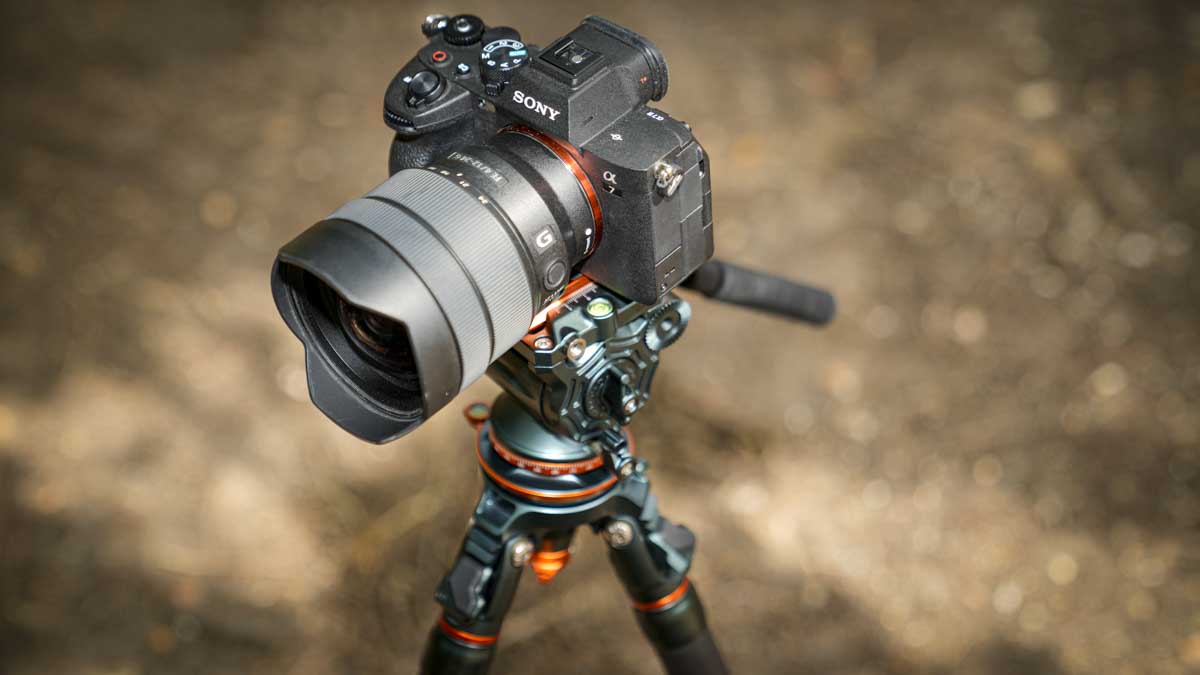
To ensure you get the best base for shooting, there’s a rotating spirit level on top, so you can ensure the head is level on whatever terrain you’re on, and again, it’s very nice and easy to see. With the easy levelling control underneath, I was able to prepare the plane ready for filming with relative ease.
Alongside the tripod, there’s also the padded carrying case. This is actually one up on many other manufacturers, with, I think, only Vanguard also supplying such a decent case. Having just bought around 30 tripods for an institution, I realise that the cost of adding another 30 bags is substantial, something that I will take note of in the future.
When it comes to build quality and design, 3 Legged Thing’s manufacturing is absolutely superb, and overall it’s got a brilliant finish. Of course, you’ve got that anodising and those design quirks that really make the 3 Legged Thing tripods instantly noticeable and very desirable.
Features
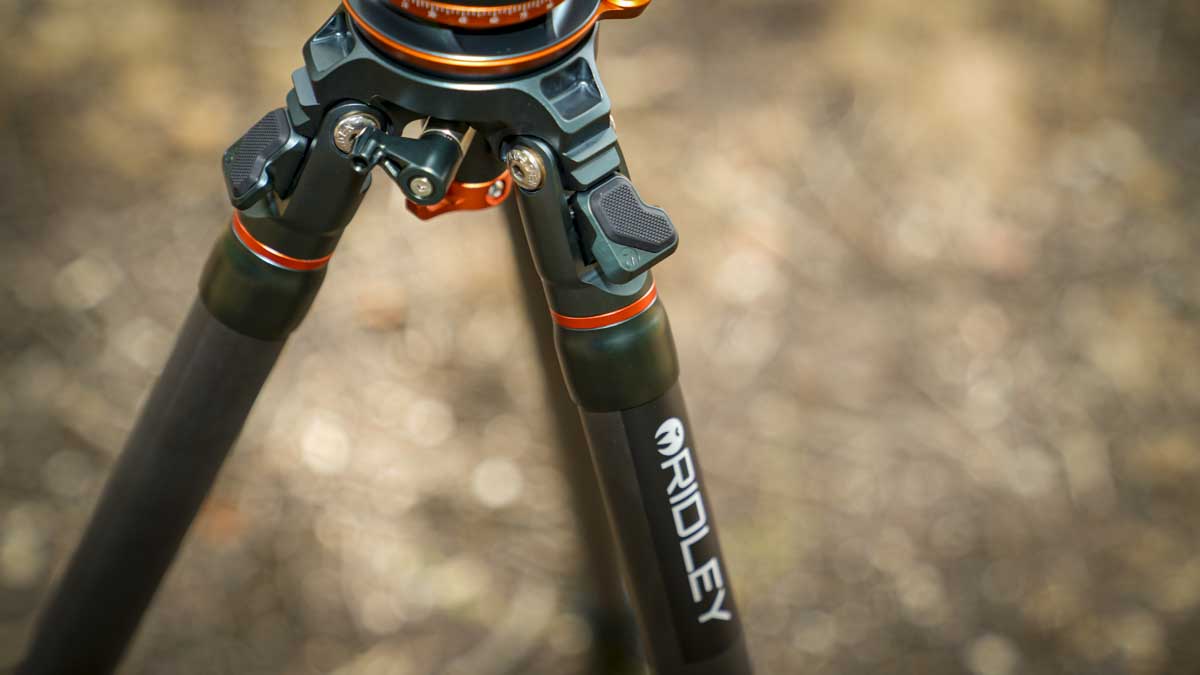
So, a quick run-through of all the features as ever, and one of the major differences between this and a standard tripod is its integrated levelling base. This is something brought down from video tripod lines into this hybrid tripod, and although levelling bases come through from video production, it’s equally beneficial in stills and has been a feature for years in some areas.
A levelling base makes it much quicker than adjusting the legs to get level; you essentially just loosen the bolt on the side, level the head and then re-lock it. If you’re shooting stills, you’ve got a nice level horizon, and if you’re shooting video, that horizon will stay locked and level.
When it comes to that multidirectional levelling, you have 10° of levelling all around, giving you plenty of scope. You still need to get the rough level with the legs, then fine-tune with the levelling base.
There’s also a 360° rotating spirit level, so no matter where you’re standing around the tripod, you’re always going to be able to gauge exactly where you are and adjust accordingly.
One feature of this tripod, and I’ve seen this with many 3-legged tripod in the past, is that it has three removable legs. Now, I’m not personally a huge fan of these, but I can definitely see the point; on a recent shoot, we had to use three legs bolted together to create one very long pole, then mount a lightweight compact camera on top. We remotely controlled the camera through Wi-Fi to get some aerial shots in a situation where a drone was needed but couldn’t be used.
While this isn’t the main use, you can quickly adapt one of the legs to a monopod configuration and, again, if you’re out and about shooting video or even stills, being able to convert to a monopod is really useful.
Likewise, if you want to switch to a tabletop tripod, you can remove the legs completely and use Vanz footwear instead. So, when it comes to versatility, it’s great for both stills and video, and you can adjust the height depending on the legs, feet, or configuration you use.
As with many of 3 Legged Thing’s other tripods, they also have the option for interchangeable footwear, so if you take a look through the 3LT website, you’ll see the other options that are available there, including Vanz footwear.
Just underneath the head, the securing bolt has a dual hook, so you can attach a bag to add a little extra weight and rigidity. It’s actually a really good option. You can also tether it directly to the ground if you need to.
There’s also an integrated 4mm hex key, and if you really need to, you can mount the camera directly to the tripod without a head. I’m not sure why you’d want to do that, but it is possible. Maybe you want to travel extra light.
Performance
Getting started with the 3 Legged Thing, Ridley is as simple as any, and with the kit I had the AirHed Cine CC on top. Before I started, I wanted to check the tripod’s build quality and handling.
First and foremost, it feels really nice with those plain carbon fibre legs; I far prefer these over the weave look, and those new twist locks. I prefer the twist locks over the 3 Legged Thing’s sucker-like rubber grips on older tripods. Whilst they’re slightly more streamlined, they still offer excellent grip in all conditions. Although it’s still relatively warm, so hand gripping is easy in colder weather, these should really come into their own as the weather draws in and it gets colder, but you can kind of tell they’re going to be absolutely ideal.
The locks are great quality, and the finish is typically 3 Legged Thing, well made and manufactured throughout with small attention to detail in the design. They make it a 3 Legged Thing tripod rather than a run-of-the-mill one.
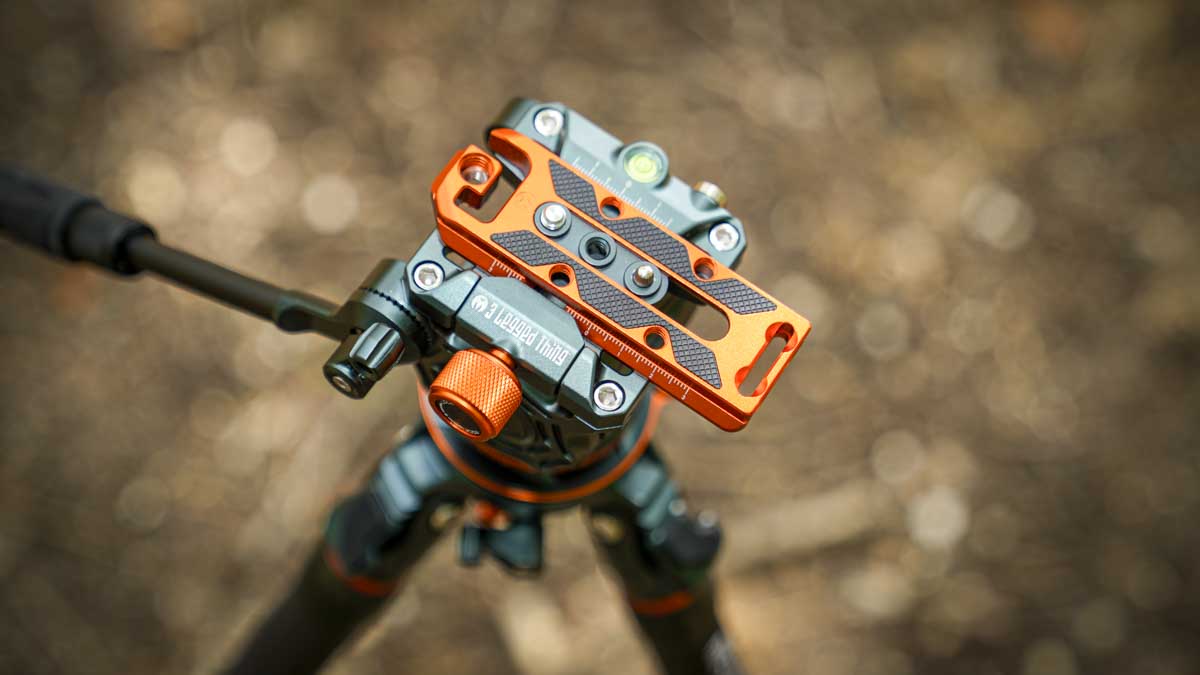
One of the points about this tripod is that the legs are removable, so you can remove each of the three legs and fit Vanz footwear or the shorter legs instead. I really like this option, and it gives a more practical use for the ability to remove the legs. You can also fit the Vanz footwear so you can mount it onto a tabletop, and I have found this really useful in the past.
Of course, one of the major uses for removing the legs is that you can use one as a monopod, and this works perfectly well with the AirHed Cine CC popped on top for good measure. It’s honestly not something that I would usually do, but as an option it is good. During the duration of this test, I did actually have another 3-legged tripod that I was using, and we had to use the legs of that attached one to the other, three in total at full length, to film something at height due to the fact that we couldn’t take off our drones because of the location. Again, this is not what the legs are designed for, but in emergencies, with a bit of gaffer tape, this extension of use can sometimes get you out of a tight scrape.
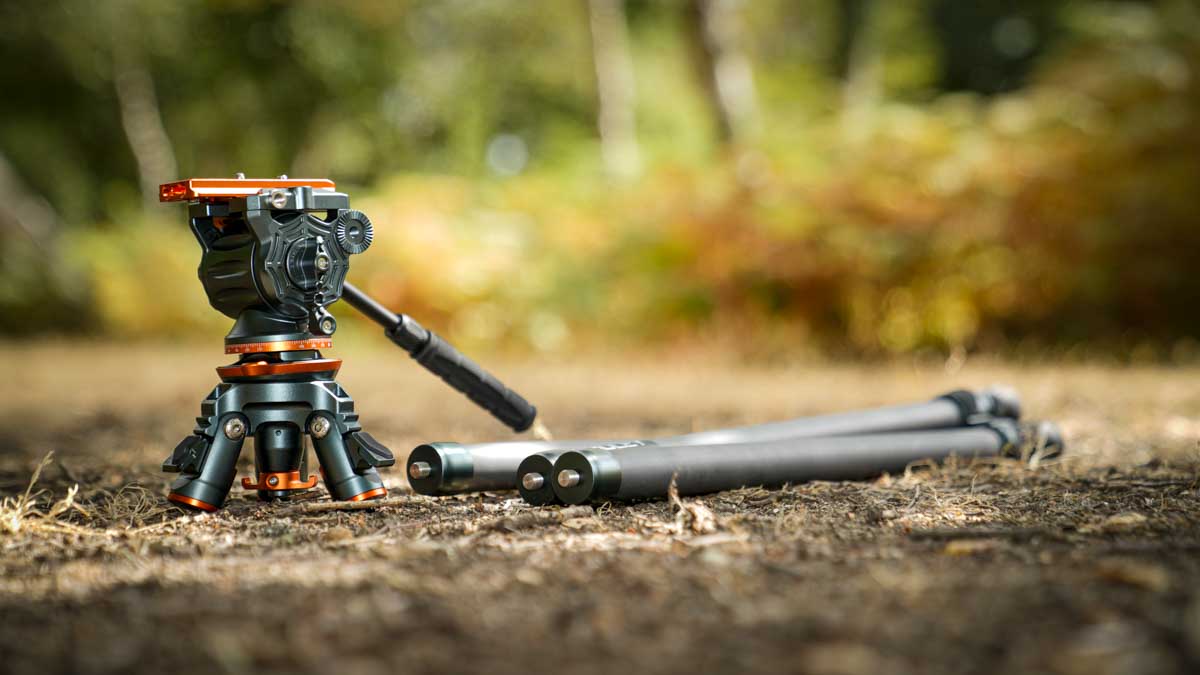
Once I’d checked over the full tripod, I popped on an A7 IV, to test it out. I tested two other cameras on top, but the main one I was using was the A7 IV for a variety of filming projects I’m involved in at the moment.
What was apparent was how well-balanced the whole thing felt; for a camera of that size, and while well below the tripod’s payload limit, the AirHed Cine CC balanced very nicely, and the legs felt good and solid. Hooking a backpack onto the hook underneath just gave it that extra level of rigidity.
Again, using the tripod, it was quick and easy to find a rough level by adjusting the legs, then using the levelling base just to perfect the adjustment so that when I pan with video it is nice and smooth and on a horizontal plane, and doesn’t suddenly veer up or down on a tilt.
One of the things that is apparent as you start to use the tripod is just how smooth all of that movement is, and obviously 3 Legged Thing has really worked on the quality of the machining and workmanship. Everything fits together very snugly and tightly, which just gives it that good-quality feel in use.
I have the grey version of the tripod in the test. I have to say I was really taken with how it looks, and whilst I’m still not overly keen on the spiderweb-style design on the AirHed Cine CC, it’s genrally a great-looking tripod.
There are a few small bits and pieces that I would like to see updated. I would like to see some sort of accessory port, but then one of those can be added with a clip to the leg if needed, especially useful when you’re shooting video. If there’s a spreader accessory as well, then that would definitely be advantageous. It just gives that little extra support when you’re shooting video. It would only be useful if you could lock out the sprung leg adjusters, so that you could adjust the leg angles in a way that is more akin to a video tripod.
One thing I really like is that the levelling base uses a small bolt on the side rather than bolts underneath. This means that you can get nice and low with the tripod, and because it is derived from the stills tripod rather than a video tripod, it will lower right the way down, meaning that you can get really good low-angle shots that you just wouldn’t normally get even with a very decent video tripod.
The other point is that it’s really lightweight; whereas many video tripods are heavy, this strikes a good balance and, even compared with some standard tripods, still feels light.
Essentially, this is a great all-round tripod with a mix of video and stills features and functionality, all at that sort of mid-range price point, which means that if you’re a hybrid shooter, you’ve essentially got everything you need.
Final Thoughts
If you’re a hybrid shooter or you like the idea of shooting video as well as stills, then the 3 Legged Thing Ridley is an absolutely superb option and really relatively well priced despite the £400 starting price. That might seem expensive, but when you look at the price of video tripods, then this actually works out as well balanced, especially considering this has carbon fibre legs, its lightweight and comes with that padded bag.
For still photography, it’s versatile and, while the AirHed Cine CC is predominantly designed for video, I found it was nice to use for stills as well, especially with the small handle neatly tucked away when shooting more traditional landscapes and portraits. Having the handle there makes it very easy to control.
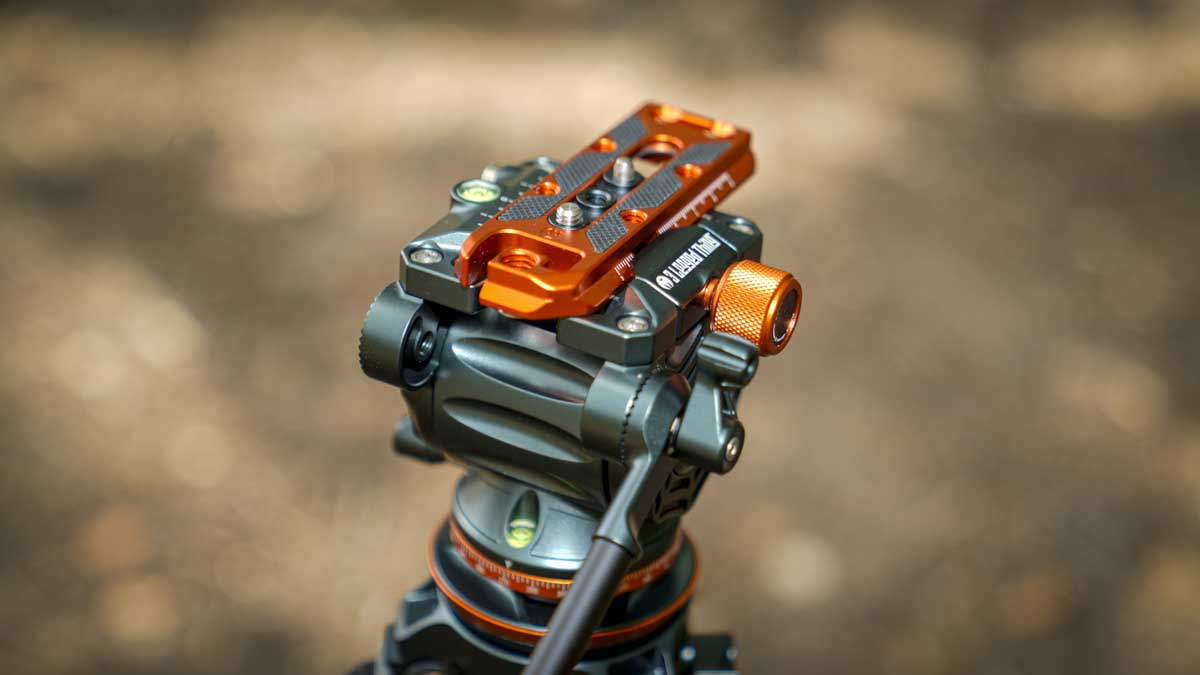
For me, the fact that it has that levelling base just makes it really quick and easy to sort out the level, and you don’t have to mess around with the legs as much as you would do with, say, traditional stills tripods. The other point is the standard leg sections are good and long, which means that it only takes a few seconds to set up and get it to exactly the height you want. If you want to drop it right down and low to the ground, the design and lack of a centre column mean it drops right down, which is brilliant for both stills and video.
The other point here is that those legs can be detached and, especially as we’re coming into autumn and macro photography such as mushrooms and other creatures that scurry around the forest floor starts to come to the fore in photography, this is just a brilliant solution. You’ve just got plenty of versatility.
But obviously video will probably remain one of the biggest uses for this tripod, and again, its lightweight nature, the padded bag that makes it easy to transport, and the levelling base that lets you find a level plane in seconds really stand out.
So, for most content creators, students, and, to be honest, enthusiasts looking to shoot stills and video, this is a superb option.