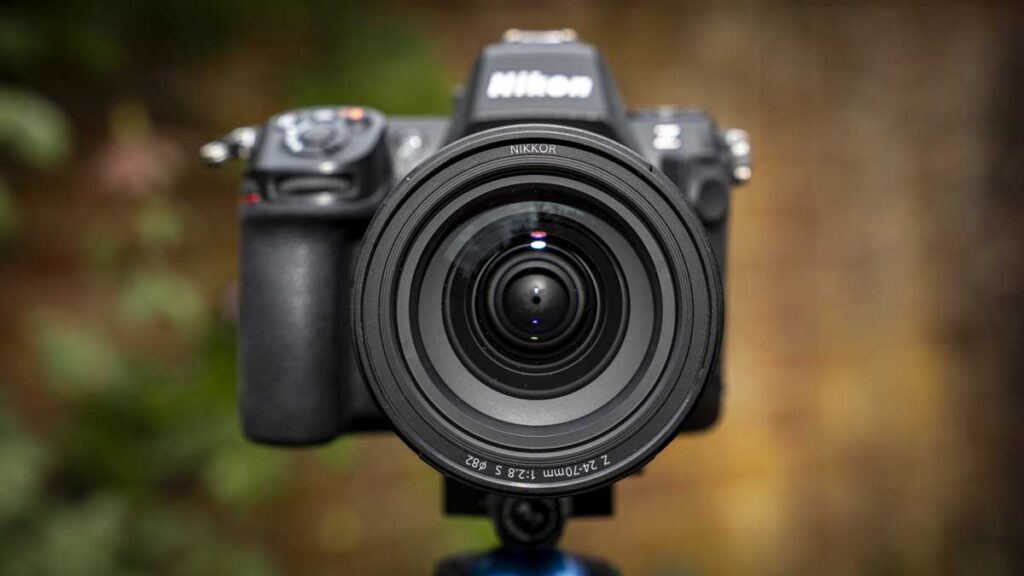

Flagship-level stills and video performance in a smaller professional Nikon body

Our Verdict

Most cameras are at their best on the day they are reviewed, and quietly get worse as the world moves past them. The Z8 is the rare exception. The camera I have been shooting with over the past few weeks is not the camera we reviewed in May 2023: firmware 2.00 in February 2024 and firmware 3.00 in June 2025 have added a dedicated bird-detection mode, Auto Capture, Pixel Shift up to 180MP, an in-camera focus limiter and a long list of smaller changes, all free, all to a body that Nikon has not replaced. If you need all-day battery life or two matched CFexpress slots, buy the Z9 instead; those are the two things the Z8 gave up to be smaller, and no firmware will fix either. For everyone else, this remains the most complete hybrid camera Nikon makes at anything like the money. The launch price was £3,999and that’s now dropped to around £3,699. Of course, second-hand prices have dropped dramatically, and a quick check on MPB shows prices vary between £2,269 and £2,349.
Who it’s for: wedding, wildlife and sports photographers who want Z9 performance without the dual grip, hybrid shooters who need 8K and N-RAW internally, and D850 owners who have been waiting for the right moment to move to Z.

What is the Nikon Z8?

The question that followed the Z9 everywhere was not about its sensor or its autofocus. It was, over and over, how heavy is it? Nikon clearly heard it, because eighteen months later the Z8 arrived with the Z9’s sensor, the Z9’s processor and the Z9’s autofocus in a body without the second grip.
That is the whole camera in a sentence. The Z8 is a professional full-frame mirrorless body built around a 45.7MP stacked BSI CMOS sensor and the Expeed 7 processor, with no mechanical shutter, 20fps raw shooting, 8K video and internal N-RAW recording. Then when it comes to weight, it comes in at 910g with a battery and card, which makes it 430g lighter than the Z9 and about 95g lighter than the D850 it was widely expected to replace, but as I discovered recently, that camera is still on sale.
Nikon had two things to cut to get there, and both were deliberate. The Z9’s EN-EL18b battery is physically large, so the Z8 takes the smaller EN-EL15c and accepts a shorter run time. And rather than fit two CFexpress slots in the space available, Nikon fitted one CFexpress and one SD, which suits photographers with a drawer full of SD cards and frustrates those who wanted a matched pair.
Nikon Z8 Review
Both the battery and the memory card choices by Nikon were made due to price, and three years on, they are still the two things you weigh up before buying. Do you need better battery life and a matched pair of CFExpress Type-B?
What has changed is everything around those two decisions. I have been shooting the Z8 again alongside my Canon EOS R5 C to see how it has aged, and the honest answer is that it has not aged; it has been upgraded twice, for free.

Specifciation

Camera type: Full-frame mirrorless
Announced: 10 May 2023
Sensor: 45.7MP full-frame stacked BSI CMOS (35.9 x 23.9mm)
Processor: Expeed 7
Lens mount: Nikon Z
Sensitivity: ISO 64-25,600, expandable to ISO 32-102,400
Shutter: Electronic only, to 1/32,000 sec, flash sync 1/250 sec
RAW burst: 20fps for 1000+ high-efficiency raw files
JPEG burst: 30fps full resolution, 60fps DX crop at 19MP, 120fps at 11MP
Autofocus: Hybrid phase and contrast detection, 493 points
Subject detection: People, animals, birds, cars, motorbikes, bicycles, trains, aeroplanes
Stabilisation: 5-axis in-body, works with lens VR
Video: 8.3K 60p N-RAW, 8K 30p, 4K 120p, Full HD 120p
Video formats: N-RAW, ProRes RAW HQ, ProRes 422 HQ, H.265, H.264
Viewfinder: 0.5in 3.69m-dot 3,000-nit OLED, blackout free
Screen: 3.2in 2.1m-dot four-way tilting touchscreen
Storage: 1x CFexpress Type B/XQD, 1x SD UHS-II
Battery: EN-EL15c, 330-370 shots (CIPA), around 2,280 in burst mode
Connectivity: Two USB-C ports, USB-to-Ethernet support
Dimensions: 144 x 118.5 x 83mm
Weight: 910g with battery and card / 820g body only
Launch price: £3,999 (May 2023)
Price today: Around £3,699 new / £2,269-£2,349 used (MPB)

Build and Handling
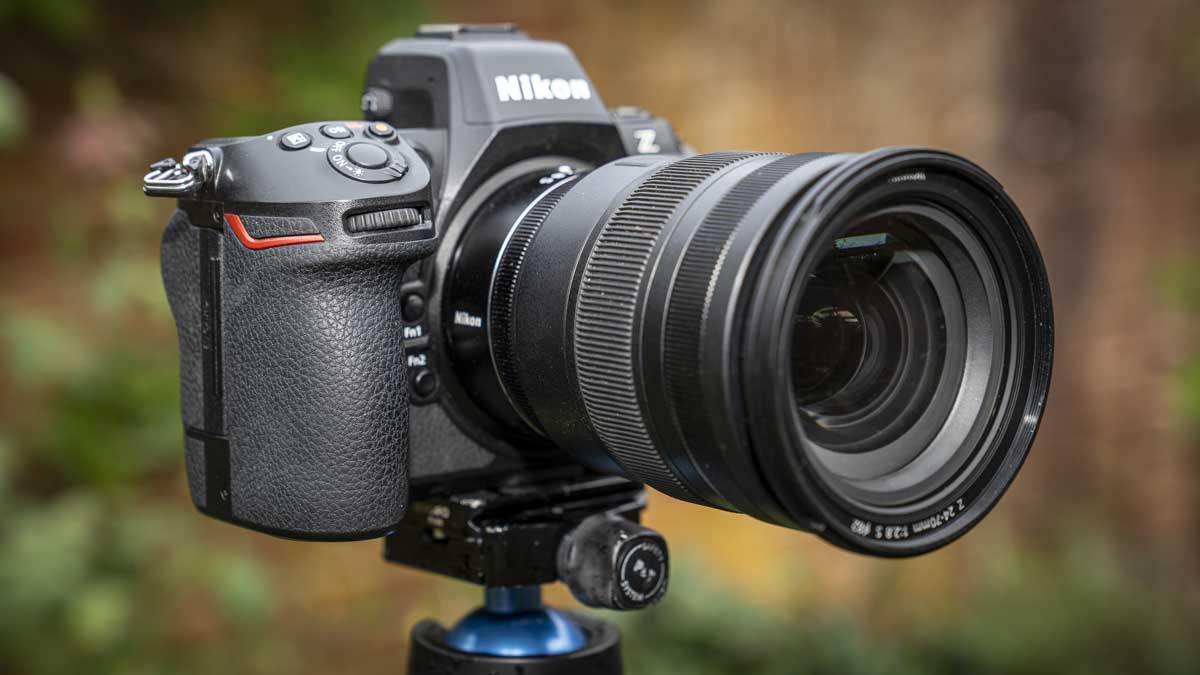
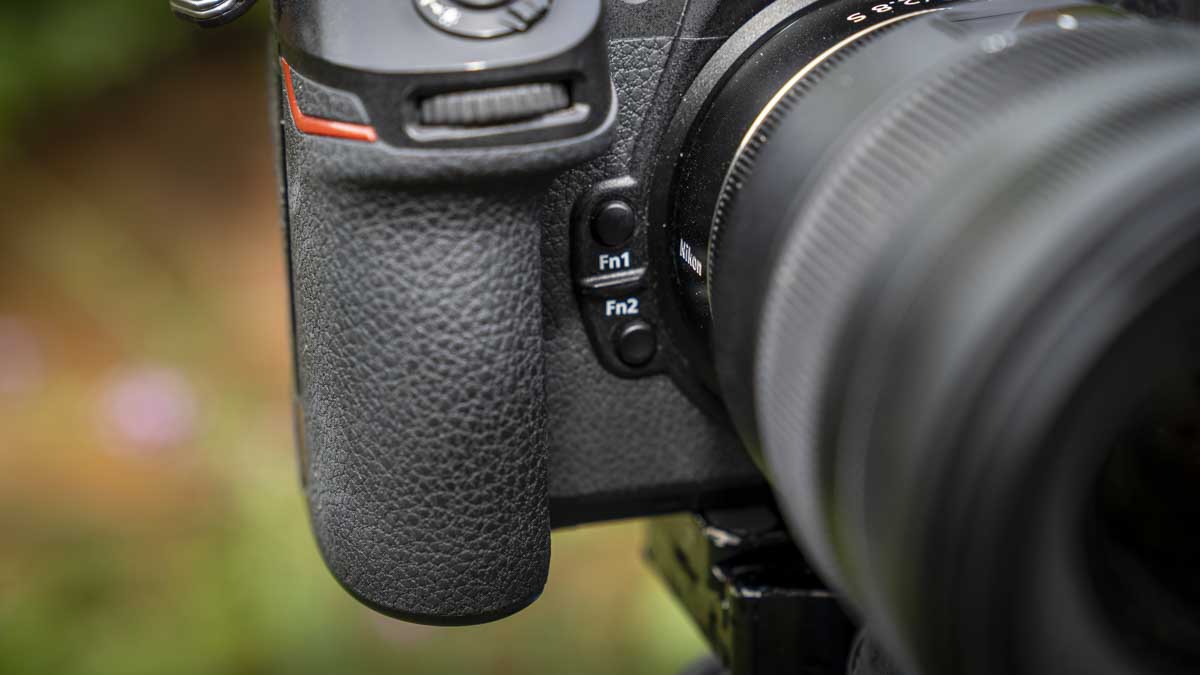
Pick up the Z8 and the first thing that you note is that it’s substantial, professional and genuinely comfortable, which is not the same as small. At 144 x 118.5 x 83mm and 910g, the Z8 is a large mirrorless camera by any normal measure; it is only compact next to a Z9. Set it beside a Z7 II, and the difference is obvious in the other direction.
The construction is what you would expect at this level, with a weather-resistant body, illuminated controls for working in the dark and a sensor shield that closes when the camera is switched off, a small thing that matters a great deal if you change lenses outdoors. The grip is deep and, as our original review noted, there is room for all four fingers beneath an index finger on the shutter, which was not true of the Z7 II and Z6 II. That holds with heavier glass fitted too.
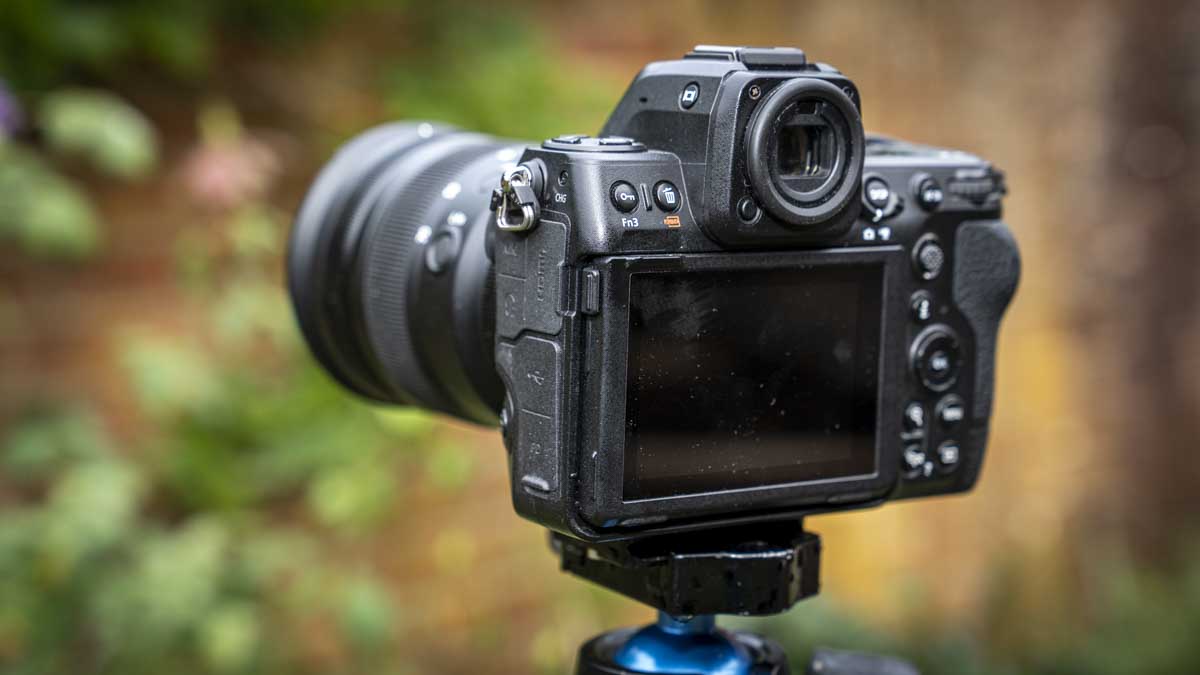
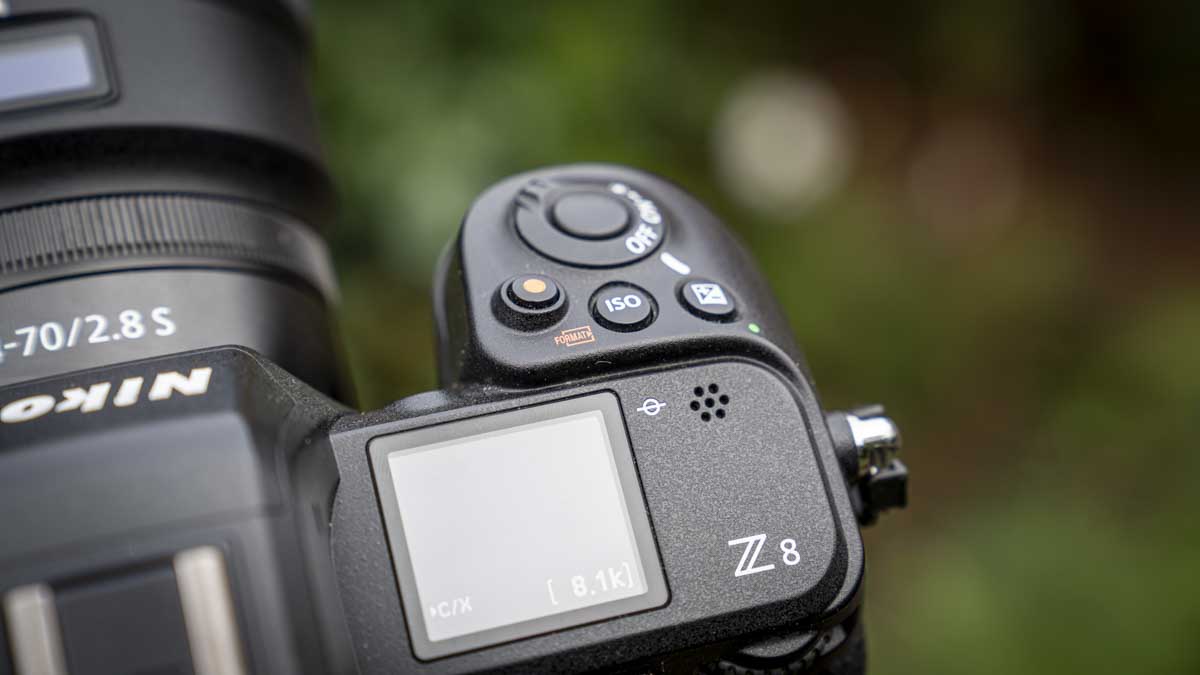
The control layout sits between the Z9 and the Z7 II, and leans towards the Z9. There is no mode dial; instead, four buttons run along the left of the top plate, covering exposure mode, drive mode, bracketing and white balance. The front and rear command dials are recessed into the body as they are on the Z9. The back is closer to the Z7 II, with fewer buttons than the Z9 carries.
Nikon Z8 Review
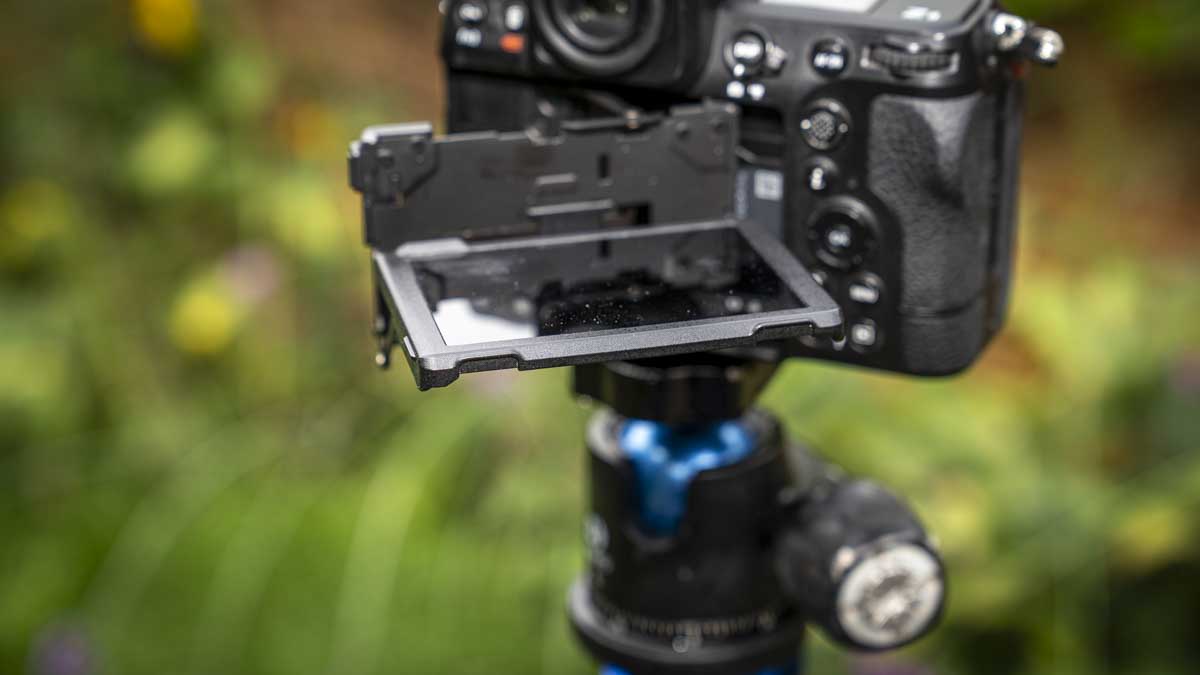
The four-way tilting 3.2in touchscreen remains one of the best implementations of the idea. It tilts in both landscape and portrait orientation; it feels robust, and because it does not swing out to the side, it never catches cables in the ports. The trade-off is that it cannot be turned to face the front, so this is still not a vlogging camera without an external monitor.
The 0.5in 3.69m-dot viewfinder is the one specification that has dated. It’s blackout-free and runs at 3,000 nits, which in practice matters more than raw resolution for following a moving subject, but rivals launched since have moved past it on pixel count.
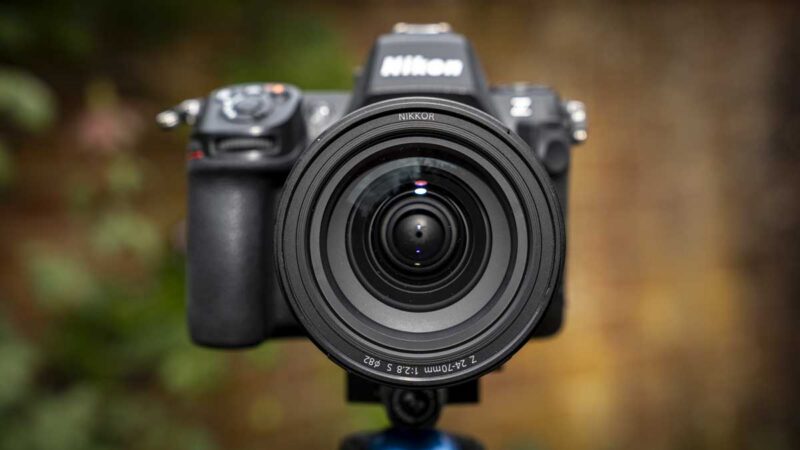
Throughout this test I’ve been using the Nikon Z8 alongside the Nikon NIKKOR Z 24-70mm f/2.8 S and
Nikon NIKKOR Z 50mm f/1.8 S

Features
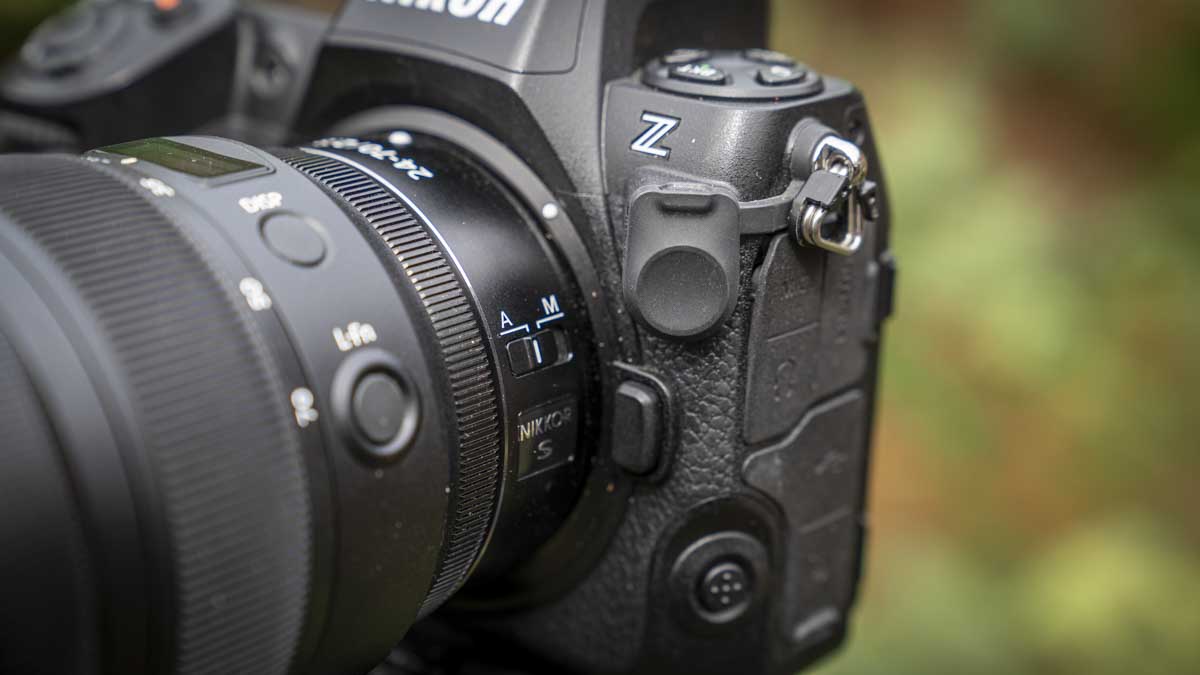
This is the section that has changed most since 2023, as the current firmware is far more capable than the one that was reviewed at launch.
Taking a look at what firmware 2.00 added when it was released in February 2024, firstly, there was the introduction of a dedicated Birds subject-detection mode, and this was separated out from the general animal detection. Our original review tested the Z8’s subject detection extensively and concluded that while animal detection worked well, some birds confused it, and that a dedicated Bird mode would be a helpful addition. Nine months later Nikon shipped exactly that. It is rare for a review request to be answered quite so directly, but that sentiment was unanimous and had been mirrored in the majority of reviews that appeared at the time.
Alongside it came Auto Capture, which lets the camera fire on its own when a subject meets criteria you set for motion, direction, distance or subject type, genuinely useful for nest work, remote bodies and anything where you cannot be behind the camera. Pixel Shift arrived in the same update, merging multiple raw files into images up to 180MP. And there was a Rich Tone Portrait Picture Control, plus a long list of operability changes.
Nikon Z8 Review
The improvements the first firmware upgrade brought were already greater than we’re used to seeing, but then firmware 3.00 rolled out in June 2025.
The most interesting addition for this next set of improvements was the ability to combine Pixel Shift with focus shift or exposure bracketing, which Nikon claims as a first among full-frame mirrorless cameras, for architectural, product and fine-art work; that means a 180MP file with extended depth of field or extended dynamic range in one operation rather than three.
There is also an in-camera focus limiter, which lets you set near and far points so the lens ignores anything outside that range, the sort of feature that used to be a switch on a long telephoto and is now available across Z lenses. Add Flexible Picture Controls created in NX Studio and loaded via card, subject detection that now works in manual focus and Hi-Res Zoom, magnification to 400% for focus checking, wide-area AF custom patterns extended to 135 options, NX Field remote control, and in-camera HEIF conversion.
Nikon Z8 Review
Firmware 3.10 followed in September 2025, which is the version that I’ve been using when testing the camera, which brings with it a few more performance enhancements, but not in the same range as the first two.
The core specifications, however, have never needed changing. There is no mechanical shutter, which means silent shooting, no shutter wear, and speeds to 1/32,000 sec; the stacked sensor’s readout is fast enough that rolling shutter is a non-issue in most real shooting, and flash sync still works at 1/250 sec, or to 1/8,000 sec with Auto FP high-speed sync.
Video remains the Z8’s excellent in a camera that is outwardly focused on stills: 8.3K 60p N-RAW, 8K 30p, 4K to 120p, ProRes RAW HQ and ProRes 422 HQ internally, N-Log and HLG, with waveform, zebras, focus peaking and a red record border. Nikon quoted 8K 30p for up to 90 minutes and 4K 60p for over two hours without overheating at launch.
Nikon Z8 Review
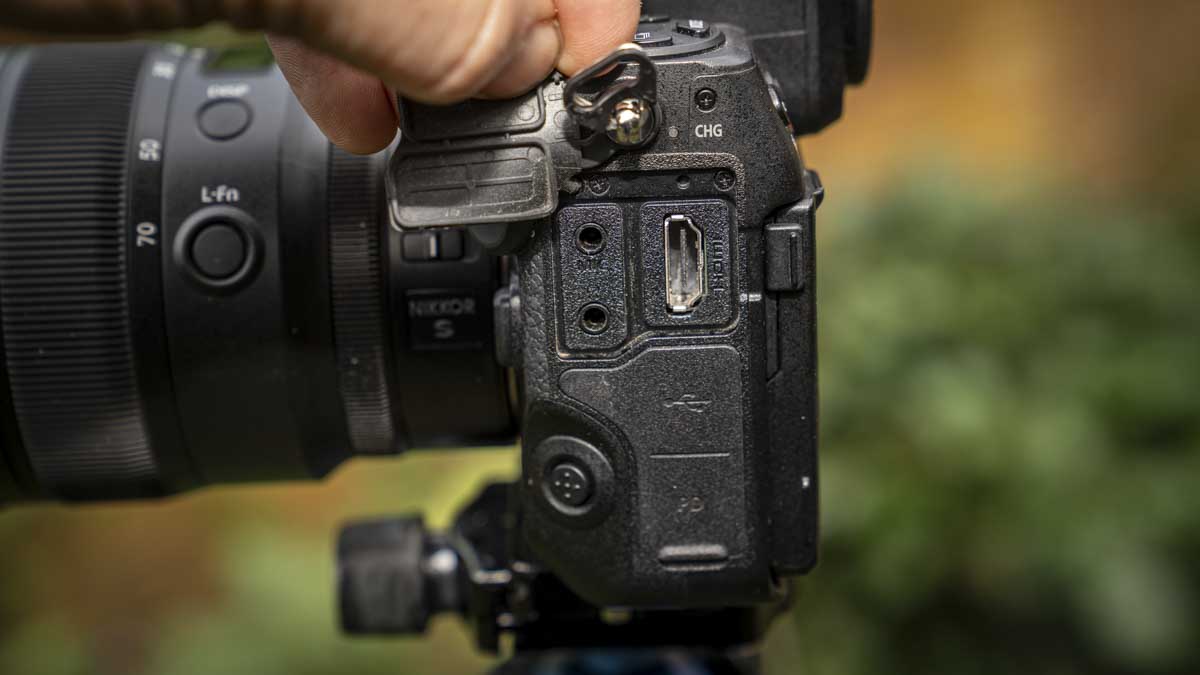
The two USB-C ports are still unusual; either will charge the camera, and the Z8 was Nikon’s first body to support USB-to-Ethernet. Note that this is not the same as a built-in Ethernet port, which the Z9 has and the Z8 does not, and there is no built-in GPS either.

Performance

Excellent, after all, this is a smaller and lighter-weight Z9 and limited only where you would expect it to be. The 45.7MP files carry the detail and resolution you’d expect with good glass, and Nikon’s noise control at this pixel count remains impressive.
Our original review put the practical ceiling at ISO 12,800, with a hint of luminance noise in shadows from ISO 3200 under close inspection, respectable results to ISO 6400, and ISO 25,600 reserved for shots that have to be got rather than shots that have to be beautiful. Dynamic range is the sensor’s real strength; a three-stop shadow lift at base ISO comes back clean, with highlights that resist blowing and shadows that do not block up.
This remains true with the latest firmware installed. This is still a very impressive camera, and the main point here is that if you’re photographing wildlife under the cover of trees, you still have a good amount of latitude with the ISO before it starts to affect the image. Meaning you can boost the shutter speed to get the image you want, even if you don’t have one of the large aperture telephoto lenses.
Nikon Z8 Review
This is where the camera is now clearly ahead of its own review. Our original testing found the subject detection quick and sticky on human and animal eyes, reliable on dancers running towards the camera at 20fps, and good enough to find animals through wire fencing. It also found that a giant tortoise defeated Auto mode until the dedicated Animal setting was selected, and that some birds caused problems.
With firmware 2.00 and 3.00 installed, the bird detection is a separate mode rather than a hopeful subset of animal detection, and the wide-area AF custom patterns give you far more control over where the camera looks.
Getting the camera to lock onto birds is where the real difference comes in, with the firmware update making all the difference and really bringing the camera up to modern standards.
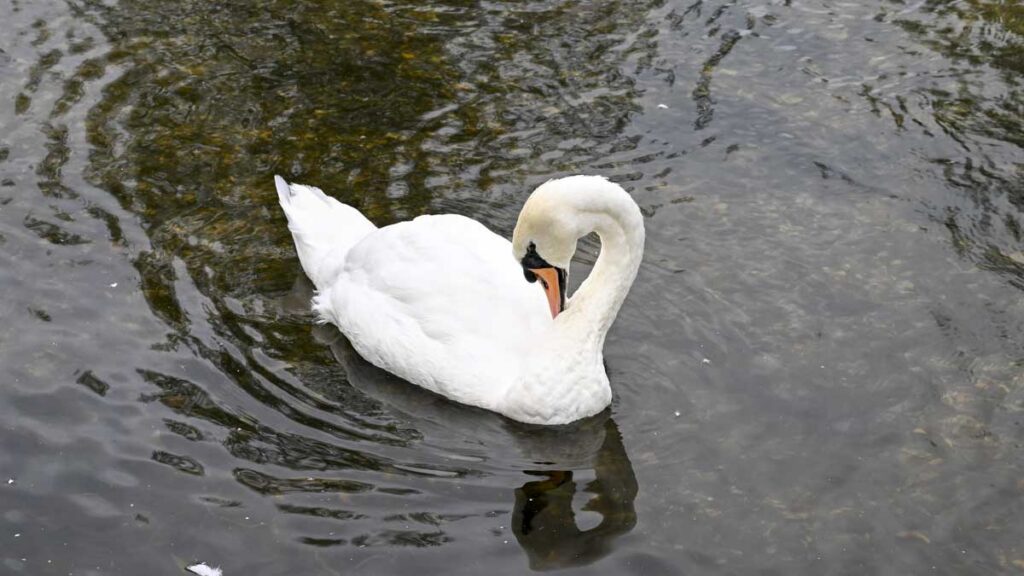
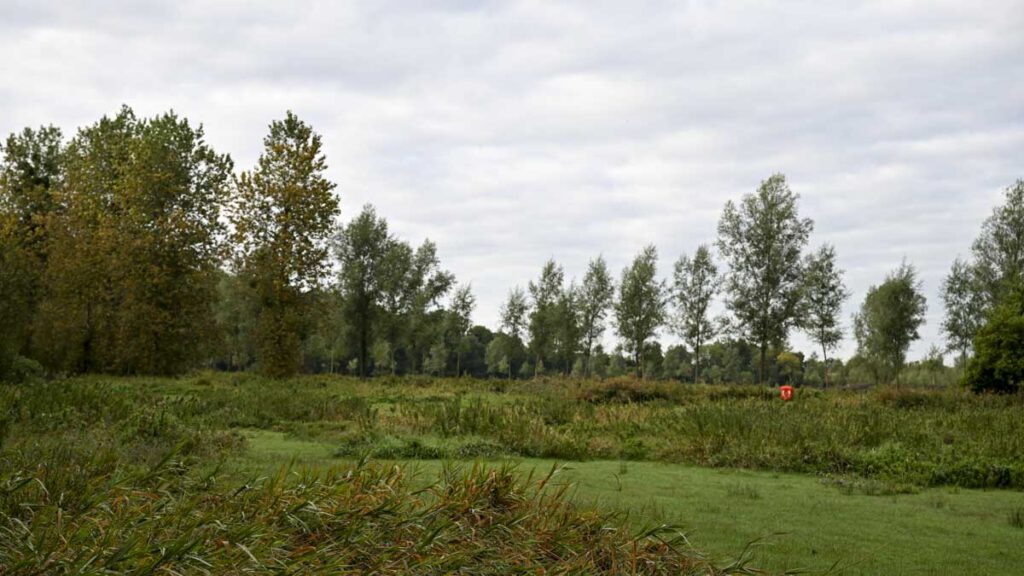
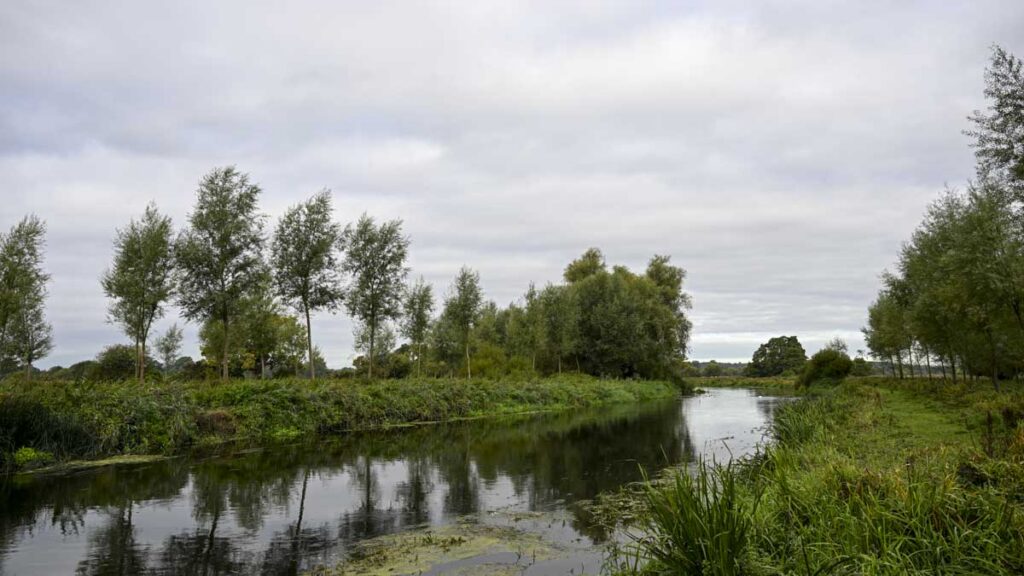
While the original subject matter wasn’t revisited, a few trips out to the forest showed just how much the camera has moved on.
Twenty frames per second in full-resolution raw is the number that matters, and the card you use decides how long it lasts. Our original review recorded 39 high-efficiency raw files at 20fps before the rate collapsed using a fast V90 SD card, against 138 of the same files on a Delkin CFexpress rated at 1,540MB/s write, after which the camera stuttered but kept shooting until the card filled.
That gap is the mixed-slot compromise in one measurement. The SD slot is genuinely useful for backup and overflow, but if you shoot action, you are shooting to CFexpress, and Nikon specifies a card with at least 1,500MB/s write for the deepest bursts and the highest video modes.
Nikon Z8 Review
For the updated test, I popped in a Lexar Professional Silver Type-B card, which our tests showed to be an ideal fit, this was coupled with aLexar Professional Silver Pro UHS-II card, which, with a maximum read speed of 280MB/s, is far slower but the near maximum for this card technology.
When it came to image stabilisation, this is good rather than class-leading. Our original review recorded sharp frames at 1/5 to 1/6 second at 70mm with the Z 28-75mm f/2.8, roughly four stops of benefit, and a 50 to 60 per cent hit rate at 1/4 second with the Z 24-70mm f/4 S at the same focal length, falling to one or two frames in ten at 1/2 second.
The second test proved similar results.
The Z8’s one genuine weakness against the Z9, and the direct consequence of the smaller EN-EL15c. CIPA figures run to 330 shots with the viewfinder and around 370 on the screen with energy saving on, against roughly 740 and 770 for the Z9. In burst shooting, the picture changes completely, with around 2,280 frames on a charge, and real-world use beats CIPA comfortably; our original review recorded 438 stills and 22 short 4K clips over two days on one charge, shooting raw and JPEG together.
In the updated test, this number dropped somewhat, but this drop can be put down to the age of the camera and battery use; whereas the original review’s camera and battery were new, this refresh review has utilised a second-hand model.

Final Thoughts

The Z8 was an easy camera to recommend in 2023 because it put the Z9’s capability into a body most photographers would actually carry. It’s an easier camera to recommend in 2026, which is not something that can be said of much three-year-old hardware.
The reason is simply that Nikon kept working on it. A bird-detection mode that the original review asked for, Auto Capture, Pixel Shift, a focus limiter, 180MP composites with focus stacking built in, none of that existed at launch; all of it arrived free, and none of it required a new body. Meanwhile, the camera has not been replaced: the current expectation is a Z9 II before a Z8 II, and nothing is confirmed for either.
What has not changed is the shortlist of compromises. Battery life still trails the Z9. The card slots are still mismatched. It is still 910g, still a large camera in the hand, and the viewfinder resolution has been overtaken. None of those is new complaints, and none of them has been fixed, because none of them can be fixed in software.
The number that has moved most is the price. At £3,999 in 2023, this was a considered purchase. At around £2,270 used, with two major firmware updates already applied and a free recall programme that has had three years to work through the affected bodies, it is one of the strongest value propositions in professional mirrorless.

Should you buy the Nikon Z8?

Buy it used at £2,269 to £2,349, where you are getting a current, actively supported professional body with three years of free feature additions already installed, for a little over half its launch price. Buy the Z9 instead if your work depends on all-day battery life or two matched CFexpress slots, and look at the Z6 III if 45.7MP is more resolution than you need and the money matters more than the burst depth.
One thing to do before you buy used. The Z8 was subject to two Nikon service advisories shortly after launch — one covering a lens mount tolerance problem that could stop a lens from locking properly, and one covering strap eyelets that could work loose. Both repairs are free regardless of warranty status, and Nikon publishes a serial-number checker. The serial is on a sticker behind the tilting screen, so it takes a moment to check a body before you commit, and any 2023-vintage camera is worth checking.

Buy it if

You want Z9 performance without the dual grip
You shoot wildlife, sport or weddings
You need 8K and internal N-RAW
You are buying used and want maximum capability per pound

Don’t buy it if

You need all-day battery life
You want two matched CFexpress slots
You need a genuinely compact body
You vlog to a front-facing screen

Alternatives

Nikon Z9: the dual-gripped original, with roughly double the battery life, two CFexpress slots, built-in Ethernet and GPS. Heavier and larger, and the right answer if your work is all-day or tethered.
Canon EOS R5 Mark II: the closest rival on paper for hybrid shooters, with a stacked sensor and comparable video credentials. The choice comes down to which lens system you are already in.
Nikon Z6 III: fewer pixels and a partially stacked sensor rather than a fully stacked one, but a considerably lower price and much of the same handling. The sensible option if 45.7MP is more than your work needs.

Frequently Asked Questions

Is the Nikon Z8 still worth buying in 2026?

Yes, and more so used than new. Firmware 2.00 and 3.00 added bird detection, Auto Capture, Pixel Shift to 180MP and an in-camera focus limiter at no cost, so a used body running current firmware is more capable than the camera reviewed at launch. At £2,269 to £2,349 used against a £3,999 launch price, it is exceptional value.

What is the difference between the Nikon Z8 and Z9?

The Z8 has the same sensor, processor and autofocus as the Z9 in a single-gripped body that is 430g lighter. The Z9 keeps a larger battery for roughly double the shot count, two matched CFexpress slots, built-in Ethernet and GPS. Everything else is close enough that the choice is about size and endurance.

Does the Nikon Z8 have a mechanical shutter?

No. The Z8 uses an electronic shutter only, which means silent shooting, no shutter wear and speeds up to 1/32,000 sec. The stacked sensor reads out fast enough that rolling shutter is rarely a problem, and flash sync still works at 1/250 sec, or to 1/8,000 sec with Auto FP high-speed sync.

Was the Nikon Z8 recalled?

Two Nikon service advisories were issued shortly after launch, covering a lens mount tolerance issue and strap eyelets that could work loose. Repairs are free regardless of warranty status, and Nikon provides a serial-number checker. If you are buying a 2023 body used, check the serial number behind the tilting screen before you commit.

Is a Nikon Z8 II coming?

Nothing has been announced. Current expectations point to a Z9 II ahead of any Z8 successor, and no date or specification for either should be treated as reliable until Nikon says so.