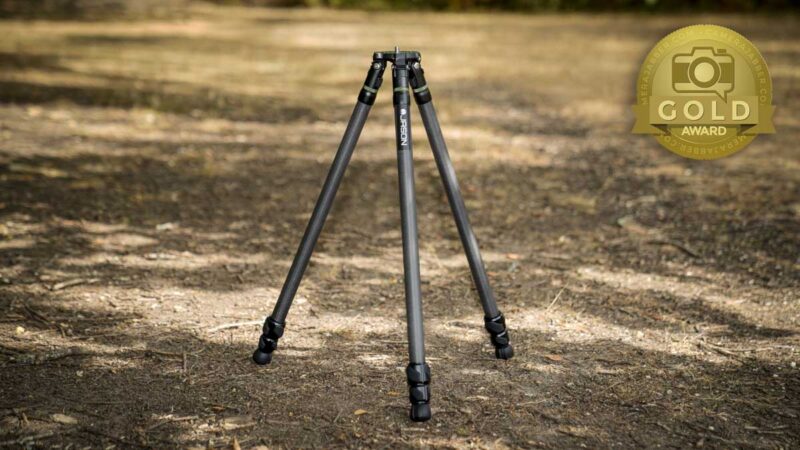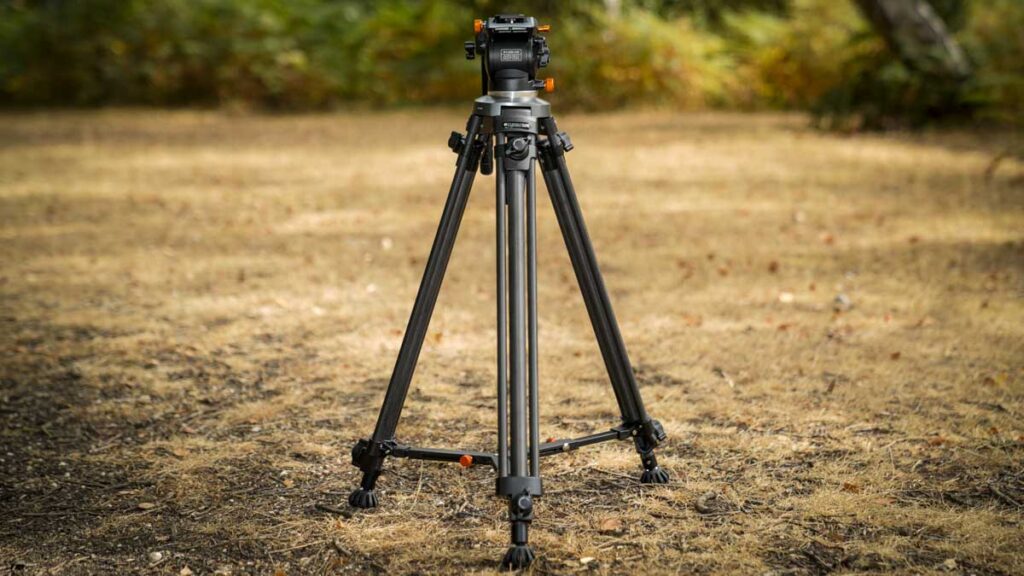

A lightweight twin-leg carbon-fibre tripod designed specifically for serious video production
Our Verdict
HUGH is one of 3 Legged Thing’s first video-only tripods, and it shows a real shift in the company’s design approach. You still have the design flares of anodised metal, but the wilder design we saw on some of the other stills accessories has been replaced with something a little more serious.
I’ve had the HUGH in for a couple of months. I’ve used it on two or three projects alongside my normal video tripods, as have members of my team. I’ve found it extremely competent. Those twin sections give the extra support you need when filming, rather than just taking stills and, coupled with the AirHed Motion head, it offers a really nice, relatively lightweight support for your camera or camcorder.
One of the main differences between this and a stills tripod is obviously the twin legs for added rigidity. Still, once again we see 3 Legged Thing’s carbon fibre, which makes the legs a little lighter than some other materials. At the top is a nice, large 75mm bowl, which is locked and released with the large knob directly below. This is pretty standard for a video tripod, but here the design makes it really easy to grip, whatever the temperature. During the test, it has been extremely hot, but through the winter months, when it’s a bit more difficult to get a good grasp, this is going to be really beneficial.
The bowl itself looks industrial, almost like a piece of tripod equipment from the 1960s or 70s. There’s a bit of an almost military design about the silver finish. I really like it, and the HUGH logo is very subtly embossed onto the side. Likewise, the AirHed Motion logo on the head has similar, almost retro styling, and it all just feels great.
I think the legs are absolutely spot-on, and I’ve really enjoyed using them, especially the leg-lock releases, which rotate and adjust in a very tactile way. My one issue with the HUGH is the AirHed Motion head. It’s nicely designed, don’t get me wrong, but the closeness of a lot of the levers is just a little bit tight. It’s something you get used to, and it’s actually quite difficult to see how they could get all of the levers they have on there while still providing plenty of space. I don’t think that’s possible, but it’s just one thing. The one to watch out for is the tilt friction adjustment and lock. A few times, I’ve gone to tighten the friction and got my thumb caught between the adjuster and the lock. I would say you do it a few times, and you learn, but I haven’t seemed to.
There’s also the panning lock, which again is quite close to the top of the crown. Again, no major issue, just something to be aware of.
What I really like is that they have included the spreader as part of the purchase price, and it’s integrated into the tripod, which isn’t always the case. Quite often you have to buy the spreader separately, and here it’s simply made from plastic, but it’s good quality and has all the usual markings. I would probably Tippex those markings so they’re a bit more visible, as it’s all just one-colour moulded plastic, but it locks, tightens, and works perfectly well.
As a mid-range video tripod for enthusiasts and content creators, this is absolutely spot-on, at a price that is way less than many of the more serious tripods on the market. What 3 Legged Thing has done here is take its tripod expertise and apply it to a video tripod, while also taking a step toward making it look a lot more serious. I’ve actually been really impressed with just how functional and useful it is.
What is the 3 Legged Thing HUGH?
The 3 Legged Thing HUGH is a carbon-fibre video tripod made with Japanese 3K carbon, so it’s about the highest-quality carbon fibre you can go for. Compared with its stills tripods, it has a three-section twin-leg design, which is synonymous with video tripods and just offers that little extra rigidity.
Click here to purchase the 3 Legged Thing Hugh directly from 3 Legged Thing
The HUGH is a video-centric tripod, so while you could use it for stills, it kind of defeats the purpose of its design. So if you’re a content creator or shoot video for pretty much any level of production, this is a great lightweight option. It’s also, I would say, in the mid-range of video tripods for this market, which is reflected in the well-balanced price.
One of the main features of any video tripod is its bowl. This is essentially a bowl underneath the head that lets you level the camera, usually adjusted with a large bolt at the bottom that releases the head so the bowl can move freely and you can level it. Here, they’ve opted for the standard 75mm bowl, which means that although it does come with the AirHed Motion head, you can also swap it out for another manufacturer’s video head if you want.
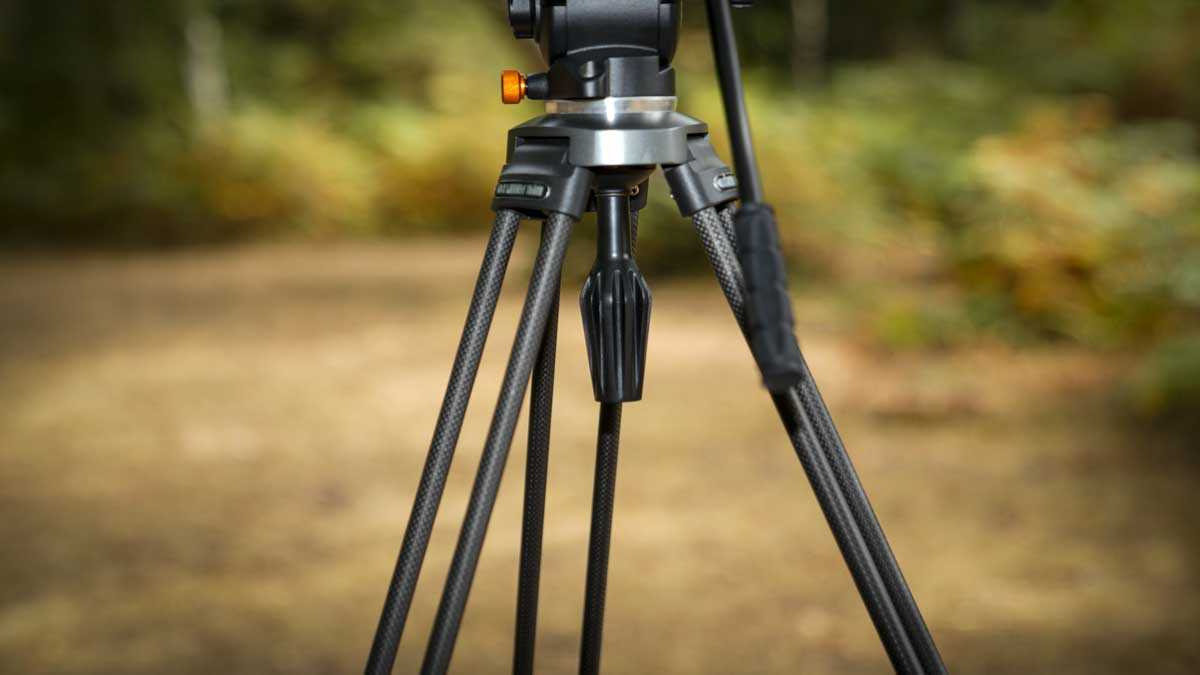
The 75mm bowl release, this is the best
Added into the structure, there’s obviously a mid-level spreader, and the leg length, as with the stills tripods, is variable.
The version of the HUGH that I looked at is the AirHed Motion Kit, with the HUGH legs and the AirHed Motion head, which essentially gives you everything you need to start filming besides the camera and filming kit.
Specification
Material: 3K carbon fibre
Leg design: Twin tube
Leg sections: Three
Head fitting: 75mm bowl
Maximum height: 150cm
Kit maximum height: 161cm
Minimum height: 66.5cm
Kit minimum height: 78cm
Folded length: 69cm
Kit folded length: 81cm
Tripod weight: 1.8kg
Kit weight: 2.9kg
Claimed tripod load: 30kg
AirHed Motion load: 5kg
Feet: Removable rubber
Spikes: Integrated stainless steel
Brace: Mid-level
Tripod price: £229.99
Kit price: £299.99
Warranty: Five years (3 Legged Thing)
Leg design: Twin tube
Leg sections: Three
Head fitting: 75mm bowl
Maximum height: 150cm
Kit maximum height: 161cm
Minimum height: 66.5cm
Kit minimum height: 78cm
Folded length: 69cm
Kit folded length: 81cm
Tripod weight: 1.8kg
Kit weight: 2.9kg
Claimed tripod load: 30kg
AirHed Motion load: 5kg
Feet: Removable rubber
Spikes: Integrated stainless steel
Brace: Mid-level
Tripod price: £229.99
Kit price: £299.99
Warranty: Five years (3 Legged Thing)
Build and Handling
The HUGH is definitely a 3 Legged Thing, but there are a few subtle changes to the design compared with what we’ve seen in the past. The anodised options are still there, and I’ve gone for the option with the copper-orangey finish on some of the tightening knobs, which are really just accent colours. Then the legs are beautifully finished in woven carbon-fibre tubing. They look great, and you can feel the quality as you lift and start to use the tripod. But it all feels a little bit more subdued than some of the tripods that we’ve seen in the past and, actually, as I started to look at some more of their video tripods, I could see that this is a theme: 3 Legged Thing is taking the video market a little bit more seriously, or should I say aiming at the professional market?
Looking at those legs, they are premium woven carbon-fibre tubing from Japan, and they have a really good, high-quality look. Their strong torsional rigidity makes them ideal for video.
Rather than the single legs we’re used to with stills tripods, we’ve got three-stage leg extensions, with the top section twin-tubed and the bottom two single-section, ensuring maximum rigidity when they’re set at video height or waist height. There’s also a spreader in the middle that just adds to how stable this feels when it’s set up.
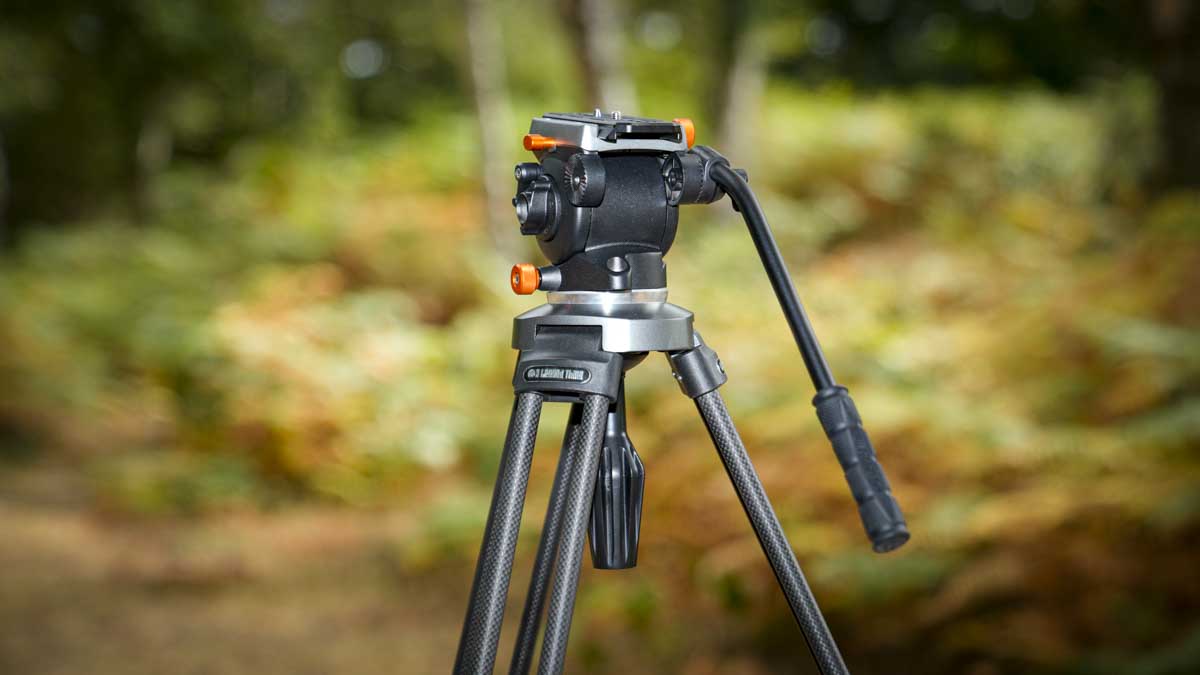
It all felt surprisingly solid for something so lightweight
When you compare the size and weight of this video tripod against more traditional options, you really see the difference that carbon fibre and modern materials make. Whilst it offers superb rigidity, it’s far, far lighter.
As you’d expect, those legs are fully adjustable, so you can set the height as needed. At the bottom are simple rubber feet, which again pivot so you can find decent purchase on all sorts of surfaces. The feet are rubber but, if you spin them round, they reveal small metal spikes for soft ground, which is a really nice feature.
As mentioned, the 75mm bowl simplifies levelling, and the tripod weighs 1.8kg, which makes it portable. It packs down to 69cm in total length and can be carried in the padded carry bag, which is, of course, included.
Features
A quick run-through of the video tripod features, although I have covered most of this already. Worthy of note is the twin-leg video construction, with the upper section using twin tubes while the lower sections of the three-section legs are single tubes. The legs are made of Japanese 3K carbon fibre, which adds extra rigidity, and each extension locks in place with a twist lock. These are different from the 360° round-the-leg locks you see on stills tripods; instead, they’re a dial you turn to lock and unlock, in a more common video-tripod style.
The leg angles are also fully adjustable, but again this differs from stills tripods because there’s no set-angle adjustment at the top of the leg section. Instead, you spread the legs to the width you want, then use the spreader to pull them back in or push them out to maximum width. Once you get that width, you can then lock the legs into place with the adjusters on the spreader. Anyone who’s used a video tripod before will find this perfectly natural. For those coming from a stills tripod, it does take a little explanation, but it makes sense once you’ve got the product in front of you.
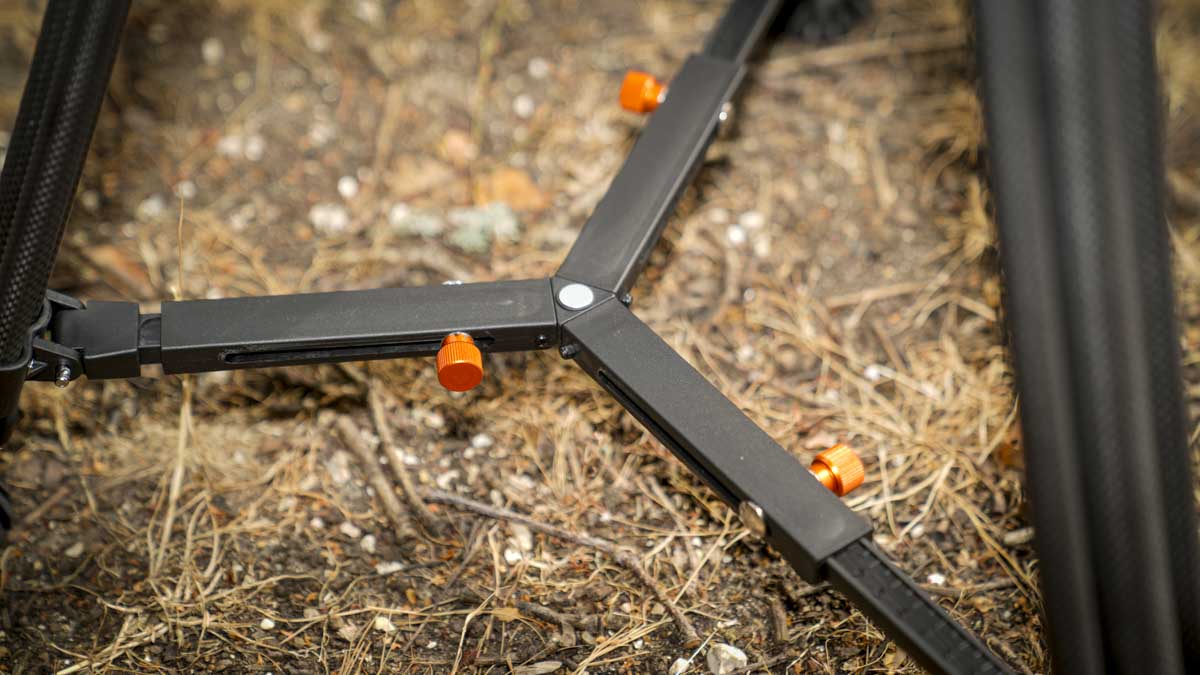
A few hints of colour
Again, this is a standard 75mm bowl. This is very common with this style of video tripod and lets you set the tripod down on almost any surface, then quickly adjust the bowl’s level. This is far more important than it is for stills, and I’ll go into that a little bit more in the Performance section.
Each leg has rubber feet, which you can remove and replace if needed. Integrated steel spikes run through these rubber feet if you need a really firm attachment to the floor. To be fully compatible with the AirHed Motion, and in this review, I’ve actually looked at the AirHed Motion Kit, which includes the HUGH legs and the AirHed Motion head.
Alongside the AirHed Motion head, it comes with the 501-style plate, which is pretty common, and there’s a detachable pan handle.
On the head itself, you’ve got graduated head drag, which is adjusted on the left, and there’s a locking knob there as well. Alongside those adjustments, you also have separate pan control.
Performance
Instantly, 3 Legged Thing’s HUGH is a little different from what the company has produced before, and with its three leg sections and dual tubes at the top, you get extra torsional rigidity. Sure enough, as I popped on the Sony A7 IV and started to pan and tilt the camera, you could really feel that 3 Legged Thing’s engineering and manufacturing focus on quality.
The movement is nice and smooth, and what this highlights is that even though this is a relatively small and lightweight video tripod. That spreader and this new construction style that 3 Legged Thing has started to pursue for its video-tripod line are really making a difference, especially from a more traditional video shooter’s standpoint.
There are video or stills tripods that are exceptionally good, and many other manufacturers are going through that transition to a more stills-style, three-single-tube-legged design, which is a great option for many content creators. But I think, as more and more content creators have set up YouTube and other social media channels over the last few years, what is apparent is that as they start to get to the point of wanting more professional video, more stable support is needed, and this is exactly where the HUGH comes in.
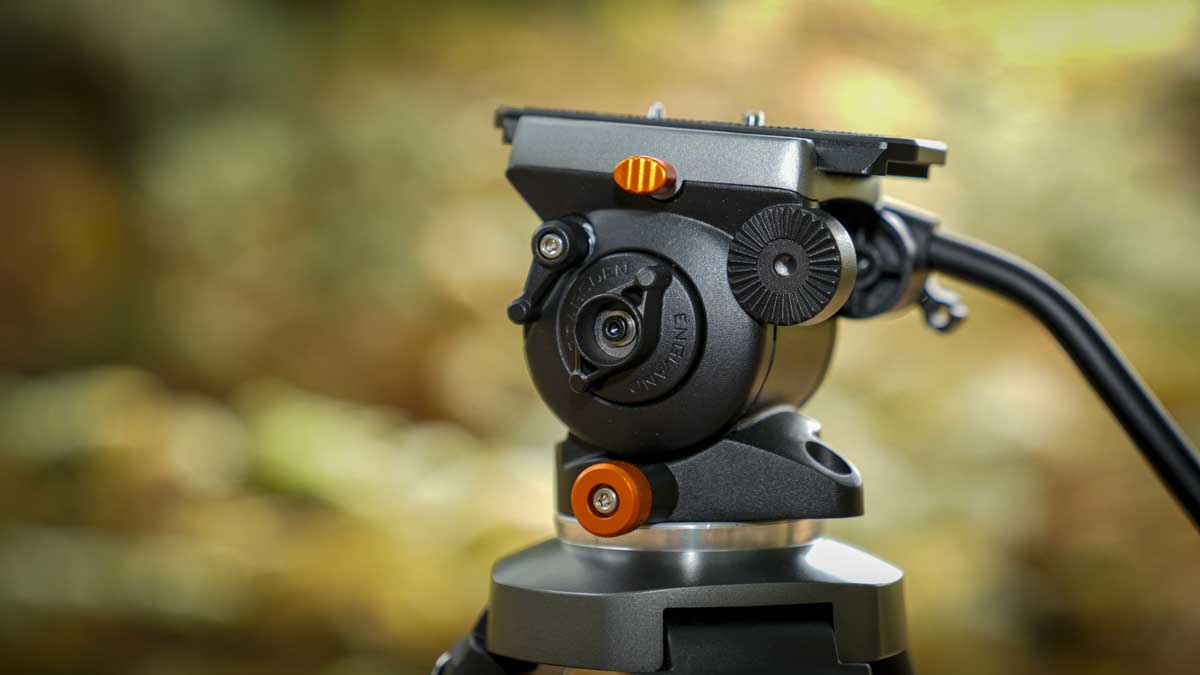
The thumb trap if your not paying attention
First of all, the torsional rigidity is superb, and with the rubber feet you can screw them down to reveal the steel spikes. It really helps reduce vibration. There’s plenty of adjustment on the AirHed Motion head as well, so that you can essentially get faster or slower pans, and the tilt stability through the head is exceptionally good. It doesn’t take long to balance the weight of your camera so you can get some really good vertical pans.
As this is a more video-centric tripod, finding level ground is essential. Essentially, you need that full pan on a level, and this is where the ball head comes in. With the 75mm option, even with the slightly larger Canon EOS R5 C mounted, it felt really beautifully balanced, even with the SmallRig attached. I’ve actually got rid of my FS7 because it feels a little restrictive compared with the quality I’m now getting out of the A7 IV. There’s just no need to have both.
So whilst this is a smaller video tripod, it works with most camcorders and cameras used across the board by content creators, and with the 75mm bowl it makes it exceptionally easy to level out.
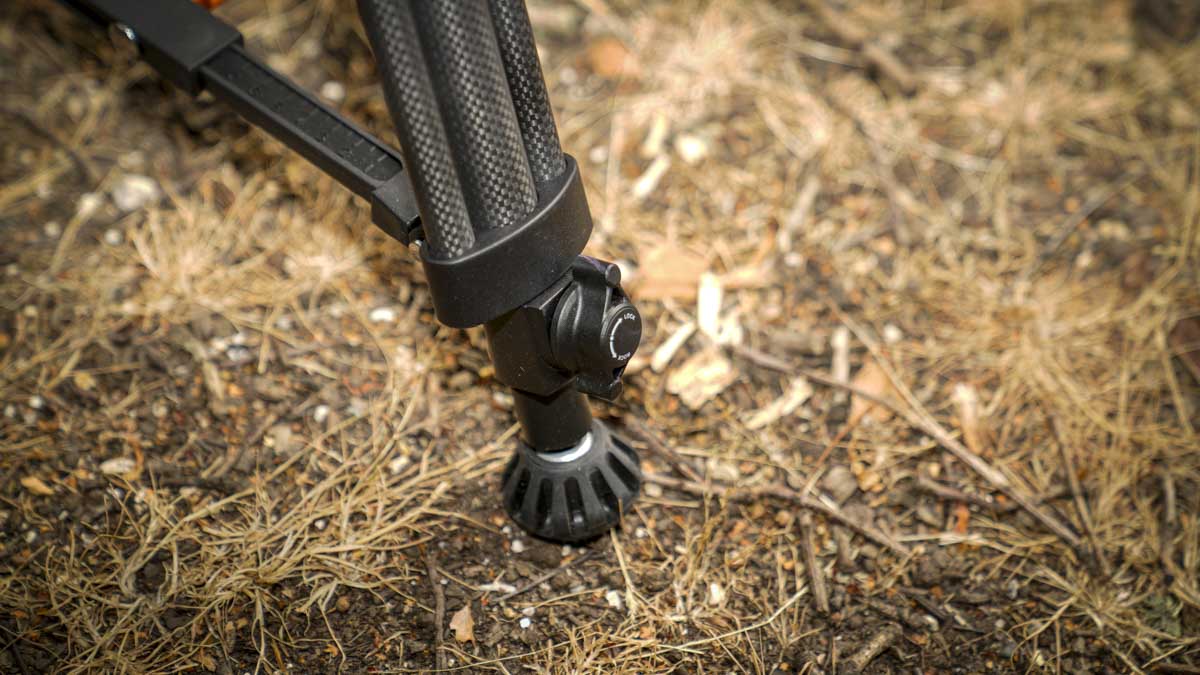
Rubber feet
Another thing I really like is the twist leg locks. These are like rotary dials and only require about a 90° turn to unlock and then lock, making it easy to unlock all three quickly, adjust the tripod height, then relock and level with the bowl in the middle, exactly what you want from this style of tripod. Then, if you do want a little extra height, there are further extensions on the bottom of the legs, which will take you to a very decent height, just above full height for me.
One of the big differences between this and a stills tripod is the leg brace, or spreader, which sits just below the top section of the legs and can be fully adjusted, with measurement markings so you can set each leg to the same distance apart. It’s made of plastic with anodised orange adjusters, but it feels like decent quality. Like many spreaders of its type, it just does the job. It’s nothing to write home about, but it feels good, solid, and well made, and on a small video tripod like this, it sits perfectly neatly within the design.
Now, one thing that I do really like about all 3 Legged Thing tripods is that they come with a really good, high-quality carry bag, and this does make a difference because if you buy a video tripod from some of the other major manufacturers, you then have to buy the bag on top, and this is normally going to set you back £50–£100. So getting one in the bundle, and for it to be such high quality, really is a bonus.
I’ve been testing this tripod for about two months in total now and on a few major projects, initially just for my B camera, but then actually swapping it over to the A camera for the one reason that it was lightweight yet stable enough to get some really decent pans in, and was easy to move around. I also like the AirHed Motion, and it all looks a lot more serious than some of their previous stills tripods which, whilst the bright colours are really nice, can sometimes distract others from the work you’re supposed to be doing. Sometimes you just don’t want pure aesthetics because they draw too much attention to themselves.
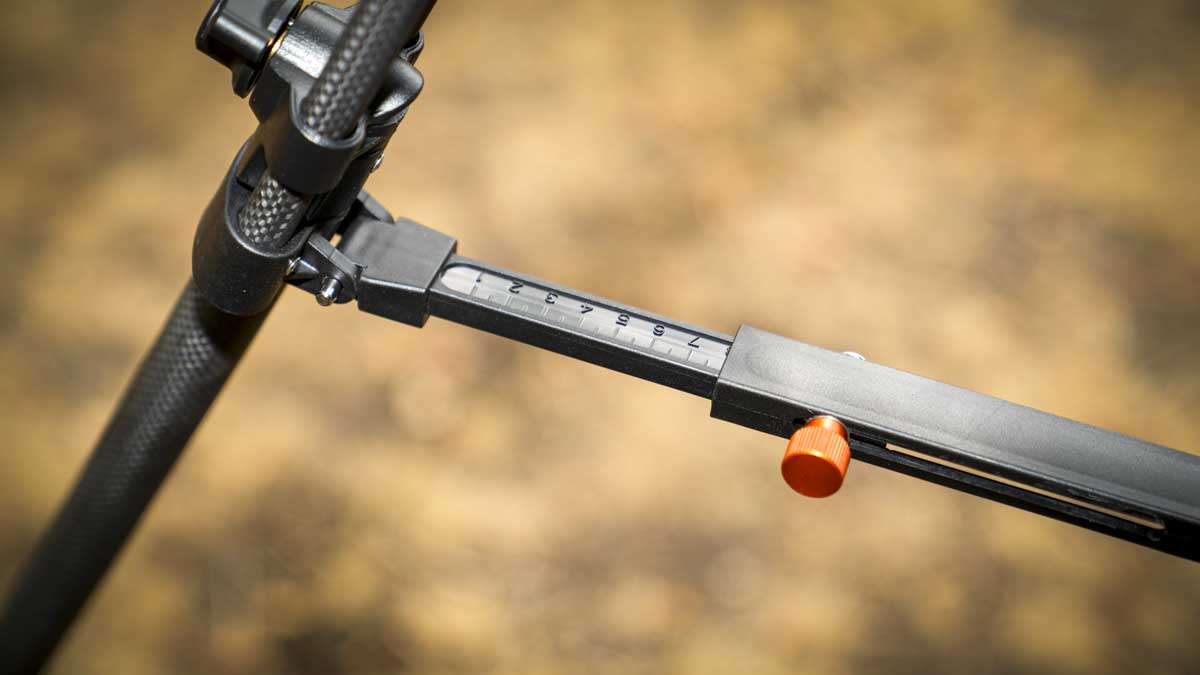
It has measurements so you know what distance it is
The build and speed of adjustment are excellent, and used with the AirHed Motion, I’ve found it a really good lightweight setup. In many cases, I’ve started using it as one of my main tripods. My one small issue with it is the tilt lock. It’s very close to the tilt-release dial and, on occasion, you can just get your thumb slightly caught. You do it a few times, and you learn, but then you go to use another tripod, then back to this one, and it happens again. But it’s just something I’ll get used to.
Final Thoughts
The HUGH is a video tripod from 3 Legged Thing that breaks away from its usual bright and very distinctive design. You can still tell it’s a 3 Legged Thing tripod, but it has a certain retro air, especially with the silver crown. However, they’re also taking things a lot more seriously, and you really do have to in the cinematography world, even when you go across to content creators. I’ve been surprised by just how serious that industry is becoming.
Here you have a video tripod that’s really good and solid. It’s small, lightweight, and perfect for today’s mirrorless cameras, even with the cages, monitors, and everything else we’re starting to see mounted.
The fact is, its lightweight design, with a twin leg at the top going down to those two single sections, gives you a good amount of height adjustment, and with those leg locks it’s really quick and easy to adjust. I also like that 3 Legged Thing has really thought about the feet: you have rubber parts on the base that can be screwed around to reveal the spikes for soft ground, and it’s quick and easy to set up, which I also really like.
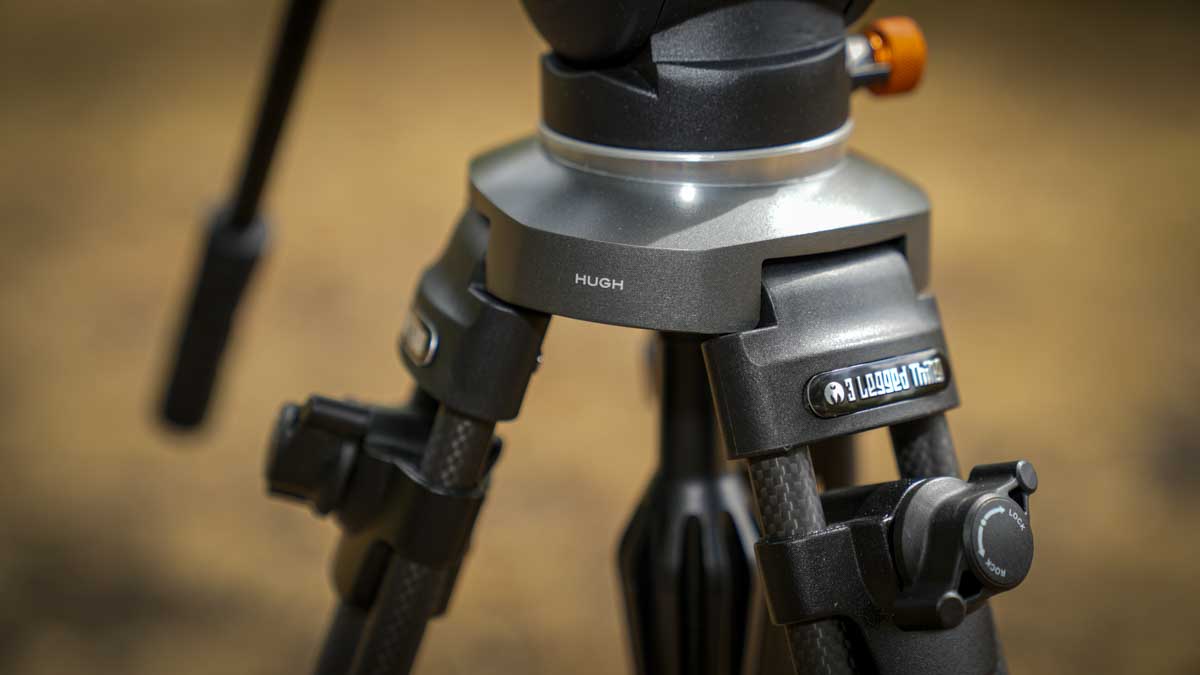
Looks a little retro, but I like it
The 75mm bowl is really useful and, if you don’t get on with the AirHed Motion, you can also replace it with another video head you might already own, and it’s fully compatible. 3 Legged Thing has been really careful to make sure everything is pretty much standardised, and this is one of the things with the video industry: people buy kit, and they use it for years, and if they have to make a change, they hate it. So having a good, lightweight set of legs that people can use with the head they’re used to makes a real difference.
What I really like is that, at 1.8kg, it is the lightest tripod of this type I have used, and that’s what makes it so versatile, especially with that spreader just below the top section. That helps you get the distance between the legs exactly right, and you’ve got plenty of flexibility in how low you can get this tripod. It’s not down to ground height as you get with a stills tripod, but it’s still pretty low to the ground. Likewise, if you want to go the other way, it will go just above head height, so it gives you plenty of flexibility for shooting angles.
Over the course of the test, I’ve been really impressed by how good this video tripod is, and I really like that it’s lightweight. It feels really good and robust, and it loses some of the more in-your-face design elements that we’ve seen from 3 Legged Thing in the past. I even had to give them a quick call to check which model it was because I’d missed the fact that HUGH had been embossed in a very discreet manner on the crown.
While at first I felt the tripod, especially the bowl, looked a little bit retro, I’ve actually come to really like it. It just feels like a solid piece of kit, to the point where it’s the one that always travels now in the van alongside the 3 Legged Thing Punks stills tripod, which is still going and is still one of the best tripods I’ve ever, ever used.