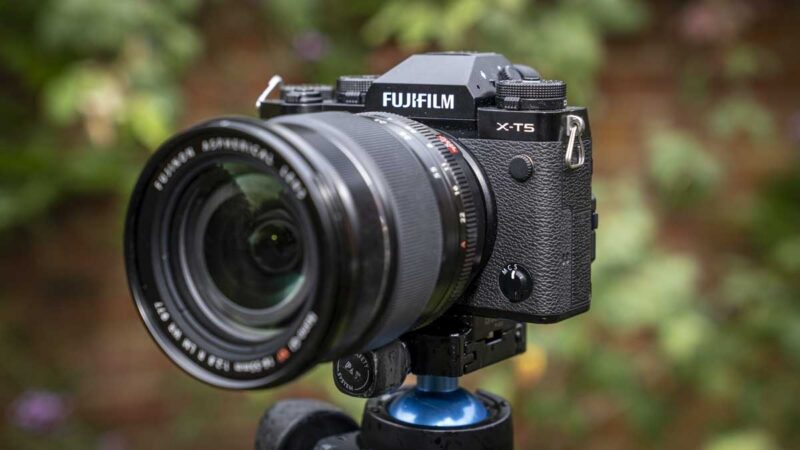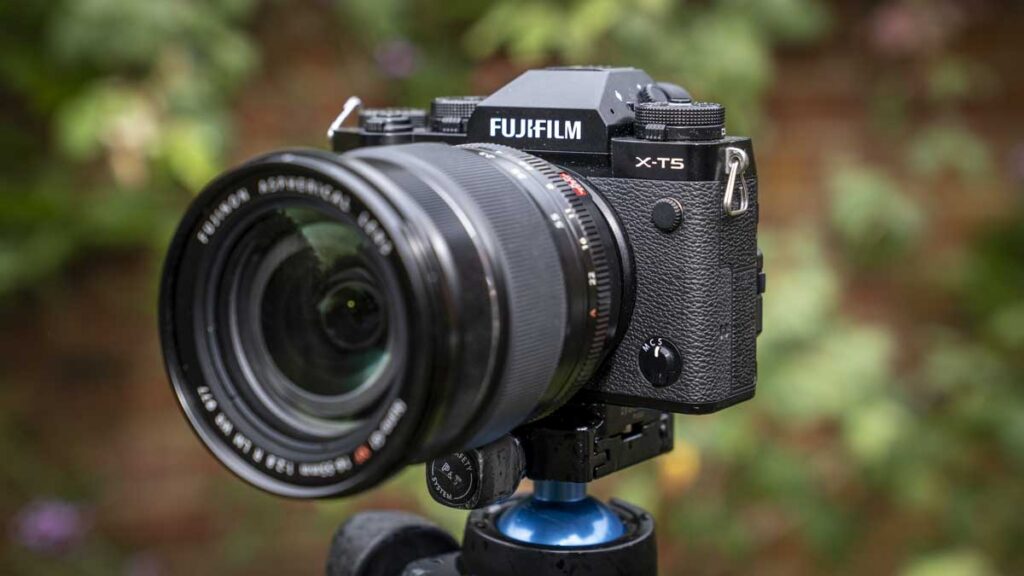

A high-resolution APS-C camera built around traditional controls and serious stills photography
Our Verdict
Some cameras are built to win specification arguments, and some are built to be used, and the X-T5 has always been firmly the second kind. Nearly four years on, it remains the most enjoyable stills camera Fujifilm makes: 40.2MP of genuinely superb detail, in-body stabilisation that earns its seven-stop rating, three dials on the top plate that tell you what the camera is doing before you switch it on, and colour out of camera that no rival has matched. For landscape, travel, street and portrait work, I would take it over almost anything at the price.
It’s not a sports camera, and it never was. The autofocus, twice revised by firmware since launch, is reliable and good, but it still trails what Canon and Sony are doing, and the raw buffer runs out sooner than the 15fps headline suggests. High ISO is limited by the physics of forty megapixels on an APS-C sensor. If your work is fast action, look elsewhere.
And there is one piece of timing you need before you spend anything. New bodies sit at £1,499 to £1,549 against a £1,699 launch price, with used examples from £1,149, but the X-T6 is expected within weeks (It’s presently early September 2026), with a partially stacked sensor and much faster shooting rumoured. Whatever that camera turns out to be, it will move the X-T5’s price. Do not buy new this month.
Who it’s for: landscape, street, travel and portrait photographers who want maximum detail in a small weather-sealed body, Fujifilm shooters upgrading from an X-T3 or X-T4, and anyone who would rather set exposure with dials than menus.
What is the Fujifilm X-T5?
Every camera range eventually has to decide what it’s for, and in 2022 Fujifilm made that decision unusually clearly. The X-H2 and X-H2S took the professional video and high-speed work, with deep grips, full-size HDMI and PASM dials. That freed the X-T line to return to what its owners actually wanted: a photographer’s camera.
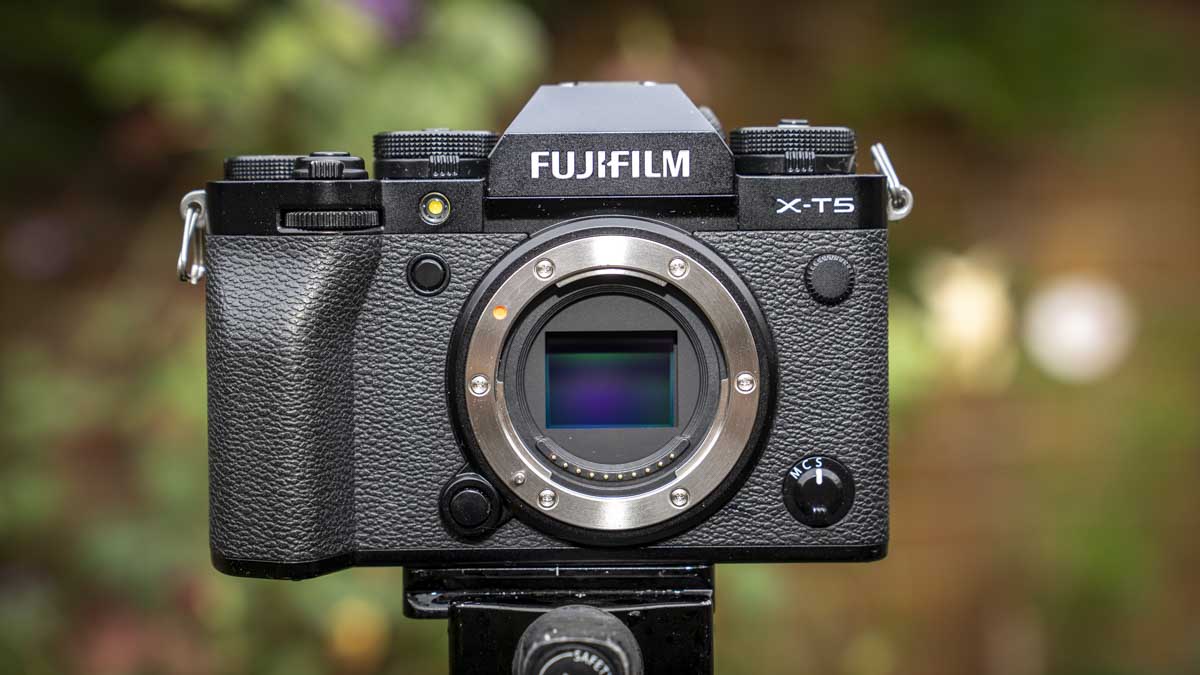
So the X-T5 is an enthusiast APS-C mirrorless body built around the same 40.2MP X-Trans CMOS 5 HR sensor and X-Processor 5 as the X-H2, in a smaller magnesium-alloy shell with three exposure dials on the top plate and a three-way tilting screen. It weighs 557g ready to shoot, is weather-sealed, and is closer in size to the original X-T1 than to the X-T4 it replaced.
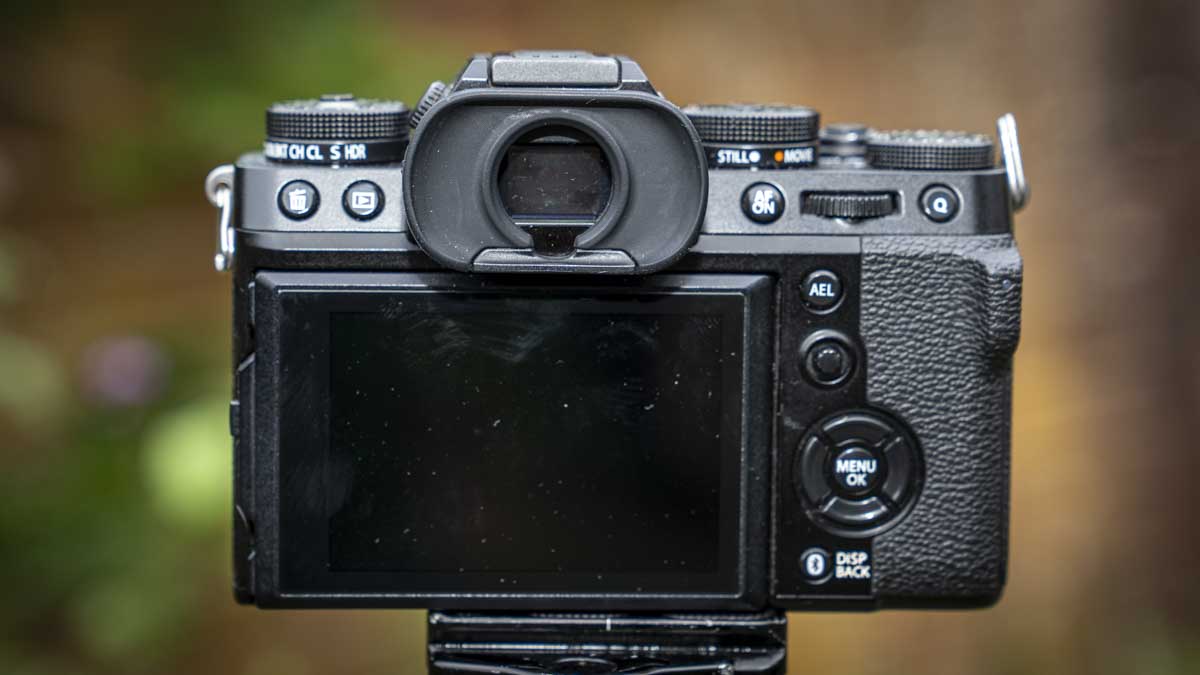
The three-way tilting screen is the clearest statement of intent. The X-T4’s vari-angle panel went, and the X-T3’s tilting mechanism came back, because X-T owners said so. It tilts for both landscape and portrait shooting, and it cannot face forwards, which rules out vlogging and bothers almost nobody who buys this camera.
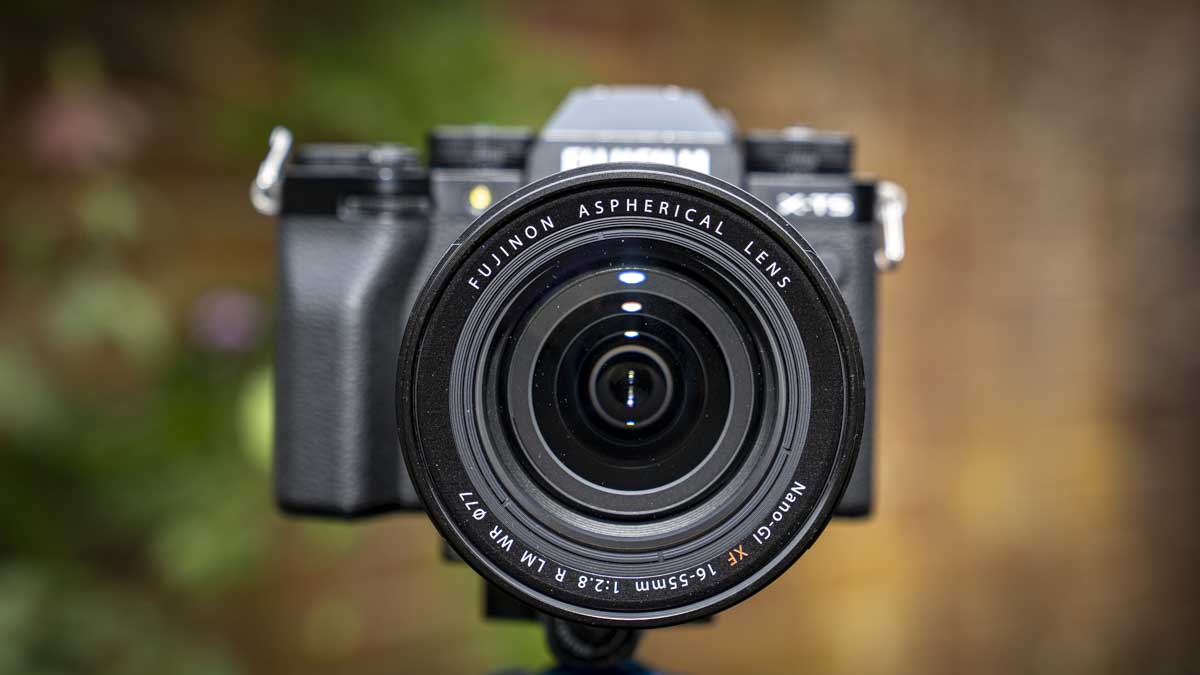
I have been out shooting with the X-T5 again alongside my Sony A7 IV to see how nearly four years have treated it, and the short answer is that Fujifilm has kept working on it. What was true at launch is still true; several things that were not true at launch are true now.
Specification
Camera type: Mirrorless, APS-C
Announced: 2 November 2022
Sensor: 40.2MP X-Trans CMOS 5 HR BSI APS-C (23.5 x 15.6mm)
Processor: X-Processor 5
Lens mount: Fujifilm X
ISO: 125-12,800, expandable to 64-51,200
Stabilisation: 5-axis in-body, up to 7 stops
Mechanical burst: Up to 15fps, no crop
Electronic burst: Up to 20fps with 1.29x crop
Mechanical shutter: Up to 1/8,000 sec
Electronic shutter: Up to 1/180,000 sec
Video: 6.2K up to 30p (1.23x crop), DCI 4K up to 60p (1.14x crop), 4K HQ oversampled from 6.2K
Slow motion: Full HD up to 240p
Video depth: 10-bit 4:2:2 internal, F-Log2, 12-bit ProRes RAW or Blackmagic RAW via HDMI
Autofocus: Hybrid, 100% phase-detection coverage, 3.33m phase-detection pixels, to -7EV
Subject detection: Faces and eyes, animals, birds, cars, motorcycles, aircraft, trains
High resolution: Pixel Shift Multi Shot, 20 frames composited to 160MP
Film simulations: 20, including REALA ACE, added in firmware 4.00
Viewfinder: 0.5in 3.69m-dot OLED, 0.80x magnification
Screen: 3in 1.84m-dot three-way tilting touchscreen
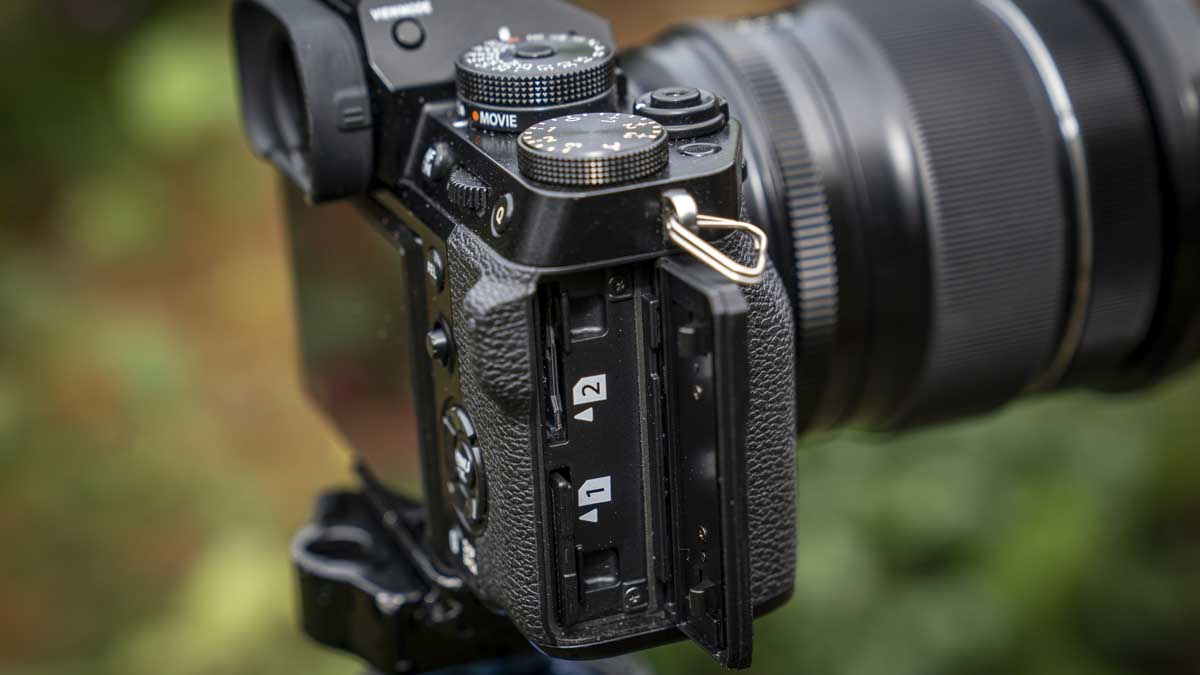
Storage: 2x SD UHS-II
Battery: NP-W235, approx. 580 frames normal / 740 economy
Connectivity: USB-C, micro HDMI, microphone input, no headphone socket
Dimensions: 129.5 x 91 x 63.8mm
Weight: 557g with battery and card / 476g body only
Launch price: £1,699 (November 2022)
Price today: £1,499-£1,549 new / £1,149-£1,309 used (MPB)
Announced: 2 November 2022
Sensor: 40.2MP X-Trans CMOS 5 HR BSI APS-C (23.5 x 15.6mm)
Processor: X-Processor 5
Lens mount: Fujifilm X
ISO: 125-12,800, expandable to 64-51,200
Stabilisation: 5-axis in-body, up to 7 stops
Mechanical burst: Up to 15fps, no crop
Electronic burst: Up to 20fps with 1.29x crop
Mechanical shutter: Up to 1/8,000 sec
Electronic shutter: Up to 1/180,000 sec
Video: 6.2K up to 30p (1.23x crop), DCI 4K up to 60p (1.14x crop), 4K HQ oversampled from 6.2K
Slow motion: Full HD up to 240p
Video depth: 10-bit 4:2:2 internal, F-Log2, 12-bit ProRes RAW or Blackmagic RAW via HDMI
Autofocus: Hybrid, 100% phase-detection coverage, 3.33m phase-detection pixels, to -7EV
Subject detection: Faces and eyes, animals, birds, cars, motorcycles, aircraft, trains
High resolution: Pixel Shift Multi Shot, 20 frames composited to 160MP
Film simulations: 20, including REALA ACE, added in firmware 4.00
Viewfinder: 0.5in 3.69m-dot OLED, 0.80x magnification
Screen: 3in 1.84m-dot three-way tilting touchscreen
Storage: 2x SD UHS-II
Battery: NP-W235, approx. 580 frames normal / 740 economy
Connectivity: USB-C, micro HDMI, microphone input, no headphone socket
Dimensions: 129.5 x 91 x 63.8mm
Weight: 557g with battery and card / 476g body only
Launch price: £1,699 (November 2022)
Price today: £1,499-£1,549 new / £1,149-£1,309 used (MPB)
Build and Handling
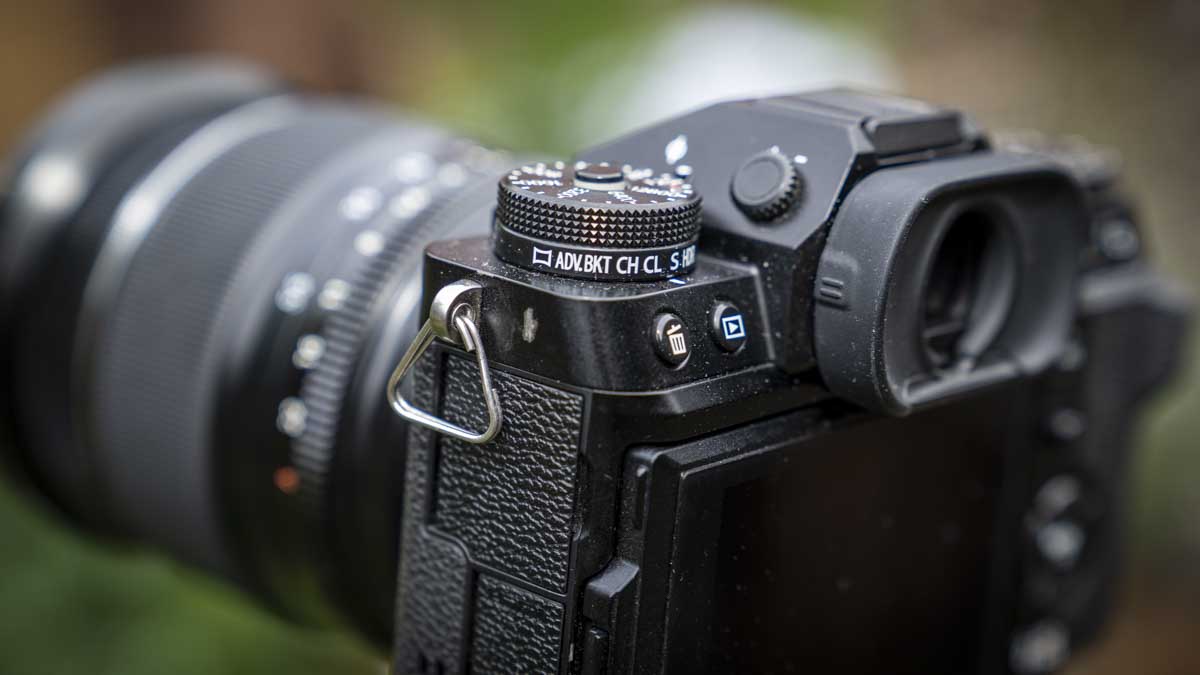
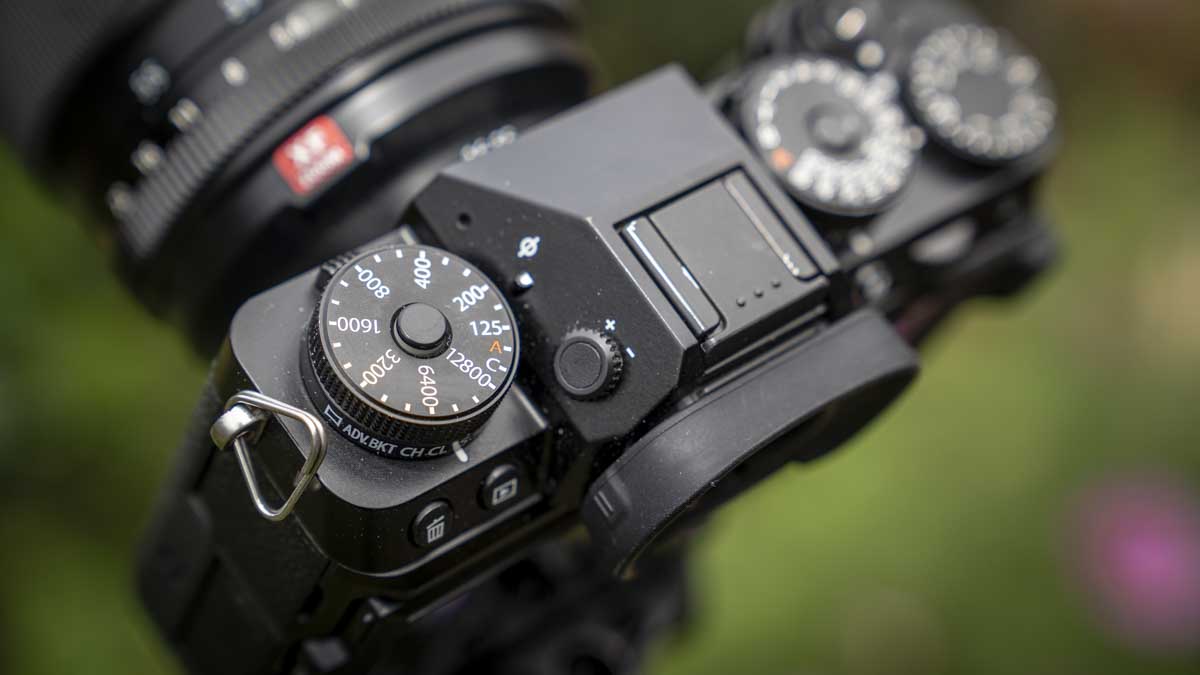
Classic, tactile and small, with one limitation that only appears when you fit a long lens. The SLR-inspired styling isn’t nostalgia for its own sake; a dedicated ISO dial, a shutter speed dial, and an exposure compensation dial mean the camera tells you its settings. At the same time, it can be switched off, which changes how you work with it.
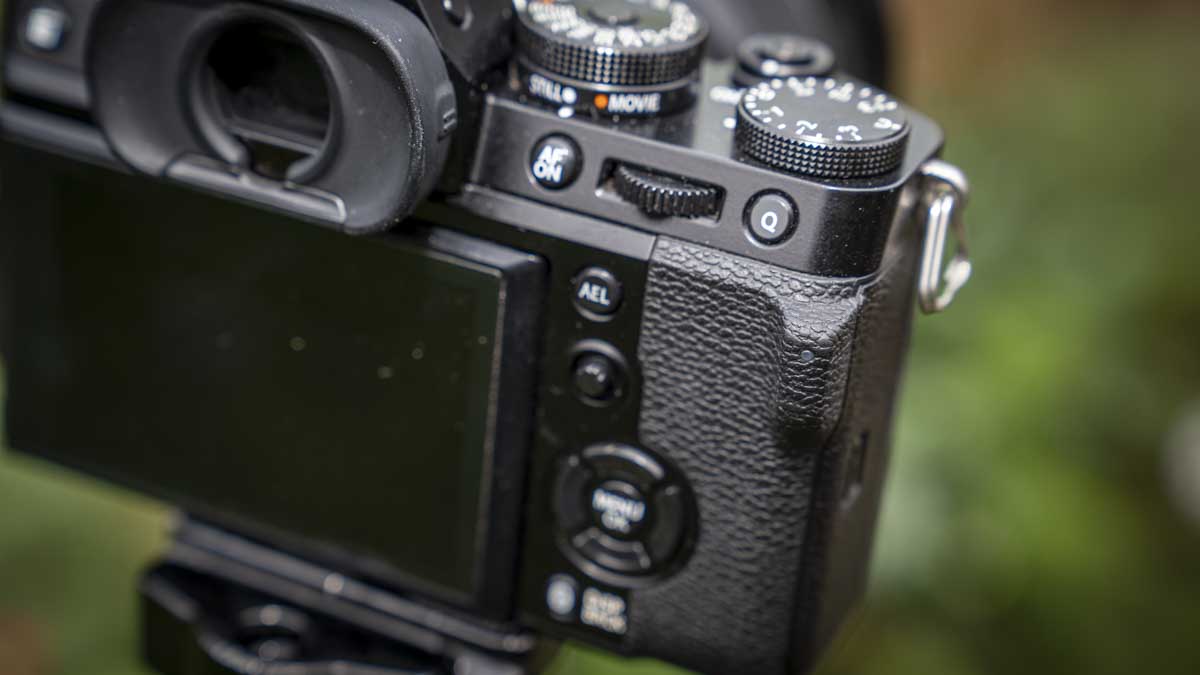
Underneath the ISO dial is a drive mode switch; underneath the shutter speed dial is the stills/video switch. A physical focus mode selector sits on the front. Aperture comes from the lens ring on most XF glass. The result is a camera you set up by touch, and after a few days I found myself checking the dials rather than the screen almost without thinking.
The build quality matches the price. Magnesium alloy, weather-resistant sealing, and at 129.5 x 91 x 63.8mm and 557g, it is 50g lighter and noticeably smaller than the X-T4. Dual UHS-II SD slots are a genuine professional touch at this level.
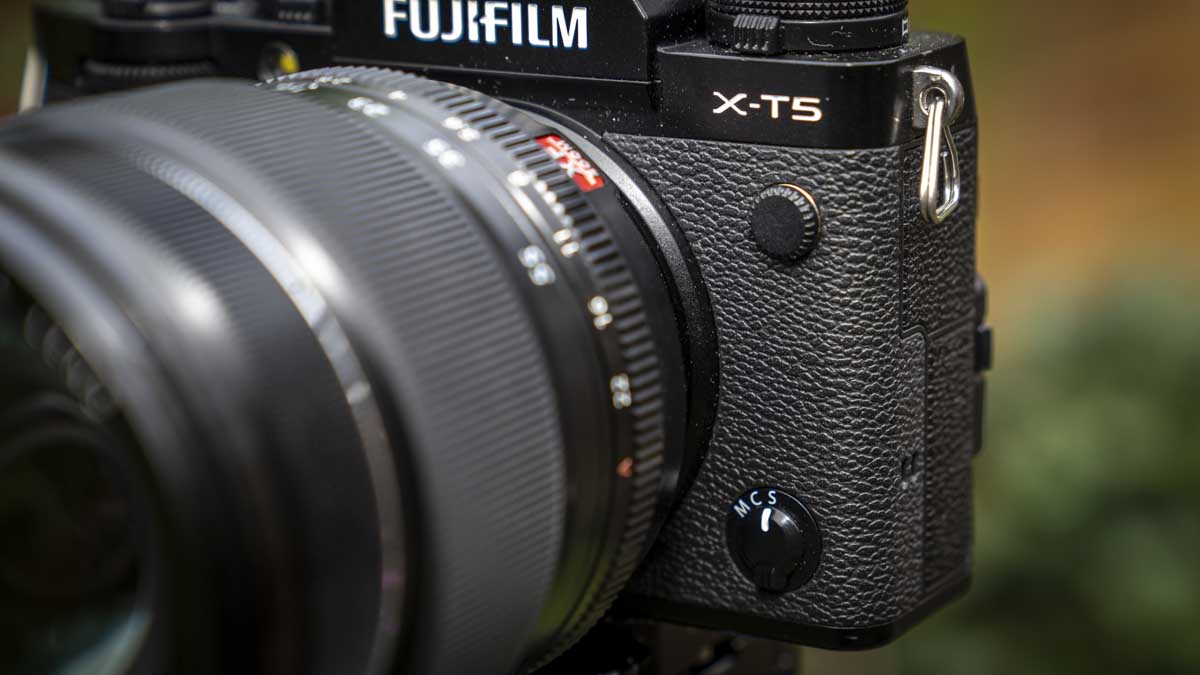
The grip is the compromise. It‘s shallow, which is exactly right with a 23mm f/2 or a 35mm f/1.4 and increasingly wrong as lenses get longer, fit the XF 150-600mm and the combination is front-heavy in a way that makes you grateful for a monopod. Fujifilm sells the MHG-XT5 hand grip, which deepens it and adds an Arca-Swiss dovetail, and that is worth budgeting for if you shoot telephoto. What Fujifilm does not sell is a vertical battery grip; unlike the X-T4, there is no VG-style accessory, so portrait-orientation shooting means turning the camera, and there is no way to add a second battery.
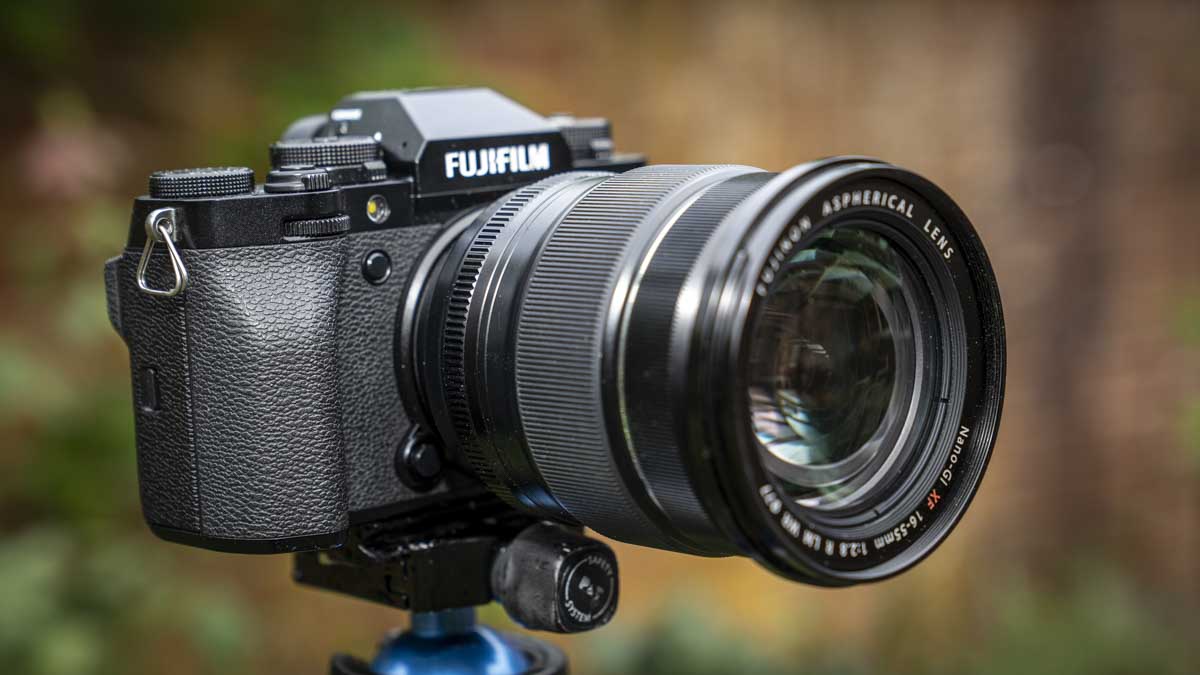
I’ve been testing the X-T5 along with the Fujifilm XF 35mm f/2 R WR and
Fujifilm XF 16-55mm f/2.8 R LM WR
Fujifilm XF 16-55mm f/2.8 R LM WR
The 0.5in 3.69m-dot viewfinder at 0.80x magnification is the same unit as the X-T4’s and lower resolution than the X-H2’s 5.76m-dot panel. It gives a natural, detailed view and I have no real complaint, but it is one place the X-T5 sits below the X-H2 rather than beside it.
Two connection irritations are worth knowing. The HDMI port is micro rather than full-size, which is a fragile choice on a camera that can output 12-bit raw video to an external recorder. And there is no dedicated headphone socket; monitoring audio means a USB-C adapter, which occupies the port you might otherwise be using.
Features
The specification was strong at launch, and it has grown since, which is worth being specific about because a used X-T5 on current firmware is not the camera that was reviewed in 2022.
Fujifilm has issued a long run of updates, and two matter. Firmware 4.00, in June 2024, added the REALA ACE film simulation, bringing the total to 20, a decent addition on a camera bought substantially for its colour, and one that arrived free two years into the camera’s life. The same update improved autofocus and added a WIDE/TRACKING mode for video.
Firmware 4.10, in December 2024, revised the autofocus algorithm to improve focusing accuracy and subject tracking, following earlier AF and subject-detection improvements through the 2.x series. Later releases through 4.20, 4.21, 4.30, and 4.31 have addressed a burst-mode freeze, lens-specific exposure tracking, a linear focus ring option, USB device compatibility, and wireless security.
Autofocus covers 100% of the frame with phase detection, 3.33 million phase-detection pixels, and a claimed working limit of -7EV. Subject detection handles faces and eyes, animals, birds, cars, motorcycles, aircraft and trains.
The in-body stabilisation is rated at up to 7 stops with compatible lenses and is one of the camera’s genuine strengths. Pixel Shift Multi Shot uses that same mechanism to take 20 frames and composite them into a 160MP file using Fujifilm’s Pixel Shift Combiner software, a desktop step rather than an in-camera one, which limits how often you will use it. Still, the results for static subjects are remarkable.
Stills come as 14-bit raw, JPEG or 10-bit HEIF, the latter around 30% smaller than a JPEG for more colour depth. It offers focus bracketing, in-camera raw conversion, pre-shot capture with the electronic shutter, and deep-learning auto white balance that I found no reason to override.
Video capture on the X-T5 is very capable; however, it is clearly the second priority, and this is not a camera that I would ever recommend if video were something you needed frequently, and not because of the specifications. The X-T5 records 6.2K at up to 30p internally in 10-bit 4:2:2, DCI 4K to 60p, Full HD to 240p, with F-Log2 for 13+ stops of dynamic range and 12-bit ProRes RAW or Blackmagic RAW out over HDMI to a compatible recorder.
The catch is the crop. 6.2K carries a 1.23x crop, 4K above 30p carries 1.14x, and the 4K HQ mode that oversamples from 6.2K carries the 1.23x too. On an APS-C sensor, those crops compound with the format, so a 16mm lens stops being a wide-angle. If video is a significant part of your work, the X-H2 does this better with a full-size HDMI port, a headphone socket and fewer crops.
Performance
The image quality is superb, and the reason to buy the camera. At the lower end of the ISO range, the 40.2MP sensor resolves genuinely exceptional fine detail, and at 300ppi a file prints to around 65.5 x 43.5cm without interpolation. Raw files carry real latitude and the dynamic range is good.
Straight-out-of-camera JPEGs remain the X-T5’s party trick. Fujifilm’s colour science paired with a competent meter means files that need nothing done to them, and with 20 film simulations now available, the camera is as much a look as a tool.
High ISO is where forty megapixels on an APS-C sensor asks for something in return. Our original review recommended ISO 6400 as a working maximum, with ISO 12,800 usable if conditions demanded it and raw strongly preferred at that setting. Against a full-frame body at the same price, this is the X-T5’s clearest deficit, and no firmware changes physics.
Autofocus is reliable, and much improved with those firmware updates, although it is still not class-leading.
General acquisition to find focus is quick and decisive, eye detection is dependable, and the subject-detection modes work. Our original review was particularly taken with Bird detection, finding that the camera would identify a bird facing away from the lens, track it around the frame, and pick up an eye the moment a sliver of one became visible, including through foreground branches that would defeat a manually placed AF point.
Fujifilm has since revised the AF algorithm twice, in the 2.x series and again in firmware 4.10. The camera focuses better than it did in 2022. But the honest 2026 position is that Canon and Sony have moved faster, and for continuous tracking of erratic subjects the X-T5 is a step behind the best at this price. For everything short of sport, that gap will not affect your photography.
Alongside fastish focus comes fifteen frames per second with the mechanical shutter and no crop, although the buffer limits it. At 15fps the camera manages 119 JPEGs but only 39 compressed raws, 22 lossless compressed raws or 17 uncompressed raws before the rate collapses. At 20fps with the electronic shutter and a 1.29x crop, the figures improve to 168 JPEGs and 72 compressed raws, but you have given up angle of view to get there.
In practical terms, shooting lossless compressed raw at 15fps gives you about a second and a half. That is enough for a decisive moment and not enough for a sequence. Dropping to 10fps mechanical or 8.9fps electronic extends the JPEG burst beyond 1,000 frames, which is the setting to use if you need endurance more than speed.
The stabalisation on the other hand is excellent, and one of the specifications that has aged best. Our original review recorded around 60% of handheld frames sharp at 1/4 second with the XF 50-140mm f/2.8 at 140mm, equivalent to 210mm in full-frame terms, roughly a six-stop benefit in real use against the seven-stop rating.
Taking a look at the battery life and this is actually far better than expected and better than the X-T4. The NP-W235 is rated at approximately 580 frames in normal mode and 740 in economy, and in mixed shooting it comfortably outlasts a day of stills work. The absence of any vertical grip option means you carry spares rather than doubling up in the body.
Coming back to using the camera and the questions that as ever arise: what is it for? Set against its own strengths, the X-T5 is excellent for landscape, street, travel and portraiture, and merely good for sport and fast wildlife. That is not a criticism so much as a description: Fujifilm built the X-H2S for the second job and this camera for the first.
Final Thoughts
The X-T5 is an outstanding enthusiast stills camera and one of the few modern bodies that is genuinely pleasurable to operate. The 40.2MP files stand up to any use short of large commercial print, the stabilisation is effective, the colours are the best in the business straight out of camera, and the traditional controls are not a gimmick — they change your relationship with the camera. As a travel, street or landscape body in a compact weather-sealed shell, it has few equals, and the X-mount lens range behind it is now deep enough that the system is no longer the compromise it once was.
The reservations are consistent and unfixed. Autofocus is not class-leading. The raw buffer limits sustained action. High-ISO performance trails full-frame at the same money. Video is capable but cropped and clearly second in the hierarchy behind the X-H2. Forty-megapixel files fill cards and hard drives faster than you expect.
Which brings us to timing, because it matters more than any of the above right now. The X-T6 is expected in the first week of September 2026, with rumours pointing to a partially stacked 40MP sensor, a new processor and much faster shooting — which would address precisely the two things this review criticises. Nothing is confirmed. But the announcement is close enough that anyone about to spend £1,500 on a new X-T5 should wait three weeks and then decide, because either the new camera is what you want or the old one gets cheaper. Waiting costs you nothing.
Should you buy the Fujifilm X-T5?
Not new, and not this month. With the X-T6 expected within weeks, buying an X-T5 at £1,499 to £1,549 now is the one clearly bad option on the table. Wait for the announcement, then either buy the new camera or buy this one at the price it settles to.
Used is a different question. MPB has ten bodies from £1,149, which is only around £350 below the new price, a narrow gap that reflects how well this camera has held its value, and one that will widen considerably once a successor exists. If you want an X-T5 specifically, the used market after the X-T6 announcement is where the value will be.
And if you need a camera today and cannot wait, the X-T5 remains an excellent choice for stills. Just know that you are buying at the least favourable moment in its life.
Buy it if
You shoot landscape, street, travel or portraits
You want maximum detail in a small weather-sealed body
You prefer setting exposure with dials
You are upgrading from an X-T3 or X-T4
You want maximum detail in a small weather-sealed body
You prefer setting exposure with dials
You are upgrading from an X-T3 or X-T4
Don’t buy it if
You shoot sports or fast-moving wildlife
Video is a significant part of your work
You need the best high-ISO performance at the price
You are buying new before the X-T6 is announced
Video is a significant part of your work
You need the best high-ISO performance at the price
You are buying new before the X-T6 is announced
Alternatives
Fujifilm X-H2: the same 40.2MP sensor in a larger body with a deeper grip, a 5.76m-dot viewfinder, full-size HDMI, a headphone socket, a vertical grip option and fewer video crops. The one to buy if you shoot video seriously or use long lenses.
Fujifilm X-H2S: 26MP stacked sensor, far faster readout and much better continuous autofocus and buffer performance. Fewer pixels, but the right Fujifilm for action.
Fujifilm X-T50: the smaller, cheaper body with the same 40.2MP sensor and a film simulation dial. Less weather sealing, one card slot and a smaller battery, but most of the image quality for considerably less.
How we tested
I shot with a Fujifilm X-T5 over two weeks alongside my Sony A7 IV, on the latest firmware, with XF lenses from wide to telephoto. Testing covered landscape, street and low-light stills, subject-detection autofocus on people, animals and birds, mechanical and electronic burst depth in RAW and JPEG, in-body stabilisation across a range of shutter speeds, 6.2K and 4K video including the crop factors, battery endurance in mixed shooting, and a comparison of new and used pricing across UK retailers and MPB in August 2026.
Fujifilm X-T5 FAQs
Is the Fujifilm X-T5 still worth buying in 2026?
As a stills camera, yes — the 40.2MP sensor, seven-stop stabilisation and traditional controls remain excellent. But the X-T6 is expected in the first week of September 2026, so anyone buying new at £1,499 to £1,549 should wait for that announcement before committing. Used bodies start around £1,149 and will fall further once a successor exists.
Has the Fujifilm X-T5 been improved since launch?
Yes. Firmware 4.00 in June 2024 added the REALA ACE film simulation, taking the total to 20, and improved autofocus. Firmware 4.10 in December 2024 revised the AF algorithm for better accuracy and subject tracking, following earlier improvements in the 2.x series. A used body on current firmware is meaningfully better than one reviewed at launch.
Is the Fujifilm X-T5 good for video?
It is capable rather than specialised. 6.2K 30p and DCI 4K 60p internally in 10-bit 4:2:2 with F-Log2 is a strong specification, but 6.2K carries a 1.23x crop, there is no headphone socket, and the HDMI port is micro rather than full-size. For serious video, the X-H2 is the better choice.
Does the Fujifilm X-T5 have a battery grip?
No vertical battery grip is available, unlike the X-T4. Fujifilm offers the MHG-XT5 hand grip, which deepens the grip and adds an Arca-Swiss dovetail for tripod use, but it does not hold a second battery or add portrait-orientation controls.
Is the Fujifilm X-T6 coming?
Fujifilm has not announced one. Reports point to an announcement in the first week of September 2026, with a partially stacked 40MP sensor, a new processor and faster shooting among the rumoured changes. Still, nothing is confirmed, and no specification should be treated as reliable until Fujifilm says so.