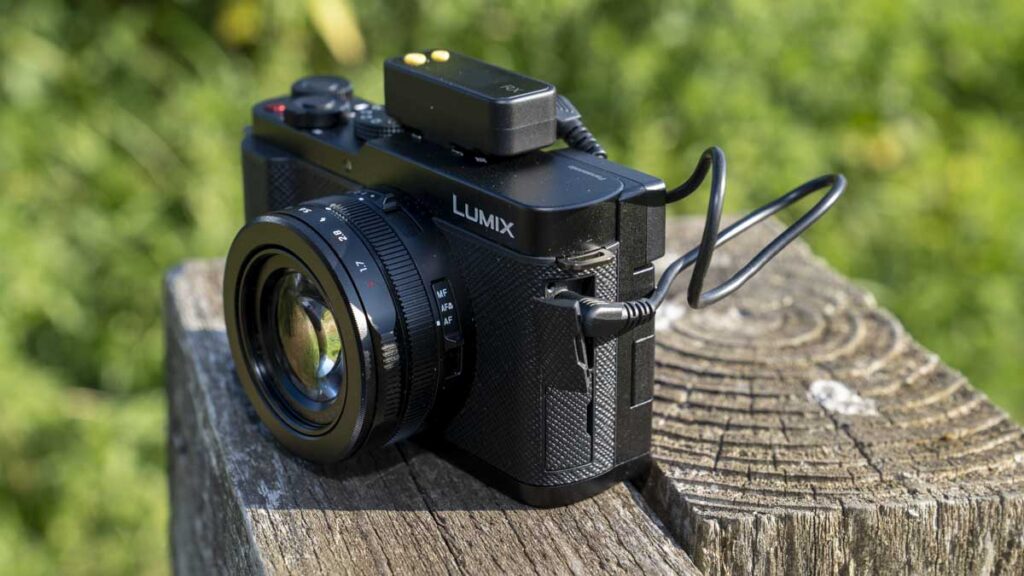

A Leica f/1.7-2.8 zoom, the GH7's sensor and proper analogue controls make this the most complete compact Panasonic has built, with two real omissions.
Our Verdict
The Panasonic Lumix L10 is essentially the compact camera that compact camera enthusiasts have been waiting for. It pairs the GH7’s 20.4MP Four Thirds sensor with a LEICA 24-75mm-equivalent f/1.7-2.8 zoom, adds fast phase-detect autofocus with full subject detection, and wraps all this in a metal, saffiano-textured body with a proper aperture ring.
I was lucky enough to have the L10 for three weeks, using it as my day-to-day camera, and aside from a few small niggles, I was impressed by the image quality, autofocus, and especially the colours it captured.
I had a few small reservations: the shutter tone didn’t quite produce the noise I’d expected, the weight (80 g) does make it a little heavy for a compact, and there’s no in-body stabilisation or weather sealing, and then £1,299 is mirrorless money. But then that’s it; everything else is exactly what you would want as a photo-first everyday and travel camera, where it absolutely excels.
Who it’s for: enthusiast photographers who want one carry-everywhere camera with a fast zoom, real controls and straight-out-of-camera colour, and shoot stills first.
What is the Panasonic Lumix L10?
The L10 is Panasonic’s premium fixed-lens compact, launched to mark the LUMIX brand’s 25th anniversary. It’s currently on offer for £1,299, so for a compact camera, it’s at the top of the premium price bracket. As I started using the camera, it became obvious why, especially when I looked back over the images I had captured during the test period.
The Lumix L10 is the long-awaited successor to the much-loved LX100 series, which last saw an update in 2018, so quite some time ago, and Panasonic has been clear this is a new line rather than a nostalgia exercise. What’s impressive here is that the sensor comes from the GH7, the processor from the S1 II family, and the autofocus is current-generation phase detection.
Essentially the formula for this new Panasonic camera is the LX100’s, modernised. A Four-Thirds sensor, far larger than the one-inch chips in most compacts, sits behind a fixed LEICA 24-75mm-equivalent zoom with a genuinely fast f/1.7-2.8 aperture. The multi-aspect design maintains the same angle of view whether you shoot 4:3, 3:2, or 16:9.
Another point that Panasonic has highlighted is that this camera is made in Osaka. Hence, it is Japanese-made and is available in Black, Silver, and Titanium Gold editions, and I’ve spent three weeks with the Black version using it as my everyday camera.
Before I delve into the review, I’ll just pitch where this camera is aimed. It should be quite obvious as a premium compact, but really any enthusiast who wants one camera that goes everywhere: street, travel and everyday photography first, with serious video capability in reserve. Panasonic has priced it directly against the Fujifilm X100VI, and the L10’s two answers to that camera are the zoom and the fully articulating screen. Whether those outweigh what the Fuji offers is the question I’ll take a look at here.
Panasonic Lumix L10 specifications
Sensor: 20.4MP Four Thirds BSI CMOS (17.3 x 13mm), no low-pass filter
Lens: LEICA DC VARIO-SUMMILUX 24-75mm equiv., f/1.7-2.8, 3.1x zoom, 9 blades
Macro: 3cm at wide end
Stabilisation: POWER O.I.S. (lens only, no IBIS)
ISO: 100-25,600 (exp. 50)
Autofocus: 779-point phase hybrid + 315-area contrast, -5EV, full subject detection
Burst: 30fps electronic (SH30, with pre-burst) / 11fps mechanical
Shutter: Mechanical 1/2,000-60s / electronic to 1/32,000s
Video: 5.6K 60p, C4K/4K 120p, 10-bit internal, V-Log (13+ stops), ALL-Intra to 600Mbps
Viewfinder: 2.36m-dot OLED, 0.74x
Screen: 3in free-angle touchscreen, 1.84m dots
Storage: 1x SD (UHS-II)
Connectivity: USB-C 10Gbps (charging, PD, UVC webcam), Wi-Fi 5GHz, Bluetooth 5.0
Battery: DMW-BLK22, 420 shots (monitor) / 1,000 (power save)
Size/weight: 127.1 x 73.9 x 66.9mm / 508g with battery and card
Price: £1,299 (Black/Silver) / £1,399 (Titanium Gold, from July)
Lens: LEICA DC VARIO-SUMMILUX 24-75mm equiv., f/1.7-2.8, 3.1x zoom, 9 blades
Macro: 3cm at wide end
Stabilisation: POWER O.I.S. (lens only, no IBIS)
ISO: 100-25,600 (exp. 50)
Autofocus: 779-point phase hybrid + 315-area contrast, -5EV, full subject detection
Burst: 30fps electronic (SH30, with pre-burst) / 11fps mechanical
Shutter: Mechanical 1/2,000-60s / electronic to 1/32,000s
Video: 5.6K 60p, C4K/4K 120p, 10-bit internal, V-Log (13+ stops), ALL-Intra to 600Mbps
Viewfinder: 2.36m-dot OLED, 0.74x
Screen: 3in free-angle touchscreen, 1.84m dots
Storage: 1x SD (UHS-II)
Connectivity: USB-C 10Gbps (charging, PD, UVC webcam), Wi-Fi 5GHz, Bluetooth 5.0
Battery: DMW-BLK22, 420 shots (monitor) / 1,000 (power save)
Size/weight: 127.1 x 73.9 x 66.9mm / 508g with battery and card
Price: £1,299 (Black/Silver) / £1,399 (Titanium Gold, from July)
How does the Panasonic Lumix L10 handle?
As a compact camera, you’d expect the handling to be a little more restrictive than a mirrorless or DSLR; however, it feels like a proper camera, which is exactly the point. The metal body with its saffiano-leather texture feels substantial and expensive, and the controls are genuinely analogue in feel and use. There’s a front-positioned aperture ring on the precision-machined lens barrel, a customisable control ring behind it, a dedicated Fn switch and a photo/video/S&Q selector, really what you’d expect on a larger mirrorless equivalent.
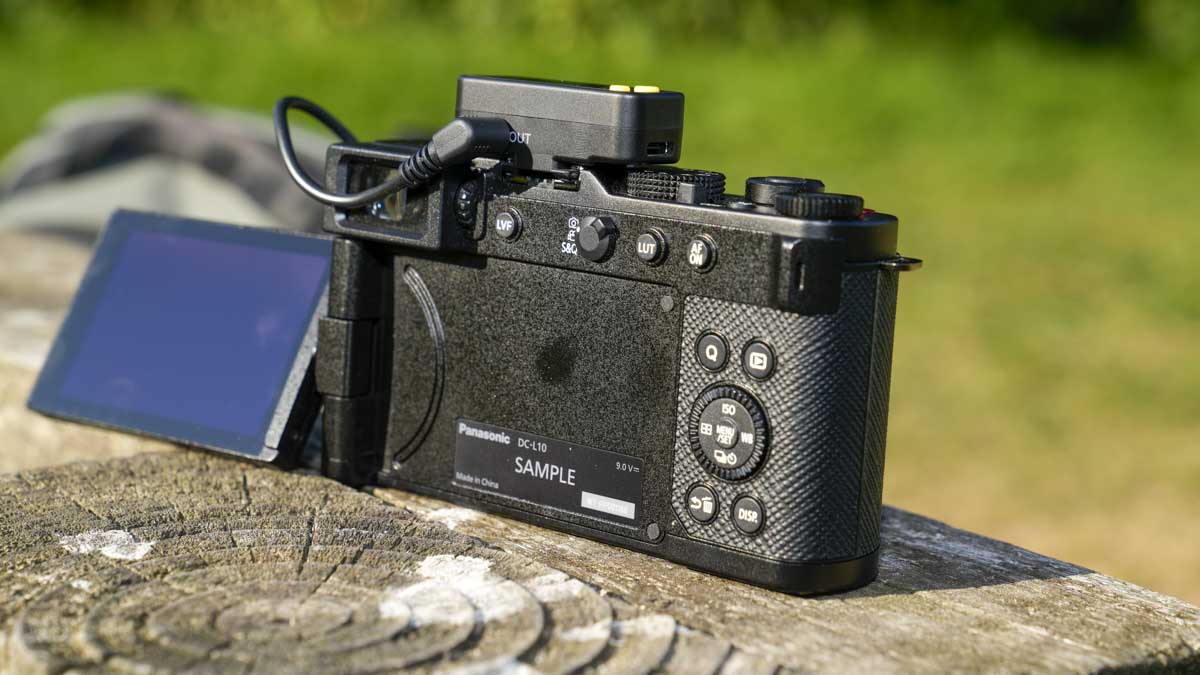
As I started using the camera, I was impressed by the 2.36-inch OLED viewfinder as I composed shots, with my thumb comfortably resting on the exposure controls. This is a natural shooting experience that many ultra-compacts abandoned years ago.
The size, in comparison to many compacts, is the trade-off. Measuring in at 127.1 x 73.9 x 66.9mm and 508g, this is a compact in-category rather than in-pocket; don’t get me wrong, this is small, but it isn’t a jacket-pocket camera, and at best a bag camera is definitely the best approach to carrying it. If you owned an LX100 II, you’ll note that it is deeper, even compared with that camera.
After a couple of weeks, I’ll admit that I stopped noticing the weight; after all, it’s still far lighter than my mirrorless with lens. The retracting zoom also means startup isn’t instant; there’s a short delay while the lens extends before you can shoot, which matters if instantaneous reactions to capture the shots are your thing.
The free-angle touchscreen is excellent, and the first vertical-optimised interface on a LUMIX makes sense the moment you shoot upright for social work. Two quick points to note on the build: there’s no joystick, so AF-point placement falls to the touchscreen, which is a bit of a pain; touch-pad AF with your eye to the finder, which works but isn’t as quick, and there’s no built-in flash, with the hot shoe taking an external unit when needed. There’s also no stated weather sealing, which at this price, on a camera built for travel, could be a bit of an issue.
What features does the Panasonic Lumix L10 have?
Taking a quick look through the features, the first thing that stands out is the colour system. Essentially, this is the big feature and ties in with Leica. Beyond LUMIX’s established Photo Styles, the L10 adds two new film-inspired looks, L.Classic and L.ClassicGold, and pairs them with REAL TIME LUT, which loads up to two custom LUTs and applies them as you shoot, with a dedicated button for instant access. Magic LUT, via the LUMIX Lab app, analyses any photo you feed it and builds a LUT to match its mood. This is Panasonic’s answer to Fujifilm’s film simulations, and it’s arguably more flexible: you’re not limited to the looks from Panasonic, and you can dip in and adjust them as you see fit.
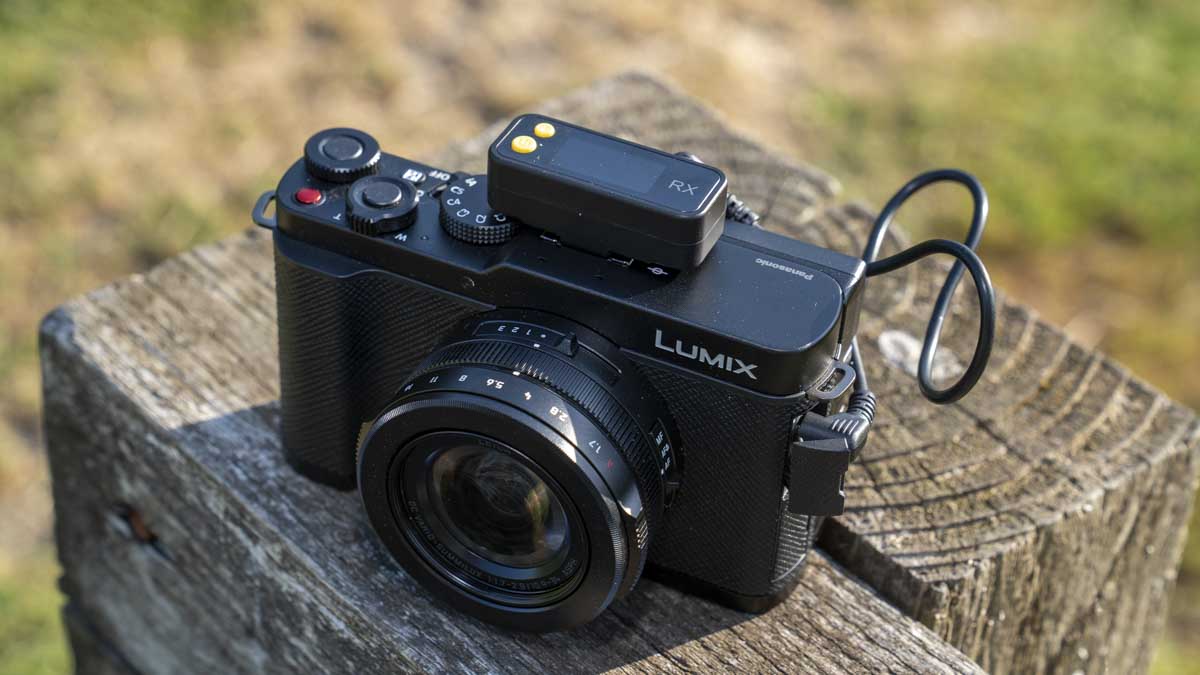
The autofocus offers 779 phase-detection points with recognition for people, animals, cars, motorcycles, trains, aircraft, and urban sports, working down to -5 EV, so the camera works well in low-light conditions if needed.
Partnering the zoom, there’s the 30fps electronic burst, which includes pre-burst capture, so the camera buffers moments before you fully press the shutter. The 3cm macro capability at the wide end turns it into a close-focusing camera for detail work, which was one of those surprising features.
As with almost every new camera, the video specifications are impressive, though here I couldn’t help but feel they go well beyond what most people would actually want. Maybe this is just Panasonic stating that they are still a leader in video and broadcast technology.
For a compact it’s able to shoot 5.6K at up to 60p; C4K and 4K at up to 120p; 10-bit internal recording to 600 Mbps ALL-Intra; V-Log with 13+ stops of latitude; 4-channel audio with the XLR2 adapter; and UVC webcam support over the USB-C 10 Gbps port. Panasonic’s own figures put sustained C4K 120p recording at around five to six minutes before thermal protection kicks in. Hence, this is for short-clip video rather than for use as an event camera. But for travel films and social content it’s absolutely ideal.
How good is the Panasonic Lumix L10’s image quality?
Even considering this is a compact camera, the image quality is excellent, clearly showing the difference the Four Thirds sensor makes over the LX100’s 1-inch sensor. The 20.4MP image files are detailed, with excellent tonal reproduction, and the LEICA zoom is sharp across its range. As I’ve seen in the past, Panasonic’s colour is excellent, with the Standard style being well balanced, and L.Classic and L.ClassicGold produce straight-out-of-camera results that I found myself using.
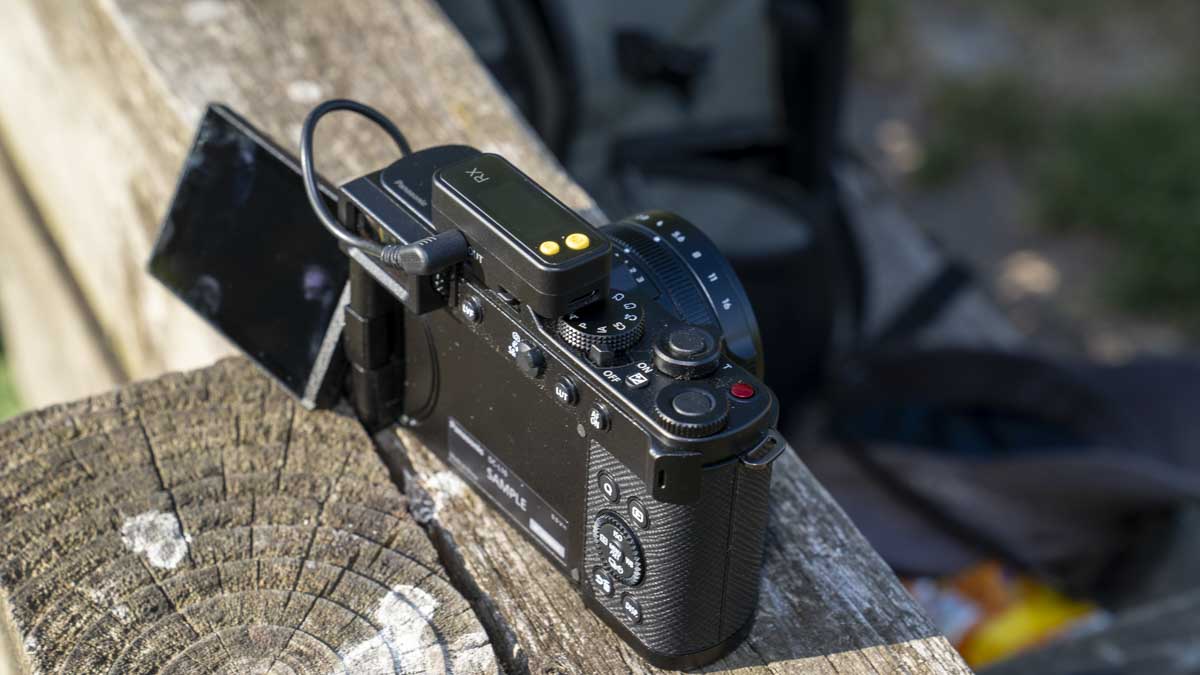
I had the camera on test just before the second heat wave, where, oddly, every day it seemed for the three weeks of the test, the clouds covered the sky, and when the sun did break, I was generally out on another job, and far away from the camera that I had kept by my side almost constantly.
Now that I’m writing the review, we’ve had wall-to-wall sun for six weeks and counting, with no break in sight. However, during the test I checked out ISO values from 100 to 1600, which I found produced clean, detailed images. Lifting to ISO 3200 shows visible noise in low-light conditions, but the images remain very usable. At ISO 6400, again in low light, the images are usable with care as detail starts to soften, and 12,800 to 25,600 bring heavy noise and detail loss, best kept for emergencies. On the flip side, if you need to use these mid- to high ISO values in brighter light to ramp up the shutter speed for sports or wildlife, the sensor can cope well, keeping the image noise in check.
JPEG processing controls noise well, and running the RAW files through DxO Pure Raw 6 (Review coming soon) yields results that files responded well to denoising and are the better route above 3200. Against APS-C rivals, the smaller sensor isn’t quite as good at high sensitivities.
For me, the lens’s feature that really stood out was the f/1.7-2.8 range. The L10 gathers one to two stops more light than a typical compact zoom, which means it needs higher ISOs less often. With POWER O.I.S.
steadying, stills, dusk, and indoor shooting stayed at usable sensitivities more than the sensor size suggests.
One point to make here is that the lens features a manual aperture ring if you want to use it; however, the aperture range is not fixed through the zoom range. So, in aperture priority mode, you may have the aperture ring set to f/1.7 when you are fully zoomed in; the aperture will actually be f/2.8.
How does the Panasonic Lumix L10 perform?
The LX10 is on the larger side for a compact camera; however, it feels incredibly well balanced in the hand, and while it may not be pocketable, it’s light enough for a jacket pocket.
First, the autofocus speed impressed me, and I’d go so far as to say it’s the best I’ve used in a fixed-lens compact. It’s fast, quiet and highly accurate on static subjects; face and eye detection is also excellent, and subject recognition works well: animals, vehicles and people are all recognised at speed, with a high hit rate in continuous AF, even with relatively fast movement. The frame-wide coverage means that composition rarely conflicts with focus placement.
To test out the AF speed, I got my now-agile Labrador Pip to act as the subject; she has become the standing animal-detection test in these reviews, and the L10 found her, boxed her and held her in focus without issue.
Over the three weeks of use, the camera did on occasion recognise a subject that wasn’t it, just happened to be subject-shaped, a bin for instance, and there was reduced reliability as the sun drew in through the evening.
Video performance was also superb. Mixed use across the three weeks produced no overheating; short 5.6K clips were recorded without issue, and the camera never seemed to lag or shut down. I used a Lexar Silver Pro UHS-II SD card.
Through the video test, I just used the camera to capture short clips more than anything meaningful, essentially thinking about how this camera would be used. Through that use, I filmed handheld video without IBIS, and while the lens O.I.S. helps stabilise, if you want to film moving or walking shots, you will want a gimbal; the DJI RS 4 Mini would be a good idea.
Should you buy the Panasonic Lumix L10?
Buy it if you want one premium camera for everyday, street and travel stills with a genuinely useful zoom; nothing else in the category matches this combination of lens, sensor and colour tools. Think harder if handheld video matters, if you shoot in bad weather, or if £1,299 stretches to an interchangeable-lens kit you’d rather grow.
Buy it if…
You want one carry-everywhere camera with a fast zoom.
Straight-out-of-camera colour matters to you.
You shoot street, travel and everyday stills first.
Don’t buy it if…
You need stabilised handheld video.
You shoot in rain and rough weather.
Pocketability is the point of a compact.
Alternatives
Fujifilm X100VI: the direct rival at the same money, with IBIS, weather resistance with the adapter, and a more premium feel, but a fixed 35mm prime where the L10 zooms. Ricoh GR III: the pocketable street answer at a lower price, prime-only and viewfinder-free. Panasonic Lumix S9: full-frame LUMIX colour tools for similar money body-only, if you’d rather grow a system.
Where to buy: the L10 is stocked by UK dealers including Wex Photo Video and Park Cameras, with the Titanium Gold edition primarily through Panasonic’s own store.
How we tested
I tested a black Panasonic Lumix L10 for three weeks as my everyday carry camera, on firmware shooting street, travel, low-light, and animal subjects alongside my regular mirrorless kit. Testing covered an ISO ladder, subject-detection and tracking with static and moving subjects, macro, the Photo Style and REAL TIME LUT colour tools, short-form 5.6K and 4K video, and battery endurance in mixed use.
Panasonic Lumix L10 FAQs
Is the Panasonic Lumix L10 worth buying?
Yes, for photo-first enthusiasts who want a premium everyday compact with a zoom. £1,299 buys a Four Thirds sensor, a LEICA f/1.7-2.8 lens and excellent autofocus in one carry-everywhere body. It’s not worth it if you need stabilised handheld video or weather sealing.
Is the Lumix L10 better than the Fujifilm X100VI?
It depends what you shoot. The L10 offers a 24-75mm zoom, a fully articulating screen and deeper video tools; the X100VI counters with in-body stabilisation, a more premium feel and its fixed 35mm f/2 character. Zoom flexibility versus prime purity is the real choice.
Does the Lumix L10 have image stabilisation?
Only in the lens. POWER O.I.S. steadies stills effectively, but there’s no in-body stabilisation, so handheld video, particularly walking shots, is noticeably less stable than rivals with IBIS. For static clips and stills, the lens stabilisation does the job.
Is the Lumix L10 good for video?
For short-form work, it’s the best in its class: 5.6K 60p, 4K 120p, 10-bit internal recording and V-Log with 13+ stops. Sustained recording is thermally limited, with Panasonic quoting around five to six minutes of C4K 120p, so treat it as a clips camera, not an event camera.