
A 60mm portrait lens joins the 1-inch wide-angle, and after three weeks of testing in Malta and back home, it’s the addition that separates this from every Pocket before

What is the DJI Osmo Pocket 4P?

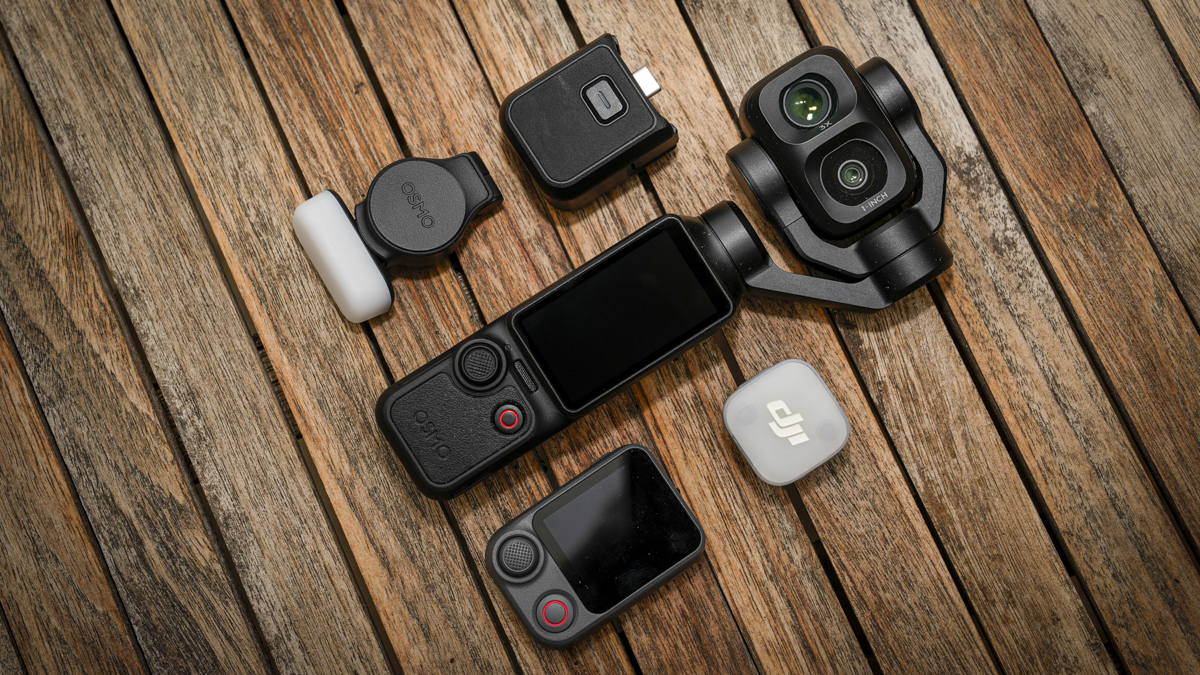
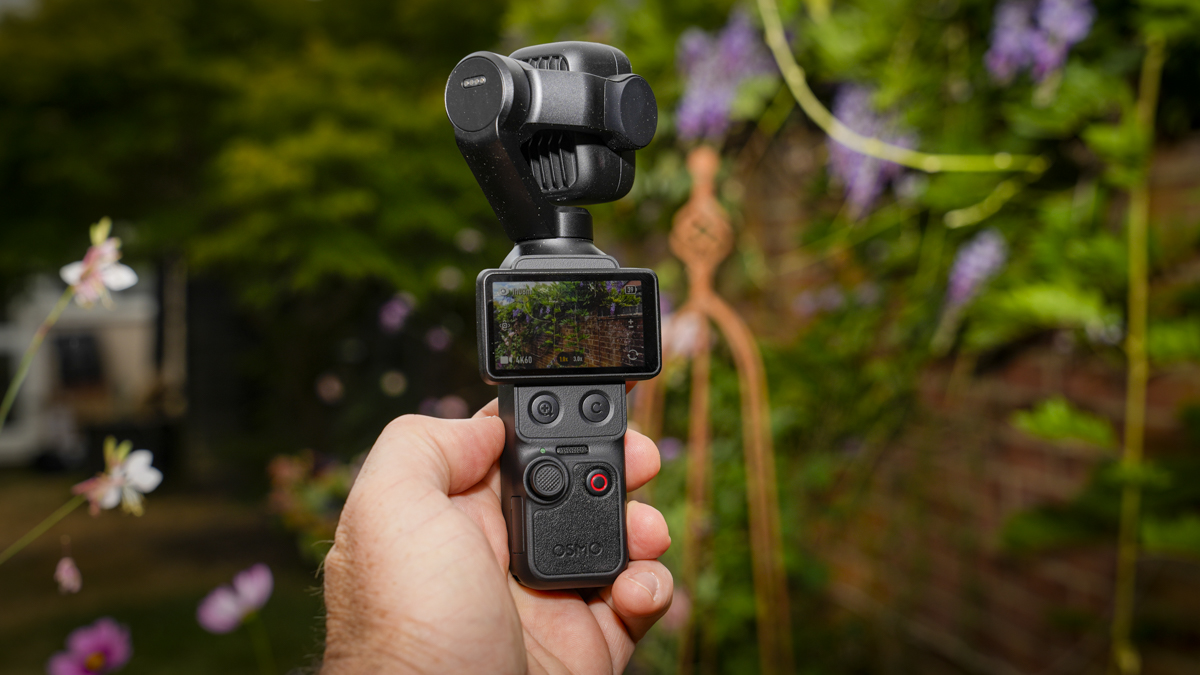
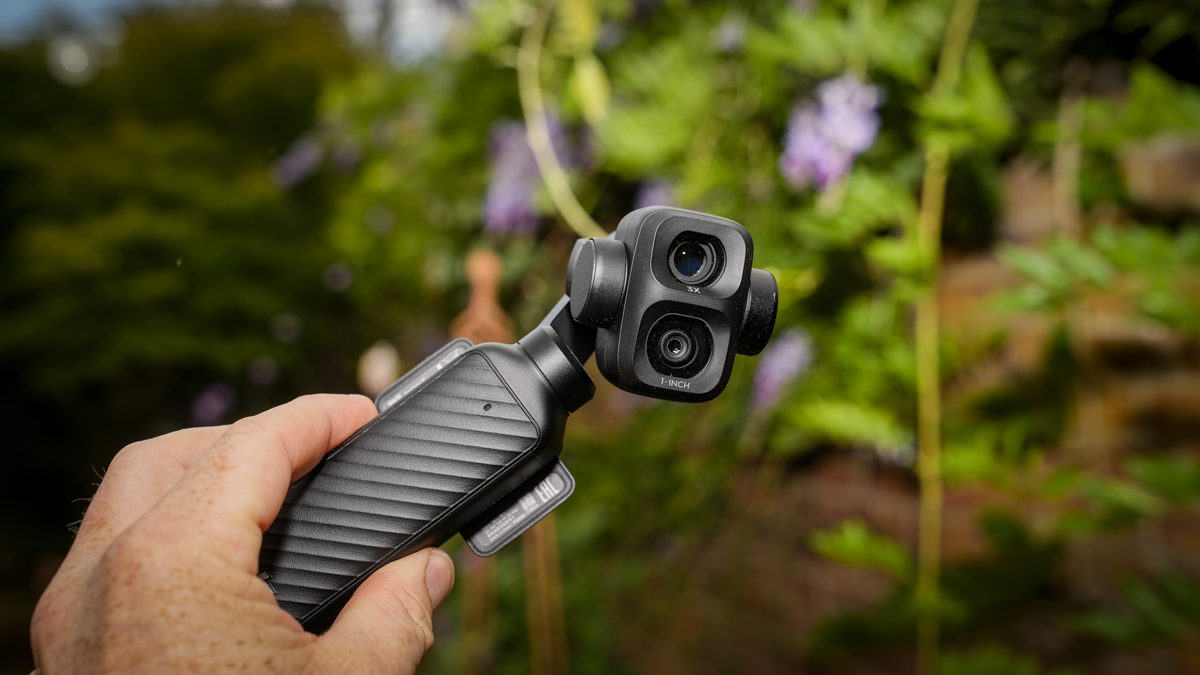
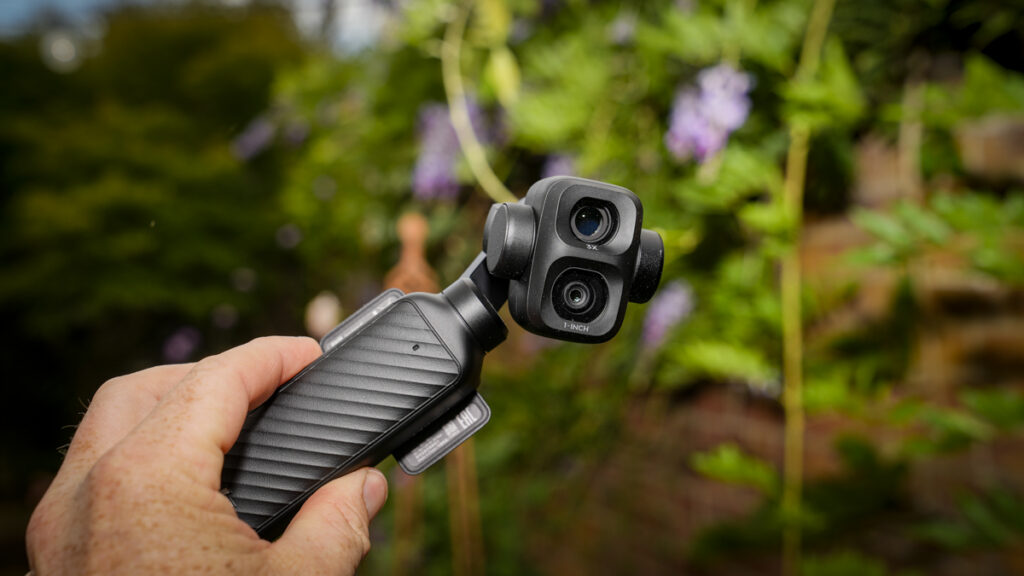
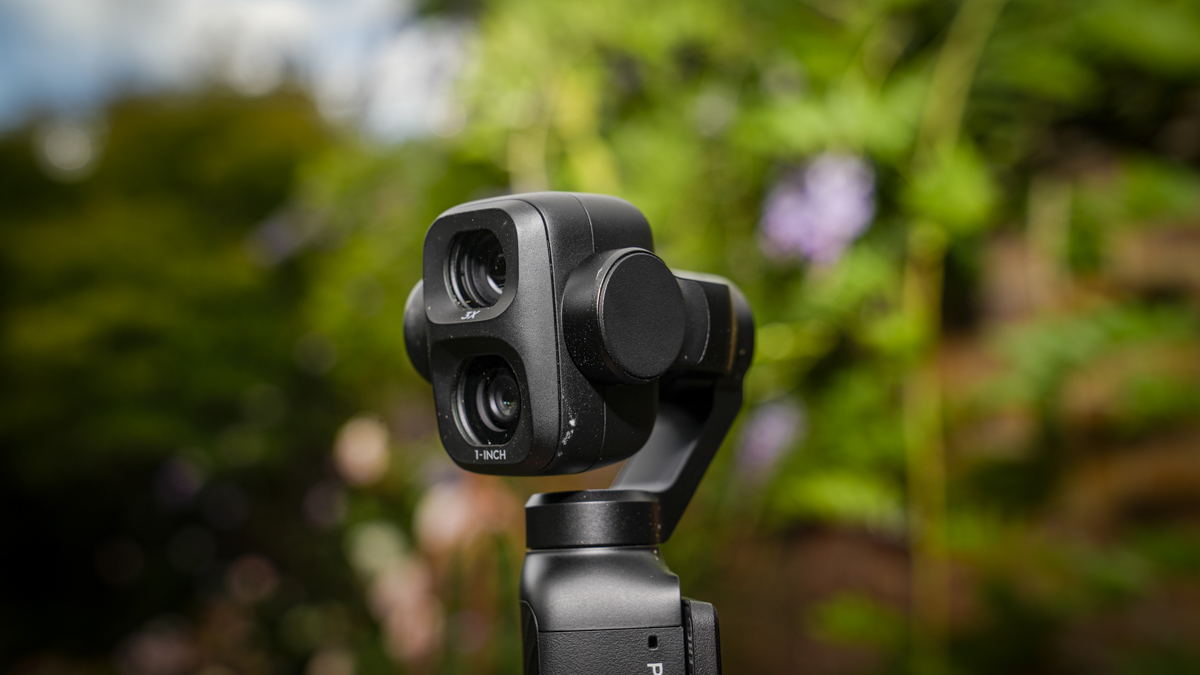
The Osmo Pocket 4P is DJI’s first dual-lens pocket gimbal camera, and, as the launch comes not long after that of the Osmo Pocket 4, it sits higher up the range rather than replacing it. An all-new 1-inch CMOS sensor backs the wide-angle lens and offers a 20mm-equivalent field of view and f/2.0 aperture; sat alongside it is a second 60mm-equivalent lens at f/1.8. This second lens gives an instant 3x optical zoom from the 20mm and up to 12x digital zoom. Aside from the dual-lens setup, much of the rest is everything that makes a Pocket a Pocket. There’s the three-axis mechanical gimbal, a rotating touchscreen that powers the camera on and starts recording, and it weighs just 230g in the hand or when slipped into a pocket.
DJI Osmo Pocket 4P
The Osmo Pocket 4P is designed for content creators who want a little more scope from their camera. The dual lens, as I discovered on a trip to M, Malta, just gives you a little more creative scope when filming, allowing you to add a subtle background blur to your to-camera shots. It also continues the film-crew-in-your-pocket approach, with the ability to film, track, and record audio via a connection to the superb DJI wireless mics. The boost in dynamic range and the Log2 profiles just expand the potential as you dig into the specifications.
DJI’s big figures in the specifications all centre around the wide lens, which is backed by LOFIC sensor technology, and quoted at 17 stops of dynamic range, as well as the new 10-bit D-Log 2 profile, which ships with LUTs for both Rec.709 and ARRI LogC4. Then there’s the slow motion that reaches 4K/240 fps on the wide lens and 4K/200 fps on the tele. A feature that I really like is that it includes 103GB of storage built into the body while still allowing a microSD card to be added.
In use, you can really feel a difference with the camera, and taking into consideration what the camera is, a personal filming rig, I connected up the mic and got filming. As with previous Pockets, the ease of use was apparent, but what impressed most was the new creative control offered by the 60mm portrait lens and the ability to control it all remotely via the removable remote, rather than relying on the Mimo App; I’ll cover that in more detail later.
DJI Osmo Pocket 4P
It doesn’t happen often, but occasionally a piece of kit impresses so much that it just starts to get used as an everyday piece of kit. And for many current reviews, that’s exactly what’s happening: the quality is more than good enough, and if you’re filming alone, then the tracking just gives a more professional and natural look. The DJI Osmo Pocket 4P comes in black or pearl white and in two kits: the Standard Combo at £529 and the Vlog Combo at £605, which adds a microphone and the battery handle. Worth noting for anyone reading from further afield, the Pocket 4P is not launching in the United States, where DJI says authorisation remains pending.

DJI Osmo Pocket 4P Specifications

Wide-angle lens: 1-inch CMOS, 20mm equiv., f/2.0, focus 0.2m to infinity
Med-tele lens: 1/1.28-inch CMOS, 60mm equiv., f/1.8, focus 0.3m to infinity
Dynamic range: 17 stops claimed (wide-angle lens, LOFIC)
Colour: 10-bit D-Log 2, D-Log, HLG; LUTs for Rec.709 and LogC4
Video: 4K up to 240fps (wide) / 200fps (med-tele), 180Mbps max, MP4 HEVC
Zoom: 3x optical (60mm), up to 12x digital
Photo: 37MP (1:1, 6144×6144) / 33MP (16:9, 7680×4320), JPEG/DNG
ISO: Wide 100-25,600 (51,200 low light) / Tele 50-12,800 (25,600 low light)
Stabilisation: 3-axis mechanical gimbal, ActiveTrack 8.0
Screen: 2.0in touchscreen, 556×314, 1000 nits
Audio: 3 microphones, 48kHz 16-bit AAC, OsmoAudio compatible
Storage: 103GB built-in plus microSD to 1TB; USB 3.1 up to 800MB/s
Battery: 1545mAh, 210 minutes claimed, 18 minutes to 80%
Size / weight: 159.5 x 63.3 x 33.5mm / 230g
Price: £529 Standard Combo / £605 Vlog Combo

How does the Osmo Pocket 4P handle?
DJI has really thought about the presentation of the small Pocket, and it arrives in a small pouch that helps to keep everything tidy and, importantly, together. Inside are all the cables and hardware, including the Pocket 4P and Mic.
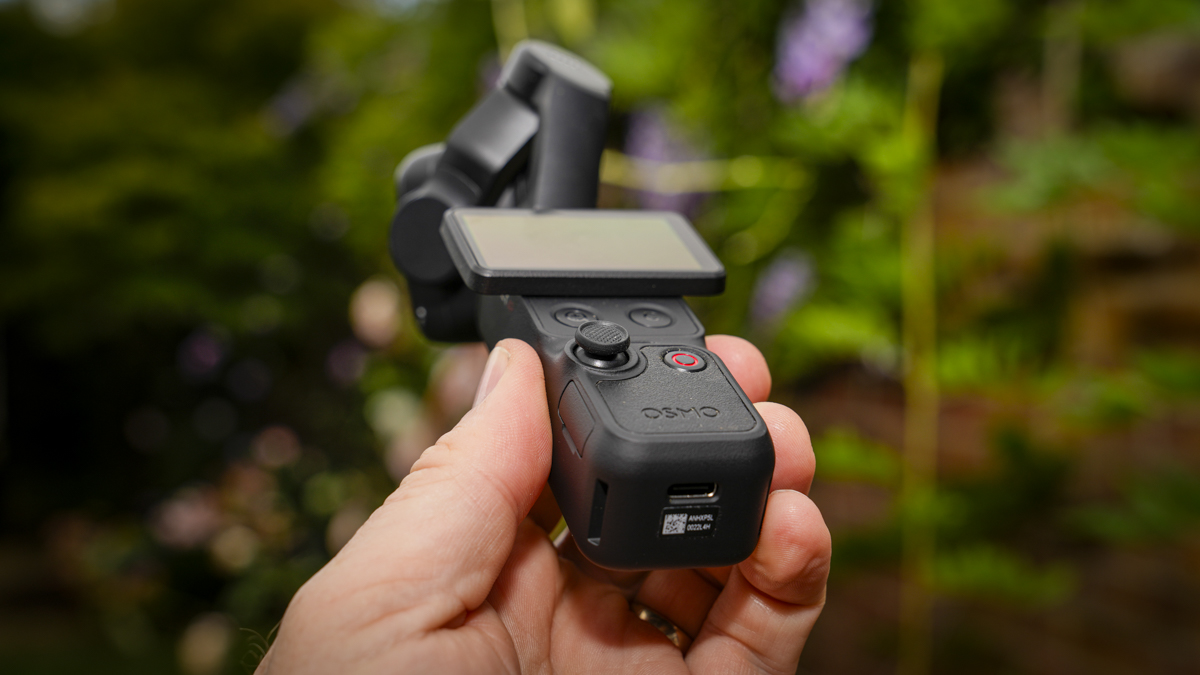
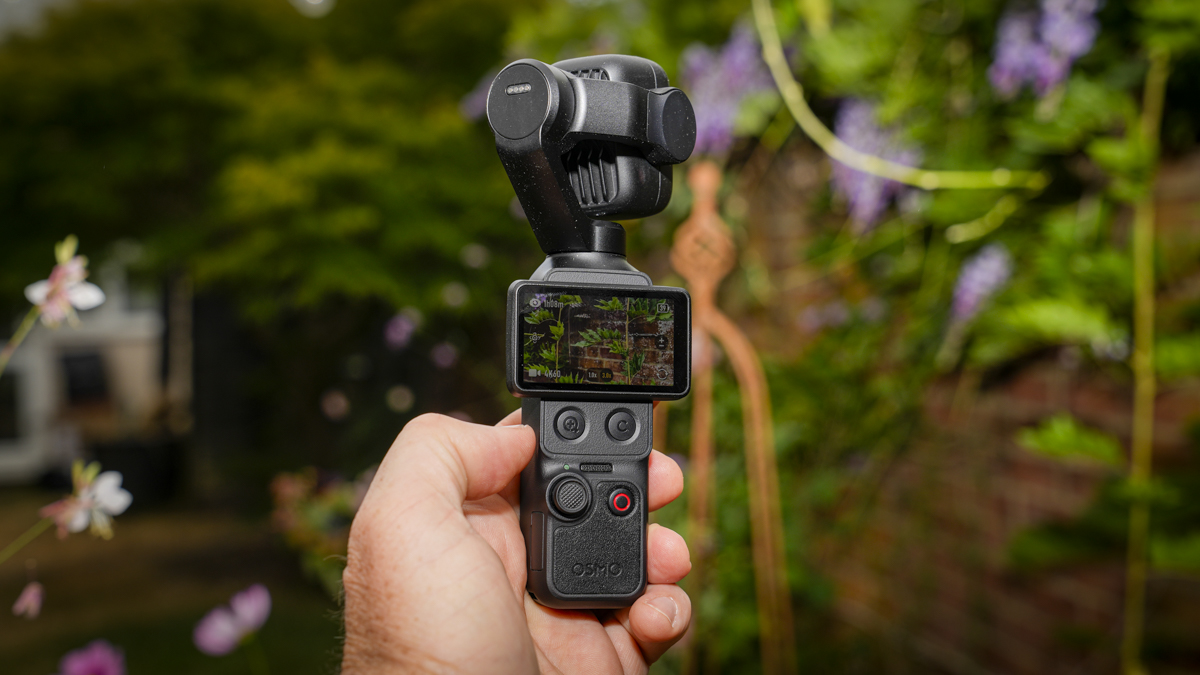
Lifting the Pocket 4P out, there are a few notable differences, but when it comes to the actual handling, the heart of this new gimbal-camera combo runs along the same lines as the models before it. Rotating the touchscreen powers the camera on and starts recording in a single action; you can opt to have this not be the case in the settings and have it just switch on, which is exactly what I did after a few sessions. I just ended up with lots of short clips of nothing.
DJI Osmo Pocket 4P
However, carrying it around Malta, that feature was handy. It enabled me to capture shots instantly without thinking. For many, especially if you have a family and want to capture the moment, that speed will be the difference between getting and missing the shot. While the sun has been relentless, the small 2.0-inch screen is incredibly bright, running at an impressive 1000 nits, which meant that even in the direct Mediterranean sun, I was able to see what was going on.
The main point of the OSMO Pocket 4P is the three-axis gimbal, which essentially gives you the look of a professional film rig, with an operator in a small device that weighs no more than 230 g, so, as the name suggests, you can stick it in your pocket without too much issue.
The self-film potential is what really appeals to many content creators, and with gesture control that enables you to trigger tracking with an open palm or start recording with a V sign, it all adds to the ease of use. But new to the design is also the removable live stream remote, which is used in combination with the new 60mm second lens and the DJI Mic Mini 2, which is in the case, so you can quickly see the appeal and, later, the quality of the visuals.  Just a quick final point on the handling: to switch between the lenses,s there’s a new physical zoom button that’s within comfortable reach of your thumb.
I tested the Vlog Combo, which adds the microphone and the battery handle, in Malta, the New Forest, and through a variety of other reviews to capture video content. Throughout the test, the weather and conditions have been consistently hot and sunny, so while there are a small number of low-light shots, the majority here is making the most of the sun.

What features does the Osmo Pocket 4P have?

Taking a look at the specifications for the Pocket 4P alongside those of the Pocket 4s, the upgrade comes into focus: this is the same camera platform with a second lens bolted on, along with the processing to make proper use of it.
The headline feature is, of course, the addition of the 60mm f/1.8 medium-tele, which offers focusing down to 0.3m and provides a 3x optical step up from the standard lens; this is not a zoom; it’s like having two primes.
Whereas the Pocket 4 offered 2x lossless zoom from its single 20mm lens, here you get a real optical focal length difference and up to 12x digitally, though the digital figures vary slightly depending on the mode. Video is the key feature here, and when it comes to the 12x at 1080p, 3K and 4K, stills and Live Photo you’re limited to 9x, and low-light, slow-motion and timelapse modes support no digital zoom at all, restricting you to the 1x and 3x optical positions, which is no bad thing.
DJI Osmo Pocket 4P
Dynamic range is boosted compared with the Pocket 4’s, from 14 stops to a claimed 17, thanks to LOFIC sensor technology on the 1-inch-wide lens, and the colour tools step up with it. I’m still trying to get my head around this, but the results seem to work.
D-Log becomes 10-bit D-Log 2, and DJI now supplies LUTs for Rec.709 and ARRI LogC4, the latter aimed at anyone matching footage into an Alexa 35 workflow, which kind of highlights what DJI is aiming at least part of its customer base. Slow motion runs to 4K/240 fps on the wide lens and 4K/200 fps on the tele, with a maximum bitrate of 180 Mbps, recording to MP4 HEVC.
Tracking moves from ActiveTrack 7.0 to 8.0, and this is more than a version step: the new release adds telephoto and multi-person tracking, enabled by that second 60mm lens. The three-axis gimbal covers 235° of pan, 125° of tilt and 45° of roll, moving at up to 180°/s under control.
New to the Pocket line is the DJI Osmo Pocket 4P remote, included with the Vlog Combo I tested. Rather than reaching for your phone and the Mimo app, it gives you direct control with a live view of what the camera sees, and, in the test, it performed exceptionally well. If you’re filming yourself, this is the difference between checking your framing and simply hoping, or faffing around with your phone and the App. When paired with the 60mm lens and the wireless mic, it turns the Pocket 4P into something much closer to a one-person crew, although the 4P was well on the way there anyway.
Taking a look at stills and at 37MP in the 1:1 6144 x 6144 mode, or 33MP at 16:9, in JPEG or DNG, it’s well spec’d for such a small camera.
Complementing the video is the audio, and onboard this runs through three microphones with OsmoAudio compatibility for DJI’s wireless mics. There is 103GB of storage built into the body, marginally down from the Pocket 4’s 107GB, and it’s expandable via microSD to 1TB.
The battery remains unchanged from the DJI Osmo Pocket 4 at 1545mAh, and the quoted 210 minutes is subject to fluctuations depending on use.

How good is the image quality?

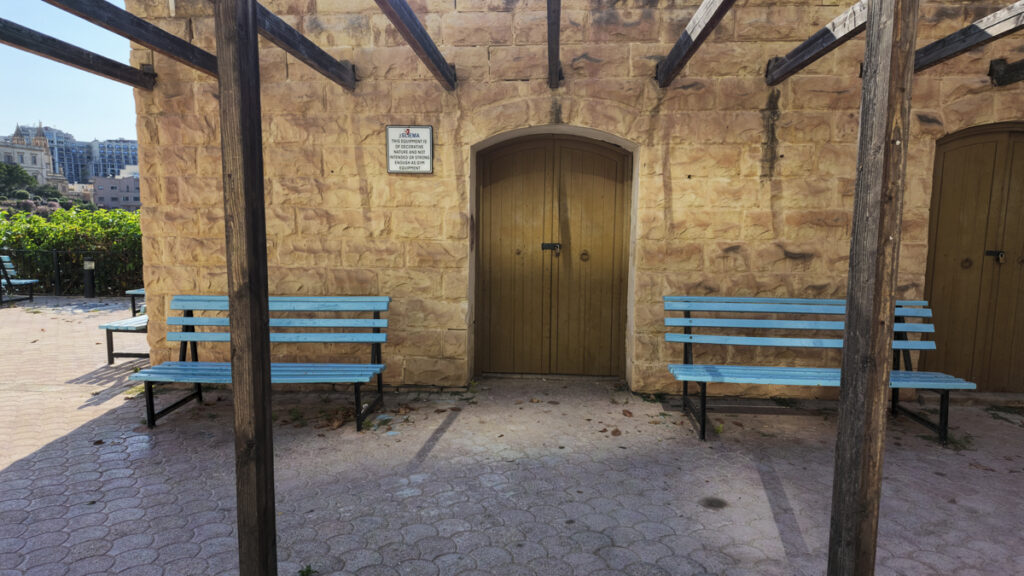
Excellent, and that is the short answer to the whole review, both for the stills and, more importantly, the video. From the few days in Maltese summer to more time in the sun back here in the UK, which is unusual to say the least, the light has been that sort of hard overhead sun with deep shade that normally punishes small sensors here. The footage coming straight out of the camera was superb. Highlights held, faces stayed lit against bright backgrounds, and very little of what I shot needed rescuing afterwards. I’ve posted a short clip of me walking through the streets of Valletta which highlights the imaging potential.
The two lenses are an obvious first point of call for the new feature that differentiates this from the 4P.
DJI Osmo Pocket 4PThrough the test, I found that for general use, the 20mm wide-angle covers most situations, and it’s the lens you will use for most travel, walk-and-talk, and most of the content you would have shot with the previous Osmo Pocket cameras. Switch to the 60mm med-tele, and this really does change what the camera can do.
The 60mm not only gets you closer to the subject but also adds in real background blur- not a lot, but enough to make a difference. With an aperture of f/1.8, the effect is subtle rather than dramatic, but it does help draw the focus onto the subject. That small amount of separation is often all a shot needs; it’s very traditional broadcast over heavy background blur.
It’s actually worth describing the character of the blur: this is not the ultra-shallow depth of field a phone produces in cinematic mode. For traditional shooters who want the subject separated while keeping a sense of where they are, that is exactly right. For anyone chasing a heavily defocused, more artistic look, this is far more restrained.

Is D-Log 2 worth having?

Yes, although I am still slightly conflicted about it. The new 10-bit D-Log 2 profile is quoted at 17 stops of dynamic range, ships with LUTs for Rec.709 and ARRI LogC4, and it’s great to have flexibility in the edit when the footage needs it. Of course, for stylistic grading it’s also essential, and the Malta footage I shot in Log2 held up well.
But there’s a question about whether you need it on a small point-and-shoot camera that’s all about speed and convenience. On a camera this size, the appeal is that convenience, not shooting the next Netflix production, and the standard output is so good that I often don’t bother grading at all. That is not that I don’t want the D-Log 2 option; when I’m blending the footage with other cameras, that tone and colour blend is that much easier. If you already grade, or use multiple cameras from different manufacturers, you will be glad it’s there. If you don’t, or you’re not sure what Log2 is, just know that it’s a feature that’s better there for when you need it than not at all.

How does the Osmo Pocket 4P perform?

OK, so in the heat, the battery life comfortably outlasted me. DJI quotes 210 minutes, and in the heat of a Maltese and New Forest summer, I would say that figure is pretty accurate. Switching between modes and resolutions does eat into it, and I noticed the battery dropping slightly faster than expected while doing so, but installing the extension battery from the Vlog Combo gives the battery life quite a boost.
As before with these small pocket cameras, the tracking is the feature that always really impresses me. Here with the latest itteratuion ActiveTrack 8.0 it once again proved reliable and accurate using both lenses. as testemnet to this after arriving back from Malta I’ve been working on some ofther features and review and the Osmo Pocket 4P was used to film clips, including a set of robot lawnmowers, which it tracked and was a whole lot lighter and quicker to use than the DJI Ronin RS4 with Sony A7 IV attached. I just found that once I started to put trust in the camera, it was the one I kept reaching for.
The slow-motion figures also looked impressive on the spec sheet: essentially 4K/240 fps on the wide lens and 4K/200 fps on the medium-tele. Both achieve the desired effect, and with the mechanical gimbal stabilised, the footage is impressive. Taking a close look at the footage, it all looks well detailed and exposed, without the quality loss that can sometimes occur.

DJI Osmo Pocket 4P Sample image

Final Verdict

Having now spent several weeks with the Osmo Pocket 4P, the one thing that stands out above the specification sheet is this: this is the camera I kept picking up. Not because I was reviewing it, but because for filming with the camera, capturing a scene or grabbing tracked footage for another piece of work, it was quicker and lighter than setting up a gimbal and a mirrorless body, and the results were good enough that nothing was lost by choosing it.
The second lens is a great addition and just lifts the quality of the work that you can do without degrading through digital zoom. The 20mm, as ever, covers the wide shot, exactly as it did on every Pocket before, but having 60mm a thumb-press away changes how you frame. The background blur it adds is subtle rather than cinematic, and that is worth knowing, as it suits the traditional broadcast look more than a heavily defocused one. It’s enough to separate a subject, and it’s the option I found myself using constantly.
DJI Osmo Pocket 4P
Straight-out-of-camera quality in punishing summer light was superb, the 210-minute battery claim from DJI did seem to hold up, and, as ever, ActiveTrack 8.0 tracked reliably enough; it honestly just gets better, and this is a feature that already impressed.
The remote, included with the Vlog Combo, is one of those accessories that really does make a difference, especially when self-filming. D-Log 2 and 17 stops of dynamic range are useful when matching footage across cameras, though on a device built for speed and convenience they are a welcome extra rather than the reason to buy.
By the time I finished this test and started using the camera, it was obvious that this is a camera that has been fine-tuned through release iterations for content creators, vloggers, travel and documentary shooters, and anyone filming themselves who wants a small crew’s worth of capability in a pocket.
If the Pocket 4 already covers your shooting, or you want shallow-depth portraiture, the cost is harder to justify. But if framing options matter and you shoot alone, the 4P is the best Pocket DJI has made.

Should you buy the DJI Osmo Pocket 4P?

Buy it if the second lens solves a problem for you. At £529 for the Standard Combo, the 4P commands a premium over the Pocket 4, and that premium buys 60mm, extra dynamic range, and D-Log 2. If you shoot travel, documentary or review work where framing options matter, that is money well spent, and the tracking and battery make it a camera you can rely on all day.
DJI Osmo Pocket 4P
Buy it if…
You want two genuinely useful focal lengths
You shoot travel, vlogs or review footage
You value straight-out-of-camera quality
Don’t buy it if…
You want ultra-shallow, heavily defocused portraits
The Pocket 4 already covers your shooting
You are buying in the US, where it is not yet available
Alternatives
DJI Osmo Pocket 4: the single-lens version with the same 1-inch sensor and 14 stops of dynamic range, lighter at 190.5g and cheaper, if 20mm covers what you shoot. DJI Osmo Pocket 3: still capable and now considerably cheaper used, though without built-in storage or the newer tracking.
How we tested
I tested a black Osmo Pocket 4P Vlog Combo, supplied by DJI with the microphone and battery handle, running the latest firmware, over three weeks shooting in Malta and subsequently on review work at home. Testing covered both lenses across the focal range, D-Log 2 capture and grading, mixed-framerate 4K sequences, slow motion, ActiveTrack, battery endurance in high ambient temperatures and general handling.

frequently asked questions

What is the difference between the Osmo Pocket 4P and the Pocket 4?

The 4P adds a second 60mm f/1.8 med-tele lens alongside the 1-inch wide-angle, raises the claimed dynamic range from 14 to 17 stops, and introduces the 10-bit D-Log 2 profile with ActiveTrack 8.0. It is also heavier at 230g compared to 190.5g and costs more.

Does the Osmo Pocket 4P have a 1-inch sensor?

The wide-angle lens does. The 60mm med-tele uses a smaller 1/1.28-inch sensor and a lower ISO ceiling of 12,800, compared to the wide lens’s 25,600. DJI’s 17-stop dynamic range claim applies to the 1-inch wide-angle lens.

How much zoom does the Osmo Pocket 4P have?

Switching to the 60mm lens provides 3x optical zoom, and the camera extends to 12x digitally, equivalent to roughly 240mm. Only the step to 60mm is optical; everything beyond that is digital and comes with the usual quality cost.

Is the Osmo Pocket 4P available in the US?

Not at launch. DJI states the Osmo Pocket 4P will not be available in the United States market while its application for authorisation remains pending. It is on sale in the UK, Europe and Australia.