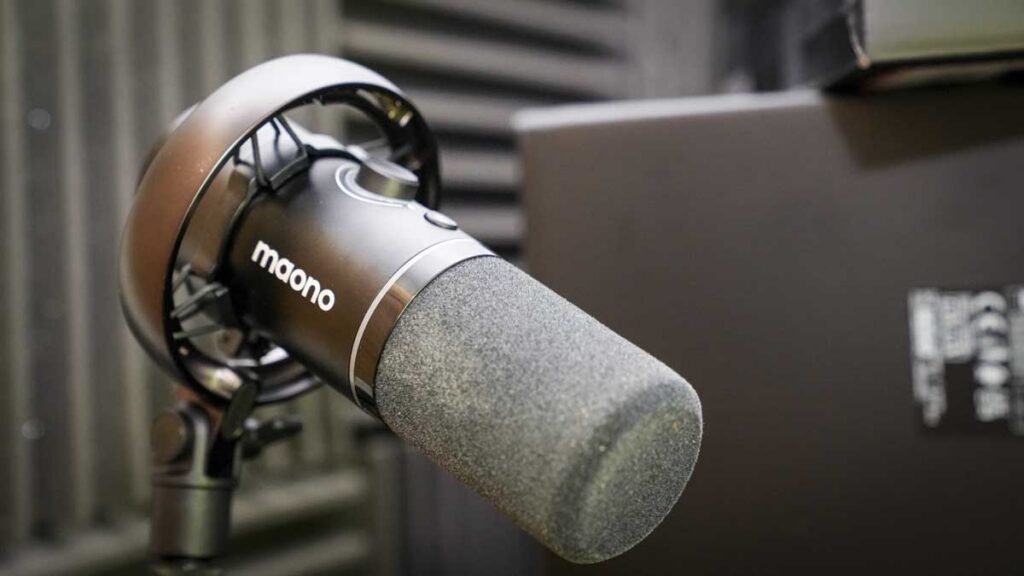

The PD200W streamlines creator audio by combining wired audio quality and wireless convenience in a single microphone. Our Verdict
Our Verdict
The Maono PD200W is a podcast mic designed for studio, desktop, and mobile use, and offers three ways to connect, including XLR, USB, and 2.4 GHz wireless. One of the most appealing features is just how adaptable this is to the way you work, and enables you to switch its use so you don’t need to fork out for separate microphones dependent on what you’re doing.
Build quality is one of its strongest first impressions. The all-metal body, integrated shock mount and pop filter give it a more serious feel than many creator microphones at this price, and after six months of regular use, that impression holds up. The most physical frustration is the mute button, which is a physical click rather than touch-sensitive and can register in a recording if pressed during a live take.
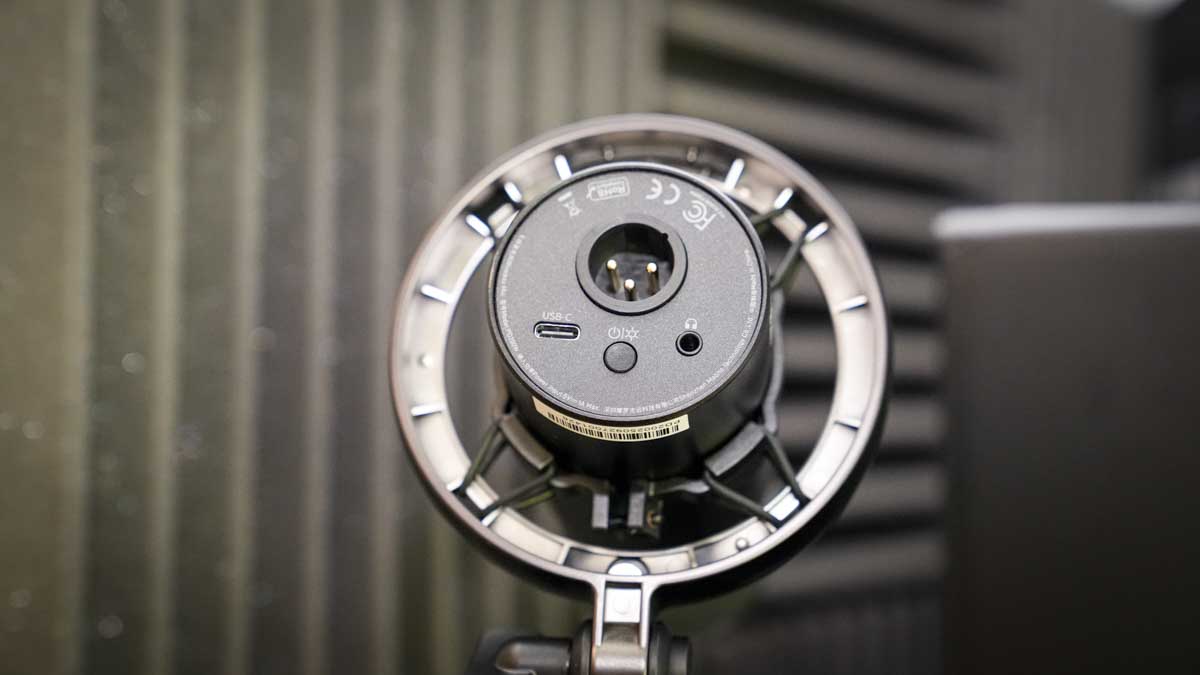
The triple-mode design is the main reason this microphone stands out. XLR into the RØDECaster Duo, USB for desktop use, and wireless to a phone such as the Vivo V70 give it a wider working range than a conventional USB mic. One important detail: in XLR mode, Maono’s onboard processing and noise cancellation are bypassed, and you get the raw dynamic signal for your interface to handle, which suits a RØDECaster Duo workflow very well.
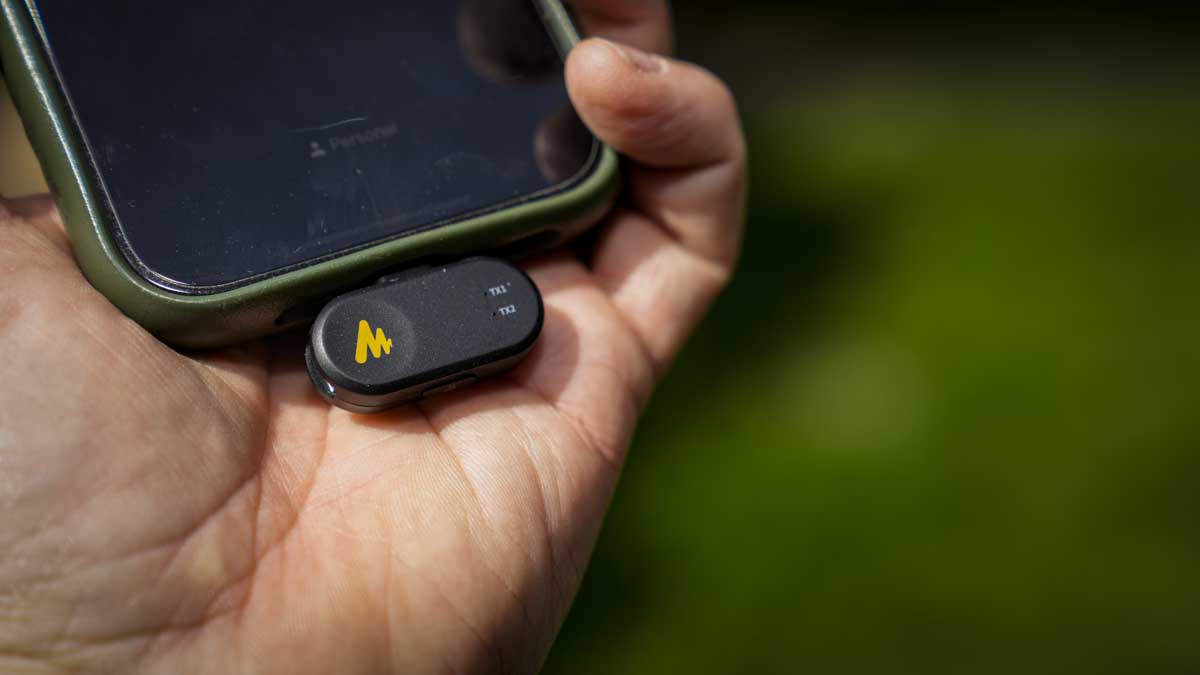
The wireless receiver is the one physical element that shows the price point. It is larger than dongles that come with compact wireless systems and can sit awkwardly on a laptop port. The mic body itself inspires confidence. However, treat the receiver with care.
At £129.99 in the UK, the PD200W is a strong option for any creator who wants a single microphone for desk podcasting, streaming, and mobile voiceover, rather than buying dedicated tools for each. The sound quality in XLR mode and the dependability of the wireless connection are the two reasons it stays in my kit.
What is the Maono PD200W?
The Maono PD200W is a dynamic cardioid microphone designed for podcasting, streaming, online meetings, voice recording and content creation. Maono positions it as a hybrid microphone with wireless, USB, and XLR connection modes and markets it as the world’s first dynamic microphone to offer all three in a single body.
It is for creators who want a desk-friendly, broadcast-style dynamic mic but also need wireless recording with phones, tablets, or cameras.
It is for creators who want a desk-friendly, broadcast-style dynamic mic but also need wireless recording with phones, tablets, or cameras.
Unlike compact wireless systems such as the DJI Mic 2 or the DJI Mic Mini 2, the PD200W is not a discreet clip-on microphone. It is closer to a full desktop dynamic mic and also offers wireless recording. For Camera Jabber readers, the key appeal is workflow flexibility — it suits podcasters using an interface such as the RØDECaster Duo, as well as creators who sometimes need to capture voiceovers directly on a phone.
Specification
Type: Dynamic cardioid microphone
Connection: XLR, USB-C, 2.4GHz wireless
capsule: 30mm
frequency: 50–16,000Hz
sample rate: 24-bit/48kHz.
SNR: 82dB
Max SPL: 128dB
Wireless range: Up to 60m (line-of-sight, laboratory conditions)
Battery: 2,600mAh — approx. 38 hours (RGB on) / 60 hours (RGB off)
Noise reduction: 3-level hardware ENC (Slight / Moderate / Aggressive)
Headphone monitoring: 3.5mm jack
RGB lighting: 16.8M colours (disabled in XLR mode)
Price: £129.99 (UK, Amazon) / $119.99 USD
Connection: XLR, USB-C, 2.4GHz wireless
capsule: 30mm
frequency: 50–16,000Hz
sample rate: 24-bit/48kHz.
SNR: 82dB
Max SPL: 128dB
Wireless range: Up to 60m (line-of-sight, laboratory conditions)
Battery: 2,600mAh — approx. 38 hours (RGB on) / 60 hours (RGB off)
Noise reduction: 3-level hardware ENC (Slight / Moderate / Aggressive)
Headphone monitoring: 3.5mm jack
RGB lighting: 16.8M colours (disabled in XLR mode)
Price: £129.99 (UK, Amazon) / $119.99 USD
Build and Handling
The PD200W makes a stronger physical impression than its price suggests. The all-metal body and matte black finish give it a broadcast-style seriousness that many budget USB microphones lack. It is not at the level of a Shure SM7B or RØDE PodMic USB but sits visually and physically closer to that category than a typical entry-level condenser.
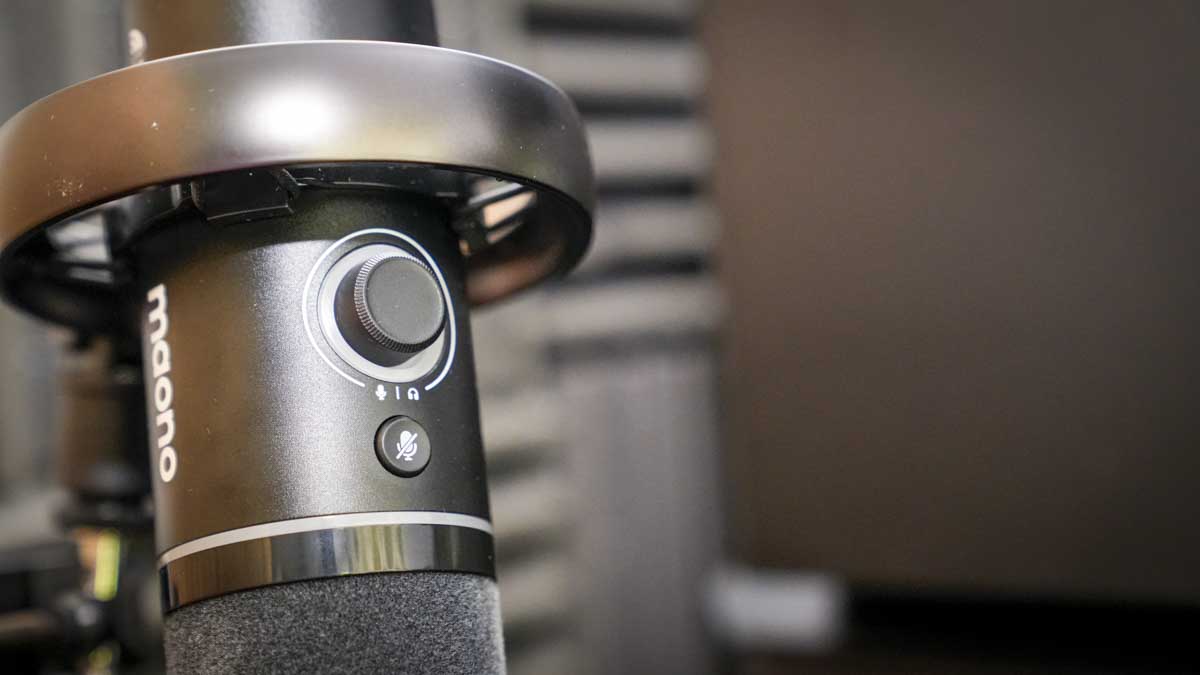
The controls are simple and mostly effective. The multi-function knob switches between mic gain and headphone volume, and the LED ring provides useful status feedback on gain, monitoring, and noise-cancellation levels, allowing adjustments without opening software during a live session. The one clear frustration is the mute button, which is a physical click mechanism rather than touch-sensitive. In a live stream or podcast recording, this click can register in the captured audio if pressed at the wrong moment, which is a notable practical limitation given how often muting mid-session comes up in real workflows.
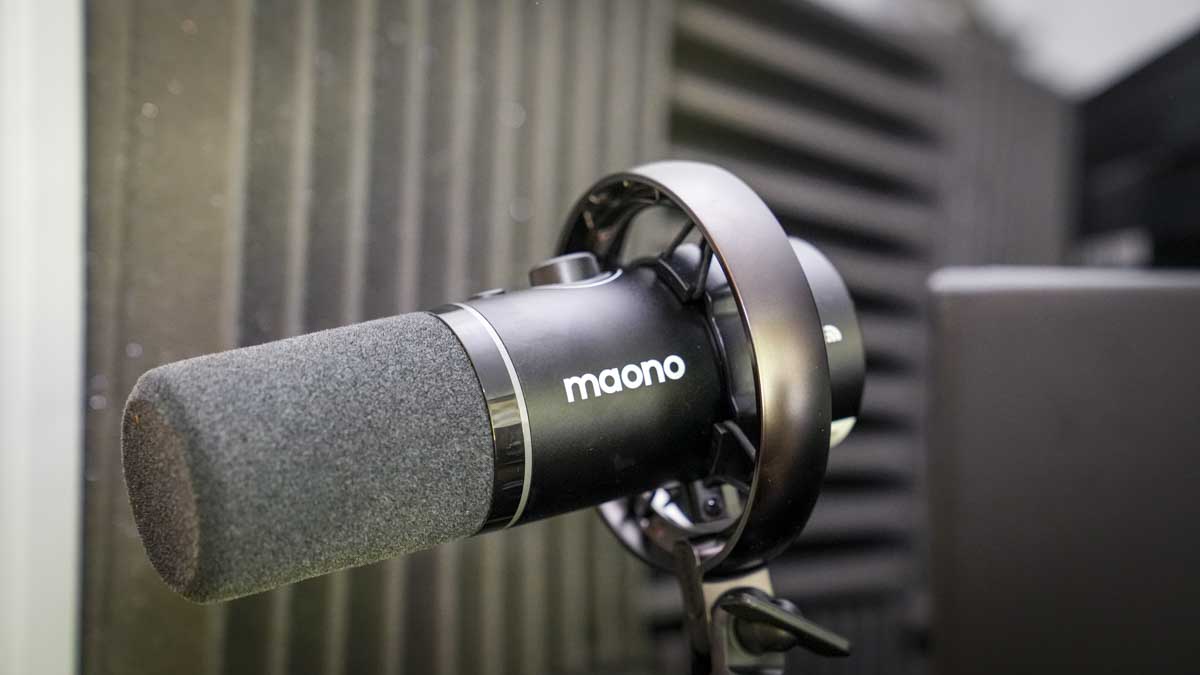
On the desk, the included stand is a usable starting point, but a boom arm is the better long-term solution, particularly when paired with something like the RØDECaster Duo, where screen space and cable routing both benefit from getting the mic off the desk surface. The supplied stand is stable, but the larger dynamic body can get in the way for keyboard-heavy work, where an arm gives better positioning and keeps the mic closer to the mouth without dominating the workspace.
The 3.5mm headphone output is genuinely useful. For XLR use into the RØDECaster Duo, I monitor through the Duo itself for full mix consistency, but the latency-free monitoring via the microphone’s own jack is a practical advantage when using USB or wireless directly into a phone or laptop without a mixer in the chain.
After six months, the mic body has held up well. The XLR socket is solid, the USB-C port has not loosened, and the metal finish shows only minor surface marks from regular handling. The more fragile element is the wireless receiver, which is plastic and does not inspire the same confidence as the microphone itself. It is also notably wide, which can sit awkwardly on some laptop ports. Treat the receiver with more care than the microphone body.
Features
The PD200W’s standout feature is its triple-mode design: XLR, USB-C and 2.4GHz wireless from one microphone. That gives it unusual flexibility for a dynamic podcast-style mic, and in six months, I have used XLR into the RØDECaster Duo as the primary workflow and wireless 2.4GHz into the Vivo V70 for voiceover work. The ability to pull the wireless receiver out of a bag and be recording into a phone within a minute, without swapping microphones, is a genuine practical advantage.
There is an important detail about XLR mode. The PD200W’s onboard digital processing, including three-level noise cancellation and Maono Link integration, is bypassed when connecting via XLR. You get the raw dynamic signal, which is what a good podcast interface like the RØDECaster Duo is designed for. The Duo’s preamps, EQ, compression, and routing take over. This means the PD200W’s processing features are most relevant to USB and wireless modes.
Wireless pairing is one of the better-implemented aspects of the design. The microphone comes pre-paired with the included receiver, so setup is immediate. In use, the 2.4GHz connection has been stable throughout the test, holding a reliable signal through typical indoor obstructions. Direct line of sight can significantly extend the range, though at the very far end of the rated 60m, the signal can drop if the body blocks the path to the receiver.
The three hardware noise-cancellation levels — Slight, Moderate, and Aggressive — are accessible directly on the microphone without software. Moderate is the sensible everyday setting, effective at reducing room reverb and ambient noise without audibly thinning the voice character. Slight is better when the recording environment is already controlled. Aggression is best reserved for genuinely noisy locations where background clarity matters more than absolute voice naturalness, as it introduces a processed quality at its stronger settings.
Maono Link adds a five-band EQ, high- and low-pass filters, presets, reverb, and RGB control, along with an onscreen level indicator to help avoid peaks. For a RØDECaster Duo user, the app is less central because the Duo handles production work, but for USB or wireless recording directly into a laptop or phone, it provides useful control that the physical controls alone cannot match.
Battery life has been notably strong. The 60-hour rating with RGB off appears accurate in practice, and the RGB-on figure of 38 hours still comfortably covers extended recording sessions. Over three or more days of regular use with RGB active, the battery has not been a concern. The ability to charge via USB-C while recording means battery anxiety effectively disappears from the workflow entirely.
The RGB lighting is a practical status indicator in USB and wireless modes — showing mute, gain and noise-cancellation states — and an aesthetic flourish second. It does not light up in XLR mode. For a working recording setup, RGB is more useful as feedback than as a visual feature, and in a professional context, it is the kind of thing I set to a low-key colour and largely stop thinking about.
Performance
In XLR mode via the RØDECaster Duo, the PD200W delivers the warm, full-bodied character of a well-voiced dynamic microphone. There is good depth and body to the spoken word without the low frequencies becoming muddy, and the natural high-frequency rolloff above 16,000Hz gives recordings a pleasing warmth rather than the crisp brightness of a condenser. For podcast voice and close-mic voiceover work, this tonal character is well-suited to the material and most recording environments.
As a dynamic cardioid, it rejects ambient noise from the rear and sides more naturally than most budget condensers, which reduces the post-processing burden in imperfect rooms. It still benefits from close placement and good technique — moving significantly off-axis noticeably degrades vocal quality — but in a typical home office or desk setup, the cardioid rejection does useful work before any noise processing is applied.
The wireless recording quality of the Vivo V70 has been one of the more surprising results of the test. The 2.4GHz wireless mode delivers audio that is noticeably close to the wired output — not identical, but close enough that voiceover recordings via wireless are usable for proper production work rather than feeling like a compromise. The consistency across modes is one of the more impressive aspects of the PD200W’s overall performance.
In practice, hardware noise cancellation is effective within its limits. Moderate handles room reverb and outdoor traffic noise well without obviously colouring the voice. Aggressive cleans up noisier environments, but introduces the kind of processing artefacts and slight voice thinning that most noise-reduction systems produce at their stronger settings. The practical guidance is to use the lightest setting that solves the noise problem, which in most controlled environments is either Slight or Moderate.
The 50–16,000Hz frequency response is narrower than many condensers, but that is not necessarily a weakness for speech. The tuning is built around body and conversational clarity rather than high-end sparkle, and for podcasts, tutorials and voiceovers, this can be flattering, particularly in less-than-perfect rooms where condenser brightness would reveal acoustic problems more readily.
Compared with the DJI Mic 2, the PD200W is less discreet, less camera-friendly, and heavier, but it delivers a richer, more broadcast-style dynamic sound. The DJI Mic 2 is a compact dual-channel wearable system with onboard recording, 32-bit float and a charging case, making it much better for interviews, walk-and-talks and camera-led production. The Maono makes more sense for desk-based podcasts, streaming, voiceover and controlled mobile narration where the larger body is not a constraint.
Final Thoughts
After six months of regular use, the Maono PD200W has earned its place in my kit by delivering on its promises more reliably than I initially expected. The all-metal build has held up, the XLR performance through the RØDECaster Duo is warm and clean, and the wireless mode into the Vivo V70 proved dependable enough for real voiceover work.
At £129.99 in the UK, the PD200W sits in a competitive bracket against USB/XLR dynamics such as the RØDE PodMic USB, but adds 2.4GHz wireless as its standout differentiator. For creators who mainly want a proper desk setup but occasionally need wireless flexibility, there isn’t much at this price that offers a comparable combination.
The most physically frustrating element is the mute button’s audible click, which is a practical concern for anyone who mutes frequently during live recordings. The receiver design could also be more refined, and a slimmer, more robust wireless dongle would strengthen the overall package. These are the two areas where the price point is visible.
For desktop podcasters running the RØDECaster Duo, the PD200W makes sense as a credible, affordable dynamic that can also follow you away from the desk when needed. It will not replace a premium broadcast microphone for studio production, but for creator, podcast and tutorial workflows, it is more than capable, and the triple-mode flexibility is genuine rather than a marketing concept.