
A medium-format 100MP camera with exceptional colour science and dynamic range that sets a new benchmark for professional image quality
Our Verdict
Hasselblad X2D II 100C verdict
What is the Hasselblad X2D II 100C?
The Hasselblad X2D II 100C is a medium-format mirrorless camera built around a 100MP BSI CMOS sensor (43.8 × 32.9mm), which is much larger than the full-frame sensors in professional Sony, Canon, and Nikon cameras. Hasselblad, one of photography’s most storied names, has a history reaching from the first photos on the moon to iconic twentieth-century portraits. The X2D II 100C is aimed at professional studio and landscape photographers for whom image quality is often the sole consideration.
It is a stills-only camera: no video, no high-speed burst, no hint of hybrid use. Instead, it offers resolution, dynamic range, and colour depth unmatched by any full-frame camera. The USP is simple: for the best mirrorless image quality, this is it. Priced at about £6,400 / $7,399 body only, it targets professional photographers in studio, landscape, or architecture fields where slower workflows are acceptable for files robust enough for extreme enlargement and extraordinary detail.

Specification
Sensor: 100MP medium-format BSI CMOS, 43.8 × 32.9mm
Resolution: 100MP
ISO range: 50–25,600
Autofocus: Phase detection AF, 425 PDAF points, LiDAR assistance
Burst rate: Up to 3fps continuous
Video: None (stills only)
Memory card: CFexpress Type-B
Weather sealing: Yes
Weight: Approx. 840g (body only)
Battery: Approx. 466 shots per charge
Mount: Hasselblad X-mount (XCD lenses)
Price: Approx. £6,400 / $7,399 (body only)
Resolution: 100MP
ISO range: 50–25,600
Autofocus: Phase detection AF, 425 PDAF points, LiDAR assistance
Burst rate: Up to 3fps continuous
Video: None (stills only)
Memory card: CFexpress Type-B
Weather sealing: Yes
Weight: Approx. 840g (body only)
Battery: Approx. 466 shots per charge
Mount: Hasselblad X-mount (XCD lenses)
Price: Approx. £6,400 / $7,399 (body only)
Build and Handling
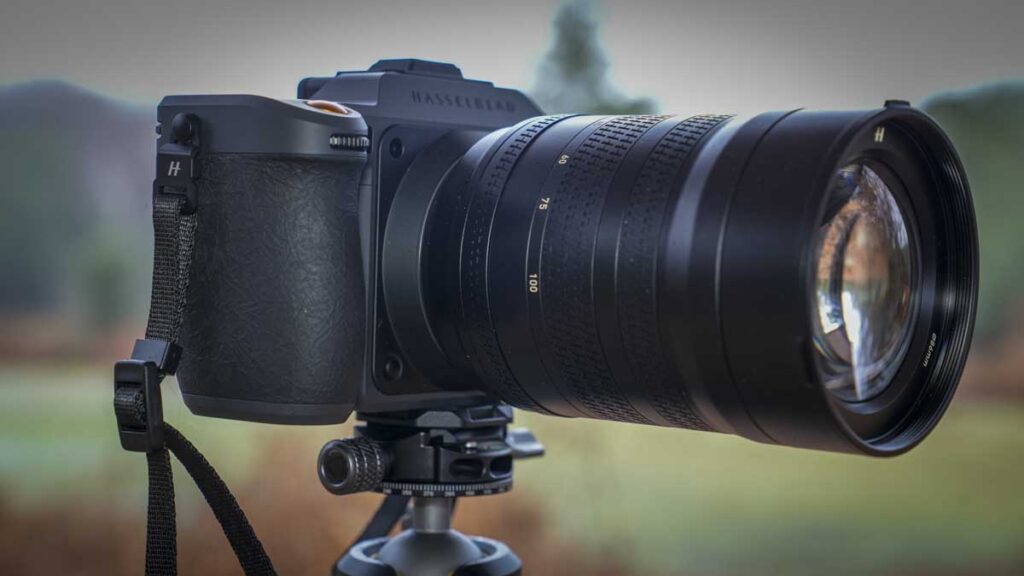
The X2D II 100C is a large camera, larger than any full-frame mirrorless body in this test, and its size is dictated by its components. The medium-format sensor demands a larger mount, body, and lenses, all of which are reflected in the Hasselblad XCD system.
At approximately 840g body only, it is substantial, and paired with the 35–100mm AF zoom, the combined weight is considerable. Yet, balance and ergonomics are excellent. The grip is deep and secure, the weight distribution intentional, and long sessions do not become the ordeal typical of less well-designed large-format bodies.
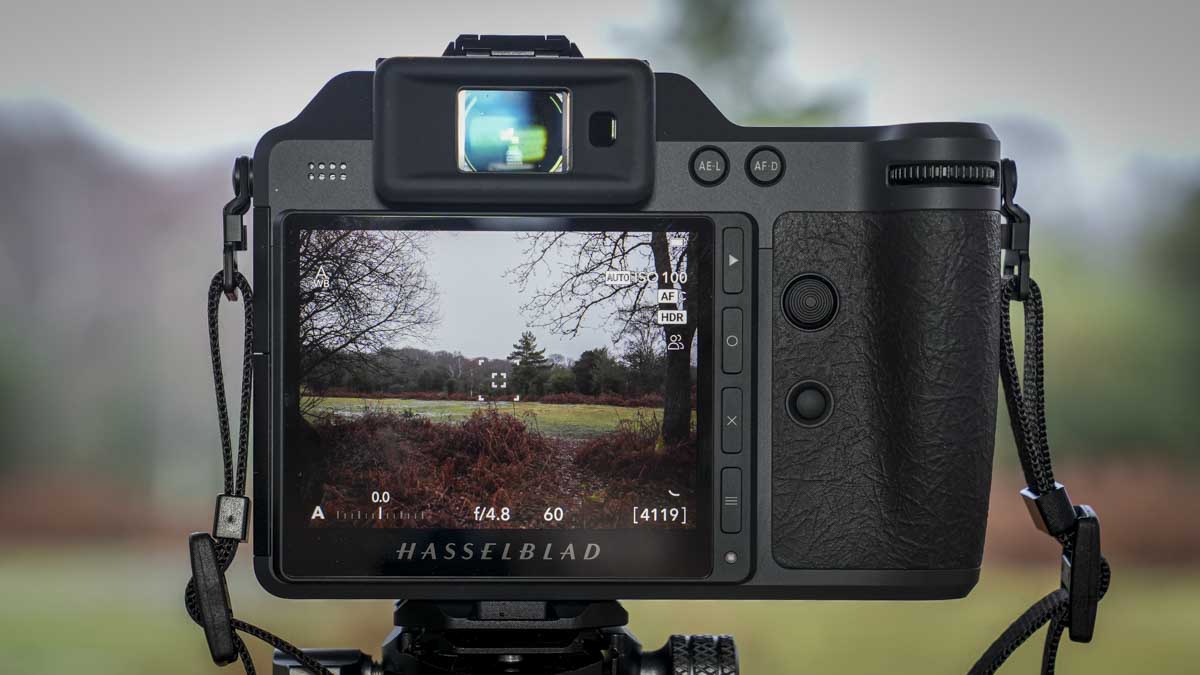
The build quality is clear; this feels like a tool engineered without compromise. Weather sealing excelled in testing, and the all-metal body gives the camera a professional solidity. The design is distinctly Scandinavian: clean, functional, and restrained. The control layout supports professional workflows, with common settings on dedicated controls instead of hidden in menus.

The interface departs from the icon-heavy menus of most Japanese camera systems. The Control Screen gives direct access to focus modes, metering, and other critical settings, and after an hour of familiarisation, the navigation felt genuinely intuitive for a professional workflow. Setup is straightforward: charge and insert the battery, slot in a CFexpress Type-B card, the file sizes from a 100MP sensor demand both the capacity and speed of a card like the Lexar Gold CFexpress Type-B, and the camera is ready to shoot. The transition from unboxing to the first image is measured in minutes.
Features
The 100MP BSI CMOS medium-format sensor is the defining feature of the X2D II 100C. Everything else about the camera exists to serve it. The BSI (back-side-illuminated) architecture improves the camera’s light-gathering efficiency. This contributes to low-light performance and dynamic range. The 43.8 × 32.9mm sensor gives it a 1.7× advantage in surface area over a full-frame sensor. This translates to more captured light per scene. The camera can reproduce shadow and highlight detail that smaller sensors simply cannot retain.
Autofocus on previous Hasselblad medium-format systems was a known limitation, but the X2D II 100C addresses this directly. The phase-detection AF system uses 425 PDAF points, combined with LiDAR distance measurements, for rapid and accurate subject acquisition. Eye detection and subject tracking both performed reliably through the test, locking on with an accuracy that exceeded expectations for a medium-format system.
It is still not on a par with the fastest full-frame AF systems from Sony or Canon, but the gap has narrowed significantly, and for portrait, studio, and landscape work, the performance is more than sufficient.
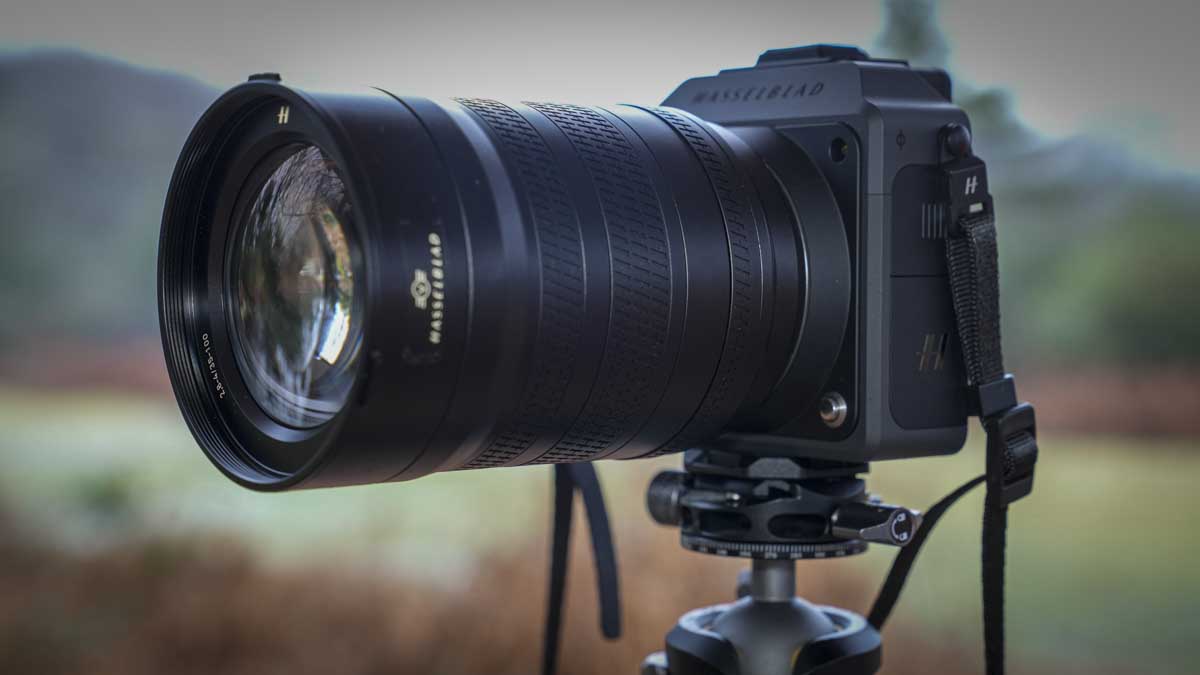
The XCD lens system is extensive and optically exceptional, though the lenses carry price tags that match the body. The 35–100mm AF zoom used in this test is a versatile professional tool, and for photographers already invested in the older 500C system, an adapter allows those lenses to be used on the new body, though the contrast with the modern XCD glass is noticeable. The camera shoots CFexpress Type-B cards exclusively, which at 100MP per image is a practical necessity rather than a limitation.
Performance
Reviewing images from the X2D II 100C alongside those from full-frame cameras is an immediate and revealing exercise. The difference is not subtle. The depth of colour, the tonal graduation from shadow to highlight, and the retention of fine detail at 100MP, texture in fabric, individual strands of hair, and the grain of wood are in a different category entirely.
At full resolution, files from the X2D II 100C withstand enlargement to print sizes that would expose the limits of any full-frame sensor. For studio, landscape, and architecture photographers, this is not an academic distinction; it is the difference between a file that works and one that excels.
Dynamic range is where the medium-format advantage is most immediately apparent. In high-contrast scenes, bright skies against shadowed foregrounds, studio lighting with deep backgrounds, the X2D II 100C retains detail in both directions with a confidence that smaller sensors cannot match. Recovery of shadow information in post-processing reveals detail that was simply not captured by the competing cameras in this test, and highlights that retention in bright conditions is equally impressive.
Low-light performance is strong for the sensor size, thanks to the larger photosites that capture more light per pixel. Colour and tone held up well at ISO 800 and above, and the results at the upper native range remained usable in a way that reflects both the sensor design and Hasselblad’s colour science, one of the most respected in the industry and immediately evident in the quality of skin tones and natural colours produced straight from the raw files.
The 3 fps burst rate is the system’s honest limitation. The image files are enormous, and the buffer fills quickly, requiring a pause before continuous shooting can resume. For portrait, studio, and landscape work, this is irrelevant. For sports, wildlife, or any fast-action discipline, a full-frame mirrorless camera with 20 fps or more will always be the practical choice. The absence of video capability is equally clear-cut; this camera does one thing, and does it better than any other camera I have tested.
Final Thoughts
If there were one camera from this entire test that I would choose to own, it would be the Hasselblad X2D II 100C. The price is significant: at £6,400 body-only, it is more than twice the cost of a professional full-frame mirrorless, but the image quality it delivers is in a different category entirely. For professional studio or landscape photographers whose clients or print work demand the highest image quality, there is no comparison.

The improved autofocus, weather sealing, and genuinely intuitive interface make the X2D II 100C a camera that works as hard as it looks. It is not a camera for everyone; the price, the pace, and the still-only focus make that clear from the outset. But for the photographer who needs the finest medium-format images available from a modern mirrorless system, this is it. Unequivocally.