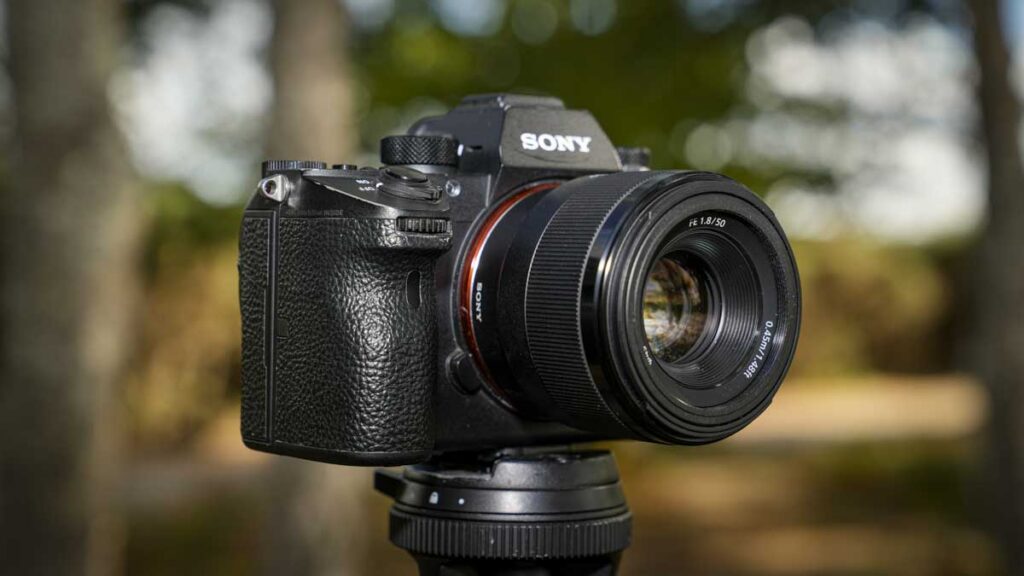

The first stacked-sensor full-frame camera cost £4,500 in 2017. It now sells used from £755, and firmware has made it better than the camera we originally reviewed
Our Verdict
The Sony A9 is a rare old camera that improved after launch. Our original review called it a game-changer for its blackout-free 20fps shooting and 693-point autofocus; history agreed, and the 2019 firmware updates added Real-time Tracking and animal Eye AF, which we never had access to in the original review, so a revisit was essential. In 2026, used bodies run from £755 to around £1,100, a fifth of the £4,500 launch price, and nothing near that money touches its speed. The trade-offs are period pieces: one fast card slot, no anti-flicker shooting, dated video tools and a menu system from Sony’s difficult phase. For action, wildlife and silent shooting, it’s still the used-market speed bargain.
Who it’s for: action, wildlife and event photographers who want stacked-sensor speed and silent shooting for under £1,100, and shoot stills first.
What is the Sony A9?
The A9 is Sony’s first professional sports camera, launched on 19 April 2017 at £4,500 to compete directly with the Nikon D5 and Canon 1DX Mark II. It was the first full-frame camera with a stacked sensor, and that architecture delivered what no DSLR could: 20fps with full autofocus tracking, a completely silent shutter, and a viewfinder that never blacks out. Our original review closed by calling it a game changer, and every flagship mirrorless camera since, from any brand, has followed the template it set.
With thanks to mpb.com who have loaned us the Sony A9 for this review update – if you’re interested in picking up a bargin, then check out the selection of second hand Sony A9 cameras they presently have on sale.
The 2026 twist is that a used A9 is better than the camera we reviewed. Sony’s 2019 firmware added Real-time Tracking and animal Eye AF, features the original body shipped without, so the £755 to £1,100 you’d pay today buys the improved version. My review body came on loan from MPB with the FE 24-70mm f/2.8 GM II and FE 50mm f/1.8, joined by my own E-mount glass, including the FE 200-600mm that the wildlife testing demanded.
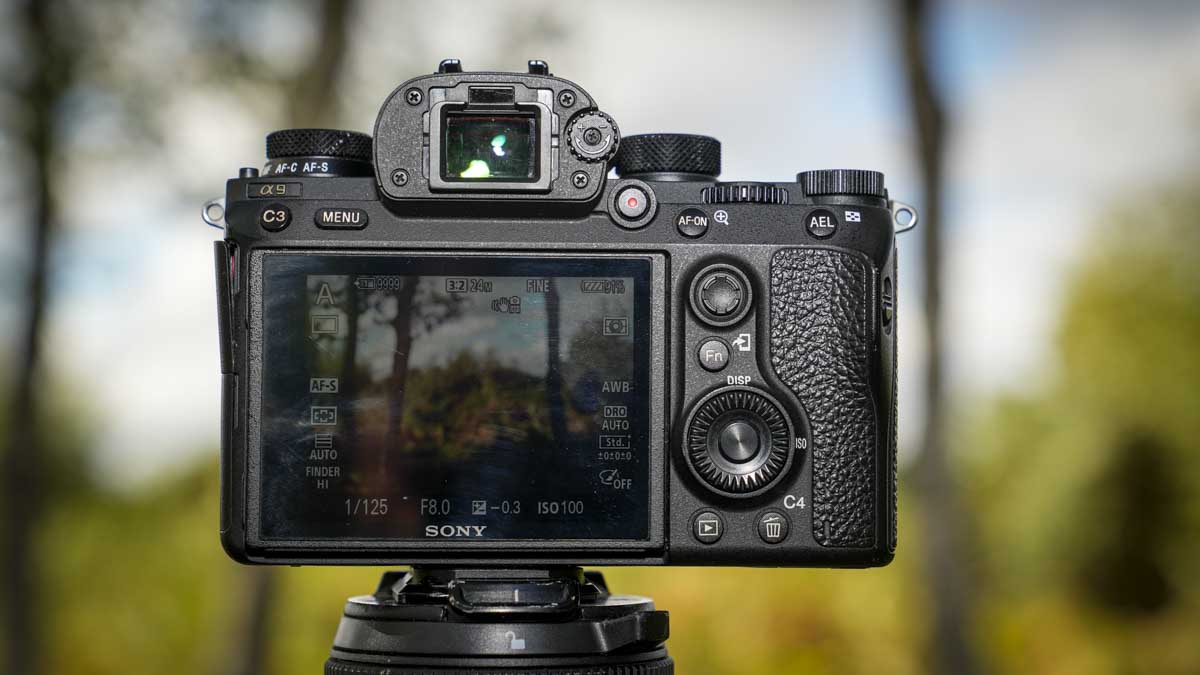
In 2026, this camera is best suited to a stills-first action photographer: sport, wildlife, events, or anyone who needs silent shooting, weddings and ceremonies above all, at a fraction of what stacked-sensor speed costs new.
Sony A9 specifications
Sensor: 24.2MP full-frame stacked Exmor RS CMOS (35.6 x 23.8mm)
Processor: BIONZ X with integral sensor memory
Lens mount: Sony E (FE)
ISO: 100-51,200 (exp. 50-204,800)
Autofocus: 693 phase points, 93% coverage, 60 calculations/sec, -3EV
Burst: 20fps electronic / 5fps mechanical
Buffer: 241 RAW / 362 JPEG
Shutter: To 1/32,000s electronic, silent operation
Stabilisation: 5-axis IBIS, 5-stop rating
Video: UHD 4K 30p (6K oversampled), 100Mbps, 8-bit, no S-Log
Viewfinder: 3.686m-dot OLED, 0.78x, 120fps refresh, blackout-free
Screen: 3in tilting touchscreen, 1.44m dots
Storage: 2x SD (slot 1 UHS-II, slot 2 UHS-I)
Battery: NP-FZ100, 480 (EVF) / 650 (LCD) shots
Weight: 673g with battery and card
Launch price: £4,500 (April 2017)
Used price: From £755, typically £900-£1,100
Processor: BIONZ X with integral sensor memory
Lens mount: Sony E (FE)
ISO: 100-51,200 (exp. 50-204,800)
Autofocus: 693 phase points, 93% coverage, 60 calculations/sec, -3EV
Burst: 20fps electronic / 5fps mechanical
Buffer: 241 RAW / 362 JPEG
Shutter: To 1/32,000s electronic, silent operation
Stabilisation: 5-axis IBIS, 5-stop rating
Video: UHD 4K 30p (6K oversampled), 100Mbps, 8-bit, no S-Log
Viewfinder: 3.686m-dot OLED, 0.78x, 120fps refresh, blackout-free
Screen: 3in tilting touchscreen, 1.44m dots
Storage: 2x SD (slot 1 UHS-II, slot 2 UHS-I)
Battery: NP-FZ100, 480 (EVF) / 650 (LCD) shots
Weight: 673g with battery and card
Launch price: £4,500 (April 2017)
Used price: From £755, typically £900-£1,100
How does the Sony A9 handle?
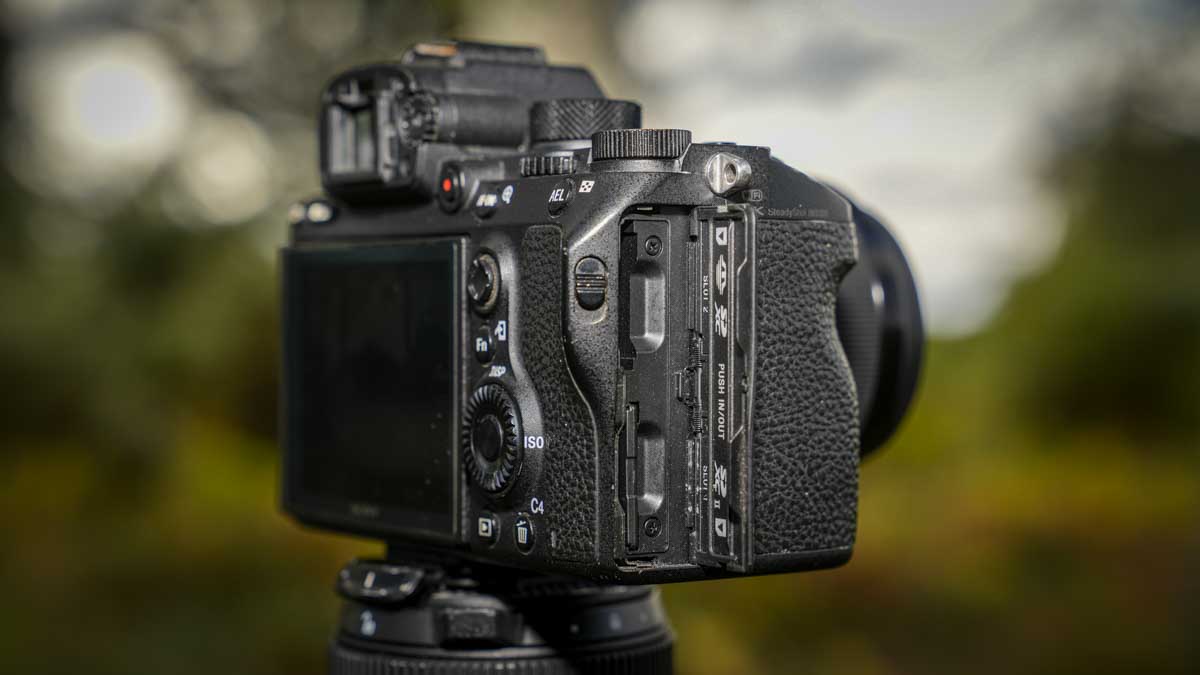
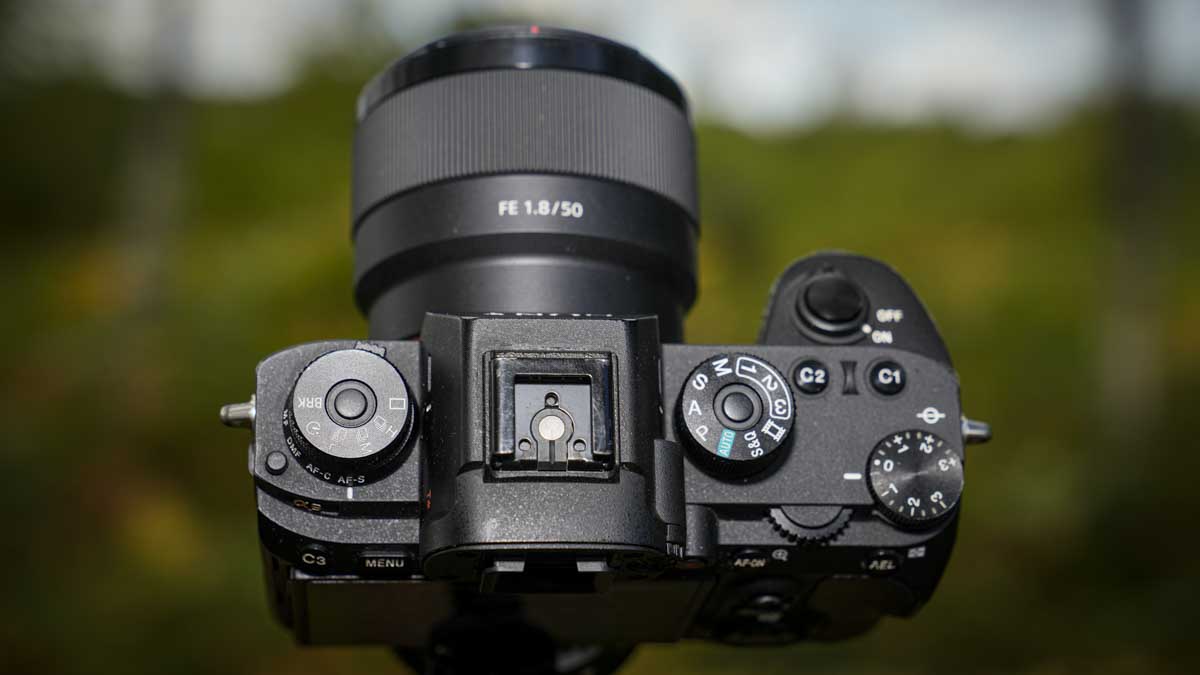
Like the moment Sony started listening to its users. The A9 fixed the A7-series complaints of its era: the grip is deeper, the body feels dense and weather-sealed, with tongue-and-groove panel joints, and at 673g with the battery, it’s still light compared to the professional DSLRs it was built to beat. Our original review’s happiest discovery was the mini-joystick for AF-point selection, greeted with an actual hurrah, and it remains the control that makes 693 points manageable. Between this, the Nikon D850 and the Canon EOS R in this retro series, the joystick-equipped bodies win on handling every time.
The quirks are still here, too. The stacked drive and focus-mode dials on the left shoulder are clever but fiddly, each with its own locking button. I have a love-hate relationship with these. The touchscreen only sets the AF point and zooms playback; the menu navigation our original review hoped the firmware would add never came, and the menus themselves sprawl across 13 shooting screens, 9 more for the second bank, and 7 for setup. Set up My Menu on day one; it’s the difference between having the setting you need to hand and pure frustration.
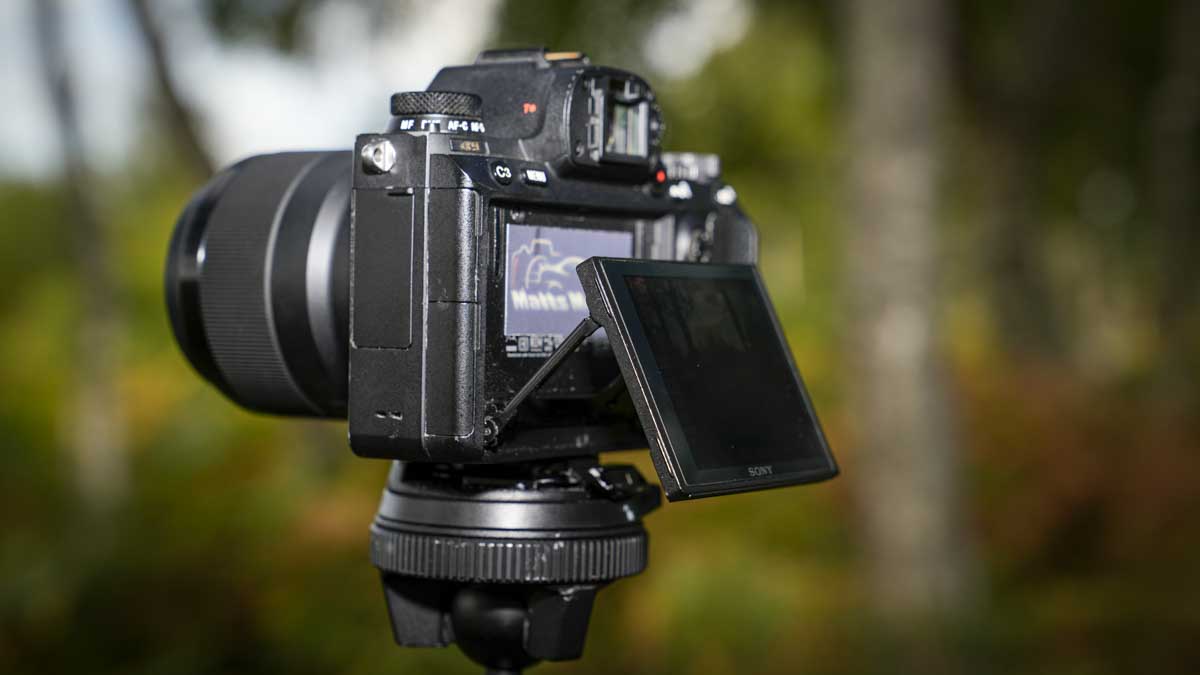
Two major details about the feature set to note. The connection is Micro-USB, so it’s another cable connector and not a great one due to its micro size. The screen tilts but doesn’t articulate, so upright low-angle work still means guesswork. Neither was a major issue in 2017, but in 2026, these are features we expect.
What features does the Sony A9 have?
Speed is delivered in three ways. The stacked sensor reads fast enough for 20fps with autofocus and metering recalculated 60 times a second, a 1/32,000s top shutter speed that shoots f/1.8 in full sun without an ND filter, and an electronic shutter that is, as our original review put it, silent, not just quiet. In that original review, it was also found that the silence was a little unnerving, and that turning the sounds back on for reassurance was common; these days, shooting silently is more common, so while still strange, it’s more acceptable.
The autofocus system spreads 693 phase points across 93% of the frame, with tracking sensitivity adjustable over five steps. What a 2026 buyer gets on top is the firmware story: version 5.0 brought Sony’s Real-time Tracking, version 6.0 added animal Eye AF, and together they turn a great 2017 system into something close to a modern one. Check the firmware version before you buy or shoot: in Setup > Version, anything below 6.00 leaves free performance on the table.
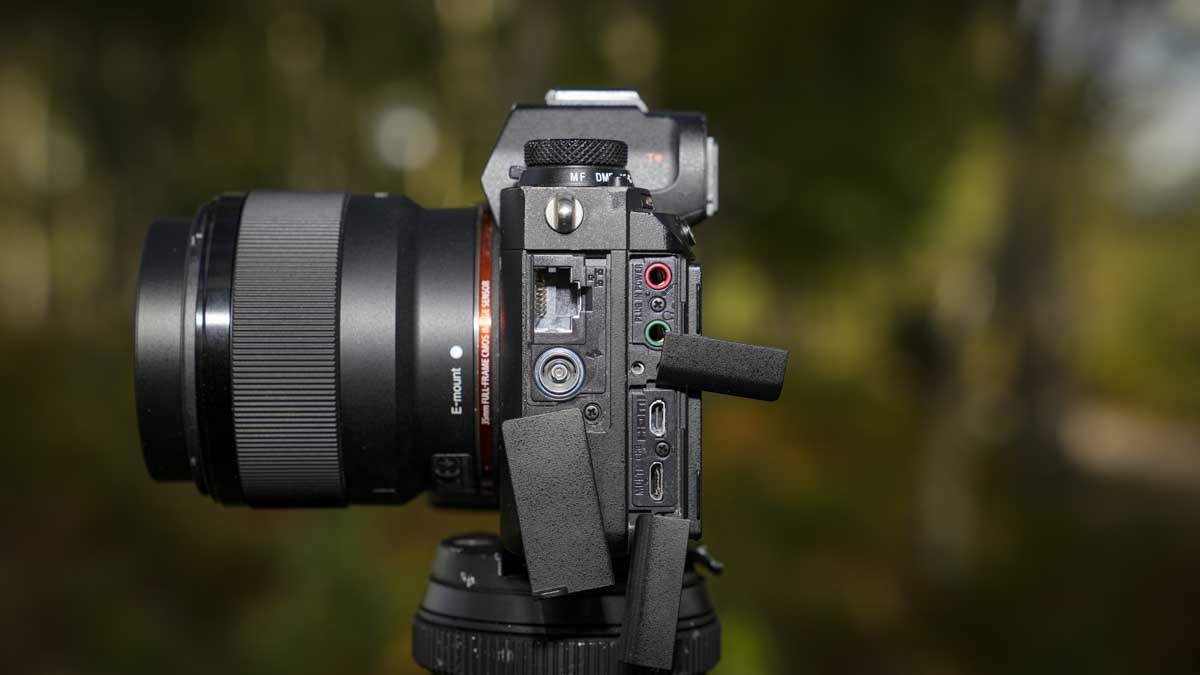
The professional connectivity is apparent, dual slots, wired LAN with encrypted FTP, a sync port, and much of it has since trickled down the range. The slots are unequal, one UHS-II and one UHS-I. Our original review expected an XQD slot, when 241 RAW frames beg for two fast ones. There’s no anti-flicker shooting, so bursts under artificial light can band. Video, in contrast to the stills performance, is a let-down: oversampled 4K 30p looks clean, and Full HD reaches 120 fps, but recording is 8-bit, and the Picture Profiles and S-Log that our original review hoped the firmware would deliver never arrived. This is very much a stills camera.
How good is the Sony A9’s image quality?
Very good, and built for speed rather than resolution. The 24.2MP count looks modest compared to the D850’s 45.7MP from the same year, but it’s the price of the stacked readout, and the files themselves aren’t compromised in terms of tone and detail. Our original review found fine detail held well at ISO 6400 and 12,800, with raw files showing only a fine texture at 100% and JPEGs staying clean, and colours that are natural rather than punchy in the Standard Creative Style.
Dynamic range was the quiet surprise: the original testing brightened low-ISO shadows by as much as 5 EV and still retained good detail and colour, which is latitude to rival that of dedicated landscape bodies. Its metering notes carry forward too: multi-segment metering held up even with small subjects against bright backgrounds, but a dark subject on pale sand wanted around +1EV, dialled in with the confidence that a live-view finder shows you the result before you press the shutter, unlike a DSLR of the time.
How does the Sony A9 perform?
The 20fps blackout-free burst is still the headline feature, nine years on. Our original review’s launch event tells it best: 921 frames in 28 minutes in a boxing gym, the finder never blacking out, the Wide-area AF picking one boxer and refusing to jump to the background, though it did keep homing in on the gloves, often the brightest thing in frame. On a later Northumberland trip, it made photographing puffins in flight, in the reviewer’s words, a cinch, holding birds against cluttered cliffs in Wide AF, a mode the reviewer normally never trusted.
The dog test completes its trilogy here, and this one comes with an inheritance. The original review photographed a puppy’s first trip to a beach and noticed that when he stood still, focus sometimes fell slightly short, but the moment he moved, the system snapped on: head when he ran toward the camera, backside when he ran away. I repeated it with Pip, my 11-year-old Labrador, with the advantage the original reviewer never had: animal Eye AF, added by firmware in 2019. The 200-600mm handled the bird retest.
The battery deserves its reputation. Rated at 480 shots through the EVF and 650 on the LCD, the original review comfortably exceeded both, and at 20fps, the frame count climbs so fast the rating becomes almost meaningless. The five-stop IBIS still earns its keep with primes, and rolling shutter is controlled well enough that the electronic shutter is the default, not the compromise. The one workflow drag is that single UHS-II slot: fill 241 RAW frames, and the clear time reminds you where nine years went.
Should you buy the Sony A9?
Buy it used if you shoot action, wildlife or events and want stacked-sensor speed for under £1,100; nothing else at the price is close. Skip it if you shoot video, work under flickering artificial light, or want modern connectivity. Check the firmware version 6.00 before you pay.
Buy it if…
You shoot sport, wildlife or fast action
You need genuinely silent shooting
You want stacked-sensor speed at a fifth of launch price
You need genuinely silent shooting
You want stacked-sensor speed at a fifth of launch price
Don’t buy it if…
Video matters; there’s no S-Log, and it’s 8-bit
You shoot bursts under artificial light
You want modern menus and USB-C
You shoot bursts under artificial light
You want modern menus and USB-C
Alternatives
Sony A9 II: the refinement pass, adding 10fps mechanical shooting, anti-flicker and better connectivity for a used premium. Sony A9 III: the global-shutter successor, used from £3,849, if distortion-free 120fps justifies four times the money. Sony A7 IV: the all-rounder answer if speed matters less than resolution and video.
How we tested
I tested a used Sony A9 supplied on loan by MPB, fitted with the FE 24-70mm f/2.8 GM II and FE 50mm f/1.8, alongside my own E-mount lenses, including the FE 200-600mm for wildlife work, over two weeks on firmware version 6. Testing covered birds in flight, action tracking with animal Eye AF, silent and 1/32,000s shooting, an ISO ladder, shadow-lift latitude, IBIS, banding under artificial light, buffer and battery, and retracing our original 2017 review’s tests. MPB had no input into this review.