
Nine years on and still on sale new, the peak of the DSLR era now costs a third of its launch price used.

Our Verdict

The Nikon D850 remains the best DSLR ever made, and in 2026, that’s both its appeal and its limitation. The 45.7MP files still stand up against anything at the price, the optical viewfinder and 1,840-shot battery embarrass most mirrorless bodies, and used prices of £957 to £1,349 buy you what cost £3,499.99 at launch. What’s incredible for a camera of this age is that it’s still on sale new for £1,699. What you give up is everything mirrorless brought afterwards: subject-detection autofocus, in-body stabilisation, and fast live view. For stills photographers with F-mount glass who aren’t bothered by auto-assisted additions, this is a superb camera, and it remains unrivalled. For everyone else, it’s a question of whether the DSLR way of working still suits you.
Who it’s for: photographers with F-mount lenses who shoot landscapes, studio, weddings or wildlife through the viewfinder, and value stamina over modern automation.

What is the Nikon D850?

The D850 is Nikon’s high-resolution professional DSLR, launched in September 2017 at £3,499.99 and is widely regarded as the pinnacle of design and technology for the format. The camera features a 45.7MP back-illuminated sensor and the 153-point autofocus system from the flagship D5, and at the time of launch, Nikon pitched it as two cameras in one: the resolution of the D810 with the speed of the D500. Our original review found that the argument held up.

Nine years later, its market position is unique. Most 2017 cameras are long discontinued; the D850 is still on Nikon’s price lists, selling new from £1,699 to £2,399, while used bodies run from around £957 to £1,349 and are falling month on month, although when I first saw the second-hand pricing, I was surprised by just how well this camera has held its value. My review body came with two lenses: the AF-S Nikkor 24-70mm f/2.8E ED VR and the AF-S 50mm f/1.8G, a pairing that covers most of what this camera does best.
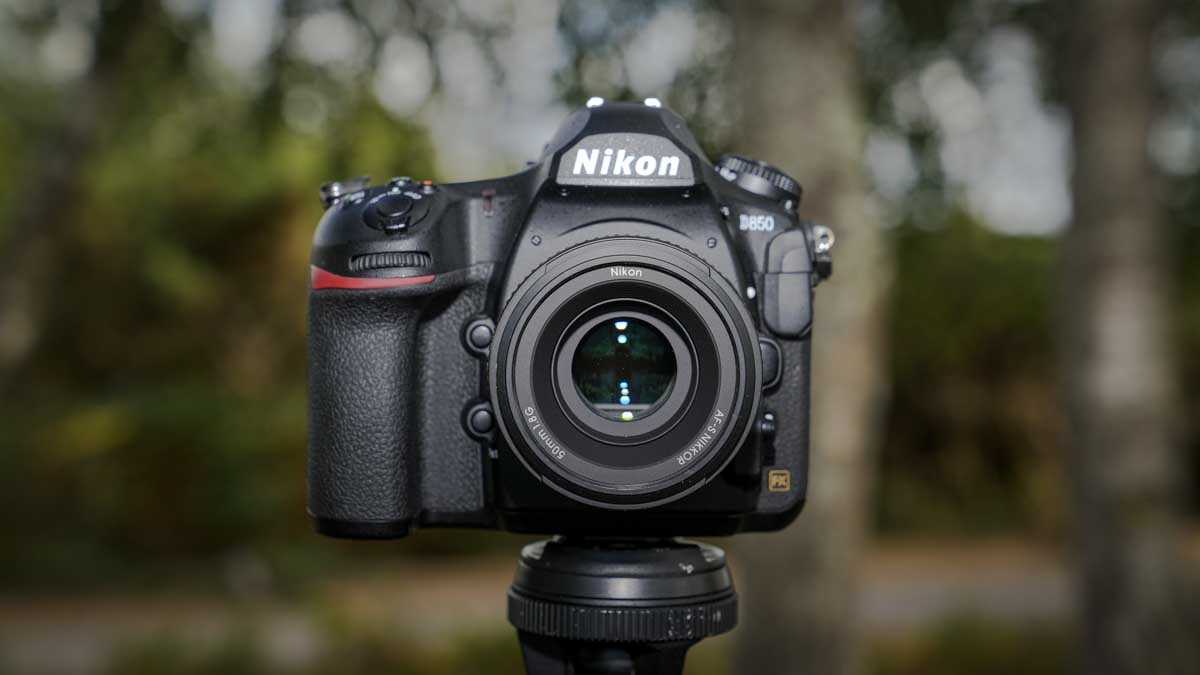
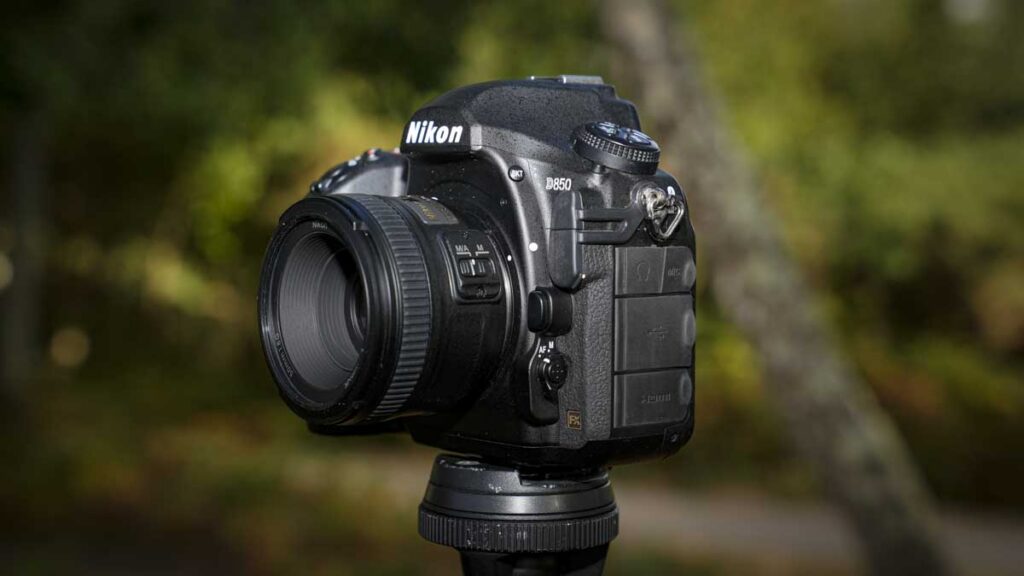
Nikon D850In 2026, the main interest in this camera will be among still photographers, especially if you already own F-mount glass and want the best image quality and outstanding battery life without making the move to the Z8, which, at £2749 as of writing, is substantially more. It’s also the last DSLR standing for anyone who simply prefers an optical viewfinder, because nothing better was ever made with one.

Nikon D850 specifications

Sensor: 45.7MP full-frame BSI CMOS (35.9 x 23.9mm), no low-pass filter
Processor: EXPEED 5
Lens mount: Nikon F
ISO: 64-25,600 (exp. 32-102,400)
Autofocus: 153 points (99 cross-type), centre point to -4EV
Burst: 7fps / 9fps with MB-D18 grip
Buffer: 51 lossless 14-bit RAW / 170 12-bit RAW
Video: UHD 4K 30p full-width, 8-bit, uncompressed 4:2:2 via HDMI
Viewfinder: Optical pentaprism, 100% coverage, 0.75x
Screen: 3.2in tilting touchscreen, 2.359m dots
Storage: 1x XQD/CFexpress + 1x SD (UHS-II)
Battery: EN-EL15a, 1,840 shots (CIPA)
Weight: 915g body only
Dimensions: 146 x 124 x 78.5mm
Launch price: £3,499.99 (September 2017)
Price now: New from £1,699; used £957-£1,349 typical

How does the Nikon D850 handle?
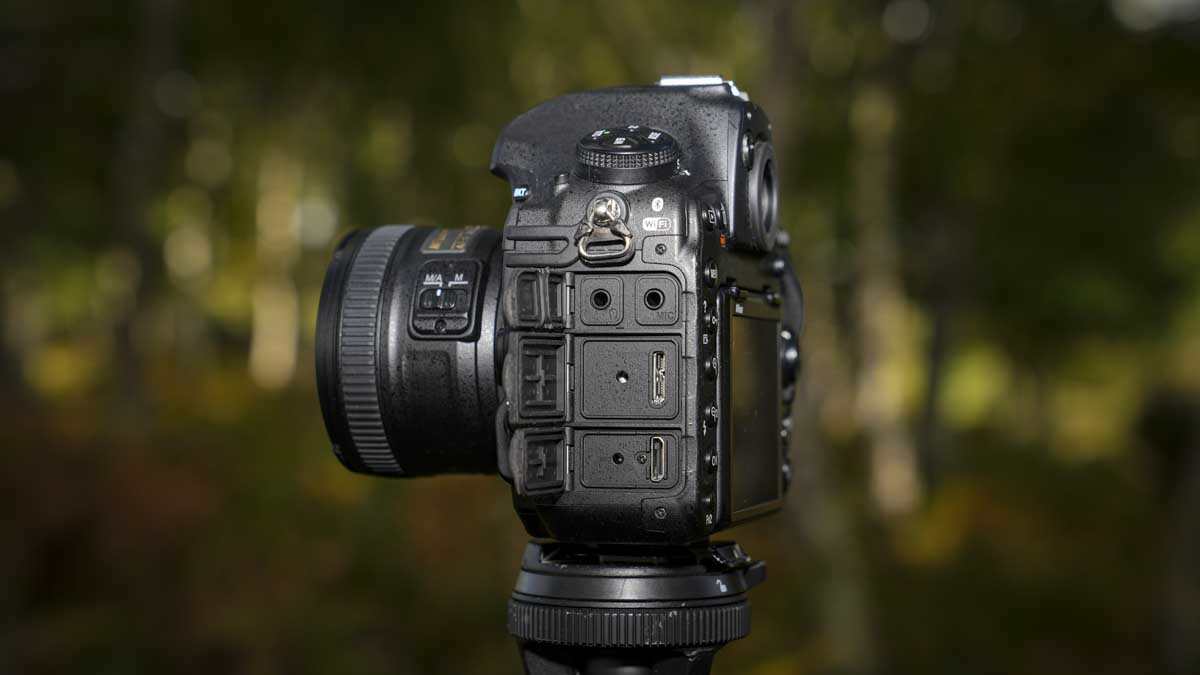
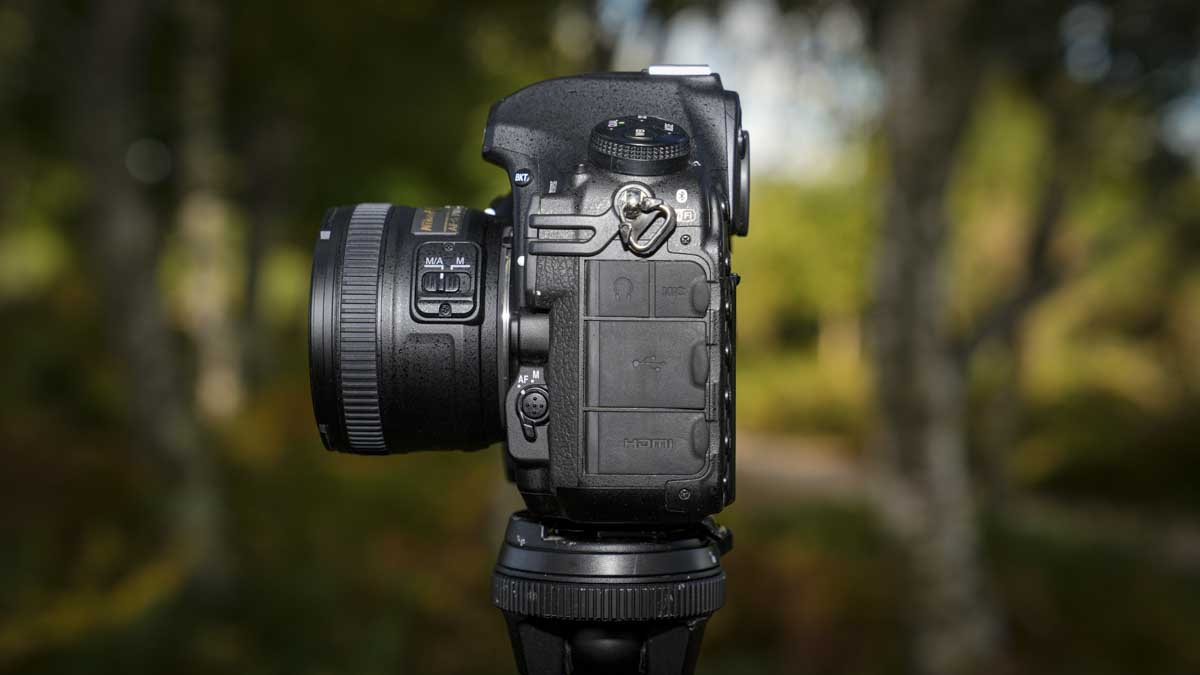
Simply put, like a professional tool from an era when weight meant durability, because it did. The body is 915g of weather-sealed magnesium alloy, and our original review tested that claim in persistent drizzle and driving wind on a sandy beach; the camera needed a wipe-down and nothing more. This time around, I’m in 30ºC plus temperatures in the summer, so quite a contrast. The shutter is rated to 200,000 cycles with a counterbalanced front curtain, and at 7 fps, it still sounds and feels expensive. This review sample has a shutter count of 73083 frames at present, and it still sounds great.
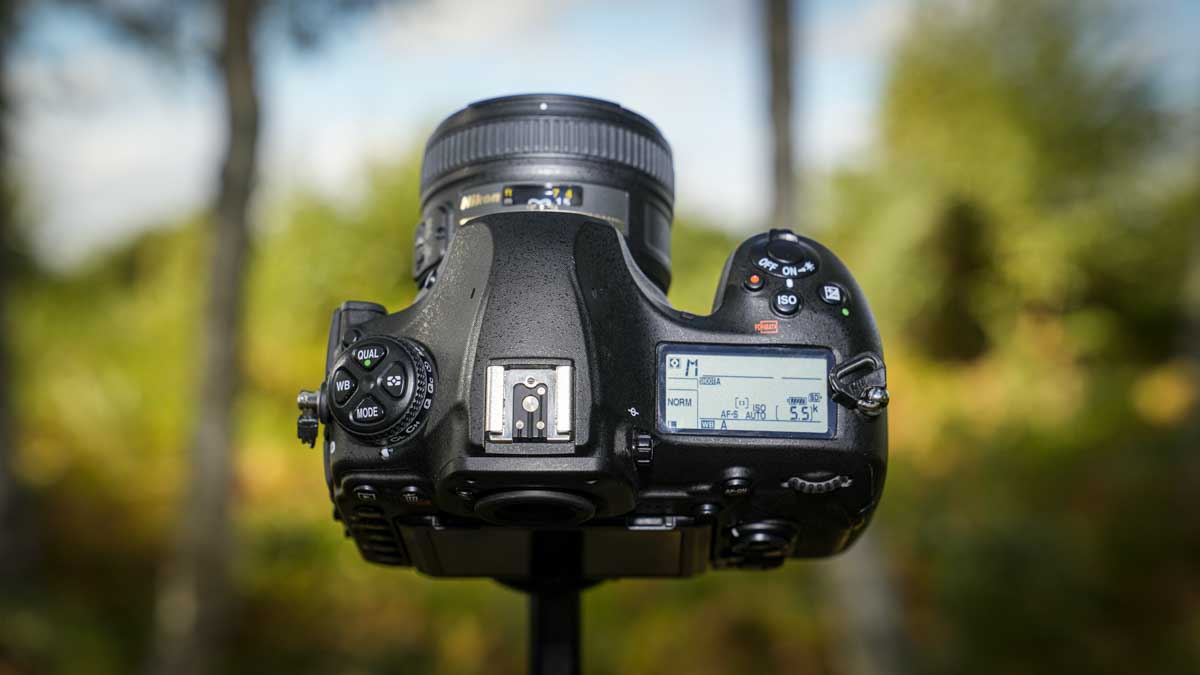
Picking the camera up, and the larger DSLR-style grip and controls are where three decades of my Nikon muscle memory expect them, and two touches to these controls stand out even now. The mini-joystick, borrowed from the D500, makes focus-point selection quick with the camera at your eye, something the EOS R (Link to EOS R review) I reviewed recently tried a different course with and failed. And the ISO button sits just behind the shutter release, under your index finger, exactly where it belongs. The buttons illuminate for night work, and the top-plate LCD shows your settings before the camera is even raised.
Nikon D850
The compromises, however, reflect the age with a 3.2-inch touchscreen that, while sharp and responsive, only tilts vertically; there’s no articulation for upright low-angle work. Our original review’s one recurring niggle stands too: the Info button shows settings without letting you change them, while the i button lists options you rarely need. And the connection is Micro-B USB, which in 2026 means carrying one more cable that no other cable in your bag uses.

What features does the Nikon D850 have?
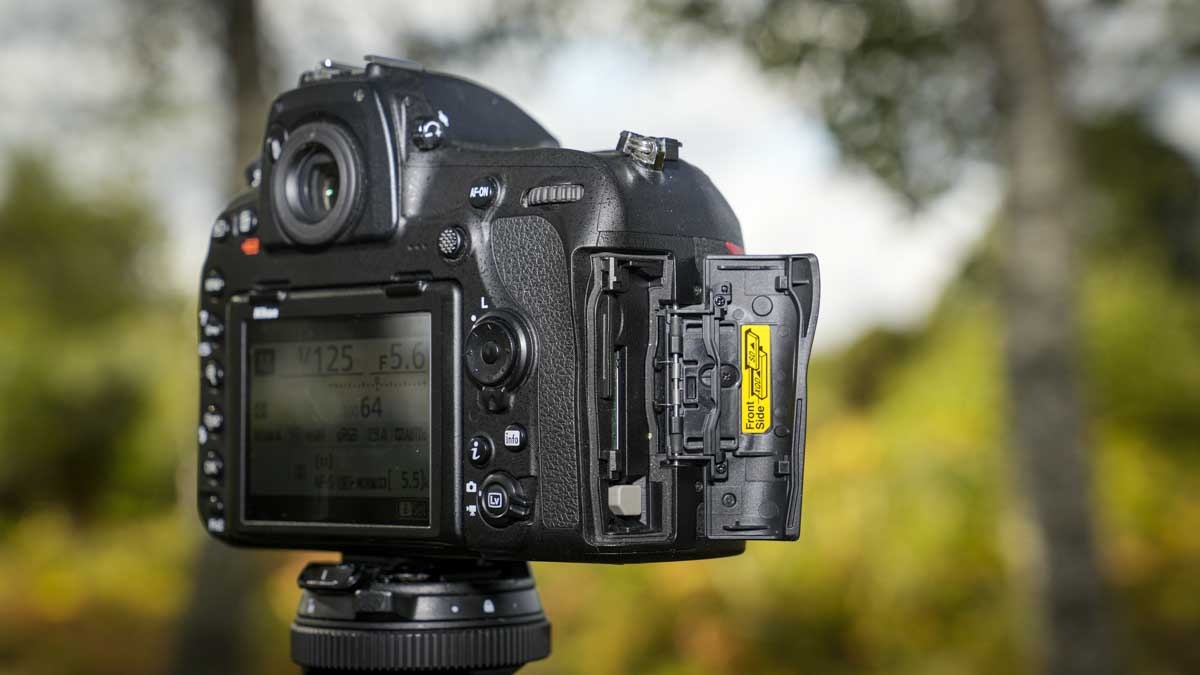
Through the optical viewfinder, which is a thing of beauty , the D850 still has an impressive autofocus system. The 153-point array, 99 cross-type with the centre point sensitive to -4EV, came straight from the D5, and our original review found the practical limit wasn’t speed but coverage: the points cluster around the centre of the frame, an unavoidable consequence of DSLR design. The cluster feels odd after years of mirrorless, where AF position isn’t an issue at all. During the testing, I also found a fix that still applies: auto-area tracking can latch onto the wrong element in a busy scene. This is a common issue, whereas a 25-point group placed over the subject was effortless.
What the D850 lacks is everything autofocus has learned since the advent of mirrorless and powerful processors. There’s no animal, bird or vehicle detection, no eye AF, and in live view, it drops to contrast detection, which our original review noted lagged Canon’s Dual Pixel system even in 2017. Compared to any current mirrorless body, live-view focusing feels archaically slow, and that’s the single biggest reason to think hard before buying one in 2026.
Nikon D850
The stills feature set remains deep. Focus-shift shooting automates up to 300 frames for stacking. Silent live view shoots 6fps full-frame with the electronic shutter, a wedding photographer’s quiet friend. RAW files come in three sizes, with the 25.5MP medium option genuinely useful, and the dual slots, one XQD/CFexpress, one UHS-II SD, give proper backup recording. Video is honest 2017: full-width 4K at 30p with no crop, which was a selling point then, 8-bit internal, a 29-minute limit, and that contrast-detect AF, which rules it out for serious video now.

How good is the Nikon D850’s image quality?
I can remember the image quality being good, and I see many of my adult students who are serious about photography and image quality with this camera; even now, the quality of the images is the standard against which other cameras are measured. The 45.7MP sensor has no optical low-pass filter, starts at a native ISO 64 that no mirrorless Nikon matches, and delivers dynamic range at base ISO that our original review found would require shadow lifts of more than 3 EV without issue. Underexpose to hold the highlights, recover the rest in post: the D850 made that workflow famous, and it still works.
The original testing put numbers on the ISO range that hold as the retest baseline. There is a faint luminance texture that appears at ISO 800 if you look at 100% scale on a monitor. ISO 25,600, the top native setting, is usable, with prints to 30x40cm looking fine. The expanded ISO 102,400 shows a crosshatch pattern and smudged detail, usable for reporting and documentation only where all other techniques fail. Metering needs watching in the same way, too: pale, bright subjects pushed the original test toward +1.3EV of compensation on a wet beach, while sunlit dunes needed none.
Nikon D850
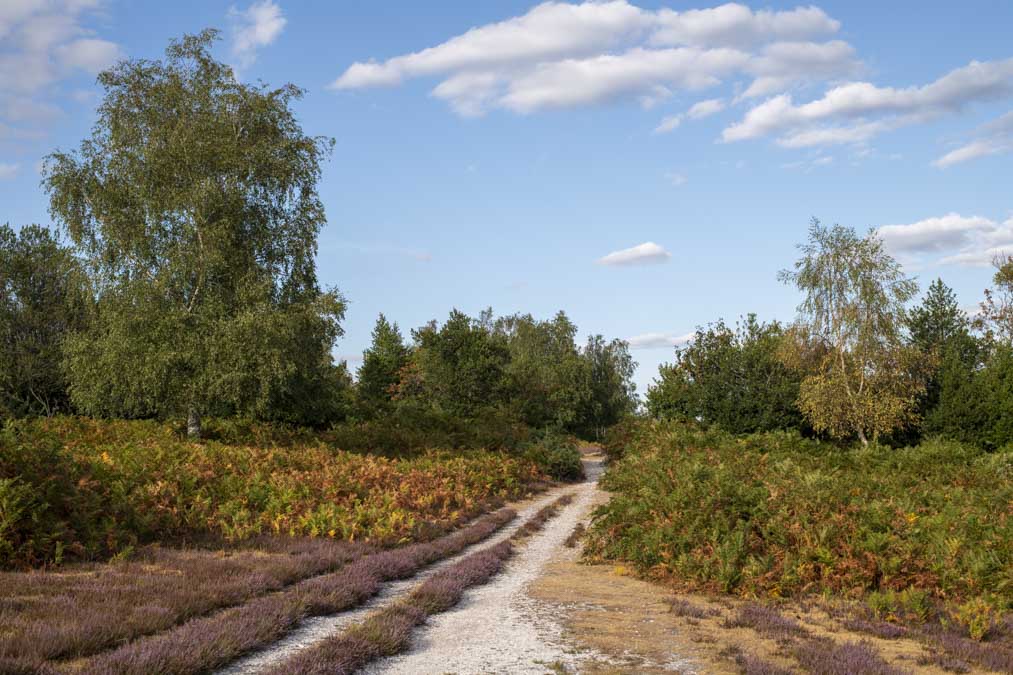
Shooting the retest with the 24-70mm f/2.8E and the 50mm f/1.8G, the base-ISO files remain excellent: the resolution of this sensor definitely rewards good glass and careful technique, and at 45.7MP, there’s crop headroom that makes the 24-70mm act like a longer lens than it is.
Nikon D850 Sample Image Nikon D850 Sample Image Nikon D850 Sample Image Nikon D850 Sample Image Nikon D850 Sample Image Nikon D850 Sample Image Nikon D850 Sample Image

How does the Nikon D850 perform?
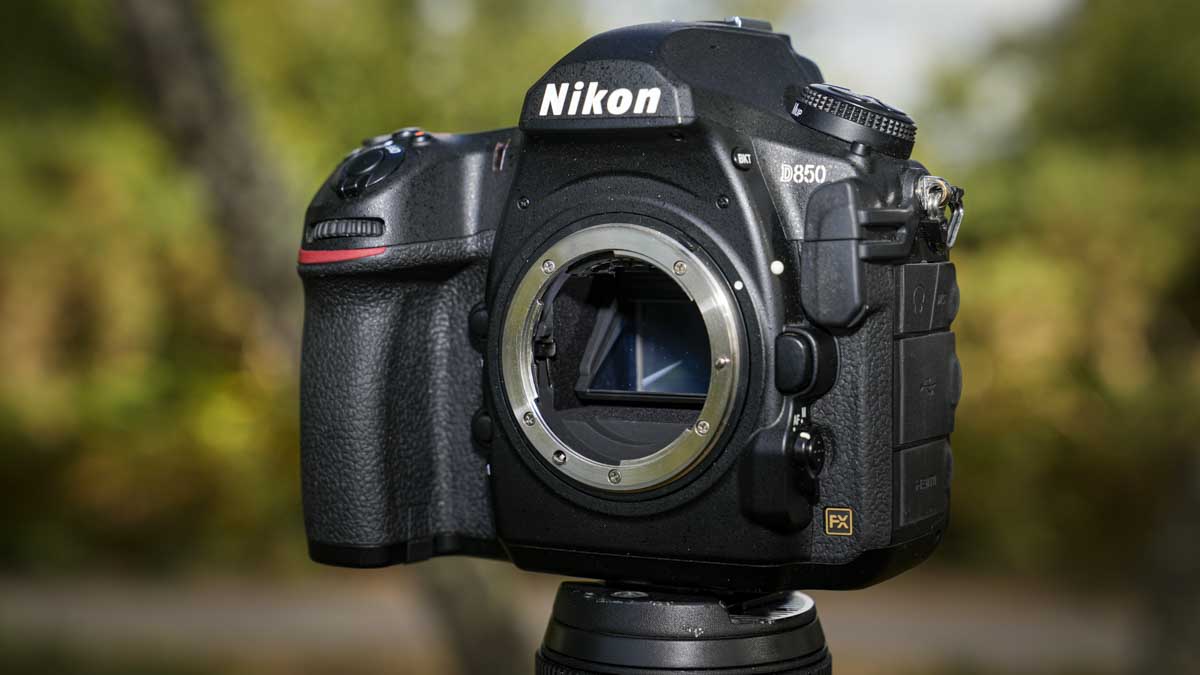
Through the viewfinder, I was surprised at the performance and how much it still feels and performs like a professional camera; however, in live view, it performs as it did in 2017, slighty slow. These are the two truths that split how you use the D850 in 2026. Checking out the numbers first: 7fps at full resolution, 9fps with the optional MB-D18 grip, and a buffer of 51 lossless 14-bit RAW files, or 170 in 12-bit. That’s still working speed for weddings, events and much wildlife.
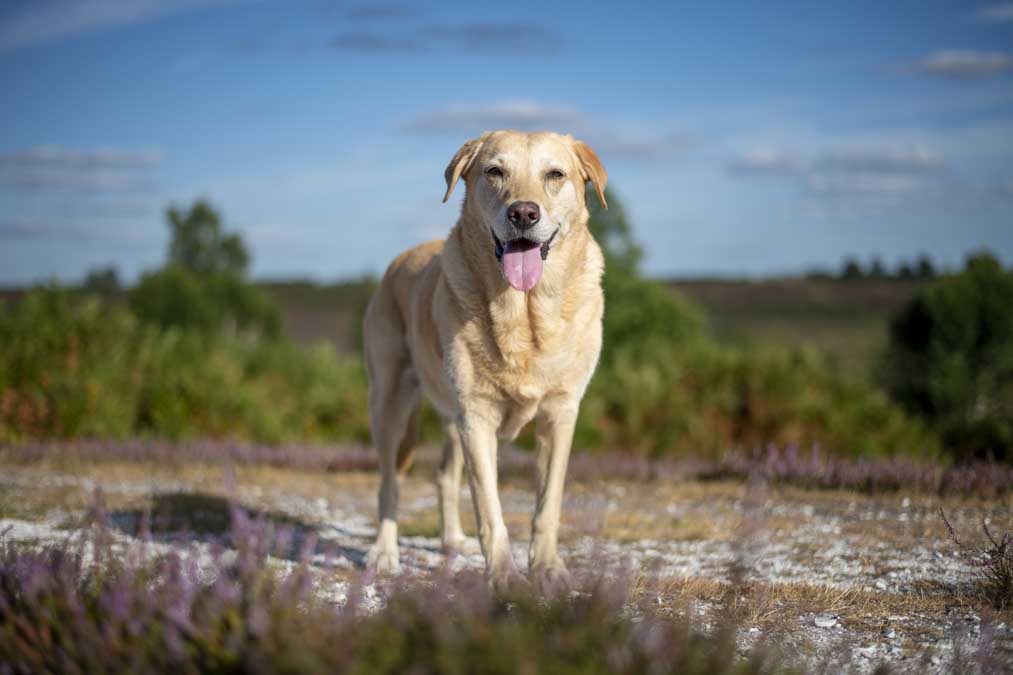
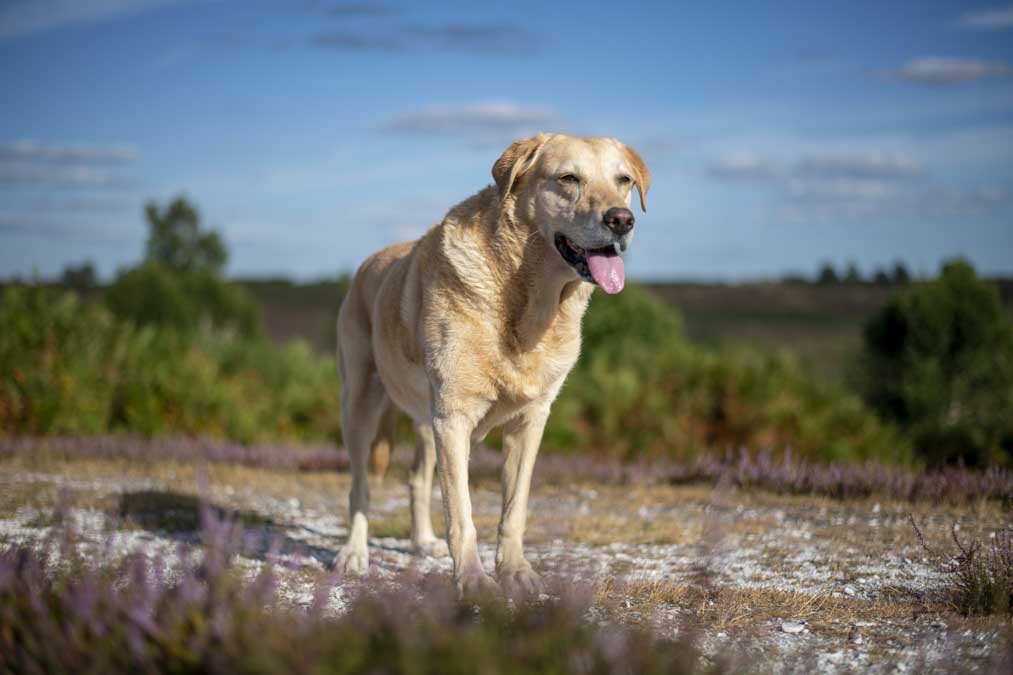
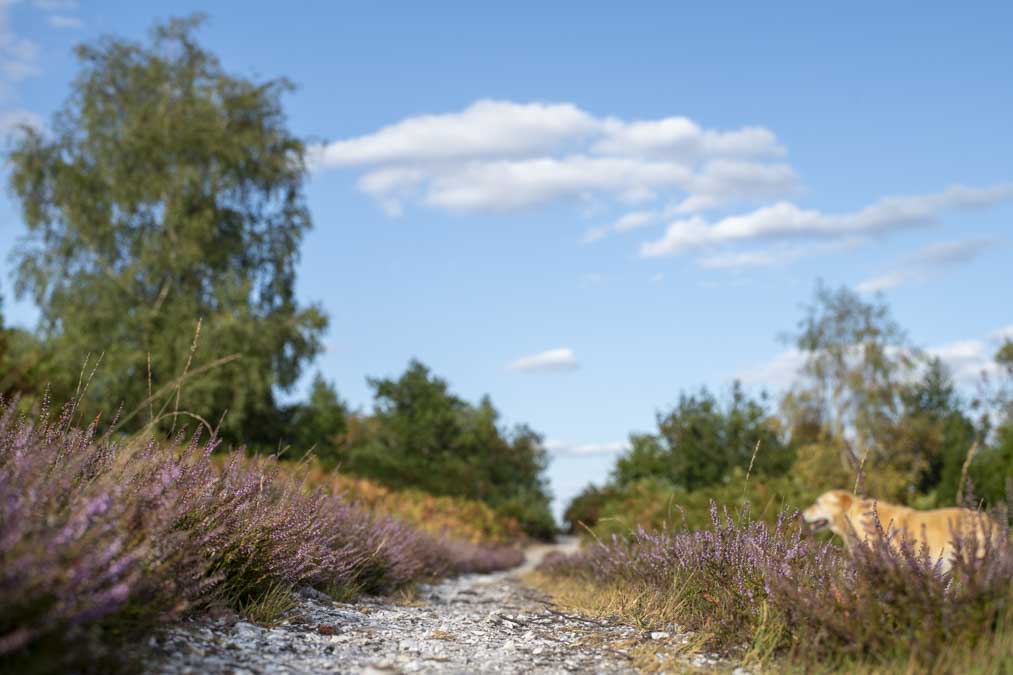
The dog test gets its second outing in this retest series. Our original review photographed a dog running along a wet beach and a dark wooded track, and found that with a 25-point or 9-point group held over him, the D850 got him sharp with unfussy consistency. I repeated it with Pip, my 11-year-old Labrador, on the 24-70mm at 70mm, running toward the camera. The viewfinder AF behaves exactly as the original described: place the group on her, and it holds; trust auto-area in a busy scene, and it can wander to the background.
Nikon D850
The stabilisation story is told by the two lenses in this kit. The 24-70mm f/2.8E has VR and shoots handheld at speeds the 50mm f/1.8G, with no VR and no IBIS, simply can’t match. Every mirrorless Nikon since the Z6 stabilises any lens you mount; the D850 never does. The battery is the counterweight: 1,840 shots per CIPA cycle, and the original review’s 550-frame day used two-fifths of a charge. No mirrorless camera near this price gets close.

Should you buy the Nikon D850?

Buy it used if you shoot stills through the viewfinder and own F-mount glass; £957 to £1,349 for this sensor and battery life is the used market’s best-value professional camera. The new price of £1,699 is harder to justify when it nearly reaches used Z7 II territory. Skip it entirely if you need video, fast live view or stabilised primes.
Nikon D850

Buy it if…

  • You shoot landscapes, studio, weddings or wildlife through the viewfinder
  • You own Nikon F-mount lenses
  • You value battery life and durability over automation

Don’t buy it if…

  • You shoot video or rely on live view
  • You want subject-detection autofocus
  • You need stabilisation with prime lenses
Alternatives

Nikon D810: the budget route into high-resolution F-mount, used from well under the D850. Used Nikon Z7 II: the mirrorless equivalent resolution with IBIS and better live view. Nikon Z8: the true successor, with the D850’s spirit and modern everything, at a much higher price.

How we tested

I tested a Nikon D850 kindly lent to Camera Jabber by mpb.com with the AF-S Nikkor 24-70mm f/2.8E ED VR and AF-S 50mm f/1.8G over a two week period on firmware 1.31, shooting alongside my regular mirrorless kit. Testing covered base-ISO landscape, an ISO ladder, action tracking, handheld VR and non-VR comparisons, silent live view, focus-shift, buffer, battery and live view AF timing, retracing our original 2017 review’s tests where the lenses allowed.

Nikon D850 FAQs

Do you ship internationally?

Yes, we are pleased to confirm that we offer worldwide shipping! Please note that we are unable to deliver to some countries and we apologize for any inconvenience caused.

Where do you ship from?

We ship all of our orders from the Netherlands, where our warehouse is based.

Can I return an item free of charge?

We offer a refund on any items returned to us within 14 days of the delivery date, excluding any delivery costs. To request a return, go to Order Management.