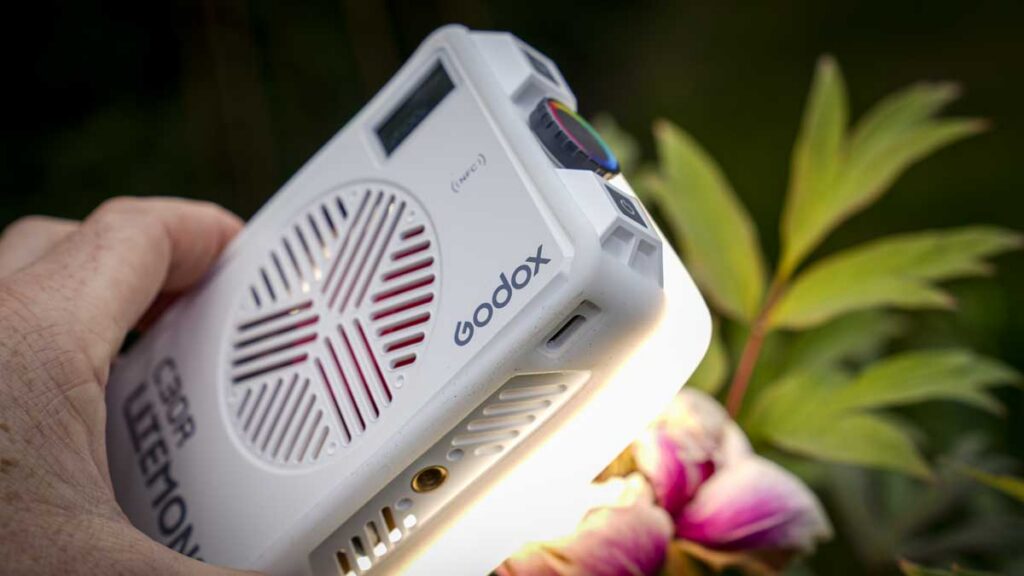

The Godox Litemons C30R packs full RGB control, HSI mode, and impressive output into a 248g palm-sized panel, making it an ideal complement to larger Godox lights or a capable standalone solution for travel and run-and-gun work
Our Verdict
Godox Litemons C30R verdict
What is the Godox Litemons C30R?
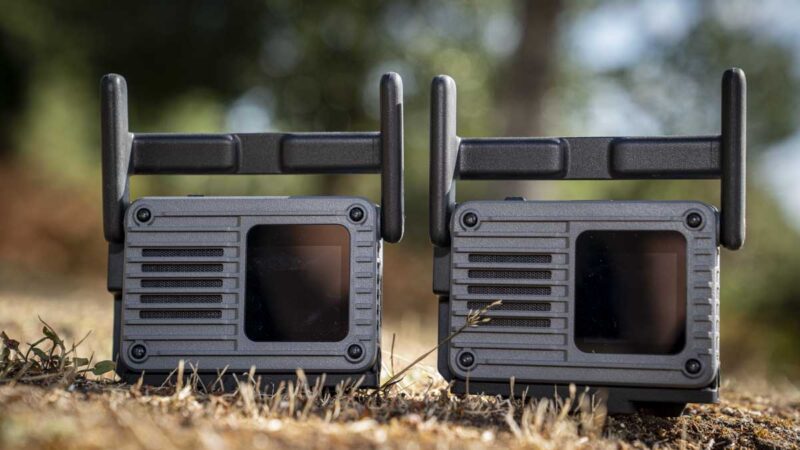
The Godox Litemons C30R is a compact pocket-sized RGB COB LED light from Godox’s Litemons enthusiast range. Weighing just 248g and measuring approximately 133 × 78 × 26mm, it is small enough to fit in any kit bag while delivering output suitable for content creation, interview lighting, accent work, and run-and-gun shooting.
The C30R offers a full colour temperature range from 1,800K to 10,000K, alongside HSI mode for direct colour control across hue, saturation, and intensity, and a full FX mode with creative lighting effects. The bi-colour C30Bi sibling sits alongside it at a slightly lower price point with a narrower 2,800K-6,500K colour temperature range and no RGB or HSI capability.
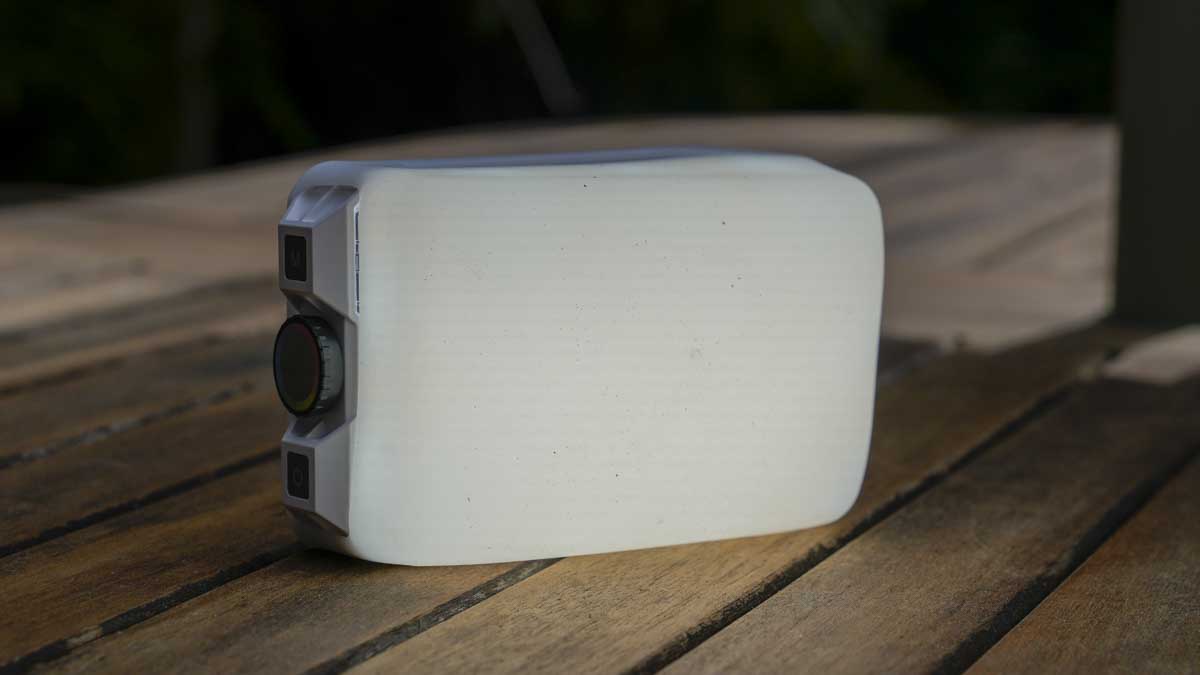
It is aimed at content creators, enthusiast photographers, and videographers who want a versatile small light that can work as a fill alongside larger key lights, as a standalone main light when travelling light, as a backlight or accent light, or as one of multiple small lights in a more elaborate setup. The USP is the combination of compact size, full RGB control, Godox Light App integration, and PD-powered charging in a body that genuinely fits in a pocket.
Specification
Type: Compact pocket RGB COB LED light
Battery: 7.2V, 3,400mAh, 24.48Wh built-in lithium
CCT range: 1,800K – 10,000K
Brightness range: 0% – 100%
Colour modes: HSI, FX, full RGB
CRI: ≥ 94
Working time: ≈ 45 minutes at 100%, ≈ 276 minutes at 50%
Dimensions: ≈ 133 × 78 × 26mm
Weight: 248g
Price: £86 (UK)
Build and Handling
My first impressions of the C30R are pretty good. It has that slightly cyberpunk-style design which feels more aimed at gaming than professional photography, but it does appeal to a younger audience that the more conservative Godox lights might not.
Take a closer look and the light unit is exceptionally well designed. Whether you like the futuristic aesthetic or not, there is no fault in the functionality. It feels good and weighty in the hand, although picking it up you can detect that it is slightly unbalanced with greater weight on the left side where the controls are.
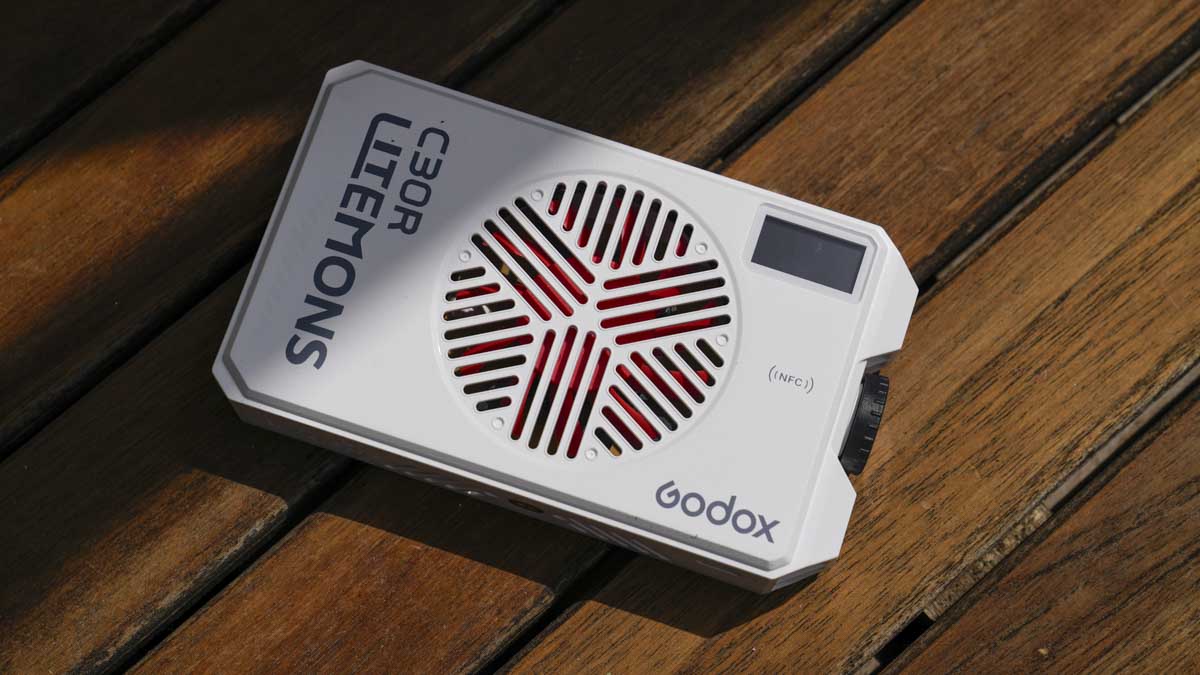
On the bottom you have a single 1/4-20 thread for mounting. The mode and power buttons are on the right side as you look at the back, with the dual-function dial in the middle that rotates to scroll and pushes to confirm selections. A small colour screen in the top right corner shows you the current setting.
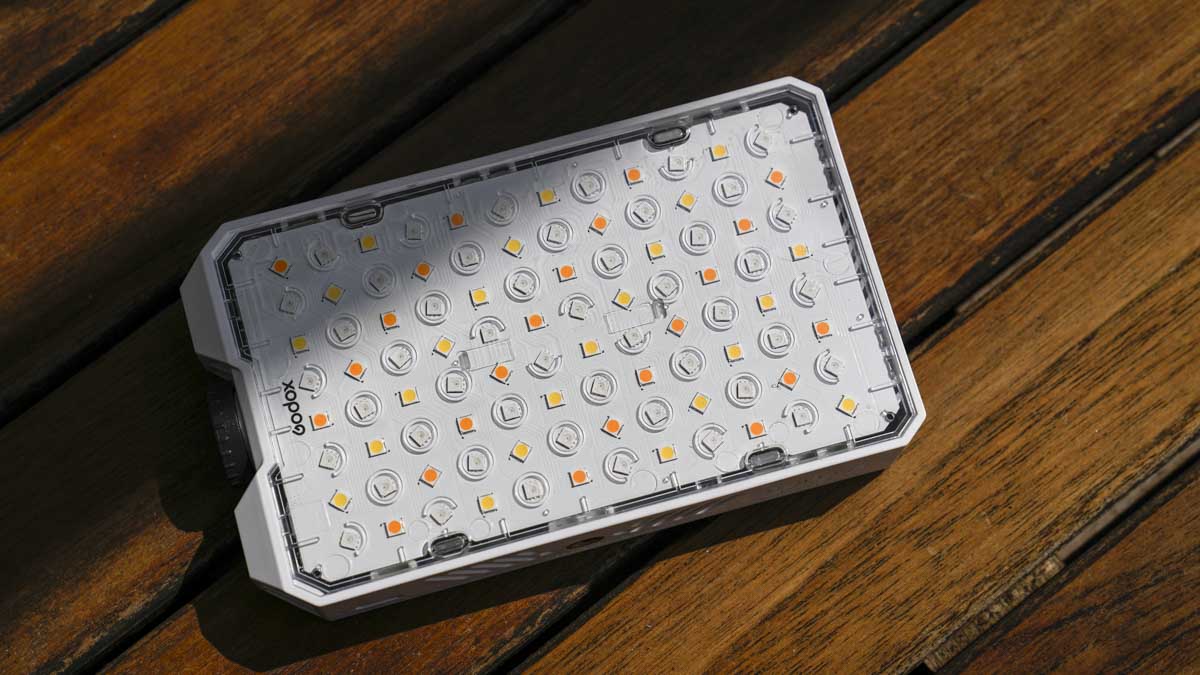
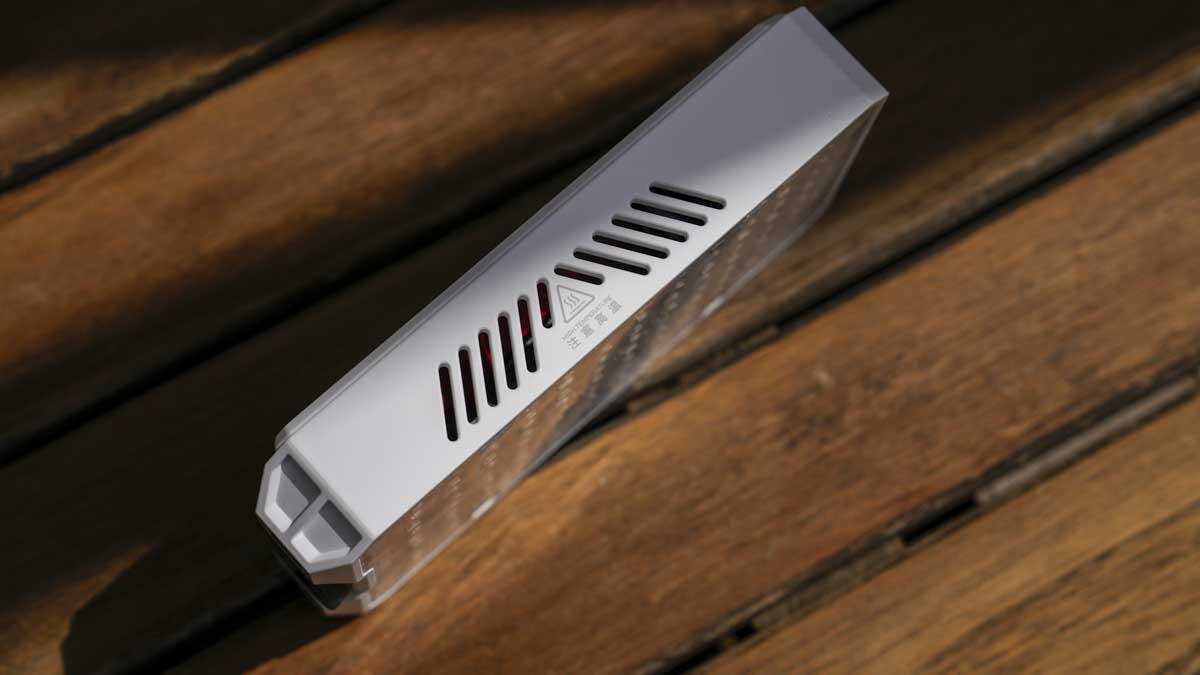
The fan is on the back, with plenty of venting around the body, which is needed because this is a powerful little light despite its small size. On the front face, an array of LEDs delivers the full RGB and bi-colour adjustment, and the unit ships with a silicone diffuser that does an excellent job softening the output.
The diffuser feels a little flimsy when attaching, but once in place it works really well and stays put through working use.
The accessories that come with the C30R are minimal but appropriate. You get the light unit, a USB-C cable, and the silicone diffuser. That is it. For a pocket light designed to travel light, that is exactly the right approach.
The single 1/4-20 mounting hole on the base is just about enough for a light of this size, but I would have preferred additional mounting points on one of the shorter edges so you can mount the light in portrait orientation natively. As things stand, you flip it round on a friction arm to get vertical orientation, which works but feels like a workaround. Three mounting points (base, side, and back) would have been ideal.
Build quality has held up well across two months of regular use. The plastics are good quality and the unit has stood up to a few knocks, especially with the silicone diffuser fitted. The only cosmetic issue is that the white finish does start to mark and look dirty after sustained use, although a quick wipe cleans it up nicely.
The control system is simple and effective. One dual-function dial on the side rotates through settings and pushes to confirm, with mode and power buttons completing the physical controls. After two months I have not felt the need to use the app for basic adjustments, the physical controls handle everything I need at the unit itself.
Features
Across two months of use, the mode I have reached for most often is CCT. A single push of the M button takes you to the main mode screen with CCT, HSI, FX, and the main menu, and pushing the dual-function dial selects CCT, which gives you the colour temperature options from 1,800K to 10,000K, plus green-magenta correction.
HSI mode is the second most-used. The ability to dial through hue from 0 to 360 degrees and adjust saturation makes it very easy to apply coloured lighting effects for video work or creative stills. The FX modes are useful for adding ambient cinematic effects to a scene, but they remain a tool I use less often than the core CCT and HSI options.
For most stills and interview video work, CCT is what I use, and matching the C30R’s colour temperature to a meter reading from the Datacolor light meter has been straightforward. When working with the Godox UP150R as the main key light, the two have matched closely in colour output.
The Godox Light App has come a long way, and pairing the C30R is straightforward via NFC or Bluetooth. Once paired, the light appears alongside the UP150R or any other Godox lights you are running, and you can adjust each individually or group them for coordinated control. For a free app it is genuinely advanced and ties the entire Godox lighting ecosystem under a single umbrella, which is a real workflow advantage when running multi-light setups.
Colour accuracy at CRI ≥ 94 and TLCI ≥ 96 has held up well in real-world testing. As I always do with any new light, I have been checking the colour temperature against the Datacolor light meter, and there is the typical small drift between what the controller reads and what reaches the subject, depending on ambient light and reflective surfaces in the room.
In a darkened room with a 1m distance, I confirmed the 5600K reading was effectively accurate, and once you have noted any consistent offset, the C30R matches in nicely with the UP150R when grouped together in the app. I also paired it during one shoot with a Nanlite FS-60B and it worked well across that mixed setup too.
Battery life is one of the C30R’s quietly impressive features. The 45 minutes at 100% output is fine for short pieces to camera, but in real shooting at 100% the diffused output can be a touch too bright for close-quarters interview work, so I have generally been running at 50% which more than doubles the runtime to over four hours. The silicone diffuser at 50% gives a really nice soft effect.
USB-C PD charging works well in practice. Charging is reasonably fast, but the more useful feature is that the C30R can run at 100% power directly from a PD source while charging. Plugged into my MacBook Pro the available power was limited to around 10%, but plugged into the DJI Power 1000 Mini’s USB-C port I got the full power output and could run the light at maximum indefinitely.
The built-in fan kicks in early at higher brightness settings but is genuinely quiet. With my interview subjects wearing DJI Mic 2 lavalier microphones, the fan noise was not picked up in any of the recorded audio across two months of interviews. If you put your ear to the unit you can just hear it, but at any normal working distance and certainly through a camera microphone, it is a non-issue.
Mounting accessories are the one major add-on cost you will need to factor in. Across the two months I have used the C30R on a Manfrotto Pixi mini tripod, a Manfrotto friction arm, and a SmallRig hot shoe mount, depending on the scenario. A mount in the box would have been welcome, but with so many possible mounting configurations it is understandable why Godox has left this to the user to choose.
Performance
As an interview key light when the UP150R is too large or impractical to bring, the C30R has performed better than I initially expected. Ideally I would still use the UP150R for interviews because the larger panel produces softer light, but the C30R with the silicone diffuser fitted produces a good spread that illuminates faces with a touch of contrast and texture, which can actually make subjects look more interesting rather than overly flattened.
As a complement to the UP150R it has been excellent. I have generally been running it at 30 to 50% output to lift shadows and add a secondary lighting position, and on a friction arm beside the main UP150R it sits cleanly alongside the larger panel without intruding into the frame. The combination of UP150R as key plus C30R as fill, possibly with a Godox RS60R adding accent or backlight, makes for a properly versatile small-team lighting kit.
As a backlight or accent light, the C30R really comes into its own. Because it is so small you can pop it into a scene on a single lighting stand behind the subject for hair lighting or edge accent work without it becoming visually intrusive. This is exactly where I wish there was a portrait mounting option on the side, since vertical orientation is the obvious choice for backlighting. A right-angle bracket does the job, but native portrait mounting would have been cleaner.
Travel light scenarios are where the C30R genuinely stands out. As a sole run-and-gun lighting solution it is small and light, much like the old Pag lights of a few years ago, and having just one small light in your bag is a superb solution when you cannot carry the UP150R or a larger panel. For Vlog-style work, quick interviews, and product shooting on the move, the C30R will cover most situations.
Light quality and softness is one of the C30R’s strengths. LED lights can produce some very harsh effects, but with the bi-colour control to warm or cool the output and the silicone diffuser fitted, the C30R produces a notably softened light that cuts harsh highlights and helps diffuse shadows. The output looks genuinely natural on faces and works well for product photography too.
Sustained use at 100% output has been limited during the test because the C30R is most often running at lower outputs as a complementary or fill light. In the cases where I have pushed it to maximum, there has been no notable thermal throttling or output drop-off, which suggests the cooling system is doing its job.
Connection reliability with the Godox Light App over Bluetooth has been excellent. I have been using the app on a vivo V70 mobile phone, and the NFC pairing combined with Bluetooth control has been fast and reliable across two months of use. I have not had to reset connections or fall back to physical controls during shoots.
Final Thoughts
After two months of regular use as a fill light, accent, backlight, and standalone travel key, the Godox Litemons C30R has been a consistently capable performer. At £86 it represents excellent value compared with similar pocket lights from Aputure, Hobolite, and Sirui, and the integration with the wider Godox lighting ecosystem through the Godox Light App makes it a natural fit alongside the UP150R, RS60R, or any other Godox lights you may already be running.
Compared with the bi-colour C30Bi, the additional cost of the RGB and HSI/FX features is genuinely worthwhile if you do video work that benefits from coloured lighting effects, or if you want creative options for stills. For straightforward interview and content creation work where you only need natural-looking light, the C30Bi will be perfectly adequate at slightly lower cost.
Compared with the Godox RS60R I have referenced extensively in other reviews, the two are different rather than competing products. The RS60R is the small COB light I reach for most consistently, but the C30R as a flat panel form factor fills a different role and combines beautifully with the RS60R units when you need both pointed light and softer panel illumination in a single setup.
Has the C30R earned a permanent place in my kit? Yes, although I am slightly more reserved on the design side. The functional features are all there, but there is something about the slightly futuristic, gaming-influenced aesthetic that makes it feel less professional than the RS60R or UP150R alongside it. I would love to see a more conservatively designed version that matches the visual language of the rest of the Godox professional range.
If I had to ask for changes in the next version, the mounting options would be top of the list, with additional 1/4-20 threads on the sides for portrait orientation. The slightly sci-fi aesthetic would be the second change.
Beyond that, the C30R is an exceptional small light for not a great deal of money, and one I can recommend to content creators, enthusiasts, and any photographer or videographer building out a flexible Godox-based lighting kit.