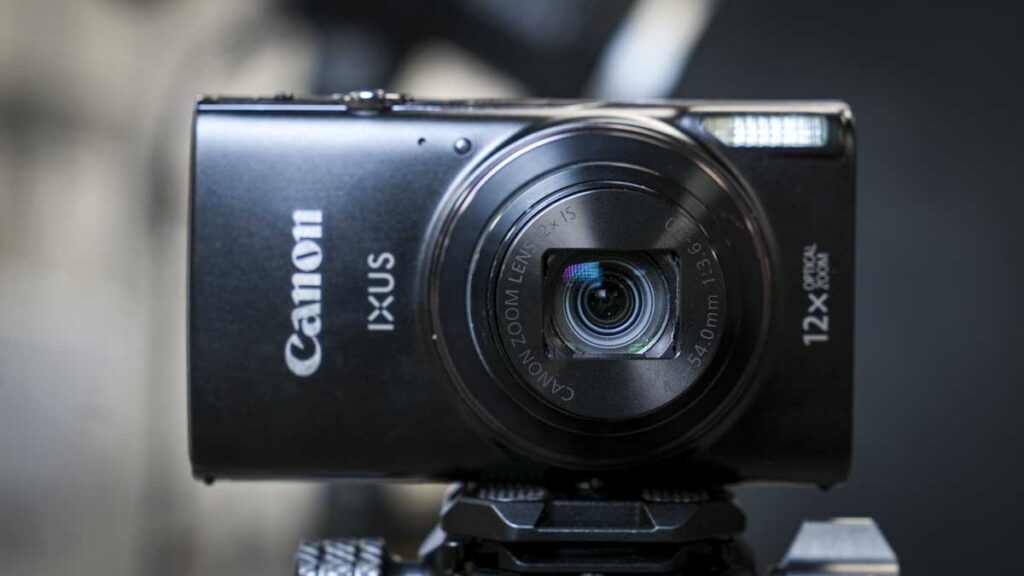

The Canon IXUS 285 HS is a slim, pocketable compact that delivers reliable point-and-shoot results and a 12x optical zoom for families and travellers who want more than a smartphone.
Our Verdict
Canon IXUS 285 HS Verdict
What is the Canon IXUS 285 HS?
The Canon IXUS 285 HS is a compact point-and-shoot camera positioned at the family and travel market. It uses a 20.2MP 1/2.3-inch CMOS sensor with a 12x optical zoom lens covering a 25-300mm equivalent range. The camera is housed in the slim, slimline metal body that the IXUS range has used since its introduction.
The 2025 version is a refresh of a design that has been around since 2016. That continuity is part of the point—the IXUS formula of pocket-friendly simplicity with reliable image quality has not needed fundamental reinvention.
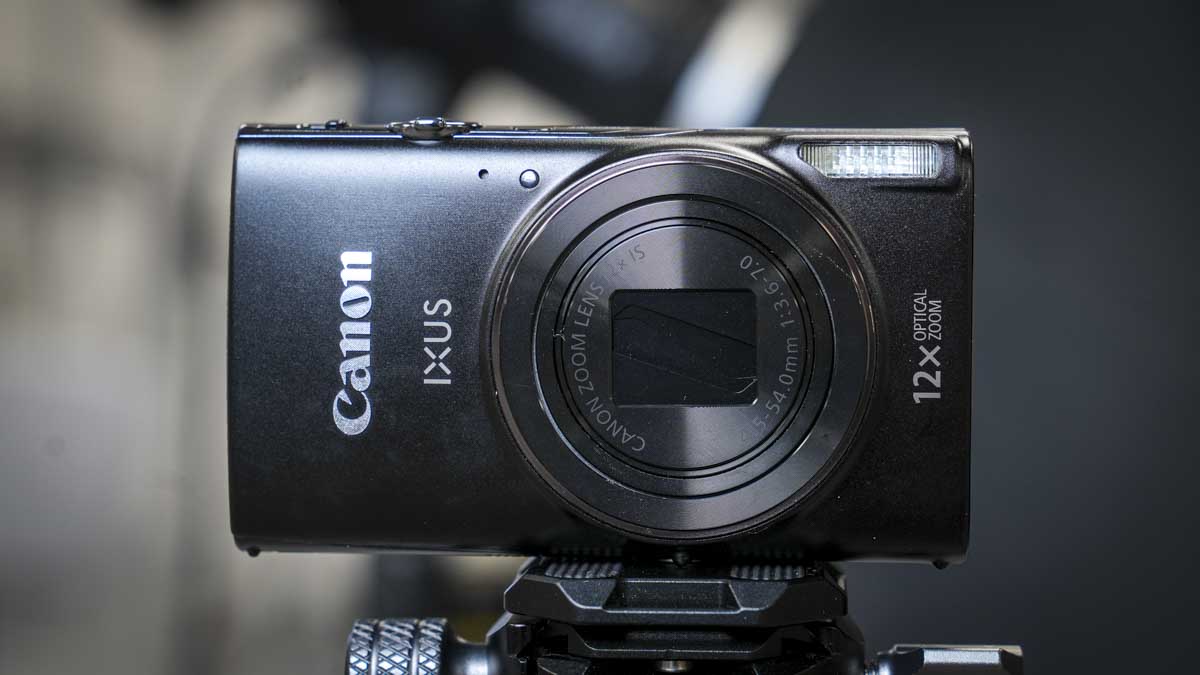
It is aimed at families, holiday photographers, and anyone who wants a dedicated camera that takes better pictures than a smartphone without the learning curve of a mirrorless system. The auto mode handles virtually every shooting scenario without requiring input, and the 12x zoom provides reach no smartphone can match for wildlife, sports, and travel photography. It is not aimed at enthusiasts or professionals, and it does not pretend to be. Its USP is simplicity, portability, and the trusted Canon IXUS reliability in a camera that anyone can pick up and use immediately.
Specification
Sensor: 20.2MP 1/2.3-inch CMOS
Lens: 25–300mm equivalent, f/3.6–6.9, 12x optical zoom
Video: 1080p Full HD at 30fps
Screen: 3.0-inch fixed LCD
Connectivity: Wi-Fi, NFC, Canon Camera Connect app
Storage: microSD
Battery: Approx. 180 shots per charge
Weight: 132g (with battery and card)
Price: £319.99 / $379.99
Build and Handling
The IXUS 285 HS has the slim, metal-bodied design that defined the original IXUS range in the early 2000s, and handling it now that design feels as right as it ever did. At 132g with battery and card, it is one of the lightest cameras in this test by a considerable margin, and the slim profile allows it to slip into a shirt or jacket pocket without any discomfort. The build quality is notably high for a camera at this price, with a solid metal construction that gives no sense of fragility despite the compact dimensions.
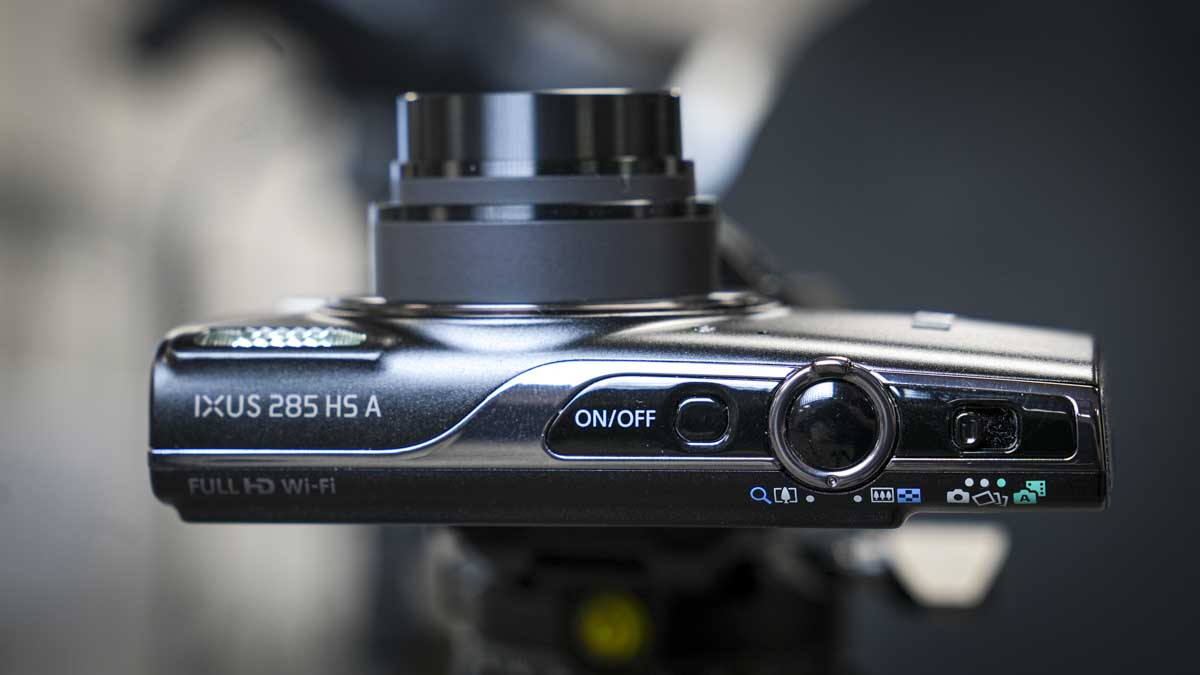
Handling is necessarily different from a mirrorless camera. This is a camera designed to slip into a pocket rather than sit in the hand for extended shooting sessions, and the slimline body reflects that priority. The wrist strap helps with security during use, and the lightweight design makes it easy to hold one-handed for snapshots. For anyone who used an IXUS in the early 2000s, the experience will be immediately familiar, and for anyone new to dedicated cameras, the simplicity of the design makes it approachable from the first session.
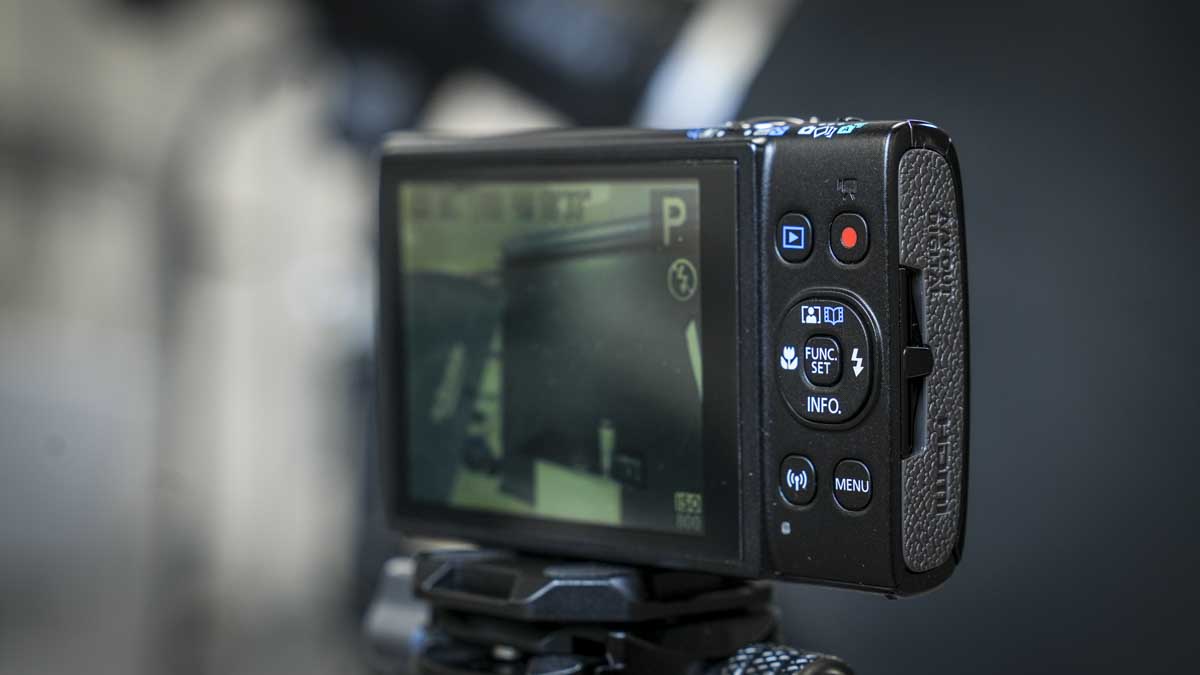
The 3.0-inch fixed LCD screen handles all composition and review, and the menu is intuitive enough that even a first-time camera user can navigate to the settings they need without consulting the manual. The auto mode reliably covers the vast majority of shooting situations, and the few additional modes, including scene selections and creative filters, are accessible without complexity. There is no touchscreen, which is the one interface feature that feels genuinely dated against modern compact cameras, but the physical buttons and controls compensate adequately.
Features
The 12x optical zoom is the IXUS 285 HS’s most practically significant feature and its clearest advantage over smartphone photography. Covering 25-300mm equivalent, the zoom range spans from wide landscape compositions to close-cropped wildlife and sports shots, without any loss of quality from digital cropping. In use, the zoom holds image quality well across its full range, and for holiday photography, school sports days, and wildlife encounters where getting closer is not possible, the reach is a genuine and meaningful capability that no smartphone can currently match.
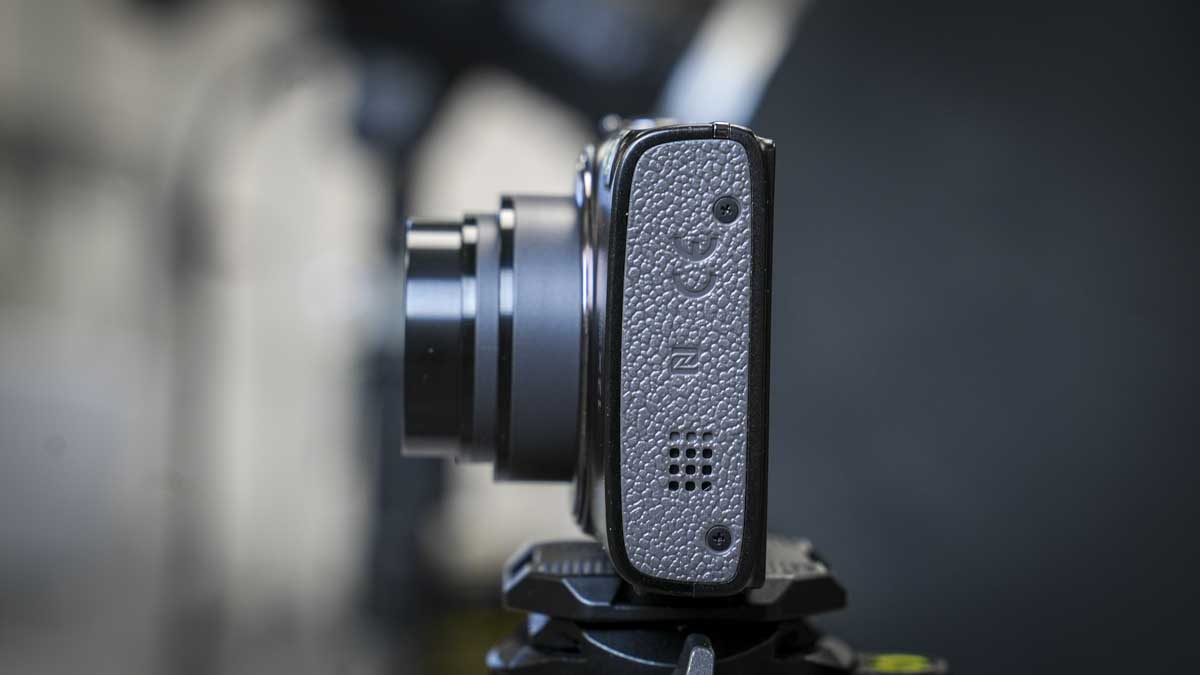
Wi-Fi and NFC connectivity link to the Canon Camera Connect app for remote live view and shutter release from a smartphone, as well as image transfer for social sharing. The pairing process is less seamless than the Bluetooth-first approach of newer cameras and requires working through a setup sequence before the connection is established, but once done, it functions reliably. For families who want to share images quickly with a smartphone, the connectivity works and adds a degree of modern utility to an otherwise traditional design.
The camera’s auto mode is sophisticated enough to handle a wide range of lighting and subject conditions without any manual input, making it genuinely accessible for occasional photographers who want results without settings. Full HD 1080p video at 30fps covers family video needs adequately, and the built-in flash provides fill-in low light, though the results have a distinctly vintage compact quality that is charming in its own way and not entirely at odds with the camera’s retro character.
Performance
In good light, the IXUS 285 HS produces image quality that is genuinely excellent for a compact at this price. Colours are bright and vibrant, exposure is well judged by the auto mode across a range of conditions, and the 20.2MP resolution delivers more detail than most family photographers will ever need. Holiday shots, outdoor portraits, and wide landscape compositions all deliver the kind of reliable, pleasing results that have made the IXUS range a trusted choice for families for over two decades.
The 12x zoom performs well throughout its range. At the wide end, landscape and group shots are clean and well-exposed. At maximum zoom, images retain usable sharpness and detail for subjects that would be impossible to capture without reach, and the optical image stabilisation helps control camera shake at longer focal lengths. For a family holiday, school sports day, or nature walk, the zoom capability makes the IXUS 285 HS meaningfully more capable than a smartphone in situations where distance matters.
Low-light performance is where the small sensor shows its limits most clearly. As the light drops, colour and tonal graduation become less precise, and the results take on the softer, noisier quality characteristic of small-sensor compacts in challenging lighting.
The built-in flash provides coverage in dark interiors and evening situations, producing images with the warm, slightly flat quality of traditional compact flash photography. This has a nostalgic appeal of its own.
For photographers expecting mirrorless-grade low-light performance, the IXUS will disappoint. For a family compact used mainly in daylight and outdoor conditions, the limitation is acceptable.
Battery life at approximately 180 shots per charge is modest and worth planning for on full days out. For a typical family holiday session or an afternoon at the park, it is sufficient, but carrying a spare battery is advisable for longer events. The microSD card format is practical and widely available, and setup from unboxing to first shot takes under two minutes, which is as immediate and uncomplicated as a camera can reasonably be
Final Thoughts
The Canon IXUS 285 HS is not trying to compete with mirrorless cameras on specifications, and it does not need to. It is doing something different and simpler, offering a slim, pocketable, reliable compact that any member of the family can use immediately and keep in a pocket rather than leave at home because it is too bulky or complicated to carry. For that specific role, it is very well executed.
At £319.99, the price is reasonable for what is offered, though the Wi-Fi pairing experience and the absence of a touchscreen are areas where a 2025 refresh might have modernised more aggressively. For families, travellers, and anyone who wants a dedicated camera without any of the complexity of a modern mirrorless system, the IXUS 285 HS remains a trusted and reliable choice.