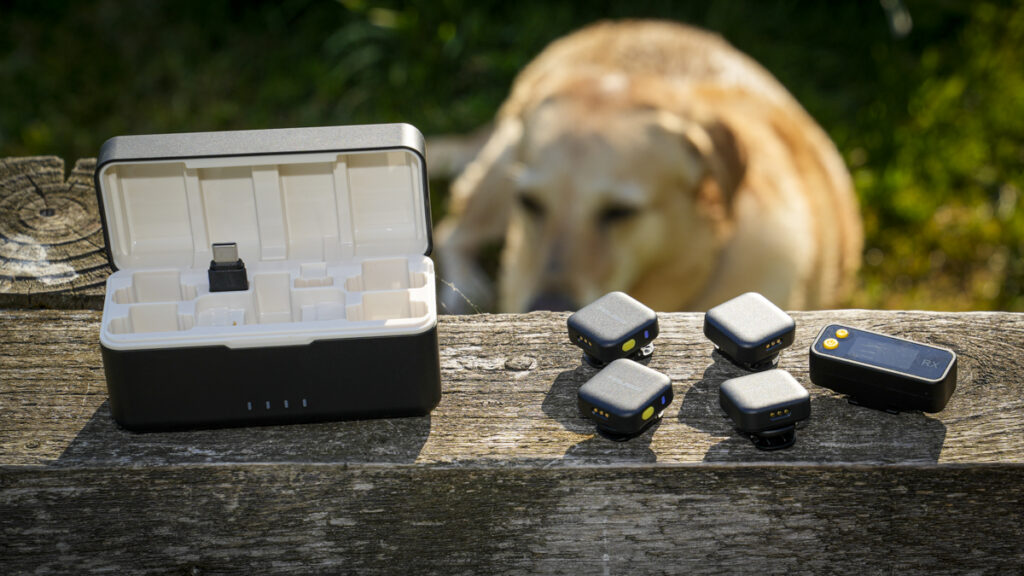

The FULAIM X6Q is an affordable four-person wireless microphone kit for interviews, podcasts and group videos.
What is the FULAIM X6Q?
The FULAIM X6Q is a wireless microphone system built around a single idea: recording several people at once, without spending a fortune. In the case you get four transmitters and one receiver, all charging together, so you can clip a mic onto up to four speakers and capture them all simultaneously through one connection to your camera or phone. It’s a 2.4GHz system, the same wireless approach used across most of this category, with USB-C and 3.5mm connections to cover cameras, phones and tablets.
It’s aimed at content creators working with more than one voice, the interviewers, podcasters, event and wedding videographers, and anyone shooting panel or group content who’d otherwise be juggling multiple two-mic kits. Where many wireless systems require you to buy a second kit to get past two speakers, the X6Q builds in four from the start, which is the whole appeal.
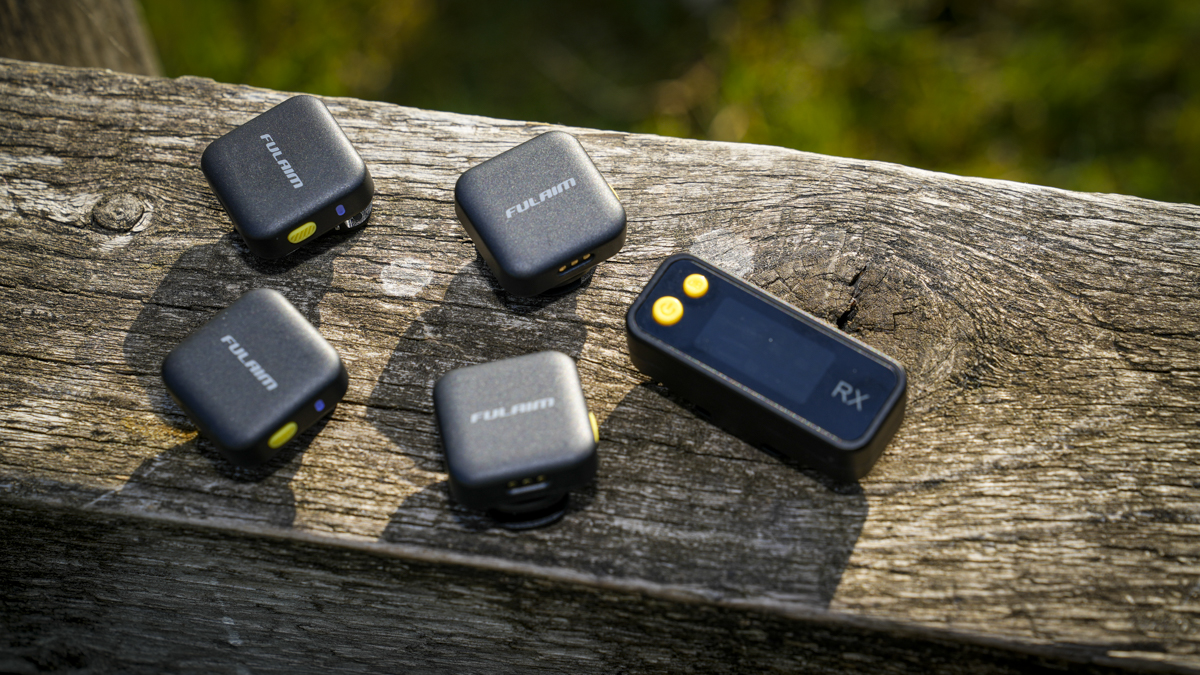
Alongside the core recording, there’s AI noise cancellation, a safety-track mode to guard against clipping, and a spread of accessories, windscreens and magnetic mounts that push it towards being a complete, ready-to-go package rather than a bare-bones set. At $105.90 for four transmitters and a receiver, it’s positioned firmly at the budget-conscious end, and that value is really its headline.
Specifciation
Wireless: 2.4GHz
Transmitters: 4 included
Microphone pattern: omnidirectional
Sampling rate: 48kHz
Bit depth: 24-bit
Signal-to-noise ratio: >70dB
Max SPL: 120dB
Claimed range: 300m (see note; page also states 60m)
Transmitter: 26 x 26 x 10mm, 8g
Receiver: 49 x 20 x 19mm, 14g
Case: 109 x 46 x 62mm, 142g
Complete system weight: 200g
Connections: USB-C, 3.5mm
Claimed total runtime: up to 24 hours (with case)
Warranty: 24 months
Price: $105.90
Transmitters: 4 included
Microphone pattern: omnidirectional
Sampling rate: 48kHz
Bit depth: 24-bit
Signal-to-noise ratio: >70dB
Max SPL: 120dB
Claimed range: 300m (see note; page also states 60m)
Transmitter: 26 x 26 x 10mm, 8g
Receiver: 49 x 20 x 19mm, 14g
Case: 109 x 46 x 62mm, 142g
Complete system weight: 200g
Connections: USB-C, 3.5mm
Claimed total runtime: up to 24 hours (with case)
Warranty: 24 months
Price: $105.90
Build and Handling
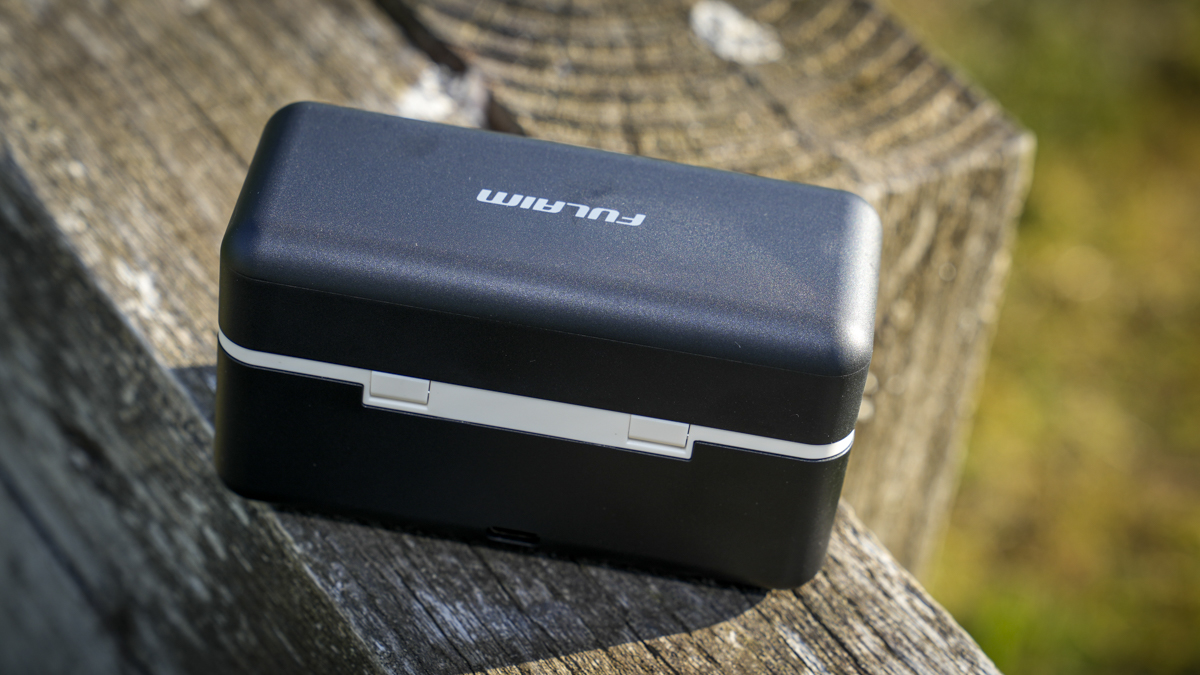
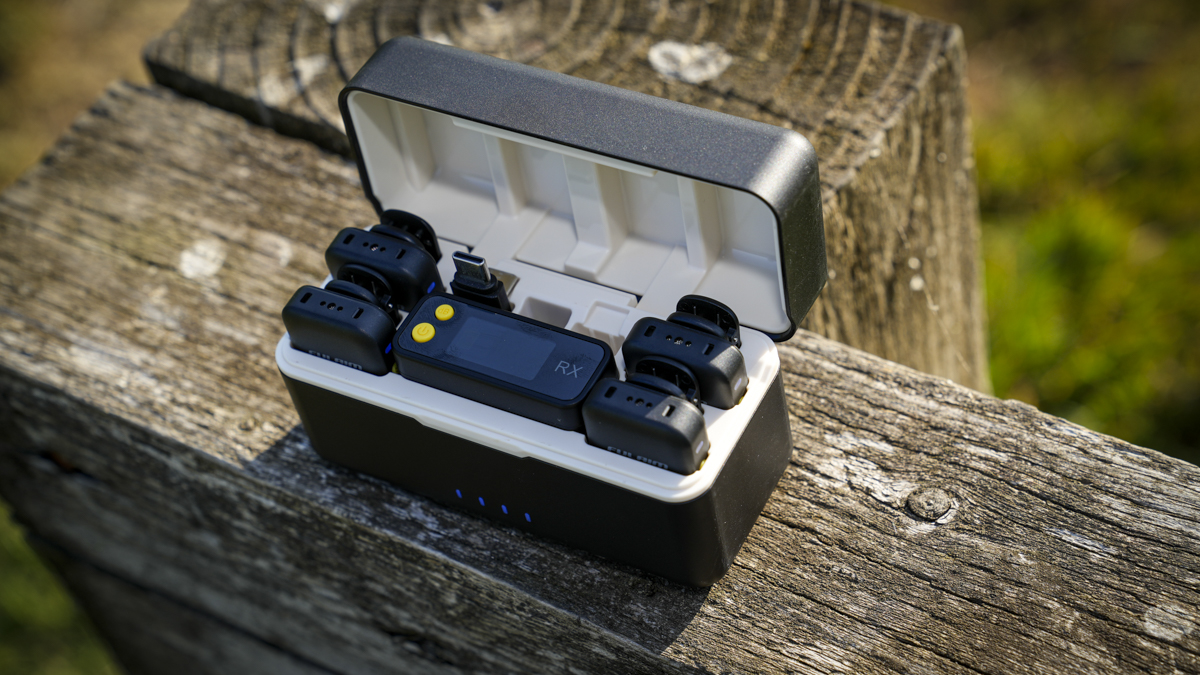
The kit arrives in the usual charging style case, which is of decent quality with the matt black finish. The case itself measures in at 107 x 45 x 61mm and weighs in at 201g. Opening up the case reveals the four transmitter mics and receiver, along with the USB-C adapter. There’s also a soft pouch in the box, which enables you to keep the charging case along with cables and windjammers altogether. I would have always preferred everything to have been squeezed into the charging case, but still, it’s a comprehensive set.
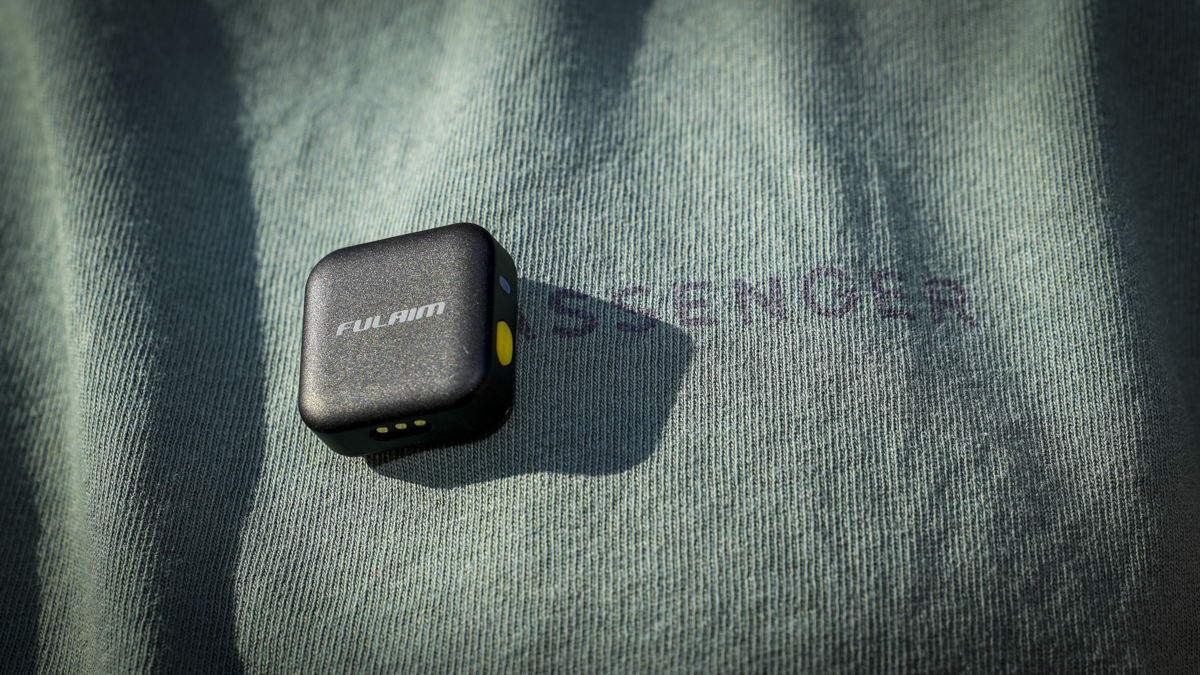
The transmitters do look a little familiar, essentially reflecting the design of previous iterations and much of the rest of the market, although the build quality here does seem to be exceptionally good considering the price. At 26mm square and eight grams each, they’re visible once clipped on, but as discreet as these button mics can be and through the test, whoever was wearing one quickly forgot it was on them, which is exactly what you want from a lav-style mic. Each one takes a standard clothing clip or a magnetic mount, so you can hide them behind a lapel or clip them to a collar, depending on the shot.
The receiver is a small, light unit at 14g, and it does its job simply enough, though the controls are fairly basic; this is a plug-and-go system rather than one with deep menus to dive into. The construction throughout is the sort of lightweight plastic you’d expect at the price, and while it doesn’t have a premium heft, nothing about it felt flimsy or fragile in use. For a kit that’s going to be clipped, charged and chucked in a bag repeatedly, that’s a reasonable balance.
Features
The four-transmitter setup is what really interested me in this set of mics, and in practice, it proved that it just works; clip on the mics, connect the receiver, and you’re capturing up to four people at once through a single connection. Pairing is automatic, and the fact that all four come in the box, rather than being a two-mic kit you have to double up on, is the reason to look at this system over most of its rivals.
The AI noise cancellation is pretty decent and does help to clean up ambient sound,although I would suggest recording without it and then running the audio through something like Adobe Podcaster for the best quality, as it does clip some of the tones.
There’s a dynamic anti-distortion process alongside a safety-track mode, which records a second, lower-level track so that if someone suddenly gets loud, you’ve a backup that hasn’t clipped. That’s a feature usually found on pricier kits, and it’s a reassuring thing to have when you can’t re-record a live interview and something that I have had to rely on in the past. It’s worth pointing out that this tracks onto the camera or phone, as there is no internal recording. The mics handle up to 120dB SPL, so they’ve plenty of headroom before things get distorted for those with booming voices.
Connecting to your camera, mobile or other recording device is well catered for, with a USB-C adapter for phones and tablets and a 3.5mm connection for cameras, so the X6Q slots into most setups without additional equipment. FULAIM quotes up to 24 hours of total runtime with the case, which is a little generous, although the battery comfortably lasted the sessions I put it through without issue.
The one notable absence, and it’s worth being clear about, is onboard recording. Some rival transmitters can record internally as a backup, storing the audio on the mic itself as well as transmitting it, and the X6Q doesn’t do that; what the receiver gets is what you’ve got. For most run-and-gun use, that’s fine, but if you rely on internal recording as a safety net, it’s a gap to be aware of before buying.
Performance
Getting set up with the mics is straightforward, and after a charge, which involves leaving the mics and transmitter in the charging case and connecting up through USB to a power source, the mics are essentially ready to go. The first thing to do is to plug the receiver into your camera, and this can be done either through USB-C with the adapter if your camera supports it or through the motivational 3.5 mm cable that’s included in the box.
Once that’s done, you can withdraw all four other mics and hand those out to whoever you’re interviewing or being interviewed. What’s clever? Here is like many of these mini mic systems, the mics were automatically paired with the receiver, so there’s no actual pairing or set-up required, and once that 3.5 mil cable is attached to your camera. You’re pretty much set to go. If you need to adjust audio volume, then you go through the camera, as there is really an inability to adjust settings through the receiver besides powering it on and off.
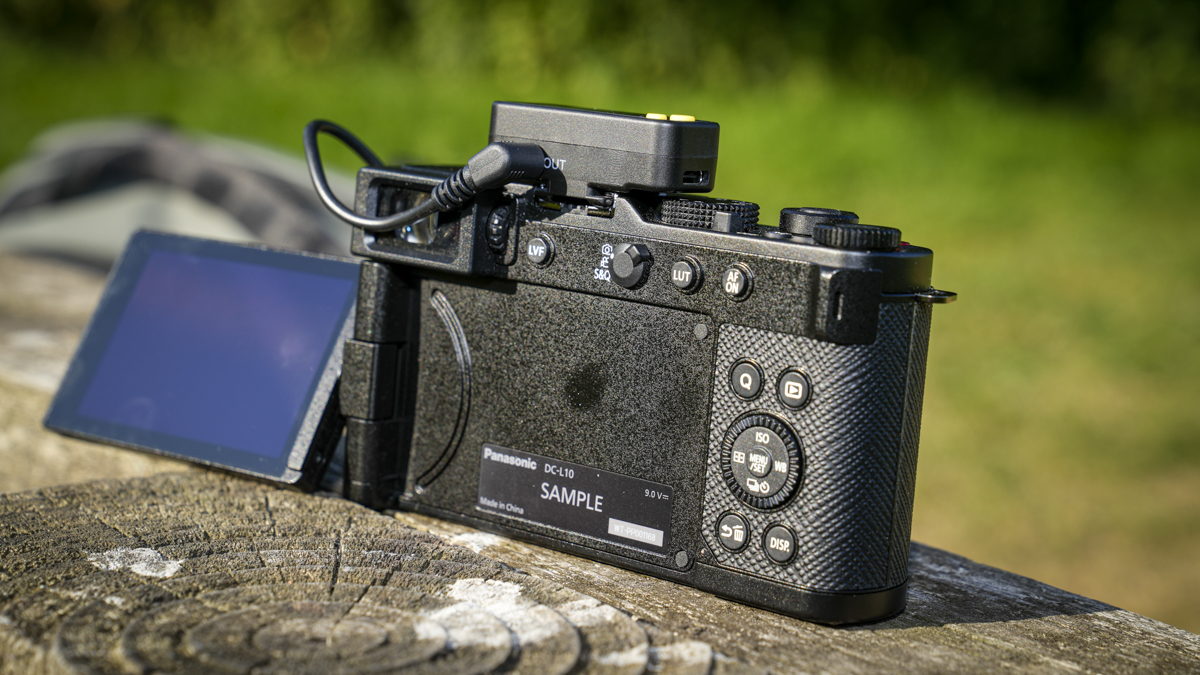
The other real function that you have on the receiver is by pushing the power button, recycling the sheet through the modes from mono to stereo and noise reduction on and off. You can also add that safety track as well
As each of the mic pairs they appear on the small screen. This isn’t touchscreen like some of the other units they were available but it does neatly show all four microphones and their power level and signal strength along with a little audio bath that just shows you a level that the receiver is receiving the audio from the transmission mics to adjust any of the settings you simply hold down the smaller top yellow button and this circles from mono to stereo to that MS safety track depending on what you need.
Now this is a budget set of microphones, so it doesn’t have the in-depth feature set despite having four microphones and the option for the safety track. There are not five channels to store all of that data instead if you’re recording with one microphone that resides on the first channel then if you record with two microphones then that simply stereo channel one and channel 2 if however you then activate that safety track then Mike one and two go onto one channel and the safety track goes onto that second Channel if you then have three mics then you get my one my three on channel one and Mike two goes onto channel 2 add in the fourth Mike and you have my one on channel one alongside Mike three and on the second channel you have Mike two and Mike four so any time you can only ever have two channels split between the four microphones and the safety track and of course if you want to use all four and the safety track and all four mics will reside on channel one and the safety track will reside on channel 2.
It’s a clever, if limited, system, but at the price, it gives you four micro recorders that would normally be well beyond an assistant at this price.
In terms of audio quality, the X6Q sounds good considering its price point. The 24-bit, 48kHz recording is clean and clear, with a signal-to-noise ratio quoted above 70dB. Across the sessions I recorded, voices came through crisp and natural, with enough dynamic range to handle the shift from a quiet aside to a louder, more animated moment. For interviews and podcasts, where a clean, intelligible voice is required, it certainly delivers.
The omnidirectional pattern is a double-edged thing, and worth understanding. On the plus side, it means positioning is forgiving, the mic doesn’t have to be pointed precisely to sound good, which makes clipping four of them onto four people quick and low-stress. The flip side is that an omnidirectional capsule picks up more of the room, so in a noisy environment, you’ll get more background than a tighter pattern would let in. The AI noise cancellation helps rein that in, but it’s not magic, and in genuinely loud surroundings, some ambient noise does make it through.
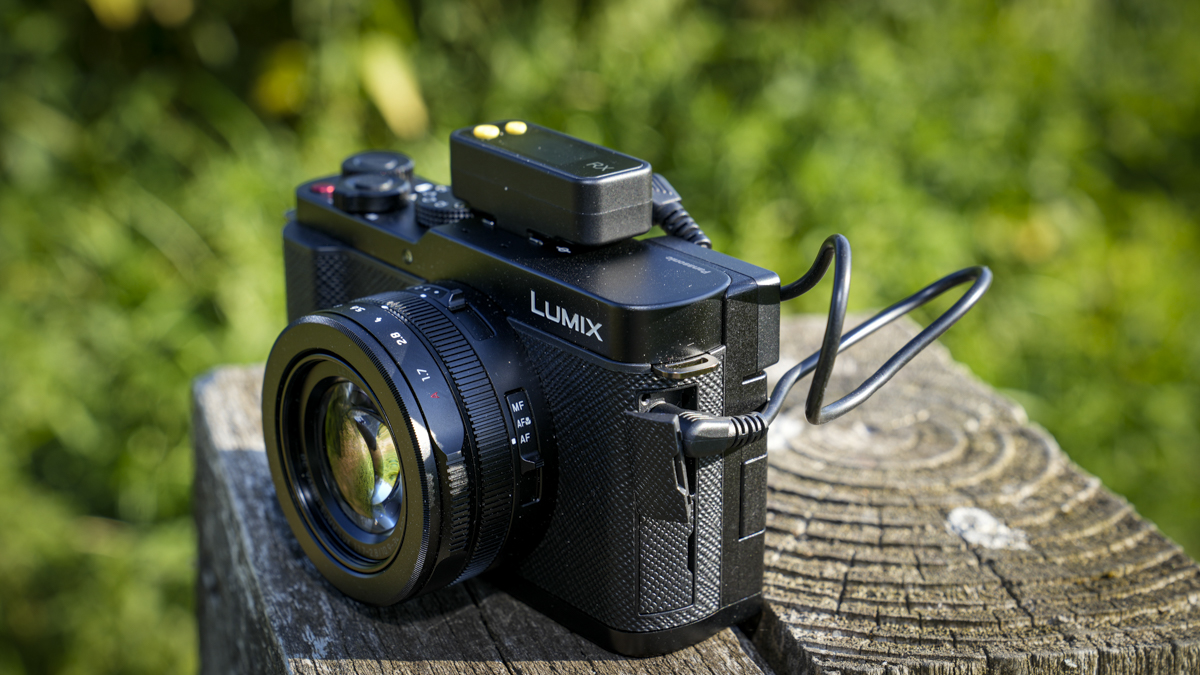
The safety track is always good to see on any set of mics, providing reassuring backup against a sudden peak, though it’s worth noting that using it means a little less separation to play with, as you’re dedicating capacity to that second track. It’s a trade-off, but on balance, a welcome one for anything you can’t reshoot and something that is a deciding factor when I’m recommending mics to people, even with the advent of AI clean-up in post.
The one thing I’d flag clearly is transmitter range. FULAIM headlines a figure of 300m. In real-world use, indoors and around a typical shooting setup, I had no dropouts at the sort of distances you’d actually work, which is a few feet rather than hundreds, for an interview or a podcast, but I’d treat that 300m headline with real scepticism, as at a distance I did start to hear a weakening of the vocals.
Final Thoughts
The FULAIM X6Q sets out to do one thing: record four people at once without costing the earth, and on that score, it succeeds. The four tiny transmitters, the clean 24-bit audio, and the safety-track mode all add up to a kit that feels like excellent value at the cost. For group interviews, podcasts and event work, it’s a practical, affordable answer to a problem that usually costs a good deal more to solve.
There are compromises, as you’d expect. There’s no onboard recording as a backup; the omnidirectional mics let in more of the room than a tighter pattern would; the receiver controls are basic. None of these should really put you off this kit at this price. One issue may be the channel allocation if you do need to edit, as the mics do double up on the tracks, but still, you expect a compromise at this price.
If you’re working on a budget and regularly need to mic up more than one or two people, the X6Q is well worth a look. It does the core job extremely well, and it’s small enough to carry everywhere, and getting four transmitters in the box at this price is really quite surprising.