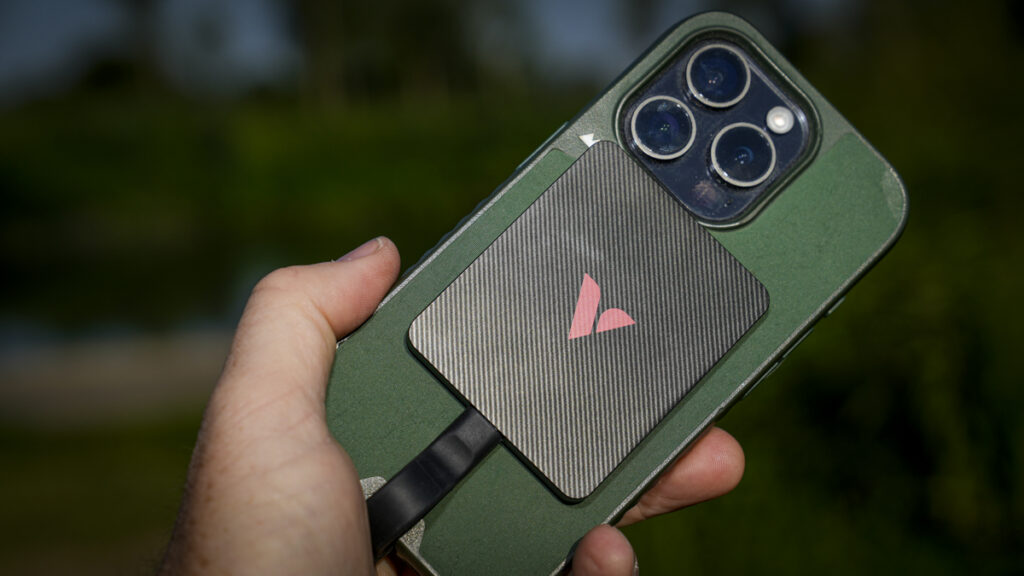

What is the Verbatim SnapBack Ultra Slim SSD?
The Verbatim SnapBack Ultra Slim SSD is a MagSafe-compatible external SSD designed primarily for use with smartphones that have the ability to connect to an external drive, and includes a MagSafe connector so that it can easily attach to your iPhone. If you have an Android device, then Verbatim has included a magnetic ring.
Checking the drive over, and it is surprisingly this at 5mm thick and weighing in at just 42g. To connect, it just snaps directly to the back of a compatible phone and then connects by means of a short USB-C cable. Once done, you can expand your phone’s storage ready for ProRes 4K recording, log video capture, and file backup.
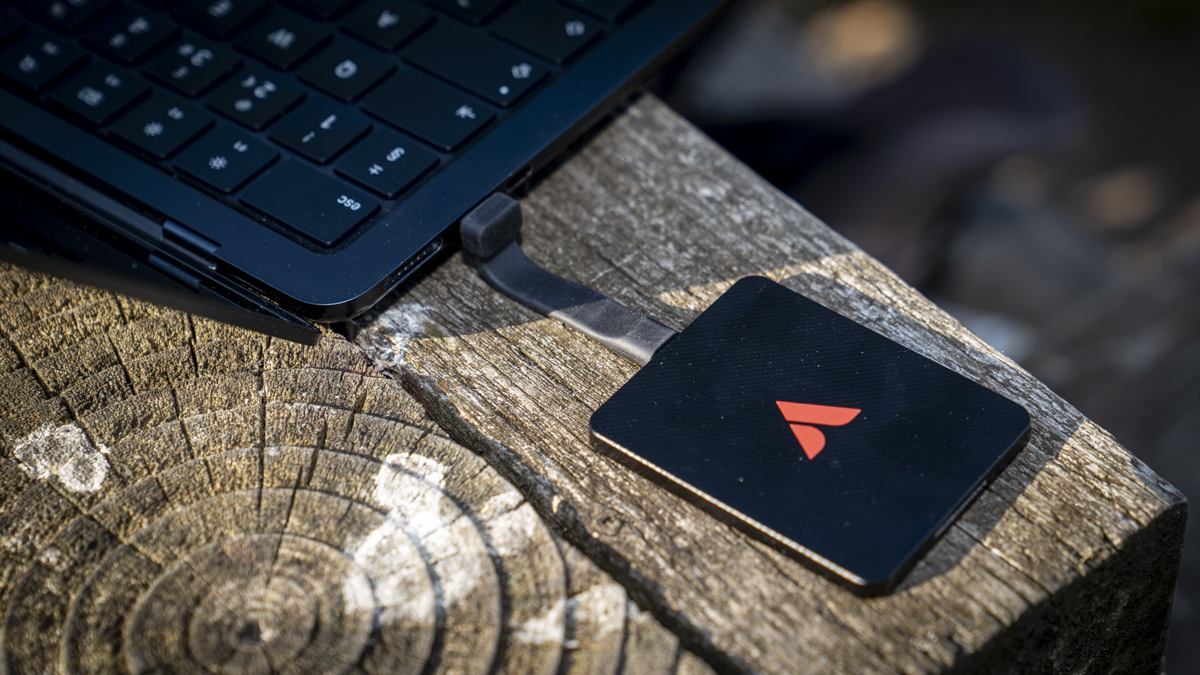
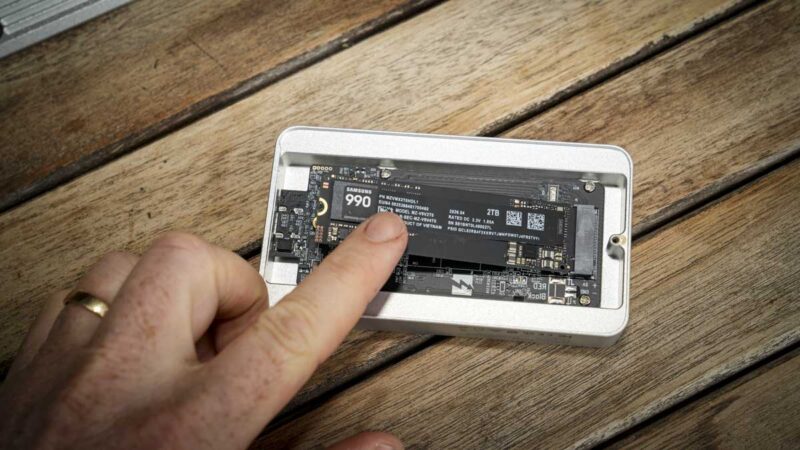
One point about the technologies used that I’ll make early on is that it uses USB 3.2 Gen 2×2, which has a rated top speed of 2,050 MB/s read and 1,900 MB/s write. Inside the metal casing is an M.2 2242 SSD, which is encased in the metal enclosure that helps to give it a premium and an aesthetic that feels well above what the price would suggest.
The drive itself is aimed at content creators and mobile shooters who want to extend the phone’s capabilities rather than carry a separate camera and storage system.
Specification
Interface: USB-C, USB 3.2 Gen 2×2 (up to 20Gbps)
Read speed: up to 2,050MB/s (requires Gen 2×2 host; ~1,000MB/s on 10Gbps host)
Write speed: up to 1,900MB/s (requires Gen 2×2 host; ~944MB/s on 10Gbps host)
Capacity (review unit): 512GB (also available: 1TB, 2TB)
Form factor: M.2 2242
MagSafe compatible: Yes
Thickness: 5mm
Weight: 42g
Dimensions: 70 × 57mm
Cables included: U-shaped USB-C 6.5cm (smartphone), straight USB-C 20cm (PC/Mac), magnetic ring (Android)
Software: Nero 3-2-1 backup (Windows only)
Warranty: 2 years
Price: From £49.99 (512GB)
Read speed: up to 2,050MB/s (requires Gen 2×2 host; ~1,000MB/s on 10Gbps host)
Write speed: up to 1,900MB/s (requires Gen 2×2 host; ~944MB/s on 10Gbps host)
Capacity (review unit): 512GB (also available: 1TB, 2TB)
Form factor: M.2 2242
MagSafe compatible: Yes
Thickness: 5mm
Weight: 42g
Dimensions: 70 × 57mm
Cables included: U-shaped USB-C 6.5cm (smartphone), straight USB-C 20cm (PC/Mac), magnetic ring (Android)
Software: Nero 3-2-1 backup (Windows only)
Warranty: 2 years
Price: From £49.99 (512GB)
Build and Handling
The first thing that stands out about the SnapBack Ultra Slim is the build quality. The metal casing gives it a premium feel that does not match the sub-£50 price, and compared to the plastic-bodied portable SSDs I have used alongside it, it simply feels more robust and definitely more refined. This is a drive you would be comfortable leaving loose in a camera bag or a coat pocket without a case.
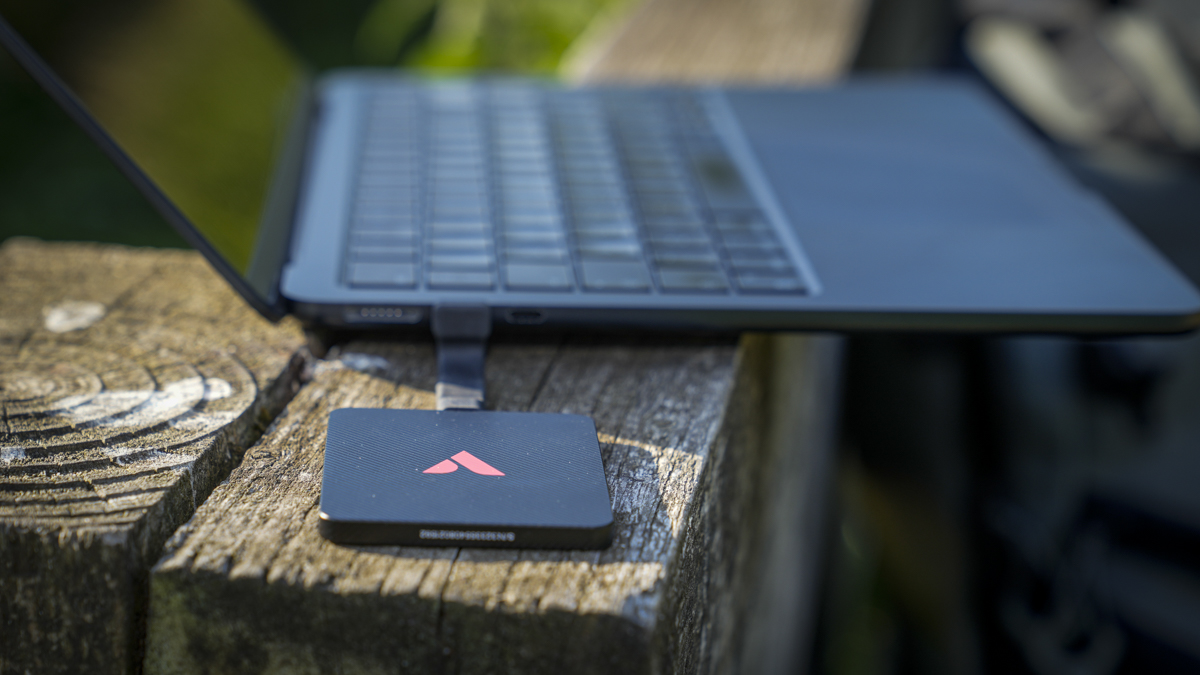
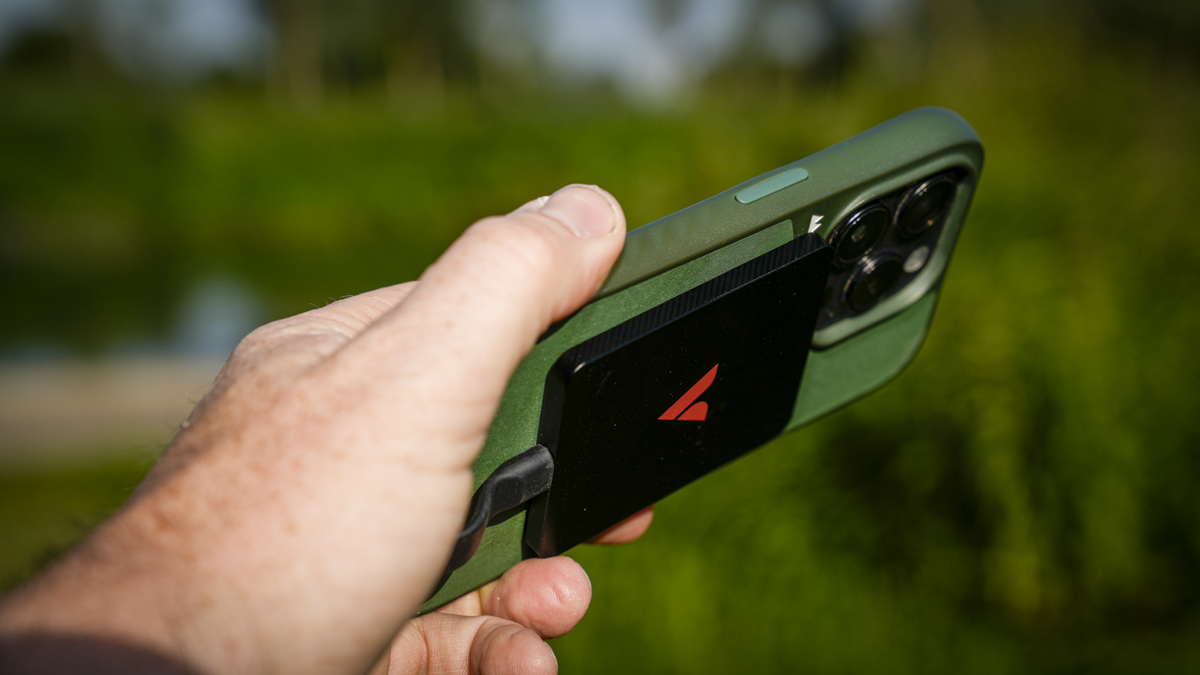
In terms of category, it differs from other drives I have reviewed, such as the Crucial T710, Orico X50, and TerraMaster D1 SSD. Those are designed primarily as desktop and laptop storage companions. The SnapBack is built around the phone use case first, and the physical design reflects that. The U-shaped USB-C cable sits neatly between your fingers when hand-holding a phone, and its slim profile does not upset the balance of a gimbal the way thicker drives do.
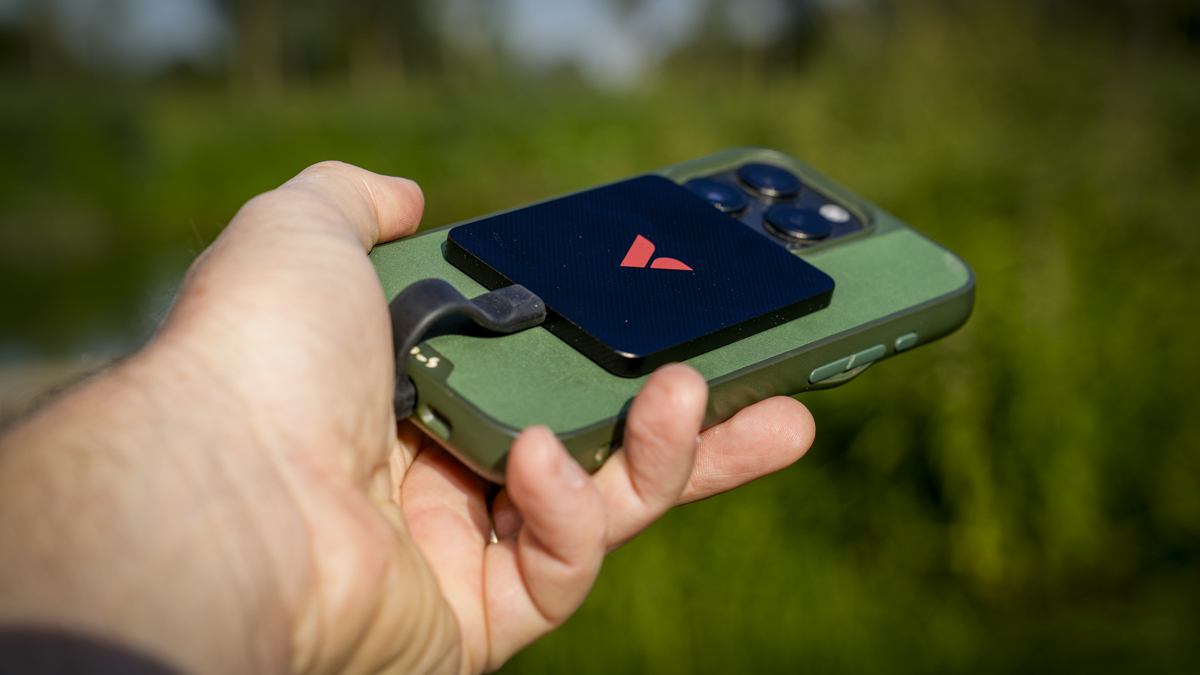
MagSafe compatibility is the defining feature, and in practice, it worked better than expected. With the iPhone 15 Pro snapped to a MagSafe case, the connection was firm and did not shift during handheld shooting. With the vivo V70, held via the included magnetic ring, the grip was equally solid. The ring itself is a small but useful addition that broadens the compatibility to Android devices without requiring a separate accessory purchase.
The 20cm straight USB-C cable is fine for desk use. For field work, connecting to the ASUS ProArt PZ14 or MacBook Pro M1 Max while the machine is in a bag or positioned at a distance, a slightly longer cable would be more practical, but it is not a significant concern, and to be honest, as I had the U-shaped cable with me most of the time, I opted to use this with the computer as well.
Features
This drive is designed for use with your iPhone or Android device, and as such, small and portable are the main features. As is common, it features the USB 3.2 Gen 2×2 interface, which, while it can offer ultra-fast transfer rates, isn’t always the most compatible when it comes to getting the full speed. What it is, is fully backward and forward compatible, although the speed does tend to be limited as I’ve seen in this test.
On the packaging, Verbatim rates the drive at 2,050 MB/s read and 1,900 MB/s write at full 20 Gbps throughput. In testing across the MacBook Pro M1 Max and ASUS ProArt PZ14, the achieved speeds were approximately 1,048MB/s read and 944MB/s write, consistent with the 10Gbps limitation of both machines, as they’re equipped with USB4 and Thunderbolt 4 connections rather than the drive’s native Gen 2×2 capability.
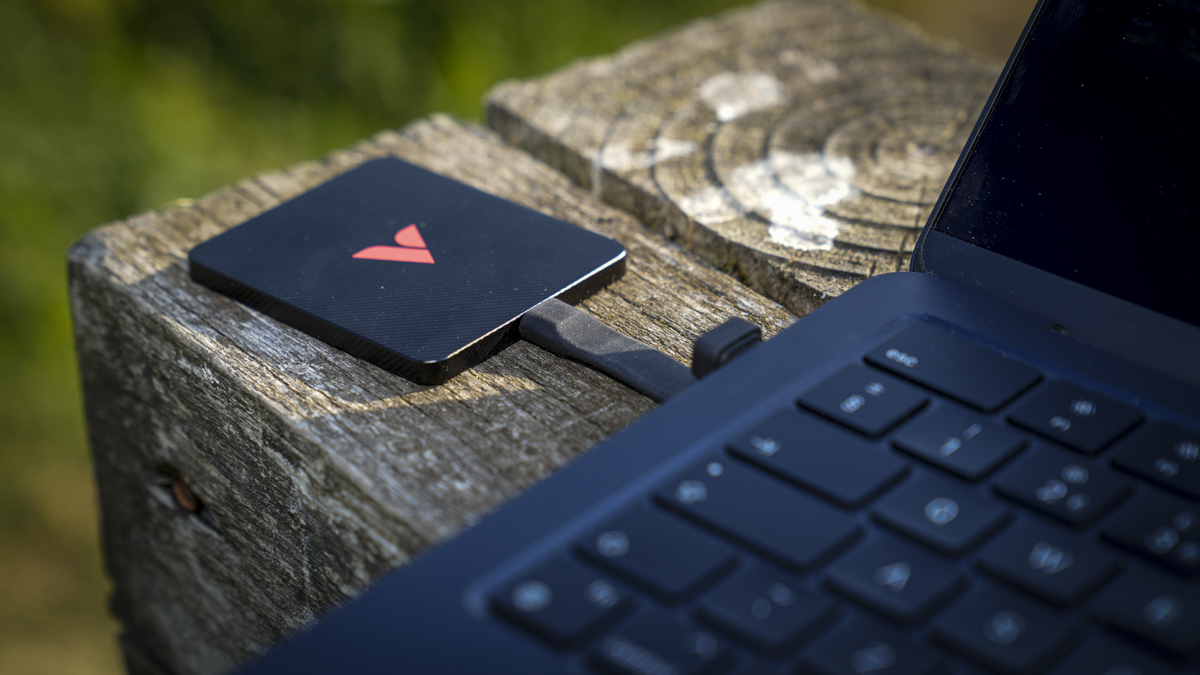
This is not an issue with the drive, and many portable SSDs use this interface as standard. Essentially, USB 3.2 Gen 2×2 requires a dedicated Gen 2×2 host controller, which is not present in USB4, Thunderbolt 4 or Thunderbolt 3 ports despite their higher raw bandwidth.
In fact, most current laptops and desktops, including some of the most capable machines available, do not expose Gen 2×2 to connected devices. I will run a dedicated Gen 2×2 test on a desktop ProArt workstation, and when the results are available, I will update this review.
For the majority of photographers and videographers that I imagine will be looking at this drive, the practical speeds will be closer to 1,000 MB/s read and 900 MB/s write, due to that compatibility.
Essentially, that figure is roughly in line with the Crucial T710, Orico X50, and TerraMaster D1 SSD on the same machines, essentially the SnapBack Ultra Slim, and its technology is the same as most other drives in this sector. When it comes to recording ProRes 4K recording from the iPhone, video offload and Lightroom imports all performed without issues, despite the slowdown due to the interfaces of the machines that I was using.
When used with the iPhone 15 Pro to capture log footage, the drive sits flat against the back of the phone, with no additional mounting hardware required. The slim profile works well when in position and compared with previous phone SSDs of this type that I have used, it felt far better designed for the purpose
One of the other features that I was unable to test was the inclusion of the Nero 3-2-1 backup software. It’s Windows-only, but looks comprehensive and could be a good free option.
Performance
CrystalDiskMark Read: 1,048 MB/s | Write: 944.47 MB/s
AJA System Test Read: 965 MB/s | Write: 873 MB/s
AS SSD Read: 966.63 MB/s | Write: 870.59 MB/s
ATTO Disk Benchmark Read: 999.02 MB/s | Write: 899.30 MB/s
AJA System Test Read: 965 MB/s | Write: 873 MB/s
AS SSD Read: 966.63 MB/s | Write: 870.59 MB/s
ATTO Disk Benchmark Read: 999.02 MB/s | Write: 899.30 MB/s
Before testing the drive out with my iPhone, I wanted to check out the raw performance across a couple of machines, both PC and Mac. While both machines are equipped with Thunderbolt 4 / USB 4, I was aware that the performance was going to be downgraded to 10Gbps for compatibility reasons.
Checking out the results, I was pleased to see that the performance was identical between the MacBook Pro M1 Max and the ASUS ProArt PZ14.
After running the benchmarks, I copied 80GB of Canon EOS R5 C footage across to the drive and created a Premiere Pro timeline, with a five-minute straight edit and was surprised that the drive kept up without thermal throttling. The metal casing became warm under sustained load but never too hot, and there was no observable drop in transfer speed during the session.
I will say that for extended video editing, a larger-capacity NAS or desktop SSD remains the right tool, but if you’re stuck in the field and need a drive to edit, then the SnapBack proved to perform surprisingly well.
On the iPhone 15 Pro, where the drive is better suited, I used the drive to capture log footage directly. The MagSafe connection remained firmly connected throughout handheld shooting, and the whole drive to phone assembly felt good and solid. Even mounted onto a gimbal, it felt well balanced, and the slim profile all seemed well balanced.
Using the connection to the iPhone, I was then able to use CapCut to create a direct edit and then upload this to Instagram, showing that with the addition of the drive, you can vastly boost the abilities of the iPhone.
The one thing that I will say is that the 512GB capacity was only adequate for a short shoot, and I’d be tempted to go for the larger capacity option if you are thinking of using this for video production.
Final Thoughts
The Verbatim SnapBack Ultra Slim SSD is the best-built phone SSD I have used, and at £49.99 for the 512GB model, it costs considerably less than it feels it should. It’s a different product from the Crucial T710 or Orico X50; those are laptop and desktop options first.
The SnapBack is designed for phone use and works and fits incredibly well due to the MagSafe connection, slim, gimbal-friendly profile, and fast in use, offering speeds to cover everything from ProRes iPhone recording to a quick field edit.
The one change I would make before buying is the capacity. The 512GB version reviewed here is limited for any serious shooting; it fills relatively quickly and requires clearing before the next outing. The 1TB version at the next price point is the one I would recommend, giving enough headroom for both recording and a working edit without having to offload between shoots.
For photographers and videographers who shoot on iPhone or want a slim, reliable field backup drive that also works neatly with a laptop, the SnapBack Ultra Slim is a great option. Just buy the 1TB.