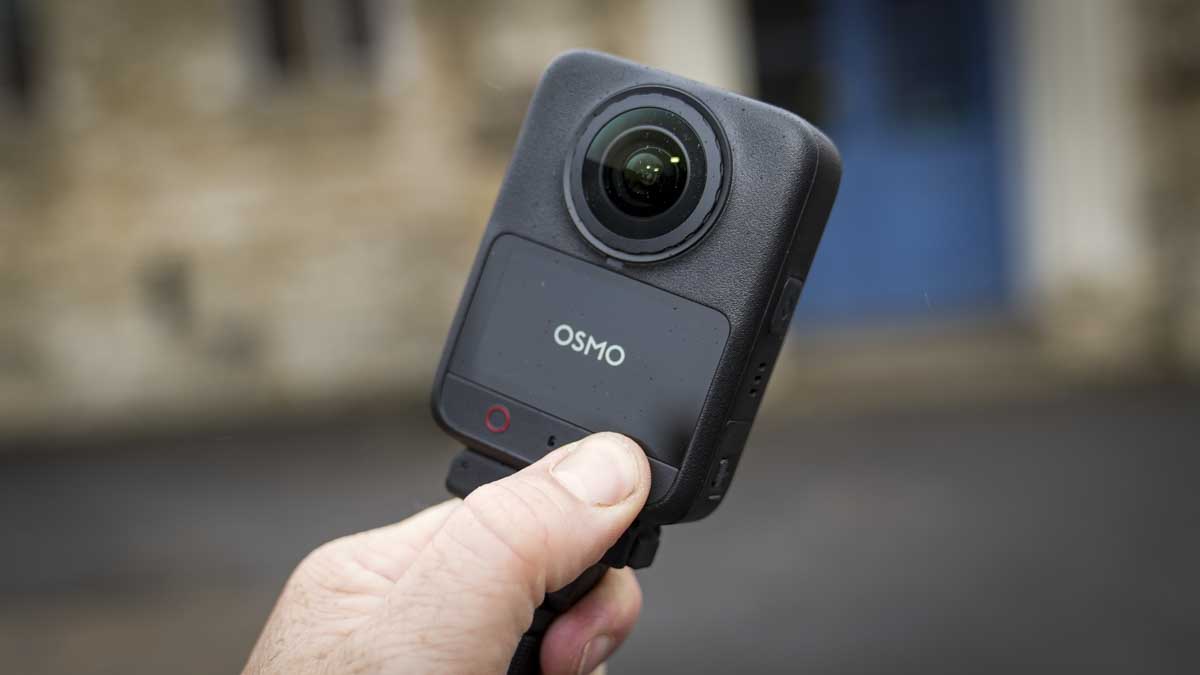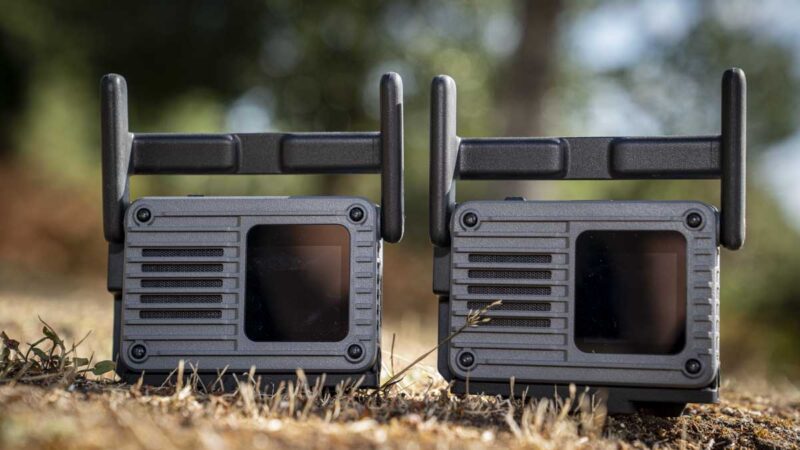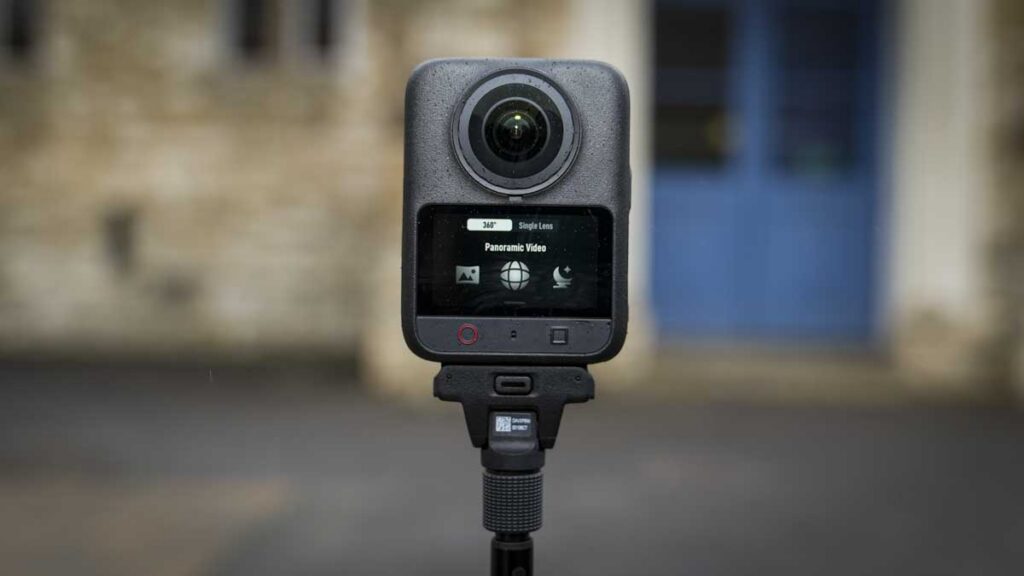

I crashed the Osmo 360 II during the review; thankfully, its lens is replaceable.

Our Verdict

I fully tested the Osmo 360 II, and using it felt so close to the original Osmo 360 that I had to double-check I had picked the right camera, although there are a few aesthetic differences. Side by side, the footage tells a different story: sharper detail, better dynamic range, and cleaner low light, but day to day in the hand, this is a refinement rather than a reinvention.
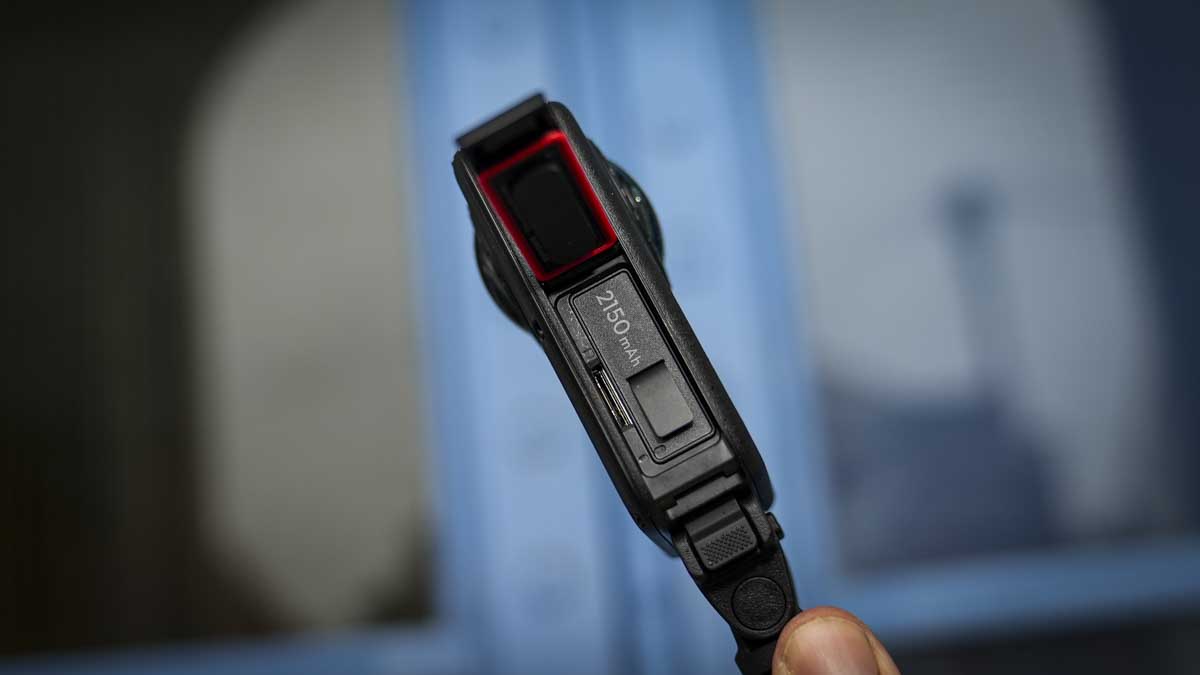
Two things stood out as genuine advantages. The replaceable lens means a scratched or cracked lens is no longer the end of the camera, which for a 360° camera with an exposed lens on each side is as I found out a handy new feature, as the review would have come to a quick and sudden stop before it had truely begun. The battery is the opposite story: DJI has fitted a larger 2150mAh cell against the original’s 1950mAh, and I expected that to translate into longer runtime. It has not; both cameras give the same 100 minutes at 8K/30fps, so the extra capacity is clearly going toward powering the higher frame rates rather than extending your shooting day.
The new creative modes, Vortex, 16K timelapse and the extended slow motion, are genuinely additive rather than gimmicks, though it takes a while to retrain your instincts for how to use them.
Who it’s for: anyone buying their first 360° camera or switching into DJI’s ecosystem, rather than existing Osmo 360 owners looking for a reason to upgrade.

What is the DJI Osmo 360 II?

The Osmo 360 II is DJI’s second full 360° camera, following the original Osmo 360. It keeps the same basic formula: two opposing wide lenses stitched into a single 360° image, a touchscreen on one side, and the same DJI Osmo ecosystem of mounts, mics and accessories. Still, it refines the workflow and recording dynamic and adds a handful of features aimed squarely at the “not quite enough innovation” criticism I made of the original.
DJI OSMO 360 II review

Specification

Sensor: 1-inch 360° image field, 1/1.1-inch square (unchanged from the original, per DJI)
Aperture: f/1.9
360° video: 8K/60fps (up from 8K/50fps)
SuperNight low-light mode: 8K/60fps (up from 8K/30fps)
Dynamic range: 14.5 stops (up from 13.5)
Slow motion: 4K/240fps native, up to 64x via DJI Studio (up from 4x on the original)
Timelapse: 16K (up from 8K)
Vortex: 8K/120fps (up from 6K/120fps)
Single-lens standard mode: [ADD HERE: confirm, DJI’s own comparison slide states 4K/60fps, down from 5K/60fps on the original]
Photo: 120MP 360°, now with RAW capture and an HDR mode
Colour: 10-bit and D-Log M, now supported across every video format.
Storage: 128GB built-in, 105GB usable (unchanged from the original), expandable via microSD to 1TB
Lens: Replaceable, 2nd-generation ultra-hard optical coating, user-swappable via the Lens Replacement Kit
Battery: 2150mAh Li-ion 1S, 8.32Wh (up from 1950mAh on the original)
Battery life: 100 minutes at 8K/30fps (unchanged from the original, measured)
Charging: Fast-charge to 80% in 22 minutes
Battery Extension Rod: Optional accessory, adds up to 180 minutes
Weight: 183g (unchanged from the original)
Waterproof: 10m bare (unchanged); 50m with the optional Invisible Waterproof Case
Operating temperature: -20 to 45°C (unchanged from the original)
Connectivity: Wi-Fi 6, Bluetooth 5.1, USB-C, NFC quick connect (new)
Microphone compatibility: DJI Mic 3, Mic 2, Mic Mini 2S, Mic Mini 2, Mic Mini, via OsmoAudio direct connection

Build and Handling
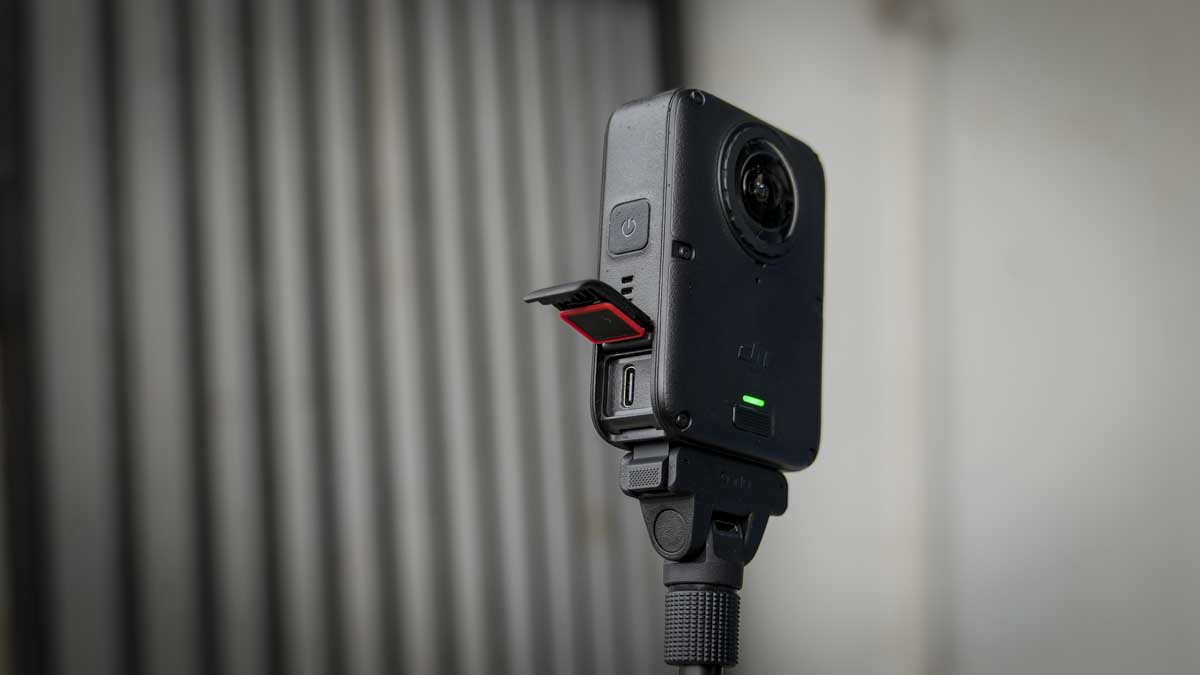
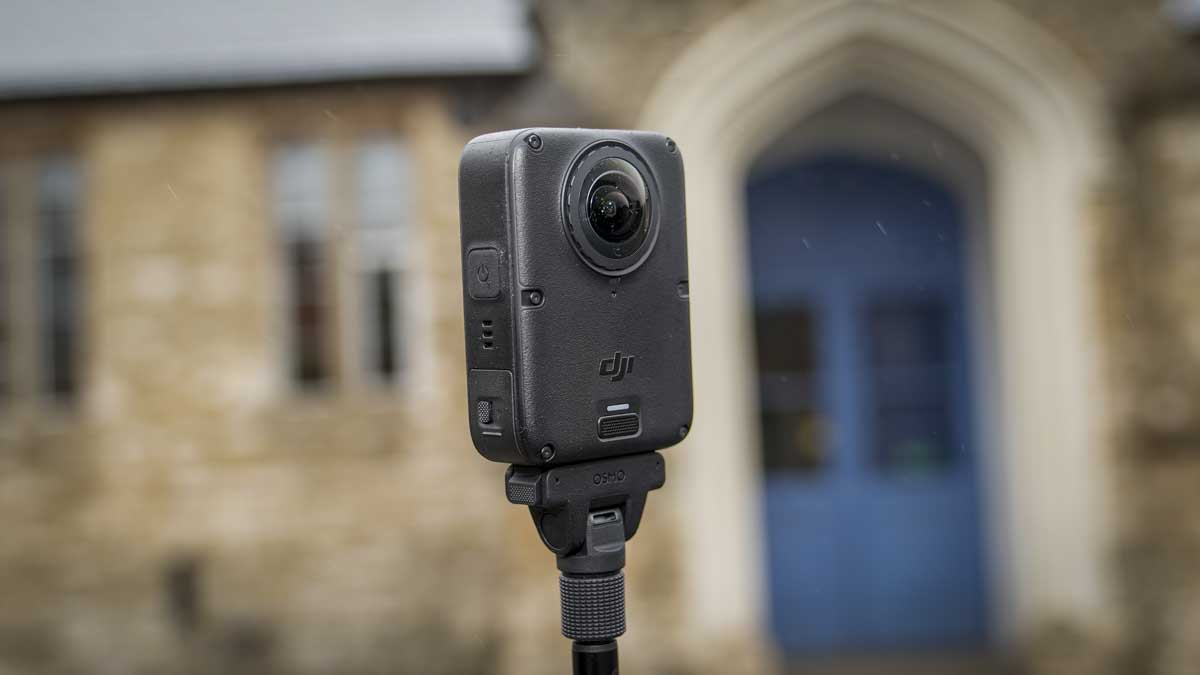
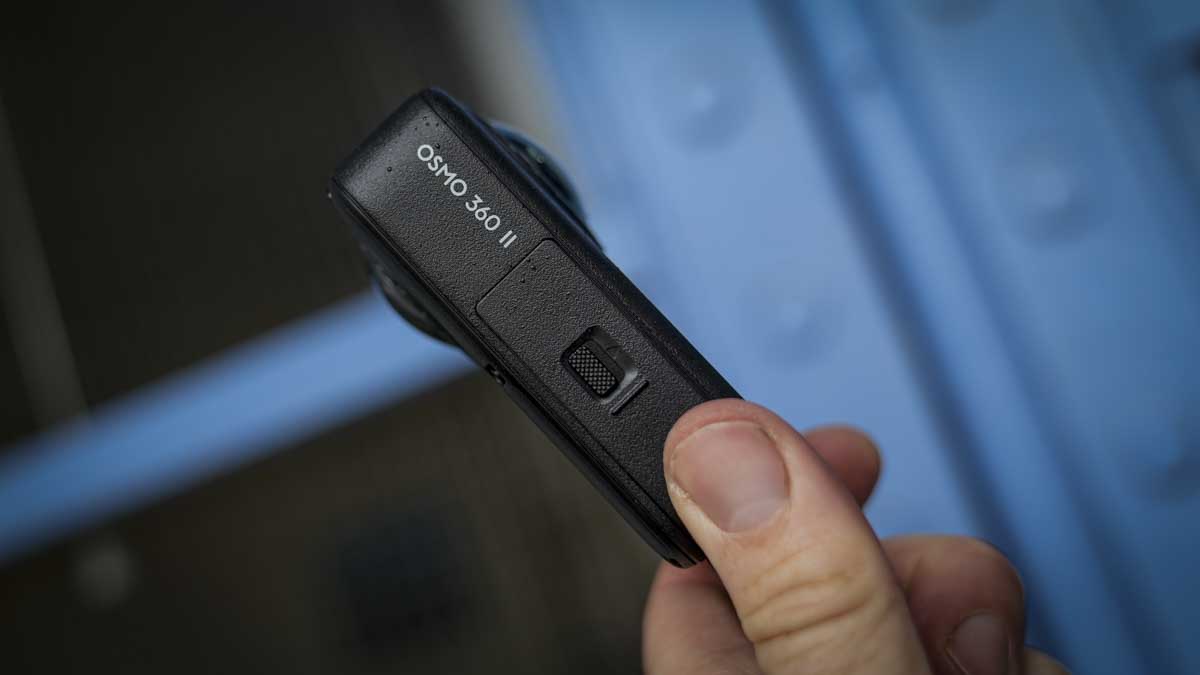
Pick the Osmo 360 II up next to the original, and you would struggle to tell them apart by feel. The weight is identical at 183g, and DJI’s own materials list identical dimensions for both cameras. Day to day, the resemblance to the original is close enough that I genuinely had to check I had grabbed the right camera off the shelf. I realised quite quickly, of course, that the original has the DJI Logo in bright white, while the latest is a more subdued, embossed detail on the solid body.
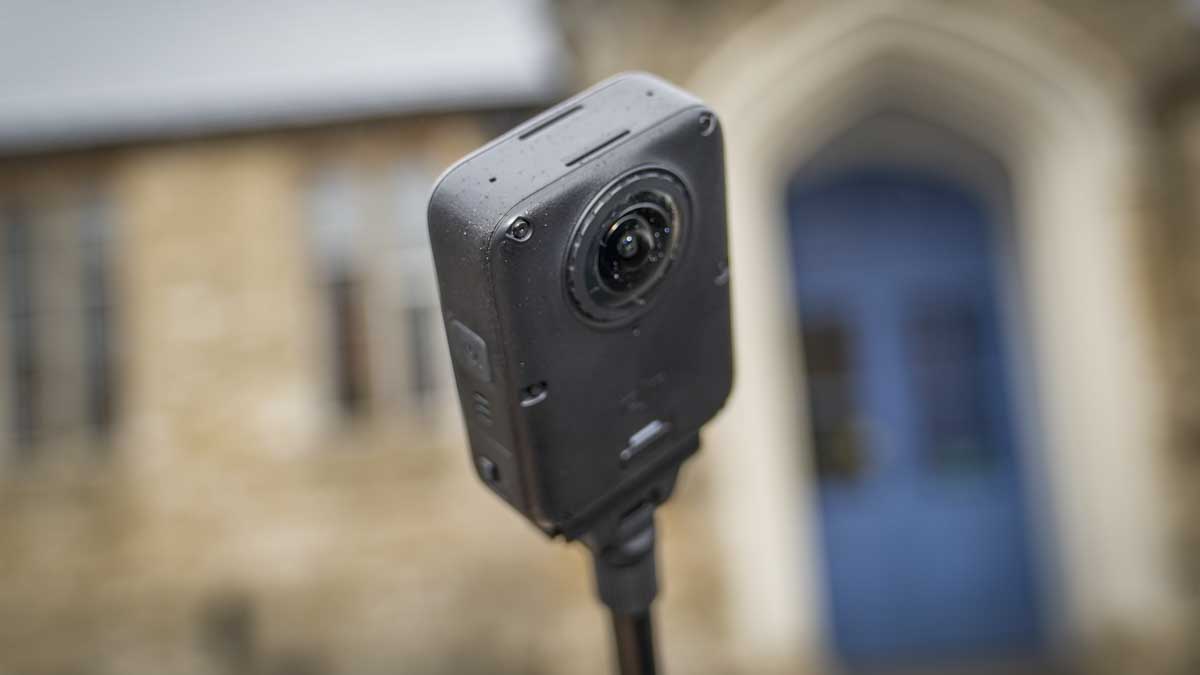
The one real physical change is the lens itself. Both lenses now use a second-generation ultra-hard optical coating and are replaceable, either with DJI’s own Lens Replacement Kit or at a DJI Authorised Service Centre. DJI’s lens replacement kit is incredibly easy to use, so you can do it yourself; it took me about two minutes to remove a broken lens and replace it. with another.
For a camera design that leaves both lenses permanently exposed, that is a great change rather than a cosmetic one, and it’s something we’ve seen GoPro do in the past with their cameras. A scratched or cracked lens used to mean the death of the camera; now it’s a quick fix, and you’re back up and running.
DJI OSMO 360 II review
I also had the Vortex grip to test alongside the camera, which pairs with the new Vortex mode to add a swing-based transition effect. Physically, it is a straightforward accessory, and it only really makes sense once you have tried the mode it is built for. I’m honestly still getting used to it, so I’ll break its use out into another feature.

Features

The headline numbers are 8K/60fps 360° video, up from 8K/50fps, and 14.5 stops of dynamic range, up from 13.5. Neither transforms the camera on its own, but together with the doubled SuperNight low-light frame rate, now 8K/60fps rather than 8K/30fps, they add up to a genuinely more capable imaging potential than the original.
DJI’s new noise-reduction algorithm is behind much of the low-light improvement, and I questioned whether this is a genuine hardware-dependent improvement or a software algorithm that could eventually reach the original Osmo 360 through a firmware update.
Alongside the hardware upgrades, there are also the three creative additions. Vortex is an 8K/120fps mode built for a swing-based transition effect, up from 6K/120fps on the original. The 16K timelapse is, in DJI’s own words, a “rather insane” resolution for the format, and there is clearly room to experiment with reframing after. Slow motion extends to 4K/240fps natively, and up to 64x through DJI Studio’s AI frame interpolation, equivalent to a cropped 8K/480fps, up from a 4x ceiling on the original.
DJI OSMO 360 II review
The feature set is there and improved over the original OSMO 360, but it feels incremental rather than a leap.

Performance

In everyday use, the Osmo 360 II feels so close to the original Osmo 360 that the difference only becomes obvious when you put footage from both side by side. That is not a criticism; it’s exactly what a second-generation refinement should feel like: the same reliable shooting experience, just with better results. I was already impressed with what the first iteration of this camera could do.
When checking through what was new, I noted that DJI has fitted a larger 2150mAh cell, up from 1950mAh on the original, and I expected that to mean longer battery life. It does not. Both cameras are rated, and in my own use, behaved the same: 100 minutes at 8K/30fps. The extra 200mAh is almost certainly going toward powering the higher frame rates and the new processing rather than extending runtime, which is a reasonable trade-off. Still, it means the number to plan around for a shoot day has not moved at all from the original camera. If you need more than 100 minutes, the optional Battery Extension Rod is rated for an extra 180 minutes and is a good option, or more batteries.
DJI OSMO 360 II review
The increased slow motion capture is a nice touch. Still, I tend to run 360° footage at 60fps for the video quality it gives me, and I could not immediately see the point of pushing the slow-motion ceiling higher for 360° work specifically. Where it’s more likely to matter is standard aspect ratio filming, which I don’t tend to shoot as much in 360° as I do conventionally, so this may matter more to your workflow than mine. However, now that this feature is available and the results look surprisingly good, it may well be something I start to investigate a little more.
The 16K timelapse is a different story. This is genuinely impressive at that high resolution for the format, and there is real potential for creative and fun use once I have had more time to experiment with it properly. I haven’t exhausted what it can do in this test, but from the sample footage shot, the results are incredibly impressive.
One feature I really liked is the new Vortex mode, and thankfully I had the Vortex grip to test it with. Vortex mode, despite the explanations, took some time to get my head around, and it was only after some pointers that I truly got what it was about. I’m still experimenting, but again the potential of this mode is impressive.

DJI OSMO 360 II reviewWhen it comes to shooting, the OSMO 360 II is a new style of camera; despite the obvious similarities to its predecessor, it does seem to be becoming a creative filming resource in its own right, in the same way as a drone, gimbal, and so many imaging devices. It feels like it’s on the verge of being something more than it is at present, and with the upgrades DJI has given us, we just have to figure out what to do with it.

Now between Vortex, the little-planet-style recomposing 360° footage already supports, and the extended slow motion and timelapse, this becomes a camera for experimenting with shot types well beyond a straightforward 360° capture. That is genuinely exciting, though it takes a while, mine at least, to retune your instincts for how actually to use all of it.

As the test went on, I found the camera’s low-light performance is a step up from the original and compares well against other 360° cameras at this price point, such as the GoPro Max 2. You can still see some reduction in detail and a degree of noise in genuinely dark scenes, but it is well handled rather than distracting.
Of course, while this camera is all about 360, it also has a single-lens mode, which is fantastic. I’d still opt for the OSMO Cation 6 if I were shooting flat footage, but if you need to shoot in-camera, that’s an option.

Final Thoughts

As it stands, there is not enough here to make me tell an existing Osmo 360 owner to run out and upgrade. The camera feels almost identical in the hand, the battery life has not improved despite the bigger cell, and the imaging gains, while real, only show up clearly when you compare footage directly rather than in day-to-day shooting.
If you are looking for a new 360° camera, or joining the category for the first time, then everything changes. The Osmo 360 II is an exceptionally good option. It refines DJI’s first venture into this camera sector in exactly the places that needed it: the replaceable lens addresses a real durability concern, the low-light step forward is genuine, and the new creative modes give you considerably more to do with the same basic camera shape.
DJI OSMO 360 II review

Should you buy the DJI Osmo 360 II?

Buy it if you are buying your first 360° camera or switching into DJI’s ecosystem. The replaceable lens alone is worth having for a camera design with both lenses permanently exposed, and the low-light and dynamic range improvements are genuine rather than marketing spin.
Skip it, for now, if you already own the original Osmo 360. The feel of shooting with it is barely different, the battery life hasn’t changed, and the improvements are real but incremental rather than transformative.

Buy it if
You are buying your first 360° camera
You want the peace of mind of a replaceable lens
You shoot in low light and want a genuine step forward
You want to experiment with Vortex, 16K timelapse and little-planet-style shots
Don’t buy it if
You already own the original Osmo 360 and want a big leap
Longer battery life is your main reason for upgrading
You mostly shoot single-lens, flat footage
You need Spotlight Follow or Dual Recording confirmed before buying
Alternatives
DJI Osmo 360 (original): still capable, and the camera to consider if the Osmo 360 II’s asking price is a stretch and you do not need the replaceable lens or the newest low-light performance

How we tested

I fully tested the DJI Osmo 360 II over three weeks, shooting alongside my original Osmo 360 for direct comparison, and with the Vortex grip accessory for the new Vortex mode. Testing covered standard 360° video, SuperNight low-light shooting, 16K timelapse, extended slow motion, the new Vortex effect, and battery runtime against the original camera’s rated and measured figures.

Frequently Asked Questions

Should I upgrade from the original Osmo 360 to the Osmo 360 II?
Probably not, unless the replaceable lens or the low-light improvement specifically matters to you. Day-to-day, the two cameras feel almost identical to shoot with, and battery life has not improved despite a larger cell. The imaging gains are real but only obvious when comparing footage side by side.
Does the DJI Osmo 360 II have a longer battery life than the original?
No. Despite a larger 2150mAh battery than the original’s 1950mAh, both cameras are rated and behaved the same in testing: 100 minutes at 8K/30fps. The extra capacity appears to power the higher frame rates rather than extend runtime.
Can you replace the lens on the DJI Osmo 360 II?
Yes, both lenses are user-replaceable, using DJI’s own Lens Replacement Kit or through a DJI Authorised Service Centre, a first for this camera line and a genuine practical upgrade given both lenses sit permanently exposed.
When is the DJI Osmo 360 II available in the UK?
DJI has confirmed pricing: Standard Combo at £509 and Adventure Combo at £639, but UK and EU consumer availability is still to be announced, expected later in September 2026 following the camera’s IFA 2026 debut.