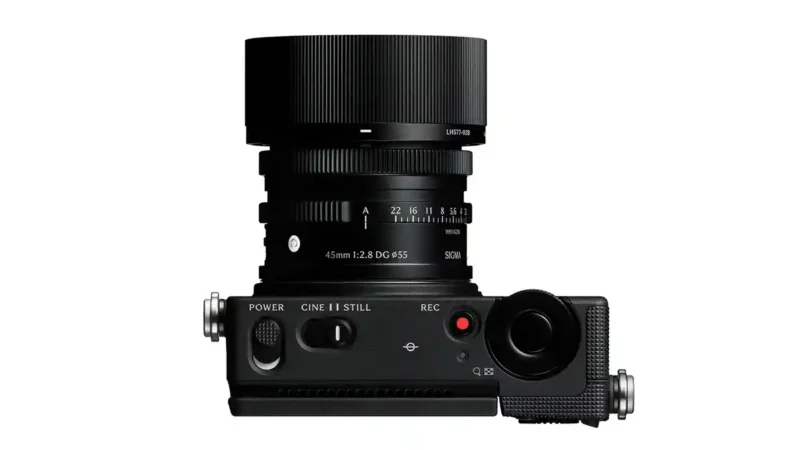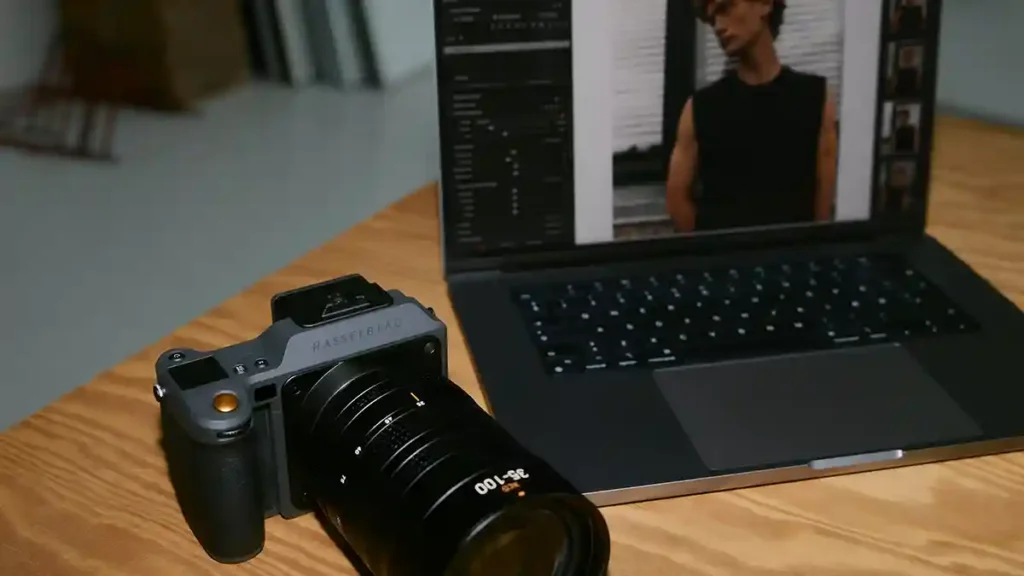

If there is one feature request that has echoed around Capture One’s forums for as long as we can remember, it is native Hasselblad support. As of today, that wait is over. Hasselblad and Capture One have announced a partnership that brings native support for Hasselblad’s medium format RAW files (.3FR) to Capture One, meaning photographers can now import, organise and develop their Hasselblad images directly in the software, with the full toolset of layers, masks, colour editing and precision adjustments at their disposal.
Capture One will also be offering a free 7-day trial for users.
In the studio we use several rather ancient Hasselblad 500C’s with digital backs alongside Capture One, a system that we’ve had in place for well over 10 years and for us it’s worked personally. However, those 500C’s have seen decades of service and an upgrade with this new workflow could finally be the key to us upgrading.
That support arrives in Capture One 16.8.3 and Capture One Mobile 3.3.4, and covers three of Hasselblad’s 100-megapixel models from day one: the X2D II 100C, the X2D 100C and the CFV 100C digital back. All three share a 100-megapixel medium format sensor with 16-bit colour and the Hasselblad Natural Colour Solution, and the CFV 100C’s inclusion is a particularly welcome touch — the modular back mounts on the 907X, on classic V System film bodies and on technical cameras, so this announcement reaches well beyond the current X System crowd.
What impresses us most is that this is not a generic, tick-box implementation. Capture One has built dedicated colour profiles for each supported model, so Hasselblad files should render with the true-to-life colour the software is known for, while dedicated lens profiles for Hasselblad’s XCD glass handle distortion, chromatic aberration and light falloff.
“Since the beginning, Hasselblad has been driven by a passion for photography and a commitment to giving photographers the tools they need to realize their creative vision. We are excited to make Hasselblad technology accessible to a wider audience. Together, we are empowering more creatives with best-in-class tools to bring their vision to life and create exceptional photography,” said Bronius Rudnickas, Global Marketing Manager at Hasselblad.
Rafael Orta, CEO of Capture One, added: “Photographers have asked us to bring Hasselblad’s image quality into Capture One’s platform for years. This partnership delivers exactly that, empowering even more photographers with everything they need, from initial inspiration to final image. It’s a collaboration the photography community has wanted for a long time, and we’re glad it’s finally here.”
Until now, bringing Hasselblad files into Capture One meant conversions and workarounds that cost colour fidelity and editing latitude — a frustration we suspect pushed more than a few medium format shooters towards Phocus or Lightroom against their preference. That barrier has now gone.
The one caveat is tethering. At launch, the partnership covers RAW file support only; tethered capture, which connects a Hasselblad camera directly to Capture One for live, on-set shooting, is planned for later in 2026, with exact timing still to be confirmed. Given that tethering is arguably Capture One’s signature strength — and precisely the environment in which many Hasselblad systems earn their keep — we would argue the partnership only truly completes when that piece lands. Still, for a first step, native RAW support with bespoke colour and lens profiles is exactly the right place to start.
Native Hasselblad RAW support is available today in Capture One 16.8.3 and Mobile 3.3.4, and a free 7-day trial of Capture One is available from the Capture One website.