A first camera arrives with a lens, a thin strap and one battery, which is enough to start taking photos the same afternoon. Within a few weeks most people hit the same frustrations: a flat battery halfway through a day out, a memory card that fills up, a strap that digs into the neck.
Building your photography kit covers everything from tripods to teleconverters, and the fixes for those first frustrations are cheap. After decades in the camera industry, these are the six accessories I recommend most often:
- A spare battery, so a flat one never ends the day
- A second memory card, because cards fill up and cards fail
- A comfortable strap, so the camera comes with you
- A padded bag, so the camera survives the journey
- A cleaning kit, to keep the front of your lens clear
- One prime lens, for brighter indoor shots and softly blurred backgrounds
Most photography starter kits include the camera, a lens and a thin strap, with a bag sometimes added as an offer. None of them include the six items above. Buy them a piece at a time and learn what each one does before the next arrives.
A spare battery and a second memory card
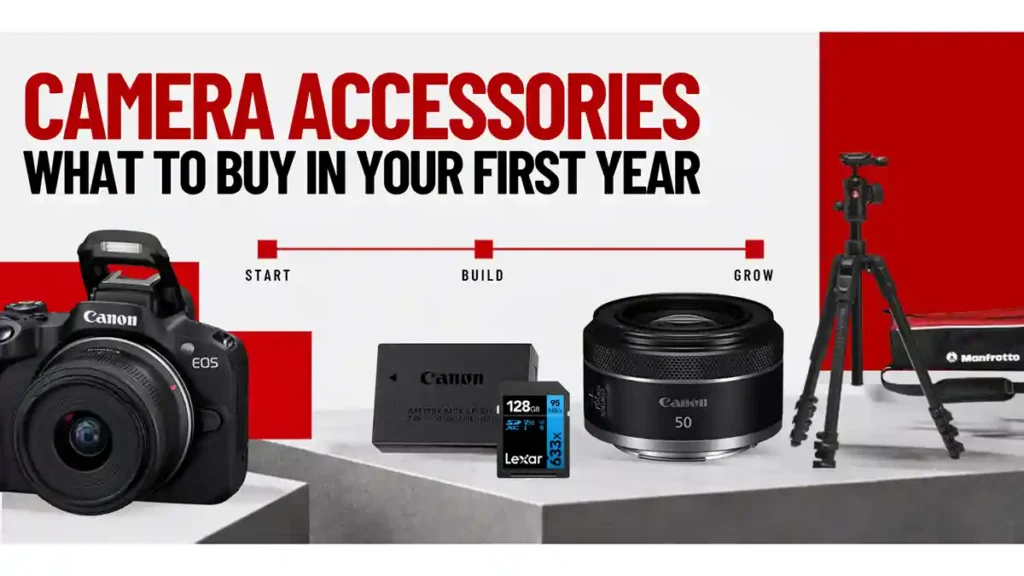
Buy both with the camera. A battery takes hours to recharge, and you cannot shoot while the battery is charging, so one flat battery ends the day. With a spare, one is in the camera and one is charged in the bag, and a swap takes ten seconds.
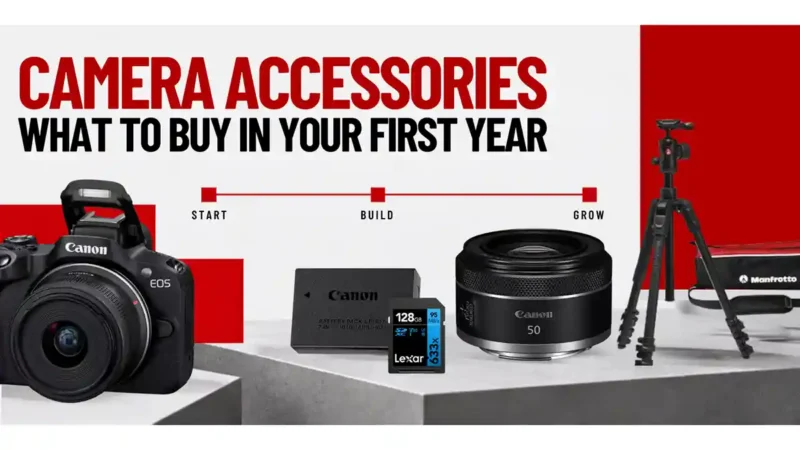
Order the spare with the camera. It adds little to the bill: a Canon EOS R50 body costs £649 and the Canon LP-E17 battery it uses costs £53.99, under a tenth of the order. Buy the camera maker’s own, because third-party copies tend to fade within a year.
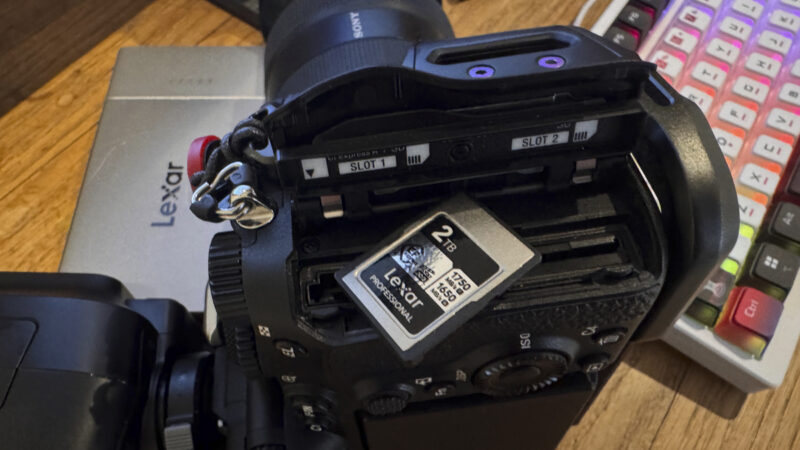
Buy memory cards the same way. A card fills faster than you expect: 4K video runs at about a gigabyte a minute, so a 64GB card can save around an hour of footage. A Lexar 128GB SDXC costs £27.50, and a spare in the bag means you keep shooting when the first one fills. Cards rarely fail, though a spare covers that too. Counterfeit cards are common online, so buy from a shop you trust.
A strap you will carry all day
Replace the strap that came in the box. The thin one digs into your neck after an hour. A comfortable strap is the accessory beginners thank me for most, because the camera then comes out with you more often, and the more you shoot the faster you improve.
A padded sling goes across your body and puts the weight on your shoulder: a Peak Design Slide Lite costs £59.99. For a lighter camera, a Peak Design Cuff wrist strap costs £34.99 and keeps the camera in your hand. Black Rapid make good slings too. Pick the one that lets you lift the camera to your eye fastest.
A padded bag to protect the camera
A bag protects the camera. Carried loose in a rucksack, the camera might get scratched by keys or zips, or a water bottle can knock the lens cap off. A padded compartment protects the camera from damage like that. The bag is also somewhere safe to put the camera down when you stop for a coffee.
For a compact camera, the Cullmann Malaga Compact 200 costs £11.99 and makes a good first bag. It can hold the body with its kit lens attached. The Billingham Hadley Small costs £175. The Billingham is waxed canvas and leather, and people are still carrying the same bag twenty years on. Buy for your current kit, with room for one more lens.
Keep the glass clean and protected
Fingerprints and dust land on the front of a lens within the first week of owning a camera. A smeared lens is one of the most common reasons photos look soft, and editing cannot bring that detail back. Clean the glass before you shoot. You need three things:
- A blower, such as the Kenro Hurricane at £10.99, puffs dust off without anything touching the glass
- A cleaning kit, such as the VSGO Multifunctional at £18.99, adds a microfibre cloth and a lens pen for fingerprints
- A protective filter takes the dust, rain and sea spray instead of the lens: £12 for a Kenko 49mm Air UV, £23 for a Hoya UX II
Fit the filter on day one and leave it on. A scratched filter is a £12 replacement, where a scratched front element means a repair bill or a new lens. Buy a well-made multi-coated one and it makes no visible difference to your photos.
Add a lens hood with it, the ring that shades the front of the lens and cushions knocks. A screen protector is £3.95 well spent too, because the back screen is the part you touch every time you shoot.
One prime lens changes your photos most
A prime lens has a fixed focal length and a wide aperture. The aperture is the opening that lets light into the camera, and a wide one gives you bright indoor shots and the soft, blurred background behind a portrait that photographers call bokeh.
A kit lens at its longest is typically f/6.3. A 50mm prime opens to f/1.8, up to twelve times as much light. A few months in, that gap is what you have been running into: indoor photos come out dark or grainy because the kit lens forces a high ISO, and portraits look flat because the background stays as sharp as the face.
Every brand sells one of these cheaply, and the 50mm f/1.8 is known as the nifty fifty. Canon’s RF 50mm f/1.8 STM costs £239, and it is sharper than the kit lens as well. Once you have the basics on this list, make it your next purchase.
A tripod or a monopod, depending on how much you move
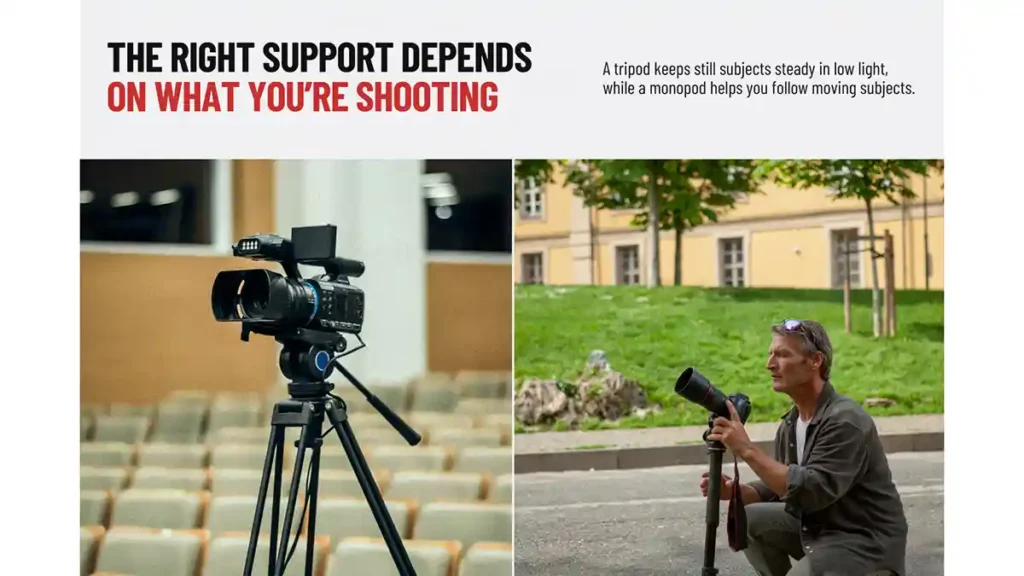
A tripod and a monopod both take the weight of the camera off your hands and hold it steady. Which one you reach for comes down to how much you need to move while you shoot.
A tripod stands on three legs and fixes the camera in one position. Use it when your own position is not going to change: landscapes, long exposures, studio and fashion work, anything you have time to compose. In low light the shutter has to stay open longer, and over a long exposure the smallest movement in your hands turns into blur, which a tripod removes.
A monopod is a single leg that you hold, and it is what you want when you are shooting on the move. Chasing a toddler round a park, working a touchline with a long, heavy lens, shooting candid frames at a wedding, moving along a street: a monopod supports the camera and the lens without setting anything up, and you can lift it, drop it and change angle in a second. It also takes up far less room in a bag.
A flash for indoor and family photos
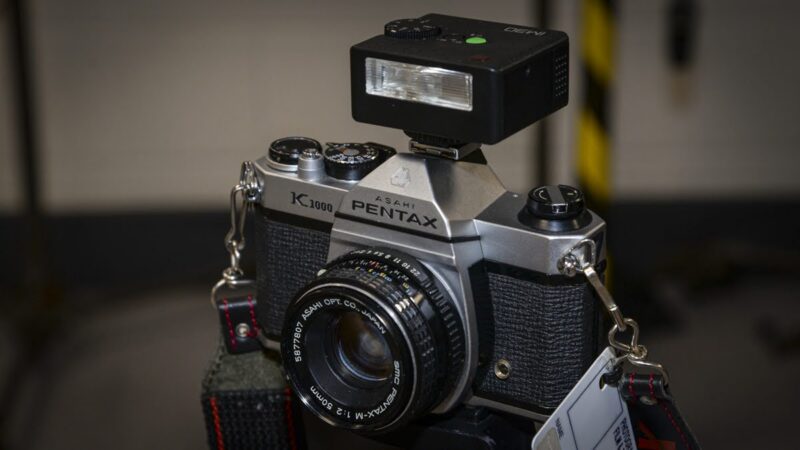
Once you have used the camera for a while, you will run into a dim room: a birthday indoors, a dinner table, a school hall. In low light you have to raise the ISO, the camera’s sensitivity to light, and a high ISO makes the photo grainy. A flash adds light to the room instead, so the ISO stays low and the picture comes out clean.
A flash is useful outdoors as well. On a bright day the sun casts hard shadows across a face, and a small burst of flash fills them in.
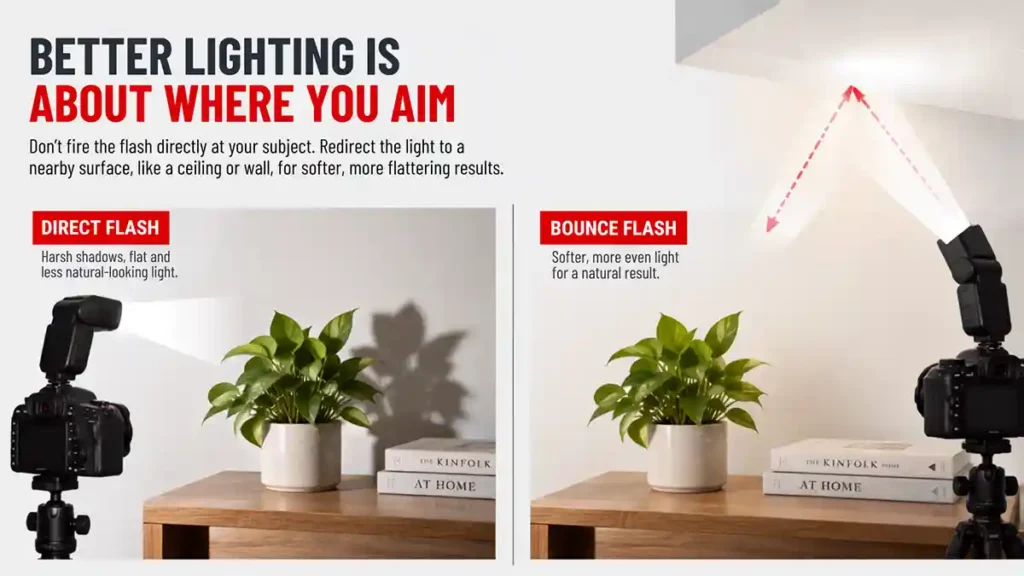
Your camera maker’s own flash is the surest fit, and a third-party unit from a brand such as Godox does the same job for less. Most flashguns have a head that tilts. Point it up at the ceiling rather than straight at your subject, so the light bounces down and spreads, which removes the hard shadows a direct flash creates. A clip-on diffuser softens it further from £3.99.
People usually buy their first flash for photographing children indoors, where the light is low and nobody sits still.
What to add as you grow
Four more items are worth buying later, once you know what you shoot most. Here is what each one is for:
- A power bank keeps you running through long video, time-lapses and night-sky sessions
- A teleconverter adds reach to a telephoto lens, once you shoot wildlife or sport
- A polarising filter deepens a blue sky and cuts reflections off water and glass
- A light meter is worth having for studio work and film
Buy each as your photography moves that way and you will use it from the day it arrives.
Book a lesson to get the most from your gear
Gear and skill work together, so plan for both. At Campkins we run one-to-one lessons, talks and workshops. An hour with someone watching you shoot moves you on further than a month on your own, because they can see the one change that will lift your photos most.
Wherever you are in the UK, camera shops, colleges and camera clubs run the same sort of thing. Find one near you and book on. Then get the items on this list, and go and shoot.
Frequently asked questions
What is the best photography starter kit for a beginner?
The best photography starter kit for a beginner is a camera with an affordable kit lens. Add a spare battery, a second memory card and a padded bag to the same order. Check what is in the box before comparing prices: most kits include the body, one lens and a thin strap, and a bag is usually a seasonal offer.
What are some common camera accessories?
The common camera accessories are spare batteries, memory cards, straps, bags, cleaning kits, protective filters, screen protectors, tripods, monopods and flashguns. Beginners get the most from the first six, and the rest follow once you know whether you shoot landscapes, sport or indoor portraits.
Do I really need a spare battery and a second memory card?
Yes. A battery takes hours to charge and the camera cannot be used while the battery is charging, so one flat battery ends the day. A second card covers the other way a day goes wrong, because cards fill up and fail without warning. At £53.99 for a Canon LP-E17 and £27.50 for a 128GB card, both are cheap next to the camera.
Can I teach myself photography?
Yes, you can teach yourself photography, and most people start with free videos and their own practice. A lesson gets you there faster, because someone watching you shoot can see the habit holding your photos back and correct it on the spot. Camera shops, colleges and camera clubs across the UK run one-to-one sessions and workshops.
About the author
Owen is the owner of Campkins Cameras, a UK camera shop with a physical store as well as an online one. Alongside cameras, lenses and flashes, it sells binoculars, monoculars, spotting scopes and more. Owen has spent decades helping beginners choose their first camera and the accessories to go with it, and he writes about the gear that makes the biggest difference to your photos.
*All prices were checked in September 2026 and may have changed since.