
A quirky screen-free camera with a genuinely useful light meter but significant imaging compromises
Our Verdict
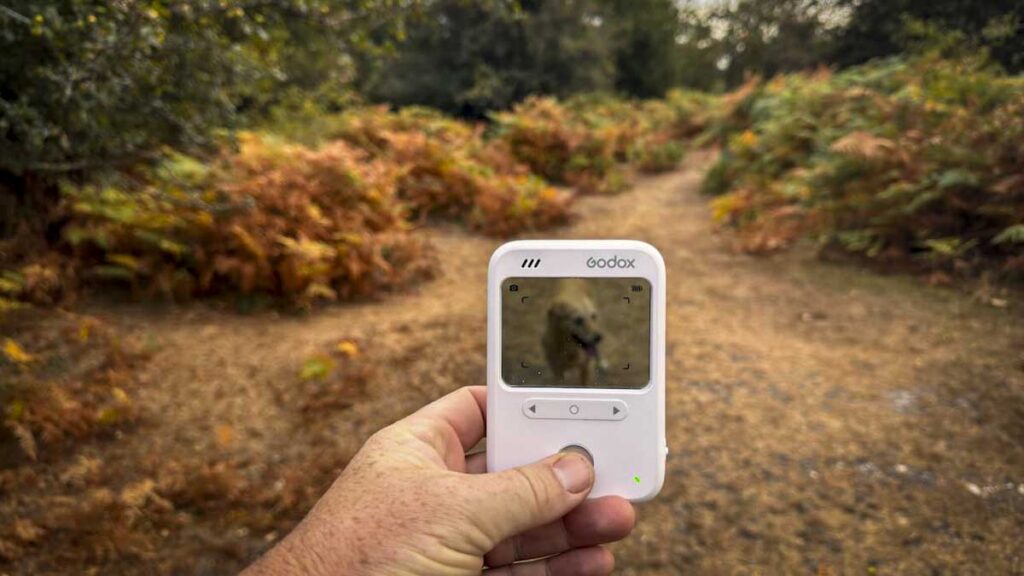
The Godox C100 is an interesting new device. Basically, it combines a camera that shoots stills and video with a fully fledged light meter that can be used with analogue cameras, so you get the best of both digital and analogue.
The whole experience is, of course, novel. It’s something new in the photographic world and, without any digital preview or live screen, you essentially just have that transparent window to frame and take the pictures. You can only look at the pictures or video you’ve shot when you’re back at the computer or if you link it to your mobile phone, and even then that’s a wired approach rather than wireless.
One of the first issues that I had with this device was that the framing accuracy just wasn’t right. Everything was slightly off, and the framing changed depending on whether you were close to or far away from an object; of course, it also depended on how far away you were from your face when you held the device. Then there was the focusing, which also didn’t seem that great, and unless the conditions were especially bright, the image quality was at best passable. Likewise, the same can be said about the video.
However, this is where the strength of this device really lies: use it as a companion for your analogue camera. It essentially works as a quick, easy light meter, and when I ran through a series of Ilford FP4 and HP5 on a Canon F1 and Hasselblad 500C and compared the results with my more standard light meter, they were spot-on.
When I first picked up the C100, I loved the idea, and if that camera and the lens on it were just a little bit better, it could be a really good, fun device. But the image quality unfortunately just lets it down. On the flip side, as a companion for your analogue camera shooting 35mm or 120 film, it’s absolutely superb, and the price is far lower than pretty much any other light meter out there. So, if you’re thinking of it as a novelty digital camera, I’d stick to your phone for now. However, if you shoot film, then pick one of these up. It’s great fun and extremely useful, especially considering the price.
What is the Godox C100?
The Godox C100 is Godox’s first digital camera, and its innovation and quirks really stand out. You have to give full credit to Godox for coming up with something truly new.
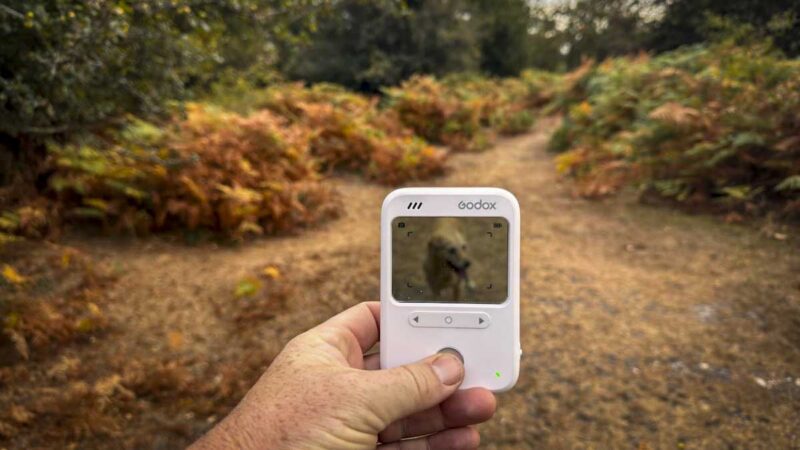
Essentially, it’s a screen-free digital compact camera that uses a transparent LCD viewfinder with overlays so that you can capture scenes before you. The camera itself is a 2-megapixel capture, so it’s really about having fun more than anything else, and it also shoots 1080p video.
So, if you’re looking for something a little different in a compact camera, the C100 would seem to fit the bill. But it’s more than just a simple point-and-shoot camera that you can use out and about in town.
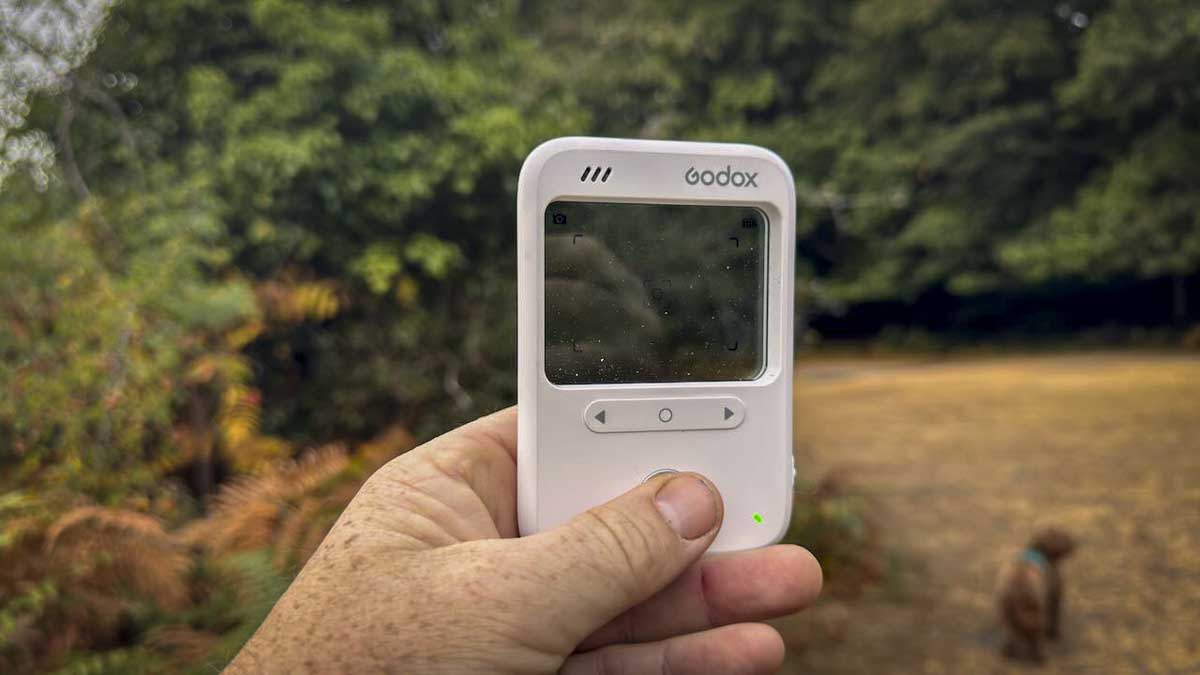
With the rise of film, you can also use it as a light meter, and with a toggle switch on the side, you can switch from camera to video to readout. When you hold out the camera, you can then adjust the shutter speed, and it will tell you the results of the other two, just like any standard light meter. So, whether you’re shooting with a 35mm camera, an old SLR, or you’re taking the step up to medium format or large format, this small device is not only cheap but promises to be extremely effective.
Looking back at the digital aspects, there are actually quite a few nice little features here. Using the toggle switches on the front, you can adjust things such as the aspect ratio, so you can shoot square 1:1, 4:3, 3:2, or 16:9, and the overlay framing markers adjust accordingly once you work out the framing issues. So, if you really like to think about your composition, this could be superb too.
Specification
Weight: approximately 65g
Dimensions: 104.1 × 71.7 × 19.1mm
Image output: approximately 2MP
Base image: 1920 × 1080
Video: 1920 × 1080
Video rate: nominal 29.97fps
Viewfinder: transparent LCD
Transmittance: above 50%
Storage: microSD/TF card
Capacity: up to 128GB
File systems: FAT32/exFAT
Connection: USB-C
Data interface: USB 2.0
Battery: integrated lithium
Claimed endurance: 1.5+ hours
Metering area: central 25%
Meter ISO: 100–800
Meter aperture: f/1–f/64
Meter shutter: 1/8000–1s
Ratios: 16:9, 4:3
Ratios: 3:2, 1:1
Video limit: 20 minutes
Dimensions: 104.1 × 71.7 × 19.1mm
Image output: approximately 2MP
Base image: 1920 × 1080
Video: 1920 × 1080
Video rate: nominal 29.97fps
Viewfinder: transparent LCD
Transmittance: above 50%
Storage: microSD/TF card
Capacity: up to 128GB
File systems: FAT32/exFAT
Connection: USB-C
Data interface: USB 2.0
Battery: integrated lithium
Claimed endurance: 1.5+ hours
Metering area: central 25%
Meter ISO: 100–800
Meter aperture: f/1–f/64
Meter shutter: 1/8000–1s
Ratios: 16:9, 4:3
Ratios: 3:2, 1:1
Video limit: 20 minutes
Build and Handling
The C100 is extremely small and slips straight into a pocket; it’s smaller than most mobile phones at just 65g. In this review, I’ve just looked at the camera, but there is a kit version that includes a small drawstring bag and lanyard, which I would recommend. It’s only a few pounds more, and within a few days, I admit that I found an old drawstring bag to pop it in just to keep it protected.
When it comes to size, it measures just 104 × 71 × 19mm, so it slips easily into a jacket pocket or even a trouser pocket without adding noticeable bulk or weight, making it one of the smallest compact cameras out there.
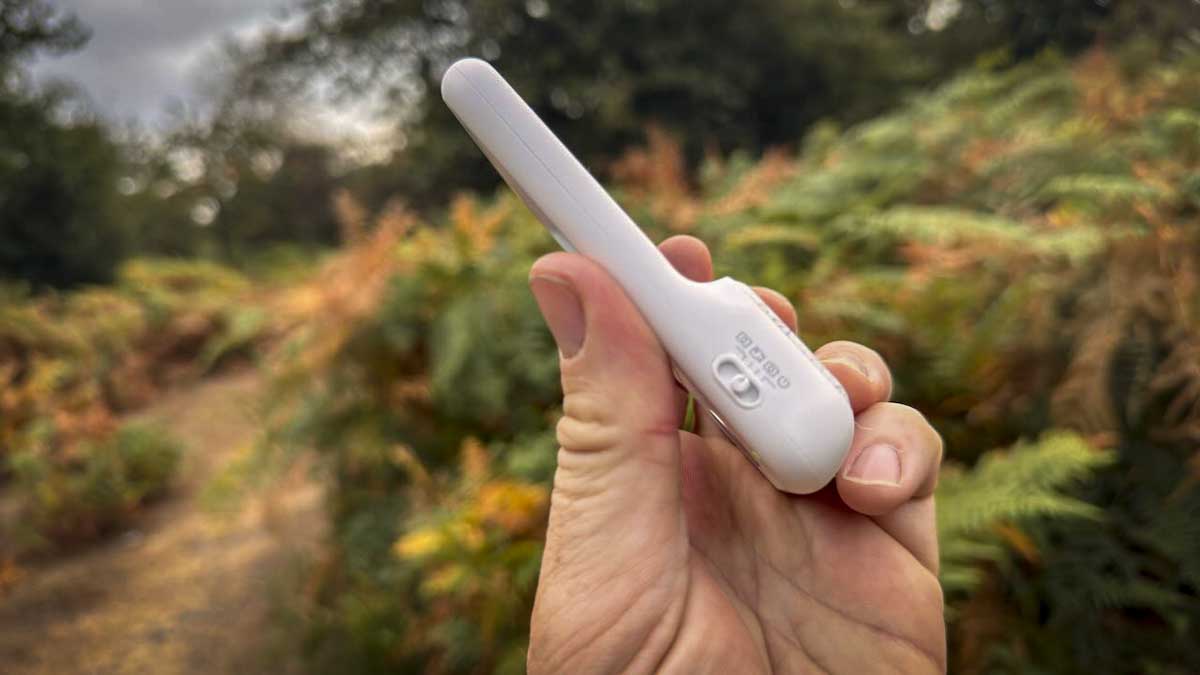
In use, the handling is also nice and easy, with the large shutter button on the front and that large transparent window that you can look through. Now, what makes this different is that the large transparent window has additional overlays. So, when you start it up by pushing the toggle switch on the side to camera, it boots up, the logo appears, and then the framing markers show on the transparent window. It’s very futuristic but, at the same time, quite retro.
You can then use the buttons to change the aspect ratio, and you’ve got four options: 1:1, 16:9, 4:3, and 3:2, covering all the standard options.
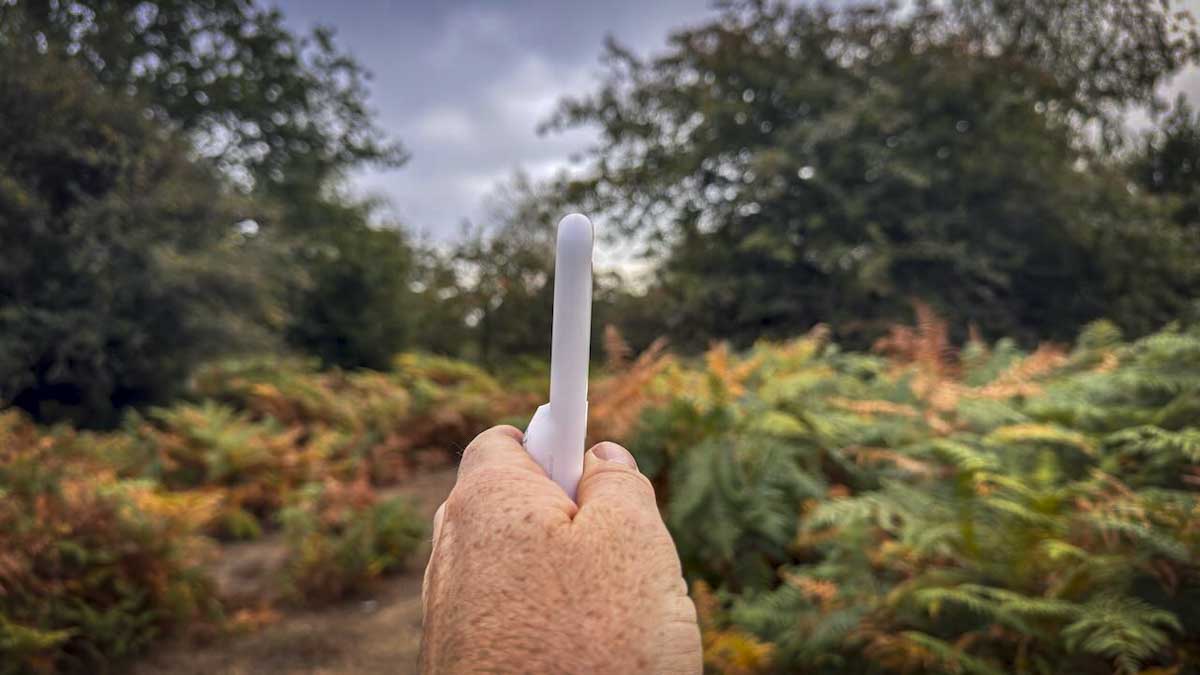
If you want to switch to video, you can push the switch on the side up to the next notch, and it’ll instantly start shooting 1080p video rather than stills. Then click it up again, and it will enter the metering mode that you can use alongside your analogue film cameras.
The C100, whilst lightweight, is well made. Still, I’d recommend popping it into that drawstring bag to help avoid scratches on the transparent window, as it does seem like a vulnerability if you’ve just got it down in your pocket alongside everything else.
For storage and power, it has an integrated battery that charges through the USB-C port on the base of the camera, and a microSD card slot that takes cards up to 128GB. That gives you plenty of capacity for both stills and video, given the camera’s maximum resolution.
The big omission is that there is absolutely no screen, so the only way to preview your images is by plugging it into a mobile phone, which, to be honest, is the whole point of the system and something I really like.
Features
At first glance, this is a simple, compact camera, with the transparent window letting you compose your shots. It has a transparent information display that overlays this transparent window when you switch through the different options.
One of the big features is the adjustable framing guide, so you can switch between 1:1, 16:9, 4:3, and 3:2 aspect ratios using the buttons on the front of the device.
It also has a dedicated stills mode, which shoots 2-megapixel images, and alongside this you have a video mode that shoots 1080p at 30 frames per second, which is, on both counts, rather low for a modern-day digital camera. But it also offers a real-time exposure light meter that lets you adjust the ISO, shutter, and aperture values, so you can automatically find the best settings for your analogue camera.
The overlay also shows battery information, as you’d expect.
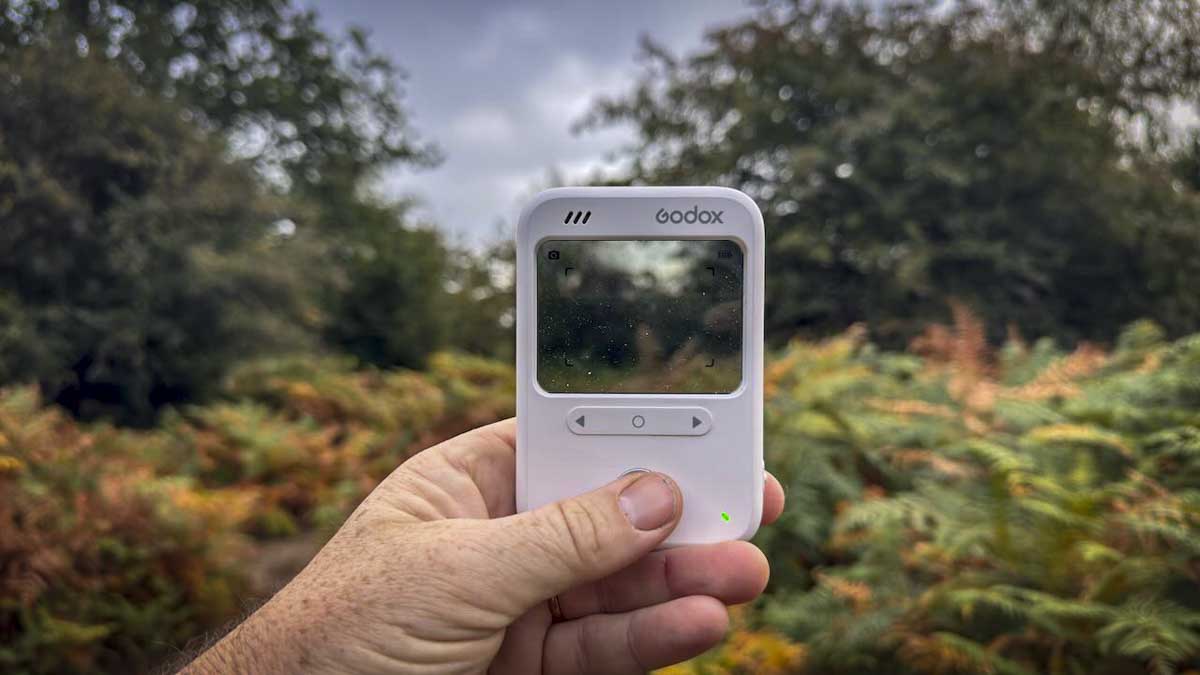
To transfer files to and from the device, you can plug it directly into your mobile phone and load them onto your phone’s internal storage, or you can plug it directly into a computer. Again, you can also just remove the microSD card and use it as a card reader, like most compact cameras. However, there is no app. This keeps it simple; other omissions include a built-in flash, manual exposure control, and, of course, image playback. This is just the camera and transparent viewfinder, keeping things simple so you can have fun taking pictures, either using the small camera itself or as a companion for an analogue film camera.
Performance
I was excited about using the Godox C100. You rarely have a device that seems completely new to the field. It combines a small digital camera with a light meter, so you can have fun out and about shooting 2-million-pixel images and 1080p video, or use it alongside your analogue camera to evaluate the best exposure settings depending on the film you’re using.
I started the test by shooting a few images, and it was instantly apparent that the camera, at 2 million pixels and with a small lens, was lacking in lower-light conditions. The noise was overbearing, and the images were extremely soft.
In brighter light, things picked up, and results were acceptable.
But it wasn’t just the image quality. It was the focus as well. Trying to shoot anything slightly close-up, even if it was within that minimum focusing distance, the close-up image just seemed a touch soft, which again was a real disappointment for something that could have been so good.
But beyond all of these issues, there is the fact that the viewfinder composition is rarely, if ever, what you’re actually taking a picture of. You see, the fact is that if you pull the viewing window towards you, then you’re going to see more of the scene behind the window in the frame, whereas if you hold it at arm’s length, the view narrows, so you get less of the scene in front of you in the frame. The camera stays in the same position with the same focal length, so that doesn’t change.
If you’re not sure exactly what I mean, try standing and looking out of a window. As you move forward towards the window, you’ll see more of the outside world. Then, if you take a few steps backwards, you’ll see your view of the world narrowing, essentially your field of view through the aperture of the window frame. This is exactly what happens with the C100.
After a bit of experimentation, you can kind of work out what’s going to be in and out of the shot, and it’s worth, when you first get the C100, just experimenting a little so you realise exactly what it’s going to be capturing. Then you can compose your shots always roughly holding the camera at the same distance from your face, it’s not that accurate, but gives you a rough idea. Of course, the problem is that even when you do that, the 2-million-pixel images aren’t that great, so whilst they are possible and usable on a mobile phone, anything more than that and they’re just not high enough quality.
Then you roll onto the video, and again, this would be a great little device to have in your pocket to shoot video. Again, there’s the issue with the composition- what’s in and what’s out because of the viewing window- and trying to work out how far away from your face you actually have to hold it to get a true representation of the framing. However, that aside, the 1080p-resolution footage and, for that matter, the dynamic range this small camera can capture are really nothing to write home about. It’s just a little bit lacking in the detail and colour that you’d expect from a modern-day camera.
To be honest, this is much like so many of those small action cameras that came out five to 10 years ago. They all boasted great features, but when it came to image quality, they fell short.
So, so far, it doesn’t sound too good for the Godox C100. This near-£50 compact camera, which is extremely innovative in design, lacks detail and resolution in stills and video. However, it suddenly pulls itself back when it comes to the metering mode.
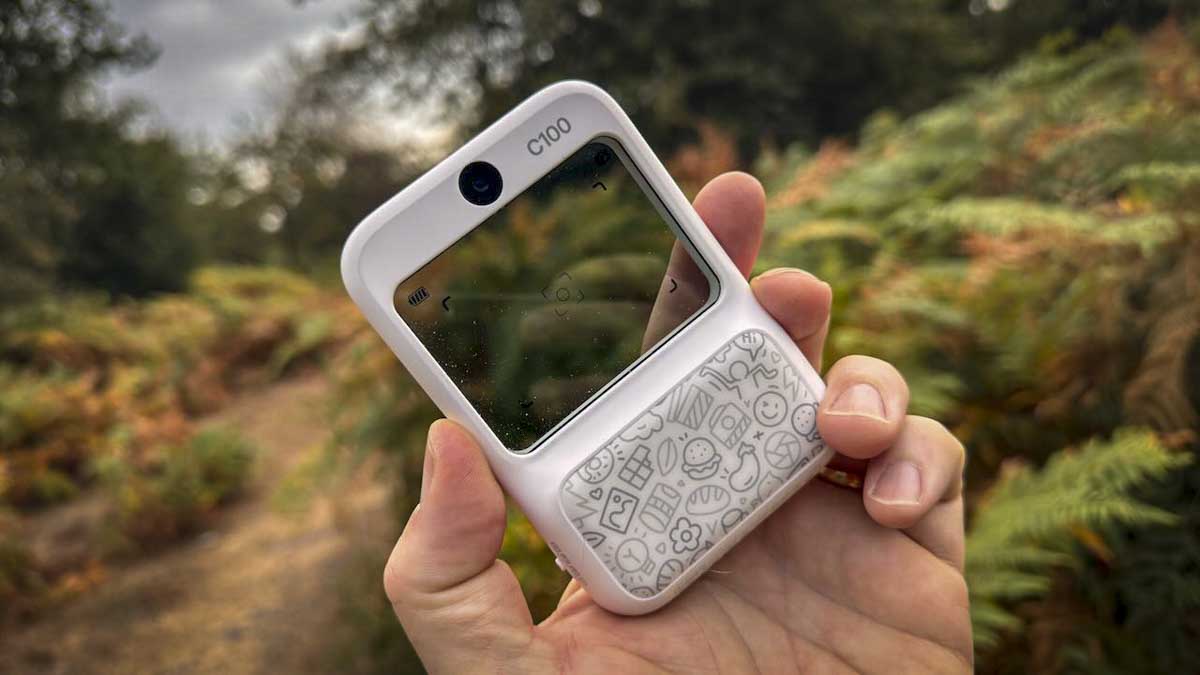
Push that mode slider to the top, and you hit the metering mode. On the viewing screen, you get an overlay of ISO, shutter speed, and aperture, all of which you can select and adjust. A quick push of the shutter button gives you a readout of the other two. Why this is quite so useful is that, if you’re using traditional film, you can dial in the ISO of the film that you’re using and then select aperture or shutter speed, adjust it, and it’ll give you the other value. Through the test, it just worked really well. Plenty of adjustment, really easy to use and, more importantly than anything else, absolutely spot-on.
So, whilst this might not be the greatest camera in the world, when it comes to metering it’s actually pretty decent. Then factor in the fact that you can take those 2-million-pixel images alongside your analogue images, and you certainly have something quite useful. You can note where you’ve taken a picture or, if there’s other information around the scene at the time, quickly capture it, keeping a record of the images you’re taking. It’s just something that an analogue camera can’t usually do.
As a partner, therefore, to an analogue camera, this is exceptionally useful and well worth the £50. Still, as a standalone quirky digital compact camera, there are other traditional options out there.
Final Thoughts
The Godox C100 is far from perfect, and the image and video quality really do need to take a step forward for this to be a truly great innovation.
As a concept, it’s absolutely superb and really refreshing to see something completely new from one of the photography industry’s largest manufacturers. I just love the fact that they’ve pushed the boat out and really found something that intrigues everyone who’s had a go with it.
The image quality isn’t great unless you’re in really good, bright conditions, in which case it does produce a passable image. Likewise with the video, in most situations where the light isn’t too great, the video quality lacks detail and punch. However, again, in bright sunlight conditions, it’s not too bad.
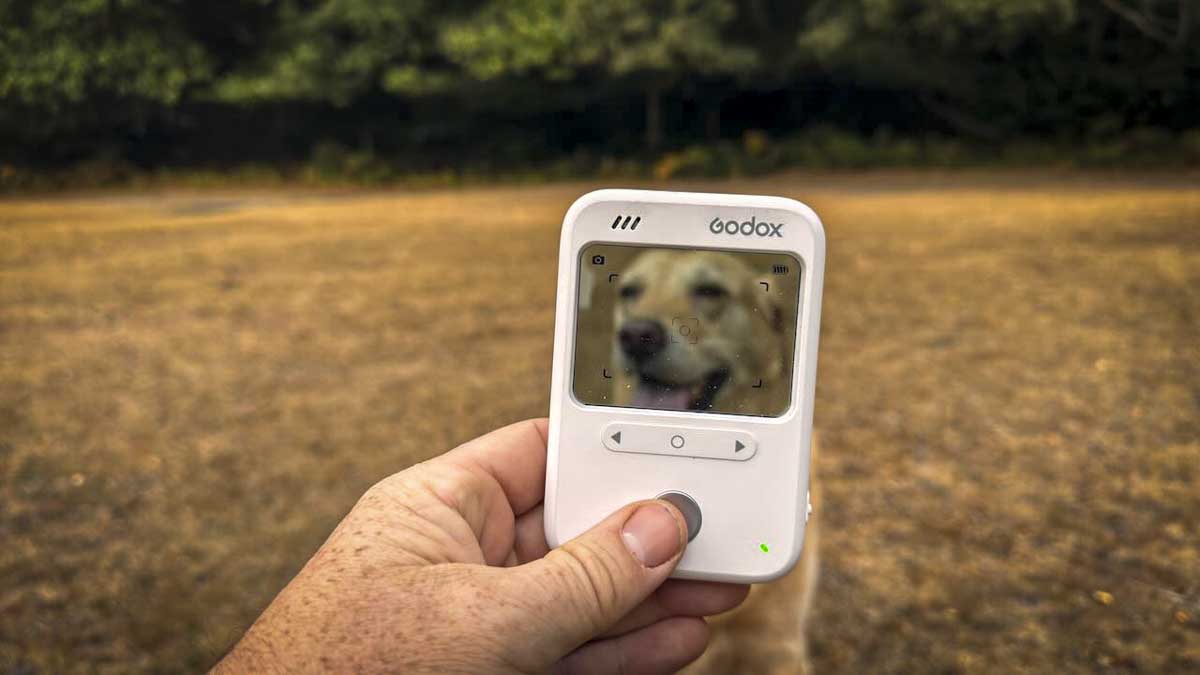
As a device to have fun with, well, that’s where it really comes into its own. Once you kind of get to figure out how the framing works, how far away from your face you actually have to hold it and what the aspect ratio markers are actually capturing, then there is lots of fun to be had with it. It’s a shame it’s limited to 2-million-pixel images, which are only just large enough to print on postcard-sized paper.
However, it really comes into its own when paired with an analogue camera shooting either 35mm or 120 film. Not only can you use it as a light meter to quickly meter the scene before you to find the best settings for your film camera, which is especially relevant if you’re using medium format such as a Hasselblad 500C or Sinar.
But that makes it more than just a meter, and what I really liked was that I could take the meter reading first so I could set the 500C or the Sinar to the correct settings for the film stock I was using. Then I could take a quick photograph of the Sinar or Hasselblad at the same time as the picture I’m taking, so I’ve got a digital record of the analogue images I’m taking. I could, of course, do this on my mobile phone, but it just feels like a more complete solution, like an imaging notebook for analogue photography, and that’s a concept that I really like.
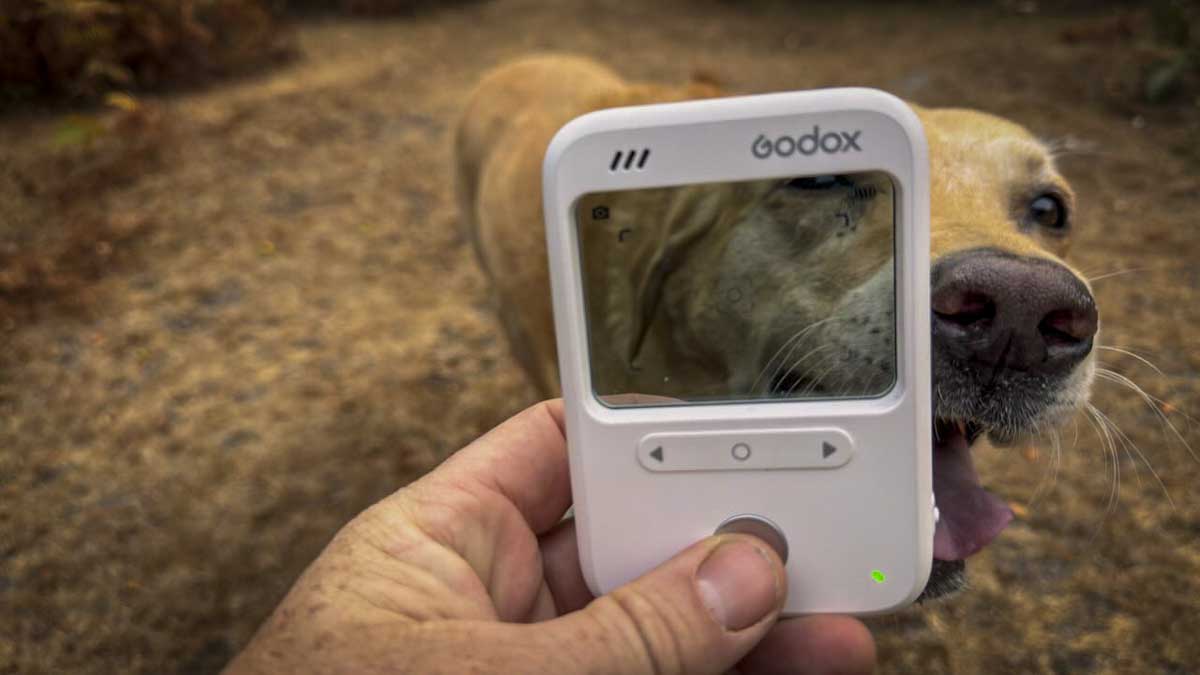
When I look at this just as an imaging device, I love the innovation, and it’s really refreshing, but it’s not exceptionally well executed. The images just lack quality. However, when you think of it as a partner for your analogue photography, then it’s extremely well priced and balanced.
To be honest, if this were £100 but took decent 12-megapixel images on par with at least the quality of the GoPro Mission One and could shoot 1080p at 120 frames per second and 4K at 60, I’d be more than happy to buy one. I really hope Godox invests in this format, drops the compact-camera angle, and focuses on the analogue partnership because, at the heart of it, this is a really good device, and it’s great to see a company like Godox innovating and investing in photography.