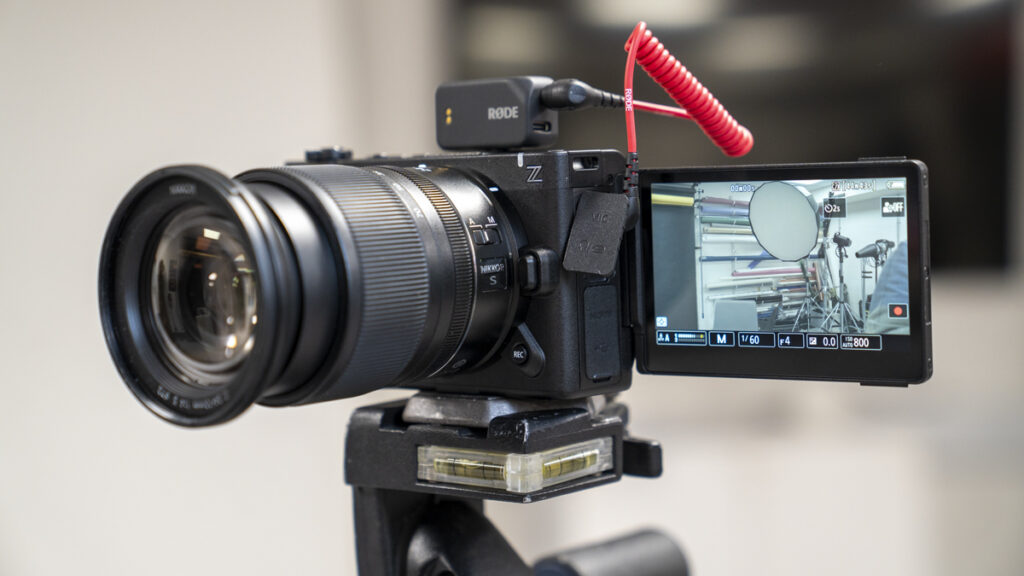

Our Verdict
Sony has done exactly what we hoped for with the A7 IV—it’s a solid upgrade over the A7 III, making meaningful improvements without losing the core appeal of the lineup. The biggest wins? The bump in video frame rates and the fully articulated screen make this a much more versatile tool for hybrid shooters. The autofocus is another standout, being faster and more accurate than before, which really helps both for stills and when tracking moving subjects in video.The balance between stills and video features is well thought out. Although this is, at its heart, a stills camera, Sony has packed in enough video-friendly features—10-bit 4:2:2 recording, improved AF, and excellent colour rendering—to keep videographers happy.That said, there’s one niggle that Sony still hasn’t fixed: the quality of the port covers. They feel a bit cheap compared to the otherwise premium build. Given the price of the camera, I’d expect something a little more refined.Overall, the A7 IV is an excellent evolution of the A7 series, making it one of the best all-rounders for enthusiasts and even professionals.
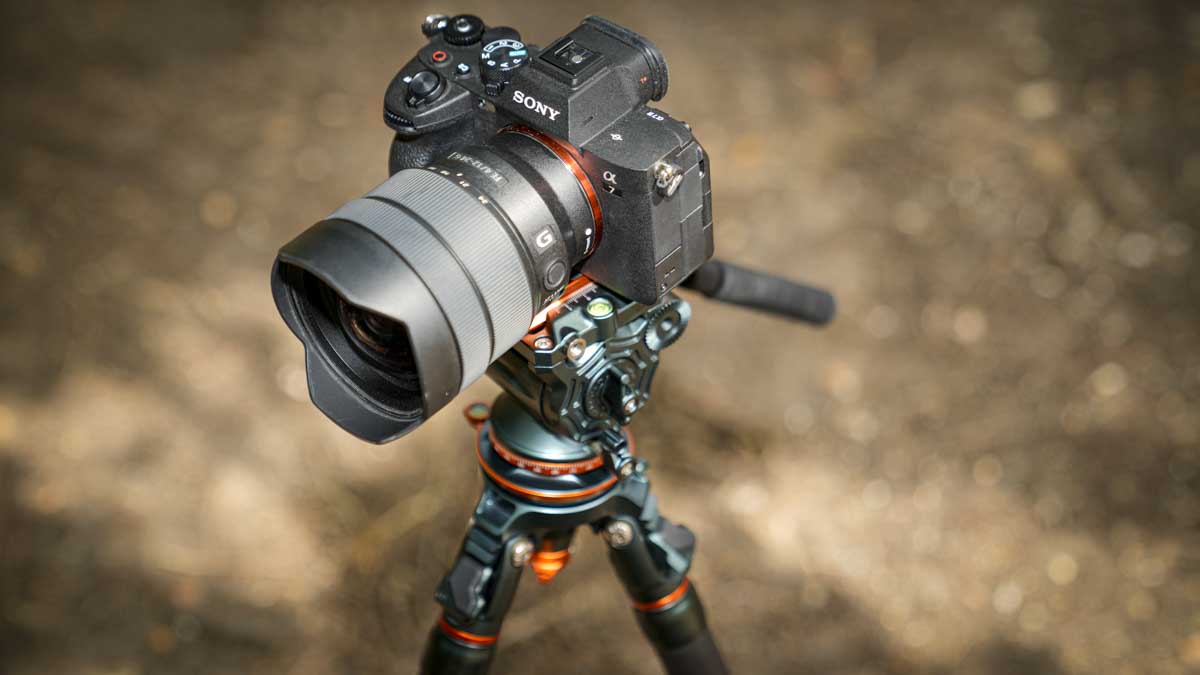
What is the Sony A7 IV?
The Sony A7 IV is the much-anticipated follow-up to the hugely popular A7 III, which when it launched in 2018 was the go-to full-frame mirrorless camera for enthusiasts, and at the time I was so impressed with it, I actually went and brought one. Sony pitched it as an all-rounder, a camera that could handle just about anything, and the A7 IV once again meets that criteria, this is essentially the camera pitched at enthusiasts, but will also stand it’s ground with Pro’s if needed.
Sony’s full-frame mirrorless lineup has expanded considerably since the A7 III, and the A7 IV now sits just above the A7C, which is the entry point into the upper end of the enthusiast range. If you want to take a step up then there’s the 61MP A7R V that’s designed for those who need ultra-high resolution, the A7S III is still the choice for dedicated video shooters, and the A1 sits at the top as Sony’s no-compromise flagship. The A7 IV sits in the middle, built primarily for stills but with more than enough video capability to make it a serious hybrid option.
With a 33MP back-illuminated sensor, improved autofocus, 10-bit 4:2:2 recording and a fully articulated screen, Sony has once again refined the formula rather than reinvented it, it’s upgrades are really keeping up with the advances in technology rather than anything groundbreaking. Which is exactly what a camera like this needs. Let’s find out if it all comes together as well as I’d hoped.
Specification
- Camera type: Full-frame mirrorless
- Announced: 21st October 2021
- Sensor: 33Mp full frame (35.9 x 24.0mm) BSI Exmor R CMOS sensor
- Lens mount: FE
- Sensitivity range: Stills: ISO 100-51,200 (expandable to ISO 50 to ISO 204,800), Video: ISO ISO 100-51,200 (expandable to ISO 100-102,400)
- Still Image format: Jpeg, HEIF, raw (Sony ARW 4.0)
- Video format & compression: XAVC S: MPEG-4 AVC/H.264, XAVC HS: MPEG-H HEVC/H.265
- 4K Video (XAVC HS): 3840 x 2160 (4:2:0, 10bit, NTSC): 60p (150 Mbps / 75 Mbps / 45 Mbps), 24p (100 Mbps / 50 Mbps / 30 Mbps), 3840 x 2160 (4:2:0, 10bit, PAL): 50p (150 Mbps / 75 Mbps / 45 Mbps), 3840 x 2160 (4:2:2, 10bit, NTSC): 60p (200 Mbps / 100 Mbps), 24p (100 Mbps / 50 Mbps), 3840 x 2160 (4:2:2, 10bit, PAL): 50p (200 Mbps / 100 Mbps)
- 4K Video (XAVC S): 3840 x 2160 (4:2:0, 8bit, NTSC): 60p (150 Mbps), 30p (100 Mbps / 60 Mbps), 24p (100 Mbps / 60 Mbps), 3840 x 2160 (4:2:0, 8bit, PAL): 50p (150 Mbps)5, 25p (100 Mbps / 60 Mbps), 3840 x 2160 (4:2:2, 10bit, NTSC): 60p (200 Mbps)56, 30p (140 Mbps), 24p (100 Mbps), 3840 x 2160 (4:2:2, 10bit, PAL): 50p (200 Mbps)5, 25p (140 Mbps)
- 4K Video (XAVC S-I): 3840 x 2160 (4:2:2, 10bit, NTSC): 60p (600 Mbps)56, 30p (300 Mbps)6, 24p (240 Mbps), 3840 x 2160 (4:2:2, 10bit, PAL): 50p (500 Mbps)5, 25p (250 Mbps)
- Movie functions: Audio Level Display, Audio Rec Level, PAL/NTSC Selector, Proxy Recording (1280 x 720 (Approx. 6 Mbps), 1920 x 1080 (Approx. 9 Mbps), 1920 x 1080 (Approx. 16 Mbps)), TC/UB, Auto Slow Shutter, Gamma Disp. Assist
- Autofocus system: Hybrid AF with 759 phase detection points and 425 contrast detection points, Still images: Human (Right/Left Eye Select) / Animal (Right/Left Eye Select) / Bird, Movie: Human (Right/Left Eye Select), sensitive down to -4EV
- Maximum continuous shooting rate: 10fps
- Viewfinder: 0.5-inch 3,686,400-dot EVF with 100% coverage and up to 0.78x magnification
- Screen: 3-inch 1,036,800-dot vari-angletouchscreen
- Image stabilisation: 5-axis giving up to 5.5EV compensation
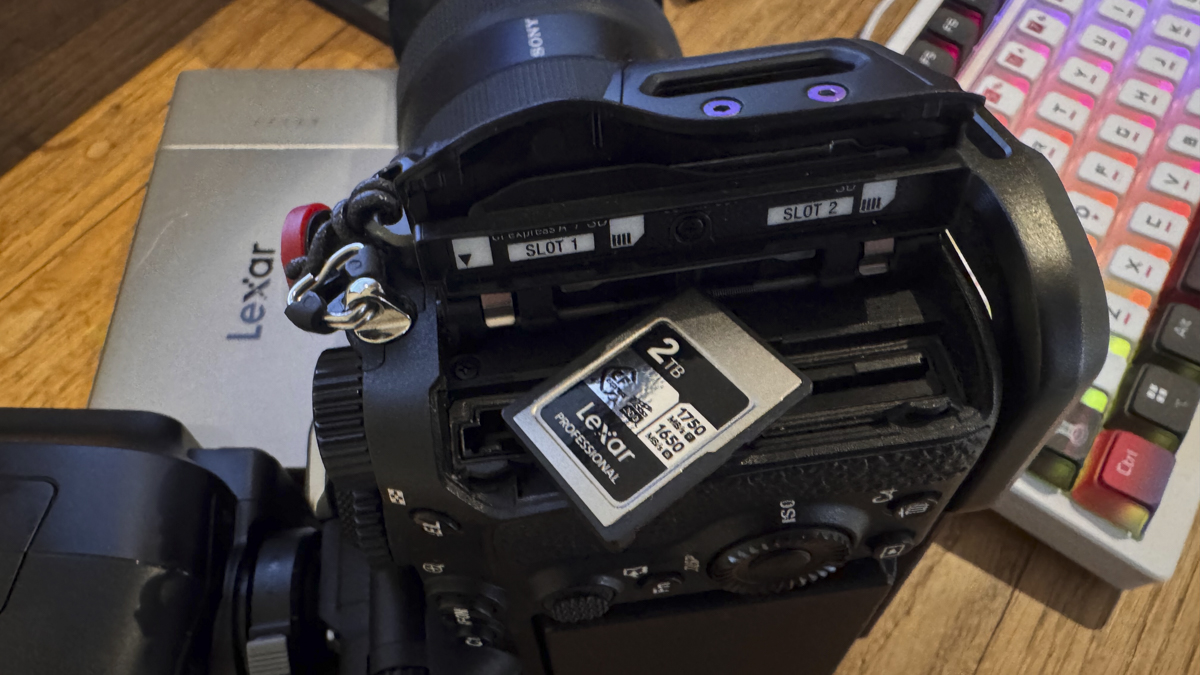
- Storage: Dual: 1: SD/SDHC/SDXC (UHS-I/II) & CFexpress Type A slot, 2: SD/SDHC/SDXC (UHS-I/II)
- Battery: NP-FZ100 rechargeable Li-ion battery giving 610 images with the screen
- Dimensions (WxHxD): 131.3 x 96.4 x 79.8mm / 5 1/4 x 3 7/8 x 3 1/4 inches
- Weight (including battery & memory card): 658g / 1 lb 7.3 oz
Build and Handling
At first glance the Sony A7 IV looks similar to the A7 III, but there are some key refinements that make a real difference in use. The most welcome change for me is the deeper grip, which is noticeably more comfortable, especially during longer shooting sessions. It should suit most hands well, though if yours are on the larger side you might still want to consider a battery grip for a more substantial hold.
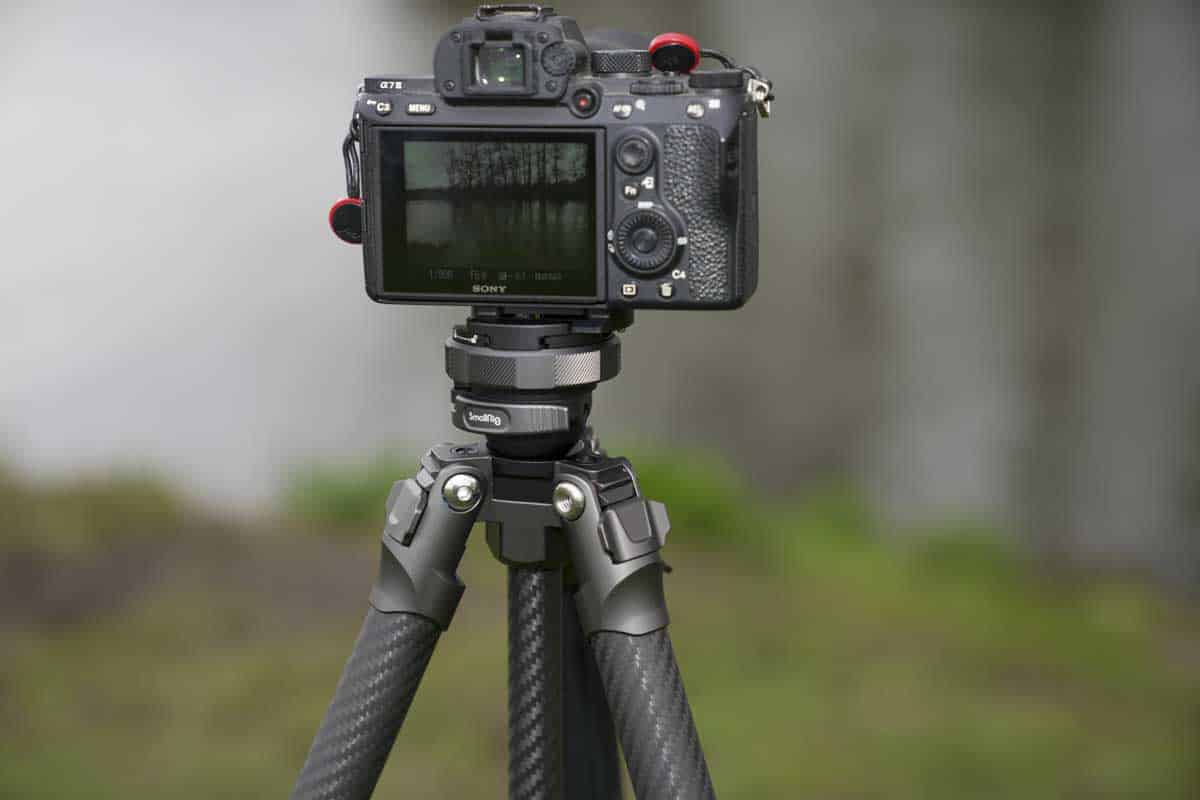
The fully articulated vari-angle screen is the other upgrade that is very welcome, and a huge improvement over the tilt screen of the previous model. Unlike the A7 III’s tilting screen, this one flips out and can be angled to suit almost any scenario, whether that is video work, high and low angle shots, or even if you’re shooting to camera. What this essentially means is that if you are doing any work to camera then you no longer need to add an external monitor to see what you’re recording, although the additional size is still handy. The mic port has also been repositioned above the screen so the two don’t clash as you move the screen, unfortunately the same can’t be said for the HDMI port which still makes things a little tight.
Sony has also brought across the revamped menu system that first appeared on the A7S III. It is a step in the right direction and things are easier to find than they were, but Sony’s menus are still a bit of a maze if I am being honest. A clearer way to see which settings work together would make a real difference, particularly for video users.
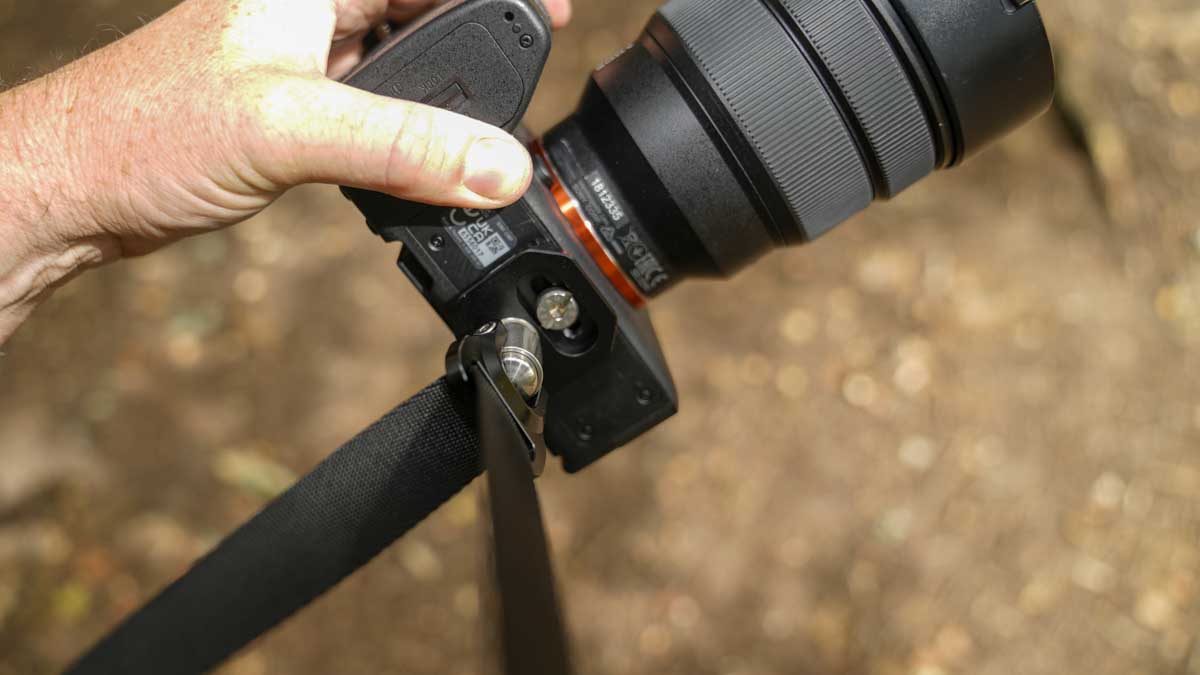
The new switch beneath the exposure mode dial, which lets you quickly move between stills, video and S&Q mode, is a handy addition, although it takes a while to remember it’s there if you’re familiar with the system. It takes a few sessions to become second nature since you need to press a forward-facing button before the switch will move, but once you are used to it, this is a feature that definately makes sense.
Other updates to the design include moving the record button to the top of the camera which just makes it easier to start and stop recording, and replacing the traditional exposure compensation dial with an unmarked, customisable control, is in someways good, but I have mixed feelings about the lack of markings. It still handles exposure compensation by default but can be reassigned to whatever function suits your shooting style, and a lock button keeps things in place when you need it.
The only real downside, and one I have raised before in this review, is the port covers. Sony has again opted for slightly flimsy covers, although even these are a major upgrade from the A7 III that do not quite match the otherwise solid construction of the body.
Overall the A7 IV builds well on what Sony got right with the A7 III. The ergonomics and usability have both been refined while keeping the familiar layout, and the day-to-day shooting experience is far better for it. If you want to see how the design has continued to evolve, our Sony A7 V review shows where Sony took things next.
Features
Sony has packed the A7 IV with a decent range of updates from the A7 III, and the most obvious change is the new 33MP back-illuminated Exmor R CMOS sensor. That is a big jump from the 24MP sensor in the A7 III, giving you extra resolution without a significant hit to low-light performance. It’s worth noting that unlike the A1’s stacked sensor, this one is not stacked, so while it is fast, it does not quite reach flagship speeds.
To keep pace with the extra data, Sony has paired the sensor with the Bionz XR processor, the same one found in the A7S III and A1. This brings improved processing speeds, better noise control and a native ISO range of 100–51,200, expandable to ISO 50–204,800 for stills. For video the extended range tops out at ISO 102,400, and in use the noise control does feel improved over the A7 III, holding more detail at higher ISOs.
The autofocus is one of the features I have been most impressed, especially when I compare the speed to the A7 III, in day-to-day use. Sony has brought across the 759-point phase-detection system from the A1, which means you are getting flagship-level AF performance in a much cheaper body. Real-time Eye AF now works for humans, animals and birds in both stills and video, and Real-time Tracking is noticeably faster and more reliable than before, which makes a real difference for anything involving movement.
Three new focusing tools have also been added; AF Assist, Focus Map and Breathing Compensation. AF Assist lets you manually adjust focus using the lens ring before handing control back to the autofocus system, which is useful when you need a precise starting point. Focus Map is an advanced take on focus peaking, overlaying red and blue to show areas in front of and behind the focus point. Breathing Compensation slightly crops the image to maintain a consistent frame as focus shifts, which is particularly useful for video work and focus stacking.
When it comes to video, the A7 IV is still clearly a stills-first camera, but Sony has made some serious improvements here too. The headline addition is 4K 60p recording, though there is an important note to make: to shoot at that frame rate you need to be in Super 35mm mode, which introduces a 1.5x crop. If you want to use the full width of the sensor, you drop to 4K 30p, which benefits from 7K oversampling for improved detail. It’s a compromise that is worth knowing about before you buy, especially if you’re looking to shoot Pro level video.
On the plus side, the A7 IV now offers 10-bit 4:2:2 colour sampling, XAVC S-I intra-frame encoding for better editing flexibility, and XAVC HS for improved compression. S-Cinetone and S-Log3 are both supported, giving you good flexibility for colour grading, and this is one of those features that has really caught my interest. The one notable omission is raw video recording, which more advanced videographers will likely miss. Sony has also improved the heat management considerably, with the A7 IV capable of recording 4K 60p 10-bit 4:2:2 continuously for over an hour without overheating, which is a significant improvement over previous models although as I discovered during the test, overheating when filming non-stop for a longer duration, above 30 minutes can still be an issue.
Despite the new processor, the maximum burst rate remains at 10fps when shooting compressed raw, the same as the A7 III. What has improved is the buffer, with the A7 IV capable of shooting up to 828 frames in a single burst when using CFexpress Type A cards. Switch to Lossless Compressed Raw and that drops to around 54 frames at 6.7fps. It’s worth being aware that getting the best out of the burst performance does require investing in CFexpress Type A cards, which are fast but still carry a premium price. The dual card slots cover both options, with one accepting CFexpress Type A alongside SD UHS-II and the second taking SD UHS-II only.
Rounding off the feature set, is the 5-axis in-body stabilisation that has been improved to 5.5 stops with an Active Mode for video that applies a slight crop for additional stability. The EVF has been upgraded to 3.69M dots with a 120Hz refresh rate, which is a noticeably smoother that the A7 III. Battery life has taken a slight step back, rated at 610 shots versus 710 on the A7 III under CIPA testing conditions, though real-world performance I found tends to be better than the official figures suggest.
Sony has not reinvented the A7 series with the A7 IV, but its updated everything that made the A7 III so popular. The autofocus improvements alone would justify the upgrade for many users, and the video specification is substantially better than before, even with the Super 35 crop at 4K 60p.
Performance
From the moment I started shooting with the A7 IV on a trip to the New Forest, it was clear that Sony has made the autofocus faster and more reliable than it was on the A7 III. Real-time Eye AF and Real-time Tracking feel noticeably more responsive, locking onto subjects with far greater speed and accuracy when compared with the A7 III. I found that this was particularly useful when photographing wildlife, where animals, birds in the case of this outing, can move unpredictably and disappear without warning.
One of the reasons for the increased AF performance is the 759-point phase-detection system that proved to performed well when tracking wild ponies although these were generally moving quite slowly, deer and birds, with Animal Eye AF quick to detect and hold focus even as subjects moved through foliage.
Photographing deer at distance was where I found it most impressive using the 200-600mm f/5.6-6.3 lens, with the system holding focus through branches and partial obstructions once it had locked on. Bird photography also benefitted from the improved Bird Eye AF, though smaller fast-moving birds did occasionally slip through.
For larger birds in flight, the Tracking: Spot L mode worked best, giving precise focus selection while letting the camera maintain lock as the bird moved. The ability to track an animal’s eye from side-on as well as head-on is a massive improvement, though it is still not quite as good in use as Canon’s system in some situations. For more on settings and technique with this kind of camera, our best camera settings for wildlife photography guide covers the key considerations in detail.
Shooting in early morning mist or under the forest canopy meant pushing the ISO. The Bionz XR processor does a great job of keeping noise under control, and images at ISO 12,800 still hold a good level of detail.
Beyond that, ISO 25,600 starts to show noticeable noise, and files processed through Sony’s Imaging Edge Desktop software can sometimes look a little over-processed at those higher sensitivities. For most wildlife work, staying at ISO 6,400 or below gives the best balance between noise and detail. The dynamic range is impressive and there’s plenty of room in post to recover highlights and shadows when shooting raw.
Sony has gradually improved its colour science and it shows in the A7 IV, with colours looking more natural straight out of camera and greens rendering accurately, which matters when shooting wildlife in varied natural light. Auto White Balance can sometimes neutralise a scene too much, making rich tones in bracken and fallen leaves look a little flat. Using a preset or tweaking it in post gives noticeably more satisfying results.
The 1200-zone metering handles most situations well, rarely needing exposure compensation even when shooting against a bright sky or through contrasting light and shadow, as long as you’ve set the correct metering, with centre weighted doing the job. The viewfinder preview is particularly useful here, letting me adjust exposure on the fly with a clear sense of what the final image will look like and proving why EVF’s are so useful compared with the old optical standa.
Handholding the Sony FE 100-400mm f/4.5-5.6 GM OSS while tracking wildlife is a proper test of IBIS, and the 5.5-stop system does its job well at longer focal lengths, though you still need to keep shutter speeds relatively high for consistently sharp results. At 70mm I was getting around 60–70% sharp images at 1/4sec, which is impressive. At 400mm I needed 1/100sec or faster for reliable handheld sharpness with IBIS really showing what’s possible. Active Mode for video smooths out minor movement well, though for steady tracking shots a tripod or gimbal is still the better option.
The 10fps burst rate is unchanged from the A7 III, but the buffer depth has improved. Using a CFexpress Type A card I could shoot 828 uncompressed raw and JPEG images in a single continuous burst, which is more than enough for capturing a pony rearing or a deer breaking into a sprint, just as a note I didn’t manage to capture either, although no fault of the camera.
On SD cards the buffer fills significantly faster, and switching to Lossless Compressed Raw drops performance to around 54 frames at 6.7fps. It is also worth tweaking the AF Subject Shift Sensitivity setting for wildlife work, as reducing it slightly helps prevent the camera jumping focus to branches or other foreground distractions, keeping tracking locked on the animal. I would highly recommend buying a CFExpress type-A card in order to unlock the cameras full potential.
Overall the A7 IV proved to be an excellent choice for wildlife photography in the New Forest, handling everything from quietly stalking deer at dawn to fast-paced bird photography. It does not offer the outright speed of the A1, but it is a versatile and capable camera that performs well across a range of challenging conditions. If you are considering it specifically for birds, it is also worth checking out our best cameras for bird photography guide for broader context on how it compares.
Final Verdict
As a long term Sony A7 III users the Sony A7 IV is exactly what I hoped it would be, a solid upgrade that refines the performance without straying too far from what made the A7 III so popular in the first place, after all I rated so highly I went out and bought an A7 III myself, and after this review, I’ve take the obvious steps and upgraded the III to the IV.
The 33MP sensor, improved autofocus and video specification make it a great choice for photographers and hybrid shooters, and the Animal and Bird Eye AF worked brilliantly during my time with it in the New Forest, tracking fast-moving subjects with real speed. The improved buffer depth is a significant, but for me the fully articulated screen is the biggest upgrade when it comes to practical use.
On the video side, 4K 60p recording, 10-bit 4:2:2 colour and S-Cinetone will give content creators and videographers far more to work with. The one point worth repeating is that 4K 60p requires a Super 35 crop, which will disappoint anyone hoping for full-frame 4K at that frame rate. It is a compromise, and worth knowing about before you commit, and this caught me out a couple of times.
The deep grip and revised controls make it comfortable for long sessions, and the port covers are still the one area where Sony has not quite matched the quality of the rest of the body, although even these feel better than they did on the A7 III. Battery life has taken a small step back at 610 shots versus 710 on the A7 III under CIPA conditions, though in real-world use I found it more than adequate for a full day of shooting.
If you already own an A7 III, the answer to whether it is worth upgrading really depends on what you shoot. For stills photographers the improvements are real but incremental, with the extra resolution, better autofocus and deeper buffer making a genuine difference. For hybrid shooters the fully articulated screen, 10-bit video and improved AF tracking make the case considerably stronger.
The A7 IV is not a revolutionary leap, but it’s significant. Investing in CFexpress Type A cards to get the best from the burst performance adds to the overall cost, and that is worth factoring in. But for anyone looking for a well-rounded full-frame mirrorless that can handle wildlife, landscapes, portraits and video without compromise, the A7 IV is one of the best options available at its price point, and one of the cameras I reach for most often. For a broader look at where it sits in the Sony range, our best Sony cameras guide is a useful starting point, and if you are considering where the A7 series goes from here, our Sony A7 V review shows exactly what Sony did next.