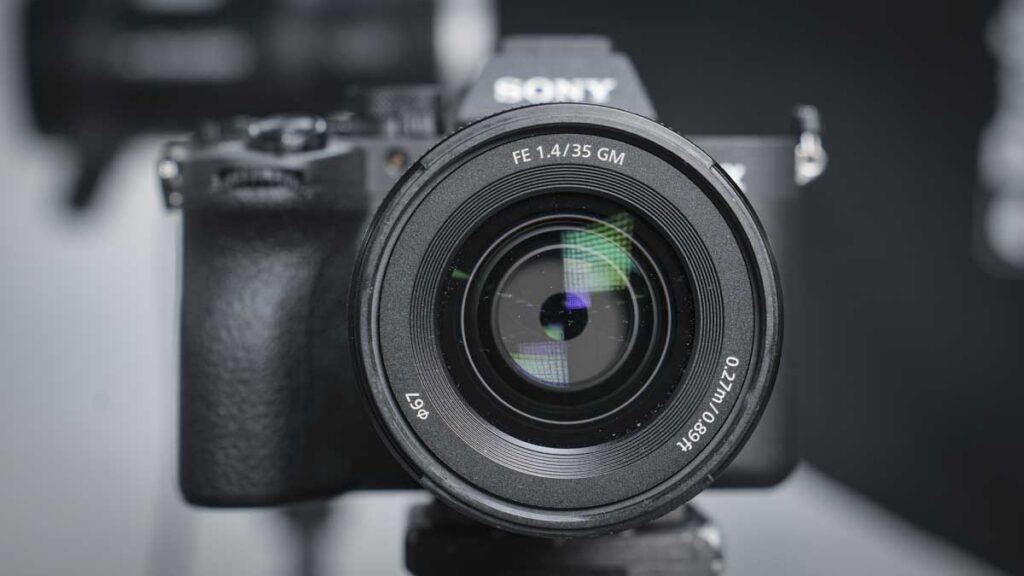

This is Sony’s most powerful hybrid camera yet, here’s why I rate the A7 V
Our Verdict
The Sony Alpha A7 V is one of the most capable hybrid cameras available, and after extended testing across wildlife, low-light, and video work, it is difficult to fault. The 50MP full-frame stacked sensor, 30fps burst rate with AI subject detection autofocus, and 8K video capability make it one of the most versatile cameras at any price.
Low-light performance is exceptional, autofocus tracking is class-leading, and the video feature set is deep enough to satisfy serious videographers. The price is high, CFExpress Type-A cards are an added cost, and Sony’s menus remain complex. But for a photographer or videographer who needs a single body capable of almost everything, the A7 V earns its cost.
What is the Sony Alpha A7 V?
Moving into the specifics, the Sony Alpha A7 V is a full-frame mirrorless interchangeable lens camera aimed at enthusiast and professional photographers and videographers who need a single body capable of delivering across every discipline. It is the fifth generation of Sony’s iconic A7 series, which effectively redefined what a mirrorless camera could be when it launched over a decade ago and has been raising the bar with every successive release.
The A7 V is built around a 50MP full-frame partially stacked CMOS sensor, paired with AI-based subject-detection autofocus and a 30fps burst rate, a combination that makes it suited to wildlife, sports, portraiture, travel, and studio work in equal measure.
On the video side, 8K capture and 4K at 120fps in Super35 crop mode make it a serious hybrid tool. It works with Sony’s extensive E-mount lens ecosystem and is compatible with a broad range of third-party glass. At approximately £2,899 body-only, it is positioned at the upper end of the enthusiast market and the entry point to professional full-frame mirrorless. Its USP is breadth: very few cameras at any price offer this combination of resolution, speed, and video capability in a single body.
Specifications
Sensor: 50MP full-frame partially stacked CMOS
ISO range: 100–51,200 (native)
Burst rate: Up to 30fps (electronic shutter)
Autofocus: AI subject detection AF
Video: 8K | 4K up to 60p full frame | 4K 120p Super35 crop
Colour profiles: S-Log3, S-Cinetone, HLG | 10-bit 4:2:2
In-camera LUT support: Yes
EVF: High resolution, high refresh rate
Memory card: CFExpress Type-A
Weight: Approximately 690–700g (body only)
Battery: Approximately 630 shots (EVF) / 750 shots (LCD)
Mount: Sony E-mount
Price: Approximately £2,899 / $2,898 (body only)
ISO range: 100–51,200 (native)
Burst rate: Up to 30fps (electronic shutter)
Autofocus: AI subject detection AF
Video: 8K | 4K up to 60p full frame | 4K 120p Super35 crop
Colour profiles: S-Log3, S-Cinetone, HLG | 10-bit 4:2:2
In-camera LUT support: Yes
EVF: High resolution, high refresh rate
Memory card: CFExpress Type-A
Weight: Approximately 690–700g (body only)
Battery: Approximately 630 shots (EVF) / 750 shots (LCD)
Mount: Sony E-mount
Price: Approximately £2,899 / $2,898 (body only)
Build and Handling
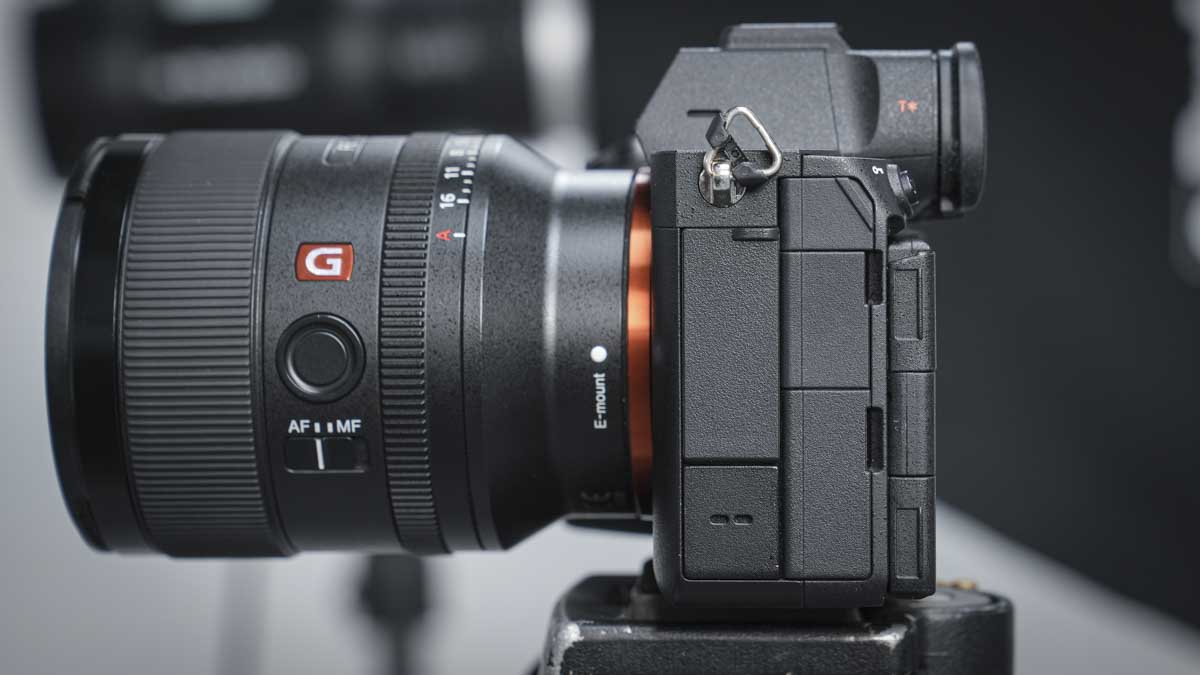
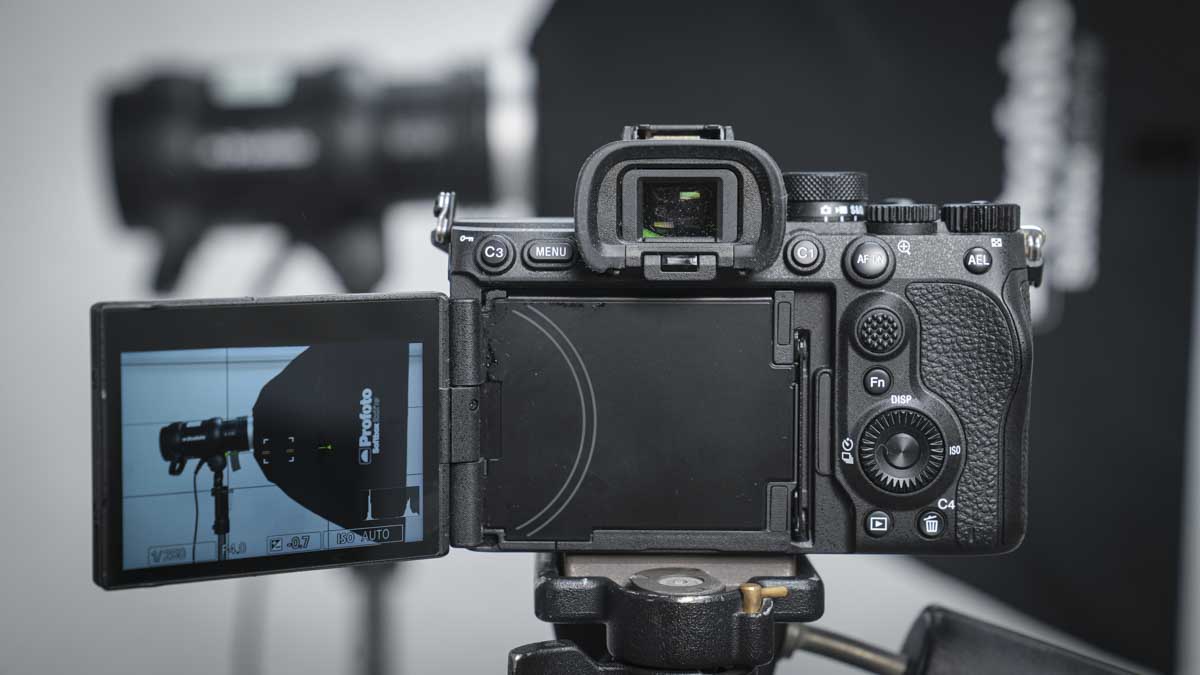
The A7 V follows the design language Sony has developed steadily across the Alpha series a combination of retro and modern that feels purposeful rather than fashionable. In testing, the body proved solid, well-balanced, and comfortable to handle, even when paired with larger G Master lenses. At 690–700g body-only, it sits in the middle of the full-frame mirrorless pack in terms of weight, and the grip is deep enough to provide good purchase during long shooting sessions.
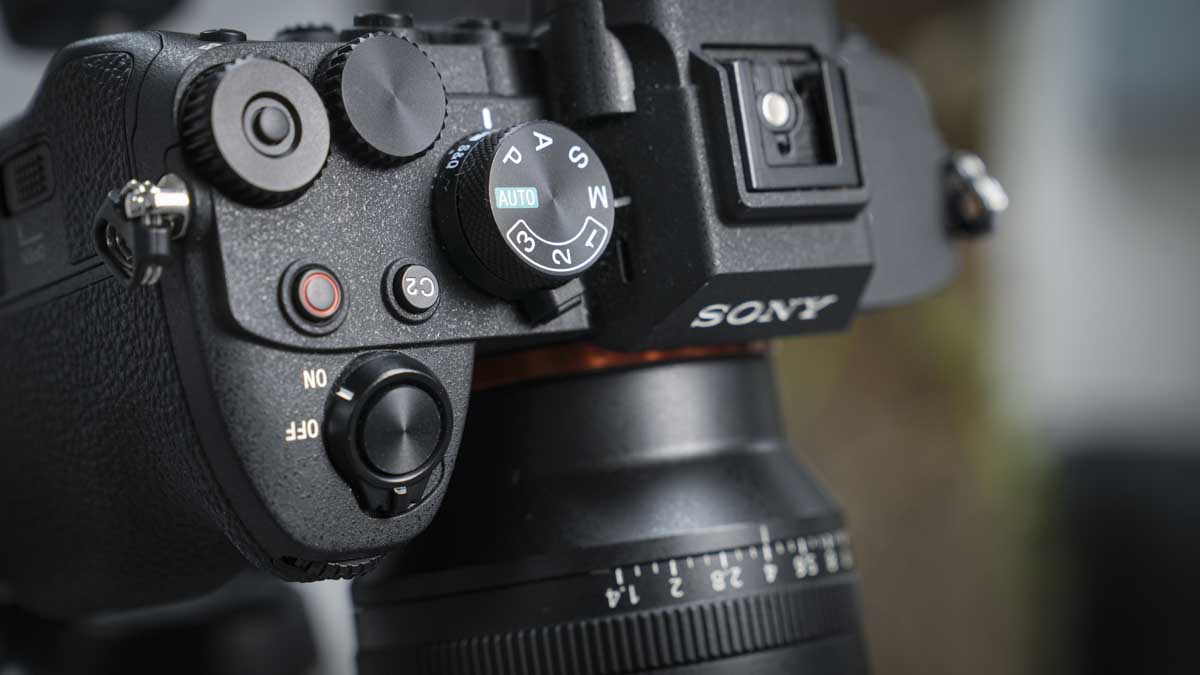
The build quality is exactly what I’d expect from a camera at this price. The body feels weather-sealed and reassuringly rigid throughout. Sony has made incremental refinements to the button and dial layout over the generations, and the A7 V update again feels user-friendly to anyone who’s upgrading from an older generation camera, although new users stepping up from a different system will need time to adjust to the menu structure, which remains one of the more complex in the category.
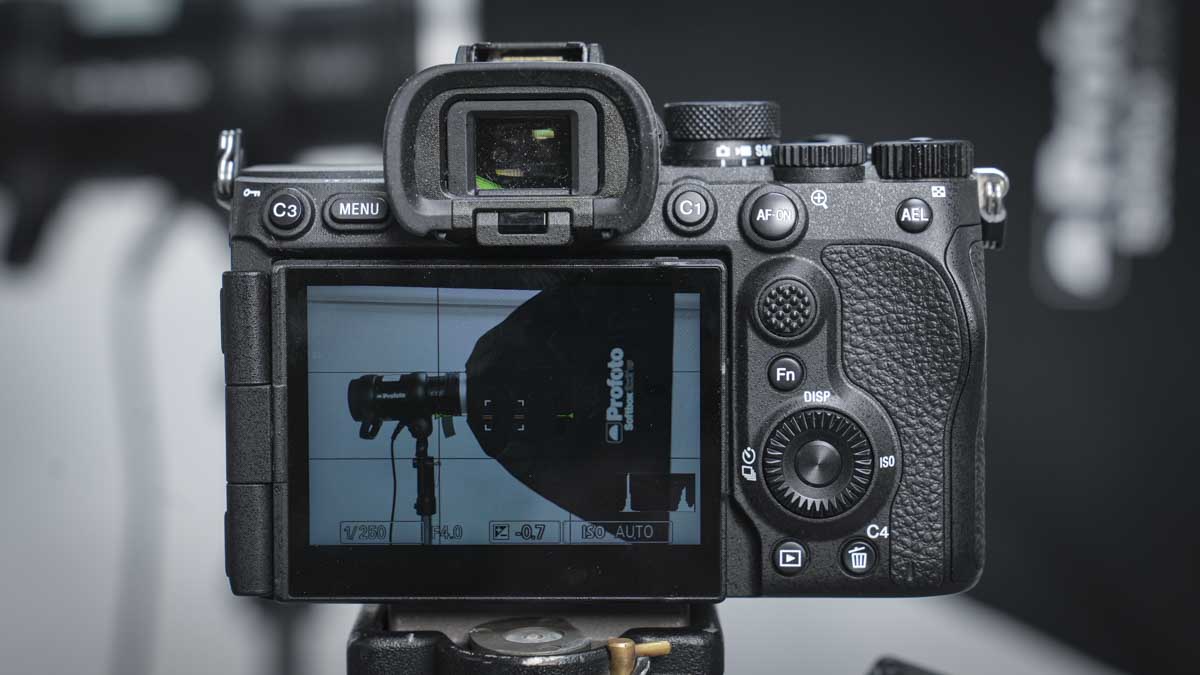
The electronic viewfinder is a genuine step forward from the previous generation — the higher resolution and improved refresh rate bring it noticeably closer to the experience of an optical viewfinder, which matters during fast-moving wildlife and action work. The rear screen is fully articulated, making low-angle and overhead compositions straightforward, and the touchscreen response is accurate and responsive throughout.
Features
The 50MP full-frame partially stacked CMOS sensor is the hardware foundation for everything the A7 V does. The stacked sensor design enables the 30fps burst rate without the rolling shutter distortion that affects standard CMOS sensors at high speeds, a significant practical advantage for wildlife and sports photographers who need speed and sharpness simultaneously.
Sony’s AI subject detection autofocus is the best I have used in this class of camera. It accurately identifies and tracks people, animals, birds, vehicles, and insects, maintaining focus as the camera and subject move, even when the subject is partially obscured. Out in the field, photographing birds of prey at 30fps, the hit rate for sharp, well-focused images was exceptional, the kind of result that would previously have required considerably more expensive equipment.
The video feature set is deep and genuinely professional. 8K capture, 4K at 60p full frame (recording 4K video at 60 frames per second using the entire sensor), and 4K at 120fps in Super35 crop mode (recording at 120 frames per second with a sensor crop for cinematic framing).
Supporting features are what set the A7 V apart for serious videographers: 10-bit 4:2:2 colour (captures more colour data for grading), S-Log3 and S-Cinetone colour profiles (special colour settings for video), and in-camera LUT support (ability to preview colour grading changes).
For a hybrid shooter integrating A7 V footage with dedicated cinema cameras, this level of colour science makes the workflow considerably more straightforward.
Performance
Still image quality from the 50MP sensor is outstanding. Shooting birds of prey in flight at 30fps with the electronic shutter, the autofocus tracked and locked with a consistency I have not seen at this price point before. Detail at full resolution is exceptional, zooming into images on screen reveals fine feather texture and edge sharpness that makes the 50MP count feel genuinely earned rather than a specification on paper. JPEG files run to approximately 20MB and RAW files to 50MB, which means fast, high-capacity storage is a practical requirement rather than a luxury.
Low-light performance was tested extensively during a wet January and February, and the A7 V handled the adverse conditions incredibly well. At ISO 800 and above, colour, tone, and detail all remained strong. Pushed to ISO 32,000 within the native range, the images retained impressive detail and controlled noise — a level of performance that would have been the preserve of cameras costing considerably more only a few years ago. For wildlife photographers working in woodland or shooting at dusk, this is a meaningful real-world advantage.
One practical note on the memory card situation: Sony continues to use CFExpress Type-A rather than the more widely adopted Type-B format. Type-A cards are faster than UHS-II SD cards and capable of sustained 8K and high-speed burst shooting, but the selection is narrower, and prices are higher than those of the Type-B equivalents. It is not a dealbreaker, but it is a cost to factor in alongside the body price.
Video performance is exceptional. Testing 8K and 4K at 120 fps in Super35 mode, the camera’s footage was immediately impressive. The 10-bit 4:2:2 colour science, S-Log3 profile, and in-camera LUT previewing make the A7 V a practical professional video tool rather than a camera that happens to shoot video. For photographers exploring video for the first time, the depth of options can be bewildering, but everything is there, and the results justify the learning curve.
Final thoughts
Still image quality from the 50MP sensor is outstanding. Shooting birds of prey in flight at 30fps with the electronic shutter, the autofocus tracked and locked with a consistency I have not seen at this price point before. Detail at full resolution is exceptional, zooming into images on screen reveals fine feather texture and edge sharpness that makes the 50MP count feel genuinely earned rather than a specification on paper. JPEG files run to approximately 20MB and RAW files to 50MB, which means fast, high-capacity storage is a practical requirement rather than a luxury.
Low-light performance was tested extensively during a wet January and February, and the A7 V handled the adverse conditions incredibly well. At ISO 800 and above, colour, tone, and detail all remained strong. Pushed to ISO 32,000 within the native range, the images retained impressive detail and controlled noise — a level of performance that would have been the preserve of cameras costing considerably more only a few years ago. For wildlife photographers working in woodland or shooting at dusk, this is a meaningful real-world advantage.
One practical note on the memory card situation: Sony continues to use CFExpress Type-A rather than the more widely adopted Type-B format. Type-A cards are faster than UHS-II SD cards and capable of sustained 8K and high-speed burst shooting, but the selection is narrower, and prices are higher than those of the Type-B equivalents. It is not a dealbreaker, but it is a cost to factor in alongside the body price.
Video performance is exceptional. Testing 8K and 4K at 120 fps in Super35 mode, the camera’s footage was immediately impressive. The 10-bit 4:2:2 colour science, S-Log3 profile, and in-camera LUT previewing make the A7 V a practical professional video tool rather than a camera that happens to shoot video. For photographers exploring video for the first time, the depth of options can be bewildering, but everything is there, and the results justify the learning curve.