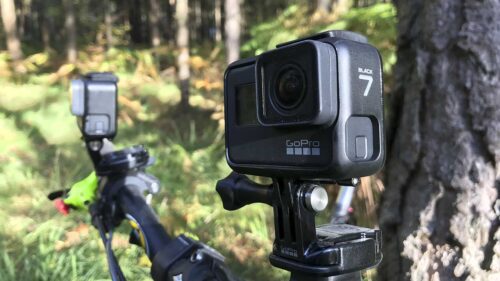

GoPro's new HyperSmooth electronic stabilisation, live streaming, and TimeWarp video transform the Hero7 Black into the most versatile action camera ever made
Our Verdict
GoPro Hero7 Black Verdict
What is the GoPro Hero7 Black?
The GoPro Hero7 Black is the flagship action camera in GoPro’s new 2018 lineup, sitting above the entry-level Hero7 White (1080p at 60fps) and the midrange Hero7 Silver (4K at 30fps). Where the Hero6 Black focused on raw resolution and frame rate gains, the Hero7 Black takes a different approach, retaining the same 4K 60fps capability and 1/2.3-inch CMOS sensor as its predecessor but adding three significant new features: HyperSmooth electronic image stabilisation, integrated live streaming to Facebook, and TimeWarp video for ultra-smooth motion timelapses.
It is aimed at action sports enthusiasts, content creators, vloggers, and anyone who wants the most versatile compact camera available. The combination of in-camera electronic stabilisation that rivals dedicated mechanical gimbals, live streaming straight from the camera body, and the new TimeWarp mode opens up the Hero7 Black to uses far beyond traditional extreme sports filming. Its USP is HyperSmooth, the first electronic stabilisation system that genuinely competes with mechanical gimbal output, freeing the camera from rigs and grips for the first time in GoPro’s history.
Specification
Sensor: 1/2.3-inch CMOS
Processor: GoPro GP1 with 2GB RAM (doubled from 1GB on Hero6 Black)
Video: 4K at 60fps | 2.7K at 120fps | 1080p at 240fps | HEVC codec at 240fps
Stabilisation: HyperSmooth electronic image stabilisation | Standard EIS
Live streaming: Built-in via Facebook (additional networks at launch)
Photo modes: SuperPhoto (HDR-style) | RAW | Burst | Time Warp | Time Lapse | Night Lapse
Audio: 3 microphones with new shielding to reduce mounting whistle
Display: Rear touchscreen | Front status display
Voice control: Enhanced voice activation
Connectivity: Wi-Fi | Bluetooth | USB-C | GoPro mobile app | Apple Watch compatible
Waterproofing: 10m without housing | 30m with optional waterproof housing
Battery: Compatible with Hero5/Hero6 batteries, approx. 2 hours runtime
Build and Handling
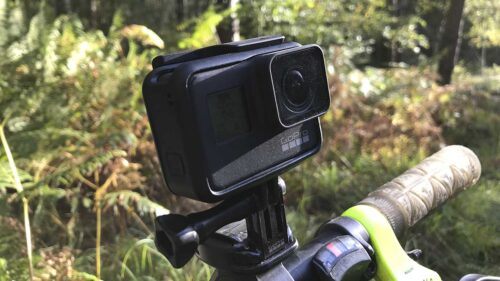
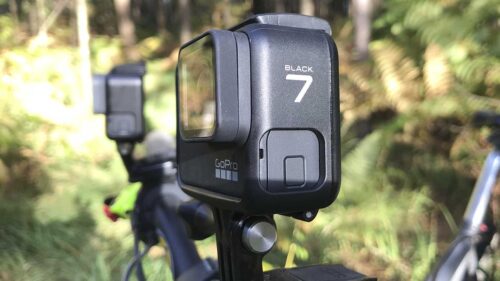
There is very little visible difference between the GoPro Hero6 and Hero7 Black. The most noticeable change is the colour, switching from the Hero6’s grey to a deep black, and the discreet model number on the lens has been replaced by a far more visible GoPro logo and Hero7 marking on the side. Lining up the Hero6 and Hero7 side by side reveals subtle further changes, the rubber texture has been smoothed slightly and the speaker beneath the camera has been redesigned, but the foundation of the camera is identical. The lens remains user-replaceable as on the Hero5 and Hero6, and the overall build is as robust and well-considered as previous versions.
The new interface is the most immediate change in use. Powering up the camera reveals an all-new user experience that gives the Hero7 a fresh feel from the moment it boots. Resolution, frame rate, and field of view are now grouped together, requiring a couple of taps to access each set of options rather than the direct links available on the Hero6. The HyperSmooth and live streaming features are activated through quick swipes and taps via the touchscreen. After some time with the new interface, the verdict is mixed. Most settings remain quick and easy to reach, but the additional taps and slightly increased complexity are not quite as intuitive as the simpler approach taken by the Hero5 and Hero6.
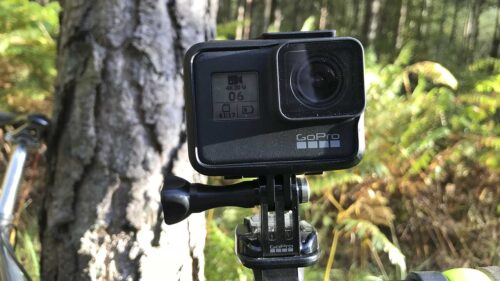
As ever, the compact size of the GoPro is slightly fiddly when held in the hand, but this is a camera designed to be mounted rather than handheld. With the Hero7’s new electronic stabilisation, however, that distinction starts to break down. Linking to the mobile app has been streamlined significantly, no passwords or fiddling, just follow the on-screen instructions and within moments the camera and phone are connected. The Apple Watch compatibility extends control further, and voice activation, while still slightly awkward in public, works reliably for hands-free operation.
Features
HyperSmooth is the headline feature and the one that most clearly justifies the Hero7 Black as a new model rather than a firmware update. It is GoPro’s enhanced electronic image stabilisation, and the company has worked out how to give the footage additional headroom that enables greater cropping into the image for the stabilisation processing. The system works at 4K 16:9 but not 4K 4:3, and at 1080p it operates up to 60fps, with standard stabilisation taking over at 120fps and no stabilisation at 240fps. The aspect ratio toggle is accessed via an icon at the top left of the screen, and the camera highlights whether HyperSmooth is active or not for the current settings.
Live streaming is now integrated directly into the camera. Sign into a Facebook account through the GoPro app, and within seconds the camera is broadcasting live to the world. The setup process is genuinely fast, and the integration with the social network removes the need for any third-party streaming app or workflow. Additional networks are expected at launch, and the implementation feels like a natural evolution of GoPro’s mobile-first approach to content sharing.
TimeWarp video is the new ultra-smooth motion timelapse feature, accessed by tapping the video icon at the base of the touchscreen and swiping left. It uses the HyperSmooth processing to produce a stabilised timelapse that has not been previously possible from a GoPro, and the result is comparable to the HyperLapse mode introduced on the DJI Mavic 2 Pro. Alongside TimeWarp, the camera offers TimeLapse Video, TimeLapse Photo, and Night Lapse Photo, expanding the time-based shooting options significantly.
SuperPhoto is the new intelligent photographic mode, essentially an HDR-style processing option that reads the scene and applies enhancements to exposure, colour, and contrast automatically. The improvements to the GP1 processor through the doubling of RAM from 1GB to 2GB enable these features without compromising the existing performance, and the additional microphone shielding addresses one of the most persistent complaints about previous GoPro cameras when mounted to brackets. ProTune remains available for users who want manual control and a flat colour profile suited to colour grading and matching footage from other cameras.
Performance
In use, the Hero7 Black is as easy to operate as ever, with the touchscreen giving direct access to all the settings and features through the new interface. The mobile app is well integrated, and setup and initial connection really could not be easier — download, start the app and the camera, and the rest happens automatically. Voice activation works reliably, though there remains something slightly self-conscious about talking to a camera in the middle of nowhere, and the touchscreen and app remain the more comfortable control methods for most situations.
Image quality from the 1/2.3-inch CMOS and GP1 processor combination is excellent, as it was on the Hero6 Black. The default settings produce slightly over-sharpened video, but this is easily dialled down through the ProTune options. Video shows the characteristic GoPro vibrance, with strong colour, plenty of tone, detail, and contrast, and on-trail testing confirmed the footage is stable, sharp, and free from the lens issues that occasionally affected earlier cameras. Vignette, sharpness fall-off, lens flare, and chromatic aberration in high-contrast areas are all well controlled, and the overall image quality remains the best available from any compact action camera.
HyperSmooth in practice is genuinely revelatory. Sample footage seen in demos before the test was impressive, but the real impact only becomes clear when reviewing footage shot in real conditions. The fluid motion is comparable to footage from a mechanical gimbal, and testing the Hero7 alongside the GoPro Karma grip showed it is genuinely difficult to tell the two apart. The implications for usability are significant, the camera can now go places where a gimbal cannot, including underwater, and the absence of mechanical stabilisation hardware means the rig is lighter and frees the USB-C port for accessories like external microphones. Image stabilisation was first introduced with the Hero5 Black, but HyperSmooth represents a step change rather than an iteration.
ProTune produces footage that is genuinely matchable with other professional cameras. The flat colour profile makes blending GoPro footage with material from other systems straightforward, and the manual control over capture parameters gives professional users the flexibility they need. The Hero7’s video at 1080p 240fps and 4K 60fps remains either market-leading or matched by only the most recent competitors, and the addition of the HEVC codec at 240fps means files are manageable, though it does require a computer capable of handling the format in post.
Final Thoughts
The GoPro Hero7 Black initially seemed like a marginal update, the same sensor and processor as the Hero6, the same top resolutions and frame rates, and headline new features that sounded like things already available elsewhere. Then it arrived for testing, and the reality was completely different. HyperSmooth is the best electronic stabilisation ever produced, period, and it transforms what a GoPro is capable of in a way that justifies the new model designation entirely.
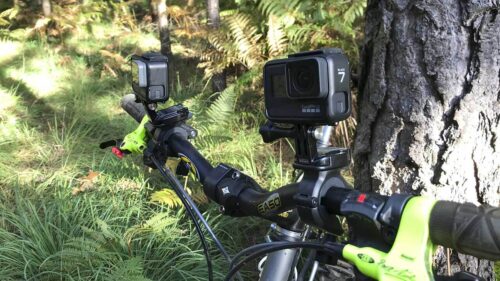
The Hero7 Black is no longer just an extreme sports camera. With HyperSmooth, a Rode VideoMicro plugged into the USB-C port, and the integrated live streaming, the camera becomes a complete vloggers kit, a high-quality camcorder, and a professional broadcast tool in one compact, waterproof, action-ready body. For social media creators, content producers, and anyone who needs versatile video capture, the Hero7 Black offers more than any other imaging device on the planet. It is the most understated GoPro release of all time, and the best all-round camera of 2018.