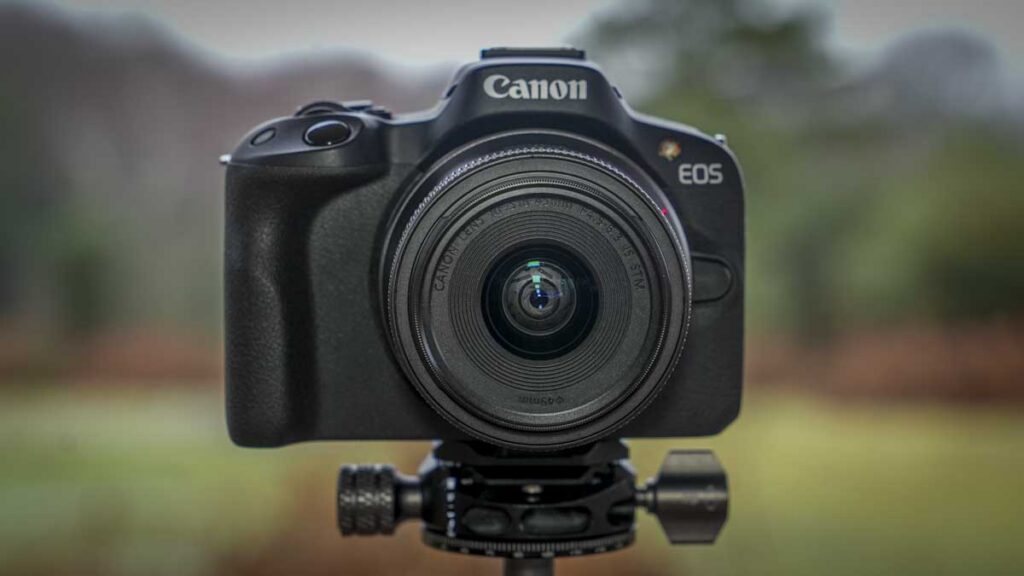

The Canon EOS R50 packs Canon's class-leading autofocus and 4K video into one of the lightest and most accessible mirrorless cameras available
Our Verdict
Canon EOS R50 verdict
What is the Canon EOS R50?
The Canon EOS R50 is an APS-C mirrorless camera positioned at the entry level of Canon’s RF system lineup. It is aimed at photographers stepping up from smartphone photography for the first time, students, and creators looking for a compact, capable camera that does not require extensive technical knowledge to use well. It uses the Canon RF-S mount for APS-C lenses and is fully compatible with the wider RF lens ecosystem via native mount, opening up access to Canon’s full range of glass as a photographer’s needs grow.
The R50 is suited to beginners, enthusiasts, travel photographers, and video creators who want a compact, capable hybrid camera without the weight and complexity of a professional body. Its USP is the combination of Canon’s advanced Dual Pixel autofocus, 4K video, and a touchscreen-led interface that lowers the barrier to entry without limiting the camera’s long-term potential. For anyone ready to move beyond a smartphone but not yet committed to a larger system, the R50 is the natural starting point in the Canon ecosystem. It is also worth noting that a dedicated video variant, the R50 V, is available for creators whose primary focus is video content.
Specification
Sensor: 24.2MP APS-C CMOS
ISO range: 100–32,000 (expandable to 51,200)
Burst rate: 15fps (electronic shutter) | 12fps (mechanical)
Autofocus: Dual Pixel CMOS AF II
Video: 4K 30p (oversampled from 6K) | 1080p up to 120fps
Screen: Fully articulated touchscreen
Weight: 375g (with battery and card)
Battery: Approx. 440 shots per charge
Mount: Canon RF / RF-S
Price: Approx. £750 (body only)
Build and Handling
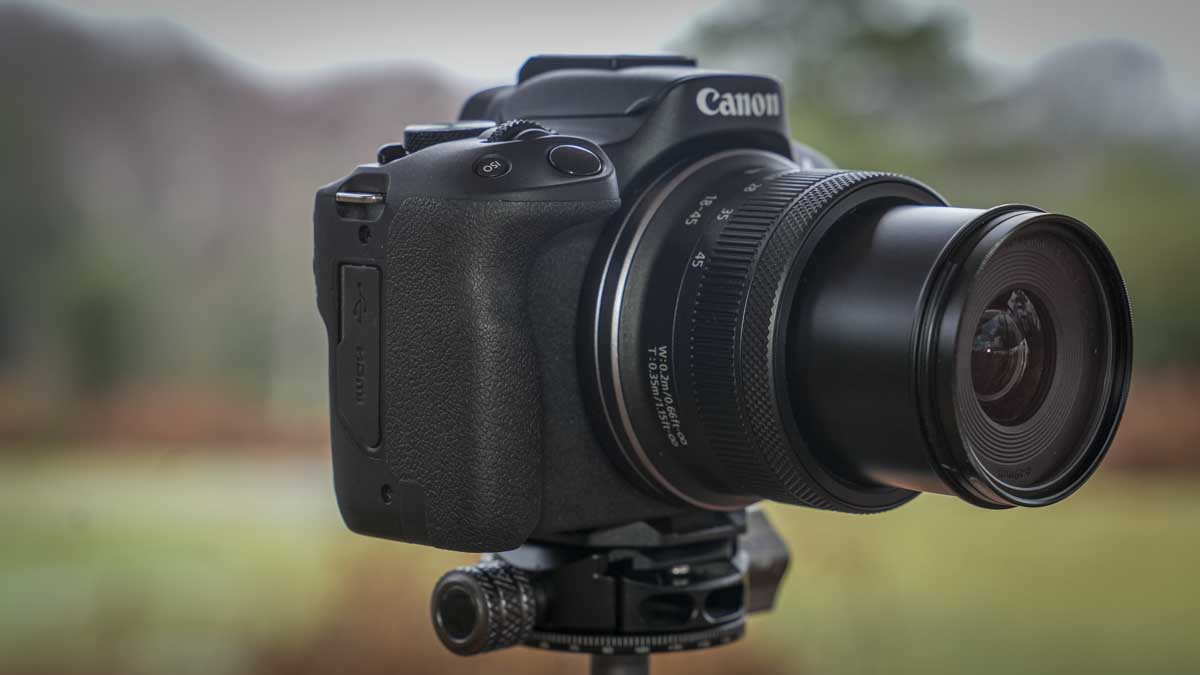
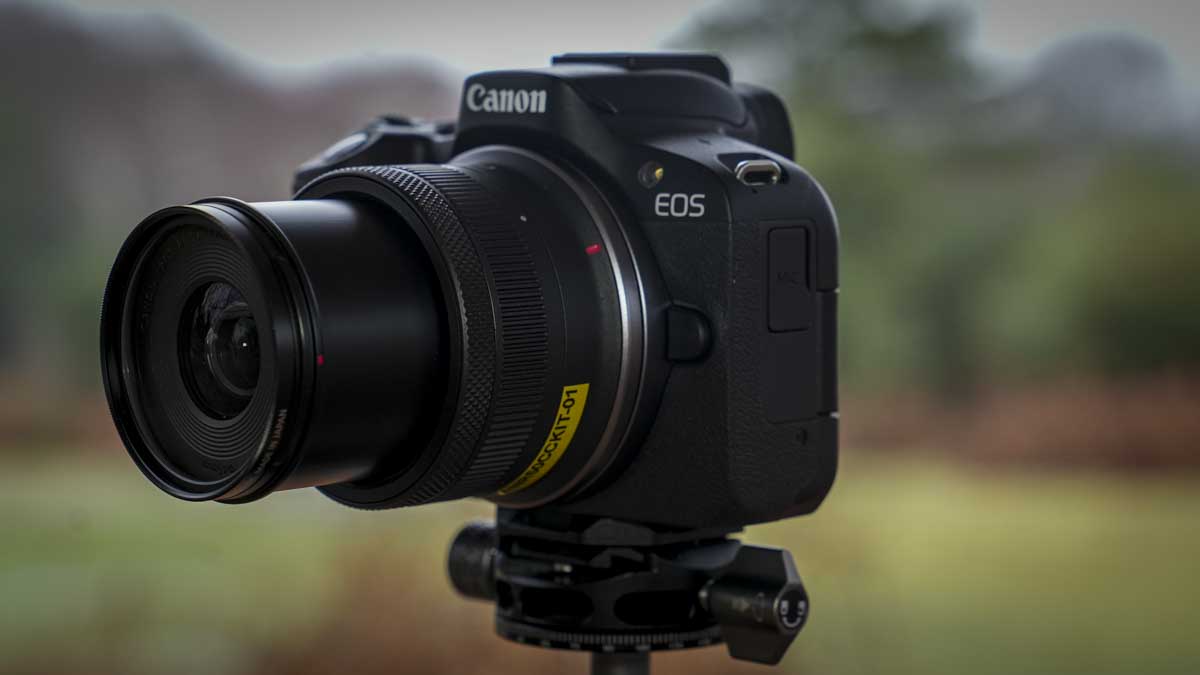
The R50 is one of the smallest and lightest cameras in this test, and that is one of its most immediate selling points. At 375g with battery and card, it is genuinely pocketable in a jacket and comfortable to carry all day without the fatigue that heavier bodies can cause. The build is plastic rather than the metal-dominant construction of the enthusiast and professional models, which keeps the weight down but does give the body a slightly less premium feel in the hand. The small grip is the most notable ergonomic limitation, particularly when larger RF lenses are fitted, where the imbalance between body and lens becomes apparent.
The fully articulated screen is a practical inclusion that opens up shooting angles that fixed or tilt screens cannot reach, and it makes the camera a natural fit for selfie and vlog-style content. The touchscreen interface is responsive and well designed for an entry-level audience, with a simplified menu layout that guides new users through the key settings without the complexity of the full Canon menu system. For those who want access to the complete menu, switching out of the guided mode reveals the familiar Canon interface used across the rest of the range, which makes transitioning to a more advanced body straightforward when the time comes.
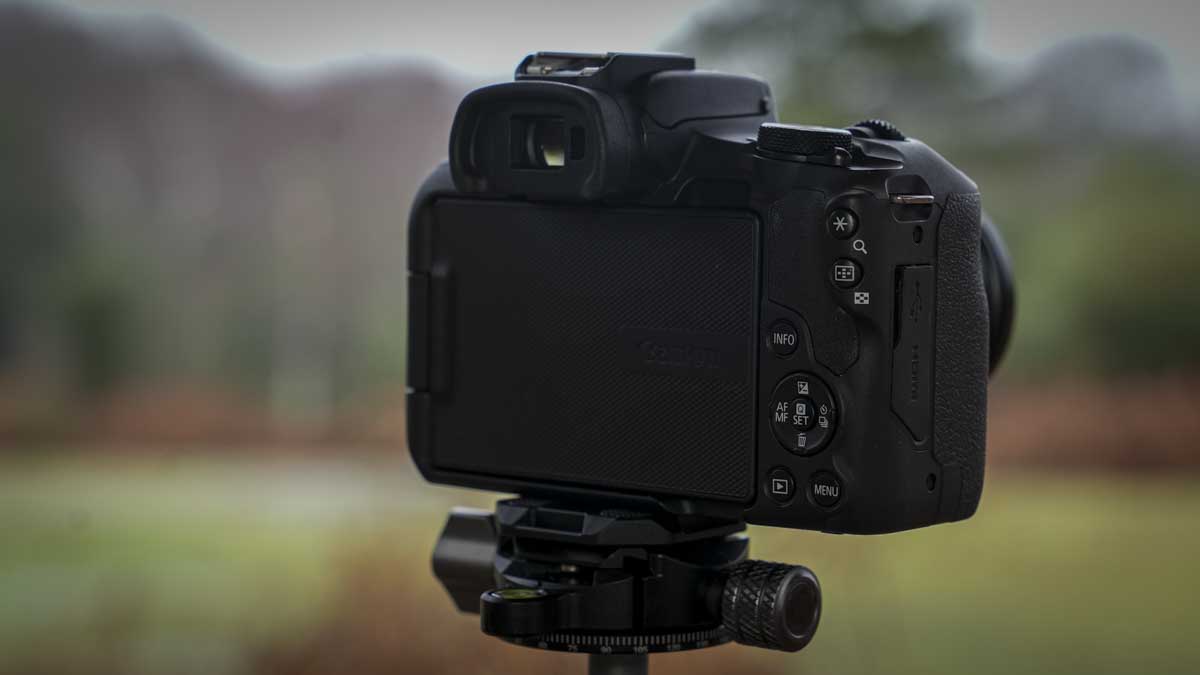
The smartphone-like feel of the R50’s interface is a deliberate design choice and one that works well for its target audience. Mobile connectivity is well implemented, and the companion app extends the camera’s capabilities for remote shooting, image transfer, and social media sharing, all of which are natural extensions of a workflow built around smartphone photography.
Features
The headline feature of the R50 is Canon’s Dual Pixel CMOS AF II system, which brings the same autofocus technology used in the R6 Mark III and other professional bodies to a camera priced at £750. Subject detection covers people, animals, and vehicles, with eye detection and tracking that perform reliably across a wide range of shooting conditions. For a camera at this price, the AF performance is a genuine differentiator, and it is one of the clearest examples of how the technology gap between entry-level and professional Canon bodies has narrowed.
The 15fps electronic shutter burst rate is another specification that punches above the camera’s price bracket, making it a credible option for capturing fast-moving subjects such as local sports, pets, and wildlife. Combined with the tracking AF, the hit rate for sharp, well-focused frames in continuous shooting is impressive for an entry-level body.
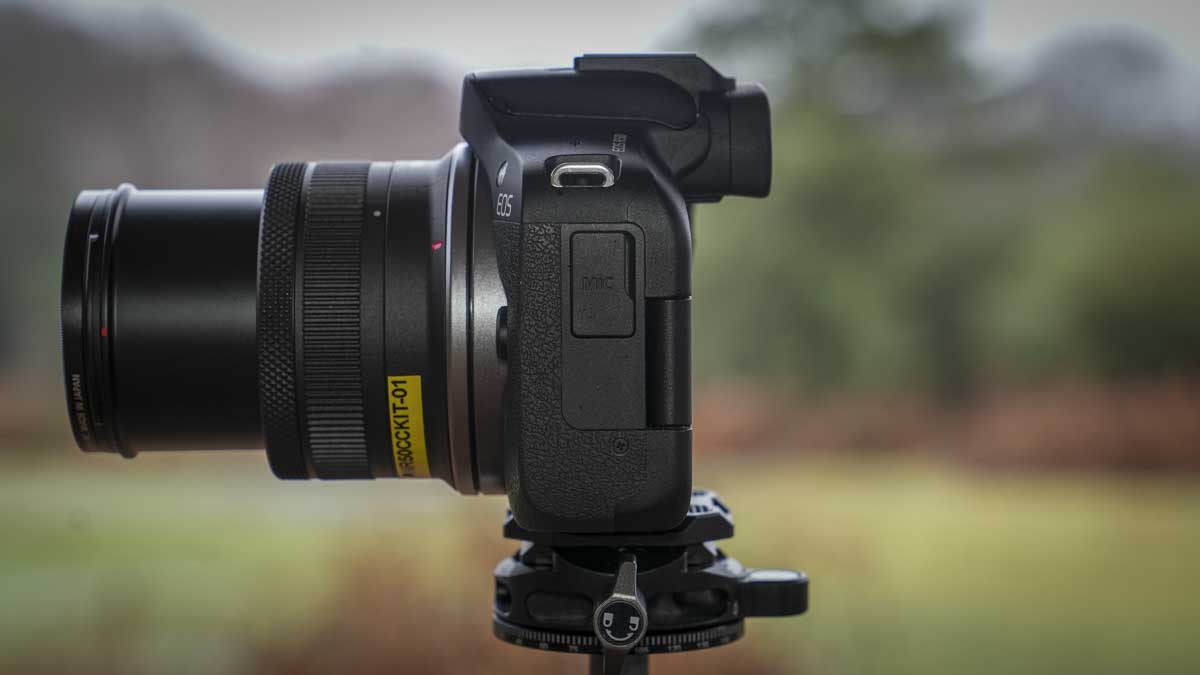
Video capability at 4K 30p oversampled from 6K is the most surprising specification on the sheet. The oversampling process produces noticeably cleaner, more detailed 4K footage than cameras relying on simple pixel binning, and dropping to 1080p unlocks 120fps slow motion for smooth action sequences. A microphone input opens up the audio recording options for creators, and the fully articulated screen makes framing for solo video work practical without additional accessories.
Performance
In practical use the R50 performs well above its price bracket in the areas that matter most for its target audience. The Dual Pixel AF is fast and accurate, tracking subjects through movement and changes of direction with a reliability that makes it easy to concentrate on composition rather than focus management.
Testing with the kit lens the system was well matched and responsive, though fitting a larger lens such as a 24-70mm highlighted the body and grip size limitations, with the combination feeling noticeably front-heavy.
Image quality in good light is excellent for an APS-C sensor at this resolution. Detail is well resolved, colour is handled with the characteristic Canon warmth and depth, and the colour modes and picture styles give beginners useful creative options without requiring raw processing knowledge. In the overcast and rainy conditions that dominated the test period, the sensor worked noticeably harder to maintain detail and tonal integrity, and the results show the gap between an APS-C and the larger full-frame sensors in the test.
Compared with older APS-C cameras, however, the improvement in low-light performance is clear, and at ISO 800 to 1600 the images remain clean and usable.
Low-light performance is the area where the sensor size shows most clearly. Noise becomes apparent at higher ISOs more quickly than with the full-frame and medium-format cameras in this test, and detail and tone soften as the light drops. In isolation, however, the results at normal shooting ISOs are genuinely good, and for the subjects and situations an entry-level photographer is most likely to encounter, the performance is more than sufficient.
Video at 4K is a genuine highlight. The oversampled 4K 30p footage is notably detailed and clean, and the slow motion option at 1080p 120fps is smooth and well resolved. For a creator stepping up from smartphone video, the improvement in image quality is immediate and significant, and the articulated screen, microphone input, and companion app make the R50 a complete entry-level content creation platform.
Final Thoughts
The Canon EOS R50 is a genuinely impressive entry-level camera that does not feel like a compromise. The Dual Pixel autofocus, 4K video, and 15fps burst rate are all specifications that were reserved for considerably more expensive cameras until recently, and their inclusion at £750 reflects how quickly the technology has filtered down through Canon’s lineup. For anyone making the transition from smartphone photography to an interchangeable lens camera, the R50 is one of the most capable and accessible options available.
The small grip and modest battery life are limitations worth knowing about before purchase, and the APS-C RF lens range, while growing, is not yet as extensive as Canon’s full RF ecosystem. But as a starting point in the Canon system, the R50 is an excellent choice, and the path to a more advanced body is clear and well signposted by the shared interface and lens compatibility across the range.