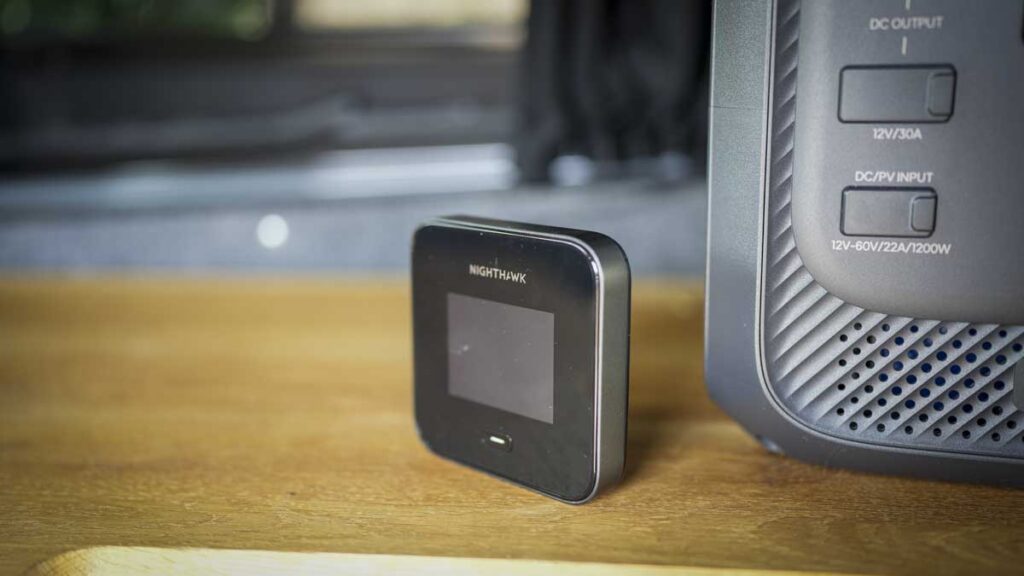

The most capable mobile 5G router available turns any location into a fast, secure working network.
Our Verdict
Nighthawk M7 Verdict
What is the Netgear Nighthawk M7 Pro?
The Netgear Nighthawk M7 Pro is a portable 5G mobile router that delivers a fast, reliable Wi-Fi network wherever you are. Rather than tethering devices to a smartphone hotspot, the M7 Pro acts as a dedicated network hub, drawing on a 5G data SIM to deliver Wi-Fi 7 connectivity to up to 64 devices simultaneously. It also features a 2.5GbE wired LAN port, enabling a full mobile wired network in the field.
It is aimed squarely at professionals who need reliable Internet away from fixed infrastructure, photographers on location shoots, videographers working with clients, or any creative team sharing large files in the field. It is not a camera accessory in the traditional sense, but in practice, it becomes one of the most useful tools in a location kit. The USP is simple: it consistently outperforms smartphone tethering for speed, reliability, and multi-device performance, and the LAN port enables direct wired connections for the fastest possible data transfer when it matters most.
Specification
Network: 5G Sub-6
Max 5G speed: 6 Gbps
Wi-Fi standard: Wi-Fi 7
Max Wi-Fi speed: 5.8 Gbps
Wired port: 2.5 Gbps Ethernet | 10 Gbps USB-C
Max connected devices: 64
Display: 2.8-inch colour LCD touchscreen
Battery: Integrated, USB-C charging with PD support
Dimensions: 105 x 105 x 20mm
Weight: 275g
International roaming: 125+ countries
External antenna ports: Yes (optional 5G antennas, sold separately)
SIM: Required separately
Max 5G speed: 6 Gbps
Wi-Fi standard: Wi-Fi 7
Max Wi-Fi speed: 5.8 Gbps
Wired port: 2.5 Gbps Ethernet | 10 Gbps USB-C
Max connected devices: 64
Display: 2.8-inch colour LCD touchscreen
Battery: Integrated, USB-C charging with PD support
Dimensions: 105 x 105 x 20mm
Weight: 275g
International roaming: 125+ countries
External antenna ports: Yes (optional 5G antennas, sold separately)
SIM: Required separately
Build and Handling
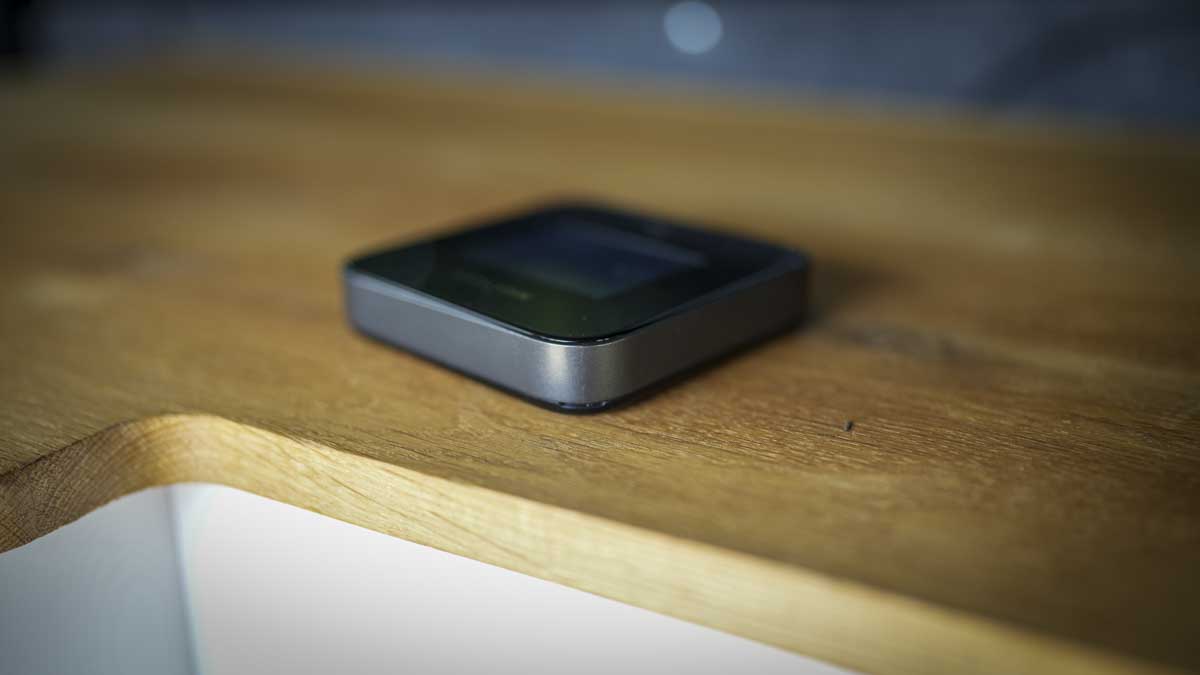
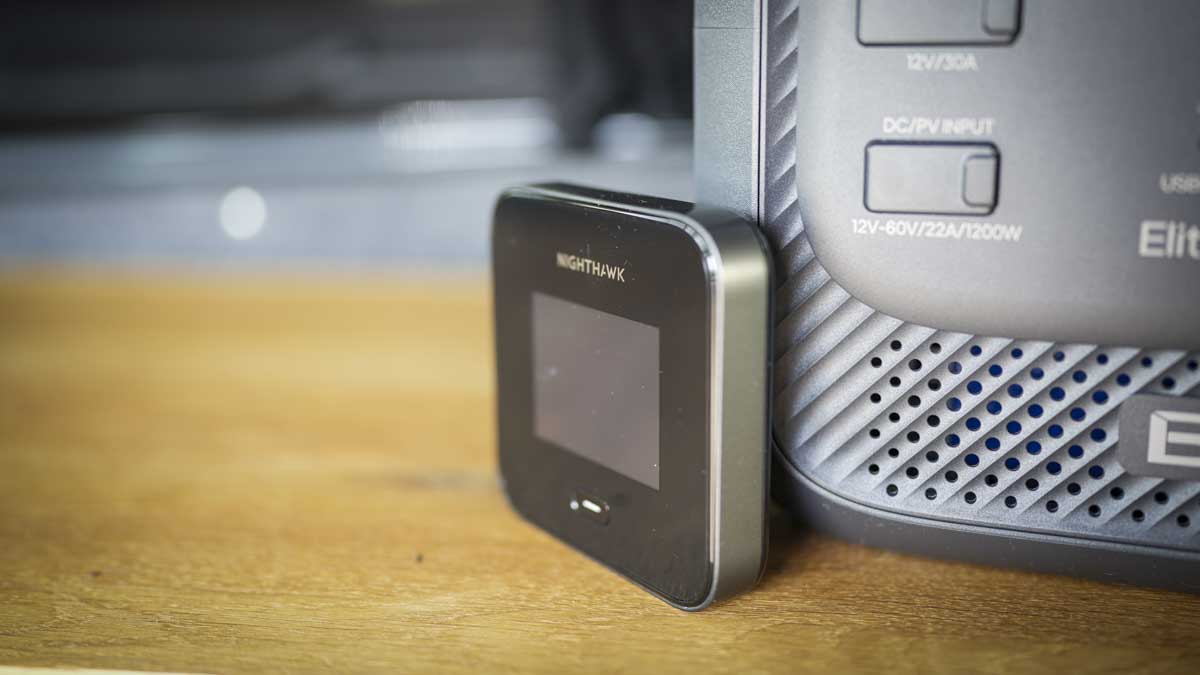
The M7 Pro follows the same design language as previous Nighthawk routers, a compact, square unit with rounded corners, finished in a dark matte plastic that looks appropriately business-like without drawing attention. At 105 x 105 x 20mm and 275g, it is pocketable in a jacket or bag side pocket, but just slightly too large for a trouser pocket. For context, it is 75g heavier than an iPhone 15 Pro, which gives a reasonable sense of what you are carrying.
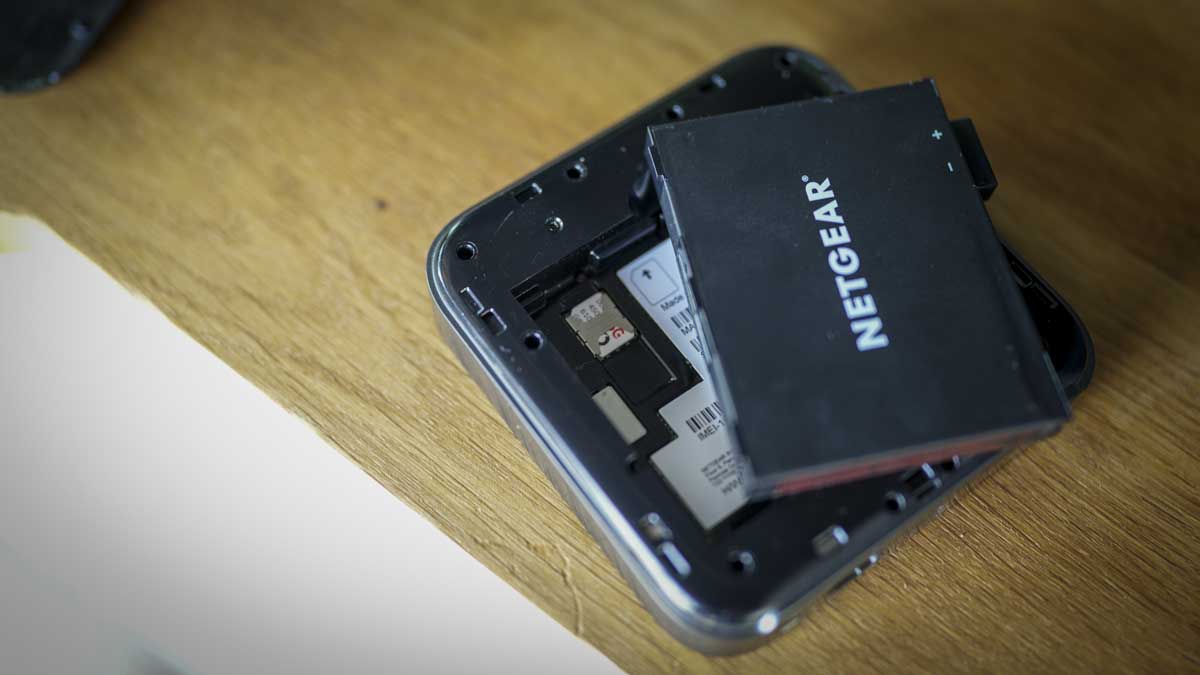
Build quality feels solid throughout, with a reassuring weight that suggests durability. The battery and SIM slot are accessed by removing the rear cover, a slight press and pull on the corner tab reveals both. It takes a little confidence the first time, and the battery can pop free if you are not careful, but once you have done it once, it is straightforward. The USB-C port on the base handles both charging and data transfer, and on each side, there are two small slide-down covers concealing the optional external 5G antenna connectors — a useful addition for low-signal environments, though the antennas cost an additional £45 and are not included.
The 2.8-inch colour touchscreen on the front is genuinely useful in the field. It displays data usage, connected devices, network status, and Wi-Fi credentials at a glance. I found the option to display the Wi-Fi name and password on screen helpful when quickly connecting colleagues on a shoot. When working in public spaces, I switched it off for obvious reasons.
Features
The M7 Pro’s feature set is built around one goal: giving you the fastest, most reliable mobile network possible. Wi-Fi 7 with an exclusive 6 GHz band is the headline feature, supporting up to 64 simultaneous connections — more than double that of most comparable devices. For a location shoot with a photographer, an assistant, a video operator, and a client all needing to access the same network, this headroom matters.
The 2.5GbE LAN port is the feature that changes how I work on location the most. Plugged into a network switch, it creates a wired mobile network that dramatically increases file transfer speeds between connected machines. On a recent shoot, this allowed me to send full-resolution files directly to a client on-site rather than delivering low-res previews and following up later.
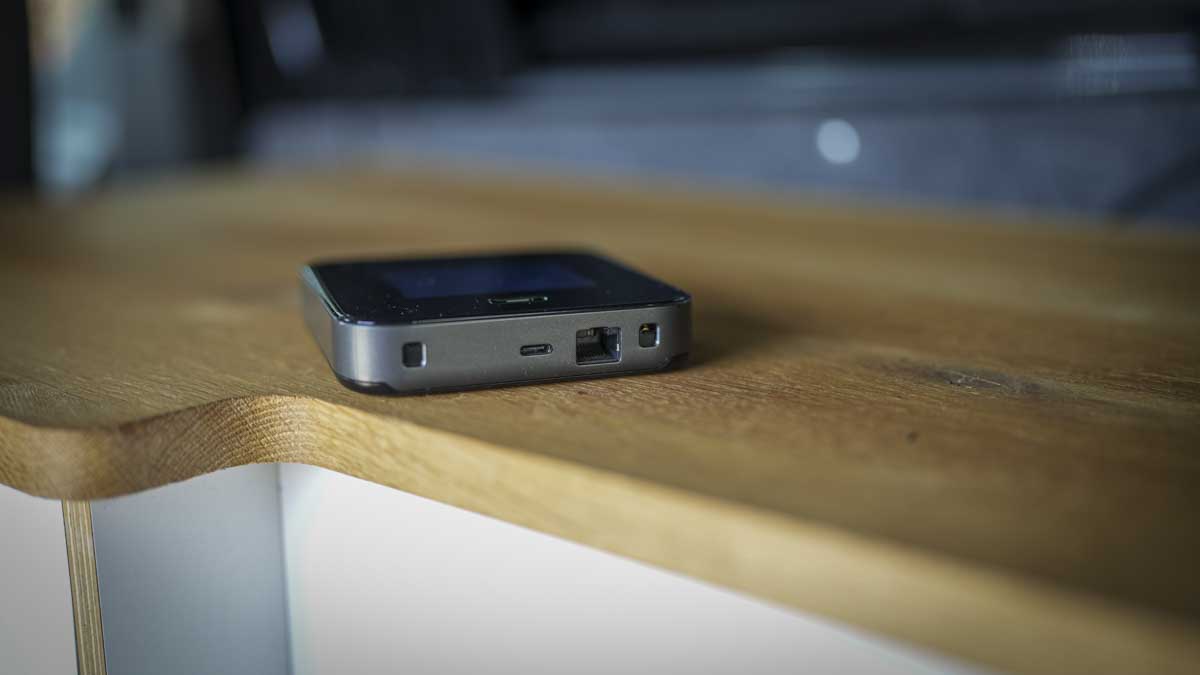
Wi-Fi offloading automatically switches between the mobile network and available Wi-Fi, conserving data when a trusted network is in range. The USB-C port supports power delivery, meaning the device can run continuously from an external battery pack on long shoots. The touchscreen interface covers all essential settings — band selection, guest Wi-Fi, Ethernet activation, and data usage — without needing the app for day-to-day adjustments. External 5G antenna connectors boost the signal in low-coverage areas, making the difference between a usable and unusable connection in rural locations.
Performance
Testing the M7 Pro alongside my iPhone 15 Pro on the same Vodafone network was immediately instructive. On the outskirts of the New Forest, an area where 5G is visible but unreliable — the iPhone struggled to maintain any usable connection, alternating between one bar of 5G and no data. The M7 Pro switched immediately to a solid four-bar 4G connection and delivered a consistent 30 MB/s throughput. That is the difference between being able to work and not being able to work, and it immediately established the M7 Pro’s credentials.
In Salisbury, with a strong 5G signal, raw speed benchmarks between the two devices were comparable. But the real-world difference showed up in consistency, streaming, uploading to WeTransfer, and transferring files between machines via the shared network all performed noticeably more reliably on the M7 Pro. Where the iPhone hotspot degraded as more devices joined, the M7 Pro maintained usable speeds across six connected devices, including two additional MacBook Airs and three phones.
The LAN port is where performance for photographers and videographers takes a step forward. Wired connections bypass Wi-Fi overhead entirely and deliver the fastest possible transfer speeds the network supports. For delivering finished edits to a client on location, or backing up a full shoot to a connected NAS before leaving a site, this is a meaningful practical advantage.
Battery life held consistently through two hours of continuous use in a café with multiple devices connected — significantly better than tethering to a phone, which drains rapidly under the same load. The USB-C PD input means the device can run indefinitely from an external pack, removing battery anxiety from the equation on all-day shoots.
Final Thoughts
The Netgear Nighthawk M7 Pro is an easy device to recommend in principle, but harder to recommend in practice, purely because of the price. At £899 plus the cost of a data SIM, I paid just over £200 for an annual Vodafone unlimited contract, the total outlay is significant. But framed as professional equipment rather than a consumer gadget, the calculation changes.
For location photographers and videographers, a fast, secure shared network, on-site file delivery, and dependable cloud backup are workflow necessities. The M7 Pro meets these needs better than anything else I’ve used. If budget is a concern, the M3 and M6 are solid alternatives, but for the best, choose the M7 Pro.