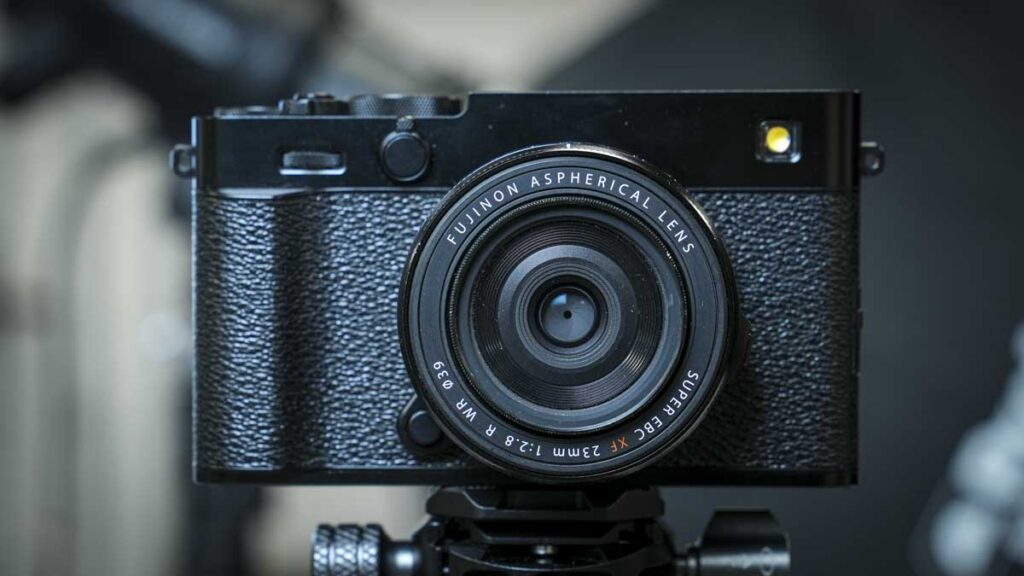

The Fujifilm X-E5 is a compact, beautifully built rangefinder-style mirrorless camera that delivers 40MP resolution and exceptional colour in a package designed for street and travel photography.
What is the Fujifilm X-E5?
The Fujifilm X-E5 is a compact APS-C mirrorless camera in the rangefinder style. It is aimed at enthusiast photographers who value character, portability, and image quality over outright speed and depth of specifications. Fujifilm has taken a different approach to camera design from the majority of the market. They combine a retro-inspired aesthetic with a modern sensor and processing engine. The X-E5 uses the X-Trans CMOS 5 HR BSI sensor, which is a proprietary design with a randomised colour filter array. This produces a distinctive image rendering quality, immediately recognisable to Fujifilm users.
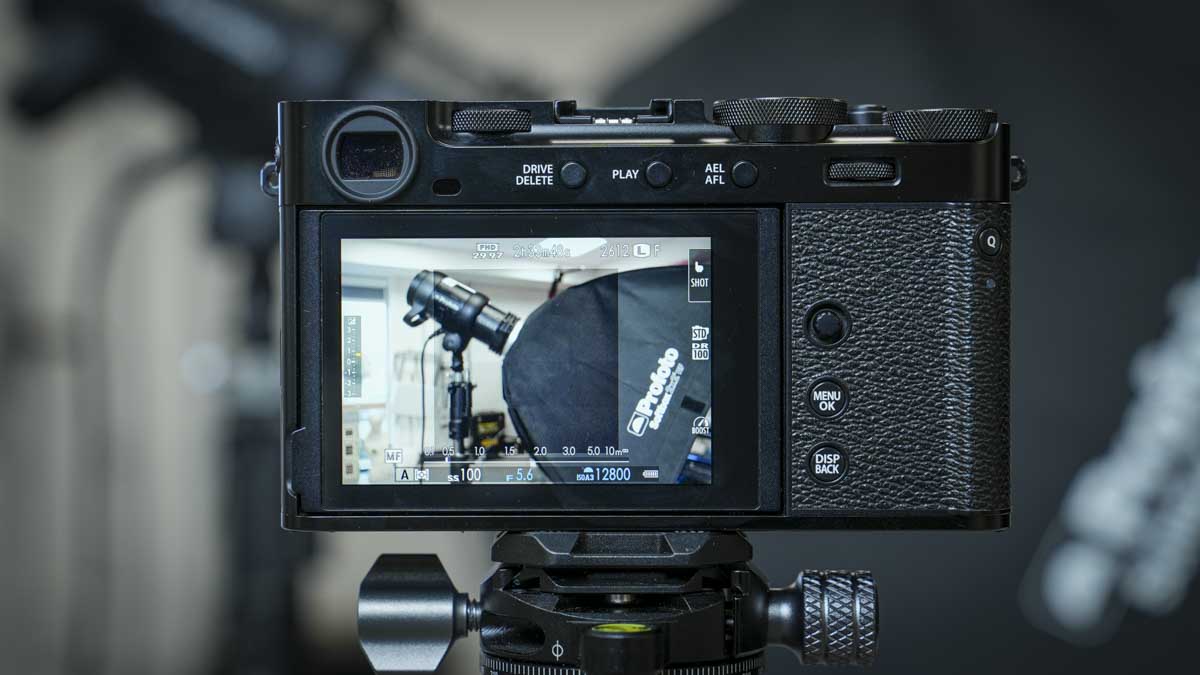
It is aimed at street photographers, travel photographers, and creative enthusiasts who want a camera that is a pleasure to carry and handle every day. The compact body and well-balanced X-mount prime lenses make it a natural walkaround combination. It is not the camera for sports or wildlife at speed. For any photographer who works at a measured pace and wants the best possible image quality from an APS-C system with genuine visual character, the X-E5 stands out. Its USP is the combination of Fujifilm’s colour science, film simulations, and a shooting experience that feels more analogue than digital.
Specification
Sensor: 40.2MP APS-C X-Trans CMOS 5 HR (BSI)
ISO range: 125–12,800 (expandable 64–51,200)
Burst rate: Up to 8fps (mechanical) | 13fps (electronic shutter)
Autofocus: Hybrid phase-detect AF, 425 points, AI subject detection
Video: 6.2K 30p | 4K up to 60p
Film simulations: Multiple modes including Provia, Velvia, Classic Neg, and more
Weight: 445g (with battery and card)
Battery: NP-W126S, approx. 450 shots
Mount: Fujifilm X-mount
Price: Approx. £1,350–£1,400 (body only)
ISO range: 125–12,800 (expandable 64–51,200)
Burst rate: Up to 8fps (mechanical) | 13fps (electronic shutter)
Autofocus: Hybrid phase-detect AF, 425 points, AI subject detection
Video: 6.2K 30p | 4K up to 60p
Film simulations: Multiple modes including Provia, Velvia, Classic Neg, and more
Weight: 445g (with battery and card)
Battery: NP-W126S, approx. 450 shots
Mount: Fujifilm X-mount
Price: Approx. £1,350–£1,400 (body only)
Build and Handling
The X-E5 is the smallest and lightest enthusiast camera in this test, and the build quality belies its compact dimensions. The solid metal body has a quality and solidity that feels closer to a Leica than to a typical entry-level mirrorless, and the retro rangefinder styling is executed with enough conviction that, at a glance, the camera could be mistaken for a film body. That aesthetic is not superficial; it reflects a genuine design philosophy around how a camera should feel and behave in the hand.
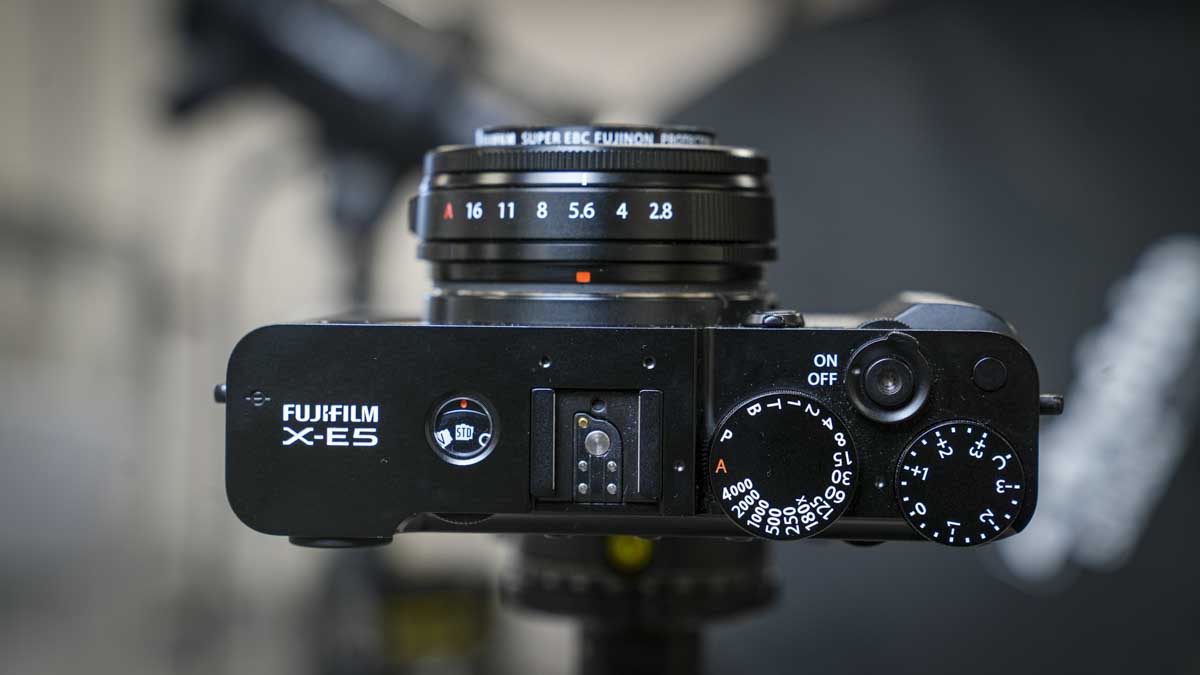
The dial-driven interface is the most immediately distinctive aspect of the shooting experience. Dedicated dials for shutter speed, exposure compensation, and ISO sit on top of the body, with aperture controlled from the lens ring on compatible X-mount lenses. This analogue approach means the camera’s primary shooting parameters are set and visible without entering a menu, and the Quick Menu, accessed via the Q button, surfaces the remaining frequently used settings in a single tap. The menu system itself is more complex than Canon’s or Nikon’s equivalents, and a first session with the manual is worthwhile, but once the dials and Quick Menu are configured to personal preference, the camera becomes very natural to use.
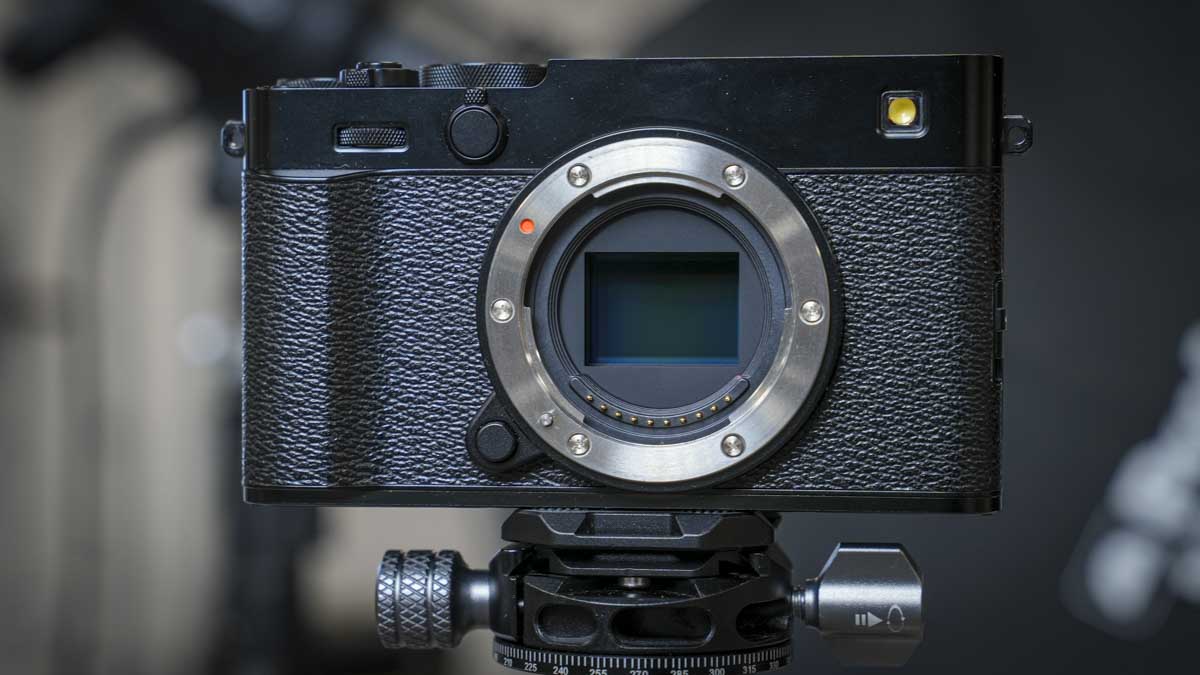
The small grip is the most honest ergonomic limitation. With the compact prime lenses, the camera is superbly balanced and comfortable to carry all day. With a larger zoom lens, the combination becomes noticeably front-heavy, and the grip offers less support than a deeper mirrorless body would. For street and travel with primes, this is a non-issue. For anyone planning to use longer, heavier lenses regularly, the X-T5 or a deeper-gripped body would be a more practical choice.
Features
The X-Trans CMOS 5 HR BSI sensor is the technical foundation of everything the X-E5 does well. The X-Trans colour filter array uses a randomised pattern rather than the standard Bayer grid used by most other manufacturers, which produces a different rendering of fine detail and colour that Fujifilm users find more film-like. At 40.2MP, it is the highest resolution APS-C sensor in this test, and the BSI architecture improves light-gathering efficiency, contributing to the camera’s stronger-than-expected low-light performance.
The film simulation modes are the feature most unique to Fujifilm. They are the clearest expression of the brand’s approach to photography. Provia, Velvia, Classic Neg, Eterna, and others each replicate the look of specific film stocks with notable fidelity. These are useful creative tools, not just novelty filters. For photographers who want to develop a consistent visual style or those who love the look of analogue photography, these modes stand out. Assigning them to a dial or custom button makes switching fast and intuitive.
The hybrid AF system uses 425 phase-detect points and AI subject detection to cover people, animals, and vehicles. Face and eye detection performed reliably in portrait and street situations, though the overall AF speed lags behind that of Canon and Nikon when tracking fast-moving subjects. The 13 fps electronic shutter burst rate is available for faster-action situations, and with appropriate lenses, the camera is capable of wildlife and sports work, though the X-T5 is the better-specified body for that discipline within the Fujifilm range. Video capability at 6.2K 30p and 4K 60p is strong, and the compact body with microphone input makes it a practical travel video option.
Performance
In use, the X-E5 performs exactly as its character suggests, rewarding a considered, engaged approach to photography with images that look and feel distinctive. Testing across street, portrait, and low-light situations, the camera’s image quality was immediately apparent. The X-Trans sensor produces files with a tonal quality and colour rendering that stand apart from the standard Bayer sensor cameras in this test, with a natural, film-like quality to greens, skin tones, and shadows that require less post-processing intervention to achieve a satisfying result.
Low-light performance exceeded expectations for an APS-C camera. Shooting indoors and in overcast outdoor conditions without flash, the sensor maintained usable detail and clean colour at ISO values where older APS-C designs would have shown significant noise. Setting the Auto ISO limit to 3200 for indoor and street work yielded clean, well-balanced images. The X-Trans rendering of noise at higher ISOs also differs from Bayer sensors, with a finer, more film-grain-like pattern that many photographers find preferable to the blotchier noise structure of standard sensors.
The film simulation modes in use are a genuine creative asset rather than a gimmick. Classic Neg and Eterna in particular produce files with a mood and character that make them immediately usable for street and documentary work, and the JPEG output from the camera in these modes is good enough that many photographers will find raw processing unnecessary. For photographers who prefer minimal post-processing, the X-E5’s in-camera output is among the best in this test.
Autofocus is reliable in the situations for which the X-E5 is designed. Face and eye detection tracked accurately in portrait and street work, and the camera responded well to deliberate, considered subject acquisition. For fast-action shooting, the lag compared with Canon and Nikon is noticeable, and the X-E5 is not the right tool for sports or unpredictable wildlife. For everything else it was tested against, the AF performed without significant issue.
Final Thoughts
The Fujifilm X-E5 is the camera in this test most likely to change how you think about photography. The combination of compact size, tactile dial controls, Fujifilm colour science, and film simulation modes creates a shooting experience that is genuinely different from every other camera tested. The image quality from the 40MP X-Trans sensor stands comfortably alongside full-frame competitors for most practical applications.
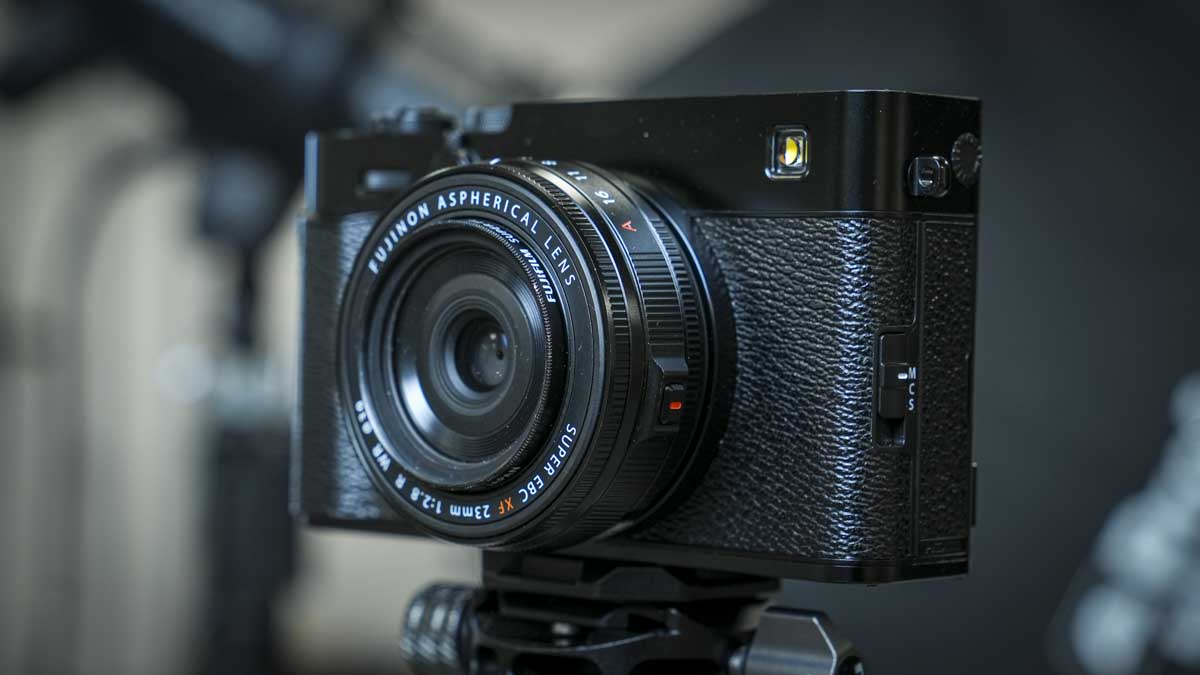
For street photographers, travel photographers, and creative enthusiasts seeking a camera that is enjoyable to use and capable of producing outstanding images, the X-E5 is a natural choice. The slower AF and smaller grip are honest limitations for fast-action or heavy-lens use. Within its intended role as a compact, character-driven everyday camera, the X-E5 is exceptional. The X-mount compact prime lenses, notably the 23mm and 56mm, are expensive but among the finest available for any APS-C system. These lenses complete the package perfectly.