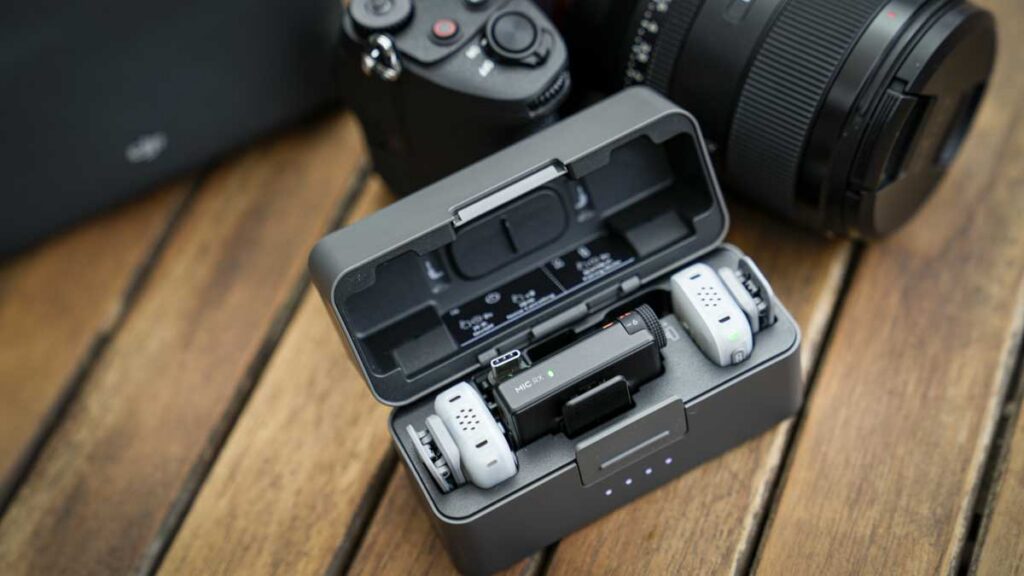

Both are tiny creator microphones, but the Mic Mini 2 feels easier to grow with.
What is the DJI Mic Mini 2?
The DJI Mic Mini 2 is a compact wireless microphone system designed for creators who want better audio without carrying a complicated recording setup. It is aimed at vloggers, mobile filmmakers, travel creators, action camera users and anyone who needs a small microphone that can be clipped or magnetically attached while recording speech on the move.
At the heart of the Mic Mini 2 is its tiny transmitter, which weighs about 11g. That keeps it close to the spirit of the original DJI Mic Mini, which was praised in the Camera Jabber review for being exceptionally small, simple and easy to use. The Mic Mini 2 does not try to turn the range into a larger professional audio system; instead, it builds on the same lightweight idea with a few useful refinements.
The pro feature is the addition of three voice tone presets: Regular, Rich and Bright. These allow the user to quickly adjust the character of their voice, making it easier to get a more balanced result straight out of the microphone. Regular is intended for natural clarity, Rich adds more depth, and Bright helps lift voices that might otherwise sound dull.
The neutral feature is DJI OsmoAudio compatibility. This is a major benefit if you already use compatible DJI cameras such as the Osmo Pocket or Osmo Action range, because it allows a cleaner and more direct recording workflow. However, its value depends heavily on whether you are already invested in DJI’s ecosystem, so it may be less important for users who mainly shoot with other cameras.
The negative feature is that the DJI Mic Mini 2 still does not include a 3.5mm lavalier microphone input. That keeps the system simple and compact, but it also limits its appeal for more professional productions where a discreet lav mic is often preferred. For that kind of work, the DJI Mic 2 remains the more suitable option because it supports an external lavalier microphone input.
In simple terms, the DJI Mic Mini 2 is best understood as a creator-focused wireless mic for everyday video production. It is more stylish and slightly smarter than the original DJI Mic Mini, but it still prioritises speed, portability and ease of use over advanced professional audio features.
DJI Mic Mini and DJI Mic Mini 2 Specification
DJI Mic Mini 2
- Transmitter weight: approx 11g
- Audio: 48kHz/24-bit
- Voice tone presets: Regular, Rich and Bright
- Noise cancelling: two-level active noise cancelling
- Automatic limiting: supported
- Transmission distance: up to 400m with DJI Mic Mini Receiver
- Mobile receiver transmission distance: up to 300m
- Battery life: up to 11.5 hours for transmitter, up to 10.5 hours for receiver
- Charging case total runtime: up to 48 hours
- Direct DJI OsmoAudio connection: Osmo Pocket 3, Osmo 360, Osmo Nano, Osmo Action 6, Osmo Action 5 Pro and other supported devices
- Pricing: DJI Mic Mini 2 2TX + 1RX + Charging Case listed at £89 / from €89; 1TX + 1 Mobile RX + Charging Case listed at £49 / from €54 in supplied DJI launch material.
DJI Mic Mini
- Transmitter weight: approx 10g
- Audio: 48kHz/24-bit
- Noise cancelling: two-level active noise cancelling
- Automatic limiting: supported
- Battery life: up to 11.5 hours for transmitter, up to 10.5 hours for receiver
- Charging case total runtime: up to 48 hours
- Transmission distance: up to 400m
- DJI OsmoAudio direct connection: supported with selected DJI products
Build and handling
The DJI Mic Mini 2 keeps the tiny, lightweight design that made the original DJI Mic Mini so easy to wear. At around 11g, it is slightly heavier than the original Mic Mini, but the difference is so small that it is unlikely to be noticeable once clipped to clothing or attached magnetically. Like its predecessor, it is designed to stay out of the way, making it well suited to vlogging, travel filming, mobile content creation and action camera work.
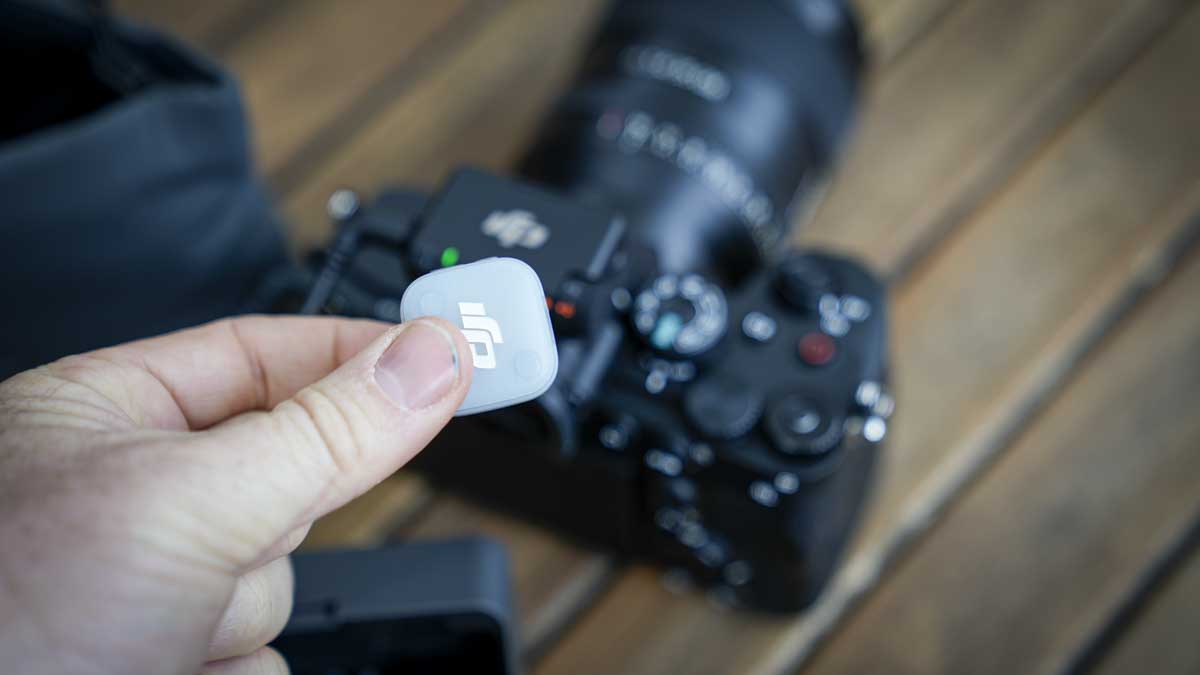
The handling improvements are more about refinement than reinvention. The new magnetic front covers make the Mic Mini 2 feel less like a visible tech accessory and more like something that can be matched to clothing, branding or a creator’s personal style. DJI’s collaboration with Victo Ngai takes this idea further with the Dawn, Surge, Blaze and Glimmer designs, positioning the microphone as something creators might deliberately show rather than hide.
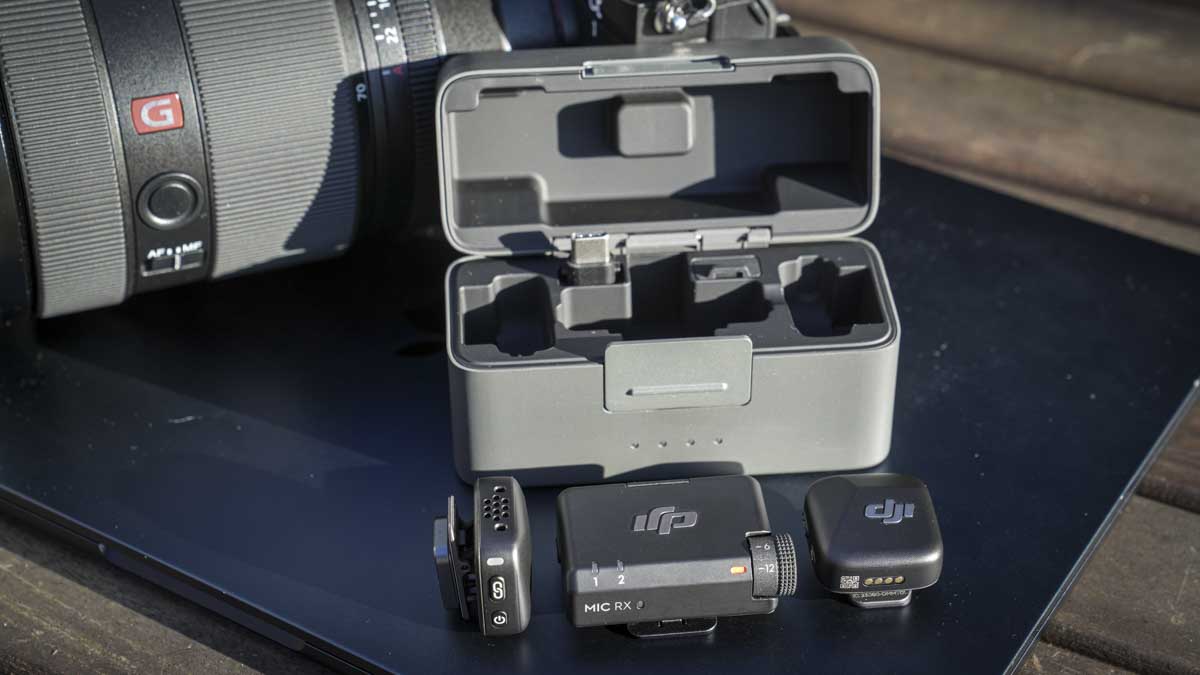
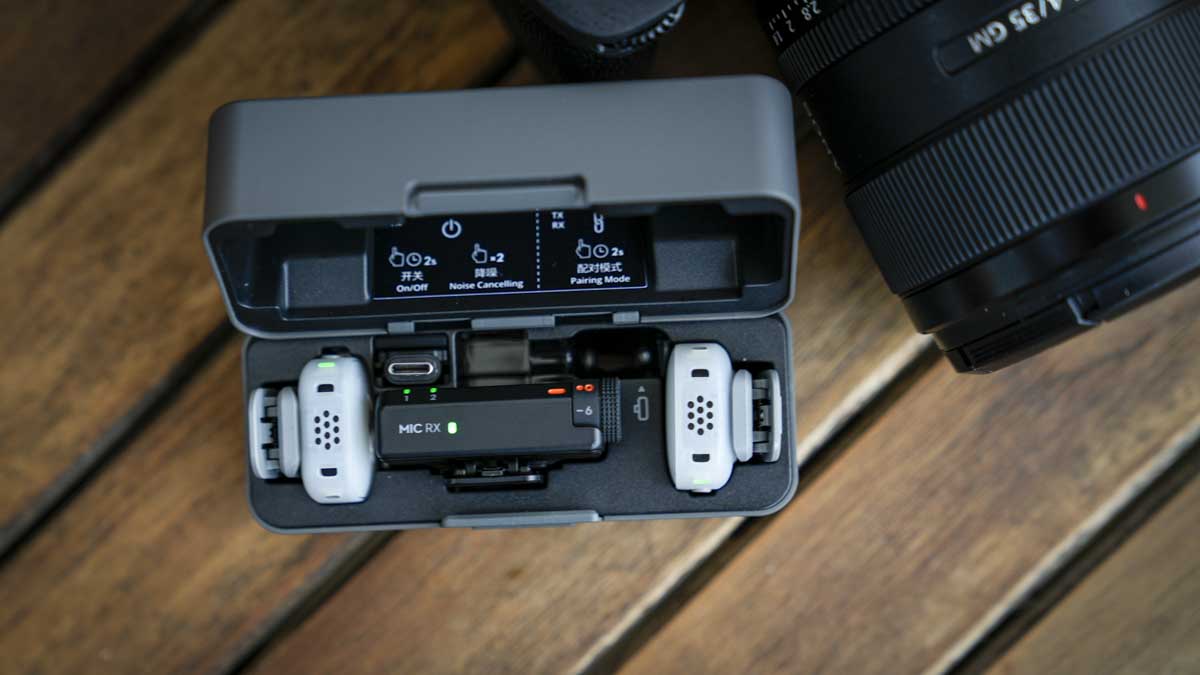
The redesigned storage options also make a difference. DJI says the standard Mic Mini 2 charging case can hold transmitters with windscreens and magnetic accessories attached, while the mobile version of the case is designed around a 1TX + 1 Mobile RX setup. That makes the Mic Mini 2 more convenient for smartphone-first creators, especially those filming short-form video, social content or behind-the-scenes material on the move.
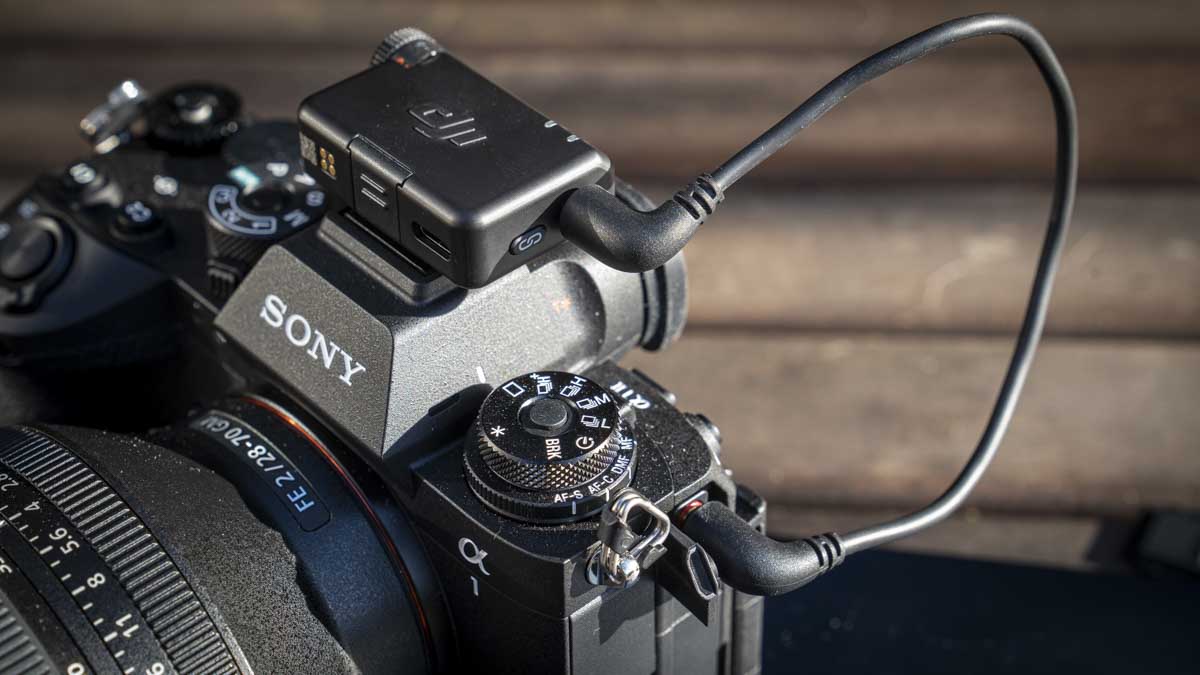
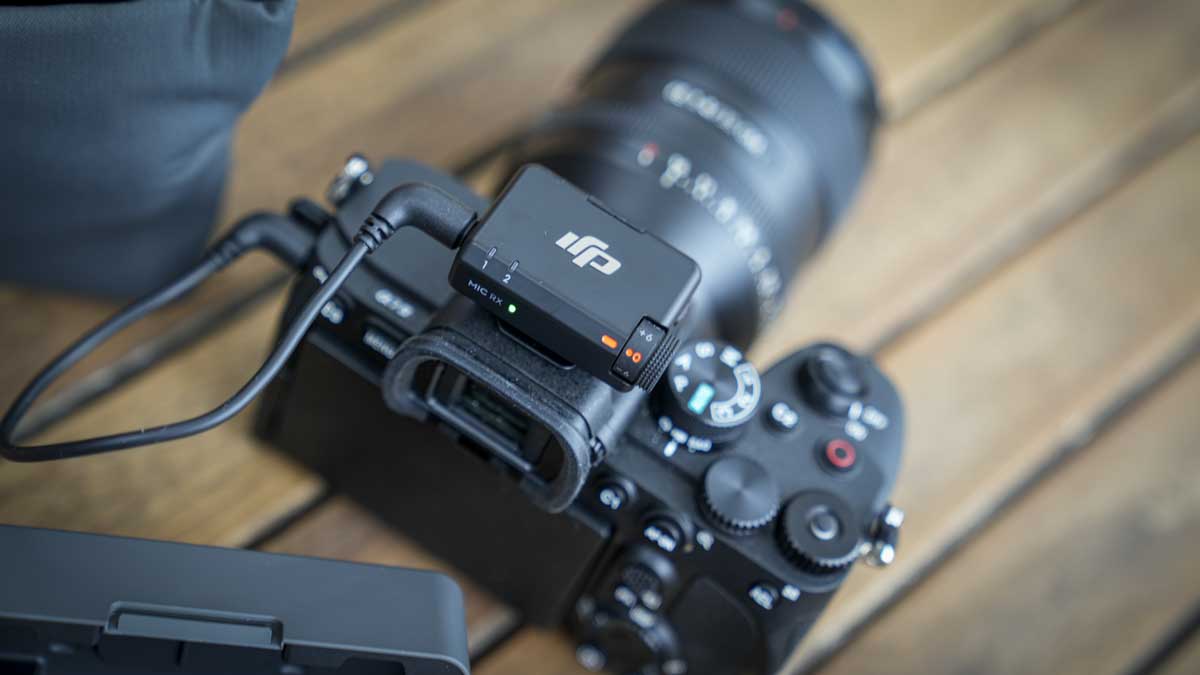
However, the Mic Mini 2 shares one of the original Mic Mini’s main limitations: it does not offer a 3.5mm lavalier input. That keeps the system small and simple, but it also limits its flexibility for more professional productions where a discreet wired lavalier microphone is often preferred. For that, the DJI Mic 2 remains the stronger choice.
The original Mic Mini still handles extremely well and remains one of the most discreet and straightforward wireless mic systems DJI has made. The Mic Mini 2 wins for handling flexibility, storage and style, but the original Mic Mini is still one of the cleanest grab-and-go wireless microphone systems available.
Features
The DJI Mic Mini 2’s most obvious feature upgrade is the addition of three voice tone presets: Regular, Rich and Bright. Regular is designed for natural clarity, Bright lifts the higher frequencies, and Rich boosts the bass for a fuller vocal sound. This is a creator-friendly addition because it gives users a quick way to shape their audio before editing, reducing the need to fix thin, dull or harsh voice recordings later.
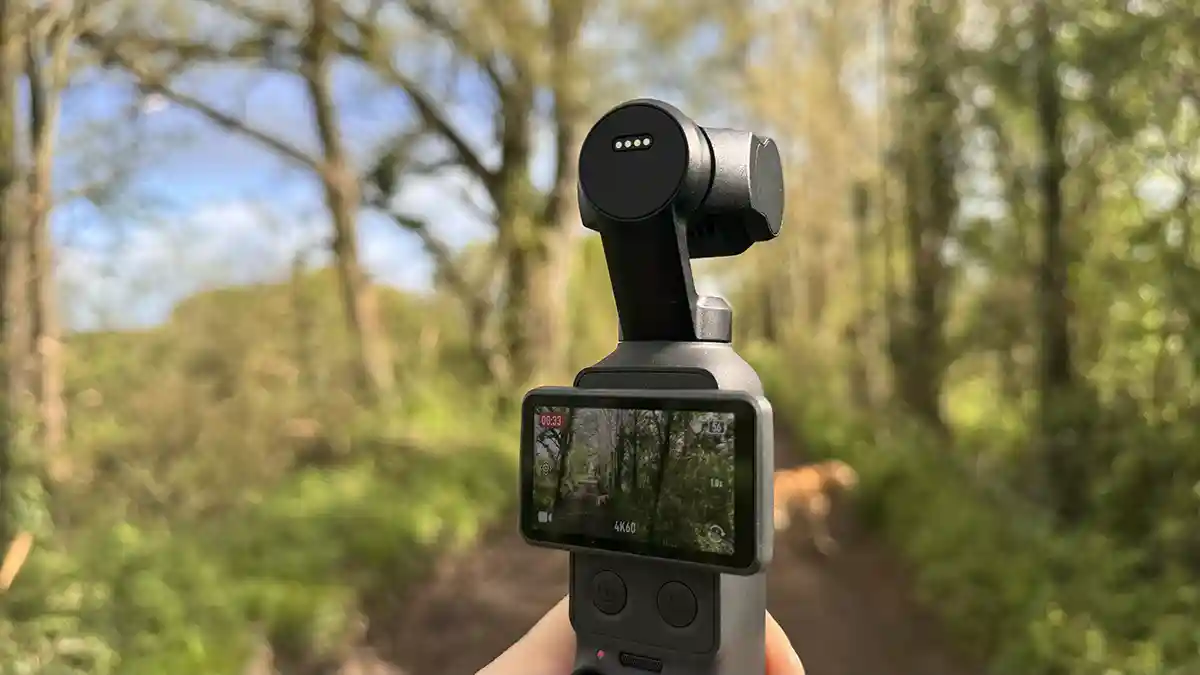
Both the DJI Mic Mini 2 and the original DJI Mic Mini support DJI’s wider OsmoAudio ecosystem, which makes them especially useful if you already shoot with compatible DJI cameras. That includes cameras such as the DJI Osmo Action 6, DJI Osmo Action 5 Pro, DJI Osmo Action 4, DJI Osmo Pocket 3, DJI Osmo Pocket 4 and DJI Osmo 360. For users already working inside DJI’s camera ecosystem, the Mic Mini 2 becomes more than just a microphone; it becomes part of a fast, compact filming setup.
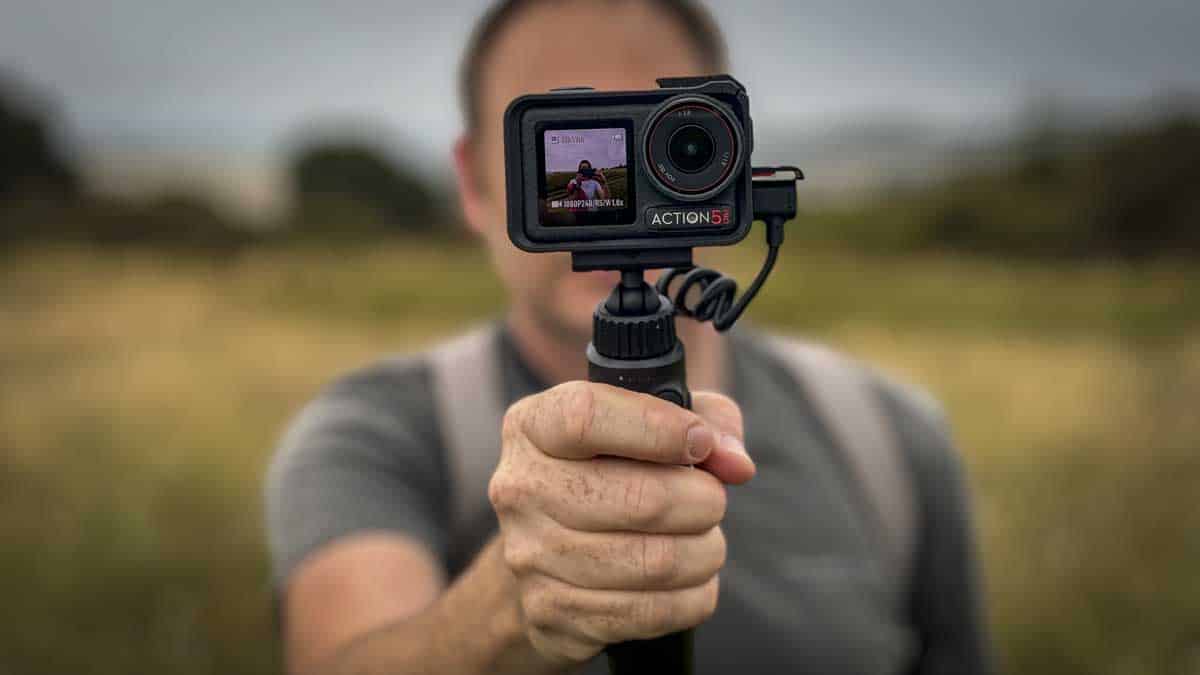
The Mic Mini 2 also improves mixed-device use. DJI says the DJI Mic Mini Receiver can connect to either Mic Mini or Mic Mini 2 transmitters, while the DJI Mic Series Mobile Receiver can work with Mic Mini, Mic Mini 2, Mic 2 and Mic 3 transmitters, up to two transmitters at once. This makes the newer system more flexible for creators who already own different DJI microphones or who work across cameras, phones and mobile gimbals such as the DJI Osmo Mobile 8 or DJI Osmo Mobile 7P.
The main drawback is that neither the DJI Mic Mini nor the DJI Mic Mini 2 has internal recording or a 3.5mm lavalier input. That means serious interview shooters, corporate filmmakers and broadcast-style users may still prefer the DJI Mic 2, while those looking at DJI’s newer high-end audio options should also read the DJI Mic 3 review. The Mic Mini 2 is not a professional audio revolution, but it is a smarter and more adaptable creator microphone than the original.
Performance
The DJI Mic Mini 2 keeps the strong 48kHz/24-bit audio foundation and long-range wireless performance that made the original Mic Mini so appealing. In everyday use, it should feel very familiar to anyone who has used the first-generation DJI Mic Mini, with the biggest improvements coming from the new voice tone presets, stronger mobile workflow and broader mixed-device compatibility rather than a dramatic change in raw audio quality.
That is not a criticism, because the original Mic Mini already performs extremely well. Camera Jabber’s review praised it as a simple yet highly effective wireless microphone system, with excellent audio quality, compact handling and strong DJI ecosystem integration. For many users, especially vloggers and travel creators, the original Mic Mini still delivers everything they need.
The Mic Mini 2’s two-level noise cancelling and automatic limiting should make it particularly useful for creators filming in unpredictable conditions. Automatic limiting is designed to reduce gain when the input gets too loud, helping prevent clipped audio when recording in high-volume environments. Combined with the Regular, Bright and Rich voice presets, this gives the Mic Mini 2 a little more control and consistency when recording in changing locations.
However, without internal recording or a wired lavalier input, both the Mic Mini and Mic Mini 2 still have clear limitations for professional productions. If you regularly record interviews, corporate work or broadcast-style content, the DJI Mic 2 remains the safer professional choice because it supports external lavalier microphones and offers a more flexible workflow.
For vlogging, travel, mobile filming and social content, though, the Mic Mini 2 offers a very appealing blend of audio quality, size and simplicity. It also pairs naturally with creator-focused cameras and devices such as the DJI Neo 2, where low weight and fast setup matter more than advanced audio routing.
DJI Mic Mini 2 vs DJI Mic Mini: which should you buy?
The DJI Mic Mini 2 is the best choice if you are buying your first DJI wireless microphone, shoot regularly with a smartphone, want the latest DJI OsmoAudio compatibility, or like the idea of voice tone presets and interchangeable front covers. It takes the simplicity of the original Mic Mini and adds more control, better styling and improved compatibility, making it the more future-proof option for most new buyers.
The original DJI Mic Mini still makes sense if you already own it, only need simple wireless audio, or can find it at a strong discount. It remains small, easy to use and capable of very good sound quality. For many creators, the actual recording experience will be close enough that an upgrade is not essential.
The DJI Mic 2 is the better option if you need a more professional system with a 3.5mm lavalier input, internal recording and a more flexible interview workflow. That lavalier socket is still the key reason to choose the older Mic 2 over the newer, smaller DJI Mic Mini models. It is also worth reading the DJI Mic 3 review for context, especially if you are comparing DJI’s current microphone range and want to understand where each model sits.
For anyone still deciding between different types of compact audio systems, Camera Jabber’s guide to choosing the best wireless mic system is also a useful supporting read.
Final Thoughts
The DJI Mic Mini 2 is a smart refinement of one of the best small wireless microphones for creators. It adds useful tone controls, better mobile options, improved styling and stronger cross-generation compatibility, while keeping the same essential philosophy as the original Mic Mini: small mic, simple setup, better audio.
It does not make the original DJI Mic Mini obsolete, especially for creators who only need simple, reliable wireless audio. The first-generation model is still a very capable choice for vlogging, travel filming and everyday content creation, particularly if price is a deciding factor.
The lack of a 3.5mm lavalier input remains the biggest limitation of the Mic Mini range. For professional users, the recommendation is more complicated. The DJI Mic 3 offers more advanced features, but the missing 3.5mm input limits its appeal for some professional setups. The DJI Mic 2 therefore remains the better choice when a discreet lavalier microphone is required.
For YouTubers, vloggers, travel filmmakers and DJI Osmo users, however, the Mic Mini 2 makes a lot of sense. It slips neatly into a DJI ecosystem that includes cameras such as the Osmo Action 6, Osmo Action 5 Pro, Osmo Pocket 3, Osmo Pocket 4 and Osmo 360, all of which benefit from fast, clean wireless audio workflows.
The DJI Mic Mini 2 may be small, but for everyday creators it makes better audio feel effortless.