A compact 1kWh portable power station with fast charging, DJI SDC drone support and a built-in retractable USB-C cable.

DJI Power 1000 Mini Verdict

What is the DJI Power 1000 Mini?

The DJI Power 1000 Mini is a portable power station from DJI, who are, of course, best known for their drone and camera stabilisers, the RS5 being the latest for mirrorless, while last week we saw the release of the Pocket 4.
DJI’s move into the portable power market makes sense, especially given the battery technology and advancements they have made through their huge drone experience. The company’s first models were the Power 500 and Power 1000, which again prioritised compact dimensions and capacity.
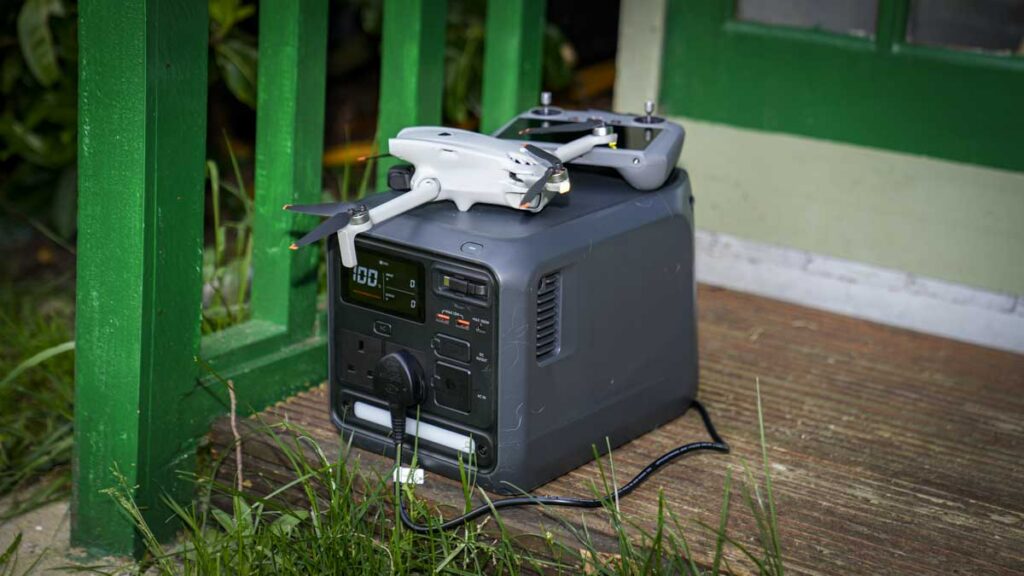
The Mini is even smaller, measuring 314 × 212 × 216mm, and weighing 11.5kg. This makes it roughly half the size of the Power 1000. It uses a 1,008Wh lithium-iron-phosphate battery with a maximum output of 1,000W and a sustained continuous output of 800W.
The new 1000 Mini power station is aimed at photographers, videographers, content creators, and drone pilots who are looking for a portable power station for on-location use.
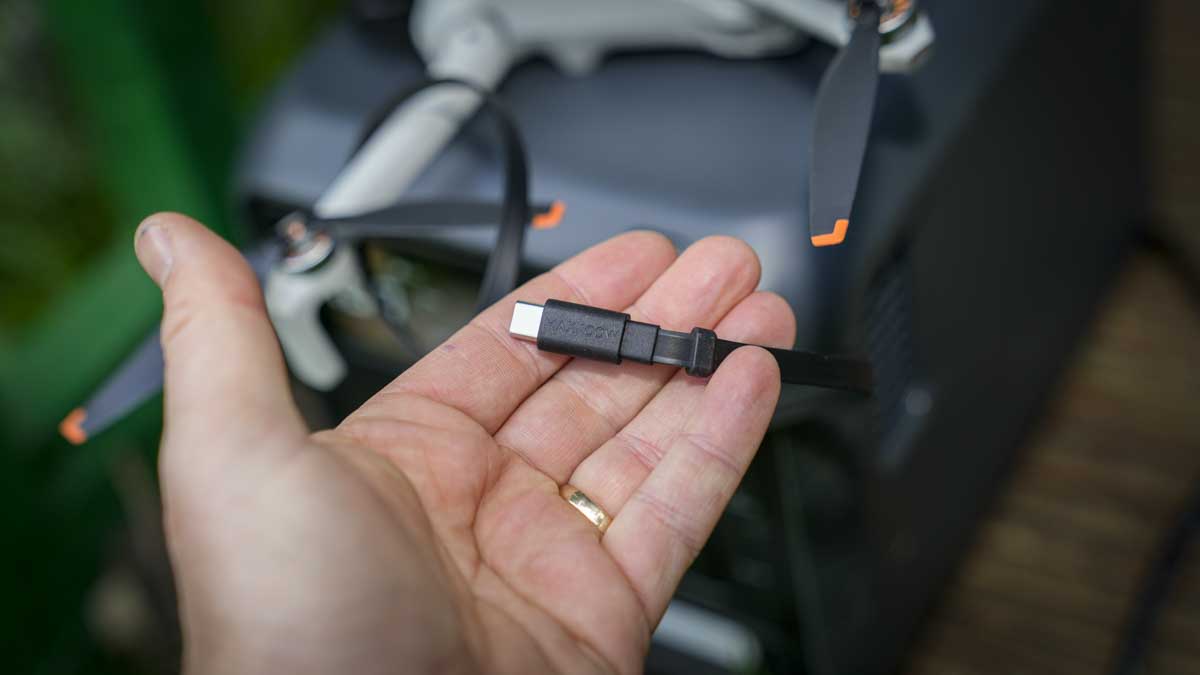
One of the key features, especially for DJI drone pilots, is the SDC port, which integrates directly with DJI’s drone ecosystem for fast battery charging. One of the interesting additions is the retractable 100W USB-C cable, which is built into the box and is something completely new to this style of device.
DJI Power 1000 Mini Review - Small footprint
There’s also a built-in 400W car charger and a 400W MPPT solar module, all giving you multiple recharging options without the need for additional adapters. Once again, the build quality is very DJI and definitely meets the same standards as the portable power stations currently available from Bluetti, Jackery, and EcoFlow.

Specification

Battery: 1,008Wh LiFePO₄ (lithium iron phosphate)
Maximum output: 1,000W (800W sustained continuous)
AC outlets: 2 × 230V (UK)
USB-A ports: 2
USB-C port: 1 × 100W retractable built-in cable
SDC port: Yes (DJI drone fast charging and solar input)
Built-in car charger: 400W (cable sold separately)
Built-in MPPT solar module: 400W (cable sold separately)
Recharge time: 0–80% in 58 minutes | 0–100% in 75 minutes (AC fast charge)
Car recharge: 0–100% in 160 minutes
UPS mode: Yes, 0.01-second switchover
LED light bar: Yes, dimmable, steady and SOS modes
App: DJI Home App (Bluetooth, remote port control, status monitoring)
Cycle life: 4,000 cycles to 80% capacity (approx. 10 years daily use)
Operating altitude: Up to 5,000m
Dimensions: 314 × 212 × 216mm
Weight: 11.5kg
Price: £449

Build and Handling

The Power 1000 Mini’s most immediate quality is its design. DJI has applied the same matte grey finish and clean, purposeful aesthetic to the power station that it brings to its cameras and drones, and the result stands out from the competition.
Where many portable power stations look purely functional, the 1000 Mini looks considered. The carry handle is robust and well-positioned, giving the unit a better balance in the hand than the Power 1000, and the flat top surface provides a stable platform for resting the kit on location.
At 11.5kg, it is not light, and nobody should mistake portable for effortless to carry. But the combination of the squarer, more compact form factor and the well-balanced handle makes it noticeably easier to move than its predecessor, and it fits into van storage cupboards that the v1000 would struggle to fit. On location, moving it from the van to where it was needed on the shoot and then back again is more than manageable, and makes an on site 1kWh power source extremely handy.
DJI Power 1000 Mini Review - quiet operation
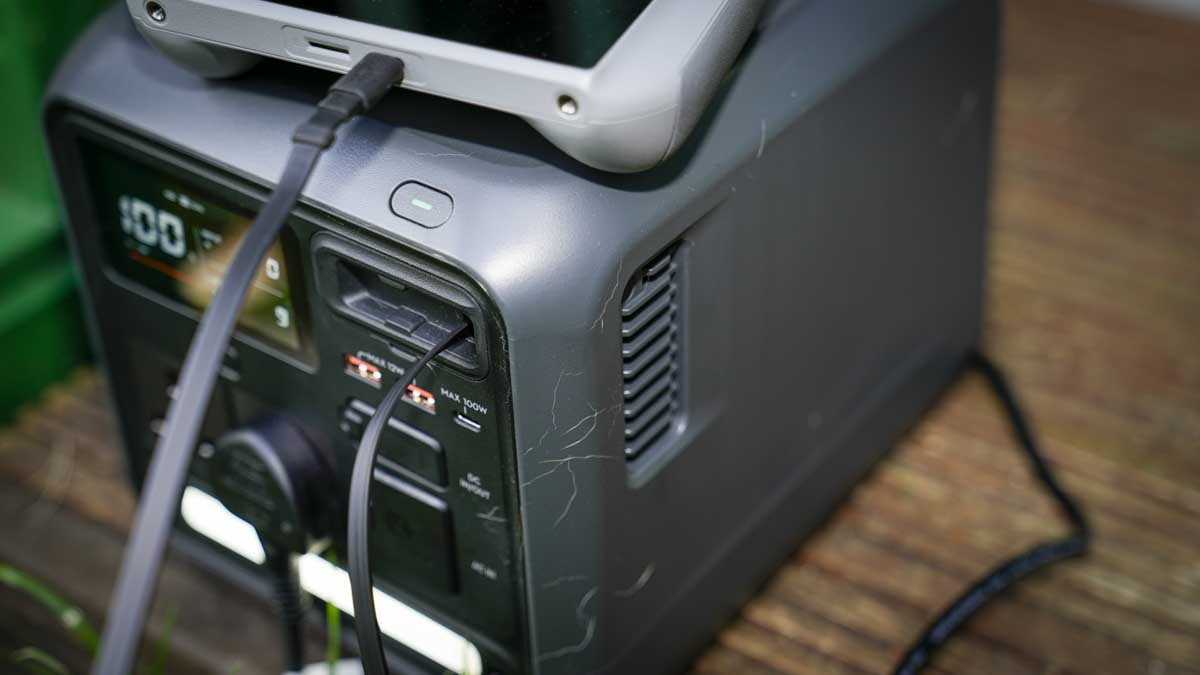
The retractable 100W USB-C cable deserves particular mention as a physical feature. It extends and retracts cleanly, the magnetic holder keeps the connector flush to the front of the unit when not in use, and the 80cm length is adequate for the desk and van situations where it is most useful.
What initially reads as a marketing feature in practice becomes the cable that is always there when you need it, removing the need to dig through a bag for a USB-C lead. It was used more consistently through the test than any other port.
Build quality throughout matches that of the best portable power stations currently available, and DJI joins EcoFlow, Jackery, and Bluetti in the tier of manufacturers that have raised the standard for construction quality in this category. The matte grey finish shows fingerprints less than glossy alternatives, and the unit feels robust enough for regular field use without being unnecessarily heavy for its size.

Features

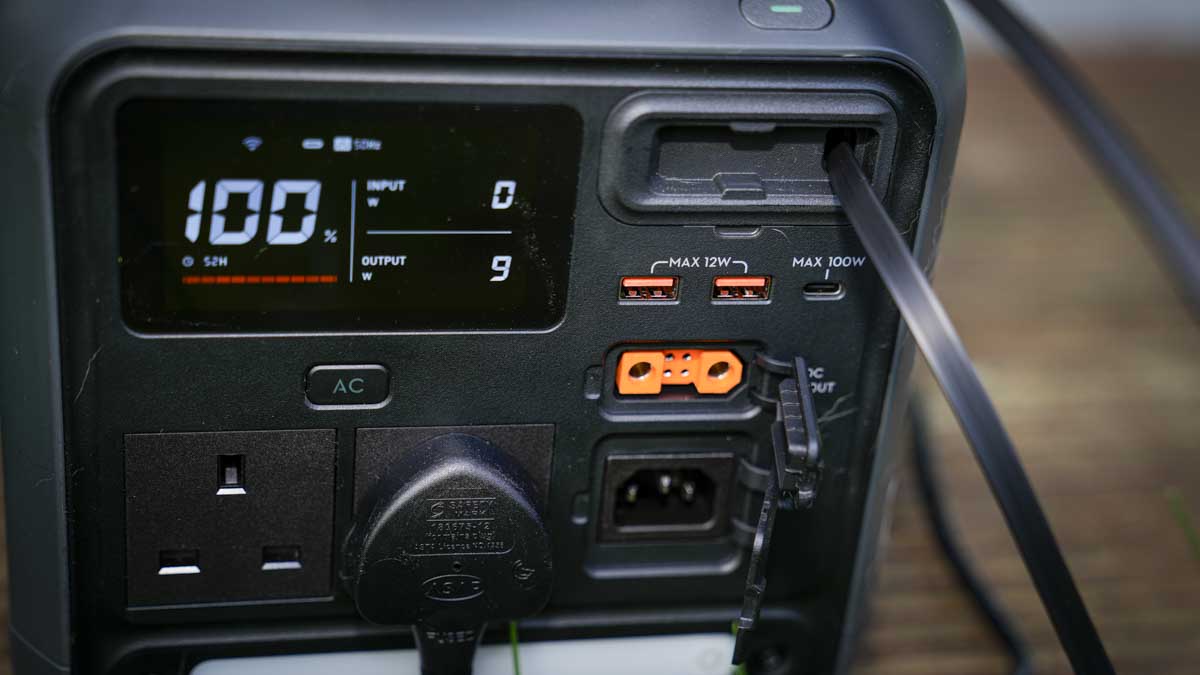
The port layout is practical for creative workflows. Two AC outlets handle camera chargers, lighting units, and laptop power bricks simultaneously; the USB-A ports support smaller accessories; and the retractable USB-C cable provides direct high-power charging for MacBooks and other USB-C devices without requiring the charger to be packed separately.
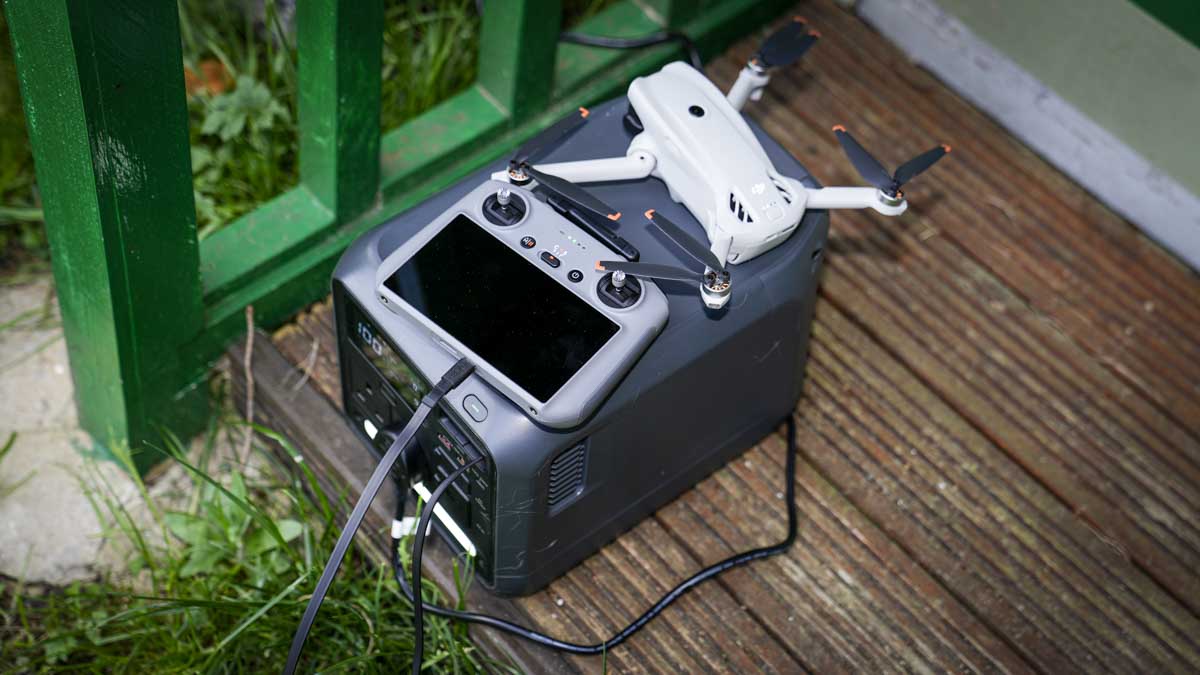
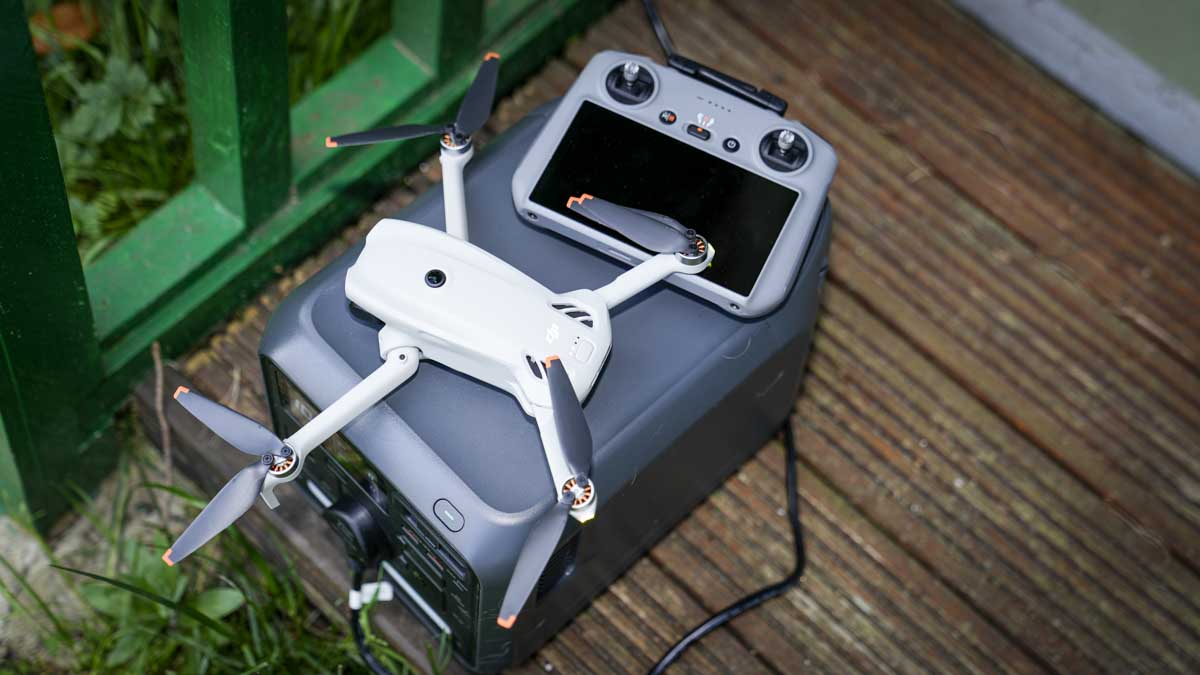
The SDC port connects directly to DJI’s drone fast-charging ecosystem, and the connector works perfectly, with an Air 3 battery charging from 10% to 95% in roughly 30 minutes.
The UPS mode operates automatically when a device is connected via AC, and both the device and the power station are receiving grid power. Testing the switchover by unplugging the unit from the mains mid-session, connected lights remained on without interruption, and the transition was imperceptible.
DJI Power 1000 Mini Review - Lito Drone charging
For photographers who run 3D printers in a workshop, desktop computers, or any device where an unexpected power cut could cause problems, the UPS capability adds genuine practical value beyond the  portable power use case.
Solar charging via the built-in MPPT module requires the DJI Power MC4 Solar Power Charging Cable at an additional £45. Connected to a 200W Panasonic panel, real-world output ran at approximately 120W in UK conditions, adding around 300Wh to the battery over a partial day of available sunlight.
It topped up the battery usefully rather than providing rapid recharging, which is consistent with the UK solar climate. The built-in 400W car charger similarly requires the DJI Power Car Battery Charging Cable as a separate purchase, enabling a full recharge in approximately 160 minutes while driving.
The DJI Home App is easy and stable. It provides remote port control and live monitoring of temperature and operating status, and the Bluetooth connection is reliable. It is not a feature-rich power management platform, but it does what it needs to do clearly and without complexity.
The built-in LED light bar proved more useful in practice than expected, providing enough ambient light to work by in a van at the end of a shoot and operating as a practical emergency light with its SOS mode.

Performance

In practical use across two weeks of location shoots, van life scenarios, and studio work, the Power 1000 Mini performed consistently and without incident. The 800W sustained output covered everything in a typical photography and video workflow, from running the Godox LiteWafer UP150R panel light at 180W for approximately five hours of continuous use, to charging DJI drones, a Sony A7 IV, a Canon EOS R5 C, a DJI Osmo Pocket 4, and a DJI Ronin RS5at the same time throughh the AC and USB ports.
The recharge speed lived up to its specification. Charging from approximately 10% to 80% took around 40 minutes, with the remaining 20% taking longer as the charge rate tapered off, consistent with LiFePO₄ charging behaviour.
The fans are audible during fast charging, and the top of the unit becomes noticeably warm,indicating thee significant power draw of pulling over 1,000W from the AC socket. In operation while discharging, the unit runs very quietly up to around 300 to 500W output, with fans becoming audible only at higher sustained loads.
DJI Power 1000 Mini Review - Port
The 800W ceiling requires planning. A standard 1kW kettle caused a warning and was switched off. A conventional air fryer was refused outright.
A small camping kettle rated at 800W worked correctly, as did the TV in the van and general entertainment and lighting use. For photographers and videographers whose location kit runs within the 800W envelope, this is rarely a constraint. For anyone expecting to run kitchen appliances at full power, the Power 1000 V2 at £579 and its 2,600W continuous output is the right choice.
Within the DJI ecosystem,the connectionn is the best available in this class of power station. SDC fast charging for drone batteries is fast, reliable, and removes the need to carry separate chargers for extended multi-battery sessions. The combination of SDC charging, the retractable USB-C cable, and the two AC outlets meant that on multi-day shoots, the Power 1000 Mini functioned as the central charging hub for all equipment with minimal cable management required.

Final Thoughts

The DJI Power 1000 Mini is the best portable power station in its class for photographers, videographers, and drone pilots who work within a DJI ecosystem and need compact, reliable field power.
The reduction in size and weight compared to the Power 1000 is meaningful in practice; the design and build quality are the best in this category, and the retractable USB-C cable is a genuinely useful feature rather than a marketing addition.
DJI Power 1000 Mini Review - Retractable Cable
At £449, the value is strong for 1kWh of well-engineered, fast-charging portable power with SDC integration. The 800W output ceiling is the honest limitation for high-draw appliance use, and the key accessories sold separately add to the effective cost for solar or car charging.
But for the creative professional who needs portable main-level power on location, the DJI Power 1000 Mini is a confident, well-executed product that raises the bar for what a compact power station should be.