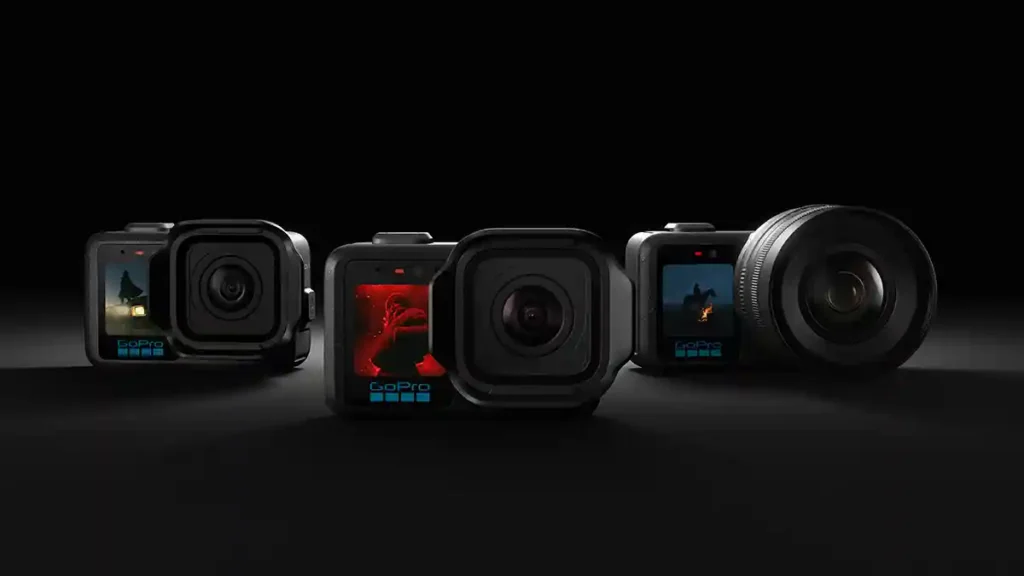

In past years I’ve been used to a GoPro launch every September and until last year, when Autumn came and passed and still no new Hero camera. Well it’s now April and finally that big new camera launch is here, although it isn’t a GoPro Hero14 Black, instead it’s something all together new, infact it two all new cameras the Mission One Pro and Mission One Pro ILS.
For more details on the GoPro Mission One Pro and GoPro Mission One Pro ILS check out the GoPro.com webiste
This launch comes alongside a new ecosystem of creator-focused accessories, including a dedicated grip and a new wireless microphone system.
I was lucky enough to have an advanced briefing on the camera which was as much about the new camera as it was about the direction of the brand and it’s product ranges. Essentially at present the GoPro Hero13 Black is still a phenominal camera and for the moment it and the Hero brand will continue.
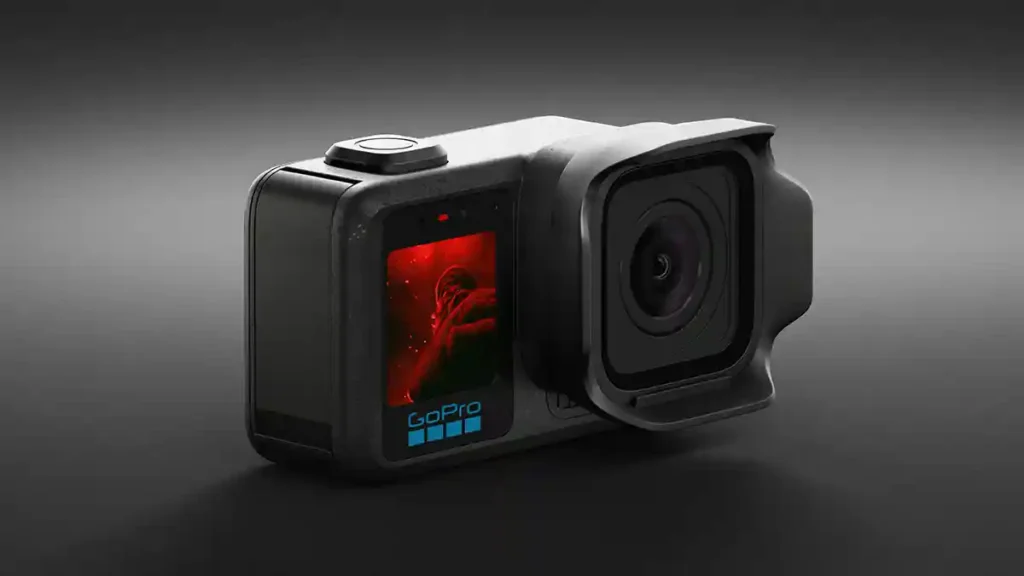
What the launch of the Misson One Pro and ILS does signal is a clear shift beyond the brand’s familiar action camera formula and into a more ambitious areana aimed at filmmakers, content creators and professional users who want more flexibility without shifting away from GoPro’s trademark ruggedness and compact design. This is after all the camera that can go anywhere.
The core of the new range is the GoPro Mission One Pro, a compact camera built around a one-inch sensor and the company’s GP3 processor. GoPro says the goal is to deliver significantly better image quality, improved low-light performance, reduced noise and a more cinematic overall look than its existing action-led models.
The headline feature here is the video mode of 8K at up to 60fps, with open-gate capture designed to offer more flexibility for reframing into both landscape and portrait formats during editing. GoPro is also pushing high-speed capture hard here, with 4K at 240fps and an even more extreme 1080p mode at 960fps for 32x slow motion.
As I’ve seen with a few other notable action camera the standard photography potential and dual use of teh camera is also a big thing, and while taking stills on a GoPro has been possible in the past, some of the new features make the new design more adaptable to this.
The Mission One Pro offers 50MP photo capture in both JPEG and Raw, while video users gain a collection of pro-facing features including GP-Log, 10-bit colour, HLG HDR, timecode sync and higher bitrate recording up to 240Mbps. GoPro is also adding what it calls Live Protune Metering, and this enables you to see white balance, exposure compensation, ISO and shutter values in real time on the screen, so far more akin to a standatrd mirrorless camera.
This brings me nicely onto the second camera, the Mission One Pro ILS, which takes the same core platform however it’s reworksed for interchangeable lens use.
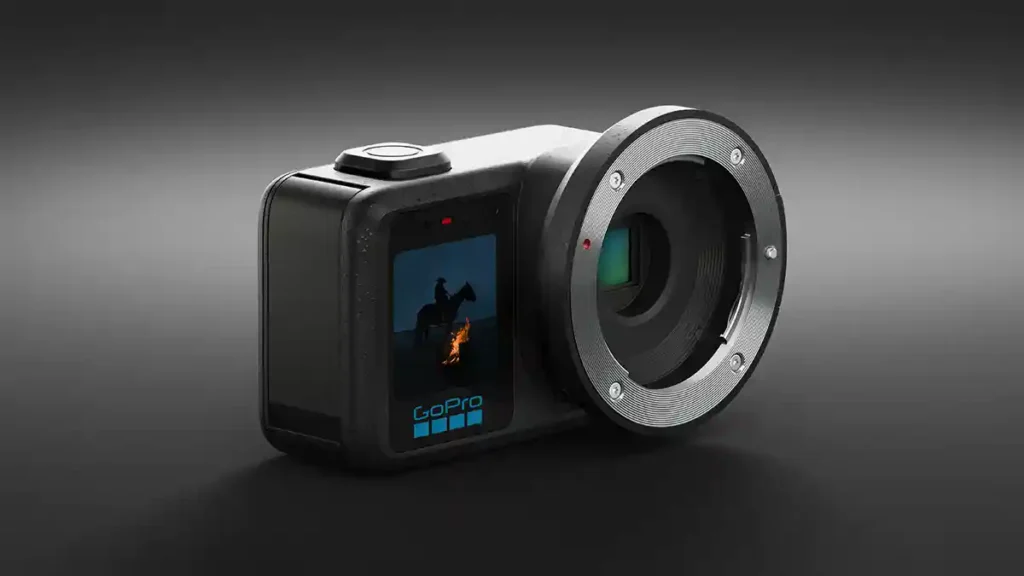
This is a complete break from what has come before and while GoPro has dabbled with lens, these are all propriatory and fit obet teh standard fixing.
Now rather than shipping with a fixed GoPro lens, the ILS version is designed as a base camera compatible with more than 300 Micro Four Thirds lenses. That gives the model a very different role within the line-up, opening it up to cinematographers, production teams and specialist creators looking for more lens choice and a more modular shooting setup.
a few ofthe interesting points that were highlighted are that the ILS model supports native focus peaking and manual in-camera stabilisation based on the focal length selected by the user, though autofocus is not currently part of the system.
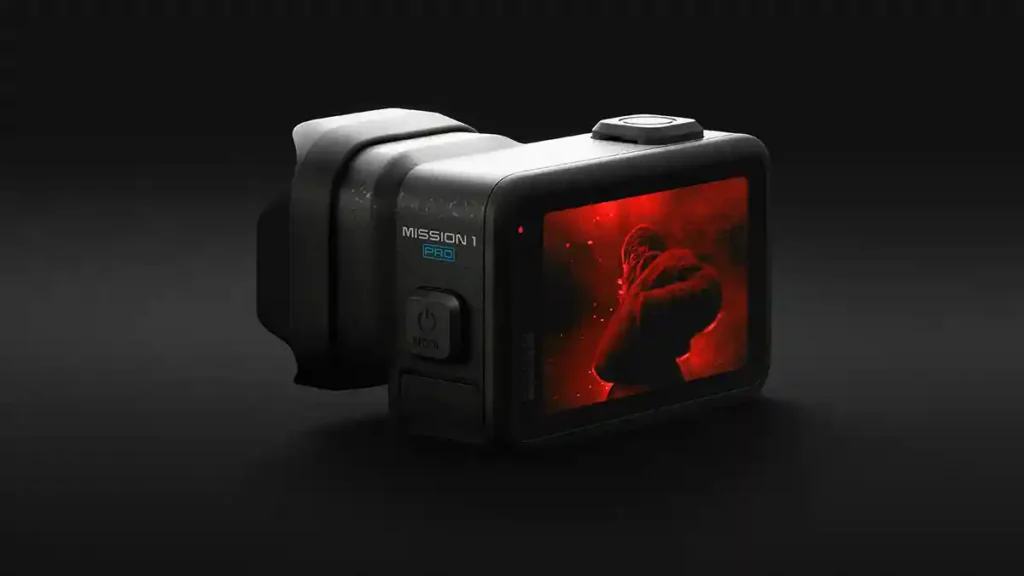
Beyond resolution and lens options, GoPro appears keen to address two of the long-running criticisms often aimed at compact action cameras that are pushing the limits on features, resolutions and framerates: battery life and thermals.
Inside powering the camera is a new Enduro 2 battery that is rated at 2,150mAh, around 13 per cent higher than the battery used in the Hero 13 Black, and GoPro claims up to one hour of continuous recording at 8K30, three hours at 4K30 and as much as five hours at 1080p on a single charge. Fast charging is also included alongside PD power. The company says only the most demanding modes, such as 8K60 and 4K240 in static no-airflow situations, remain challenging from a heat-management perspective.
Audio is as ever another major consideration and part of the new camera. On board the GoPro Mission One has a fourth internal microphone to improve stereo capture and wind-noise reduction, technically when it come sto the quality the camera will also be introducing 32-bit float audio, and direct Bluetooth support for compatible microphones and earbuds. I was interested to hear that they will als continue support for native USB-C audio input, which is no doubt a request from the broadcast industry and in event enviroments can be a saviour. That last point is especially important for creators who have wanted simpler wired microphone support without relying on a Media Mod.
As well as the two new camera thtere’s a bunch of accessories and this is where things become even more interesting.
One of the must have additions for GoPro and users will be an onbrand Wireless Mic System and this includes two ultra-compact transmitters with clip or magnetic mounting, direct camera connectivity and a charging case. Its a bit of a surprise that this didn’t feature with the GoPro Hero13 Black, but initial visuals look good.
This new Mic system looks pretty comprehensive and enables direct use with the GoPro camera but also the ability to connect through TRS or USB-C receiver. Alongside it comes a redesigned Media Mod with three 3.5mm audio ports, support for 32-bit float audio input, timecode input, live headphone monitoring and micro HDMI output up to 4K60 for external monitoring, all features that will please Pro users.
GoPro is also introducing a Grip Edition bundle built around a new side grip that turns the Mission One Pro into something closer to a classic handheld point-and-shoot video camera. My initial thoughts on this are that it looks absolutely spot on, and when the ILS model is launch in August this will be an absolutely essenyial assessory.
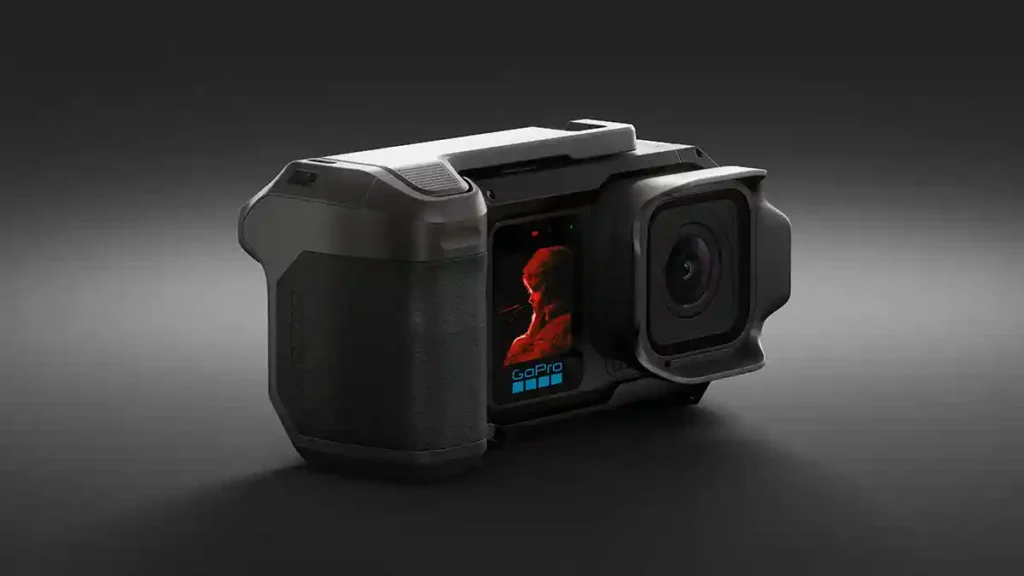
The grip includes an integrated shutter control and appears designed to make everyday shooting, vlogging and general handheld operation more intuitive. A feature I had hoped to see on a camera of this type was a build in ND system, however, there is an ND Filter Pack which is closer to what we’ve seen in the past.
Other accessories include a 60m protective housing, a vertical mount adapter, a new Light Mod 2 and higher-end creator bundles that add accessories such as the Volta 2 battery grip and GoPro’s fluid gimbal, this in itself is an interesting return, obviously helping you to make the most out the sensors size and qulaity withit being cropped for EIS.
Taking a look at the two cameras together, the Mission One series the models do feel like a step forward for GoPro, for the last few year I have been saying small incremental updates rather than a full new release camera, and now here today we have that, a completely new next generration GoPro.
This also obviously raises the question is the Hero now not long for this world. While the official line is that the Hero will continue, having now seen the Mission One Pro and what it’s capable of you can’t help but feel the Hero’s time on this earth is limited. The range changed the face of video camera and earnt the company legacy status, but Mission One definately feels like a camera for the future.
The other point here is that when GoPro launched the marketing and userbase was like nothing we’d ever seen before and why GoPro succeeded was because they stood out from other action camera companies and really highlighted why you as the user needed one. And at the time, anyone into any type of exterem sport wanted one. Now with the new cameras, GoPro once again has something unique, and something that really stands out against anything else in the market, now they just need to get the messaging and education out there.
GoPro Mission 1 Pro Specifications:
Sensor: 50MP 1-inch, 1.6µm native pixels, 3.2µm fused pixels (Quad Bayer)
Processor: GP3 (5nm, AI Neural Processing Unit)
Video: 8K60, 4K240, 1080p480 (16:9); 8K30 and 4K120 Open Gate (4:3); 1080p960 burst (10-second)
Photo: 50MP JPEG and RAW; burst up to 60fps; SuperPhoto HDR mode
Dynamic range: Up to 14 stops
Colour: 10-bit with GP-Log2; HLG-HDR
Bitrate: Up to 240Mbps
Stabilisation: HyperSmooth in-camera
Battery: Enduro 2, 2,150mAh
Runtime claims: 5+ hours at 1080p30; 3+ hours at 4K30
Audio: Four built-in microphones; 32-bit float; Bluetooth 5.3 audio (HFP v1.9, Super Wideband); native USB-C audio
Waterproofing: 20m without housing; 60m with Protective Housing
Field of view: 159° native
Rear display: OLED (14% larger than previous GoPro flagship)
Connectivity: Timecode Sync
Extras: GoPro Labs compatible; 13 capture modes; ND filter auto-detection
Mounting: Magnetic latch mount, folding fingers, 1/4-20 thread
GoPro Mission 1 Pro ILS Specifications:
Core platform: Same 50MP 1-inch sensor and GP3 processor as Mission 1 Pro
Lens system: Interchangeable Micro Four Thirds (MFT) mount; compatible with 300+ MFT lenses and adapters (telephoto, zoom, macro and more)
Stabilisation: HyperSmooth in-camera stabilisation with any rectilinear prime focal length lens; manual focal length input for other lenses
Weatherproofing: Weatherproof (not waterproof to rated depth)
Video: Same as Mission 1 Pro — 8K60, 4K240, Open Gate 8K30 and 4K120
Focus: Manual focus with focus peaking
GoPro Mission 1 ILS Specifications:
Sensor: 50MP 1-inch (same as Mission 1 Pro)
Processor: GP3 (same as Mission 1 Pro)
Video: 8K30, 4K120, 1080p240 (16:9); 4K120 Open Gate (4:3)
Photo: 50MP JPEG and RAW — same as Mission 1 Pro
Lens Mount: MFT
Dynamic range: Up to 14 stops
Stabilisation: HyperSmooth in-camera
Battery: Enduro 2, 2,150mAh
Runtime claims: 5+ hours at 1080p30; 3+ hours at 4K30
Audio: Four built-in microphones; 32-bit float; Bluetooth 5.3 audio
Waterproofing: 20m without housing; 60m with Protective Housing
Field of view: 159° native
Wireless Mic System Specifications:
Audio quality: 24-bit / 48kHz
Noise reduction: Dynamic Noise Reduction
Transmitter weight: 10g per unit
Runtime: 6.5 hours per transmitter; charging case provides two additional full charges
Wireless range: Up to 150m
Safety Track: Backup track at -6dB
Gain: Adjustable
Compatibility: Mission 1 Series, GoPro HERO Black, DSLRs, smartphones
Media Mod for Mission 1 Series Specifications:
Microphone: Built-in multi-pattern mic; eight pickup pattern options
Ports: Three 3.5mm (external mic input, line-in for timecode sync, headset monitoring); micro-HDMI video output up to 4K60
Output: Up to 4K60 via micro-HDMI for monitors, recorders, or live broadcast
Enduro 2 Battery Specifications:
Capacity: 2,150mAh
Charging: Fast-charging
Compatibility: Mission 1 Series; HERO13 Black
Runtime improvement: Extended runtimes vs original Enduro
Volta 2 Battery Grip Specifications:
Built-in battery: 5,800mAh
Combined runtime: Up to 9 hours at 4K30 (with Mission 1 Series camera and Enduro 2)
Features: Integrated camera controls; 1/4-20 mount; tripod and remote functionality
Light Mod 2 Specifications:
Brightness: 200 lumens
Battery: 33% increased capacity vs Light Mod 1; up to 100% longer runtime
Mounting: Cold shoe (via Media Mod or Point-and-Shoot Grip); standalone use
Diffuser: Optimised diffuser design included
Point-and-Shoot Grip Specifications:
Mounts: Cold shoe; 1/4-20 thread; magnetic latch mount; vertical mounting
Converts to: Rugged metal cage for added protection and vertical mounting
Pass-through: Access to camera’s integrated fingers and magnetic mounting
M-Series ND Filters Specifications:
Pack: ND8, ND16, ND32, ND64 (4-pack)
Compatibility: Mission 1 Pro and Mission 1
Auto-detection: Camera detects filter and auto-adjusts shutter speed
Protective Housing Specifications:
Waterproofing: 60m
Mounting: Built-in fingers for horizontal and vertical capture
Compatibility: Mission 1 and Mission 1 Pro (Mission 1 Pro ILS is weatherproof only — no housing listed)
Key accessories
GoPro Wireless Mic System: Dual transmitters, clip or magnetic mounting, charging case, direct camera connection, TRS and USB-C receiver options
Media Mod: Three-mic array, three 3.5mm ports, 32-bit float audio input, timecode input, live headphone monitoring, micro HDMI output up to 4K60
Grip: Side grip with integrated shutter control
Housing: Waterproof to 60m
ND Filter Pack: Automatic filter detection with optional manual override
Vertical Mount Adapter: Supports vertical shooting setups
Light Mod 2: New on-camera light accessory
GoPro Mission One Pro Price and Availability
GoPro has now confirmed full pricing and pre-order details for the MISSION 1 lineup, completing the picture following its initial announcement. The new range will start at £529.99 for the standard MISSION 1, with GoPro subscribers benefiting from a reduced price of £439.99. The more advanced MISSION 1 PRO is priced at £599.99 (or £509.99 for subscribers), while the MISSION 1 PRO ILS—set for release in Q3—will share the same pricing structure.
To incentivise early adopters, GoPro is offering a limited-time pre-order bonus. Customers who reserve either the MISSION 1 or MISSION 1 PRO via GoPro.com will receive the new Point-and-Shoot Grip, worth £99.99, free of charge while stocks last.
The MISSION 1 series continues to position itself at the cutting edge of compact imaging technology, combining an all-new 50MP 1-inch sensor with GoPro’s GP3 processor. The result is what GoPro describes as the world’s smallest and lightest 8K/4K open gate cinema camera system, aimed at creators seeking high-end video capabilities in an ultra-portable form factor.
Mission 1 Pro Pricing:
MISSION 1 PRO ILS (Q3): £599.99 MSRP / £509.99 (GoPro subscribers)
MISSION 1: £529.99 MSRP / £439.99 (GoPro subscribers)
MISSION 1 PRO: £599.99 MSRP / £509.99 (GoPro subscribers)