
Camera glasses have had a rough time of it lately. Meta’s Ray-Bans work well but have drawn a steady backlash over the discomfort of not knowing when someone’s filming you. Snap’s answer, with its new Specs AR glasses now on pre-order, is a rather different one, and it’s not just the eye-watering price. Details are on the official Specs site.
The difference: you can see them working
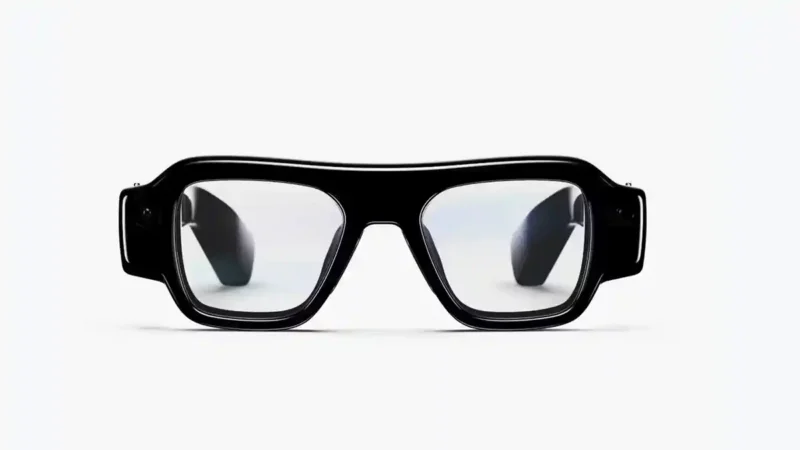
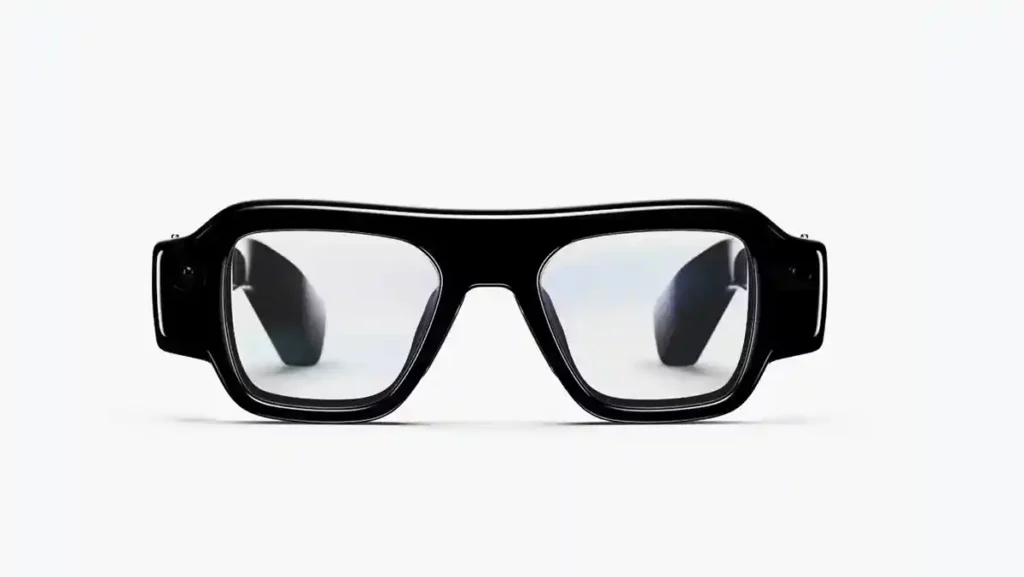
Meta’s glasses look like ordinary sunglasses, which is exactly the problem for anyone standing in front of them — there’s no obvious sign a camera is running. Snap has gone the opposite way. The Specs are unapologetically chunky, visibly a piece of technology on your face, and that’s the point: they announce themselves. You can, as the coverage puts it, see them from a mile away.
Whether that solves the privacy question or just trades one awkwardness for another is a fair debate, but it’s a genuinely different design philosophy. Rather than disguising the tech, Snap is making it conspicuous — the social contract being that if you can see the glasses, you know what they can do.
What they actually are
These are proper augmented reality glasses, not just camera glasses, and that’s what separates them from the Ray-Ban category. They have a genuine see-through display — a 51-degree field of view built on waveguides — that anchors digital objects in the real world with six degrees of freedom, and they do it without a phone tether or an external compute puck. Two Qualcomm Snapdragon chips sit inside, one handling computer vision and one running Snap’s AR “Lenses”, with a claimed 7ms motion-to-photon latency and electrochromic lenses that auto-tint in about ten seconds.
There’s an AI layer too, “Specs Intelligence”, for contextual assistance and AR navigation, built with an Nvidia partnership, and Snap is pushing the glasses at enterprise as well as consumers. Battery life is around four hours of mixed use, and they can be recharged while worn.
Why a photography site should note this
Camera glasses sit at the edge of our beat, but they matter for two reasons. The obvious one is capture: any wearable with a camera and a display changes how people record the world around them, and where that goes is worth watching. The less obvious one is the privacy conversation, which is a genuine issue for every photographer. The unease around covert wearable cameras feeds directly into the wider suspicion of anyone holding any camera in public, and how the big platforms handle it — conspicuous design versus disguise — will shape the environment we all shoot in.
The honest caveat is the price. At $2,195, with a $200 refundable deposit, these are far dearer than Meta’s Ray-Bans (which start around $350) and aimed at early adopters and developers rather than the average buyer. Snap is only making around 100,000 in the first run, so this is a measured launch of a first-generation product, not a mass-market play. And nobody’s had proper hands-on time yet, so how well the display and the AI actually perform in daily use remains to be seen.
But as a statement about where wearable cameras and AR are heading — and about the privacy backlash the whole category is now having to answer — the Specs are worth knowing about.
Snap Specs: Specifications
Type: standalone augmented reality glasses with see-through display.
Field of view: 51 degrees.
Display: waveguide see-through, six degrees of freedom spatial anchoring.
Processors: dual Qualcomm Snapdragon (one for computer vision, one for AR Lenses).
Latency: 7ms motion-to-photon.
Lenses: electrochromic auto-tinting, roughly 10-second transition; prescription inserts available.
Colour: 16 million colours.
AI: Specs Intelligence, with Nvidia partnership for AI agents.
Battery: approximately 4 hours mixed use, rechargeable while worn.
Connectivity: fully standalone, no phone tether or compute puck required.
Snap Specs: Price and availability
Snap Specs are on pre-order now at $2,195 (with a $200 refundable deposit) in the US, UK and France, expected to ship in autumn 2026. Pre-order via the Specs site.