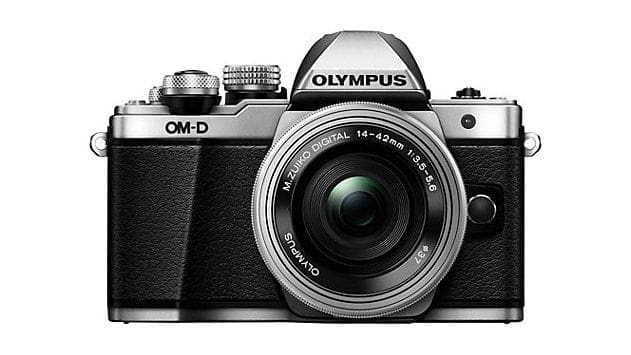

OM Digital Solutions has revealed that it has discussed making APS-C or full-frame cameras more than once since taking over the Olympus camera business, but decided each time that its future lies with Micro Four Thirds.
The comments come from a video OM Digital Solutions posted on its Japanese YouTube channel, the second part of a series introducing the OM System business. In it, COO Setsuya Kataoka and Eiji Shirota, head of the OM System business unit, take on the question many OM and Olympus users have asked: will the company ever make a full-frame camera? The video was first picked up by Digital Camera Life.
Exhaust Micro Four Thirds first
According to Digital Camera Life’s summary, calls to build a full-frame or APS-C camera have come up inside the company from time to time and then faded away. The team did think about what a full-frame OM System camera might look like, but it never got as far as making one.
The turning point appears to have been a challenge from within the business. The question put to the team was whether it had really exhausted what was possible with Micro Four Thirds before talking about switching to another format. The view was that moving to a different sensor size before doing that would be the wrong move. Since then, OM says it has kept working on how to push past the format’s limits.
The executives are clear that they aren’t claiming full frame is worse. They say each format has its own strengths. Micro Four Thirds is easy to carry everywhere, while full frame suits photographers chasing the very best image quality. They also accept that the gap in image quality won’t close entirely. Their argument is that once Micro Four Thirds reaches a level of quality users are happy with, the difference stops mattering.
They point to features like High Res Shot and general performance gains as ways the company has tackled traditional weaknesses such as pixel count. They also say complaints that a camera is missing something have dropped considerably.
Our take
It’s reassuring for OM System users to hear the company commit so clearly to the system they’ve invested in. OM’s strengths have always been compact long lenses, excellent stabilisation and computational features like Live ND and High Res Shot. These are areas where the smaller sensor works for the photographer rather than against them, especially for wildlife and outdoor shooting.
The bigger question is whether OM can keep delivering the sensor and processing improvements needed to back up that position. We’d like to see a new-generation Micro Four Thirds sensor soon. OM’s argument only works if image quality keeps improving, and the company will need to show that it is.
The story was also covered by PetaPixel.