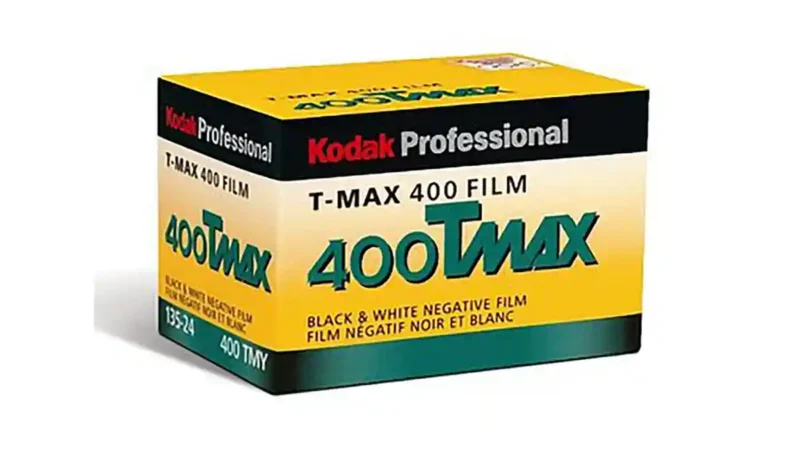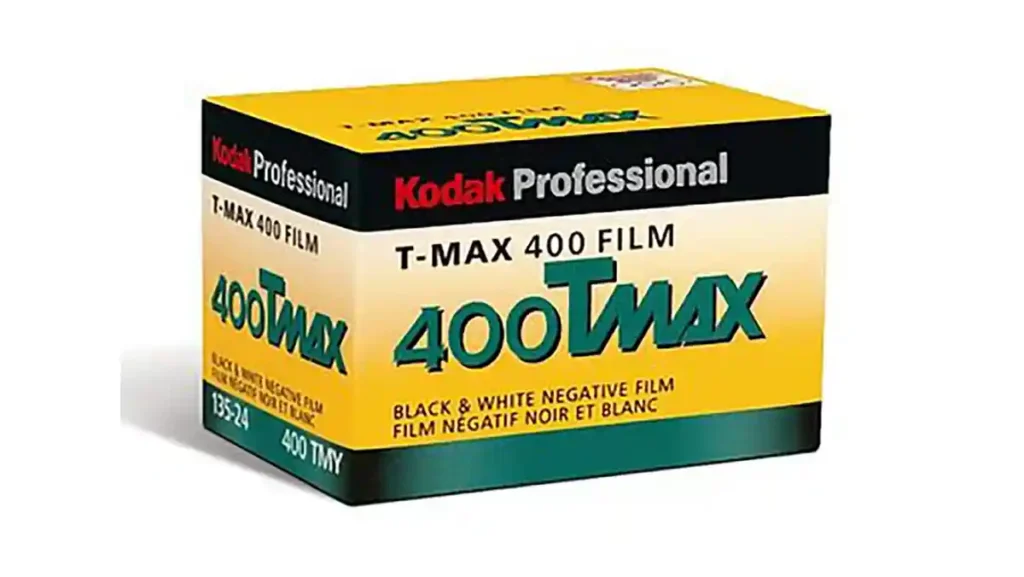

Kodak T-Max 400 turns 40 this year, but if you’ve been film shopping lately you may have noticed it now has a twin called Ektapan 400. We explain what’s going on, which box to buy, and why this sharp, fine-grained T-grain film still earns a place in our camera bags in 2026.
A short history of T-Max 400
Kodak introduced T-Max 400 in 1986. It was built around Kodak’s T-Grain technology: flat, tabular silver halide crystals that gather more light for their size than conventional cubic grains, giving finer grain and higher sharpness at a given speed. Where Tri-X is all bite and texture, T-Max 400 was designed to look cleaner.
This year the picture got more complicated. Eastman Kodak took film distribution back from Kodak Alaris, a handover completed in March 2026. Alaris kept the T-Max and Portra names, so Eastman Kodak now sells its black-and-white T-Grain films as Ektapan – Ektapan 100, Ektapan 400 and Ektapan P3200. As PetaPixel reported at the launch, Ektapan is a revived name: the original Ektapan was discontinued nearly 25 years ago, when Kodak told photographers to move to T-Max.
T-Max 400 or Ektapan 400: what buyers need to know
In the UK you’ll currently find both on the shelves. Kodak Alaris still lists T-Max 400, while Eastman Kodak describes Ektapan 400 as “the world’s sharpest and finest grain 400 speed black-and-white film” with a T-Grain emulsion. Some UK retailers list Ektapan 400 with “(Kodak T-Max 400)” in the product description, but Kodak itself doesn’t say the two are the same emulsion. Our advice: buy whichever is cheaper or in stock, and check your development times against the data sheet for the box in your hand.
Why T-Max 400 still matters
The look. T-Max 400 gives smooth tones and crisp edges, which makes it an excellent choice when you want 400-speed flexibility without obvious grain – street work in dull November light, interiors, or portraits that will be enlarged.
Formats. Ektapan 400 is sold in 35mm 36-exposure rolls, 100ft bulk rolls, 120 five-packs and 4×5 sheets in packs of 10 and 50, while Alaris lists T-Max 400 in an even wider range of sheet sizes. That makes it one of the few 400 films you can shoot across every format we teach.
Darkroom notes. T-Grain films reward care. Consistent temperature and agitation matter more than they do with Tri-X or HP5 Plus, and the fixer works harder, so we keep an eye on fixer capacity.
At Ali’s Tuesday night darkroom evening course, students learn on the college’s Pentax K1000s, Hasselblad 500C, Mamiya RB67s and Sinar cameras. For this test I loaded a roll into my Canon T90 – a camera launched in 1986, the same year as T-Max, which makes it a fitting partner.
Is T-Max 400 still worth buying in 2026?
Yes. If you want the finest-grained, sharpest 400-speed black-and-white film around, T-Max 400 – or Ektapan 400 – is still the benchmark. It costs a little more than Ilford HP5 Plus and a lot more than Kentmere Pan 400, so it isn’t our first choice for students burning through practice rolls. But for work that will be printed big, or 4×5 sheets in the Sinar, it’s worth the money. Just don’t let the two names confuse you.
Kodak T-Max 400 / Ektapan 400 specifications
- Type: black-and-white negative film, T-Grain emulsion
- Speed: ISO 400
- Process: standard black-and-white developers
- Ektapan 400 formats (Eastman Kodak): 35mm 36 exp, 35mm 100ft, 120 five-pack, 4×5 10 and 50 sheets
- T-Max 400 formats (Kodak Alaris): 35mm 24/36 exp and 100ft, 120, sheet sizes from 4×5 to 20×24
- Introduced: 1986 (T-Max 400); Ektapan name revived March 2026
Kodak T-Max 400 / Ektapan 400 price and availability
Kodak Ektapan 400 is available now in the UK, with Dupli as Eastman Kodak’s UK distributor. When we checked on 5 November 2026, First Call Photographic had 35mm 36-exposure rolls at £12.99 and 4×5 10-sheet boxes at £62.99, while Analogue Wonderland listed Ektapan 400 120 from £10.49 and T-Max 400 35mm from £12.49.