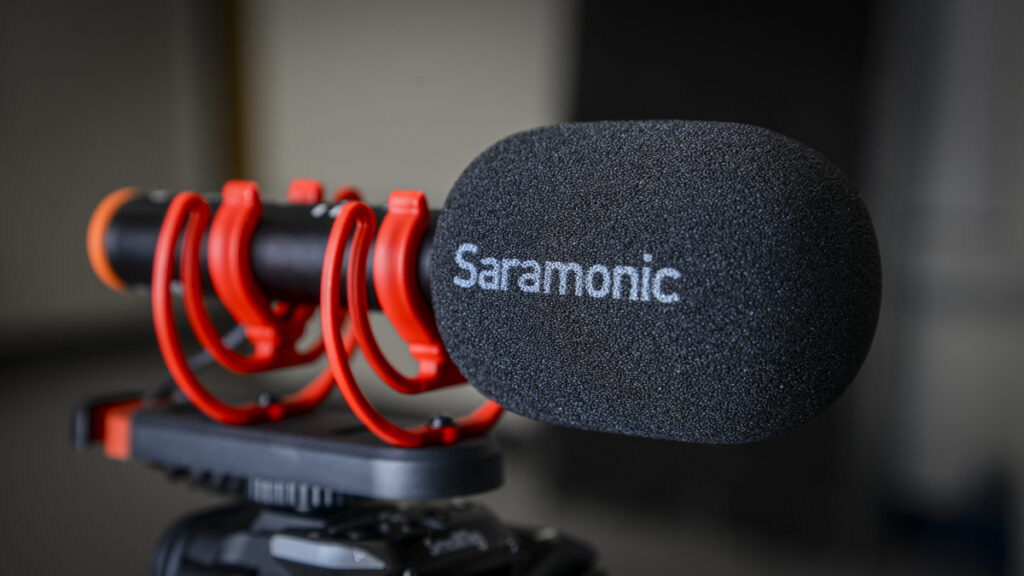

A compact M-S stereo production microphone built for documentary sound and natural ambience captured alongside the subject

Our Verdict

Lift the SG-MS1 out of its case and the first thing you notice is the weight, or the lack of it. At 90g it is far lighter than the mics I would usually reach for, and my first instinct was to wonder whether that meant a cheaper build. Handling it properly answered that. This is a genuinely well-thought-out piece of kit, and the more time I spent switching between its three modes, the more the specialist headline made sense.
Saramonic files this in its shotgun-microphone range and, in places, markets it as a stereo shotgun. It is not, and calling it one undersells what it actually does. This is an M-S stereo production microphone: a forward cardioid capsule for the subject, a figure-8 side capsule for the ambience around them, and three modes to decide how much of that ambience makes it into the recording. Tested alongside my usual RODE NTG 4+ and mounted on the Sony A7 IV’s hotshoe, the smaller, lighter body simply made more sense for most of what I was shooting.
Who it’s for: documentary and field-recording shooters who want subject and ambience captured together rather than isolated; solo operators and small crews who cannot mic up every subject individually; and anyone camera-mounting a stereo mic who cares about weight and balance.

What is the Saramonic SG-MS1?

The SG-MS1 is a clever all-in-one stereo solution built around Mid-Side recording rather than a conventional mono capsule. Saramonic positions it inside its shotgun-microphone range, which is where the confusion starts, because it is not a traditional shotgun replacement, and I would not buy it expecting one.
What it actually does is capture a main subject and the space around them at the same time, which makes it far more flexible than a mono mic for dialogue and ambience together. That is genuinely useful for documentary and field recording, less useful if maximum dialogue isolation in a noisy environment is what you actually need, and it is best suited to specific workflows rather than being an everyday, unthinking swap for a shotgun.

Specification

Type: M-S stereo production microphone (Saramonic markets it within its shotgun range)
Capsules: Cardioid (Mid) and bi-directional/figure-8 (Side)
Modes: Decoded L/R stereo, Raw M-S stereo, M/S mono
Frequency response: 20Hz-20kHz
Max SPL handling: 138dB
Construction: All-metal
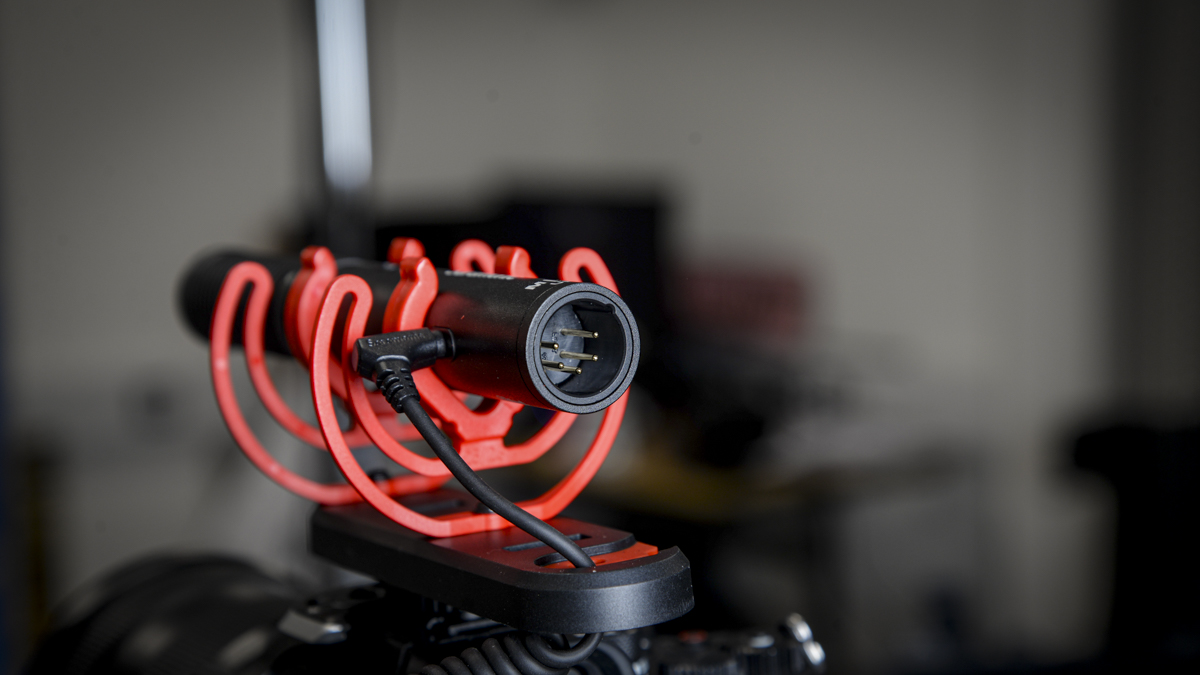
XLR output: 5-pin, via included breakout cable; 3-pin stereo adapter also included
Power: 48V phantom, USB-C, or internal rechargeable battery
Battery life: Up to 5 hours
App: Saramonic control hub app, for mode, features, and deeper control

Build and Handling
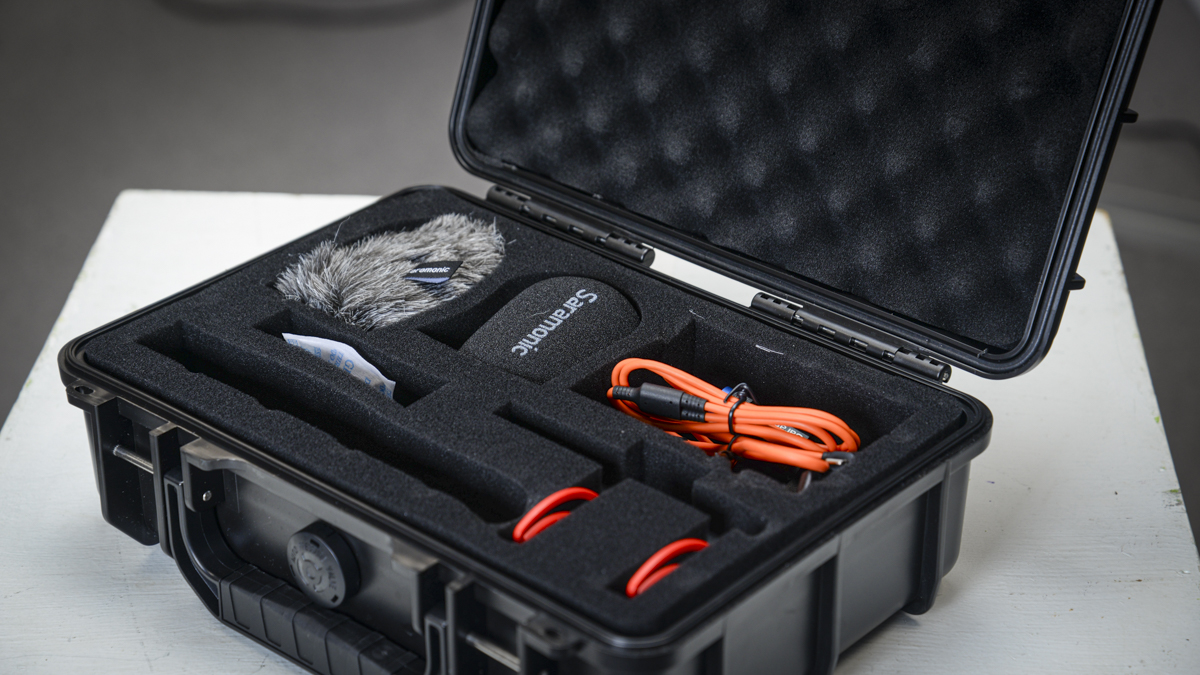
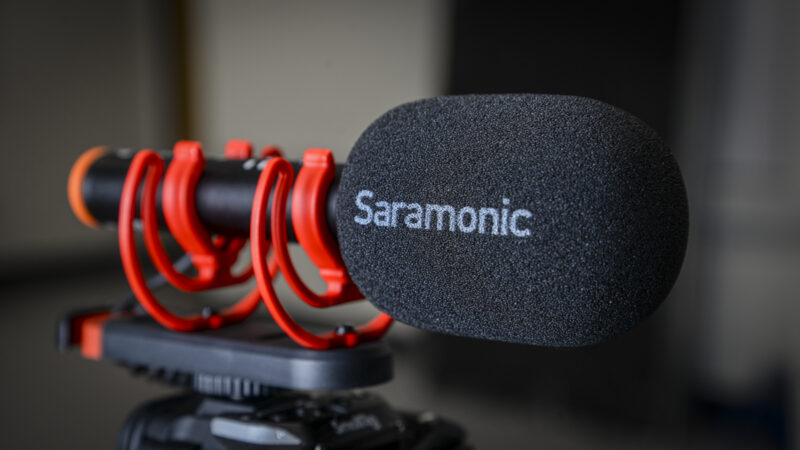
Initially, lifting the SG-MS1 out of the hard case it arrives in with its accessories, and despite the quality feel, you could be forgiven for mistaking it for a cheaper cardioid mic. That impression comes entirely from the weight, just 90g, far lighter than other mics of its type. The more I handled the compact mic, though, the more reassuring the build quality and design became.
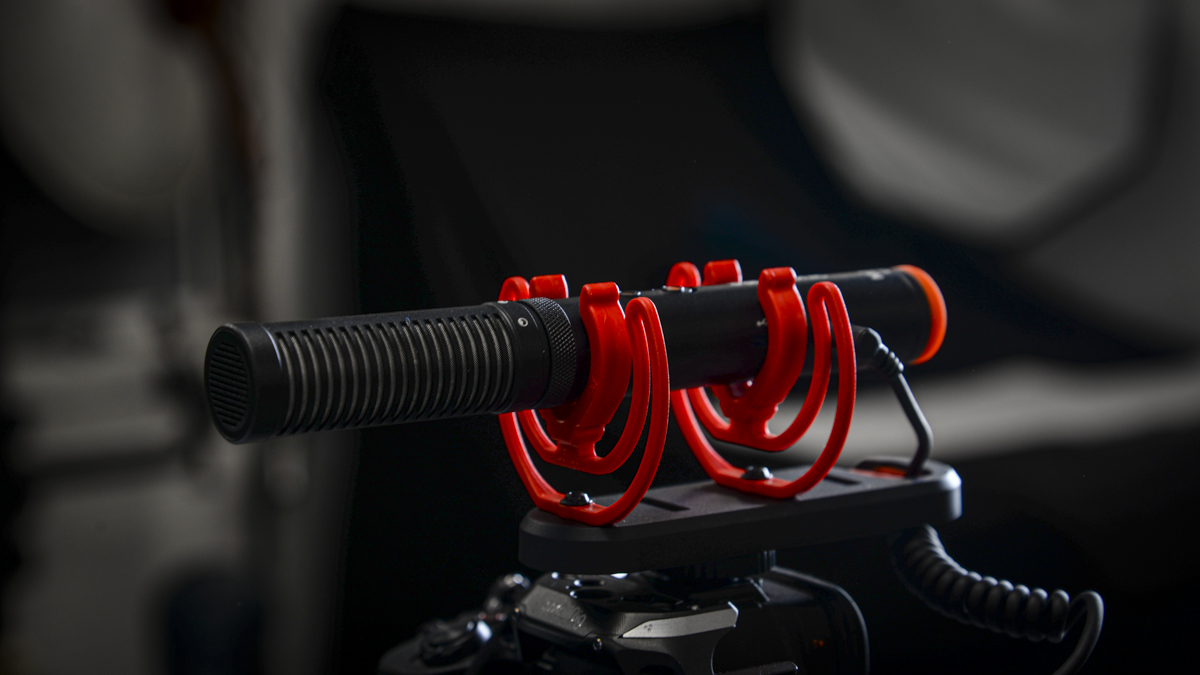
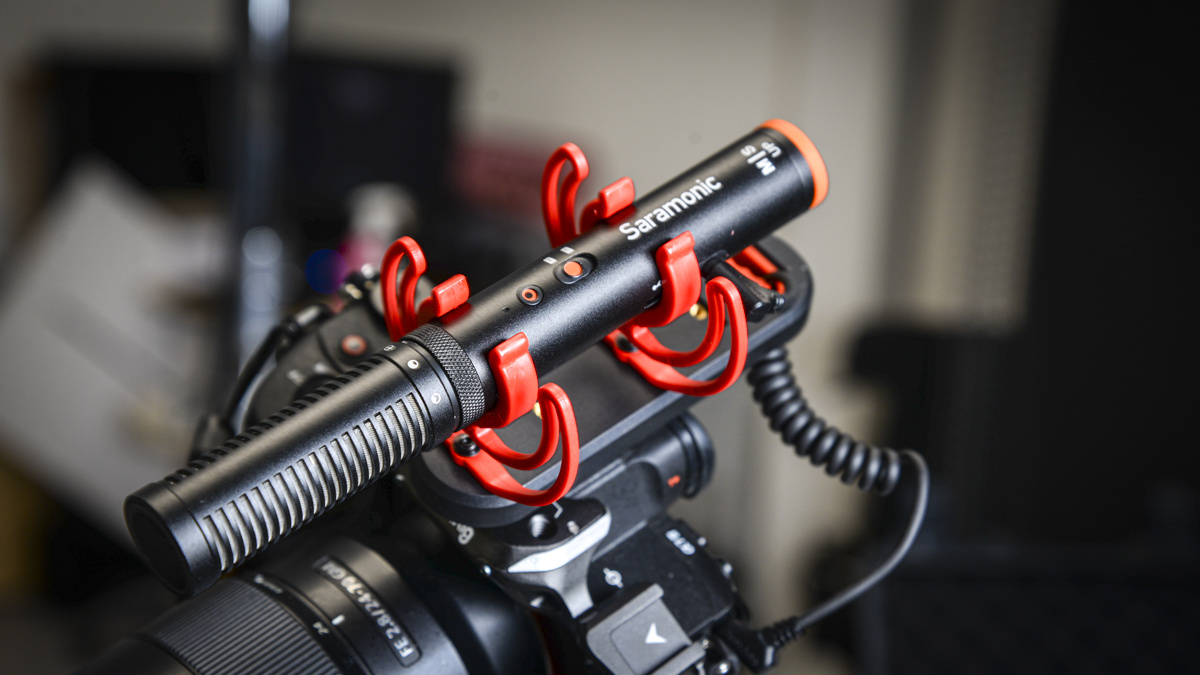
Unlike other mics of this type, it packs in a genuine wealth of features, and looking it over showed just how much potential is built into something this small. At the top is the main mic capsule assembly offering its range of pickup patterns. On the main body is the mode switch, letting you move between M/S mono, Raw M-S, and Decoded L/R stereo. Below the mode selector are the power and device-lock button and the low-cut switch, both marked in red for easy visibility. On the side are the USB-C and 3.5mm connections that let you connect straight into a camera.
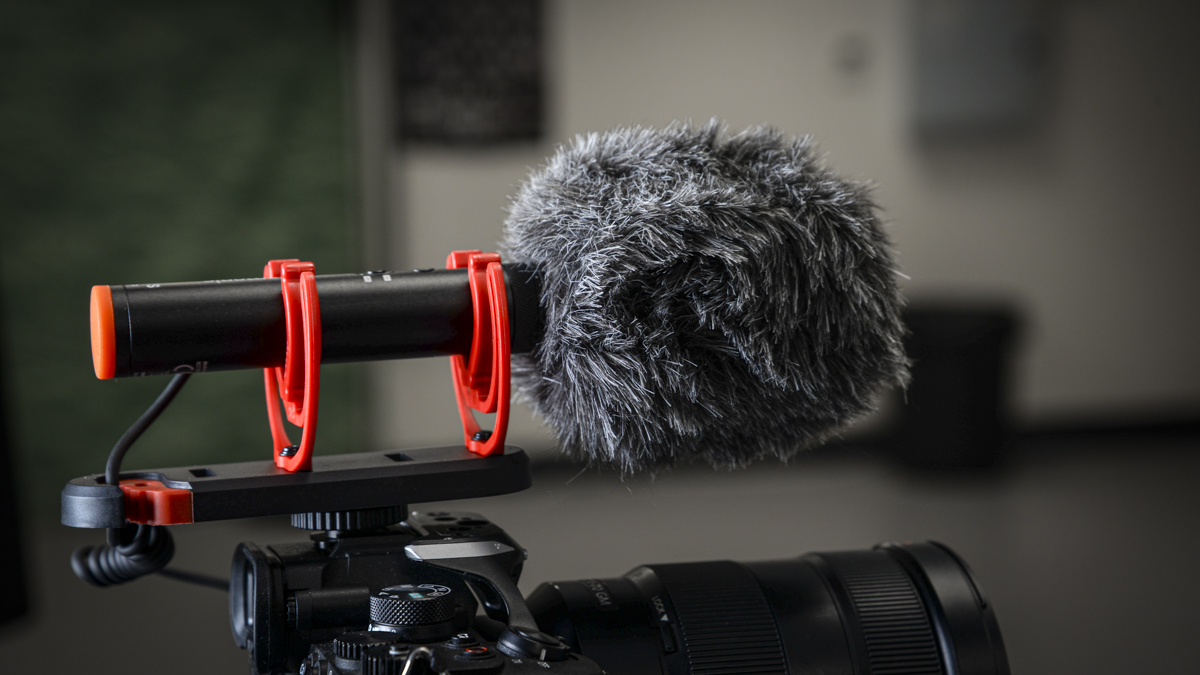
In the hard case alongside the mic is a proper set of accessories: a shock mount, a USB-C to USB-C cable, an XLR breakout cable, a Lightning cable, assorted 3.5mm cables, foam and fur windscreens, thread adapters, a hex key and a silicone plug, everything needed to rig it directly into a camera without raiding a separate cable box.
Saramonic SG MS1
It feels compact and manageable in the hand, light enough that mounting it on a camera does not unbalance the rig, and the controls are well positioned. The trade-off is that the extra adapters add a bit of cable clutter to the case, and wind protection, even with the supplied fur windscreen, is one area I would still treat carefully outdoors. Long-term durability is not something I can speak to yet from a short test, but after using it for a month I feel confident that this can withstand years of use, even from me.

Features

The SG-MS1 is designed to be a compact, versatile M-S stereo production microphone, built for mirrorless cameras but equally at home on professional camcorders and broadcast gear where travelling light matters.
It offers three selectable modes: Raw M-S, which outputs the undecoded mid and side signals for later decoding; Decoded L/R, which decodes onboard for a standard stereo pair; and M/S mono, which uses the cardioid or bi-directional capsule on its own. That range is the whole point of the design; you choose how much processing happens on the mic itself versus in post.
Connectivity runs to three options: XLR, natively 5-pin via the included breakout cable with a 3-pin stereo adapter also in the box, USB-C, and 3.5mm. USB-C provides full digital output, which most laptops and tablets support and which is becoming more common on mirrorless cameras, though it is worth checking your specific camera, since not every USB-C-equipped body supports audio capture over that port.
Alongside the mic is Saramonic’s control hub app, which gives more in-depth control over modes and features than the physical controls alone, at the cost of another layer in your workflow if you would rather just use the switches.
Saramonic SG MS1
Power comes from 48V phantom power as standard, USB-C, or the internal rechargeable battery, good for up to five hours. That is adequate, but not exceptional, for a full day, so it is worth knowing which power source you will actually have on set.

Performance

The SG-MS1 is not a conventional shotgun microphone, even though Saramonic places it in its shotgun range and describes it as a stereo shotgun in some of its own marketing. The SG-MS1 is more accurately an M-S stereo production microphone. Its job is to capture a main subject plus the surrounding ambience at the same time: the forward-facing cardioid Mid capsule takes the central subject, while the figure-8 Side capsule takes spatial information from the left and right. That makes it particularly suited to documentary filming, field recording, live performances, sound effects, soundscapes, outdoor content and small-crew productions where the environment is part of the story.
A normal mono shotgun is primarily about isolating dialogue or a subject and rejecting sound from the sides. The SG-MS1 does the opposite on purpose; it captures some of that side information deliberately so you can build an adjustable stereo image.
In use, the small size instantly comes into play, making it light and agile whether that is on a camera or on a pole. Compared with my usual NTG 4+ shotgun for most situations and interviews, the smaller, more compact size made sense, and it gave a noticeably better balance mounted to the Sony A7 IV’s hotshoe.
Saramonic SG MS1
Working through the modes, the design has clearly been thought through, not perfect, but close to it. The mode switch makes it easy to move between M/S mono, Raw M-S and Decoded L/R. For most of the test, Stereo recording gave a good, natural balance, with the cardioid and bi-directional pickups doing their job to deliver decent audio and isolate vocals in pieces to camera. Switching to M/S mono simply widens the pickup, and for a run-and-gun interview with two people, it gets the job done with genuinely good audio, even though the two people aren’t on separate tracks in that mode.
The most interesting use is Decoded L/R, which uses the app to separate the left and right sides, again ideal for a two-person interview. The results here were mixed at first, and needed some careful positioning to get right, specifically mounting the mic in the hotshoe with the logo pointing up. Once positioned that way, results were genuinely impressive.
The mic itself is exactly what you would want in use, easy to operate once you know which mode is which. A glance at the small paper manual in the box tells you immediately, and then it is up to you to remember. The button layout, and particularly the colour coding, makes them easy to find in any light, and while they are not backlit, which I have found useful on other mics in the past, there are only two of them, so they are easy enough to locate regardless. As with the K9 XTX, everything needed to get started is in the box, which makes a real difference.
One point worth flagging: if you are pairing this with the K9 XTX I reviewed recently, that device takes a 3-pin XLR, so you will need the adapter that is supplied in the box.
For close-quarters work, or documentary shoots where you know you will not have time to mic up individual subjects, a traditional shotgun still isolates dialogue better. The SG-MS1’s trade-off is that the Mid capsule picks up the subject in front while the figure-8 Side capsule captures the ambience around them, by design rather than by accident.

Final Thoughts

This is one of Saramonic’s more interesting mics, and an excellent tool when creative sound, rather than pure dialogue isolation, is the job. For documentary work in particular, being able to capture a subject and a believable sense of place in one pass, from one lightweight mic, is a genuine advantage over carrying a shotgun and a separate ambience mic.
The  not ideal for every videographer, and its specialist strengths do limit how broadly it will appeal. A conventional shotgun remains the simpler tool for straightforward dialogue capture, and if that is all you need, this is not the mic to reach for. But for the workflows it’s built around, it is a strong, well-thought-out option.
Saramonic SG MS1

Should you buy the Saramonic SG-MS1?

Buy it if your work regularly needs a sense of place alongside your subject, documentary, field recording, soundscapes, or small-crew productions where you cannot mic everyone up individually. The M-S flexibility, camera-friendly weight, and the choice of onboard or app-based decoding make it a genuinely creative tool rather than just a compact mic.
Look elsewhere if dialogue isolation in a noisy environment is your main job, or if you would rather not learn M-S recording to get the best from your microphone. A conventional shotgun will get you there faster for straightforward interview and dialogue work.
Saramonic SG MS1

How we tested

I tested the Saramonic SG-MS1 over a month, mounted on the Sony A7 IV’s hotshoe and compared directly against my usual RODE NTG 4+ shotgun. Testing covered all three modes, M/S mono, Raw M-S and Decoded L/R stereo, in interviews, pieces to camera and general location use, along with XLR pairing via the included breakout cable and adapter, and compatibility with the Saramonic K9 XTX.

Saramonic SG-MS1 FAQs

Is the Saramonic SG-MS1 a shotgun microphone?

Not really, whatever Saramonic’s own marketing sometimes suggests. It is an M-S stereo production microphone, with a cardioid capsule for the subject and a figure-8 capsule for ambience on either side. It captures more of the surrounding sound on purpose, which a true shotgun is designed to reject.

What do the three modes on the Saramonic SG-MS1 do?

M/S mono uses a single capsule for straightforward mono pickup. Raw M-S outputs the undecoded mid and side signals for decoding in post. Decoded L/R does that decoding onboard, giving you a standard stereo pair straight out of the mic.

Can the Saramonic SG-MS1 be used with the Saramonic K9 XTX?

Yes, but the K9 XTX takes a 3-pin XLR, while the SG-MS1’s native output is 5-pin, so you will need the 3-pin adapter that is included in the box.