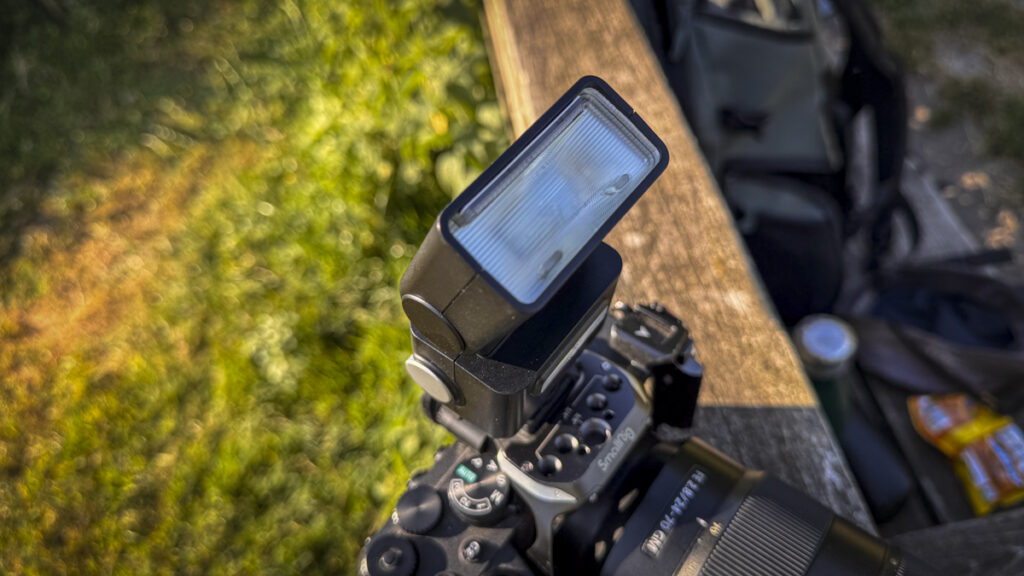

The Godox iT32 impresses as a modular flash with fast off-camera switching and multi-brand support.
Our Verdict
Godox iT32 verdict
What is the Godox iT32 & X5?
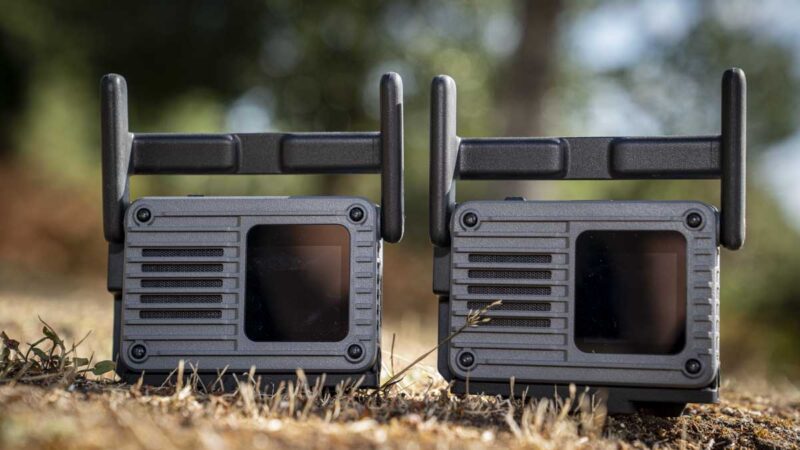
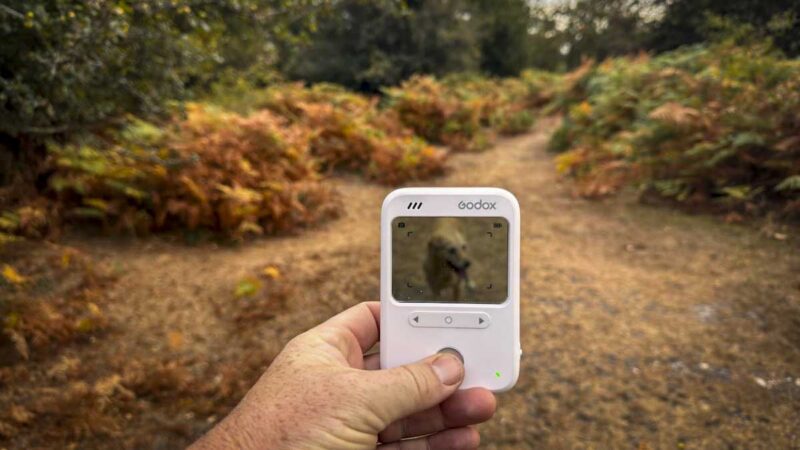
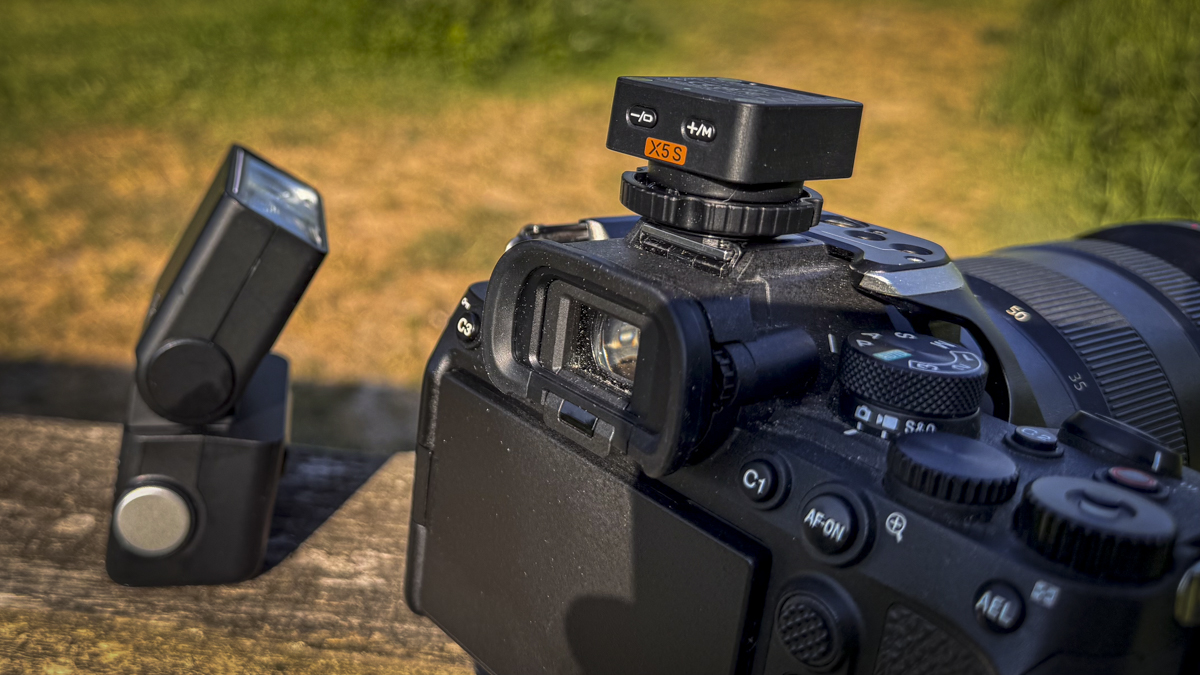
The Godox iT32 is a compact flash unit in the company’s iFlash system and comes with a small detachable trigger called the X5. The two interface via a magnetic connector, and the X5 then essentially looks like part of the main flash, which can be pushed into the hotshoe as normal. This on/off connection defines how the system works. With the X5 attached, the iT32 operates as a standard on-camera TTL flash. Detach the X5 from the iT32, mount it on your camera, and the flash instantly becomes a wireless off-camera unit, with the X5 acting as the trigger.
The X5 is available in versions for Canon, Nikon, Sony, Fujifilm, OM System and Leica, and this is where the modular thinking really comes in. The flash body stays the same; only the trigger changes to match your camera system. If you shoot across brands or work in a studio with a range of bodies, one flash and a couple of X5 versions cover the lot, and in this review I’ll be using the iT35 with the X5 for Sony and Canon. It’s worth noting that the Sony X5S is the only model that supports Global Shutter Sync, so if that matters for your shooting, check the version carefully.
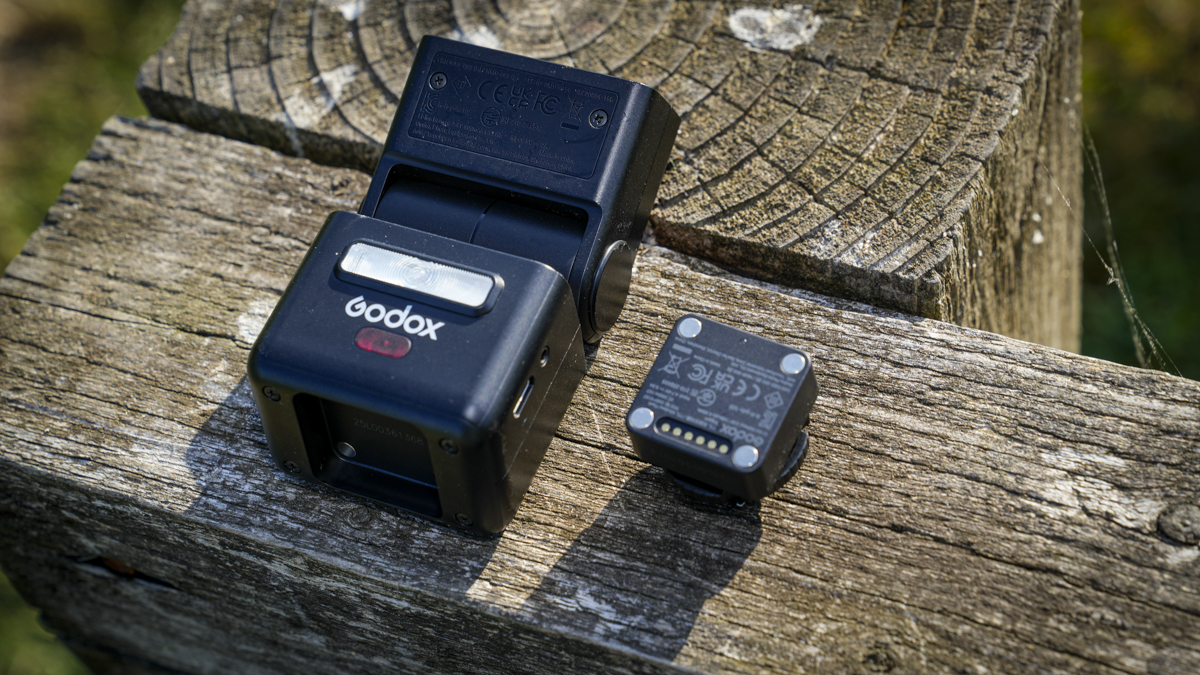
The iT32 sits within the wider Godox 2.4GHz X System, so it will happily trigger and be triggered alongside other Godox lights, including the Godox LiteWafer UP150R and Godox Litemons C30R, which I’ve looked at previously. It’s aimed at photographers who want a small, flexible flash for portraits, events, and documentary work, with full TTL and HSS support and the ability to integrate into a multi-light setup as needs grow.
Specification
Guide number: GN18 (ISO 100, metres)
Recycle time: approximately 1.5 seconds (full power)
Full-power flashes: approximately 510
Flash duration: 1/1000s-1/3000s
FEC: ±3EV in 1/3 EV steps
HSS: up to 1/8000s
Sync modes: first-curtain, second-curtain, HSS
Wireless: Godox 2.4GHz X System, 32 channels, ID 1-99
Wireless range: up to 80m (20m with X5 separated)
Battery: iT32 7.4V/900mAh, X5 3.8V/100mAh, USB-C charging
Weight: iT32 169g / X5 23g
Compatibility: Canon, Nikon, Sony, Fujifilm, OM System, Leica (by X5 version)
Recycle time: approximately 1.5 seconds (full power)
Full-power flashes: approximately 510
Flash duration: 1/1000s-1/3000s
FEC: ±3EV in 1/3 EV steps
HSS: up to 1/8000s
Sync modes: first-curtain, second-curtain, HSS
Wireless: Godox 2.4GHz X System, 32 channels, ID 1-99
Wireless range: up to 80m (20m with X5 separated)
Battery: iT32 7.4V/900mAh, X5 3.8V/100mAh, USB-C charging
Weight: iT32 169g / X5 23g
Compatibility: Canon, Nikon, Sony, Fujifilm, OM System, Leica (by X5 version)
Build and Handling
Taking the iT32 out of the box, the first thing that strikes you is the size; this is a genuinely small flash, noticeably more compact than a standard speedlight, and at 169g for the flash and just 23g for the X5, the combined unit sits on a camera without adding any real weight or bulk. The build is the hard plastic that Godox uses across its portable range, light and practical rather than premium, but through several weeks of use, it has proved perfectly robust.
The magnetic connection between the flash and the X5 is inspired and just works, holding the flash solidly to the small trigger unit on the camera and being easy enough to disconnect when needed. One click and the two are together; a robust pull and they’re apart, with the X5 ready to slide onto the camera’s hotshoe as a trigger. The hold when the two are connected is solid, and at no point did the connection feel like it would come apart in use. If you regularly move a flash between on-camera and off-camera positions during a shoot, this makes the process about as quick as it could be. This is definately a system that I’d love to see with the Godox V100 range.
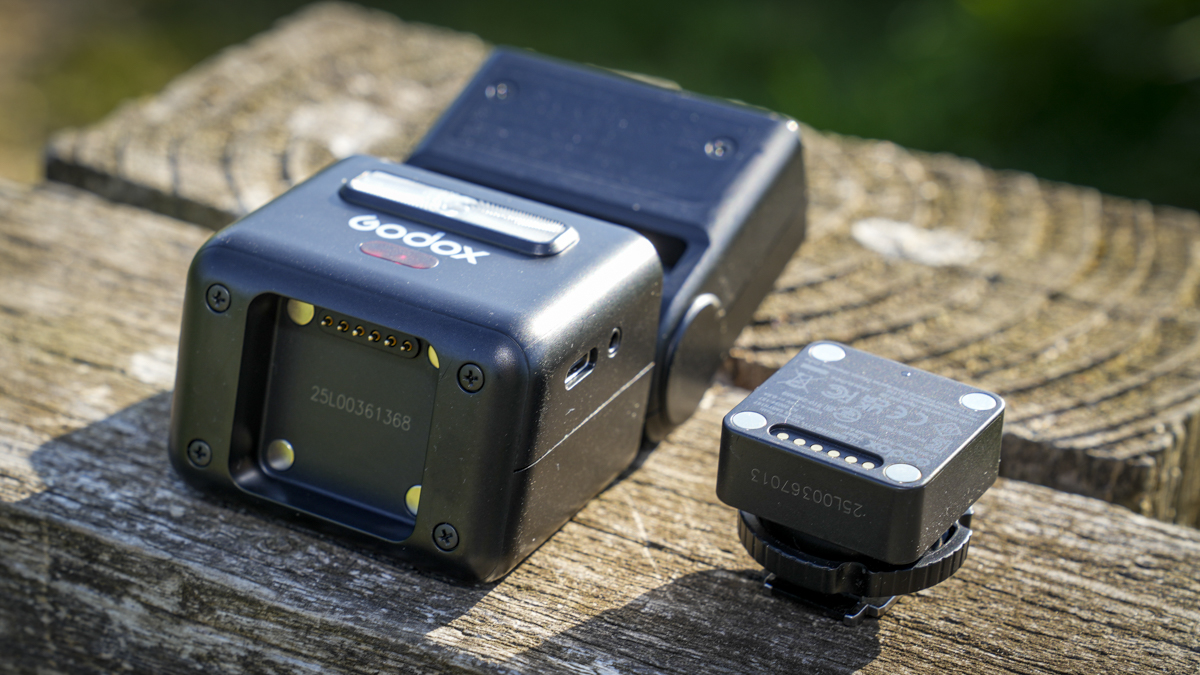
On the back of the flash is a small touchscreen that handles the mode, power, and wireless settings. For the most part, it’s quick to navigate, and along with the simple dial, the interface is easy enough for beginners to pick up. However, I did find that the touchscreen is a little too easy to trigger accidentally; picking up the flash or repositioning it mid-shoot occasionally changed a setting without me noticing until the next frame. A screen lock option would have been a good idea.
The small flash head offers a good range of flexibility, with a built-in reflector and diffuser, and the magnetic front accepts accessories such as gels, although I didn’t have these in this test. There’s also a small stand included in the box, which is a nice touch for popping the flash on a shelf or table when working off-camera without a light stand, although the base of the flash, when removed from the X5, is flat, so on a basic level, it’s very easy just to pop down as is. My one other minor complaint is the placement of the LED modelling light; it just feels like an afterthought, which becomes less useful once the head is angled.
Charging is via USB-C, essentially the same as pretty much everything else, and although the battery is built-in and non-removable, I found the charge lasted for around 500 full-power flashes per charge.
Features
The feature list is surprisingly extensive for a flash of this size. TTL and manual control, high-speed sync up to 1/8000s, first- and second-curtain sync, and multi-flash all feature, with flash exposure compensation of ±3 EV in 1/3-stop increments, which is standard, giving plenty of control over TTL metering when needed.
The wireless system is built into both units, so there’s no need for a separate receiver. The flash has a 2.4GHz receiver inside, the X5 has the sender, and when you pull them apart, they pair automatically; there’s no channel matching or setup to run through, and I found it just works, and if you want to pair more flash heads, just connect them to the X5 and then disconnect and they’re paired. Throughout the test, the automatic switching between on- and off-camera modes was far more reliable than I imagined, making this a pretty much frustration-free wireless flash review.
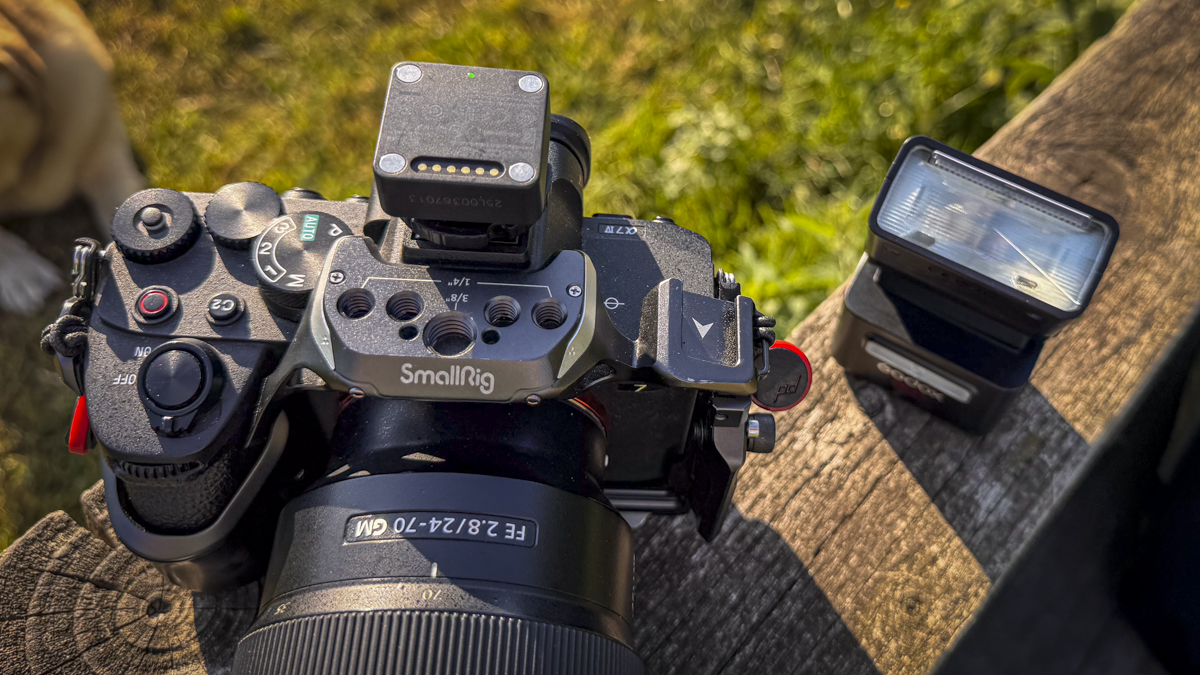
There are, however, a few points to be aware of, such as the quoted 80m wireless range. It turns out that this applies when the X5 is attached to the flash and working alongside another Godox trigger, such as the X3 Pro; when the X5 is detached and used on its own to fire the iT32, the range drops to 20m. In reality, for portraits and events, 20m is plenty considering the power output. These are great options for adding interesting lighting behind objects.
The X5 itself is also fairly basic as a standalone trigger. Adjusting the flash’s power and settings remotely requires a little more back-and-forth than a dedicated Godox transmitter would, and if you’re used to full control from the camera position, the X5 does feel a little limited. Given that it’s designed primarily as the hotshoe mount, this is fair enough, but a step up to a dedicated trigger is worth considering for more involved multi-light work.
The one feature that’s notably absent is a zoom head. The iT32’s beam angle is fixed, so there’s no way to pull the light in tighter for distance or telephoto work. Combined with the GN18 output, this really limits its use to close and mid-range work; still, that’s exactly what it’s been designed for.
Performance
During the test, I used the iT32 for a mix of portraits, fill flash, and product shots, and within its intended range, it performed consistently well, especially when I added a second paired with the same X5. The TTL metering proved decent enough, producing balanced exposures in mixed light without much need for compensation, and when I did want to adjust, the ±3EV FEC range was more than enough.
The GN18 output is the biggest limit; however, it’s a step up from the built-in flash on many cameras, and if you’re using a Sony A7 as I am or a similar camera with no built-in flash, there’s no doubting just how handy it is. Having a flash, rather than nothing, even with the relatively low GN18 power, is worth something.
Working at around one to three metres from the subject, the power is plenty, and with HSS for daylight fill, the flash was extremely useful and an ideal option for anyone starting out. If you try to use the flash at a greater distance than 3 meters, the power does start to struggle, but this is when you should really start to look at the likes of the V100.
Recycle times were good and at full power, the quoted 1.5 seconds, although not quick for a flash of this size, I was happy with the balance, and at the lower power levels that I set it to for most of the test shots, the recycle times were far faster.
Flash power was decent enough for the size of the flash, but what really makes this stand out, and since writing this review, has made it one of the most recommended pieces of kit to students, is the off-camera potential. Actually, not just the fact that you can use it off camera, but you can use several off camera all synced to the same trigger.
The mechanism of attachment and disconnection also makes it extremely quick to use, so if you are running a portrait shoot, then it’s easy to adjust and move your lighting setup. It’s small and versatile. If you’re an enthusiast looking for a decent compact off-camera flash solution, then this is it.
Final Thoughts
The Godox iT32 X5 is one of those products where the core idea is so simple and well-executed that it just works, and you end up thinking,: Why hasn’t this been done before? Moreover, why isn’t this available for a V100?? The magnetic modular design just works, and the speed of switching between on and off-camera use makes experimenting with flash positioning something you actually do because it’s so quick.
There are, of course, limits: the GN18 flash power won’t light a room, there’s no zoom to extend its reach, and the X5 is basic as a standalone trigger, with no on-device adjustments. But none of that is an issue when you consider the size and potential of the price, and what this flash is for. If you need power, Godox has plenty of bigger options, such as the V100, that this system will happily trigger alongside.
For portraits, fill, product work and travel, and especially if you shoot across camera brands, the iT32 X5 is a clever, well-priced and genuinely useful bit of kit. Just make sure you order the right X5 version for your camera, and if you’re a student studying photography, then this is the flash you need to get started, just buy one X5 and three iT35’s.