
If you are planning to look up tonight for the Lyrid meteor shower, the DWARFLAB DWARF Mini feels like a particularly timely bit of kit. With public interest in space rising again thanks to renewed attention on lunar missions and NASA’s Artemis programme, and with a strong run of visible sky events across spring, I think there is a clear appetite for stargazing technology that removes some of the usual complexity. That is exactly the pitch here.
What makes the DWARF Mini interesting to me is that it is designed to help you get started quickly, without the learning curve that often comes with traditional telescope setups. According to the information provided by DWARFLAB, it weighs just 820g, can be set up in around three minutes and uses app-based control to locate and track celestial objects automatically. If you are new to astrophotography, that kind of simplicity is likely to be the biggest selling point. You are not being asked to wrestle with a bulky, intimidating system before you can even start shooting.
Tonight’s Lyrid meteor shower gives this launch angle some immediate relevance. The Lyrids are one of the oldest known meteor showers, and they offer a strong visual hook for anyone wanting to try photographing the night sky. Beyond that, the broader spring calendar keeps the momentum going, with the Eta Aquariids, Vesta at opposition, a Blue Mini Full Moon and a Venus-Jupiter conjunction all helping to keep skywatching in the conversation over the coming weeks.
For me, one of the more useful ways to understand where the DWARF Mini sits is to look at what DWARFLAB has done before. If you want some background on the company’s earlier approach to smart telescopes, you can also read Camera Jabber’s DWARF II review here. That previous model already showed the brand’s interest in making astronomy and telephoto imaging more accessible, and the DWARF Mini appears to continue that idea in a smaller, streamlined format.
In practical terms, the DWARF Mini still offers enough substance to keep enthusiasts interested. It features a Sony IMX662 sensor, a 150mm f/5 telephoto lens and built-in astro, dark frame and narrow band filters. Up to 90-second exposures and equatorial tracking mode should help you produce more stable long-exposure images, while dedicated modes for subjects such as the Moon and planets broaden its use beyond meteor showers. So while it is clearly aimed at beginners, I can also see the appeal for anyone wanting a lightweight second setup that is easier to carry and faster to deploy.
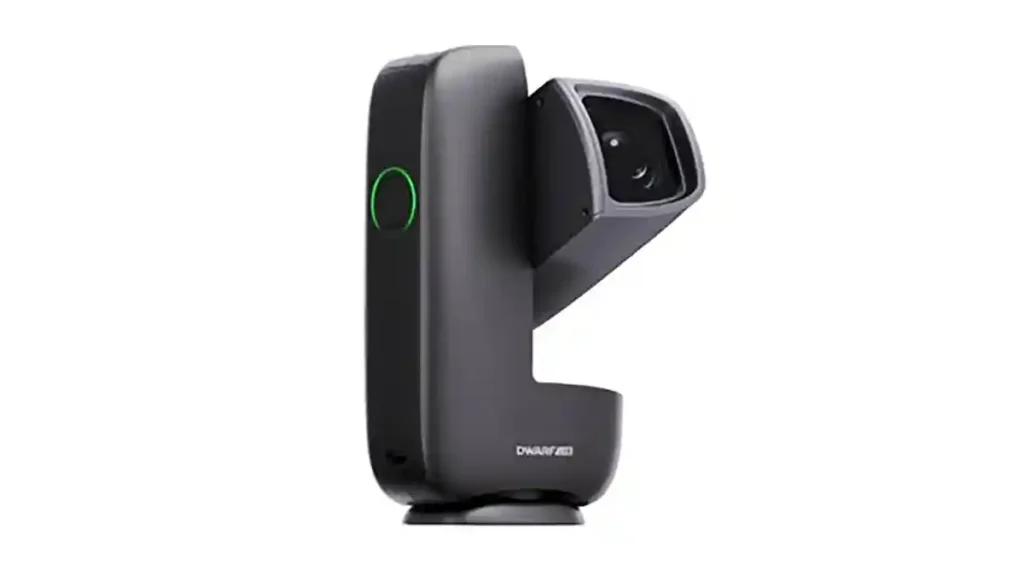
From where I am sitting, that is the real story. The DWARF Mini is not just arriving as another smart telescope. It is arriving at a moment when more of you are likely to be curious about photographing the sky, and tonight’s Lyrid meteor shower gives you an immediate reason to try.
Specifications:
Weight: 820g
Sensor: 1/2.8-inch Sony IMX662
Resolution: 1080p
Pixel size: 2.9µm
Lens: 150mm f/5 telephoto
Aperture: 30mm
Filters: Astro, dark frame and narrow band
Solar filter: Included
Mounting and tracking: 360-degree motorised object finding with equatorial mode
Maximum exposure: Up to 90 seconds
Battery: 7000mAh
Storage: 64GB built in
Setup time: Approximately three minutes
Control: App based
Price and Availability:
You can buy the DWARF Mini now for £359 in the UK and $399 in the US through Amazon and via the official DWARFLAB website at https://dwarflab.com. If you would like a sense of the company’s wider smart telescope approach before deciding where this new model fits, I would also point you to our earlier DWARF II review at https://camerajabber.com/reviews/dwarf-ii-smart-telescope-review/.