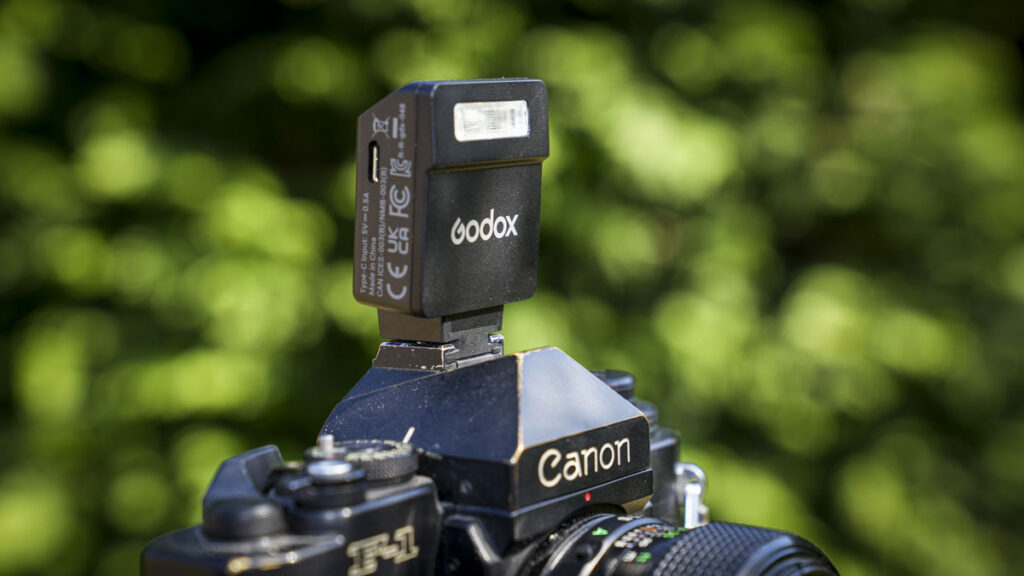

A compact flash with a built-in battery that's designed for compact and mirrorless cameras
Our Verdict
What is the Godox iM22?
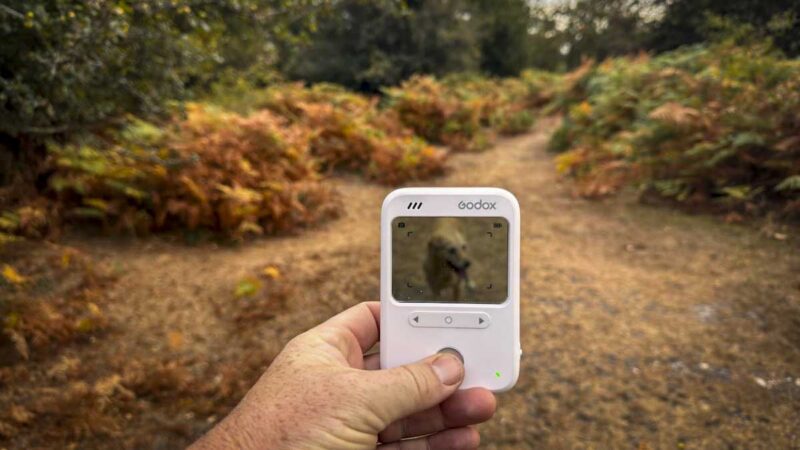
The Godox iM22 is one of a growing number of ultra-simple compact flashes that essentially sit straight onto your hot shoe. Then you dial in a bit of power, and it should work. There’s no TTL, no metering, no slave mode or anything more complex—it really is just point-and-shoot with the flash.
What it does is replicate the small built-in flashes that we used to see on most of the beginner and intermediate DSLR and mirrorless cameras that used to pop up when you were in program mode—just a little bit of flash for your portraits and macro shots. Here again, what we have is a very small flash that you can keep in your pocket and pull out to use on your camera when you want that little bit of extra light.
While the actual adjustments are minimal, it does come with five levels of power, which can be adjusted by using the plus and minus buttons on the back to increase or decrease the power output. Other than that, there is just a power button, which doubles up as a flash test button.

Specification
- Battery: Built-in Lithium 3.8V,470mAh
- Charging Time: Approx. 1h10min
- Flash Time (at full power): 440
- Recycle Time (at full power): 3s
- Flash Power Steps: 5
- Working Environment Temperature: -10℃~+35℃
- Sync Triggering: Hot Shoe
- Dimension: 57x40x22mm
- Net Weight: 34g
Build and Handling
Once again, Godox has made a really nice compact product. The design is incredibly simple, measuring 57 x 40 x 22mm and weighing just 34g—so 3g more than the even more compact iM20. This design is a hot shoe flash with a single connector on the bottom of the flash, which enables your camera to fire the flash when the shutter is pressed.
There’s no way of communicating with the power options through your camera, so it really is base-level simplicity. All power options, as I’ve mentioned before, are done using the plus and minus buttons on the back, and a row of five LEDs highlights what power setting you’re on.

One of the big features here over the iM20—and the purpose of separating the two products—is that the iM22 has a little bit of extra height to the flash. So, it just brings it a little bit higher up over the camera. If you are using a larger camera or a longer lens, then the reach of the flash should just reach over your subject without casting a lensthe shadow, which can be an issue with the 20.
As with the iM20, there is an internal battery, which is charged using the standard USB Type-C cable into the side.
Features
Take a look at the features, and they really pretty much match the iM20. Interestingly enough, Godox actually has a joint product page for these two products. Really, the only difference is the form factor of the flash, and it would appear that all the internal workings, the power, and the adjustment are identical. So you have the same flash bar, the same USB charging, and the same power options with five settings. You also have the power button that doubles up as a test flash button.
One of the big features here is that it’s so small and lightweight. Alongside your compact camera, you can also fit in this small flash. The lithium battery inside can be charged through USB Type-C, offering maximum compatibility. So wherever you are—if you’re off on holiday—you’ll probably have your phone charger or your compact camera charger with you, and as most of these are now USB Type-C, this flash will charge using exactly the same equipment.
When it comes to a full charge, you can then take up to 440 full-power flashes, which, considering the small size of the unit, is exceptionally good. And if you just want to get some real stark 90s-style portraits, then this is a great option. Obviously, you do have the ability to adjust the power output, and by reducing the power down, you’ll get even more flashes. If you are using it at full power, then it takes about three seconds for the flash to recycle and be ready for the next shot, which is relatively slow in terms of professional flashes—but at this level, who cares? Three seconds is worth the wait.
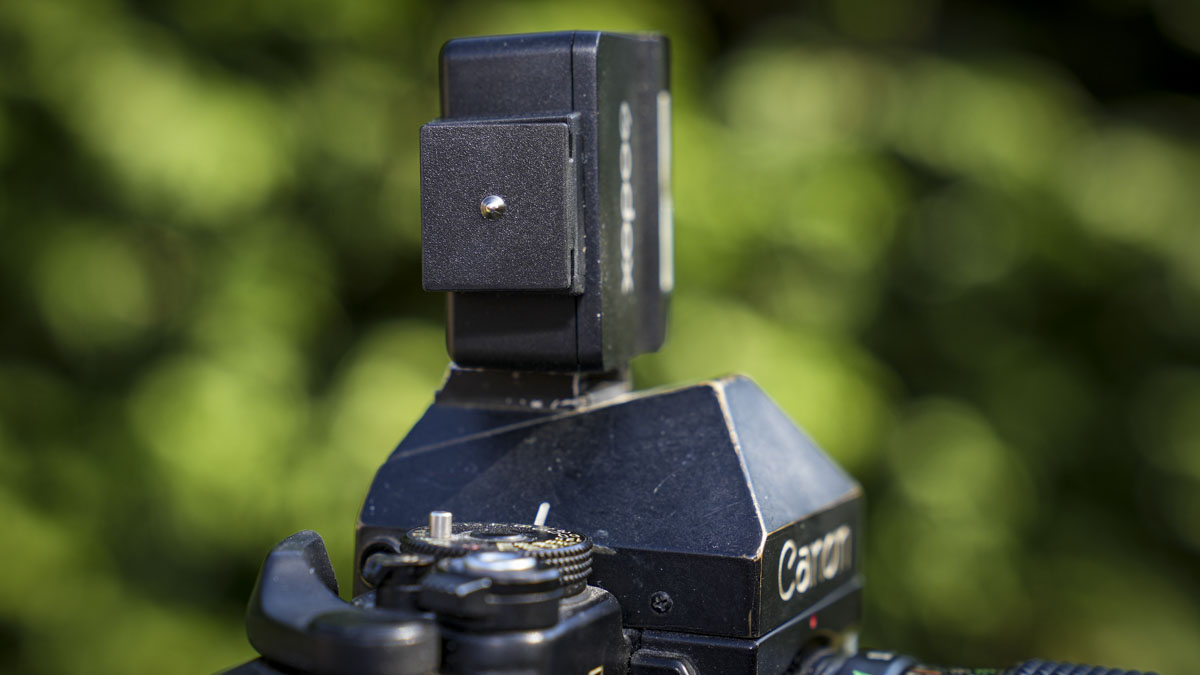
Unlike flashes of the past, the colour balance has been really well thought through, and you can expect a good, natural luminance from the flash. Results balance out nicely for your portrait and still-life photography shots and should mimic relatively natural lighting, although you are sure to get a few harsh shadows due to the position of the flash.
Those five levels of power adjustment are limited, but actually, they do give you a good range of control—and to be honest, it just keeps things simple, so you can have fun, concentrate on your photography, and not get too bound up with the complexities of flash.
What’s great about this flash is that if you do want to get a little bit more creative, then you can get the likes of the V100, slap that into slave mode, and use this compact flash just to fire off the larger flashes—creating a complex setup with just a few small and relatively cheap components.
Performance
When it comes to performance, don’t expect too much from the iM22. Like the iM20, this design features a very small, compact flash that’s ultimately about convenience and always being ready to use when you need it. Its small size means you can keep it in a jacket or camera bag pocket without adding much weight—or, more importantly, bulk. Unlike larger flashes like the V100, you don’t need to dedicate a separate section of your camera bag to this small unit. And if you use a compact camera, then it’s just a perfect partner.
When it comes to power, the output is really quite limited. Godox hasn’t actually highlighted the GN number of this small flash; however, suffice it to say that it isn’t huge. What it is, though, is a perfect fill-in for when you do a portrait, still life, or even a bit of macro. One of the main advantages of the iM22 over the iM20 is that it does have a little extra height. So, if you think of the iM20 as designed for use with compact cameras, then think of the iM22 for use with larger mirrorless or DSLR cameras.
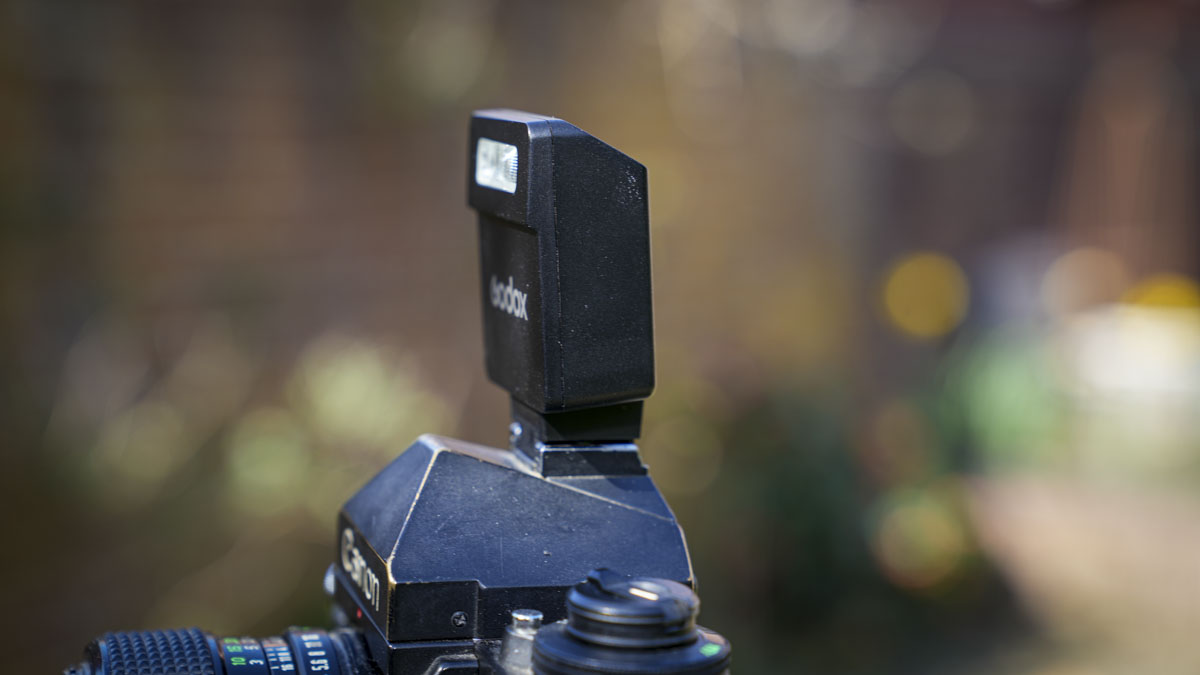
Either way, simplicity is the key with this flash. And if you’re looking for anything more advanced, it’s not that. During testing, I found it was great for really mimicking that 1980s–1990s compact camera look, where the flash just filled in and gave a little bit of light with a few shadows. While we mainly try to avoid this in professional photography, when you’re trying to get that look or just having a little bit of fun, actually, it isn’t too bad—and it is slightly retro.
When you couple the flash with some of the latest compact cameras that are rolling out—such as the EV-1 from Sony or Canon PowerShot V1 latest—it makes a really good addition to your setup.
Ultimately, don’t think about the iM22 as a professional or enthusiast-level flash. It’s designed either as a pure entry-level flash or one to have some fun with. It’s one that gets you the look rather than any really advanced lighting. Although, saying that, you can pair it with a couple of V100s, put those in slave mode, and then use this small flash to fire them off. In the studio, just for fun, I hooked up a couple of the Profoto heads and popped those into slave mode to get a few more advanced backlighting and top-lighting effects—and this little flash did a great job at that, without pushing too much light into the picture.
Final Thoughts
The iM22 is essentially a slightly taller version of the iM20, and once again, it’s a flash to have a bit of fun with—not take life too seriously or photography too seriously. It works incredibly well, and if you are using a mid-sized mirrorless camera and just need that little bit of extra height on your flash to reach over the top of your lens, then the iM22 is a better option than the iM20. If you’re using a small compact camera, then stick with the iM20—it’s a perfectly good flash, and I really like it. Essentially, they’re both really good.