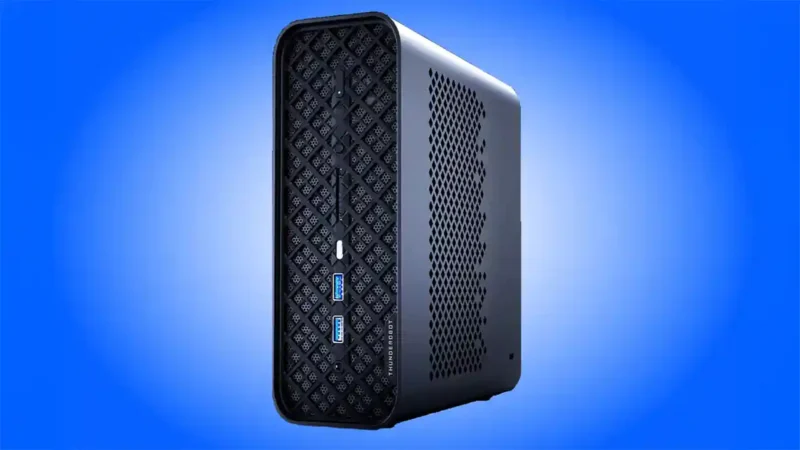

The short answer: around a dozen Ryzen AI Max+ 395 mini PCs are genuinely purchasable with a published price, and for a fully specified machine you are realistically looking at £1,500 to £2,000 rather than $1,500.
Where the bigger numbers come from
The inflated counts are not dishonest so much as loosely defined. They tend to include laptops and handheld gaming devices using the same chip, machines announced but not shipping, listings available only in China, near-identical clones sold under different brand names, and products with no confirmed price at all.
Every one of those is a real device. None of them is a mini PC you can order and have delivered next week.
What you can actually buy
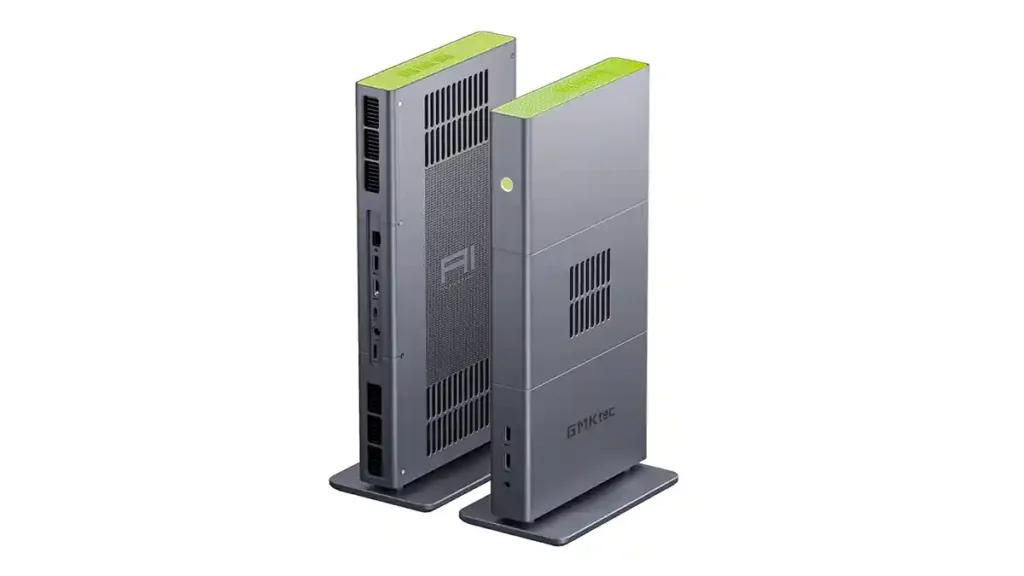
By our count, these are the machines with a published price and a route to purchase: the GMKtec EVO-X2, GMKtec EVO-X3, Beelink GTR9 Pro, Minisforum MS-S1 Max, Geekom A9 Mega, Bosgame M5, Corsair AI Workstation 300, HP Z2 Mini G1a, Framework Desktop, AMD’s Ryzen AI Halo developer platform and ACEMAGIC M1A Pro+.
Sitting just outside that list are the ZOTAC ZBOX MAGNUS EAMAX395C and ACEMAGIC F9A, both fully specified but without published pricing; the AOOSTAR NEX395, still at teaser stage; and the FEVM FAEX1, which has the best specification of the lot and is China-only.
The part that actually matters to photographers
Here is the more useful realisation. Every machine on that list uses identical silicon: 16 Zen 5 cores, Radeon 8060S graphics with 40 compute units, and soldered LPDDR5X on a 256-bit bus. Editing performance in Lightroom, Photoshop, Premiere Pro and DaVinci Resolve is therefore broadly the same across all of them.
So the processor is not the decision. These four things are.
Networking. Most ship with 2.5GbE, which is fine if your media lives on internal drives and inadequate if it lives on a NAS. Editing 4K directly from networked storage effectively requires 10GbE. The Beelink GTR9 Pro and Minisforum MS-S1 Max are the readily available choices, both with dual 10GbE; AMD’s developer platform also has a 10GbE port, but its distribution is much more limited.
Storage slots. Two M.2 slots means choosing between a fast scratch disk and library capacity. Three — as on the ACEMAGIC M1A Pro+ — lets you separate scratch, active projects and archive, which is the difference between a timeline that scrubs and one that stutters.
A card reader. More common than it first appears, but still genuinely useful. The GMKtec EVO-X2, Beelink GTR9 Pro, Geekom A9 Mega, Bosgame M5, Corsair AI Workstation 300 and ACEMAGIC M1A Pro+ include an SD card reader. Everything else expects a dongle.
Expansion. OCuLink carries PCIe 4.0 x4 to an external graphics card, well beyond what USB4 manages. Among the machines you can readily buy, the GMKtec EVO-X3 has OCuLink. The Minisforum MS-S1 Max takes a different route, with a full-length internal PCIe expansion slot. The unpriced ACEMAGIC F9A and China-only FEVM FAEX1 also offer OCuLink.
And the thing nobody offers
Memory is soldered on every single one. There is no upgrade path on any Strix Halo machine at any price — the wide 256-bit bus that makes them so capable is precisely what rules out sockets. Choose your capacity at purchase, because you are living with it.
For photo and video work, 64GB is comfortable and 128GB is generous. The larger figure earns its keep only if you intend to run very large AI models locally, since up to 96GB can be assigned to the GPU.
So what should you buy?
If your media is on internal drives and you want the most capability for the money, the GMKtec EVO-X2 remains the value benchmark. If your library lives on a NAS, the Beelink GTR9 Pro and its dual 10GbE is the honest answer. If you shoot cards all day and want them to go straight into the machine, the Bosgame M5 or Corsair AI Workstation 300. If you want expansion later, the GMKtec EVO-X3 or Minisforum MS-S1 Max. And if this machine will earn your living and you want a warranty and someone to call, Corsair, HP or ZOTAC are worth the premium over buying direct from a factory.
What you should not do is choose based on a TOPS figure or a headline core count. On this platform those numbers are the same everywhere. The ports are where the real differences live.