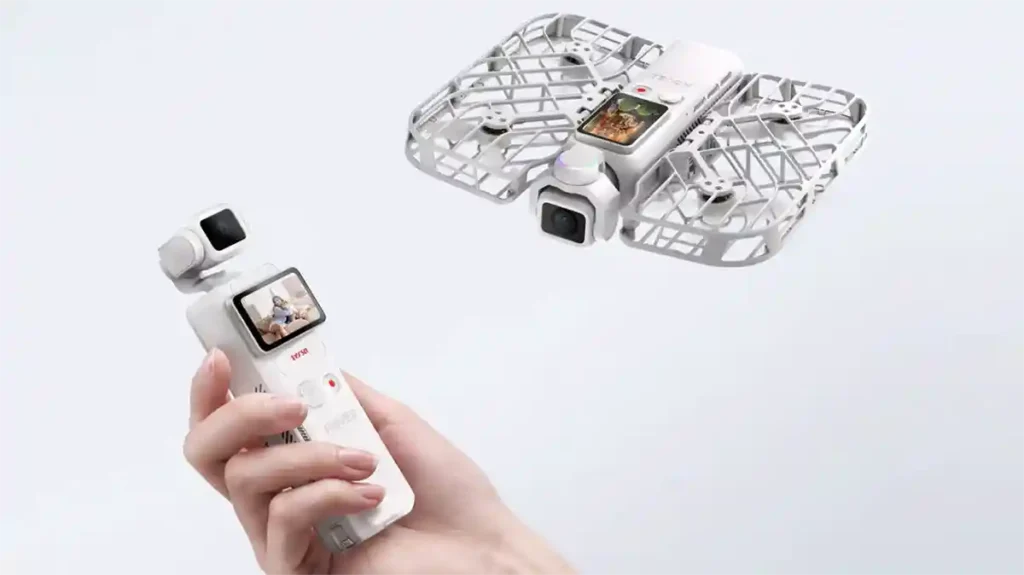

Carrying both a pocket gimbal camera and a small drone has always felt like a duplication of effort — two batteries, two chargers, two sets of footage to match in the edit. HoverAir has just teased a device that collapses the two into one. The Versa is a handheld gimbal camera that clicks into a caged drone body and takes off from your palm, and it’s the first product we’ve seen that genuinely occupies the space between the two categories. Details are on HoverAir’s site, where the company is taking sign-ups ahead of launch.
In handheld mode it’s a conventional pocket camera: a three-axis mechanical gimbal, a built-in display, joystick controls and optical stabilisation, with a new image processor HoverAir says improves dynamic range and low-light performance. Slide it onto the drone carrier, unfold the arms, and it becomes a self-flying camera — no controller, no piloting skills required, which is the approach HoverAir has built its X1 series around.
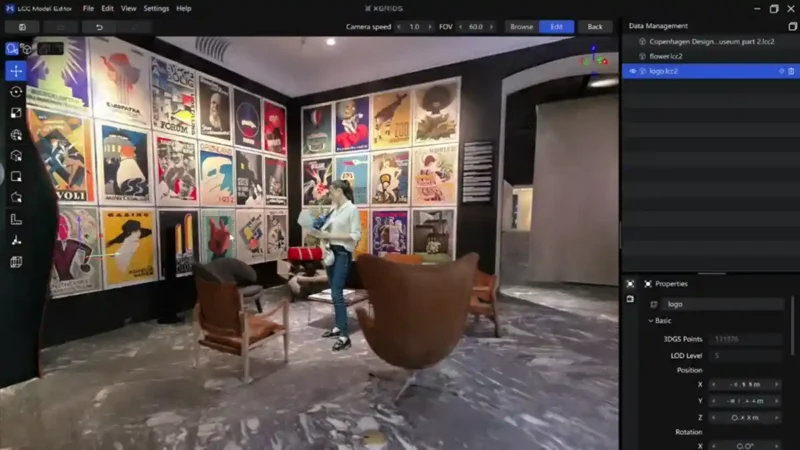
The flight side leans heavily on automation. There’s AI-powered subject tracking and framing, more than ten intelligent flight modes aimed at social content, and a mode called 3D Worlds that flies a 360-degree path around a scene and reconstructs it as an interactive three-dimensional capture — without LiDAR. That last one is the most interesting idea here, and a genuinely novel use of an autonomous flight path rather than just another orbit shot.
For solo creators the appeal is obvious. Walk-and-talk footage handheld, then an aerial establishing shot from the same device, with one colour profile and one workflow. The catch, for now, is that HoverAir has told us almost nothing concrete: no sensor size, no resolution or frame rates, no lens specification, no weight, no price and no release date. All the company has said is that an “industry-leading processor” is inside and that details are coming soon.
Weight will be the number to watch. HoverAir’s previous drones have stayed under 250g, which keeps them clear of registration requirements in many countries including the UK. Whether a device carrying both a gimbal assembly and a flight platform can hold that line is the question that will decide how casually most people can actually use it.
It’s also worth noting the timing. With DJI’s recent hardware unable to clear FCC authorisation in the US, there’s a gap in that market, and HoverAir is one of the few credible alternatives. Whether the Versa can fill it depends on regulatory clearance nobody has yet navigated successfully. For UK buyers that’s less of a concern — but it does explain why this announcement has arrived when it has.
HoverAir Versa: what we know so far
Format: modular handheld gimbal camera that attaches to a detachable caged drone carrier. Handheld mode: three-axis mechanical gimbal, built-in display, joystick controls, optical stabilisation, new image processor. Flight mode: palm launch, autonomous flight with AI subject tracking and framing, more than 10 intelligent flight modes, no controller required. Notable feature: 3D Worlds — a 360-degree autonomous flight path reconstructed as an interactive 3D capture. Not yet disclosed: sensor size, resolution, frame rates, lens specification, weight, battery life.
Price and availability
HoverAir revealed the Versa on 30 July 2026 as a teaser, with full specifications and availability promised soon. No pricing or release date has been announced. Interested buyers can register for launch notifications on HoverAir’s website, and we’ll update this story once details are confirmed.