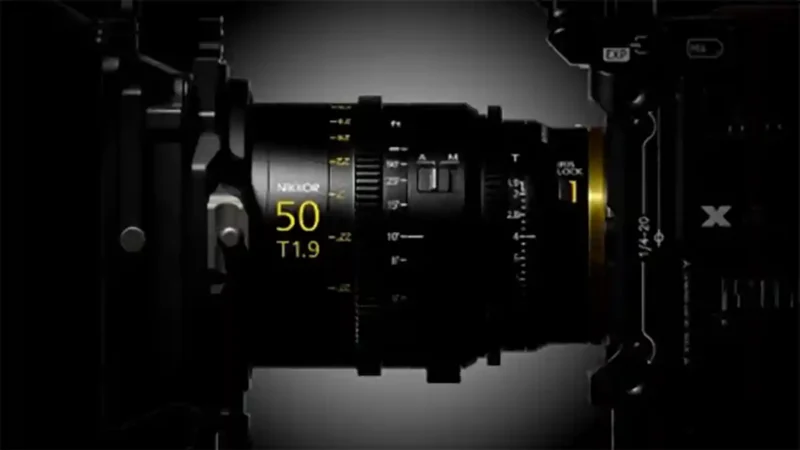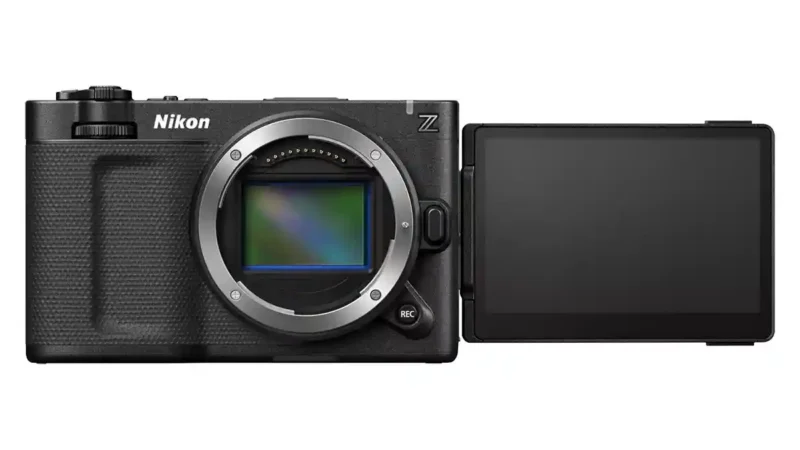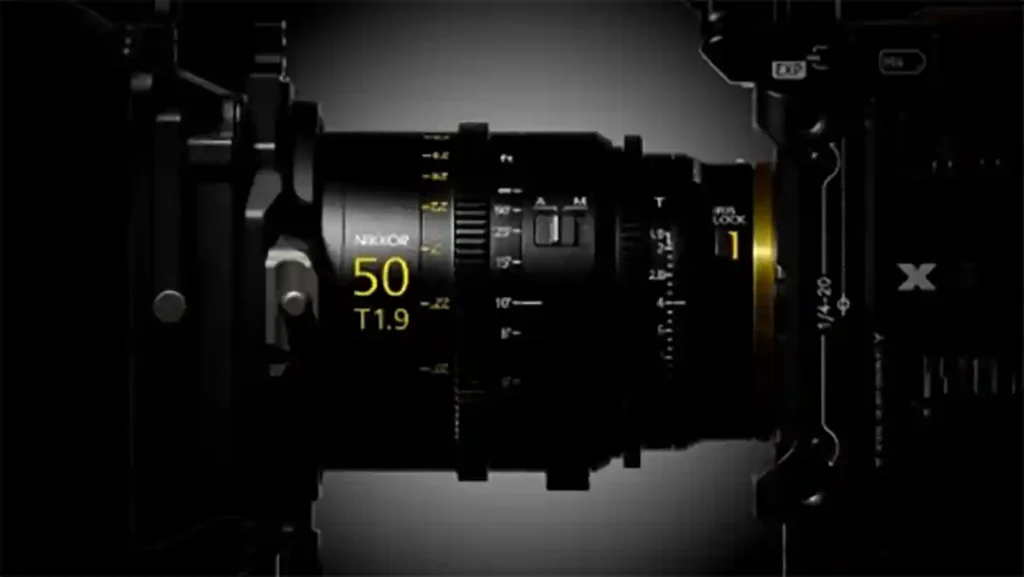

Nikon has announced the development of nine cinema lenses, and this is the first announcement since the RED acquisition where the logic of that deal becomes properly visible. The NIKKOR Z CINEMA T1.9 VV series will cover not only Nikon’s full-frame sensors but RED’s larger VV format — and, unusually for cinema glass, the lenses will autofocus. Details are on Nikon’s site.
What VV coverage actually means
The VV in the name refers to the image circle, and it is the specification that matters most here. These lenses will cover the 40.96 x 21.60mm sensor developed by RED for the V-RAPTOR [X] — which is wider than a full-frame 36 x 24mm frame, though shorter.
Nikon describes this as a first for NIKKOR: no previous Nikon lens has been built to throw an image circle that large. It also tells you exactly who these are for. A lens designed to cover a RED cinema sensor is not a stills lens with a cine housing bolted on; it is glass engineered from the outset for a format Nikon did not own two years ago.
Nine lenses is a serious commitment. Cinema lens sets are bought and rented as families, and a nine-lens range is enough to build a production around rather than a taster. So far Nikon has named only one: the NIKKOR Z CINEMA 50mm T1.9 VV.
The autofocus is the interesting part
Cinema lenses traditionally do not autofocus. Focus is pulled by hand, or by a wireless follow focus, by someone whose entire job is doing it accurately. That convention exists for good reasons — repeatability, marked distance scales, and the fact that a director of photography wants focus exactly where they put it rather than where a camera guesses.
Nikon says the series will offer a highly precise autofocus mechanism designed to support creators’ workflows, and that phrasing is doing deliberate work. This is aimed at the growing number of productions shooting without a dedicated focus puller — documentary, corporate, branded content, solo operators — where the choice is currently between cinema glass you focus manually and stills glass that autofocuses but does not behave like a cine lens on set.
Whether Nikon can deliver autofocus precise enough that a professional trusts it, while retaining the mechanical qualities cinema lenses are bought for, is exactly the question these will be judged on.
Why this matters beyond Nikon
When Nikon bought RED in 2024 the obvious question was what either party would actually get from it. This is a clearer answer than anything since: Nikon’s optical division, which has been making lenses for over a century, building glass for RED’s sensors, with Nikon’s autofocus expertise applied to a category that has never had it.
It also arrives in a week where Nikon’s imaging division has been under pressure, with revenue and profit both down and forecasts revised. A nine-lens cinema range is not a short-term fix for that, but it is a statement about where the company sees its future — and cinema glass carries margins that consumer zooms do not.
This is a development announcement rather than a launch. Nikon has published no specifications beyond the image circle and maximum aperture, no focal lengths beyond the 50mm, no pricing and no timescale. Nikon and RED are at IBC from 11 to 14 September, which is the obvious place for more detail to emerge.
NIKKOR Z CINEMA T1.9 VV series: what we know
Series: NIKKOR Z CINEMA T1.9 VV. Number of lenses: nine in development. Confirmed model: NIKKOR Z CINEMA 50mm T1.9 VV. Maximum aperture: T1.9 across the series. Image circle: covers Nikon full-frame sensors and the VV format of the RED V-RAPTOR [X], a 40.96 x 21.60mm sensor developed by RED Digital Cinema — a first for NIKKOR lenses. Autofocus: a highly precise autofocus mechanism supporting creators’ workflows. Intended market: cinema, high-end production and creators. Not yet announced: remaining focal lengths, full specifications, pricing and availability.