
A premium lightweight drone that combines strong image quality with smart flight features for creators.
If someone asked me what drone they should buy, my usual answer is a DJI Mini, the reason being, its small, compact and incredibly easy to use. The Mini also comes in under that all-important 250 grams, which means you do need to register the drone, but you don’t need any more in-depth qualification to use it.
While in the past you might’ve seen the DJI Mini drones as just a bit of a toy, these days they’ve gone far beyond that. Actually, they’re a perfect option for travellers, content creators as well as enthusiasts. And what’s more, with the Pro version, the small camera is able to produce quite incredible quality.
Whilst the DJI Mini 4 Pro was one of my favourite drones, and I’ve been using it for well over a year since it was initially launched, the arrival of the DJI Mini 5 Pro marks something just a little bit different. Firstly, the camera has taken a huge leap forward once again with its official quality resolution and frame rate. It now features full obstacle avoidance, which just makes it that much easier and safer to use.
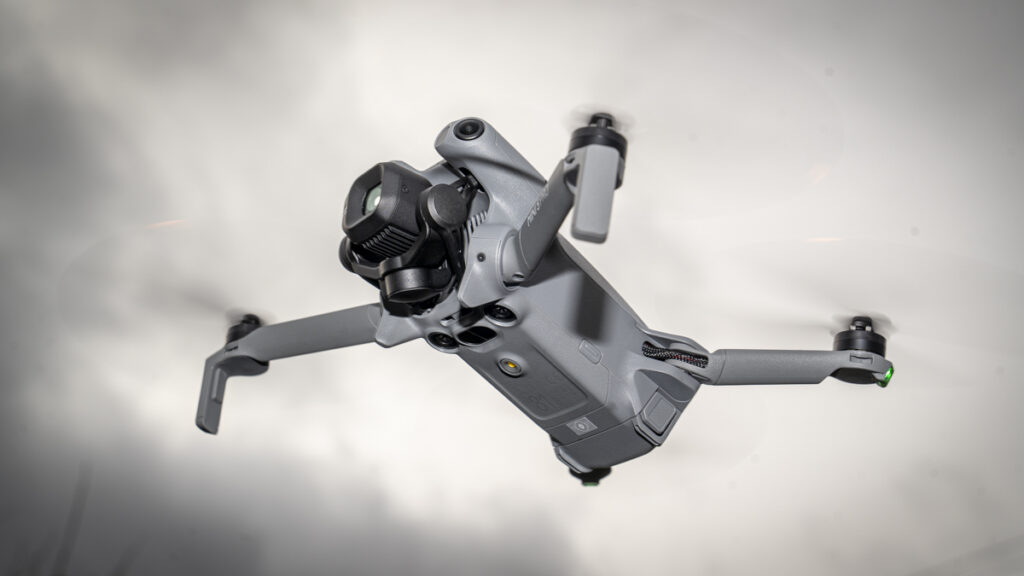
Of course, unlike the Flip or Neo, those blades aren’t protected, so if you’re just starting out and you see this drone and think, “That’ll be a brilliant one to learn with,” I’d actually go for one of those two smaller models, just because they’re that much easier to fly and they have the protection of those full prop guards for added safety.
That said, the Mini 5 Pro is once again exceptionally easy to fly and features autopilot that keeps it stable in the air, utilising GPS and sensors that are far removed from drones just a few years ago. That safety, with full 360° obstacle avoidance sensors, does actually make it harder to crash or bump into anything than ever before.
For my money, for most photographers and videographers looking for a small and lightweight solution for photography and video, the DJI Mini 5 Pro is one of the best options out there, and certainly the safest. Its small size makes it ultra-portable and you can take it literally anywhere. And then there’s the fact that it comes in under 250 grams, which gets around some of the light restrictions you have with larger drones. Now the video quality, as well as image quality, is so good, it just makes it a good all-round option.
What is the DJI Mini 5 Pro?
The DJI Mini 5 Pro is a compact drone weighing 249 grams, that’s just under the 250 g weight where you’d require a licence, but you should still register the drone and get your CAA pilot ID, which costs you around £10.
The new drone is equipped with a 48-megapixel 1/1.3-inch sensor, which will offer high-resolution stills and video. In fact, that 1/1.3-inch sensor is similar to the ones that you find in many action cameras, so to have it on a drone of this small size and weight is quite remarkable.
The drone is able to shoot 4K HDR footage at 60 frames per second, and you can even shoot 4K at 100 frames per second if you want to capture some slow-motion video for a cinematic effect.
One of the big features that stands out with the DJI Mini 5 Pro is that it offers full 360° omnidirectional sensing, which will enable much safer flying than its predecessor. And if you activate the vastly enhanced ActiveTrack 360, you’re able to get some pretty advanced dynamic tracking shots that just wouldn’t have been possible with a drone at this size or even price just last year.
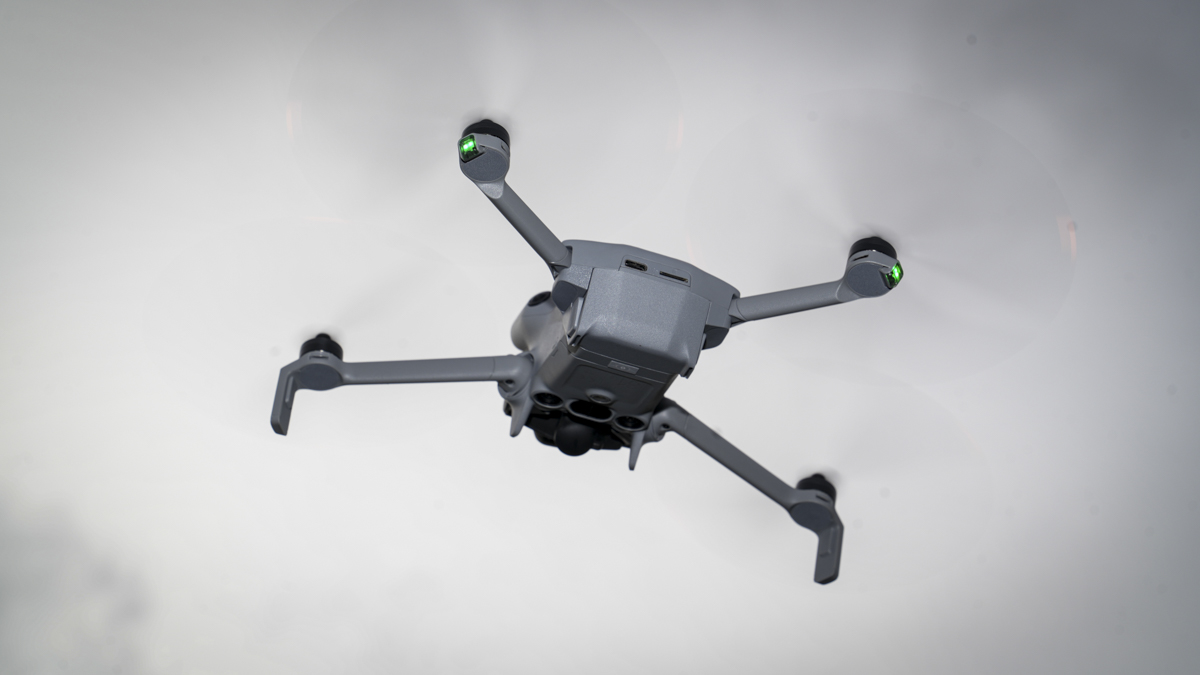
So the Mini 5 Pro is a compact, lightweight, multi-featured drone packed with superb video quality and flight features for a relatively decent price, and will suit both beginners and enthusiasts. Professionals may also appreciate the small size and the fact that it can be flown in locations where other drones might not be suitable.
Specification
- Weight/class: 249.9 g (±4 g), C0, optional C1 via DJI Fly.
- Dimensions: Folded 157 × 95 × 68 mm; unfolded 304 × 380 × 91 mm.
- Flight time: up to 34 min (45 min with Plus battery; not sub-250 g).
- Battery: Standard 2590 mAh, 7.32 V, 77.9 g; Plus 3850 mAh, 7.38 V, 121 g.
- Max range / link: O4+, up to 20 km (FCC) live video; RC view 1080p/60.
- Camera: 1/1.3″ 48 MP CMOS, f/1.7, 24 mm eq., ISO 100–12800 (video), 100–6400 (photo).
- Stills resolution: 8064 × 6048 pixels (48 MP).
- Video: 4K 24/25/30/48/50/60/100 fps; FHD 24–200 fps; 10-bit H.265 (Normal/HLG/D-Log M), 130 Mbps.
- Stabiliser: 3-axis gimbal; tilt −90° to +60°, roll −90° to +90°; pan fixed.
- Sensing: Omnidirectional vision; forward LiDAR; downward IR.
- Storage: 2 GB internal; microSD up to 512 GB (exFAT supported).
DJI Mini 5 Pro Build and Handling
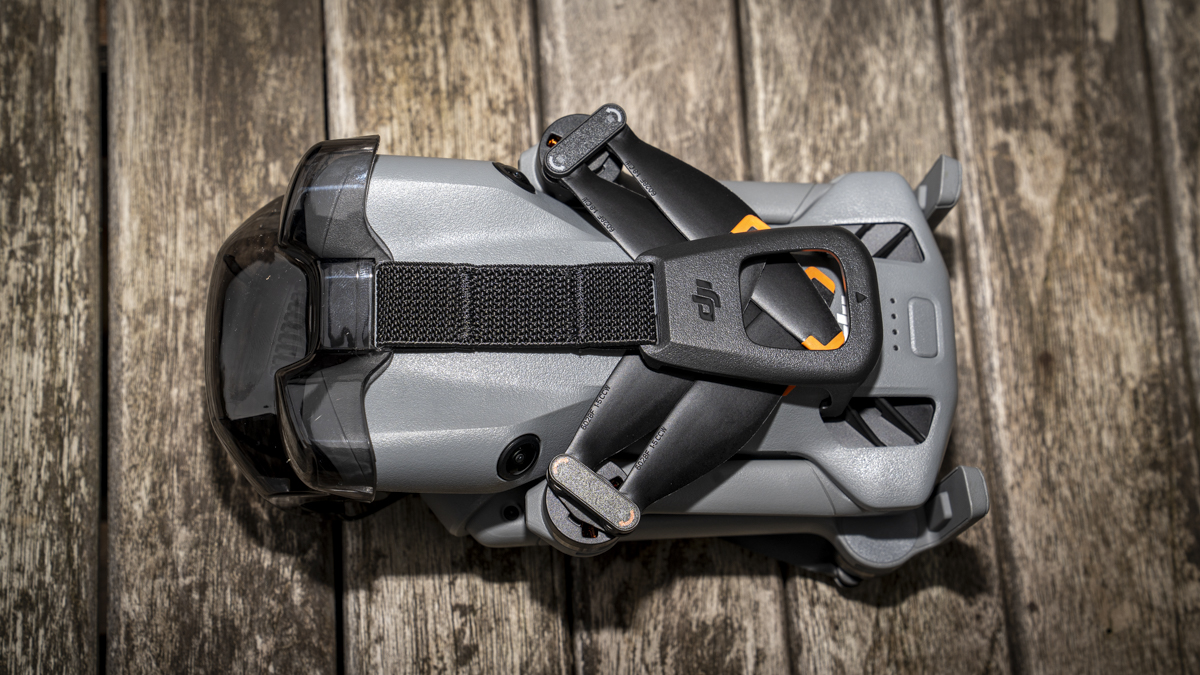
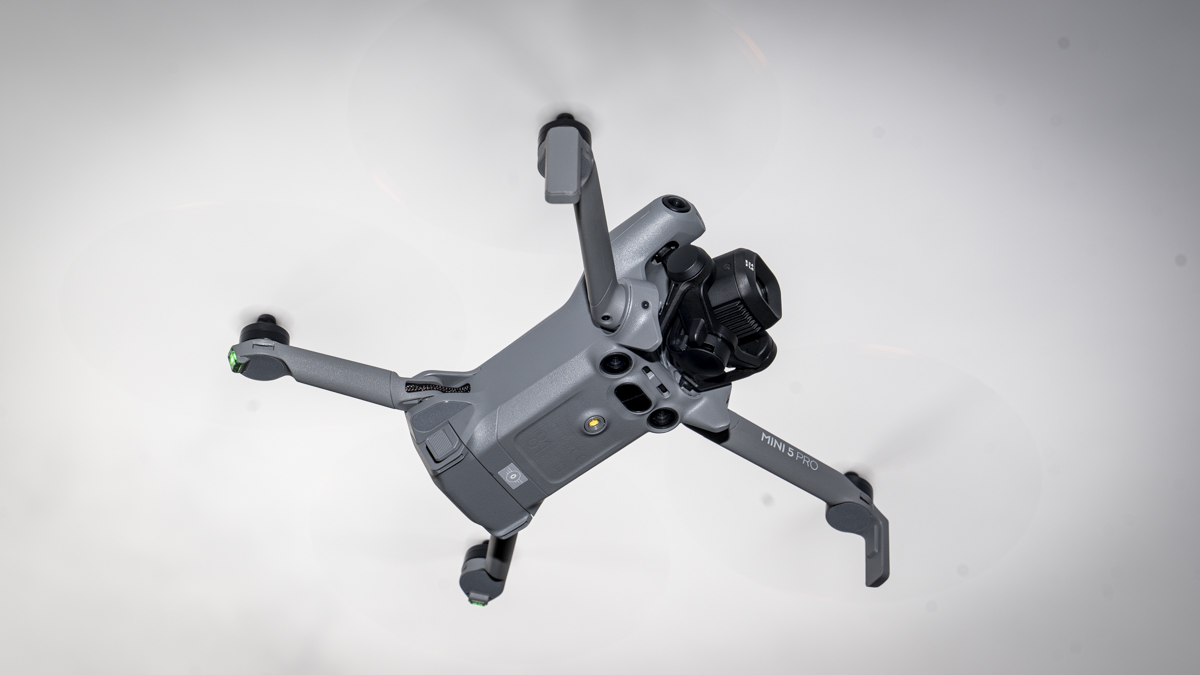
As we’ve now seen for many generations of the Mavic and other DJI drones, the DJI Mini 5 Pro features the small foldable design that sees the prop arms fold in and under the main drone body so that it can be packed away neatly inside a backpack or bag and carried with you.
One of the aspects here that I really like is the fact that it features a very neat harness. This is something that we’ve seen on the Mavic Pro series for quite some time, so to see it here on what is kind of an entry-level model is a nice addition. It just means that everything stays nice, tight and safe during transport. One of the issues that I’ve had with small drones in the past is the propellers getting caught and snapping in transit, or at least getting misshapen—so here it just means that everything stays in top condition while in storage.
When it comes to size and weight, the standard take-off weight—which is the all-important figure including the flight battery, propellers and a microSD card—all comes in at 249 g, so that’s 1 g under the 250 g regulatory limit for many regions, including here in the UK.
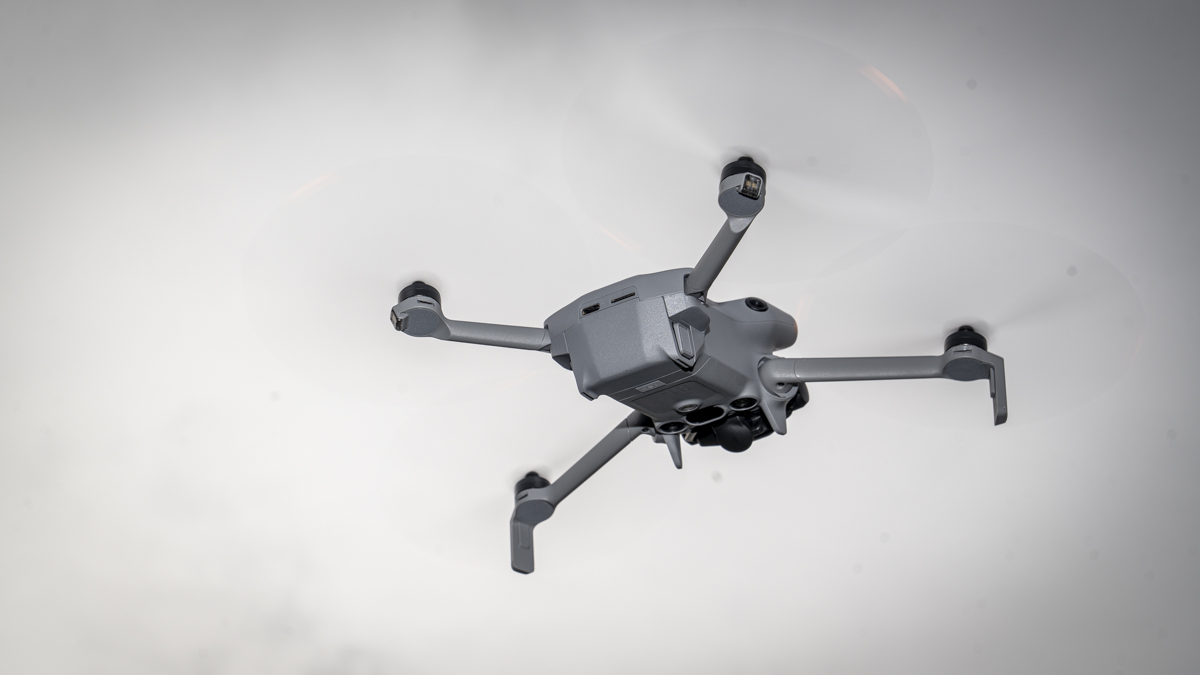
When folded down ready for transport, it measures 157 × 95 × 68 mm, and unfolded ready to fly measures 304 × 380 × 91 mm. So any way you look at it, it really is small, lightweight and portable. In fact, I’ve had it pop into the side pocket of one of my backpacks, where it fits extremely neatly in place of a water bottle.
The overall build quality is once again stereotypically DJI and has the usual high-quality plastic and metal mix that offers plenty of durability. Obviously, keeping this small drone lightweight to stay under that regulatory weight limit is all-important—and here, they’ve done that without seeming to have reduced the quality or robustness of the drone.
As it arrives, the drone is pretty much set and ready to go. It’s not like drones from a few years ago, where you needed to bolt or screw on the propellers—here, everything is neatly fixed in place. And if you do need to replace the propellers, then it’s not too much of an issue.
The weight-saving factor here is that the small propellers are actually screwed to the drone, rather than using the quick-release system that we see on the larger drones. That’s a bit of a shame but does make sense. However, removing the propellers if you need to replace them is all simple enough and really shouldn’t cause you any issues.
As ever, the battery slots into the back, and if you buy the Fly More option, then you get two spare batteries, giving you a total of three. Each of these weighs 77.9 g, so individually not particularly heavy, but they do make up the greater part of the drone’s weight. Capacity-wise, they give you 2590 mAh with a voltage of 7.32 V, which should provide you with up to 34 minutes of flight time. During the test, you have to reduce this by 20% initially due to the safety margin, taking you down instantly to around 27 minutes, and then because I was flying it around at speed testing the flight characteristics, that reduced to more like 20 minutes per battery. That still gives you over an hour of flight effectively with the three batteries included in the kit I reviewed.
Charge time for those batteries was about an hour each when charged in the two-way hub that comes with the Fly More package, which isn’t bad. I charged these using the DELTA 2000 in the van.
If you do want a little bit more flight time, there is the option for the Intelligent Flight Battery Plus, but this does weigh more—121 g—and offers a capacity of 3850 mAh. That will give you an increased flight time of up to 45 minutes. Take off that 20% for safety margin, and you’re down to 36 minutes, but that battery weight will push you well above the 250 g limit, so that’s something to be aware of.
As ever, there are several ways to control the drone. You can either use the DJI RC 2 that I’ve used in this review, or one of the other remotes if you have access to them. As ever, it’s also possible to use DJI Goggles, if you want a little bit of FPV-style flight—but again, you do need to check the regulations for your location.
Likewise, when it comes to other remote controllers and motion controllers, there’s plenty of support as well.
DJI Mini 5 Pro Features
When it comes to features, this drone really packs it in considering its small size and weight—top of which is the fact that it features a 1/1.3-inch 48-megapixel CMOS camera sensor, the same as the one that you would find in many action cameras. It’s capable of capturing 4K 60 frame-per-second HDR footage, and 4K 100 frames per second slow-motion footage if you want to capture some professional-grade cinematic video.
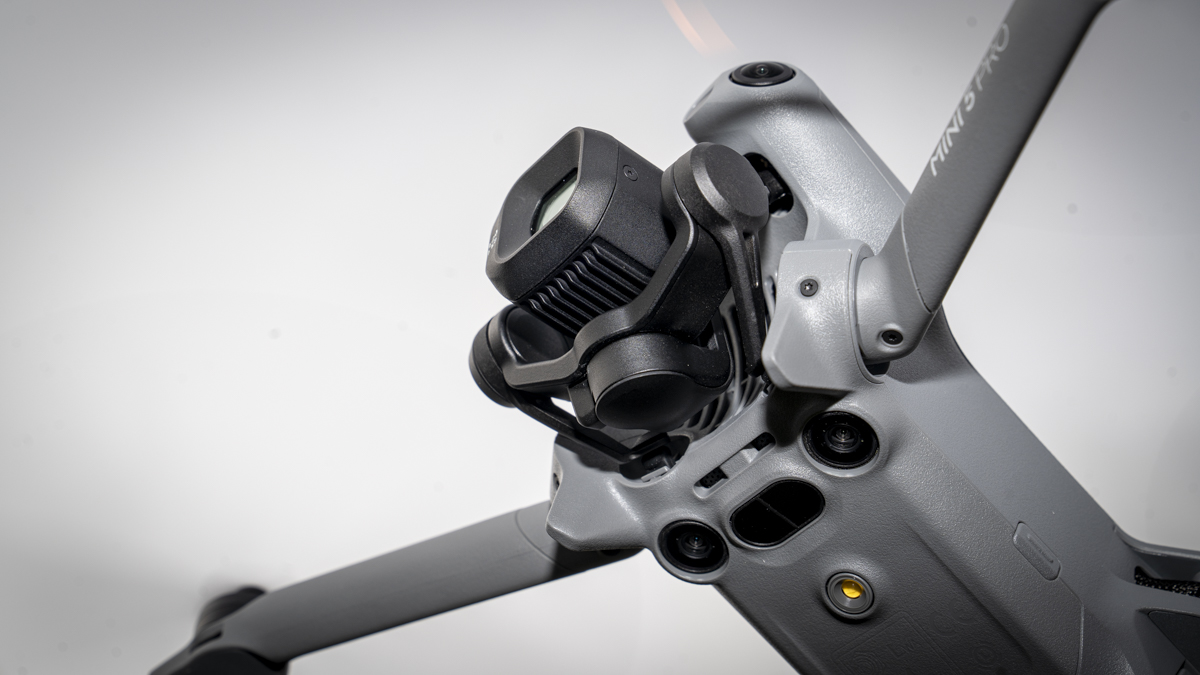
The object avoidance is also a major new feature, with 360° coverage, meaning that if you’re flying through the woods or through a building then it’s just that much safer and you’re far less likely to get it tangled in branches or tap a wall. It does make flying through such areas a little bit more tricky, as when the drone senses anything, it will just stop in flight.
One of the big features of the Mini range is the fact that it comes in at the sub-249 g weight. This means that it’s far easier to fly in many locations, as it’s under the weight restrictions for many regions—although you still need to check on the regulations. So here in the UK, you still need to run through the training awareness test and register your drone.
One of the other new features of the Mini 5 Pro is the fact that it features OcuSync 4.0 for its transmission system. This means that if you want to use it with goggles, you can—and it also enables a far better live stream back to the controller.
Vertical shooting, as we’re now used to with mobile phones, is also now possible natively. So with the simple click on the controller, the camera can rotate from horizontal to vertical, enabling you to shoot vertical rather than landscape-oriented footage.
Flight times have been taken up a notch, with a maximum 34-minute flight time (in ideal conditions) if you don’t use the safety margin.
Video imaging quality has really taken a huge step forward with support for 10-bit D-Log M and HLG profiles. These are professional colour workflows for grading and HDR, and will be a really good addition for any keen enthusiast—meaning that they can use the smaller drone rather than needing to take a leap up to something larger. Staying with that imaging, the low-light performance also takes a step forward, so there’s far less noise and it can do a little bit better with those low-light conditions—although dry conditions still get the best out of the small camera.
There have also been a few new and improved photo and video features, including SmartPhoto and Night mode, as well as 360° panorama and the all-important QuickShots, which essentially offer automated creative photo and video effects that you can utilise at the tap of a button.
One of the features that really struck me from the outset was that it was a little bit quieter than some of the previous iterations of the drone. It’s still noisy—there’s no way you could avoid hearing it—but it is quieter than some of the drones that we’ve seen in the past.
Flight features have also been greatly enhanced. Whilst on the Mini 4 Pro they were already exceptionally good, here they’ve just been refined, with better Advanced Return to Home logic that helps you utilise those sensors to avoid any obstacles that might appear en route. There’s also global navigation support for GPS, Galileo, and BeiDou, and one of the features that I haven’t used for a while but used to use quite a lot is waypoints and automated flight modes to create cinematic motion whilst requiring less skill from the pilot to achieve impressive results.
DJI Mini 5 Pro Performance
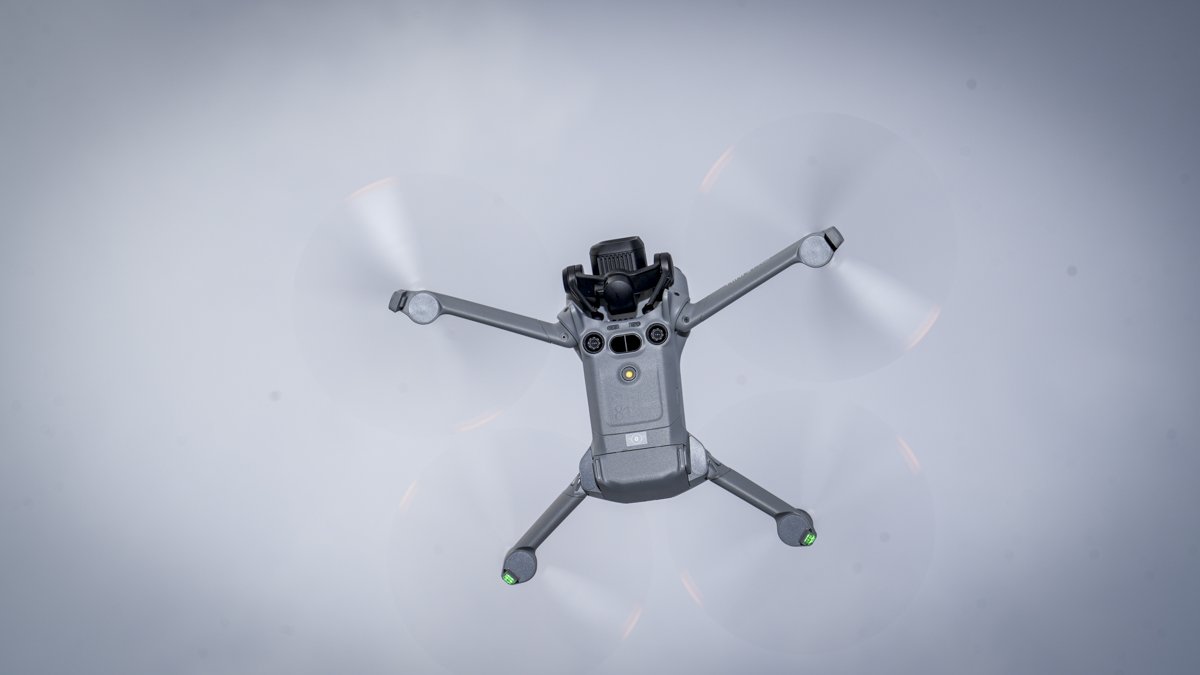
The DJI Mini 4 Pro was impressive, and now with the 5 Pro, it just takes everything up to the next level. The fact that it has 360° obstacle avoidance sensors now dotted around the entire body makes it far safer to fly in more confined environments, and if you’re new to flight, then you’re far less likely to bash it into a wall, tree or other immovable object.
As I got started, I charged up the three batteries that came in the Fly More Combo kit that I was reviewing, which offered over an hour of flight time. Once again, whilst the drone itself feels really light in the hand, it actually feels good, strong and robust. I inserted the first battery and the microSD card to store the footage. Everything felt the same high quality that I’ve come to expect from a DJI product.
Folding out the arms for the props and just giving everything a check over, everything seemed of a good, high quality. Once again, it’s a bit of a shame to see that the propellers are screwed in rather than using a quick-release mechanism if you do need to change them, either for a replacement or for an upgrade—but this is all due to weight, more than anything else.
Completing the first round of flight checks and starting up the propellers for the first time, the drone quickly launched to around a metre height. I was able to get a first feeling of how it would respond in the air. Once again, one of the things that I really like about the Mini series is just how fast and responsive they are. Here, doing a quick check of the controls, everything seemed good and tight before landing it ready for its first proper flight.
That first flight really highlighted just how good the drone is. Flying it in comparison with the DJI Mini 4 Pro, it was good to see the advancement of the technology. Essentially, whilst initially these two drones might look very similar, in reality, they are quite different. The technology has come on leaps and bounds, and you can see that as soon as you look at the two drones side by side.
The DJI Mini 5 has the inclusion of all those additional sensors, looking slightly like bug eyes out of the front, and we’ve seen the same happen with the Air and the Mavic drones in the past.
Those additions, when flying out in the open, don’t actually make a great deal of difference, and once again, like the DJI Mini 4 Pro, the flight characteristics are sharp and responsive. Once you click on Sport mode just to see how quickly the small drone will act, it’s great to see just how precise its movement is, especially in the air, as it darts to and fro across the field.
Slowing down to cinematic mode and setting a couple of waypoints through the DJI Fly app, again it’s good to see just how stable the small drone looks in the air. Weather conditions were good and there wasn’t much of a breeze on this first flight, but it’s still great to see just how precise its movement is. Whilst its movement might look nice and smooth, that small camera is actually having to deal with quite a lot—thankfully the 3-axis mechanical gimbal smooths footage out beautifully.
When it comes to that all-important video and image quality, first and foremost, stills and video look clear and bright, with plenty of detail. Ultimately, that 3-axis mechanical gimbal provides footage that’s stable straight out of the drone.
DJI have worked hard on the profiles that have been applied to the raw footage, so stills and video directly from the drone are ready to use. There’s no need for any enhancement unless you are shooting in the D-Log M format. After all, considering the market position of the drone, it’s really for beginners and enthusiasts, not professionals.
In bright summer conditions, visual quality is spectacular—clear and bright. The lens manages to minimise any distortion, giving good clarity across the frame. Through the whole test, due to flight restrictions in the UK, I only used the drone in decently bright, well-lit conditions and never in lower light where it would be difficult to see the drone flying. All footage was captured in daylight, with the quality looking exceptionally good, with rich colour and plenty of tone and clarity.
Ultimately, the video and still image quality is superb for the size of the drone, and I think anyone would be hard-pressed to quibble with just how good it is. It’s not up to the footage that you see on the more expensive drones, but if you’re an enthusiast just getting into flying drones, then you’re going to be more than impressed with what this drone is able to capture.
To be honest, with drone footage these days, the major issue is the skill of the pilot—just making sure that you fly smoothly, normally in cinematic mode, so that you get smooth video capture without sudden jumps in the footage from jerking the drone around. Likewise, when you’re panning, just a small touch of the stick is required to get the rotation or the horizontal pan, and again it’s surprising the difference in quality of footage that you get by the speed at which the drone is flying.
One of the other points about the drone that I really liked was the ability to shoot both horizontally and vertically. This means that if you are shooting for social media content which is going to be viewed vertically, then it can do this natively, improving the quality of the footage.
Final Thoughts
When I first tried out the DJI Mini 4 Pro, I was impressed by just how good the small drone was. And now, with the DJI Mini 5 Pro, it just takes things up another level—with both video quality and the feature set of the small drone.
One of the most important factors is that it still comes in under 250 g, as long as you don’t use the Intelligent Flight Battery Plus, which is an additional extra. Through this review, I used the Fly More Combo kit, which includes the additional batteries. I also had ND filters to play around with as well, all adding into the quality and cinematic profile of the small camera.
What’s really changed about small drones is not just the fact that you can fly them in more places than you can with larger drones, but that the image quality is now genuinely very good. In the UK, where you can only really fly in decent conditions and where the sensor is rarely pushed, that quality is exceptionally good—with bright, clear colour, clarity and tone.
While it might not have the depth of some of the larger drones or some of the more advanced features, I would say for 90% of drone pilots, the DJI Mini 5 Pro is going to meet most of their demands for video and image capture. And the fact that it’s small and you can fly it in more places just means that you’re more likely to capture the shots that you want.
The other point here is that, because it’s so small and lightweight, it easily slips into a backpack pocket—making it the drone that you can always have with you, rather than the drone you have to plan around.
For my money, this is the best of DJI’s drones. Its small size, portability, ease of use and decent video quality all ensure that you’re going to have great fun and capture the shots when you want, rather than having to do a great deal of planning around them.