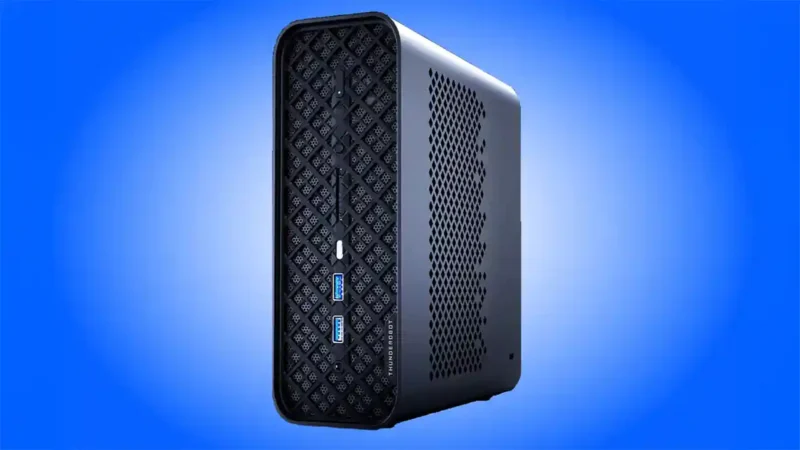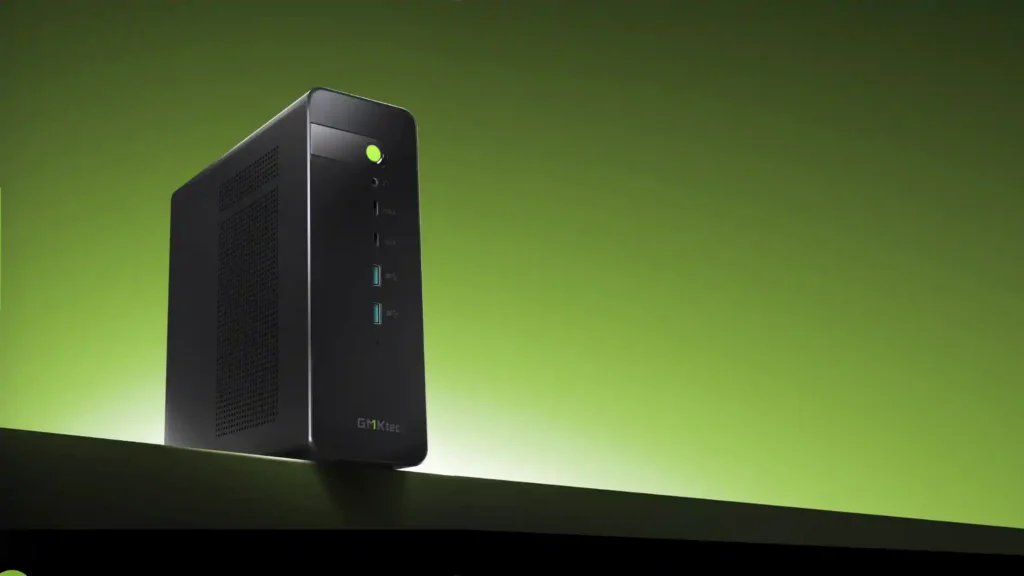

GMKtec’s new EVO-X5 Pro goes on sale on 28 September. On paper, it’s the most powerful AI mini PC we’ve seen. It’s the first built around AMD’s new Ryzen AI Max+ PRO 495, with 192GB of unified memory, up to 160GB of which can be given to the graphics. GMKtec is selling it as an “agentic PC” that can run large language models of around 300 billion parameters completely offline.
Those headline numbers will get the attention. But after spending time working with AI mini PCs of this type, I think the real story for photographers and videographers is much less dramatic, and much more useful.
AI isn’t about replacing us
Mention AI to most creatives and the conversation goes straight to generative images: the fear that a prompt will replace a photographer, or that a machine will take the craft out of what we do. It’s an understandable reaction, but it misses most of the picture.
For me, AI isn’t about taking the human out of photography. It’s about co-existing with a tool that handles the jobs that eat into our time, so we can spend more of it behind the camera and less of it at a desk. Standard machines have given us a glimpse of what’s possible. A machine like the EVO-X5 Pro is a real step up, because it can do all of this locally, on your own desk, without sending your clients’ images or your personal files to someone else’s server.
Where it starts: sorting your files
My first step with a machine of this type was simple. I wanted it to organise my files by date and subject. Sorting by date can already be done with standard automation, and has been for years. The difference is subject. A local AI model can look at an image, recognise what’s in it and file it accordingly. It doesn’t just see that a photo was taken on a Tuesday; it sees that it’s a portrait, a landscape or a product shot.
From there, I got it to create a contact sheet. It’s the sort of job that sounds trivial but usually means fiddling with export presets or a plugin. Interestingly, this proved easier on the PC than when I’ve tried similar things on a Mac.
Then there’s image analysis. A local model can look through a shoot and give you structured feedback on exposure, focus and composition. It won’t replace your own eye, but it’s a useful second opinion when you’re sifting through hundreds of frames at the end of a long day.
The everyday jobs
Beyond the images themselves, most of us spend a surprising amount of time on the business of being a photographer or videographer. That means emails to clients, quotes, shoot plans, call sheets, invoices and scheduling. These are exactly the tasks a local AI assistant is good at. It can draft replies in your own tone, turn rough notes into a shoot plan, or build a spreadsheet or presentation from a brief.
For video, the possibilities go further. A machine like this can transcribe interview footage with timecode, pull out the key soundbites, and help build a rough edit that you then refine in your editing software of choice. Again, the creative decisions stay with you; the machine just gets you to them faster.
And yes, there’s generative AI too, both images and video. Used carefully, it’s handy for mood boards, storyboards and pre-visualising a shoot before you commit to it.
Why the hardware matters
All of this can be done in the cloud, so why a machine like the EVO-X5 Pro? The answer is memory. Most of these tasks rely on AI models, and the bigger and more capable the model, the more memory it needs. With 192GB of unified memory, the EVO-X5 Pro can run models locally that normally require a data centre.
That brings three benefits for creatives. Your images and client data stay private. There are no monthly subscriptions or usage limits for the AI side. And it all works without an internet connection, which matters if you’re on location or editing on the move.
Under the hood, the Ryzen AI Max+ PRO 495 has 16 Zen 5 cores and 32 threads, boosting up to 5.2GHz. It’s paired with Radeon 8065S graphics with 40 compute units and an XDNA 2 NPU rated at up to 55 TOPS. GMKtec quotes up to 131 TOPS of AI performance for the whole system. It’s a combination that should also make light work of photo and 4K video editing in the conventional sense.
Our take
Machines like the EVO-X5 Pro aren’t cheap, and for plenty of photographers a more modest AI mini PC will do much of what I’ve described. But this is a clear sign of where things are heading. AI on the desktop is becoming a practical, private assistant for creatives, not a threat to them. We’ll be putting it to the test as soon as we can.
GMKtec EVO-X5 Pro specifications
- Processor: AMD Ryzen AI Max+ PRO 495, 16 cores / 32 threads, up to 5.2GHz boost
- Graphics: AMD Radeon 8065S (RDNA 3.5, 40 compute units)
- NPU: AMD XDNA 2, up to 55 TOPS (up to 131 TOPS total system AI performance)
- Memory: 192GB LPDDR5X-8533 unified memory, up to 160GB configurable as VRAM
- Storage: 2TB or 4TB SSD, expandable up to 24TB
- Connectivity: 2x front USB4, 2x rear USB4 v2, dual 10GbE LAN, 8K video output
- Management: AMD DASH remote management
- Cooling: Vapour chamber with triple fans, three performance modes
Price and availability
The GMKtec EVO-X5 Pro launches on 28 September 2026 in 192GB RAM/2TB SSD and 192GB RAM/4TB SSD configurations, with UK plug versions listed. GMKtec will confirm final pricing at launch on the official GMKtec EVO-X5 Pro product page. More details are in GMKtec’s IFA 2026 announcement.