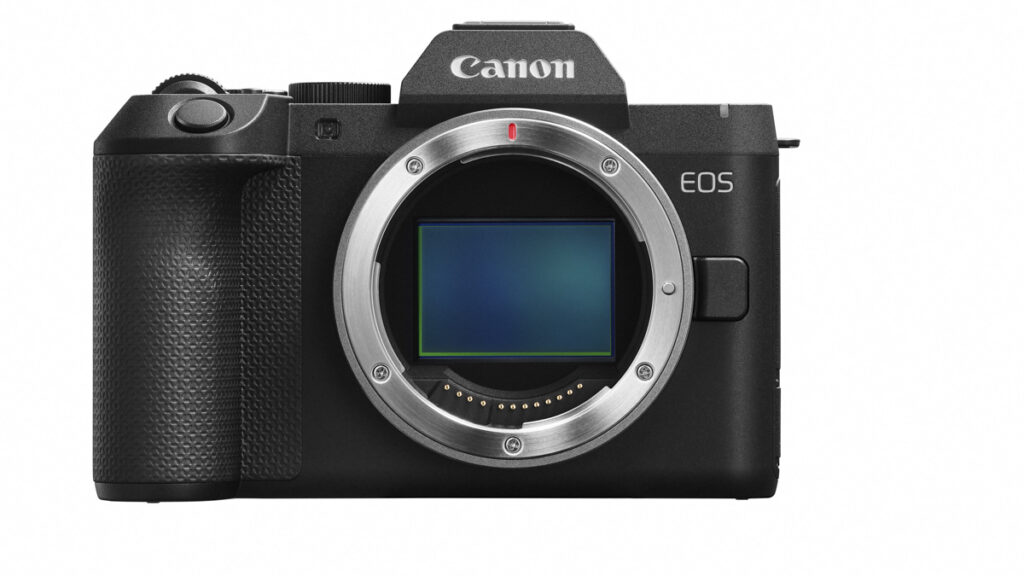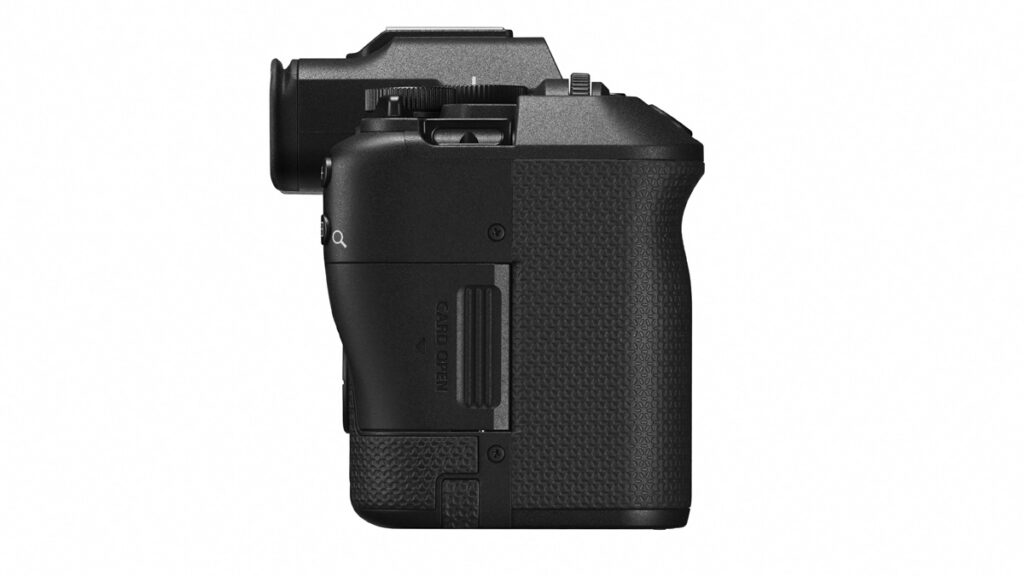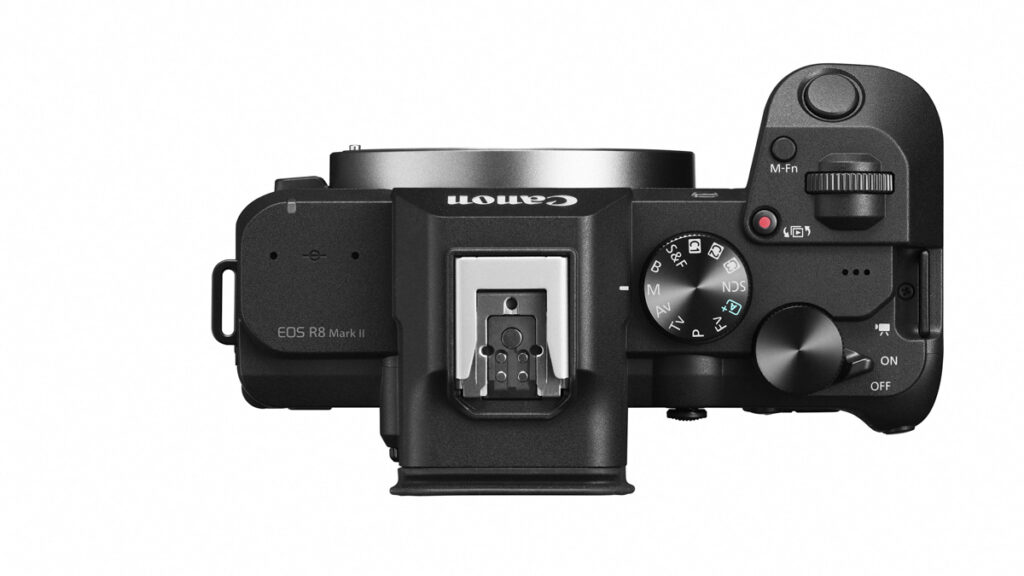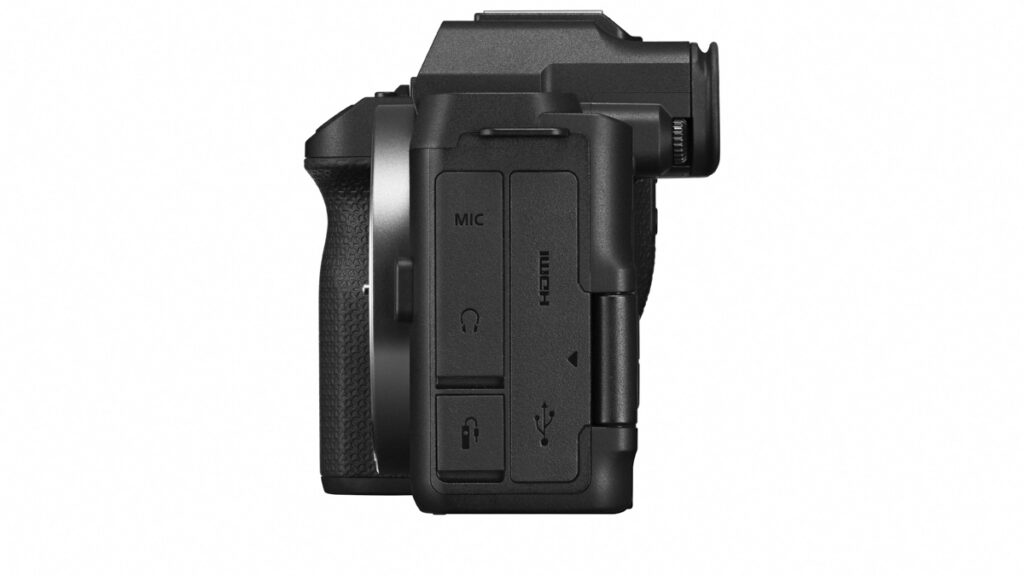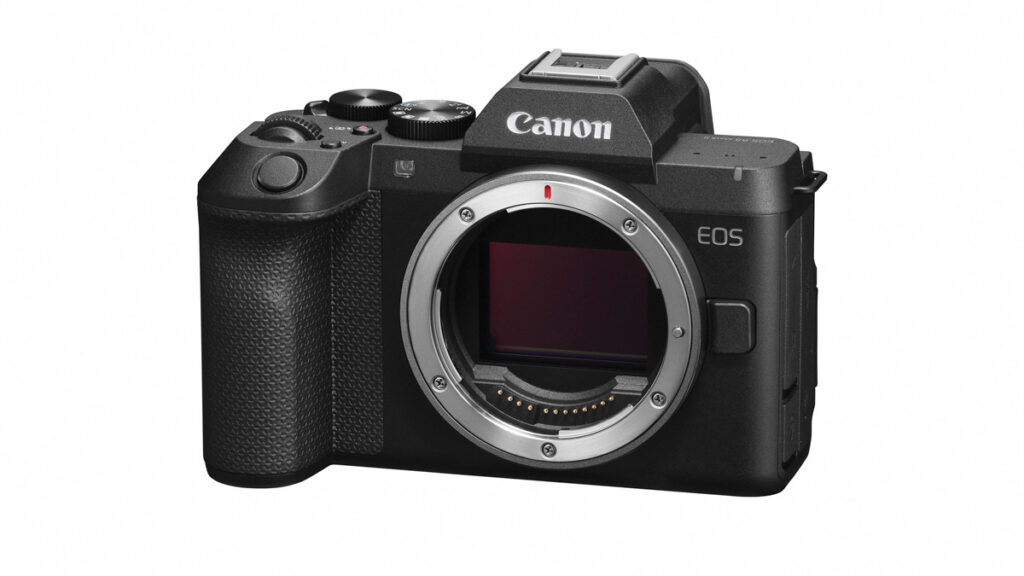

Canon has announced the EOS R8 Mark II, and it fixes the two things everyone wished the original R8 had: in-body stabilisation and a second control dial’s worth of proper handling. It keeps the thing that made the R8 special — full-frame image quality in a genuinely small, light body — and adds the flagship-level autofocus and speed that were missing. Details are on Canon’s site.
The headline: IBIS arrives
The original R8 had no in-body stabilisation at all — it relied on lens IS and digital IS for video. That was the compromise that defined it, and it is the one the Mark II undoes. The R8 Mark II adds 5-axis in-body image stabilisation rated to 7.5 stops at the centre and 7.0 stops at the periphery.
For a camera pitched at travel and everyday shooting, that is the single most important change. It means sharp handheld frames in low light without pushing the ISO, steadier handheld video, and the confidence to leave the tripod behind — which is rather the point of a camera this size. It arrives without the body growing much: 499g body-only, 546g with card and battery, up from the R8’s 461g, and still smaller than an R6 Mark II.
Flagship autofocus and 40fps
The autofocus is where Canon has been unusually generous. The R8 Mark II uses Dual Pixel CMOS AF II with Deep Learning subject detection — people, animals and vehicles, with eye, face, head and body tracking — and focuses in light as low as EV -7.5, the same figure Canon quotes for the flagship EOS R1. It also gains improved tracking persistence, holding focus when a subject briefly leaves the frame, and Register People Priority, letting you register up to 10 faces in-camera (100 on a card) so the camera prioritises the people who matter in a busy scene.
Continuous shooting runs to 40fps with the electronic shutter, with a bigger buffer than the R8 — up to 73 RAW files in a burst — and pre-continuous shooting in H+ mode that captures roughly half a second before you fully press the shutter, adding up to 20 frames before your reflexes catch up. For wildlife, kids and unpredictable travel moments, that combination is genuinely capable rather than a spec-sheet flourish.
The sensor stays, the handling improves
The sensor is the familiar 24.2MP full-frame CMOS with DIGIC X — the same resolution as the R8, and no bad thing, since it is a well-proven chip with strong low-light performance and ISO to 102,400 (expandable to 204,800). This is not a resolution upgrade; it is a capability upgrade.
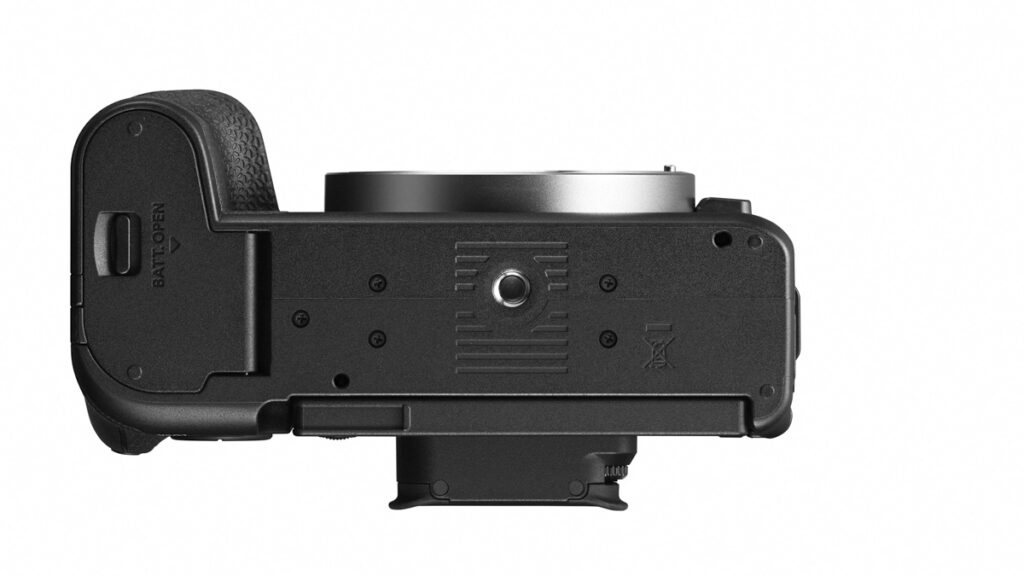
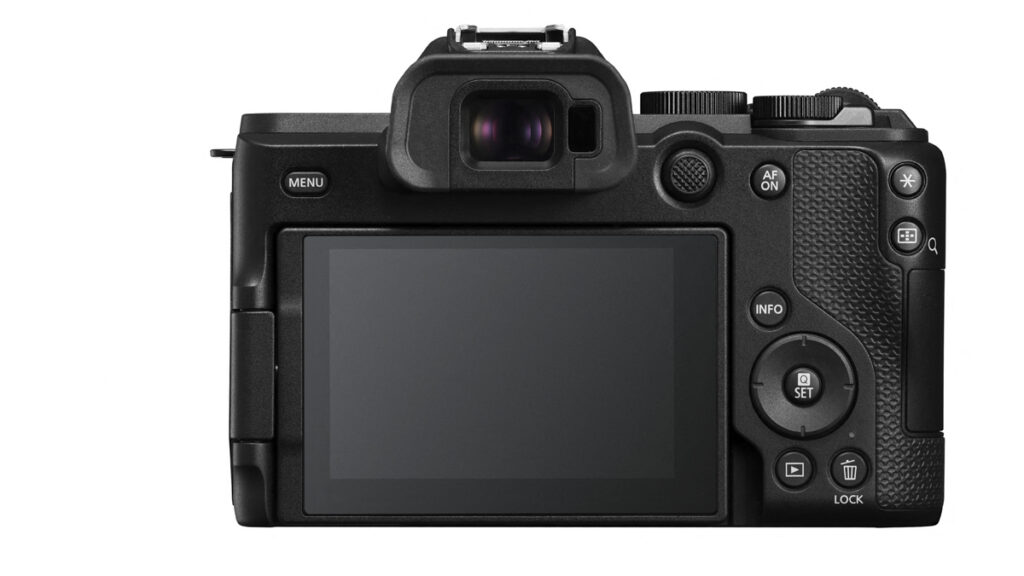
Handling gets real attention. There is a new streamlined body design and — crucially — a multi-controller (AF joystick), which the R8 lacked, making it far quicker to move the focus point by hand. The 2.36-million dot EVF and 1.62-million dot vari-angle screen carry over. The optional EG-E2 Extension Grip adds a separate tripod socket and direct battery access for longer days.
Video and the surprise 3D feature
On video it offers 4K up to 60p oversampled from 6K, Full HD up to 180fps for slow motion, Canon Log 3, HLG and a new Cinema View 2.35:1 mode, plus LUT support. It is a capable hybrid, though worth noting it inherits the R8’s single card slot and the smaller LP-E17 battery (around 340 shots by the LCD, 220 through the finder), so spares remain essential.
The genuinely novel addition is that the R8 Mark II is the first camera with Canon’s new Dual Pixel 3D technology — it can capture JPEGs containing depth information and convert them into 3D images and models via a free Windows app (more on that in our separate story). It is an unusual thing to find on an entry full-frame body, and a sign Canon sees this as more than a budget model.
Our take
This is the camera the R8 should arguably have been, and it is hard to fault the additions. IBIS, a joystick, flagship-level AF, 40fps and pre-capture turn a very good budget full-frame body into a seriously capable one that gives up little to the R6 Mark II beyond the bigger battery, dual slots and higher-resolution finder.
The question, as ever with this camera, will be price — which we will confirm at launch. The original R8 succeeded because it was almost too generous for the money; if Canon has held that line while adding IBIS and this autofocus, the R8 Mark II is one of the most compelling full-frame cameras at its level. If the price has climbed to meet the extra capability, the used original R8 becomes the value pick. Either way, we will have a full review as soon as we can get one in.
Canon EOS R8 Mark II: Specifications
Sensor: 24.2MP full-frame CMOS (36.0 x 24.0mm); DIGIC X.
ISO: 100-102,400, expandable to 50-204,800.
Stabilisation: 5-axis in-body IS, up to 7.5 stops centre / 7.0 stops peripheral, plus movie digital IS.
Autofocus: Dual Pixel CMOS AF II with Deep Learning subject detection (humans, animals including horses, vehicles including aircraft and trains); eye/face/head/body tracking; Register People Priority (10 in-camera, 100 on card); working range to EV -7.5.
Continuous shooting: 40fps electronic shutter (6fps electronic 1st-curtain), 20fps pre-continuous in H+, buffer up to 73 RAW.
Shutter: electronic 1st-curtain 30-1/4000; electronic to 1/16,000.
Video: 4K UHD up to 60p oversampled from 6K; Full HD up to 180fps; Canon Log 3, HLG, PQ; Cinema View 2.35:1; LUT support; frame grab; MP4.
3D: first camera with Dual Pixel 3D (JPEG with depth information, converted via free Dual Pixel 3D Converter app for Windows).
Viewfinder: 0.39-type 2.36M-dot OLED, up to 120fps, 0.70x.
Screen: 7.5cm/3.0in vari-angle, 1.62M-dot.
Storage: 1x UHS-II SD.
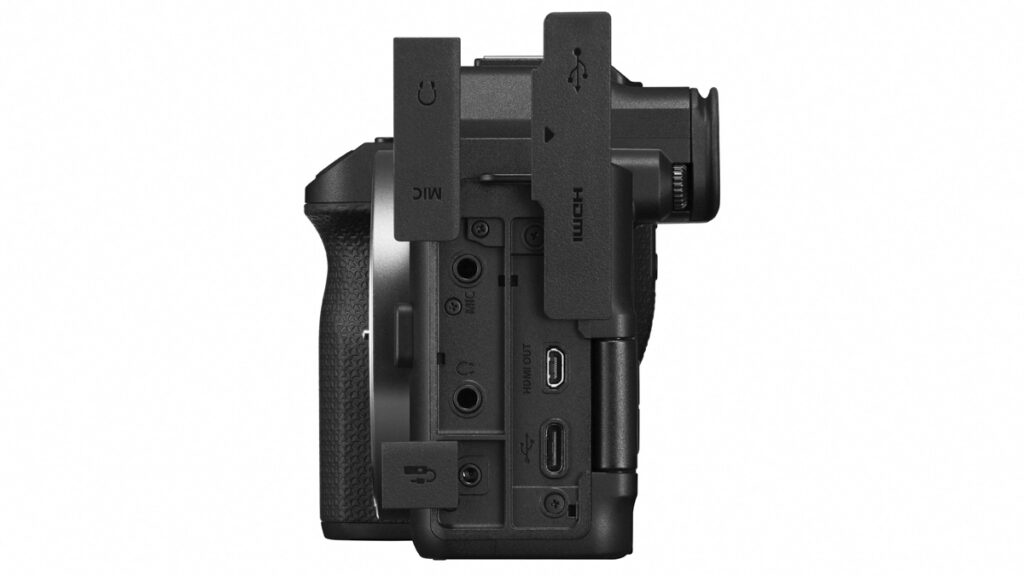
Connectivity: Wi-Fi 2.4/5GHz, Bluetooth 5.3, USB-C 10Gbps with charging and USB livestreaming, Micro HDMI, 3.5mm mic and headphone, multi-function shoe.
Battery: LP-E17, approx. 340 shots LCD / 220 EVF; USB charging.
Body: magnesium alloy, dust and moisture resistant; new multi-controller.
Colour tools: Filmtone Colour Filters, Picture Styles, Smooth Skin.
Dimensions: approx. 131.4 x 90.0 x 79.7mm.
Weight: approx. 499g body only, 546g with card and battery.
Lens mount: RF (RF-S, EF/EF-S via adapter).
Canon EOS R8 Mark II: Price and availability
Canon announced the EOS R8 Mark II on 16 September 2026. UK pricing and on-sale date were not confirmed in the launch materials we have seen, we will update this story once they are available.