
In-body image stabilization (IBIS) is one of the most significant advances in camera technology of the past decade. By physically moving the sensor inside the camera to compensate for hand movement, IBIS allows photographers to shoot sharper stills at slower shutter speeds and gives videographers smoother, steadier footage without a gimbal. It works with any lens, unlike optical image stabilization which requires specific glass.
Since the Minolta DiMAGE A1 introduced the concept in 2003, IBIS has evolved dramatically. Where early systems offered two or three stops of compensation, today’s leading cameras claim eight, nine, or even ten stops, and the technology has spread from professional flagships to enthusiast and even entry-level bodies. This guide covers every current camera with IBIS worth knowing about, organised by manufacturer, with updated IBIS ratings and context for 2025 and 2026.
What is IBIS?
IBIS stands for in-body image stabilization. It works by physically shifting the camera’s sensor to counteract movement detected by built-in gyroscopes and accelerometers. Because the stabilization happens at the sensor level, it is effective with any lens attached, whether that lens has its own optical stabilization or not.
Most modern IBIS systems use 5-axis stabilization, compensating for movement along five axes: pitch (rotation from side to side), yaw (rotation left and right on a vertical axis), roll (rotation around the front-to-back axis), and horizontal and vertical shift. More axes means more comprehensive compensation for real-world hand movement.
Many camera systems also offer coordinated stabilization between the camera body and a stabilized lens, sometimes called Dual IS, Synchro VR, or Coordinated IBIS, which combines the compensation abilities of both systems to produce higher effective stop ratings than either could achieve alone.
It is worth noting that published stop ratings are measured under controlled CIPA laboratory conditions and do not always reflect real-world performance, which varies with focal length, technique, and individual steadiness. The ratings are best used as a comparative guide rather than an absolute guarantee.
What is 5-axis image stabilisation?
Many cameras with IBIS have what is called 5-axis image stabilization. This means that your camera has built-in gyroscopes that provide stabilization along five axes: yaw, pitch, roll, horizontal and vertical.
Yaw is when your camera twists left or right on a vertical axis. Rotation on the front-to-back maxi is called roll. Rotation from side to side is called pitch.
Current cameras that feature IBIS
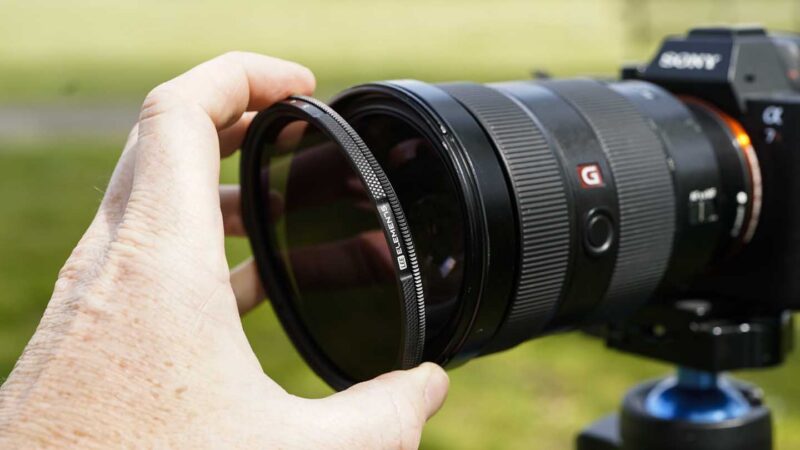
In this guide we’ve listed out all of the current cameras on the market that feature in-body image stabilisation. Some manufacturers, such as Sony and Olympus, have featured this technology in previous generations of popular models such as the A7 series cameras. Given the unpredictability in finding some of these older cameras, we’ve listed out which cameras have IBIS that we know are readily available.
For a deeper dive into the many different camera types and features available, check out our range of camera buying guides.
Which Canon cameras have IBIS?
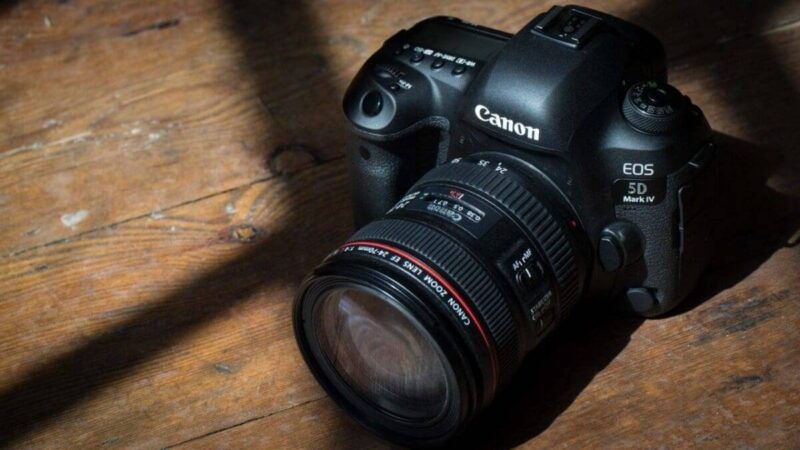
Canon introduced IBIS to its EOS R mirrorless system in 2020 with the EOS R5 and R6, and has since extended it across several bodies in the lineup. IBIS is currently available on the R1, R5 variants, R6 variants, and R7. The EOS R8, R10, and R50 do not include IBIS.
Canon EOS R1
Sensor: Full-frame CMOS, 24.2MP stacked
IBIS system name: 5-axis In-Body Image Stabilizer
Stops of compensation: Up to 8 stops (body only)
Combined stabilization: Up to 8 stops (coordinated with RF IS lenses)
Axes: 5-axis (pitch, yaw, roll, horizontal, vertical)
Video stabilization mode: Movie Digital IS (with crop)
Canon’s current flagship professional mirrorless, the EOS R1 features a 5-axis IBIS system providing up to 8 stops of compensation, working in coordination with stabilized RF lenses for maximum performance. The R1 is aimed at professional sports and photojournalism photographers who need the highest AF speed, frame rate, and environmental sealing alongside reliable stabilization for handheld work in any conditions.
Canon EOS R5 Mark II
Sensor: Full-frame CMOS, 45MP
IBIS system name: 5-axis In-Body Image Stabilizer
Stops of compensation: Up to 8.5 stops (body only)
Combined stabilization: Up to 8.5 stops (coordinated with RF IS lenses)
Axes: 5-axis (pitch, yaw, roll, horizontal, vertical)
Video stabilization mode: Movie Digital IS / Movie IS Enhanced (with crop)
The EOS R5 Mark II is Canon’s high-resolution hybrid flagship, featuring a 5-axis IBIS system rated at 8.5 stops, the highest of any Canon body and among the highest of any full-frame camera available. Combined with RF lens stabilization via the 12-pin mount connection, the system delivers exceptional compensation for both stills and video. The R5 Mark II is the natural choice for photographers who need maximum resolution alongside the best available stabilization for handheld work.
Canon EOS R6 Mark III
Sensor: Full-frame CMOS, 32.5MP
IBIS system name: 5-axis In-Body Image Stabilizer
Stops of compensation: Up to 8.5 stops (body only)
Combined stabilization: Up to 8.5 stops (coordinated with RF IS lenses)
Axes: 5-axis (pitch, yaw, roll, horizontal, vertical)
Video stabilization mode: Movie Digital IS / Movie IS Enhanced (with crop)
Launched in late 2025, the EOS R6 Mark III improves on the R6 Mark II with a new 32.5MP sensor and an IBIS system rated at 8.5 stops, matching the R5 Mark II. Combined with 40fps electronic shutter, Dual Pixel CMOS AF II, and substantially improved video capability, it is the most versatile hybrid in the Canon lineup.
Canon EOS R5
Sensor: Full-frame CMOS, 45MP
IBIS system name: 5-axis In-Body Image Stabilizer
Stops of compensation: Up to 8 stops (body only)
Combined stabilization: Up to 8 stops (coordinated with RF IS lenses)
Axes: 5-axis (pitch, yaw, roll, horizontal, vertical)
Video stabilization mode: Movie Digital IS (with crop)
The original EOS R5 was Canon’s first camera to offer IBIS when it launched in 2020, with a 5-axis system providing up to 8 stops of compensation with compatible RF lenses. While superseded by the R5 Mark II, it remains capable and is widely available at reduced prices. Canon’s IBIS can deliver 8 stops even with non-stabilized lenses, an advantage over systems that require lens coordination to reach their maximum ratings.
Canon EOS R6 Mark II
Sensor: Full-frame CMOS, 24.2MP
IBIS system name: 5-axis In-Body Image Stabilizer
Stops of compensation: Up to 8 stops (body only)
Combined stabilization: Up to 8 stops (coordinated with RF IS lenses)
Axes: 5-axis (pitch, yaw, roll, horizontal, vertical)
Video stabilization mode: Movie Digital IS (with crop)
The EOS R6 Mark II features an 8-stop IBIS system and proved highly effective across stills and video in testing. Now superseded by the R6 Mark III but still available, it represents strong value for hybrid photographers who want capable stabilization at a lower price than current-generation bodies.
Canon EOS R3
Sensor: Full-frame CMOS, 24.1MP stacked
IBIS system name: 5-axis In-Body Image Stabilizer
Stops of compensation: Up to 8EV (body only)
Combined stabilization: Up to 8EV (coordinated with RF IS lenses)
Axes: 5-axis (pitch, yaw, roll, horizontal, vertical)
Video stabilization mode: Movie Digital IS (with crop)
Canon’s sports-focused professional body includes a 5-axis IBIS system providing up to 8EV of compensation. In video mode the system produces genuinely rock-steady handheld footage, and the R3’s speed and AF capabilities make it a natural choice for sports photographers who need reliable stabilization alongside extreme burst rates and subject tracking.
Canon EOS R7
Sensor: APS-C CMOS, 32.5MP
IBIS system name: 5-axis In-Body Image Stabilizer
Stops of compensation: Up to 8EV (body only)
Combined stabilization: Up to 7EV (with RF-S 18-150mm IS STM)
Axes: 5-axis with horizon correction function
Video stabilization mode: Movie Digital IS (with crop)
The R7 is Canon’s current flagship APS-C mirrorless and the first in the crop-sensor range to include IBIS. It introduces a horizon correction feature that uses sensor movement to level a sloping horizon, visible in the viewfinder and on screen. For vloggers and content creators the combination of IBIS and compact APS-C size is a meaningful practical advantage.
Which Sony cameras have IBIS?
Sony was an early adopter of full-frame IBIS with the A7 II in 2014 and has since developed some of the most capable stabilization systems in the industry. The Alpha range now covers everything from entry-level APS-C to professional full-frame with IBIS, and Sony’s coordinated IBIS systems with compatible G Master lenses are among the most effective available.
Sony Alpha 1 II
Sensor: Full-frame stacked Exmor RS CMOS, 50MP
IBIS system name: 5-axis SteadyShot IBIS
Stops of compensation: Up to 8 stops (body only)
Combined stabilization: Higher with OSS-equipped FE lenses
Axes: 5-axis (pitch, yaw, roll, horizontal, vertical)
Video stabilization mode: Active Mode (with crop) / SteadyShot Active
Sony’s current flagship combines a 50MP stacked sensor with a 5-axis IBIS system and Sony’s most advanced AI subject tracking. The IBIS works in coordination with OSS-equipped FE lenses to deliver high-stop compensation across the widest range of shooting scenarios. For photographers who need the highest resolution, fastest subject acquisition, and best stabilization in a single Sony body, the A1 II is the definitive choice.
Sony Alpha 7 V
Sensor: Full-frame BSI CMOS, 33MP partially stacked
IBIS system name: 5-axis SteadyShot IBIS
Stops of compensation: Up to 7.5 stops (body only)
Combined stabilization: Higher with OSS-equipped FE lenses
Axes: 5-axis (pitch, yaw, roll, horizontal, vertical)
Video stabilization mode: Active Mode (with crop)
The Sony A7 V is a 33MP full-frame hybrid featuring a 5-axis IBIS system rated at up to 7.5 stops, a meaningful improvement over the A7 IV’s 5.5EV system. The Bionz XR2 processor with integrated AI unit drives significantly improved subject detection AF and a multi-shot high-resolution mode. Active Mode for video provides additional electronic stabilization with a slight crop.
Sony Alpha 7R V
Sensor: Full-frame BSI CMOS, 61MP
IBIS system name: 5-axis SteadyShot IBIS
Stops of compensation: Up to 8 stops (body only)
Combined stabilization: Higher with OSS-equipped FE lenses
Axes: 5-axis (pitch, yaw, roll, horizontal, vertical)
Video stabilization mode: Active Mode (with crop)
The A7R V’s high-resolution 61MP sensor is paired with a 5-axis IBIS system offering exceptional shake compensation. The AI processing unit drives improved subject detection AF, and the camera supports 8K video with a 1.2x crop and full-frame 4K from 6.2K oversampling. For high-resolution landscape, studio, and architecture work where handheld shooting is required, the A7R V remains one of the best options available.
Sony Alpha 7S III
Sensor: Full-frame BSI CMOS, 12.1MP
IBIS system name: 5-axis SteadyShot IBIS
Stops of compensation: Up to 5.5EV (body only)
Combined stabilization: Higher with OSS-equipped FE lenses
Axes: 5-axis (pitch, yaw, roll, horizontal, vertical)
Video stabilization mode: SteadyShot Active (digital, with crop)
The A7S III is Sony’s video-specialist full-frame camera, using a 12MP sensor optimized for sensitivity and dynamic range. It features 5-axis IBIS with up to 5.5EV compensation alongside SteadyShot Active digital stabilization for video. The camera produces excellent 4K video even without using its more advanced features, making it a great option for those new to grading Log files.
Sony Alpha 7 IV
Sensor: Full-frame BSI CMOS, 33MP
IBIS system name: 5-axis SteadyShot IBIS
Stops of compensation: Up to 5.5EV (body only)
Combined stabilization: Higher with OSS-equipped FE lenses
Axes: 5-axis (pitch, yaw, roll, horizontal, vertical)
Video stabilization mode: Active Mode (with 1.3x crop via firmware update)
The A7 IV features 5-axis IBIS with 5.5EV compensation. Real-world testing at 70mm achieved around 60-70% sharp frames at 1/4-second shutter speed. A firmware update added Active Stabilization with a 1.3x crop for additional video stability. The camera remains a strong all-round hybrid at its price point and is now available at significantly reduced cost.
Sony A9 III
Sensor: Full-frame global shutter stacked CMOS, 24.6MP
IBIS system name: 5-axis SteadyShot IBIS
Stops of compensation: Up to 8 stops (body only)
Combined stabilization: Higher with OSS-equipped FE lenses
Axes: 5-axis (pitch, yaw, roll, horizontal, vertical)
Video stabilization mode: Active Mode (with crop)
The A9 III uses a global shutter stacked sensor that eliminates rolling shutter distortion entirely. It includes 5-axis IBIS working in coordination with Sony’s OSS lenses, and the combination of the global shutter, blackout-free shooting, and IBIS makes it the most capable camera for freeze-frame action with clean stabilization. It is the choice of professional sports photographers who need the absolute highest tracking reliability.
Sony A6700
Sensor: APS-C stacked Exmor R CMOS, 26MP
IBIS system name: 5-axis SteadyShot IBIS
Stops of compensation: Up to 5 stops (body only)
Combined stabilization: Higher with OSS-equipped E-mount lenses
Axes: 5-axis (pitch, yaw, roll, horizontal, vertical)
Video stabilization mode: Active Mode (with crop)
The A6700 is Sony’s flagship APS-C mirrorless and the first in the APS-C range to include 5-axis IBIS. It also features Active Mode for video with a slight crop. The inclusion of the AF system and IBIS from Sony’s professional full-frame range in an APS-C body at the A6700’s price was a significant development, and it remains the most capable APS-C option in Sony’s lineup.
Which Nikon cameras have IBIS?
Nikon introduced IBIS to its Z-series cameras with the Z6 and Z7 in 2018, calling its implementation Vibration Reduction (VR). The Z-system has since developed coordinated IBIS through Synchro VR, which combines body and lens stabilization for higher effective stop ratings.
Nikon Z9
Sensor: Full-frame stacked CMOS, 45.7MP
IBIS system name: 5-axis Sensor-shift VR
Stops of compensation: Up to 6EV (body only)
Combined stabilization: Up to 6EV (with Synchro VR-compatible lenses)
Axes: 5-axis (pitch, yaw, roll, horizontal, vertical)
Video stabilization mode: Electronic VR (with crop)
The Nikon Z9 is Nikon’s professional flagship, with a 5-axis IBIS system rated at up to 6EV. The 45.7MP stacked sensor enables 20fps RAW, 30fps JPEG, and 120fps at 11MP, and the AF system with Eye Detection is among the fastest available. At its price point the Z9 competes directly with the Sony A1 II and Canon EOS R1, surpassing the capabilities of the Nikon D6 DSLR at significantly lower cost.
Nikon Z8
Sensor: Full-frame stacked CMOS, 45.7MP
IBIS system name: 5-axis Sensor-shift VR
Stops of compensation: Up to 5.5 stops (body only)
Combined stabilization: Higher with Synchro VR-compatible Z lenses
Axes: 5-axis (pitch, yaw, roll, horizontal, vertical)
Video stabilization mode: Electronic VR (with crop)
The Nikon Z8 shares much of the Z9’s sensor and processing capability in a more compact body, with a 5-axis IBIS system providing 5.5 stops of compensation. In testing, the Z8 produced sharp images handheld at shutter speeds as slow as 1/5sec, and around 50-60% sharp frames at 1/4sec with a 70mm lens. For the resolution and speed combination it offers, the Z8 represents strong value relative to the Z9.
Nikon Z6 III
Sensor: Full-frame partially stacked CMOS, 24.5MP
IBIS system name: 5-axis Sensor-shift VR
Stops of compensation: Up to 6 stops (body only)
Combined stabilization: Up to 8 stops (with Synchro VR-compatible lenses)
Axes: 5-axis (pitch, yaw, roll, horizontal, vertical)
Video stabilization mode: Electronic VR (with crop)
The Nikon Z6 III is a significant upgrade over the Z6 II, featuring a partially stacked sensor and a 5-axis IBIS system reaching up to 8 stops with Synchro VR. It competes directly with the Sony A7 V and Canon EOS R6 Mark III, and its -10EV AF sensitivity in low light is particularly notable for wildlife and documentary photographers.
Nikon Z5 II
Sensor: Full-frame CMOS, 24.5MP
IBIS system name: 5-axis Sensor-shift VR
Stops of compensation: Up to 5EV (body only)
Combined stabilization: Higher with Synchro VR-compatible Z lenses
Axes: 5-axis (pitch, yaw, roll, horizontal, vertical)
Video stabilization mode: Electronic VR (with crop)
The Z5 II carries the EXPEED 7 processor from Nikon’s professional flagship cameras in an accessible full-frame body. Its 5-axis IBIS provides up to 5EV and works with compatible Z-mount lenses for coordinated stabilization. For photographers entering the full-frame Z system, the Z5 II offers the best value access to Nikon’s stabilization technology alongside the advanced autofocus capabilities of the EXPEED 7 engine.
Nikon Zf
Sensor: Full-frame BSI CMOS, 24.5MP
IBIS system name: 5-axis Sensor-shift VR with Focus Point VR
Stops of compensation: Up to 8 stops (body only)
Combined stabilization: Higher with Synchro VR-compatible lenses
Axes: 5-axis (pitch, yaw, roll, horizontal, vertical)
Video stabilization mode: Electronic VR (with crop)
The Nikon Zf features up to 8 stops of IBIS and introduced Focus Point VR, which prioritizes the area under the active focus point for stabilization with both still and moving subjects. The Zf’s combination of film-camera aesthetics, modern sensor technology, and this high-performing IBIS system makes it a distinctive choice for photographers who want capability and character in equal measure.
Nikon Z7 II
Sensor: Full-frame BSI CMOS, 45.7MP
IBIS system name: 5-axis Sensor-shift VR
Stops of compensation: Up to 5EV (body only)
Combined stabilization: Higher with VR-equipped Z and F-mount (via adapter) lenses
Axes: 5-axis (pitch, yaw, roll, horizontal, vertical)
Video stabilization mode: Electronic VR (with crop)
The Z7 II features the same 5-axis IBIS as the Z6 II, offering up to 5EV of compensation. Testing with the Nikkor Z 24-70mm f/4 S produced approximately 50% sharp frames at 5EV slower than normal shutter speed. The Z7 II is now superseded by the Z8, which offers significantly improved performance at a comparable price, but remains a capable option for high-resolution handheld work.
Nikon Z6 II
Sensor: Full-frame BSI CMOS, 24.5MP
IBIS system name: 5-axis Sensor-shift VR
Stops of compensation: Up to 5EV (body only)
Combined stabilization: Higher with VR-equipped Z and F-mount (via adapter) lenses
Axes: 5-axis (pitch, yaw, roll, horizontal, vertical)
Video stabilization mode: Electronic VR (with crop)
The Z6 II was Nikon’s first body to offer dual processor and dual card slots. Its 5-axis IBIS provides up to 5EV of compensation. Now considerably reduced in price and superseded by the Z6 III, it remains a capable option for photographers who want an accessible entry point to the full-frame Z system with built-in stabilization.
Which Panasonic cameras have IBIS?
Panasonic has long been a leader in IBIS technology across both its Micro Four Thirds Lumix G series and its full-frame Lumix S series. Many Panasonic bodies offer Dual IS 2, which coordinates sensor-shift stabilization with optical image stabilization in compatible lenses for higher effective compensation.
Panasonic Lumix S1 II
Sensor: Full-frame partially stacked CMOS, 24.1MP
IBIS system name: 5-axis Body IS
Stops of compensation: Up to 8 stops (body only)
Combined stabilization: Higher with Dual IS 2 compatible L-mount lenses
Axes: 5-axis (pitch, yaw, roll, horizontal, vertical)
Video stabilization mode: E-IS (Electronic Image Stabilizer, with crop)
The Lumix S1 II is Panasonic’s latest full-frame hybrid flagship, featuring a partially stacked 24MP sensor and an improved 5-axis IBIS system. It builds on the S1’s strong video heritage with 4K 120p, V-Log support, and professional codec options, alongside the improved phase detection AF introduced in the S5 II. The S1 II is particularly suited to hybrid shooters whose work is weighted toward video.
Panasonic Lumix S5 II
Sensor: Full-frame CMOS, 24.2MP
IBIS system name: 5-axis Body IS
Stops of compensation: Up to 5EV (body only)
Combined stabilization: Up to 6.5EV (with Dual IS 2 compatible lenses)
Axes: 5-axis (pitch, yaw, roll, horizontal, vertical)
Video stabilization mode: E-IS (Electronic Image Stabilizer, with crop)
The S5 II introduced phase detection AF to Panasonic’s S-series alongside an updated 5-axis IBIS system. The combination of phase detection AF, strong IBIS, and extensive video capability including 4:2:2 10-bit internal recording makes it one of the best hybrid options in its price range. For photographers who prioritize video quality alongside stills, the S5 II remains one of the most compelling options in the full-frame category.
Panasonic Lumix G9 II
Sensor: Micro Four Thirds Live MOS, 25.2MP
IBIS system name: 5-axis Dual IS 2 / Active IS
Stops of compensation: Up to 8 stops (body only, CIPA rated)
Combined stabilization: Higher with Dual IS 2 compatible MFT lenses
Axes: 5-axis (pitch, yaw, roll, horizontal, vertical)
Video stabilization mode: E-IS / Active IS (with crop)
The G9 II is Panasonic’s flagship Micro Four Thirds mirrorless, featuring a sensor-shift IBIS system with a CIPA rating of 8 stops. Micro Four Thirds sensors benefit particularly from IBIS because the smaller, lighter sensor is easier to move quickly and precisely, making the G9 II one of the most effective stabilization platforms available for the size and cost.
Panasonic Lumix GH6
Sensor: Micro Four Thirds Live MOS, 25.2MP
IBIS system name: 5-axis Body IS / Dual IS 2
Stops of compensation: Up to 7.5 stops (body alone)
Combined stabilization: Higher with Dual IS 2 compatible MFT lenses
Axes: 5-axis (pitch, yaw, roll, horizontal, vertical)
Video stabilization mode: E-IS / Active IS (with crop)
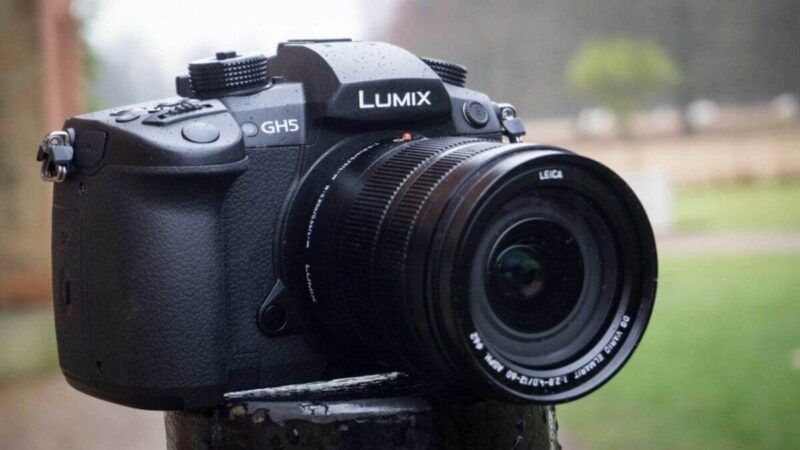
The GH6 features an updated 5-axis gyro sensor providing up to 7.5 stops of Body IS on its own. The stabilization system also enables a High Resolution mode that shifts the sensor across 8 frames to produce a 100MP equivalent composite image, usable without a tripod. Digital stabilization for video is available with a slight crop.
Panasonic Lumix GH5 II
Sensor: Micro Four Thirds Live MOS, 20.3MP
IBIS system name: 5-axis Body IS / Dual IS 2
Stops of compensation: Up to 6.5EV (body only)
Combined stabilization: Higher with Dual IS 2 compatible MFT lenses
Axes: 5-axis (pitch, yaw, roll, horizontal, vertical)
Video stabilization mode: E-IS (with crop)
The GH5 Mark II features IBIS with up to 6.5EV of compensation using the stabilization algorithm from the S1H. It supports C4K and 4K video at 60p and 4:2:2 10-bit output to HDMI simultaneously. Now superseded by the GH6, the GH5 II remains available at reduced prices.
Panasonic Lumix S1
Sensor: Full-frame CMOS, 24.2MP
IBIS system name: 5-axis Body IS / Dual IS 2
Stops of compensation: Up to 6EV (body only)
Combined stabilization: Higher with Dual IS 2 compatible L-mount lenses
Axes: 5-axis (pitch, yaw, roll, horizontal, vertical)
Video stabilization mode: E-IS (with crop)
The original Lumix S1 introduced full-frame IBIS to Panasonic’s lineup and its Dual IS system stabilizes both images and video effectively. Now significantly superseded in video capability by the S5 II and S1 II, it is available at considerably reduced prices and remains a capable option for photographers who want a robust full-frame body with stabilization.
Panasonic Lumix GX9
Sensor: Micro Four Thirds Live MOS, 20.3MP
IBIS system name: 5-axis Body IS
Stops of compensation: Up to 4EV (body only)
Combined stabilization: Higher with Dual IS compatible MFT lenses
Axes: 5-axis (pitch, yaw, roll, horizontal, vertical)
Video stabilization mode: E-IS (with crop)
The GX9 is Panasonic’s compact rangefinder-style Micro Four Thirds camera featuring 5-axis sensor-shift IBIS. Its small, flat body makes it particularly well suited to street and travel photography, and the built-in stabilization is effective for handheld shooting with compact M43 prime lenses. Though now several generations old, the GX9 remains available and provides capable stabilization in a distinctive small form factor.
Which Fujifilm cameras have IBIS?
Fujifilm introduced IBIS to its X series APS-C cameras with the X-H1 in 2018 and has since extended it to multiple bodies across both the APS-C X series and the medium-format GFX line. Fujifilm’s coordinated IBIS works with optically stabilized XF lenses for higher combined compensation.
Fujifilm X-H2S
Sensor: APS-C X-Trans CMOS 5 HS (stacked), 26.1MP
IBIS system name: 5-axis In-Body Image Stabilization
Stops of compensation: Up to 7 stops (body only)
Combined stabilization: Higher with OIS-equipped XF lenses
Axes: 5-axis (pitch, yaw, roll, horizontal, vertical)
Video stabilization mode: Digital IS (with crop)
The X-H2S is Fujifilm’s speed-focused APS-C flagship, featuring a stacked sensor for fast readout and a 5-axis IBIS system providing up to 7 stops. The stacked architecture enables 40fps continuous shooting, 6.2K video at 30p, and 4K at 120p. For wildlife and action photographers working within the X-mount system, the X-H2S offers the best combination of speed and stabilization in Fujifilm’s APS-C range.
Fujifilm X-H2
Sensor: APS-C X-Trans CMOS 5 HR (BSI), 40.2MP
IBIS system name: 5-axis In-Body Image Stabilization
Stops of compensation: Up to 7 stops (body only)
Combined stabilization: Higher with OIS-equipped XF lenses
Axes: 5-axis (pitch, yaw, roll, horizontal, vertical)
Video stabilization mode: Digital IS (with crop)
The X-H2 shares the same 5-axis IBIS system as the X-H2S, rated at up to 7 stops. The 40MP X-Trans sensor makes stabilization especially valuable for landscape and architecture photographers who want maximum detail in handheld conditions. Fujifilm also improved the shake detection algorithm for both stills and video compared with earlier X-series bodies.
Fujifilm X-T5
Sensor: APS-C X-Trans CMOS 5 HR (BSI), 40.2MP
IBIS system name: 5-axis In-Body Image Stabilization
Stops of compensation: Up to 7 stops (with OIS lenses)
Combined stabilization: Up to 7 stops (coordinated with OIS-equipped XF lenses)
Axes: 5-axis (pitch, yaw, roll, horizontal, vertical)
Video stabilization mode: Digital IS (with crop)
The X-T5 incorporates 5-axis IBIS with up to 7 stops, improved over the X-T4’s 6.5EV. It also supports Pixel Shift Multi-Shot mode, using the IBIS system to shift the sensor between frames at 20fps to produce a 160MP composite via Fujifilm’s Pixel Shift Combiner software.
Fujifilm X-E5
Sensor: APS-C X-Trans CMOS 5 HR (BSI), 40.2MP
IBIS system name: 5-axis In-Body Image Stabilization
Stops of compensation: Up to 7 stops (body only)
Combined stabilization: Higher with OIS-equipped XF lenses
Axes: 5-axis (pitch, yaw, roll, horizontal, vertical)
Video stabilization mode: Digital IS (with crop)
The Fujifilm X-E5 is a compact rangefinder-style APS-C mirrorless with a 40.2MP X-Trans BSI sensor and 5-axis IBIS. The stabilization is particularly valuable given the camera’s compact form factor and the wide maximum apertures of the X-mount compact primes it is naturally paired with for street and travel photography.
Fujifilm X-S20
Sensor: APS-C X-Trans CMOS 4 (BSI), 26.1MP
IBIS system name: 5-axis In-Body Image Stabilization
Stops of compensation: Up to 7 stops (body only)
Combined stabilization: Higher with OIS-equipped XF lenses
Axes: 5-axis (pitch, yaw, roll, horizontal, vertical)
Video stabilization mode: Digital IS (with crop)
The X-S20 is Fujifilm’s vlog-focused APS-C mirrorless, featuring 5-axis IBIS alongside a dedicated Vlog mode and a vari-angle touchscreen. The X-Processor 5 drives subject detection AF and the most comprehensive video specification in Fujifilm’s mid-range. For content creators who want Fujifilm’s colour science alongside effective stabilization in a compact package, the X-S20 is the natural choice.
Fujifilm X-S10
Sensor: APS-C X-Trans CMOS 4 (BSI), 26.1MP
IBIS system name: 5-axis In-Body Image Stabilization
Stops of compensation: Up to 6EV (body only)
Combined stabilization: Higher with OIS-equipped XF lenses
Axes: 5-axis (pitch, yaw, roll, horizontal, vertical)
Video stabilization mode: Digital IS (with crop)
The X-S10 brought IBIS to a more affordable Fujifilm body, with up to 6EV compensation. Testing with the XF18-55mm at 55mm produced around 50% sharp images at 1/2-second shutter speed. Now superseded by the X-S20 but available at reduced prices, it remains an accessible IBIS-equipped entry point to the Fujifilm system.
Fujifilm X100VI
Sensor: APS-C X-Trans CMOS 5 HR (BSI), 40.2MP
IBIS system name: 5-axis In-Body Image Stabilization
Stops of compensation: Up to 6 stops (body only)
Combined stabilization: N/A (fixed lens, no coordinated IS)
Axes: 5-axis (pitch, yaw, roll, horizontal, vertical)
Video stabilization mode: Digital IS (with crop)
The X100VI was a milestone for the series as the first X100 to include IBIS, rated at 6 stops. Integrating stabilization into the X100’s compact fixed-lens body without compromising its defining character was a significant engineering achievement. For street and travel photographers who want the classic X100 experience alongside practical stabilization for low-light handheld shooting, the X100VI is the definitive X100.
Fujifilm GFX100RF
Sensor: Medium-format BSI CMOS, 102MP (43.8 × 32.9mm)
IBIS system name: 5-axis In-Body Image Stabilization
Stops of compensation: Up to 8 stops (body only)
Combined stabilization: N/A (fixed lens, no coordinated IS)
Axes: 5-axis (pitch, yaw, roll, horizontal, vertical)
Video stabilization mode: Digital IS (with crop)
The GFX100RF is a medium-format fixed-lens compact with a 102MP BSI CMOS sensor and 5-axis IBIS. The built-in four-stop ND filter and the IBIS system work together to provide extensive handheld exposure control in bright conditions. For a medium-format camera the stabilization performance is impressive, making it a genuinely practical handheld instrument for photographers who want 102MP quality without being tied to a tripod.
Fujifilm GFX100 II
Sensor: Medium-format BSI CMOS, 102MP (43.8 × 32.9mm)
IBIS system name: 5-axis In-Body Image Stabilization
Stops of compensation: Up to 8 stops (body only)
Combined stabilization: Higher with OIS-equipped GF lenses
Axes: 5-axis (pitch, yaw, roll, horizontal, vertical)
Video stabilization mode: Digital IS (with crop)
The GFX100 II is Fujifilm’s medium-format flagship with an interchangeable lens system, featuring 8 stops of IBIS — an exceptional performance for a sensor of this size. The combination of 102MP resolution, 8-stop stabilization, and Fujifilm’s GF lens system makes it one of the most capable handheld imaging systems ever built, competitive with the Hasselblad X2D II at a broadly similar price.
Which OM System cameras have IBIS?
OM System, formerly Olympus, has been one of the pioneers and long-standing leaders in IBIS technology. The Micro Four Thirds format’s smaller, lighter sensors are inherently easier to stabilize, and OM System bodies consistently deliver some of the highest real-world stop ratings of any cameras on the market.
OM System OM-1 Mark II
Sensor: Micro Four Thirds Live MOS, 20.4MP
IBIS system name: 5-axis Sync IS
Stops of compensation: Up to 7.5EV (body only)
Combined stabilization: Up to 8.5 stops (with Sync IS-compatible M.Zuiko lenses)
Axes: 5-axis (pitch, yaw, roll, horizontal, vertical)
Video stabilization mode: M-IS1 / M-IS2 (with crop)
The OM-1 Mark II is OM System’s professional flagship, featuring a 5-axis IBIS system rated at 8.5 stops with compatible lenses, matching the Canon EOS R5 Mark II for the highest rating among mainstream camera systems before the Hasselblad X2D II raised the bar. The IBIS also enables Handheld High Res Shot mode producing 80MP composites without a tripod.
OM System OM-1
Sensor: Micro Four Thirds Live MOS, 20.4MP
IBIS system name: 5-axis Sync IS
Stops of compensation: Up to 7EV (body only)
Combined stabilization: Up to 8EV (with Sync IS-compatible M.Zuiko lenses)
Axes: 5-axis (pitch, yaw, roll, horizontal, vertical)
Video stabilization mode: M-IS1 / M-IS2 (with crop)
The original OM-1 delivers up to 7EV IBIS compensation, increasing to 8EV with compatible lens IS. The stabilization works effectively in video mode as well as stills, and the Live Composite mode for capturing light trails and fireworks benefits significantly from the ability to hand hold during long composite sequences.
OM System OM-5 II
Sensor: Micro Four Thirds Live MOS, 20.4MP
IBIS system name: 5-axis Sync IS
Stops of compensation: Up to 6.5EV (body only)
Combined stabilization: Up to 7.5EV (with Sync IS-compatible M.Zuiko lenses)
Axes: 5-axis (pitch, yaw, roll, horizontal, vertical)
Video stabilization mode: M-IS1 / M-IS2 (with crop)
The OM-5 II is a compact weather-sealed Micro Four Thirds body for outdoor and travel photography, featuring IBIS up to 7.5EV with compatible lenses. It includes Hand-held High Res Shot mode producing up to 50MP composites without a tripod. For travel photographers who want a weatherproof compact body with strong stabilization, the OM-5 II is the natural choice.
OM System OM-5
Sensor: Micro Four Thirds Live MOS, 20.4MP
IBIS system name: 5-axis Sync IS
Stops of compensation: Up to 6.5EV (body only)
Combined stabilization: Up to 7.5EV (with Sync IS-compatible M.Zuiko lenses)
Axes: 5-axis (pitch, yaw, roll, horizontal, vertical)
Video stabilization mode: M-IS1 / M-IS2 (with crop)
The original OM-5 offers up to 6.5EV IBIS (7.5EV with compatible lenses) and a Hand-held High Res Shot mode. Now superseded by the OM-5 II, it remains available at reduced prices as a capable compact weather-sealed stabilization platform.
Olympus OM-D E-M1 Mark III
Sensor: Micro Four Thirds Live MOS, 20.4MP
IBIS system name: 5-axis Sync IS
Stops of compensation: Up to 7EV (body only)
Combined stabilization: Up to 7.5EV (with Sync IS-compatible M.Zuiko lenses)
Axes: 5-axis (pitch, yaw, roll, horizontal, vertical)
Video stabilization mode: M-IS1 / M-IS2 (with crop)
The E-M1 Mark III uses the same gyro as the E-M1X and provides up to 7.5EV with compatible lenses. The system enables High Res Shot in both Tripod (80MP) and Handheld (50MP) modes, compositing sensor-shifted images in-camera. Available at significantly reduced prices, it offers one of the most capable stabilization systems in Micro Four Thirds at accessible cost.
Olympus OM-D E-M1X
Sensor: Micro Four Thirds Live MOS, 20.4MP
IBIS system name: 5-axis Dual IS II (twin gyro system)
Stops of compensation: Up to 7.5EV (body only, with compatible lens)
Combined stabilization: Up to 7.5EV (Dual IS with Sync IS-compatible lenses)
Axes: 5-axis (pitch, yaw, roll, horizontal, vertical)
Video stabilization mode: M-IS1 / M-IS2 (with crop)
The E-M1X was Olympus’s dual-grip professional body featuring a twin gyro sensor system that improved IS performance significantly. At 100mm equivalent focal length with the M.Zuiko 12-100mm Pro, up to 7.5EV of compensation was available. Now discontinued but representing the pinnacle of Olympus IBIS development at the time.
Olympus OM-D E-M10 Mark IV
Sensor: Micro Four Thirds Live MOS, 20.3MP
IBIS system name: 3-axis In-Body Image Stabilization
Stops of compensation: Up to 4.5EV (body only)
Combined stabilization: Higher with IS-equipped M.Zuiko lenses
Axes: 3-axis (pitch, yaw, roll)
Video stabilization mode: Digital IS (with crop)
The E-M10 Mark IV is the entry-level OM System body, featuring 3-axis IBIS providing up to 4.5EV. Testing showed approximately 50% sharp images at 1/13sec with a 120mm equivalent focal length. Despite being the least powerful IBIS in the range, it remains impressive for a body at this price point and makes the E-M10 Mark IV one of the best stabilized entry-level cameras available.
Which Hasselblad cameras have IBIS?
Hasselblad X2D II 100C
Sensor: Medium-format BSI CMOS, 100MP (43.8 × 32.9mm)
IBIS system name: 5-axis In-Body Image Stabilization
Stops of compensation: Up to 10 stops (body only, CIPA — 10 stops centre, 8 stops edges)
Combined stabilization: Higher with Synchro-compatible XCD lenses
Axes: 5-axis (pitch, yaw, roll, horizontal, vertical)
Video stabilization mode: None (stills only camera)
The Hasselblad X2D II 100C holds the current record for the highest IBIS rating of any camera ever made, with a 5-axis system rated at 10 stops — surpassing the previous industry high of 8.5 stops. This is a remarkable achievement for a medium-format sensor. The 100MP BSI sensor delivers exceptional image quality with 15.3 stops of dynamic range and Hasselblad’s renowned colour science. It includes 1TB of built-in SSD storage. At £6,400 body only, the price represents a significant reduction from its predecessor.
Which Pentax cameras have IBIS?
Pentax K-1 Mark II
Sensor: Full-frame CMOS, 36.4MP
IBIS system name: 5-axis Shake Reduction (SR II)
Stops of compensation: Up to 5EV (body only)
Combined stabilization: Works with any K-mount lens including legacy glass
Axes: 5-axis (pitch, yaw, roll, horizontal, vertical)
Video stabilization mode: SR active during live view / video
The Pentax K-1 Mark II is a full-frame DSLR featuring Shake Reduction SR II providing effective 5-axis stabilization with any K-mount lens. It also offers the Pixel Shift Resolution System II with Dynamic Pixel Shift mode, producing higher resolution images with more accurate colour. Pentax’s SR system is unique among DSLR stabilization in working with any K-mount glass, including decades of legacy lenses.
Verdict
IBIS has transformed photography and videography over the past decade, and the range of cameras now offering it spans every sensor size, format, and price point. For photographers who prioritize stabilization above all else, the Hasselblad X2D II 100C’s industry-leading 10-stop IBIS on a medium-format sensor is in a category of its own, while the OM System OM-1 Mark II and Canon EOS R5 Mark II deliver 8.5 stops from more accessible and versatile systems.
For video-focused shooters, Panasonic’s Dual IS 2 systems in the Lumix S5 II and GH6 remain some of the most effective, while Sony’s Active Mode and Nikon’s Synchro VR both offer meaningful additional compensation for coordinated body-lens stabilization. At the accessible end of the market, cameras like the Fujifilm X-S20, Sony A6700, and Canon EOS R7 have brought capable multi-stop IBIS to enthusiast and entry-level price points that would have been unimaginable a few years ago.
The technology continues to improve, and as manufacturers develop more sophisticated algorithms and lighter, faster sensor-shift mechanisms, the gap between IBIS-equipped and unstabilized cameras will only continue to widen.