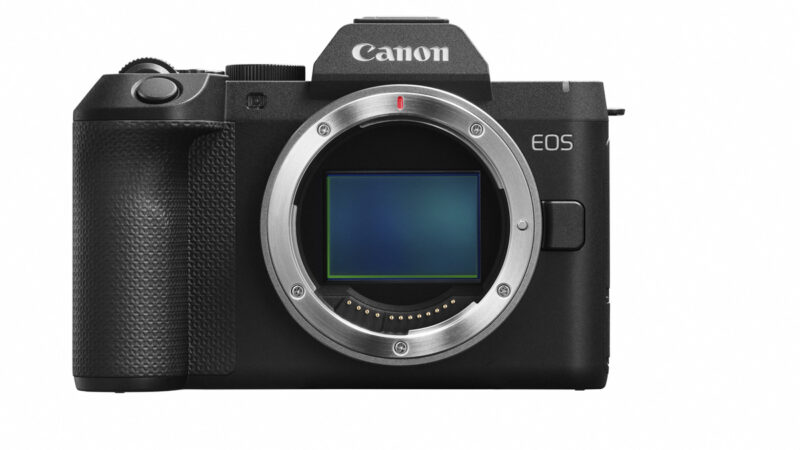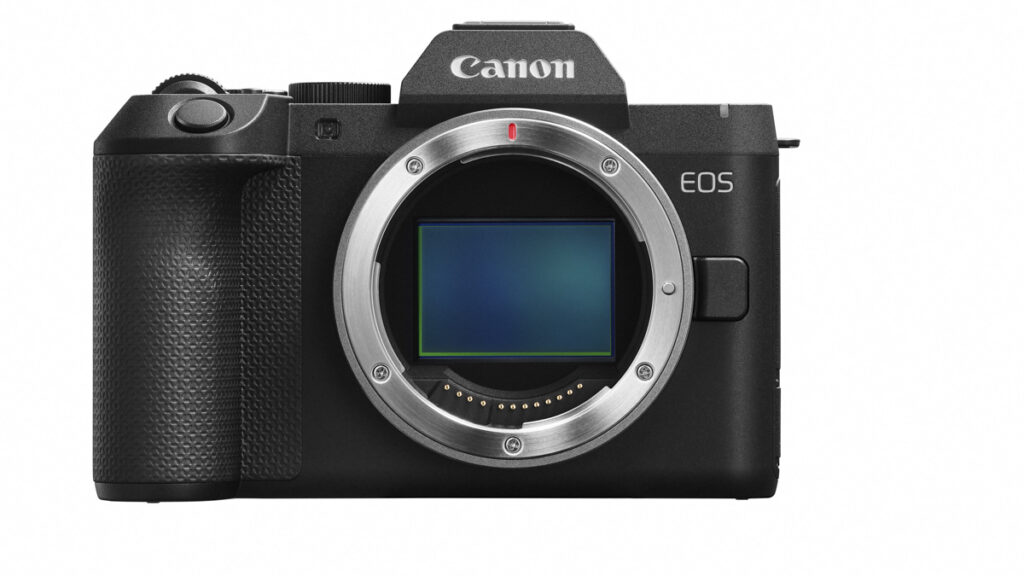

The Canon EOS R8 Mark II is here, and the obvious question if you already own the original is whether Canon’s changed enough to make upgrading worthwhile.
Answering it means looking past resolution. Both cameras use a 24.2MP full-frame CMOS sensor. Both offer ISO 100-102,400, expandable to 50-204,800. Both shoot electronically at up to 40fps. Both have 3-inch 1.62-million-dot vari-angle displays and 2.36-million-dot viewfinders.
Look only at those numbers and the Mark II can seem remarkably similar. It isn’t. The differences are concentrated in the things that actually affect how you take photographs: stabilisation, autofocus, reaction speed, buffer, handling and connectivity. And that makes it a particularly interesting upgrade for the sort of enthusiast I regularly meet when I’m teaching photography to adults.
The big upgrade is IBIS
This is the headline difference. The EOS R8 doesn’t have sensor-shift in-body image stabilisation. The R8 Mark II does, and Canon rates it at up to 7.5 stops at the centre and 7 stops towards the edge, depending on the lens.
For me, that’s more significant than going from 24MP to 30 or 32MP would’ve been. Stabilisation changes where and how you can use the camera. Put an unstabilised prime on the original R8 and shutter speed becomes your main defence against camera shake. With the R8 Mark II, the sensor itself compensates. For travel, landscapes, interiors, street and available-light portraits, that’s potentially transformative, and it makes Canon’s smaller RF primes far more appealing as companions. You can build a genuinely lightweight full-frame system and keep stabilisation.
Image quality isn’t the reason to upgrade
This needs saying, because it’s easy for a Mark II launch to give the impression the outgoing camera has suddenly become obsolete. It hasn’t. Both cameras have the same 24.2MP full-frame sensor and the same quoted ISO range.
If you own an R8 and mostly photograph landscapes from a tripod, studio portraits under controlled light, or static subjects in good conditions, the Mark II’s improvements aren’t fundamentally about giving you more pixels. The original R8 remains an extremely capable full-frame camera. That’s also why it’s still such an interesting upgrade in its own right if you’re coming from APS-C or an older DSLR, and the arrival of the Mark II only makes the ladder clearer.
The autofocus difference
Both cameras use Dual Pixel CMOS AF II and recognise people, animals and vehicles. The Mark II adds a refined tracking algorithm and Register People Priority, which lets you register up to 10 people in-camera, or as many as 100 on a card, and give them focusing priority.
That’s more useful than it sounds. Photograph your child’s football team and the original R8 knows there are people in front of it; the Mark II can know which one you actually care about. The same applies to weddings, family gatherings, festivals, events and travel. Canon’s also improved low-light AF from -6.5EV to -7.5EV under its specified conditions, which matters if you often work indoors, at concerts, or around dusk.
40fps versus 40fps isn’t really equal
This is where a spec comparison misleads. Both cameras quote 40fps electronically, so they’re identical, right? Not quite.
The Mark II gets an expanded buffer, up to 73 RAW files in a burst under Canon’s test conditions, and more importantly it gains pre-continuous shooting. Half-press the shutter and it buffers, so when you fully press, the sequence can include up to 20 frames from roughly half a second before you reacted. For landscapes that won’t matter. For wildlife, children, pets, sport and spontaneous street work, it absolutely can. The Mark II doesn’t shoot faster, it gives you a better chance of catching the moment you were too slow to anticipate.
Handling may be the sleeper upgrade
The original R8 is exceptionally light at around 461g with battery and card. The Mark II rises to about 546g, and it’s deeper too, roughly 131.4 x 90 x 79.7mm against the original’s 132.5 x 86.1 x 70mm.
Normally I’d treat an 85g increase as a backwards step in a camera whose appeal is portability. Here I think it’s a fair trade. You’re gaining IBIS, and Canon’s reworked the ergonomics, including adding a multi-controller. For anyone progressing beyond beginner level, that physical control matters. Once you start changing AF areas rapidly, moving focus points while looking through the finder and adapting settings by instinct, direct controls become far more valuable.
It’s something I notice repeatedly when I’m teaching. At the start, menus don’t feel like a problem because you’re changing settings slowly and deliberately. As experience grows, you want the camera to disappear from the process, your fingers making changes without interrupting your concentration. The R8 Mark II is much more explicitly designed for that stage of photographer.
R50 and R10 owners: this is where it gets interesting
If you’re using an R50, I’d see both R8 generations as logical full-frame destinations. The R50 is an excellent starting point for the RF system, its 24.2MP APS-C sensor, Dual Pixel CMOS AF II and approachable interface letting you develop without being buried in complexity. But once you start shooting seriously, full-frame becomes appealing for reasons that aren’t just bragging rights: shallower depth of field for portraits, better low light for events and interiors, wide-angle lenses behaving at their native field of view, or simply reaching the stage where better RF glass makes sense and you want a body that exploits it.
An R50 to R8 route stays perfectly sensible. An R50 to R8 Mark II route adds IBIS and controls that give you more room to grow. Likewise, if you own an R10 and already understand manual exposure, autofocus configuration and interchangeable lenses, the Mark II is a natural full-frame progression.
What about DSLR owners?
This could be an even more interesting audience. If you’ve got an EOS 80D, 90D, 800D, 850D or similar, you may have reached the point where your photography has outgrown the body, but spending several thousand pounds on a professional mirrorless camera is hard to justify. That’s exactly where the R8 concept works.
When I teach, there’s often a moment where someone understands photography perfectly well and is making good pictures, but their kit has become the limitation. You don’t need a flagship. You need a meaningful step forward, and both R8 generations fill that role, the original giving you full-frame at remarkably low weight, the Mark II adding stabilisation and more sophisticated shooting assistance without the size and cost of Canon’s professional bodies. You can also mount EF and EF-S lenses through Canon’s EF-EOS R adapters, though EF-S lenses work with the appropriate crop rather than the whole sensor, which softens the financial hit of changing systems.
Should EOS R owners look at it?
As a comparison, absolutely, because the change in technology since Canon’s first RF body is considerable. When I revisited the original EOS R this year, its 30.3MP sensor was still capable of beautiful photographs, resolution isn’t the problem. Speed, stabilisation, autofocus sophistication and video are where the years show. Moving from the R to the R8 Mark II actually means dropping from 30.3MP to 24.2MP but gaining a vastly more modern shooting experience, a useful reminder that an upgrade doesn’t have to mean more megapixels.
Should an R8 owner upgrade?
Here I’d separate photographers by what they actually shoot. If you’re happy with your R8, use stabilised RF lenses and mostly photograph static subjects, the shared 24.2MP resolution means there’s no obvious image-resolution reason to change.
If you regularly shoot handheld in low light, use unstabilised primes, or photograph wildlife, children, sport, events or travel, the equation shifts considerably. IBIS, pre-continuous capture, the expanded buffer, Register People Priority, improved low-light AF and better controls are all aimed at exactly those situations. This isn’t primarily a file-quality upgrade. It’s a hit-rate upgrade.
R8 Mark II, or move higher?
Canon’s own range positioning helps here. It places the R8 as the full-frame step-up, describes the R8 Mark II as compact full-frame freedom for creators and travellers, and puts the R6 Mark II beyond it for anyone wanting to master photography and filmmaking. Our testing of the R6 Mark III shows what the next serious step brings: a 32.5MP sensor, more substantial handling, 40fps, 4K 120p and 7K RAW video, in a body aimed at serious enthusiasts and professionals.
So I’d think of the progression broadly as R50 or R10, then R8, then R8 Mark II, then the R6 class, then the R5 class. You don’t have to climb it. The point is that each move should solve a problem rather than just satisfy the urge to own something newer. For a beginner leaving APS-C, the R8 is affordable access to full-frame. The Mark II adds stabilisation and far more shooting assistance. The R6 tier makes sense when handling, battery life, storage redundancy, more advanced video and professional robustness become requirements rather than luxuries. The R5 class serves a different level of specialist need again.
Which R8 makes sense for an enthusiast?
This is why the original R8 deserves to stay in the conversation rather than being dismissed because a replacement exists. I regularly see enthusiastic adult photographers reach the stage where they want full-frame but can’t justify, or simply don’t want, the price and bulk of more advanced models. The R8 was already an excellent answer, with the sensor size, autofocus and speed to open up serious photography while staying unusually compact.
The Mark II takes the same idea and makes it more complete. IBIS is the crucial addition for me, because it helps almost every genre at some point. The better AF, pre-continuous shooting and improved controls then add advantages that become more valuable as your photography develops. So rather than making the R8 redundant, the Mark II gives Canon two genuinely interesting points of entry into full-frame, depending on how pricing settles: the R8 as the lean, lightweight route, the R8 Mark II as the more rounded enthusiast camera. And if your photography eventually demands more than either can give, the R6 and R5 families are there without abandoning the RF lenses you’ve built up. That’s exactly what a good system should let you do, not just buy a better camera, but grow.
Canon EOS R8 Mark II specifications
Sensor: 24.2MP 36 x 24mm full-frame CMOS.
Processor: DIGIC X.
Image stabilisation: 5-axis sensor-shift IBIS, up to 7.5 stops centre and 7.0 stops peripheral depending on lens.
Autofocus: Dual Pixel CMOS AF II with people, animal and vehicle detection, Register People Priority, low-light AF to -7.5EV under Canon’s specified conditions.
Continuous shooting: up to 40fps electronic or 6fps electronic first-curtain, plus pre-continuous shooting up to 20 frames.
Video: 4K UHD up to 60p with 6K oversampling in full-frame recording, Full HD up to 180p.
Display: 3-inch 1.62-million-dot vari-angle touchscreen and 2.36-million-dot OLED EVF.
Storage and battery: single UHS-II SD slot, LP-E17 battery.
Weight: approximately 499g body only, 546g with battery and card.
Dimensions: approximately 131.4 x 90.0 x 79.7mm.
Canon EOS R8 Mark II price and availability
Canon announced the EOS R8 Mark II on 16 September 2026. UK, US and euro prices weren’t stated in Canon’s launch material, so keep an eye on Canon UK’s official website for confirmed pricing and availability. We’ll update this article once those details are official.