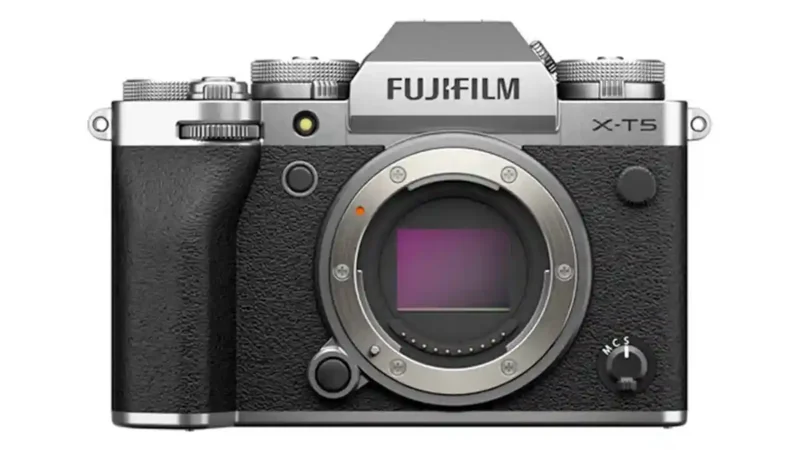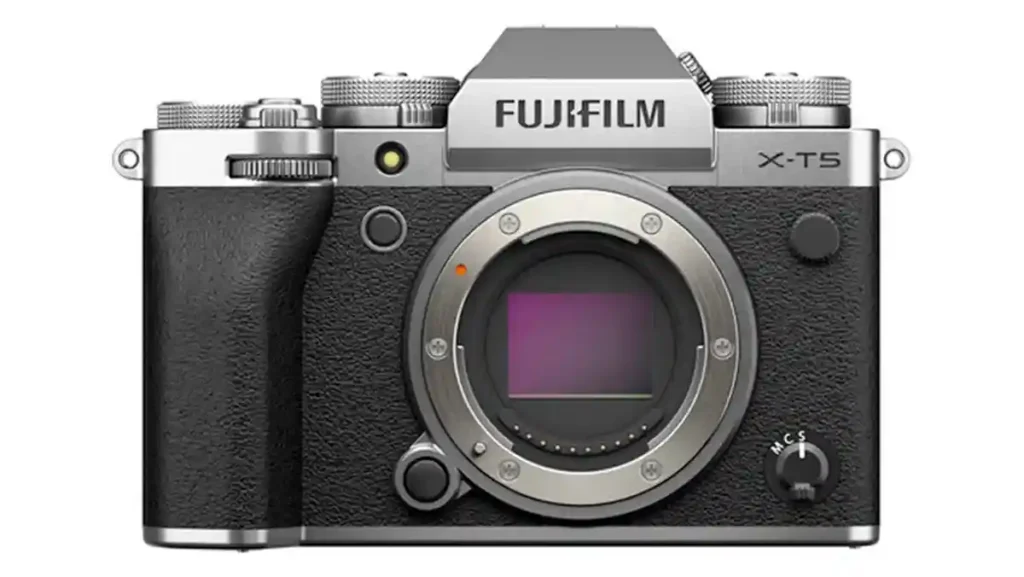

Camera manufacturers rarely tell you what a body looks like inside, which is a shame, because the engineering decisions hidden under the shell explain a great deal about how a camera behaves. German conversion specialists IRreCams stripped a Fujifilm X-T5 down to its sensor for a full-spectrum conversion, and the results are worth knowing about — particularly if you have ever fancied trying infrared or astrophotography. The complete teardown, with photographs of every stage, is on IRreCams’ original article.
What conversion actually means
Every digital camera has a filter sitting in front of the sensor — usually called a hot mirror — which blocks infrared and ultraviolet light so that visible-light images look correct. Sensors are naturally sensitive well beyond what our eyes can see, and that filter throws most of it away.
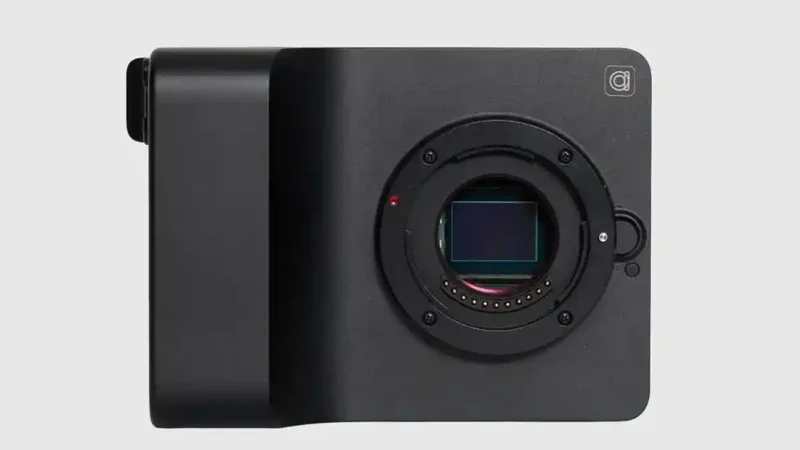
A conversion removes that filter and replaces it with something else. Fit an infrared-pass filter and the camera sees only infrared: foliage turns white, skies go black, and skin takes on a curious translucence. Fit clear glass instead and you get a full-spectrum camera, sensitive to ultraviolet, visible and infrared light, with the choice made by screwing filters onto the front of the lens.
The third option matters to astrophotographers. An astro-modification removes the filtering that blocks hydrogen-alpha light at 656nm — the deep red wavelength emission nebulae radiate, and precisely what a standard camera discards. It is the difference between photographing a faint grey smudge and photographing the Horsehead Nebula.
What the teardown found
Three things stand out.
The stabilisation unit is remarkably small. IRreCams describes the X-T5’s sensor module as the most compact it has seen in any Fujifilm camera, noting that since the X-H1 introduced in-body stabilisation, Fujifilm has shrunk the assembly with each generation — and that on paper the smaller module gives nothing away against the larger one in the X-H2. That unit delivers up to seven stops of correction while also positioning the sensor with pixel precision for Multi Shift Pixel Shooting.
The body is lighter than it looks. The housing components feel noticeably lighter in the hand than those of an X-H2 or X-T4 — difficult to photograph, IRreCams notes, but obvious when handling them. Heat dissipation measures are present but less extensive than the X-H2, which makes sense: the X-H2 has to survive 8K video, and the X-T5 does not.
And crucially, there is no internal infrared LED. This is the detail that matters most for conversion. Some cameras carry a small infrared light inside the body, and once you remove the blocking filter its stray light can fog long exposures. IRreCams tested the converted X-T5 with a 30-second exposure at ISO 12,800 and got a completely black frame apart from expected noise — confirming the camera is clean enough not just for infrared work but for astro-modification too.
Why this makes the X-T5 a good choice
The 40MP APS-C X-Trans sensor is the same one used in the X-H2, and the teardown found no unwanted artefacts — no line patterns from the phase-detect pixels, which can plague converted cameras — alongside good resolution, dynamic range and noise performance.
The removal itself is straightforward: two blocking filters come off the sensor and a full-spectrum filter is fitted with a new seal.
There is one genuine limitation, and it is a Fujifilm-wide one. The camera cannot set the extreme white balance that colour infrared work requires, so that correction has to happen on the computer afterwards. In practice that means shooting RAW is not optional — JPEGs from a converted Fuji will be unusable. Worth knowing before you commit a camera to the process.
Should you convert?
The obvious caution: conversion is permanent, and it voids the manufacturer’s warranty. You are turning a general-purpose camera into a specialist one, which is why most people convert an older second body rather than their main camera — and why the used market matters here. A well-priced secondhand X-T5 makes a far more comfortable candidate than a new one.
The alternative is buying a camera already converted. IRreCams sells converted X-T5 bodies at around €2,349 with a two-year guarantee, and other specialists including Kolari Vision and Life Pixel offer similar services and pre-converted stock.
For anyone interested in infrared landscape work or in getting genuinely serious about astrophotography, it is a route worth understanding — and on the evidence of this teardown, the X-T5 is about as well-suited a candidate as Fujifilm currently makes. The full article, with photographs of every stage of the disassembly, is available at IRreCams.
Fujifilm X-T5 conversion: the key points
Sensor: 40MP APS-C X-Trans, as used in the X-H2; no PDAF line-pattern artefacts reported. Stabilisation: most compact sensor module IRreCams has seen in a Fujifilm body; up to seven stops, with pixel-precision positioning for Multi Shift Pixel Shooting. Build: housing components lighter than X-H2 or X-T4; heat dissipation present but less extensive than the X-H2. Internal infrared LED: none — a 30-second exposure at ISO 12,800 on the converted body returned a clean black frame, making the camera suitable for astro-modification as well as infrared. Conversion process: two blocking filters removed from the sensor, replaced with a full-spectrum filter and new seal. Limitation: white balance for colour infrared cannot be set in camera and must be corrected on computer — RAW capture is essential. Conversion types available: infrared, full spectrum and astro (H-alpha) modification.