
Ensure your monitor's colours are spot on
Our Verdict
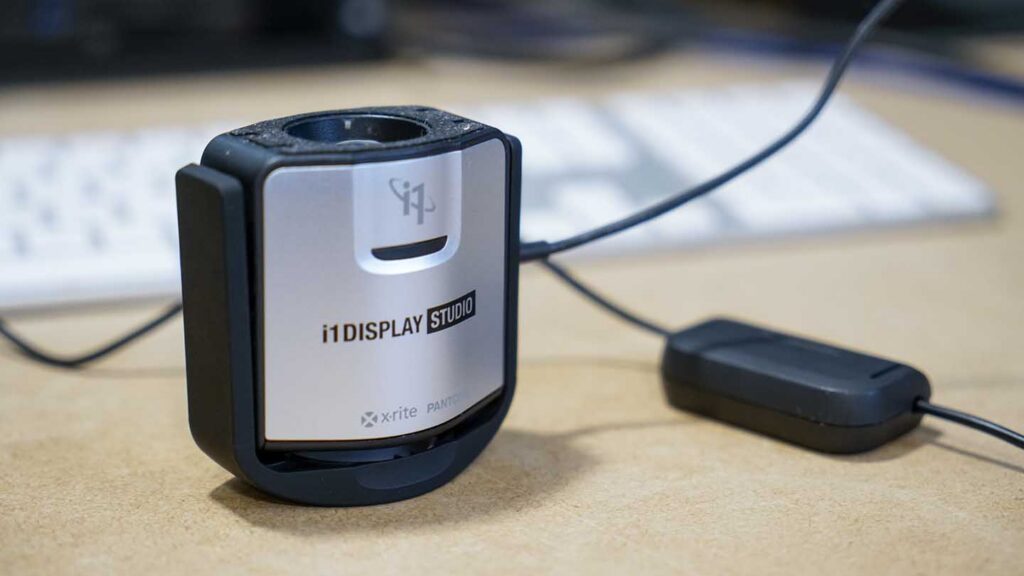
What is the i1 Display Studio?
Monitor calibration is one of the most important factors when it comes to producing great images. Think about it, if your monitor isn’t displaying the correct colour or tone, how are the adjustments you make going to be right?
The i1 Display Studio is X-Rite’s entry-level monitor calibration device and is used in conjunction with the i1Studio software. This enables you to quickly calibrate your screen to ensure that it’s displaying the best quality and standards correct image.
Specification
- Connection: USB Type-A
- Flare correction: Yes
- Dual monitor support: Yes
- Ambient light measurement: Yes
- Supported standards: NTSC, PAL SECAM, Rec. 709, Rec. 2020 and DCI-P3
- Multi monitor calibration: Yes
Build and Handling
X-Rite is one of two companies that dominate the colour calibration market, and while the market isn’t that crowded, both companies know that build quality is of huge importance.
The build and construction of the i1Display Studio is excellent, it feels like a quality piece of kit that has obviously been designed to last for years. That quality also means that if you work out in the field the unit should withstand being carted around in a kit bag and isn’t something that needs to reside in the studio.
Although all levels of photographer should utilise colour calibration, in reality, it’s only when people reach the keen enthusiast-level or above that the importance of colour calibration really becomes apparent.
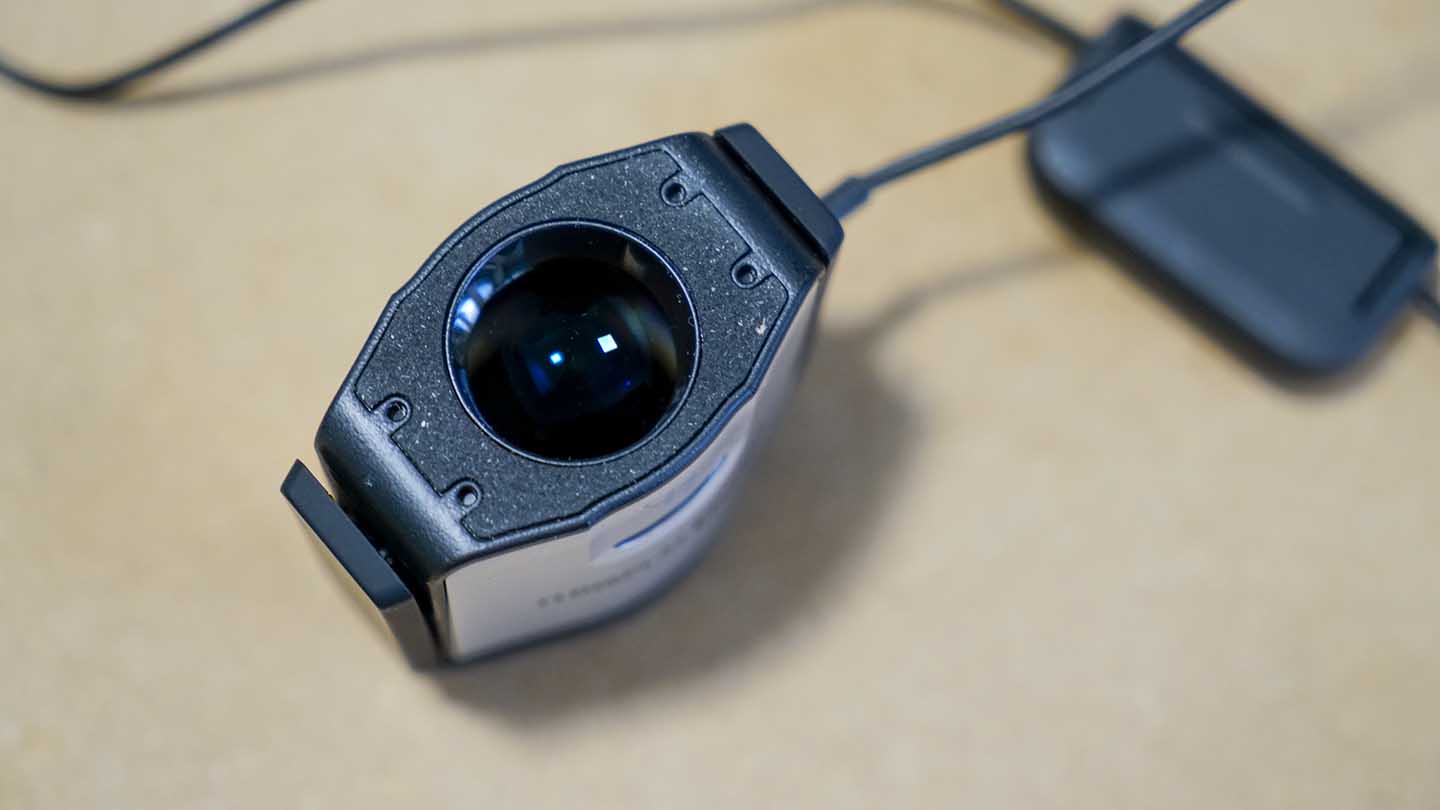
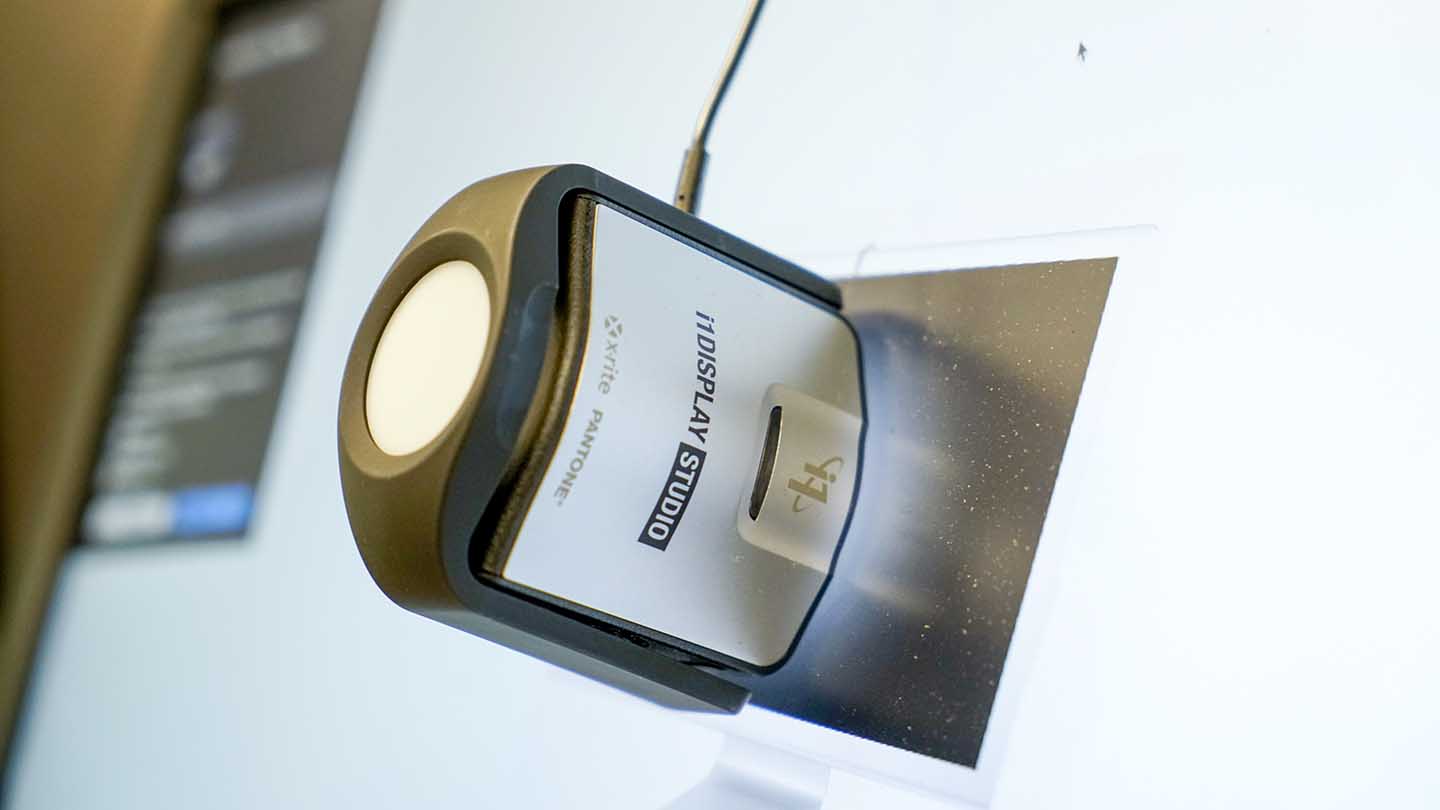
The small i1Display studio is compact with a flip-over cover that helps protect the lens. Once this cover is swivelled over the device it reveals the lens which interfaces with the software and makes all the display readings that are required for calibration.
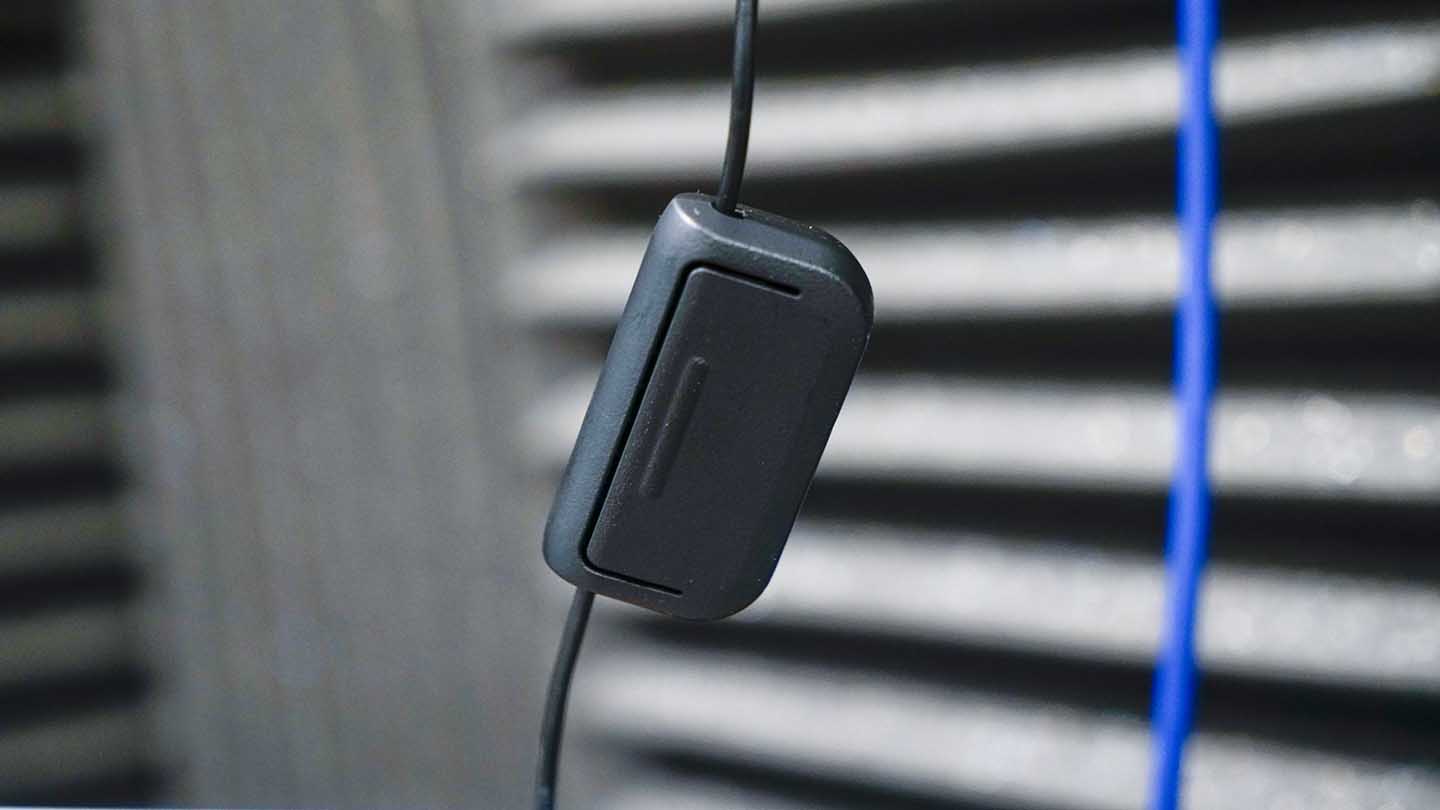
A small weight on the USB cable that connects the i1Display Studio to the computer enables you to balance the device over the monitor. This is needed to ensure that the i1Display Studio is in the correct position on the screen for the software to make the readings it needs.
Just to help protect the screen there’s a protective foam the base of the unit.
The hardware is 100% controlled by the software so once in place; there are no buttons to push or adjust.
Performance
Setting up the i1Display Studio doesn’t take long, although it does require a few restarts of your computer to ensure that the software is installed and updated to the latest version.
I tested the i1Display Studio on Mac, with Catalina being used as the main OS and then Big Sur.
For all other systems, once the device is unpacked and plugged in, you follow the instructions on the card in the packaging.
For some reason, the link at https://xrite.com/geti1Studio would not download on my Mac, but following the links on the https://support.xritephoto.eu/software-downloads/ website took me to the correct download link that worked fine.
Once the software was installed, and hardware plugged in a quick restart was required. After the restart and starting the application a further update was download and another restart was required before being able to start the calibration process.
This is, of course, a process that you’ll only need to run through during the first run of the device and software.
From then on the process is exceptionally simple. Select i1Display Studio > Display then Photo, Video or Custom and follow the onscreen instructions.
The software is quite copy heavy, and it’s important to read what is required through the adjustment process; resetting monitor, adjusting brightness etc.
Once you’ve been through the process once it’s all quite straight forward and once you get to the end, you can see the before and after results.
When it comes to time, the initial monitor calibration takes around 10 minutes, and you can save down that profile once completed.
This means that you can profile the monitor for photography and then video and switch between the two depending on what you’re doing. To do this, you need to dip into the system monitor settings as there’s no way to do this directly in the software or through the i1StudioTray.
Keeping on top of monitor calibration is also important and not something that should just be done once and forgotten about. A nice touch is that in the settings, you can select recalibration intervals; 1, 2, 3 or 4 weeks and the software will alert you as to when that calibration needs to be done.