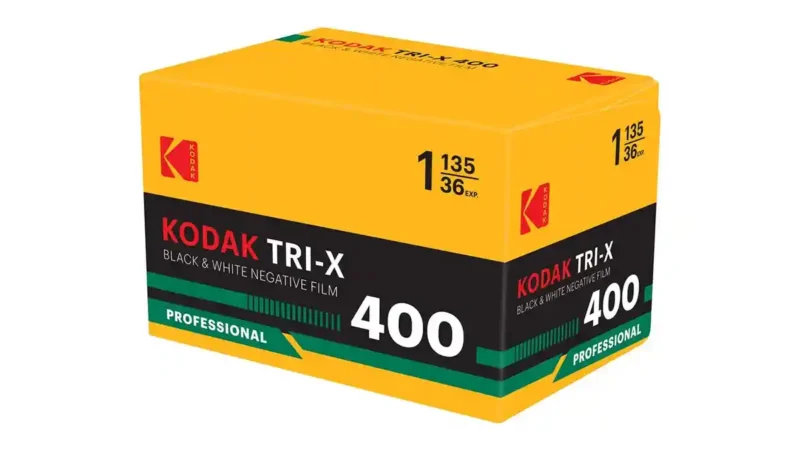

Kodak Tri-X has been in production in one form or another since around 1940, and in 2026 it is back in the hands of the company that makes it, in new packaging and at a lower UK price. Here’s why we think it’s still the black-and-white film to beat.
A short history of Kodak Tri-X
Tri-X first appeared as a sheet film around 1940, and Kodak’s own milestones page marks 1954 as the year it arrived as the high-speed black-and-white film most photographers know, in 35mm and 120 roll film. Its speed rating rose from ASA 200 to 400 around 1960, but that reflected a change to the ASA standard rather than the film itself. In 2007 Kodak revised the emulsion, giving us the finer-grained 400TX we shoot today.
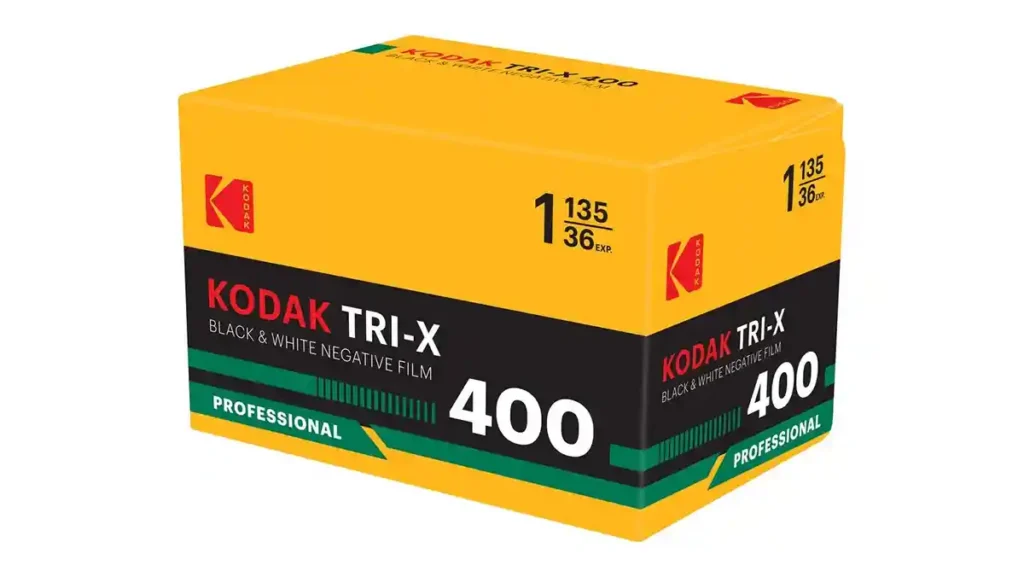
The bigger change this year is who sells it. Eastman Kodak has taken distribution of its stills films back from Kodak Alaris, a handover that started in late 2025 and was complete by March 2026. Tri-X keeps its name (unlike T-Max, which Eastman Kodak sells as Ektapan) and now comes in a new yellow-and-black box. As Kosmo Foto reported, Dupli has the UK distribution rights and the new-look films are up to 20% cheaper than before.
Why Kodak Tri-X still matters
The look is the obvious reason. Tri-X has a grain that’s visible but well behaved, strong edge sharpness and a tonal range that holds a lot of shadow and highlight detail. It’s the film behind decades of reportage and street photography, and it still looks like that.
Latitude is the practical reason. Tri-X copes with overexposure well and takes kindly to being pushed, which makes it a forgiving choice for anyone metering by eye or with an elderly built-in meter. Kodak lists Tri-X 400 in 35mm 24- and 36-exposure rolls, 100ft bulk rolls and 120 five-packs, while large-format shooters get Tri-X 320 in 4×5, 5×7 and 8×10 sheets. That spread means you can shoot the same family of film in everything from a compact to a Sinar.
For the darkroom, Tri-X is about as well documented as a film can be. It works with just about every common developer, from D-76 and XTOL to HC-110 and Rodinal, and there’s decades of published data to fall back on. On the Tuesday night darkroom evening course Ali runs, where students shoot the college’s Pentax K1000s, Hasselblad 500C, Mamiya RB67s and Sinar cameras, it’s one of the films we point people towards, because results are consistent and mistakes are rarely fatal.
Our darkroom notes
For this one Ali has reached past his Canon AE-1, T90, EOS-1N and A-1 and loaded Tri-X into his Canon F-1, Canon’s 1970s professional body and one that suits the film’s reportage heritage. It’s a fully mechanical camera, so it’s a good test of how Tri-X handles a bit of metering guesswork.
Is Kodak Tri-X still worth buying in 2026?
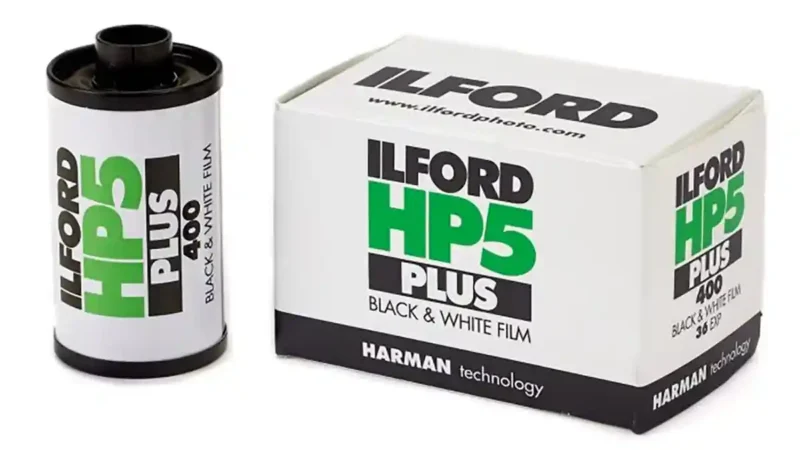
Yes. Ilford HP5 Plus, which we covered last week, is the obvious alternative and arguably the easier film for complete beginners, but Tri-X has a slightly crisper, punchier character that many of us prefer, especially when pushed. The lower UK price makes it easier to justify as an everyday film rather than a treat.
If you’re new to film, we’d shoot a roll of each side by side and develop them the same way. If you’re coming back to the darkroom after years away, Tri-X is still the film you remember, just in a different box.
Kodak Tri-X specifications
- Type: Panchromatic black-and-white negative film
- Speed: ISO 400 (Tri-X 400), ISO 320 (Tri-X 320 sheet film)
- Push processing: Supported
- Formats: 35mm 24 and 36 exposures, 35mm 100ft bulk, 120 (five-pack); 4×5, 5×7 and 8×10 sheets (Tri-X 320)
- Process: Standard black-and-white chemistry
- Storage: 13°C (55°F) or lower recommended
Kodak Tri-X price and availability
Kodak Tri-X 400 is available now from UK film retailers in its new Eastman Kodak packaging. At the time of writing, we found 35mm 36-exposure rolls from £9.95 (First Call Photographic) to £10.95 (Analogue Wonderland), with 120 at £11 a roll or £50 for a five-pack at Analogue Wonderland.