
What lens should you buy? There are a number of factors to consider when you choose the best lens for your camera. Here’s what you should consider when looking for a new optic.
Buying a new lens is no small purchase, so don’t go making any ill-informed choices. In this quick guide we tell you the key features to look for when buying a lens for your camera – and even the accessories you should expect to come with it.
What is lens focal length?
Lens focal length is a fundamental characteristic of a camera lens that profoundly impacts how you frame a scene, capture your subject, and convey perspective. Measured in millimeters (mm), the focal length determines the distance between the optical center of the lens and the camera’s image sensor when the lens is focused at infinity. This measurement influences the lens’s field of view and magnification, making it one of the most critical factors in selecting a lens for any type of photography.
Focal length directly affects the field of view—the amount of a scene visible through the lens. Shorter focal lengths, such as 14mm or 24mm, provide wide-angle views that are perfect for capturing expansive landscapes, architecture, or tight indoor spaces. In contrast, longer focal lengths, like 85mm or 300mm, offer a narrow field of view, allowing you to isolate subjects and bring distant objects closer, making them ideal for portrait, sports, or wildlife photography.
The choice of focal length also influences perspective. Wide-angle lenses exaggerate perspective, making foreground objects appear larger and more prominent compared to the background, creating a dynamic and immersive effect. On the other hand, telephoto lenses compress perspective, giving a more flattened look where objects in the scene appear closer together, which is often used for artistic compositions and portraits.
Photographers can choose between prime lenses with fixed focal lengths (e.g., 50mm) and zoom lenses that offer a range of focal lengths (e.g., 24-70mm). Each type has its advantages, with primes known for their superior sharpness and wide apertures, while zooms provide versatility and convenience. The effective focal length of a lens can also vary depending on the camera’s sensor size, with smaller sensors, such as those in APS-C or Micro Four Thirds cameras, effectively magnifying the lens’s reach due to the crop factor.
In essence, the focal length of a lens shapes the way you see and capture the world. Understanding its impact on field of view, perspective, and magnification is key to choosing the right lens for your creative vision and photographic needs. Whether you are shooting sweeping landscapes, intimate portraits, or distant wildlife, mastering focal lengths allows you to unlock the full potential of your photography.
What is field of view? (Angle of view)
Field of view, also known as angle of view, is a photographic term that refers to the amount of a scene a lens can capture. This is expressed as the angular measurement of the scene visible through the lens. It is directly influenced by the lens’s focal length and the size of the camera’s image sensor, and it determines how much of the scene will be included in the final image.
The focal length of a lens plays a significant role in determining the angle of view. Wide-angle lenses, such as those with focal lengths of 14mm or 24mm, provide a broad angle of view, making them ideal for capturing sweeping landscapes, expansive architectural shots, or scenes in confined spaces. Conversely, telephoto lenses with longer focal lengths, like 200mm or 400mm, offer a narrow angle of view, allowing photographers to magnify distant subjects and isolate them from their surroundings.
Sensor size is another critical factor that affects the angle of view. Full-frame sensors, equivalent to 35mm film, deliver the widest angle of view for a given focal length. However, crop sensors, such as APS-C or Micro Four Thirds, reduce the effective angle of view due to the crop factor. For instance, a 50mm lens on an APS-C sensor with a 1.5x crop factor will provide the angle of view equivalent to a 75mm lens on a full-frame sensor. This effect must be considered when choosing lenses, as it influences how much of the scene is captured.
The angle of view is measured in degrees and can be described horizontally (width of the scene), vertically (height of the scene), or diagonally (corner to corner of the frame). A wide-angle lens might offer an angle of view of up to 114 degrees, capturing a vast expanse of the scene, while a telephoto lens may have an angle as narrow as 10 degrees, focusing tightly on a specific subject.
Understanding the angle of view is essential for achieving the desired composition in photography. A wide angle of view emphasizes depth and scale, making it suitable for storytelling or dramatic shots. A narrow angle of view, on the other hand, is perfect for isolating subjects or drawing attention to specific details within a scene.
By mastering the relationship between focal length, sensor size, and angle of view, photographers can make informed choices about their equipment and better plan their shots. This knowledge enables them to capture images that align with their creative vision, whether they’re shooting vast landscapes, intimate portraits, or distant wildlife.
What is focal length magnification?
What is the difference between prime and zoom lenses? When choosing a lens, one of the first decisions photographers face is whether to use a prime lens or a zoom lens. These two types of lenses differ significantly in design, functionality, and how they influence the creative process in photography. Understanding their differences is essential for making the right choice for your needs.
Prime lenses have a fixed focal length, meaning they cannot zoom in or out. Common focal lengths include 35mm, 50mm, and 85mm, each suited to specific types of photography. Prime lenses are often prized for their superior image quality, thanks to their simpler optical design. They also tend to have wider maximum apertures, such as f/1.4 or f/1.8, which allow for exceptional low-light performance and the ability to create beautifully blurred backgrounds, known as bokeh. Additionally, prime lenses are typically lighter and more compact, making them easy to carry and handle. However, their fixed focal length can feel limiting, especially in situations where physically moving closer to or farther from the subject is impractical. Photographers often need to carry multiple prime lenses to cover a variety of focal lengths, which can be inconvenient in dynamic shooting environments.
Zoom lenses, on the other hand, offer a range of focal lengths, allowing photographers to zoom in and out without changing lenses. For instance, a 24-70mm zoom lens can transition seamlessly from wide-angle to standard perspectives, while a 70-200mm zoom is perfect for capturing distant subjects. This versatility makes zoom lenses invaluable in fast-paced scenarios like events, sports, or travel, where the ability to adjust focal length quickly is crucial. A single zoom lens can replace several prime lenses, reducing the need to carry extra gear. However, zoom lenses are generally larger and heavier, and their optical complexity means they may not match the sharpness and quality of prime lenses, particularly at extreme focal lengths. Additionally, many zoom lenses have narrower maximum apertures, such as f/4 or f/5.6, which can limit their performance in low-light conditions and their ability to achieve a shallow depth of field.
The choice between a prime and zoom lens ultimately depends on your style of photography and the demands of your shoot. Prime lenses are ideal for controlled environments, such as portraits or studio photography, where image quality and creative depth-of-field effects are priorities. In contrast, zoom lenses are better suited for situations requiring flexibility, like weddings, wildlife, or travel photography, where adaptability and convenience are key.
For many photographers, the best approach is to use both types of lenses depending on the circumstances. Each offers unique strengths that can complement the other, allowing you to balance quality, creativity, and practicality. By understanding these differences, you can choose the right lens to meet your creative and technical needs.
What is lens ‘speed’?
Aside from sharpness, a lens’s speed is the key thing to consider. But what is lens speed, and what are fast and slow lenses?
‘Fast’ lenses are those that have wide maximum apertures – f/2.8, f/1.8 etc. For example, the new Nikon 105mm f/1.4E has a fast aperture at a long focal length, meaning it will let in more light and allow one to shoot at faster shutter speeds.
The downside of fast lenses? They’re heavier and more expensive. The Nikon 105mm f/1.4E price tag starts at more than $2,000!
‘Slower’ lenses are cheaper, but you lose that flexibility. Quite often you will find yourself having to increase your camera’s ISO in order to achieve fast-enough shutter speeds in low light conditions.
What’s more, the speed of a lens is also relative to its focal length – a 500mm f/4.5 lens is actually a pretty fast lens, while a 100mm f/4.5 is rather slow.
What is minimum focus?
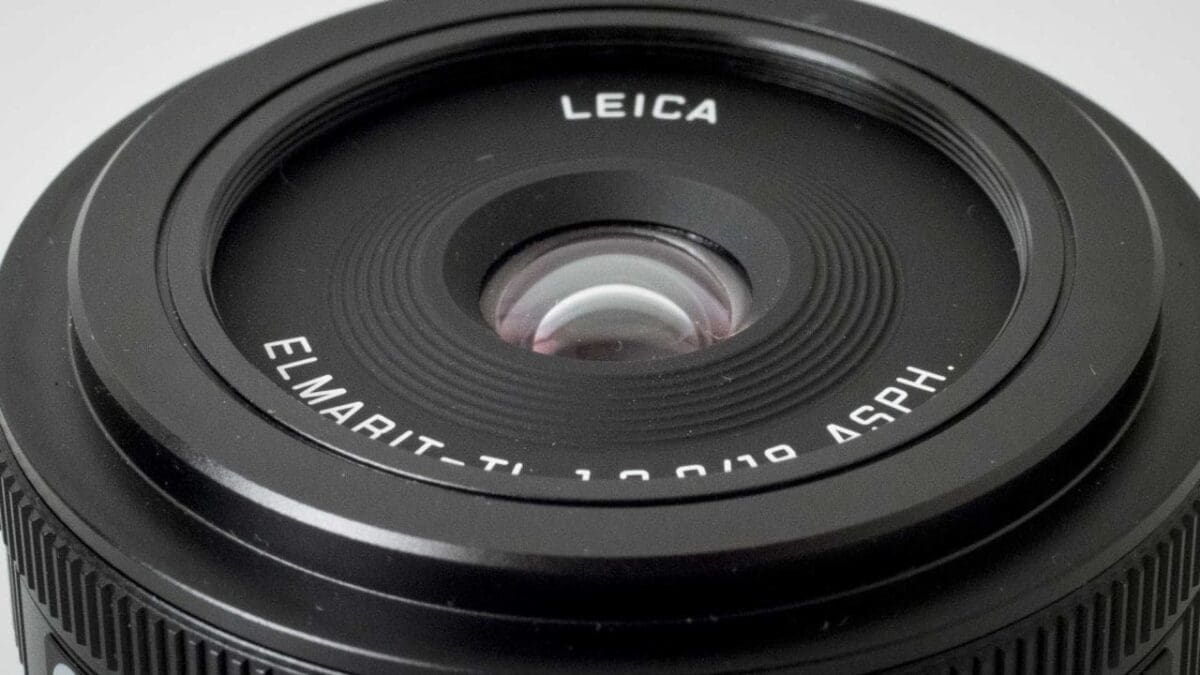
By minimum focus we mean how close you can physically get with your lens before it cannot focus on the subject at all. When this happens your lens has reached its near focus limit.
Minimum focus becomes a really important feature to consider when choosing a telephoto lens. It’s easy to be wowed by huge focal lengths and massive magnification, but if you can’t get close enough to take advantage of it, what good is it serving you? You’ll find you’ll need to use extension tubes to get closer.
What is floating vs fixed aperture?
There’s a lot of jargon in photography. It’s one of the things that satisfies our inner geek, but it’s also one of the things that can make people feel daunted early on in their photographic journey. A fixed aperture is a zoom lens that maintains the same aperture throughout the zoom range.
A floating aperture is simply a zoom lens designed so that the aperture gets smaller as you zoom from the wide to telephoto end of the focal range.
Needless to say, fixed aperture lenses are more expensive than floating aperture lenses.
The downside of a floating aperture (such as f/4.5-5.6) is that, in order to maintain the same exposure, you must use slower shutter speeds as the aperture gets smaller. So you constantly need to be aware of possible camera shake creeping in.
Optical quality
Online shopping is a wonderful convenience, but it’s only by testing a lens in a physical camera shop or by reading reviews (hopefully Camera Jabber reviews!) that you’ll know if a lens’s image quality will meet your needs. We all know how important sharpness is, but don’t forget to other important lens qualities, such as its ability to handle flare, vignetting and optical aberrations.
A lot of this comes down to the type of glass used in the lens’s construction. We often see those odd abbreviations in lens names and think they’re unnecessarily complexly titled, but most of those letters such as APO, L, ED, ASP that you see after the focal length aren’t just marketing gibberish – they do actually tell you if better glass has been used.
Lens handling
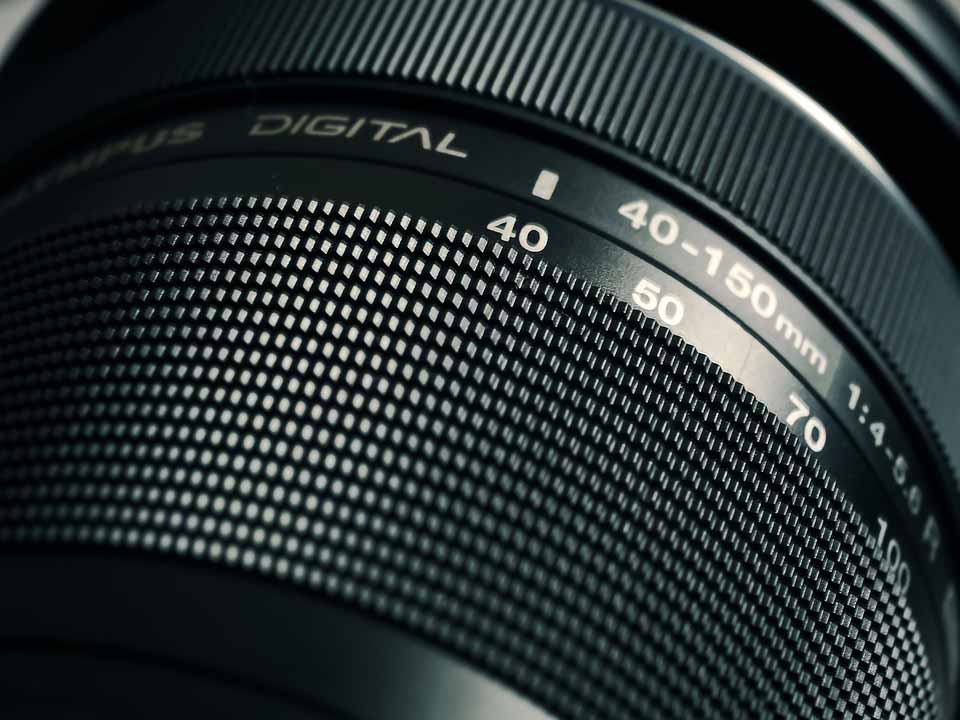
It sounds ridiculous given that you hold your camera, not the lens. But how a lens feels in your hands shouldn’t be discounted. Again, you’ll need to visit a camera shop and ask to mount one.
Do the zoom and focus rings fall in the right place for your fingers? Can you reach the image stabilisation switch easily? These are important considerations.
Type of zoom
You’ll find there are two types of zoom lens – the common ring type, or the now less common push/pull ‘trombone’ style design. The push/pull lenses are simpler to use, however longer versions can become a bit awkward to handle when zoomed all the way to the telephoto end of the focal range.
What is a rotating filter ring?
Budget lenses often feature a front element that rotates as the lens focuses. What’s wrong with that? you may be thinking. Nothing in principle. Except when you’re using filters. If you shoot a lot of landscape photography and use a polariser or graduated neutral density filter, in particular, this is something to consider.
With a polariser mounted, a rotating filter ring will change the look of the effect as it turns. However, there is a simple workaround: focus first before making filter adjustments.
What is a distance scale?
Distance scale is handy for determining depth of field. Again, this should be a concern for landscape photographers who want to maximise sharpness throughout the frame. Many modern lenses don’t have one though. And, really, we don’t know why!
Lens hood
A lens hood is essential for helping to reduce flare. Most new lenses come with one; however, not all do. If the lens you want to buy doesn’t come with one… factor in the extra cost. It’s essential. The same is true for a tripod collar for larger lenses.
What is a lens mount?
A lens mount is the interface—both mechanical and sometimes electrical—that connects a camera body to its lens, enabling secure attachment and communication between the two. This connection is crucial for ensuring that lenses fit properly onto cameras while facilitating functions such as autofocus and aperture control.
In modern photography, most lens mounts are bayonet-style, utilising tabs to lock the lens firmly in place. This design allows for quick and easy lens changes and ensures a precise fit, which is essential for maintaining image quality, especially with high-resolution cameras. Additionally, bayonet mounts often incorporate electronic contacts that enable data exchange between the camera and lens, supporting advanced features like image stabilisation and real-time aperture adjustments.
It’s important to note that lens mounts are typically proprietary, with each camera manufacturer developing its own unique design. This means that lenses are generally compatible only with camera bodies from the same brand unless adapters are used. However, using adapters can sometimes result in reduced functionality, such as the loss of autofocus capabilities or electronic communication between the lens and camera.
Understanding the specific lens mount of your camera system is essential when selecting lenses to ensure compatibility and to fully leverage the features offered by both the camera and the lens.
Here’s a full list of the different camera lens mounts
Canon lens mounts:
- EF Mount: Introduced in 1987, used for Canon full-frame and APS-C DSLRs.
- EF-S Mount: Introduced in 2003, designed specifically for Canon APS-C DSLRs; EF-S lenses cannot be used on full-frame bodies.
- RF Mount: Introduced in 2018, utilized by Canon full-frame mirrorless cameras.
- RF-S Mount: Introduced in 2022, intended for Canon APS-C mirrorless cameras; RF-S lenses can be used on full-frame RF mount cameras with a crop.
Nikon lens mounts:
- F Mount: Introduced in 1959, used for Nikon’s film and digital SLR cameras; supports both full-frame (FX) and APS-C (DX) formats.
- Z Mount: Introduced in 2018, designed for Nikon’s full-frame and APS-C mirrorless cameras.
Sony lens mounts:
- A Mount: Introduced in 1985 by Minolta and later adopted by Sony, used for Sony’s DSLRs and SLT cameras.
- E Mount: Introduced in 2010, utilized by Sony’s mirrorless cameras; supports both full-frame and APS-C formats.
Pentax lens mounts:
- K Mount: Introduced in 1975, used for Pentax’s film and digital SLR cameras; supports both full-frame and APS-C formats.
- Q Mount: Introduced in 2011, designed for Pentax’s mirrorless cameras with 1/2.3″ sensors.
- 645 Mount: Used for Pentax’s medium format cameras.
Micro Four Thirds (MFT) lens mounts:
- MFT Mount: Introduced in 2008, a standard developed by Olympus and Panasonic for mirrorless cameras with Four Thirds sensors; also adopted by other manufacturers.
Leica lens mounts:
- M Mount: Introduced in 1954, used for Leica’s rangefinder cameras.
- L Mount: Introduced in 2014, a collaboration between Leica, Panasonic, and Sigma for mirrorless cameras; supports both full-frame and APS-C formats.
Fujifilm lens mounts:
- X Mount: Introduced in 2012, designed for Fujifilm’s APS-C mirrorless cameras.
- G Mount: Introduced in 2016, used for Fujifilm’s medium format mirrorless cameras.
Olympus lens mounts:
- Four Thirds Mount: Introduced in 2002, used for Olympus’s DSLR cameras with Four Thirds sensors.
- Micro Four Thirds Mount: Introduced in 2008, used for Olympus’s mirrorless cameras with Four Thirds sensors.
Panasonic lens mounts:
- Micro Four Thirds Mount: Introduced in 2008, used for Panasonic’s mirrorless cameras with Four Thirds sensors.
- L Mount: Introduced in 2018, used for Panasonic’s full-frame mirrorless cameras.
Sigma lens mounts:
- SA Mount: Introduced in 1992, used for Sigma’s DSLR cameras.
- L Mount: Introduced in 2018, used for Sigma’s mirrorless cameras.
Samsung lens mounts:
- NX Mount: Introduced in 2010, used for Samsung’s mirrorless cameras with APS-C sensors.
Yongnuo lens mounts:
- YN Mount: Supports multiple mounts including Canon EF, Canon RF, Sony E, Nikon F, Nikon Z, and Micro Four Thirds.
Tamron lens mounts:
- Adaptall Mount: A versatile mount system allowing adaptation to various camera mounts.
Tokina lens mounts:
- AT-X Mount: Supports multiple mounts including Canon EF, Nikon F, Sony A, and Micro Four Thirds.
Zeiss lens mounts:
- ZE Mount: Compatible with Canon EF mount.
- ZF Mount: Compatible with Nikon F mount.
- ZM Mount: Compatible with Leica M mount.
Third-Party Manufacturers lens mounts:
- M42 Screw Mount: Also known as the Pentax thread mount, used by various manufacturers in the past; allows for adaptation to multiple camera mounts.
- T-Mount: A standardized screw mount (42mm diameter, 0.75mm thread pitch) used for attaching lenses to various camera bodies via adapters.
Please note that while adapters are available to use lenses across different mounts, they may result in reduced functionality, such as loss of autofocus or electronic communication between the lens and camera. Always ensure compatibility when selecting lenses and adapters for your camera system.
What is lens stabilisation?
Lens stabilisation, also known as optical image stabilisation (OIS), is a technology integrated into certain camera lenses to minimise the effects of camera shake. This feature ensures sharper images and smoother videos, even in challenging conditions. It is particularly valuable when shooting in low light, using slower shutter speeds, or working with telephoto lenses where even minor hand movements can result in noticeable blur.
The stabilisation process involves optical elements within the lens that move to counteract small, unintentional camera movements. Sensors and gyroscopes detect motion, and actuators shift the stabilisation elements to maintain a steady light path as it reaches the camera sensor. This precise, real-time adjustment allows photographers and videographers to capture clearer and more professional results without the need for a tripod.
The primary benefit of lens stabilisation is its ability to allow slower shutter speeds while avoiding motion blur caused by camera shake. This is particularly helpful in low-light conditions or when capturing static subjects. For photographers using telephoto lenses, stabilisation is crucial because longer focal lengths amplify the effects of small movements. Videographers also benefit from reduced jitters, producing smoother and more polished footage.
However, lens stabilisation is not without its limitations. While it compensates for hand movements, it cannot freeze motion from moving subjects—that still requires a fast shutter speed. Additionally, stabilised lenses are often heavier, bulkier, and more expensive than their non-stabilised counterparts. Despite these trade-offs, lens stabilisation remains an invaluable feature for many types of photography.
Manufacturer Names for Stabilised Lenses
Different camera and lens manufacturers use their own terminology for lens stabilisation. Here are the most common names:
- Canon: Image Stabilisation (IS)
- Nikon: Vibration Reduction (VR)
- Sony: Optical SteadyShot (OSS)
- Panasonic: Power Optical Image Stabilisation (Power OIS) or Mega OIS
- Sigma: Optical Stabilisation (OS)
- Tamron: Vibration Compensation (VC)
- Fujifilm: Optical Image Stabilisation (OIS)
- Olympus: Optical Image Stabilisation (OIS)
Cameras with IBIS (In-Body Image Stabilisation)
While lens stabilisation is highly effective, many modern cameras now feature in-body image stabilisation (IBIS), which stabilises the sensor itself rather than relying solely on the lens. IBIS works in tandem with stabilised lenses for even greater performance, or independently with non-stabilised lenses. This makes IBIS-equipped cameras incredibly versatile for both photography and videography.
For a comprehensive guide to cameras with IBIS, visit Camera Jabber’s Buyer’s Guide. Here, you’ll find a detailed list of models that integrate this advanced feature, helping you choose the best system for your needs.
What Lens Names Mean
When choosing a lens, the names and abbreviations in their descriptions can seem overwhelming. However, these labels provide essential information about the lens’s features, compatibility, and intended use. From autofocus motors and image stabilization to sensor compatibility and professional-grade optics, each manufacturer uses specific terms to highlight these characteristics. Understanding what these names mean can help you make informed decisions and choose the perfect lens for your photography needs.
Canon:
- EF (Electro-Focus): Standard lens mount for Canon’s full-frame and APS-C DSLRs.
- EF-S (Short Back Focus): Designed specifically for Canon’s APS-C DSLRs; not compatible with full-frame cameras.
- L (Luxury): Professional-grade lenses with superior optics and build quality.
- IS (Image Stabilization): Lenses equipped with optical image stabilization to reduce camera shake.
- USM (Ultrasonic Motor): Features a fast and quiet autofocus motor.
- STM (Stepping Motor): Provides smooth and silent autofocus, ideal for video recording.
- DO (Diffractive Optics): Utilizes diffractive optical elements to reduce lens size and weight.
Nikon:
- AF (Auto Focus): Lenses with autofocus capability.
- AF-S (Auto Focus with Silent Wave Motor): Features a silent and fast autofocus motor.
- AF-P (Auto Focus with Pulse Motor): Utilizes a stepping motor for smooth and quiet autofocus, beneficial for video.
- VR (Vibration Reduction): Incorporates image stabilization to minimize camera shake.
- DX: Designed for Nikon’s APS-C (crop sensor) cameras.
- FX: Compatible with Nikon’s full-frame cameras.
- G: Lenses without an aperture ring; aperture is controlled via the camera body.
- E: Features an electromagnetic diaphragm mechanism for more precise aperture control.
- D: Provides distance information to the camera for enhanced metering and flash capabilities.
- ED (Extra-low Dispersion): Utilizes glass elements that reduce chromatic aberration for sharper images.
- IF (Internal Focusing): Focuses internally without changing the lens’s physical length.
Sony:
- FE: Lenses designed for full-frame E-mount cameras.
- E: Compatible with APS-C E-mount cameras.
- G (Gold): High-quality lenses with superior optics and construction.
- GM (G Master): Premium lenses offering top-tier performance and image quality.
- OSS (Optical SteadyShot): Incorporates optical image stabilization.
- PZ (Power Zoom): Features motorized zoom control, useful for video.
Sigma:
- DC: Lenses designed for APS-C sensor cameras.
- DG: Compatible with full-frame cameras.
- DN: Optimized for mirrorless cameras.
- EX: Professional-grade lenses with superior build and optical quality.
- OS (Optical Stabilization): Features image stabilization technology.
- HSM (Hyper Sonic Motor): Provides fast and quiet autofocus.
- Art: Lenses focused on artistic expression and high image quality.
- Contemporary: Balances performance with compactness and affordability.
- Sports: Designed for fast action and sports photography.
Tamron:
- Di (Digitally Integrated): Lenses designed for full-frame cameras.
- Di II: Optimized for APS-C sensor cameras.
- Di III: Tailored for mirrorless cameras.
- VC (Vibration Compensation): Incorporates image stabilization.
- USD (Ultrasonic Silent Drive): Features a fast and quiet autofocus motor.
- PZD (Piezo Drive): Utilizes a compact and quiet autofocus motor.
- SP (Super Performance): High-performance lenses with superior optics.
Tokina:
- AT-X (Advanced Technology Extra): Professional-grade lenses with advanced features.
- PRO: Indicates a professional series lens.
- SD (Super Low Dispersion): Utilizes glass elements to minimize chromatic aberration.
- DX: Designed for APS-C sensor cameras.
- FX: Compatible with full-frame cameras.
Pentax:
- DA: Lenses designed for APS-C sensor cameras.
- D FA: Compatible with both full-frame and APS-C cameras.
- FA: Designed for full-frame cameras.
- HD (High Definition): Features high-quality lens coatings for improved image quality.
- AL (Aspherical Lens): Incorporates aspherical elements to reduce aberrations.
- ED (Extra-low Dispersion): Utilizes elements that minimize chromatic aberration.
- IF (Internal Focusing): Focuses without changing the lens’s external length.
- WR (Weather-Resistant): Sealed to protect against dust and moisture.
- AW (All Weather): Offers enhanced weather sealing for more demanding conditions.
- SDM (Supersonic Drive Motor): Provides silent and fast autofocus.
- PLM (Pulse Motor): Features a stepping motor for smooth and quiet autofocus, ideal for video.
- XS: Denotes ultra-thin pancake lenses.
- Limited: Premium lenses with exceptional build and image quality.
Fujifilm:
- XF: High-quality lenses for X-series mirrorless cameras.
- XC: More affordable lenses with a lightweight design for X-series cameras.
- R: Indicates the lens has an aperture ring for manual adjustment.
- LM (Linear Motor): Uses a linear motor for fast and silent autofocus.
- OIS (Optical Image Stabilization): Includes image stabilisation technology to reduce camera shake.