
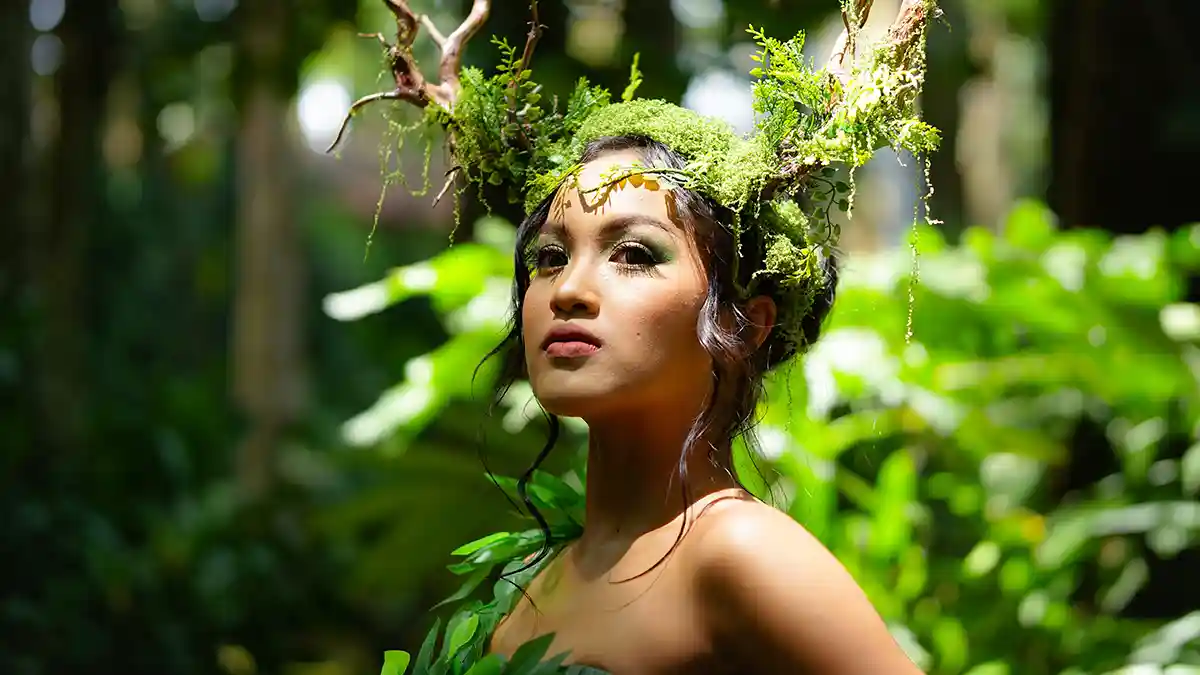


While the medium of photography has grown steadily over the years, taking in different styles and methods from all over the world, there is one area of photography that has long endured and continues to remain timeless – portrait photography. Whether personal or commercial in nature, the art of capturing the personality, identity, and essence of a person is deeply embedded in photography’s DNA, and can be achieved in many ways. By using varied techniques like studio or natural lighting, posing, backdrops, and composition to create portraits, you can produce great results.
But while it may seem natural to shoot a portrait under the bright lights of a studio, you can yield equally impactful results by shooting in an environmental setting that is personal to the subject and their profession – whether that be in the middle of a bustling city, a botanical garden or even in one’s kitchen – many photographers are experimenting in this way as a means of making their images look and feel more natural.
This style of photography is known as environmental portraiture, which swaps out the traditional studio setting with surroundings that provide a unique insight into the subjects’ lives and interests. However, that is not to say that you can’t use studio equipment like portable lights and tripods in your shoots – after all, combining studio techniques with environmental portraits can provide an organic layer to your work and help it to stand out from the rest.
Why Environmental Portraits Appeal in 2025
There are a number of reasons as to why environmental portraits speak to us in the way that they do, particularly in the current era. For one, they offer more of a personalized narrative. By showing the subject in their natural environment, as viewers we can start to learn more about the subject and their life, and even pick up on what characteristics or traits they may have.
In addition, we have long been fascinated by the people around us, and environmental portraits allow us to dive deeper on an emotional level with the subjects. In this way, environmental portraiture also shares many similarities with photojournalism, as both forms require the photographer to capture the nature of the individual and their profession.
Of course, the influence that photo-sharing platforms like Instagram has had on certain photographical styles can’t be overlooked either, and many photographers have contributed to the continued success of environmental portraits. Matt Porteous, for example, has shown how diverse environmental portraits can be. From photographing members of the Royal Family in the elegance of their homes, to professional surfers engulfed in curved, hollow waves, the varied nature of environmental portraits is a key factor in their appeal.
Additionally, environmental portraits that depict the subject in beautiful, natural surroundings like the aforementioned waves can also be used in a meaningful way, by bringing attention to the natural environment and the need to protect it. This is a particularly prevalent part of the genre’s overall importance, as today we are more aware than ever of our carbon footprint and the impact it has on the world around us.
Selecting Locations with Dramatic or Soft Ambient Light
As you may expect, there are a vast number of locations you can choose to shoot your environmental portraits, all of which will have different levels of lighting and shadow. For example, if you were shooting a portrait of a lifeguard on a sunny beach then additional flash would hardly be needed, and would likely be imperceptible due to the overall brightness of the image. On the other hand, if you were looking to photograph a warehouse worker in a dimly lit corridor or break room, then off-camera flash could be utilised to great effect, highlighting the subject’s face and place in the frame.
Off-camera flash is a method that involves positioning a flash unit separately from the camera and triggering it wirelessly to create lighting that is more controlled and often softer than the harsh, straight-ahead light from an on-camera flash. Additionally, this method will allow you greater creative control to direct light from various angles, by placing the flash unit on a light stand or other nearby surface.
Mixing Natural and Artificial Light for Balanced Results
When choosing between natural or artificial light in your environmental portraits, it is worth keeping in mind that you are free to use both simultaneously. After all, there is no strict rule that states you cannot mix them, nor does the portrait itself have to be taken exclusively in the subject’s place of work. You should experiment with both to see what works best, but for the best results you may want to utilise professional equipment, like the Profoto A2 Flash for example.
The Profoto A2 is both compact and lightweight enough to carry with you on your shoots, and is it very easy to use, making it an excellent choice in this area. The flash delivers fast recycling times, a built-in reflector and lens, as well as a built-in LED focus modelling light for greater illumination. Furthermore, it is capable of delivering 400 full-power flashes at 100W from a single battery charge alone, so it will give you plenty of opportunities to experiment when shooting.
Lighting your images is one thing, but what camera is best suited to environmental portraiture specifically? Well, the Nikon Z6 II is well suited to this area thanks to its key features, which include a a 24.5MP full-frame BSI CMOS sensor coupled with a dual EXPEED 6 processor, providing faster performance and enhanced image quality. Additionally, it also boasts an ultra-wide hybrid autofocus system that includes advanced eye detection capabilities, offering more precise shots and improved performance in low-light conditions.
Editing to Match Look and Feel
As with any photograph, it is up to you how drastically you wish to edit the original image, but it is important to remember that the essence of environmental portraits is to visually communicate authenticity to your viewer, so for this reason it is best to avoid making any dramatic alterations. With this in mind, subtle adjustments can be used to great effect in environmental portraits.
For example, if you were shooting a subject in their local environment, such as a beach or a jungle, then gently adjusting the colour palette can do wonders for the overall image. For example, consider moderately adjusting the saturation levels to bring out the natural vibrancy of green leaves, or the yellowy warmth of the sand.
Leave a Reply
You must be logged in to post a comment.