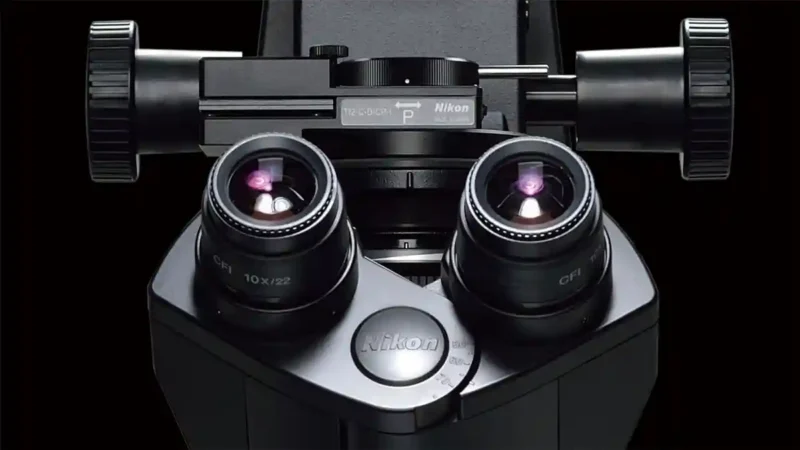

Nikon is re-reviewing the winning entry in this year’s Small World in Motion competition after scientists raised concerns that the video contains AI-generated content.
The video, by Ning Xu of the National University of Singapore, shows abnormal ciliary movement in lung tissue from a child with primary ciliary dyskinesia. Cilia are tiny hair-like structures that move mucus out of the airways. The video took first place in the 16th Small World in Motion competition, which runs alongside Nikon’s long-established Small World photomicrography contest.
After the result was announced, several scientists questioned it publicly. PetaPixel reported that Edward Phelps, an associate professor at the University of Florida, said “purple structures pop in and out of existence” and that “green cilia also appear from nowhere”. Ian Donovan, an MD/PhD student at UT Southwestern Medical Center, said that running the video through Google Gemini detected a SynthID watermark, which Google uses to mark AI-generated content.
Nikon said: “Regarding questions raised about this year’s Small World In Motion winning video, Nikon is carefully re-reviewing the information provided during the initial vetting, along with additional supporting materials from the entrant.” According to Gizmodo, Nikon also acknowledged that “an unsupervised neural-network method was subsequently used as part of the post-processing and visualization workflow”.
Xu says the original video of the cilia and their motion is real, and that AI was only used on reconstructed greyscale data to separate and colour structures with similar shapes.
This is a difficult case, and it goes further than the usual question of whether an image is real or fake. Scientific imaging has always relied on processing, and false colour is standard in microscopy. The question is where enhancement ends and invention begins. If a neural network adds structures that weren’t in the original data, the result is no longer a record of what was under the microscope, however good it looks. It’s the same issue that photography competitions everywhere are dealing with, and the result of Nikon’s review will be watched closely.
Small World in Motion 2026: key details
- Competition: Nikon Small World in Motion (16th edition)
- Winning entrant: Ning Xu, National University of Singapore
- Subject: abnormal ciliary movement in a child with primary ciliary dyskinesia
- Concerns raised by: Edward Phelps (University of Florida), Ian Donovan (UT Southwestern Medical Center) and others
- Status: Nikon is re-reviewing the entry
What happens next
Nikon hasn’t said when its review will be finished or what action it might take. We’ll update this story when the outcome is announced.