
Find serenity through mindful, minimalist photography
Calm minimalist photography is an area that often goes unexplored. In a medium dominated by ultra-polished shots and saturated visuals, it’s easy to forget the beauty of the understated areas. Whether these are photographs of empty fields or unpopulated lakes and mountains, there is a sense of calming stillness that persists in shots like these.
It is worth mentioning that while some may label this as ‘minimalist photography’, it can also be referred to as ‘mindful photography’ or just simply ‘quiet photography’. As you would guess, this is a genre that is all about reflecting that stillness and contemplation, encouraging your viewer to experience feelings of peace and serenity.
Therefore, there is little wonder as to why more and more photographers are looking to capture and communicate that serenity to their viewers. After all, with so many people using photo-sharing platforms like Instagram and Facebook, our feeds are becoming increasingly saturated with loud, shouty visuals where it feels like every creator is competing for our attention.
This begs the question – how can you produce quieter images in such an environment, and ones that are compelling enough to make a viewer pause their doomscrolling for a few seconds? Well, there are a variety of elements at play. You should consider the use of soft lighting, cool colour palettes and uncluttered composition. Effectively, you are looking to create something of a minimalist aesthetic, a photo with an overall calming mood.
Identifying “Calm” Elements in the Real World
As one might expect, there are many calm environments in the real world that can be captured whilst keeping the previous elements in mind. A great place to start is by looking at wide open spaces. These can be green fields, beaches or sand dunes for example. When you have found the right space, you will notice how easily the secondary elements should fall into place.
For example, the natural uncluttered landscape will make it much simpler to consider the use of shapes in the image. If there is an old farming fence in the image, you can use this as a natural shape to guide your viewer into the wider open frame.
Alternatively, you could get a low angle, closer to the ground on a beach, and frame it so that the sand naturally leads into the sea, guiding the viewer’s eye into another calming, open expanse. More specifically, consider shooting at low tide, as this usually means flatter, smoother waves that will be less imposing for your viewer to look at.
Ultimately, the most important part of this practice is that your photos, however you choose to frame them, remain smooth and uncluttered, minimising the need for your viewers to scan for additional objects and elements.
Using Light and Colour to Lower the Volume
One area that can often be overlooked in minimalist photography is the use of lighting. It is easy to forget that the main subject of the image, such as a grassy field, is only part of the story. Lighting is equally important here, as it plays a major role in determining how your viewer registers and therefore reacts to the image. But what type of lighting should you use? Well, as you would expect, only natural lighting should be used in quiet photography, as any bright artificial light is inherently the opposite of a natural, calming environment.
Therefore, you should consider how your image may look if you were to shoot it on an overcast day, as opposed to a bright summer’s day with no cloud. On the other hand, scattered, random clouds in different shapes and sizes can be too messy and cluttering for the viewer, so try to avoid capturing these if possible.
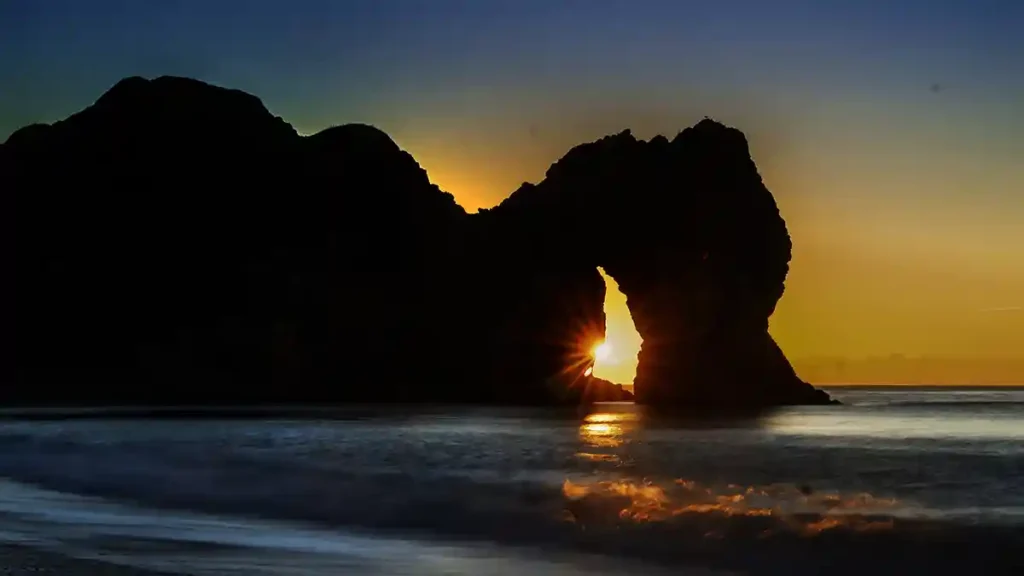
Therefore, consider shooting on an overcast day when the sun is diffused by the cloud, as the smoother contrast in gamma levels will be easier on the viewer’s eyes and will neutralise harsh shadows. You could also consider shooting during golden hour, just before sunset or sunrise for a naturally warm and softer glow as opposed to the harsh brightness of the middle of the day.
In a similar fashion, you also need to think about the use of colour. Generally, the biggest adjustments in colour will be made in the editing room. Therefore, you should consider the look of your image prior to any colour correction. Is the photo already benefitting from a muted, softer colour palette? If it is, then minimal adjustments may be needed – if any.
Most importantly, you should absolutely avoid bumping up the saturation as this will make contrast levels starker and will oversaturate the colour palette, making the image brighter and harsher on your viewer’s eyes, defeating the purpose of a restful image to cast their gaze upon.
Posing and Timing for Stillness
As mentioned, there are many ways you can use the environment you are capturing in a way that emphasises the calming atmosphere. From waiting for low tide on a beach, to waiting for animals to wander out of the frame in a field, it’s always interesting to observe the gaps in movement.
Furthermore, if you wanted to capture a field that was full of livestock, you could wait until just one animal like a cow or horse is in the frame, with them in a still posture munching at grass or hay. The negative space around the animal can be used to calming effect when carefully framed. Alternatively, if you were on a pier, you could use the lines of the fence barrier to lead the viewer’s eye out to sea.
Where Quiet Images Work Best (and why)
In the digital age there is no shortage of places to share your images – artist websites, Instagram and Facebook are all great examples of these, but there are photographers who have even used video-based platforms like TikTok to great effect, with slideshows of their shots.
However, quiet images can occasionally get lost in these spaces due to the hyperactive engagement of the viewers and their fast-doomscrolling habits – so where do quiet images really work best?
Well, traditional photo books and printed photographs are best suited to this style of photography as the viewer can observe your work without any technological distraction.
This is why many wellness and meditation spaces often use physically-based minimalist photographs in their aesthetics, from leaflets to framed photographs, as they give the viewer room to breathe. Ultimately, this is what quiet photography is all about – giving your viewer the space and time to reflect as they view your work, without feeling overstimulated or rushed.